
铁矿石供需平衡

Search documents
铁矿石周度报告-20260201
Guo Tai Jun An Qi Huo· 2026-02-01 07:23
1. Report Industry Investment Rating - No relevant information provided 2. Core View of the Report - The current situation and expectations of iron ore are in a state of game, and the price of iron ore is oscillating [3] - The resumption of production by steel mills combined with the end - of - year winter storage replenishment has led to a strong rigid demand for iron ore, and the trading window for the price suppression of high inventory has been postponed [5] 3. Summary by Related Catalogs 3.1 Iron Ore Price Spreads - Last Friday, the spot price of PB powder was 790 (-10) yuan/ton, and the price of the 05 contract was 791.5 (-4) yuan/ton. The basis of the 05 contract was 32 (+1) yuan/ton, and the 05 - 09 spread was 19 (+1.5) yuan/ton [10] - In the table of Rizhao Port imported ore prices (wet - based tax - included) and iron concentrate powder market prices (dry - based tax - included), the prices of most imported ores decreased this week compared with last week, while the prices of Tangshan and Anshan special iron concentrates remained unchanged [12] 3.2 Iron Ore Supply - Supply remains at a high level, with the year - on - year difference significantly higher than that of last year. Both mainstream and non - mainstream ore supplies are at high levels. The supply of FMG has increased significantly, and the domestic ore production is stable [14][16][18] - When comparing the current week with last week and the same period last year, the global iron ore shipment was 2978.30 million tons, a week - on - week increase of 1.7% and a year - on - year increase of 30.4%. The Australian shipment was 1780.20 million tons, a week - on - week increase of 10.5% and a year - on - year increase of 44.2%. The Brazilian shipment was 544.80 million tons, a week - on - week decrease of 1.6% and a year - on - year decrease of 14.1%. The 45 - port arrival volume was 2530.00 million tons, a week - on - week decrease of 4.9% and a year - on - year decrease of 5.8% [4] - In terms of major mines, the shipment volume of Rio Tinto was 569 million tons (+10), BHP was 583 million tons (+143), FMG was 431 million tons (+63), and VALE was 377 million tons (-11) [18] 3.3 Iron Ore Demand - Profit has led steel mills to resume production at low levels, and the rigid demand for iron ore has rebounded. The end - of - year winter storage replenishment by steel mills has further increased the demand for iron ore. The winter storage replenishment has led to the port clearance being significantly higher than the rigid demand for molten iron. Steel mills prefer medium - grade powder ore, and scrap steel has a substitution effect [30][31][33] - The molten iron production was 227.98 million tons, a week - on - week decrease of 0.1% and a year - on - year increase of 1.1% [4] 3.4 Iron Ore Inventory - The accelerated arrival of floating cargoes has led to an increase in supply and a rapid accumulation of inventory. The inventory of Australian ore has increased significantly [38][39] - The 45 - port inventory was 17022.26 million tons, a week - on - week increase of 1.5% and a year - on - year increase of 14.0% [4] 3.5 Iron Ore Cost - The rise in oil prices has led to an increase in freight rates, including BCI, BDI, West Australia - Qingdao, and Tubarao - Qingdao sea freight [42]
铁矿周报2026、1、28:节前补库需求支撑仍在-20260129
Zi Jin Tian Feng Qi Huo· 2026-01-29 08:01
Report Information - Report Title: Iron Ore Weekly Report 2026/1/28 [1] - Author: Kang Jian [1] -从业资格证号: F03088041 [1] -交易咨询证号: Z0019583 [1] - Research Contact: kangjian@zjtfqh.com [1] -审核: Li Wentao [1] -交易咨询证号: Z0015640 [1] Investment Rating - No investment rating information is provided in the report. Core Viewpoints - Supply has stabilized and is rising, downstream profits are stable, hot metal production is fluctuating within a narrow range, downstream demand is fair, and the short - term supply - demand situation is loose. However, pre - holiday restocking demand remains, so iron ore may maintain a volatile trend. [4] - The monthly spread of iron ore may remain volatile in the short term. [5] Summary by Directory Supply - Global iron ore shipments have stabilized and slightly increased. Reuters data shows that on January 24, 2026, the 7 - day moving average of global iron ore shipments (excluding mainland China) was 4327 thousand tons, a week - on - week increase of 4.2% and a year - on - year increase of 70.7%. Australian shipments were 2352 thousand tons, a week - on - week increase of 8.8% and a year - on - year increase of 114.6%, and Brazilian shipments were 905.9 thousand tons, a week - on - week decrease of 12.1% but a year - on - year increase of 0.3%. [24][29] - Except for India, non - mainstream shipments are 82% higher year - on - year. [33] - The total arrival volume has declined, but it is still higher year - on - year. The 45 - port arrival volume decreased by 129.7 thousand tons last week. [52][101] - The total output of domestic iron ore continues to rise. [107] Demand - The profitability rate of steel mills has increased, and hot metal production has slightly increased. The daily average hot metal production of 247 samples was 228.1 thousand tons, a week - on - week increase of 0.1 thousand tons, and the average daily hot metal production in January was about 228 thousand tons, indicating stable demand. [10][110] - The profits of finished steel products are stable, and the scrap - to - pig iron price difference in Tangshan is stable. [114] - The weekly output of the five major steel products has slightly increased, the profits of finished steel products are stable, the demand for rebar has slightly decreased, and the demand for hot - rolled coils has slightly decreased. [133] Inventory - Port inventory has increased. The 45 - port inventory increased by 212 thousand tons, and the proportion of traded ore was 66.3%, a slight increase compared to the previous period. [152] - The total inventory of imported ore in steel mills increased by 127 thousand tons, the inventory in steel mills decreased by 2.53 thousand tons, and the inventory of floating cargoes + port inventory increased by 129.1 thousand tons. The available days of imported ore increased by 2 days to 23 days. [162] Price - Futures and spot prices have declined in a volatile manner, the basis is stable, and the 5 - 9 monthly spread has slightly decreased. [169] - The basis of the 05 contract is about 3%, and the basis is stable, with the basis rate slightly decreasing by 0.2%. [10] - The decline in the premium of Brazilian fines has slowed down, the premiums of mainstream low - to - medium - grade ores are stable, and the price difference between domestic and foreign ores continues to increase slightly. [9][179][182] - Ocean freight has stabilized and rebounded, and the import profits of mainstream varieties are stable. [185][191] - The average value of the Platts Index in January was 105, corresponding to a disk valuation of about 782. [8][193] Balance Sheet - The total supply and consumption of iron ore show different trends over time. The total supply in 2026/1 was 12386 million tons, and the consumption was 12538 million tons, with a surplus of - 342 million tons. [195] - Due to the continuously high year - on - year hot metal production, the report slightly increased the demand forecast for iron ore. [195]
铁矿周报:终端需求低位,矿价震荡运行-20260126
Yin He Qi Huo· 2026-01-26 02:28
1. Report Industry Investment Rating - Not provided in the given content 2. Core Viewpoints of the Report - This week, iron ore prices slightly declined from their high levels. The current market is mainly dominated by macro and capital factors, and the macro sentiment has cooled this week, with iron ore prices being moderately overvalued [4]. - On the supply side, there has been a significant continuous increase, and the pattern of loose supply has continued. The port inventory of imported iron ore has been increasing rapidly. On the demand side, although the new construction of real - estate in December improved month - on - month, it is still at a low level. The growth rates of infrastructure investment and manufacturing investment have further declined month - on - month, and there is no significant improvement in domestic terminal steel demand [4]. - In the first half of the year, demand may fall short of expectations. Since the second half of 2025, domestic steel demand has been continuously declining. Against the high - base background of the first half of 2025, domestic steel demand is expected to contribute a decline in the first half of 2026. The weakening of the domestic iron ore fundamentals is expected to continue, and the high valuation of iron ore is unlikely to last [4][13]. - Overall, the rapid weakening of domestic steel demand is expected to dominate the medium - term iron ore prices. The fundamentals of iron ore itself have undergone significant changes. As iron ore prices decline from high levels, short - term macro and capital disturbances will increase, and iron ore prices are expected to fluctuate mainly [4]. 3. Summary According to Relevant Catalogs 3.1 Comprehensive Analysis and Trading Strategies - **Logic Analysis**: The market is dominated by macro and capital. Macro sentiment has cooled, and iron ore is moderately overvalued. Supply is increasing, and demand is weak. The weakening of fundamentals is expected to continue, and high valuation is hard to sustain [4]. - **Trading Strategies**: - **Unilateral**: Fluctuate [4] - **Arbitrage**: Wait and see [4] - **Options**: Wait and see [4] 3.2 Iron Ore Core Logic Analysis 3.2.1 Global Iron Ore Shipment - In 2026 to date, the weekly average of global iron ore shipments is 31.08 million tons, a year - on - year increase of 14.3% or 11.7 million tons. Among them, Australia's weekly shipments are 17.85 million tons, a year - on - year increase of 7% or 3.6 million tons, and Brazil's weekly shipments are 6.7 million tons, a year - on - year increase of 15% or 3.6 million tons [7]. - Among the mainstream mines in Australia and Brazil, Rio Tinto has a year - on - year increase of 14% or 2.6 million tons, BHP has a year - on - year decrease of 2% or 0.3 million tons, FMG has a year - on - year increase of 6.5% or 0.7 million tons, and VALE has a year - on - year increase of 20% or 2.6 million tons [7]. - In 2025, the import of iron ore was 1.26 billion tons, a year - on - year increase of 24 million tons. Since the third quarter of last year, the year - on - year increase in domestic imported iron ore has been continuously increasing [7]. 3.2.2 Non - mainstream Iron Ore Shipment - From 2026 to date, the weekly average of non - Australian and non - Brazilian iron ore shipments is 6.54 million tons, a year - on - year increase of 38% or 5.3 million tons. The weekly average of non - mainstream iron ore shipments in Australia is 2.58 million tons, a year - on - year increase of 15% or 1 million tons, and the weekly average of non - mainstream iron ore shipments in Brazil is 1.57 million tons, a year - on - year increase of 2% or 0.1 million tons [9]. - Non - Australian and non - Brazilian global shipments may decline (except for Simandou). From 2023 - 2025, non - Australian and non - Brazilian mines have continuously contributed increments, with an average annual increment of over 20 million tons for three consecutive years [9]. - The Simandou mining area is expected to contribute most of the increment in 2026, with an annual increment of about 20 million tons. It is expected to enter the fast - lane of production release in 2027, but in 2026, it is still in the production ramping - up stage [9]. 3.2.3 Imported Iron Ore Port Inventory - This week, the port inventory of imported iron ore has continued to increase significantly, and the steel mill inventory has increased slightly. As a result, the total inventory of domestic imported iron ore has increased by 3.5 million tons month - on - month. In the past more than a month, the total inventory of imported iron ore has increased by more than 17 million tons. The current port inventory of imported iron ore is at the highest level in the past 6 years, and the domestic iron ore supply - demand pattern of looseness has continued [11]. - The current total domestic iron element inventory is at a high level in the past 6 years, basically the same as in 2022 [11]. 3.2.4 Terminal Steel Demand - In December 2025, the new construction of real - estate decreased by 19% year - on - year, and the sales area decreased by 17% year - on - year. Infrastructure investment (excluding electricity) decreased by 12% year - on - year, and the growth rate of manufacturing investment decreased by 11% year - on - year. The real - estate market has improved month - on - month but is still at a low level, while the growth rates of infrastructure investment and manufacturing investment have declined significantly month - on - month [13]. - In terms of overseas demand, from January to November 2025, overseas iron ore consumption decreased by 1% or 10 million tons year - on - year, but overseas iron element consumption increased by 3% or 28 million tons year - on - year. Since the second quarter, overseas iron element consumption has been at a high level year - on - year and has continuously contributed increments. Among them, India's crude steel production from January to November increased by 10% or 14 million tons year - on - year, and it is expected to contribute an increment of 15 million tons for the whole year. Overseas India's crude steel demand remains at a relatively high level [13]. 3.3 Iron Ore Fundamental Data Tracking 3.3.1 Imported Iron Ore Port Price - The report provides data on the price index of Platts iron ore, the price of PB powder at Qingdao Port, the price of Carajas fines at Qingdao Port, and the spread between high, medium, and low - grade powder and the cash profit of steel mills [18]. 3.3.2 Imported Iron Ore Port Profit - The report shows the import profits of PB powder, Carajas fines, Super Special fines, Jinbuba, PB lump, and FMG [20]. 3.3.3 East China Mainstream Steel Mill Profit - It includes the cash profit of East China rebar, the cash profit of East China hot - rolled coil, the cost of East China hot - rolled coil, the cost of East China billet, and the cash cost of East China rebar [22]. 3.3.4 Domestic and Overseas US Dollar Spread - It involves the spread between SGX main contract and DCE contracts (converted to PB pricing), the premium rate of Singapore iron ore over domestic iron ore, and the spread between East China hot metal and recycled steel [24]. 3.3.5 Iron Ore Main Contract Basis and Inter - period Spread - It includes the basis of the optimal delivery product against the 01, 05, and 09 contracts, and the 9/1, 1/5, and 5/9 spreads [26]. 3.3.6 Global Four Major Mines' Shipment - The report presents the global shipment volumes of Rio Tinto, VALE, BHP, FMG, and CSN, as well as the arrival volume at 45 ports [29]. 3.3.7 Imported Iron Ore Port Inventory - It shows the inventory of powder, lump, pellet, non - trade, iron concentrate, and non - Australian and non - Brazilian iron ore at the port [31].
钢矿周报:市场情绪反复,盘面延续震荡走势-20260118
Hua Lian Qi Huo· 2026-01-18 14:29
1. Report Industry Investment Rating - No relevant information provided. 2. Core Viewpoints of the Report 2.1. Steel (Rebar) - Inventory: The latest inventory of the five major steel products decreased slightly week - on - week. Rebar inventory decreased slightly, while wire rod inventory increased slightly. Under the influence of the off - season, the pressure of inventory accumulation increased [7]. - Supply: Affected by environmental protection in the north, the hot metal output of blast furnace steel mills decreased slightly. However, with the recovery of steel profits, steel mills are willing to resume production, and there is room for an increase in steel supply [7]. - Demand: The total apparent demand of the five major steel products rebounded week - on - week. Although the expectation of a decline in steel demand remains unchanged, the weakening pace is slow, and demand has a certain degree of resilience [7]. - View: Recently, the pace of steel mill resumption has been erratic, and rebar production has been relatively stable. However, with acceptable profitability of steel mills and low inventory levels, there is room for a marginal increase in supply. As the off - season deepens, demand gradually weakens, and the pressure of inventory accumulation increases. The industrial supply - demand contradiction will gradually accumulate. Currently, the expectation of increasing supply and weakening demand in the steel market exerts pressure, but in the short term, steel prices show a range - bound trend due to macro expectations and cost support [7]. - Strategy: The 2605 contract is expected to fluctuate in the range of 3100 - 3200 [7]. 2.2. Iron Ore - Supply: In the latest period (January 5 - January 11, 2026), the global iron ore shipment volume decreased, while the arrival volume in China increased. The total global iron ore shipment volume was 31.809 million tons, a week - on - week decrease of 32,800 tons. The total shipment volume from 19 ports in Australia and Brazil was 25.332 million tons, a week - on - week decrease of 1.333 million tons. Australia's shipment volume was 18.689 million tons, a week - on - week decrease of 5100 tons, and Brazil's shipment volume was 6.643 million tons, a week - on - week decrease of 1.282 million tons. The arrival volume at 47 ports in China was 30.15 million tons, a week - on - week increase of 1.903 million tons; the arrival volume at 45 ports was 29.204 million tons, a week - on - week increase of 1.64 million tons; the arrival volume at six northern ports was 14.692 million tons, a week - on - week decrease of 437,000 tons [9]. - Demand: As of January 16, 2026, the blast furnace operating rate of 247 steel mills was 78.84%, a week - on - week decrease of 0.47 percentage points; the blast furnace iron - making capacity utilization rate was 85.48%, a week - on - week decrease of 0.56 percentage points; the steel mill profitability rate was 39.83%, a week - on - week increase of 2.17 percentage points; the daily average hot metal output was 2.2801 million tons, a week - on - week decrease of 14,900 tons. Affected by environmental protection, the blast furnace operating rate of steel mills decreased slightly, and the hot metal output decreased slightly week - on - week [9]. - Inventory: As of January 16, 2026, the total inventory of imported iron ore at 47 ports in China was 172.887 million tons, a week - on - week increase of 2.4426 million tons; the daily average port clearance volume was 3.3502 million tons, a decrease of 19,400 tons. The total inventory of imported iron ore in national steel mills was 92.6222 million tons, a week - on - week increase of 2.7263 million tons; the daily consumption of imported ore by the current sample steel mills was 2.8184 million tons, a week - on - week decrease of 14,300 tons; the inventory - to - consumption ratio was 32.86 days, a week - on - week increase of 1.13 days. The iron ore port inventory continued to reach a new high, and the steel mill inventory increased week - on - week [9]. - View: In terms of the industry, overseas iron ore shipments continued to decline, and the expectation of tightened overseas shipments under the influence of seasonal factors was strong. The arrival volume in China remained at a high level, and the port inventory continued to reach a new high. On the demand side, in the short term, affected by environmental protection, the steel mill hot metal output decreased slightly again, but the steel mill profitability was acceptable, and the hot metal output still increased year - on - year. Overall, the supply - demand pattern of iron ore is relatively loose, but the expectation of supply - demand improvement provides certain support for ore prices [9]. - Strategy: The iron ore 2605 contract is expected to operate in the range of 800 - 850 [9]. 3. Summary by Relevant Catalogs 3.1. Weekly Supply and Demand Data of Steel - Supply: The blast furnace operating rate of 247 steel mills was 78.84%, a week - on - week decrease of 0.47 percentage points; the capacity utilization rate was 85.48%, a week - on - week decrease of 0.56 percentage points; the profitability rate was 39.83%, a week - on - week increase of 2.17 percentage points; the daily average hot metal output was 228.01 tons, a week - on - week decrease of 1.49 tons. The operating rate of 94 independent electric furnaces was 72.97%, with no week - on - week change; the capacity utilization rate was 57.99%, a week - on - week increase of 1.09 percentage points; the scrap consumption was 244.24 tons, a week - on - week decrease of 3.06 tons. The total output of the five major steel products was 819.21 tons, a week - on - week increase of 0.62 tons [10]. - Demand: The average daily trading volume of traders (MA5) was 8.84 tons, a week - on - week decrease of 1.04 tons; the procurement volume of wire rods and rebars in Shanghai was 17,850 tons, a week - on - week decrease of 4650 tons; the apparent demand for rebar was 190.34 tons, a week - on - week increase of 14.44 tons; the apparent demand for hot - rolled coils was 314.16 tons, a week - on - week increase of 5.55 tons; the apparent demand for wire rods was 71.54 tons, a week - on - week increase of 4.90 tons; the apparent demand for cold - rolled coils was 91.93 tons, a week - on - week increase of 3.09 tons; the apparent demand for medium - thick plates was 158.15 tons, a week - on - week decrease of 0.47 tons [10]. - Inventory: The total inventory of the five major steel products was 1247.01 tons, a week - on - week decrease of 6.91 tons; the rebar inventory was 438.07 tons, a week - on - week decrease of 0.04 tons; the hot - rolled coil inventory was 362.33 tons, a week - on - week decrease of 5.80 tons; the wire rod inventory was 91.76 tons, a week - on - week increase of 1.95 tons; the cold - rolled coil inventory was 158.49 tons, a week - on - week decrease of 3.26 tons; the medium - thick plate inventory was 196.36 tons, a week - on - week increase of 0.24 tons [10]. 3.2. Weekly Supply and Demand Data of Iron Ore - Shipment Volume: The global iron ore shipment volume was 31.809 million tons, a week - on - week decrease of 32,800 tons; the shipment volume from 19 ports in Australia was 18.689 million tons, a week - on - week decrease of 5100 tons; the shipment volume from 19 ports in Brazil was 6.643 million tons, a week - on - week decrease of 1.282 million tons [11]. - Arrival Volume: The arrival volume at 45 ports in China was 29.204 million tons, a week - on - week increase of 1.64 million tons; the arrival volume at six northern ports was 14.692 million tons, a week - on - week decrease of 437,000 tons [11]. - Inventory: The inventory at 47 ports was 172.887 million tons, a week - on - week increase of 2.4426 million tons; the inventory of 247 steel mills was 92.6222 million tons, a week - on - week increase of 2.7263 million tons [11]. - Demand: The port clearance volume at 47 ports was 3.3502 million tons, a week - on - week decrease of 19,400 tons; the daily consumption of steel mills was 2.8184 million tons, a week - on - week decrease of 14,300 tons [11]. 3.3. Futures - Spot Market - As of January 16, 2026, the closing price of the RB2605 contract was 3163 yuan/ton; the closing price of the HC2605 contract was 3315 yuan/ton; the closing price of the I2605 contract was 812 yuan/ton. The basis of Shanghai rebar's main contract was 137 yuan/ton; the basis of Shanghai hot - rolled coil's main contract was - 15 yuan/ton. The spot screw - coil spread in Shanghai was 0 yuan/ton, and the screw - coil spread of the main contract was - 152 yuan/ton [21]. 3.4. Demand Side - The report mainly presents the apparent consumption volume of various types of steel products (such as rebar, hot - rolled coils, wire rods, cold - rolled coils, medium - thick plates), trading volume, procurement volume, cement outbound volume, and concrete production capacity utilization rate through charts, but no specific numerical analysis is provided in the text [57][63][65]. 3.5. Inventory Side - The report mainly shows the inventory of various types of steel products (such as rebar, hot - rolled coils, wire rods, cold - rolled coils, medium - thick plates) and the inventory - to - sales ratio through charts, but no specific numerical analysis is provided in the text [78][89][98]. 3.6. Supply Side - Steel Production: The report shows the production volume of various types of steel products (such as rebar, hot - rolled coils, medium - thick plates, wire rods, cold - rolled coils) and the total production volume of the five major steel products through charts, but no specific numerical analysis is provided in the text [109][114][116]. - Steel Mill Operation: The report shows the operating rate and capacity utilization rate of 247 blast furnace steel mills and independent electric furnace steel mills through charts, but no specific numerical analysis is provided in the text [123]. - Hot Metal and Scrap: The report shows the hot metal production volume and scrap consumption through charts, but no specific numerical analysis is provided in the text [125]. - Steel Mill Profit: The report shows the steel mill profitability rate and steel profit through charts, but no specific numerical analysis is provided in the text [130]. 3.7. Raw Material - Iron Ore - Global Shipment: From January 5 - January 11, 2026, the total global iron ore shipment volume was 31.809 million tons, a week - on - week decrease of 32,800 tons [136]. - Australia - Brazil Shipment: The total iron ore shipment volume from 19 ports in Australia and Brazil was 25.332 million tons, a week - on - week decrease of 1.333 million tons. Australia's shipment volume was 18.689 million tons, a week - on - week decrease of 5100 tons, and the volume shipped from Australia to China was 15.933 million tons, a week - on - week increase of 395,000 tons. Brazil's shipment volume was 6.643 million tons, a week - on - week decrease of 1.282 million tons [140]. - Arrival Volume: From January 5 - January 11, 2026, the arrival volume at 47 ports in China was 30.15 million tons, a week - on - week increase of 1.903 million tons; the arrival volume at 45 ports was 29.204 million tons, a week - on - week increase of 1.64 million tons; the arrival volume at six northern ports was 14.692 million tons, a week - on - week decrease of 437,000 tons [153]. - Port Inventory: As of January 16, 2026, the total inventory of imported iron ore at 47 ports in China was 172.887 million tons, a week - on - week increase of 2.4426 million tons; the daily average port clearance volume was 3.3502 million tons, a decrease of 19,400 tons. In terms of components, the Australian ore inventory was 75.8221 million tons, an increase of 1.5887 million tons; the Brazilian ore inventory was 61.6914 million tons, an increase of 612,400 tons; the trading ore inventory was 113.5285 million tons, an increase of 1.8404 million tons; the coarse powder inventory was 131.6586 million tons, an increase of 923,600 tons; the lump ore inventory was 21.6713 million tons, an increase of 387,500 tons; the iron concentrate powder inventory was 15.5271 million tons, an increase of 699,400 tons; the pellet inventory was 4.03 million tons, an increase of 432,100 tons [157][161]. - Steel Mill Inventory: The total inventory of imported iron ore in national steel mills was 92.6222 million tons, a week - on - week increase of 2.7263 million tons; the daily consumption of imported ore by the current sample steel mills was 2.8184 million tons, a week - on - week decrease of 14,300 tons; the inventory - to - consumption ratio was 32.86 days, a week - on - week increase of 1.13 days [173].
铁矿博弈与压力双向掣肘,下方支撑难降
Dong Zheng Qi Huo· 2025-12-24 07:12
Group 1: Report Industry Investment Rating - The investment rating for iron ore is "Oscillating" [6] Group 2: Core View of the Report - In 2026, the total pressure on iron ore will become more obvious, but with major mines reducing product grades, mainstream resources may still face structural shortages. Without a strong negative demand resonance, the supply - side pressure alone is unlikely to drive the price down independently. The iron ore price is expected to be influenced by both total pressure and structural support, with the lower support likely to remain the same as in 2025. The price is expected to fluctuate between $90 - $110 in 2026, with supply mismatches to be watched in the first half and overseas demand changes in the second half [4][77] Group 3: Summary by Relevant Catalog 2025 Review - In 2025, the black demand was not bad, with the growth rate of 247 - caliber hot metal and crude steel fitting output exceeding 2%. In the first half, due to concerns about the ebb of export demand, the whole industry chain actively reduced inventory, and the iron ore price fell with the port inventory. The Platts Index dropped from $109 at the beginning of the year to $95 at the end of June. After July - August, driven by policies and re - evaluation of actual demand, the price rebounded slightly in the second half. From September - October, affected by port inventory structure and negotiation progress, the inventory and price deviated. The overseas mines' shipments recovered rapidly in the second half, and the domestic port inventory increased by 10 million tons per month from November - December, suppressing the overall price [12] Iron Ore Supply - **2025 Supply**: The global seaborne iron ore supply increased by about 37 million tons in 2025. The shipment was low in the first half due to hurricane disruptions and rebounded rapidly in the middle of the year as major mines "reduced product grades to maintain quantity". The shipping - caliber global iron ore shipments from January - November increased by about 38 million tons, and the shipments to China increased by about 16 million tons [14] - **Regional Supply in 2025**: From January - November, Australia, Brazil, Iran/Oman, and West Africa increased by about 10 million tons, South Africa by about 2 million tons, India decreased by 8 million tons, and other countries such as Russia and Ukraine increased by 4 million tons. Major mines like Rio Tinto, Vale, and FMG reduced product grades. African iron ore in Sierra Leone increased more than expected, and the Onslow project in Australia reached its production capacity in the third quarter [15][24][25] - **Structural Issues in 2025**: Since 2025, structural inventory contradictions have reappeared. The decline in mainstream mine quality and the locking of Jimblebar inventory explain the deviation between high port inventory and firm spot prices since the second half of 2025 [31] - **2026 Supply Forecast**: The global iron ore supply is expected to increase by 51 million tons in 2026. Simandou may contribute an increment of 20 million tons, Onslow will continue to increase production by 10 million tons, Australia is expected to recover and grow by about 10 - 15 million tons, and India's net export volume is expected to continue to decrease by 9 million tons [41] 2026 Crude Steel Demand - In 2026, the crude steel demand is expected to be low in the first half and high in the second half, with strong resilience but lack of increment. After the export resilience in 2025, the market's demand expectation for 2026 turns cautious, with the mainstream expectation around zero growth. Real estate demand is expected to shrink by 10%, infrastructure demand may increase slightly, direct exports may decline slightly, but indirect exports from the manufacturing industry will offset the decline. External demand may improve moderately under the background of interest rate cuts [3][65] Summary and Outlook - The market's expectation for domestic demand in 2026 turns cautious after the export resilience in 2025. The iron ore supply will increase significantly in 2026, about 51 million tons in total, with about 30 million tons having a high probability of realization. Although there is total pressure on the supply side, mainstream resources may still face structural shortages. The iron ore price is expected to be influenced by both total pressure and structural support, with the lower support likely to remain the same as in 2025. The price is expected to fluctuate between $90 - $110 in 2026 [77]
铁合金周报:故事重点或在供给端-20251222
Zi Jin Tian Feng Qi Huo· 2025-12-22 08:44
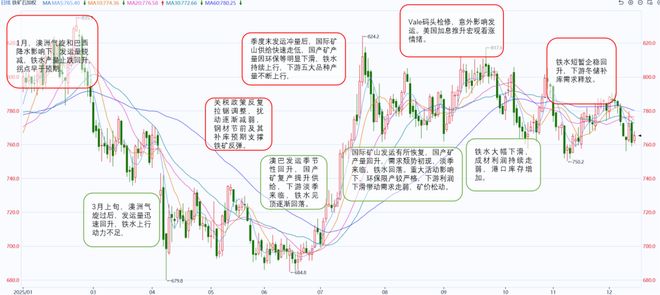
1. Report Industry Investment Rating - Not provided in the content 2. Core Viewpoints of the Report Supply - Static calculations show that from January to November 2025, China's iron ore imports first decreased and then increased, with a year-on-year increase of 8.76 million tons (1.5%) to 1.14 billion tons, and the annual total may exceed 1.249 billion tons. The new production capacities of mines in Australia and Brazil will be reflected in the fourth-quarter shipments, and imports are expected to continue a slight increase of 1.1% in 2026 [7][125]. - In 2025, China's cumulative iron ore output is expected to reach 295 million tons, a year-on-year decrease of 0.71%. The output rebounded in the fourth quarter as the pressure on safety and environmental protection eased. The output of domestic iron concentrate is expected to increase by 2% year-on-year in 2026 [7][125]. - The pricing benchmark of iron ore will decrease from 62% iron grade to 61%, and the pricing system may be adjusted [7][125]. - In 2026, the total supply will increase by 1.3% year-on-year to 1.544 billion tons [7][125]. Demand - Domestic: In 2025, the decline in the real estate sector slowed down, infrastructure investment showed positive year-on-year growth, and the manufacturing industry continued to improve. The annual iron ore demand was calculated to be 1.498 billion tons, a year-on-year increase of 59.97 million tons (+4.23%). The annual iron ore demand in 2026 is expected to remain stable with little change [7][125]. - Overseas: In 2026, the pig iron output in major overseas iron ore - importing countries is expected to decline slightly, while the steel demand in India and the United States will continue to be strong [7][125]. Inventory - As of early December 2025, the inventory at 45 ports was 154 million tons. The production capacity of mines increased slowly in the early stage of 2025 and started to expand in the fourth quarter. However, the demand showed strong resilience, and hot metal production was "not weak in the off - season". With the continued release of iron ore production capacity in 2026, static calculations suggest that the iron ore supply - demand situation will become looser, and there is a high possibility of continued inventory accumulation in 2026. However, short - term supply - demand tightness caused by meteorological and other factors may still occur [7][125]. 3. Summary According to the Relevant Catalogs Market Review - In January, affected by cyclones in Australia and rainfall in Brazil, shipments decreased sharply, and hot metal production stopped falling and rebounded earlier than expected. In early March, after the cyclone in Australia, shipments quickly recovered, but the upward momentum of hot metal was insufficient. With the seasonal recovery of shipments from Australia and Brazil, the resumption of domestic mines increasing supply, and the arrival of the downstream off - season, hot metal production reached its peak and gradually declined. Repeated adjustments of tariff policies caused disturbances that gradually weakened. The pre - festival restocking expectations of steel supported the rebound of iron ore prices. Hot metal production declined significantly, steel product profits continued to weaken, and port inventories increased. After a brief recovery, hot metal production stabilized, and the downstream winter restocking demand was released. After the quarterly shipment rush, the supply from international mines decreased rapidly, the output of domestic mines decreased significantly due to environmental protection, hot metal production continued to rise, and the output of the downstream five major steel products continued to increase. The shipments of international mines recovered, the output of domestic mines increased, but demand showed signs of decline, the off - season arrived, and hot metal production declined. Under the influence of major events, environmental protection restrictions were strict, downstream profits declined, demand weakened, and iron ore prices fluctuated. Vale's terminal maintenance unexpectedly affected shipments, and the US interest rate hikes boosted the macro - optimistic sentiment [5]. Supply - **Global Shipment Volume**: In 2025, the global mainstream iron ore shipment volume first decreased and then increased, with a slight year - on - year increase. As of December 12, 2025, the global average daily shipment volume was 4.47 million tons per day, a 2.76% increase compared to 4.35 million tons per day in the previous year. From January to September 2025, the global iron ore trade volume decreased by 2.38%, and China's iron ore imports from the world increased by 0.01% year - on - year. In the fourth quarter, the new iron ore production capacity was released, and from January to October 2025, China's imports of iron ore from the world increased by 0.75% year - on - year [12]. - **China's Imports from Australia and Brazil**: From January to October 2025, China's imports of iron ore from Australia and Brazil increased by 1.54%, showing a pattern of first decline and then increase, especially a significant improvement since September. China's imports of iron ore from non - Australia and Brazil regions decreased by 2.66%, also showing a pattern of first decline and then increase, especially since September [16]. - **Australia**: From January to September 2025, Australia's iron ore exports showed a pattern of low at first and then high, with a year - on - year decrease of 0.01%. From January to October 2025, China's imports of iron ore from Australia increased by 1.55% year - on - year. According to the capacity expansion plan, the main production capacity increments in Australia in 2025 come from the Xipo (officially put into production on June 6, 2025) and Onslow projects. If the weather remains normal, the iron ore shipments in the fourth quarter may maintain a certain increment [21]. - **Brazil**: From January to September 2025, Brazil's iron ore exports showed a pattern of low at first and then high, with a year - on - year increase of 4.48%. From January to October 2025, China's imports of iron ore from Brazil increased by 1.15% year - on - year. According to the capacity expansion plan, the main production capacity increment in Brazil in 2025 comes from Vale's S11D mining area expansion project (20 million tons). According to the capacity release plan, Brazil's iron ore exports may continue to grow in 2026 [26]. - **Major Mining Companies' Production and Shipment Targets**: - Rio Tinto: In fiscal year 2026, the shipment target will be increased by 20 - 28 million tons. From January to September 2025, the equity ore output was 210.1 million tons, a year - on - year decrease of 0.68%. The SP10 shipments remained at a high level throughout the year, squeezing part of the PB share. The Xipo mining area was fully put into production on June 6, 2025, to maintain the production of PB powder, which is the main source of production increment for Rio Tinto in 2025 [27][32]. - BHP: In fiscal year 2026, the shipment target range will be increased by 2 million tons. From January to September 2025, BHP's output was 196 million tons, a year - on - year increase of 0.63%. In fiscal year 2025 (July 2024 - June 2025), BHP's 100% equity output was 29 million tons, a year - on - year increase of 1.01%, reaching a record high. The South Slope mine was the main source of increment, with its capacity fully reaching 80 million tons per year in fiscal year 2025, and together with the C mining area, it forms the world's largest iron ore hub (total capacity of 145 million tons per year). Its high - grade ore (average iron grade of 62%) enhances BHP's product portfolio premium ability [33][38]. - FMG: In fiscal year 2026, the shipment target range will be increased by 5 million tons. From January to September 2025, FMG's output was 179.9 million tons, a year - on - year increase of 10.57%. In 2025, the shipments of Super Special Powder were at a high level, while the shipments of Mixed Powder were relatively weak. FMG has announced that the iron ore shipment target for fiscal year 2026 is set at 195 - 205 million tons, with both the upper and lower limits of the range increased by 5 million tons compared to the previous fiscal year. Among them, the shipment target for the Iron Bridge project is 10 - 12 million tons [40][44]. - Vale: In 2026, the target output will be increased by 10 million tons. From January to September 2025, Vale's iron ore output was 246 million tons, a year - on - year increase of 1.49%. The S11D production area is part of the Serra Sul mining complex in Vale's northern system. Vale proposed the Serra Sul 120Mtpy capacity growth project in August 2020, aiming to increase the annual production capacity of S11D by 20 million tons to 120 million tons, which is expected to be completed in the second half of 2026. The Serra Norte comprehensive mining area also belongs to the northern system, with an annual production capacity of 140 million tons. Vale is investing in the N3 mine maintenance project in this area, with a planned total investment of 84 million US dollars, and it is expected to be put into production in the first half of 2026. The Capanema Maximization project is a capacity growth plan proposed by Vale for its southeastern system, aiming to increase the combined output of the Fábrica Nova and Capanema mines, providing greater operational flexibility for the Mariana mining complex, with a planned investment of about 910 million US dollars. The Vargem Grande (VGR) complex is located in the southern system. Vale is carrying out the VGR 1 project in this area to maintain the operation of existing projects and promote the recovery of the mining area's production capacity. The VGR 1 project consists of three simultaneous sub - projects, with a total investment of 67 million US dollars. The increments from the S11D, Serra Norte, Vargem Grande, and Capanema mining areas may bring about 60 million tons of iron ore output increment for Vale in the next three years. It is expected that Vale's iron ore output will recover to the range of 340 - 360 million tons in 2026 [45][48]. - **Global Iron Ore Production Capacity Increment**: In 2026, the global iron ore production capacity is expected to increase by nearly 47 million tons, with the commissioning progress of Simandou attracting the most attention. There are expectations of increments in Australia, Brazil, and non - mainstream regions in 2026 [50]. - **China's Domestic Supply**: In 2025, the iron concentrate output of 332 domestic mining enterprises is expected to reach 294.82 million tons, a year - on - year decrease of 0.71%, mainly affected by environmental protection and safety inspections. In 2026, with the commissioning of new domestic production capacities and policy support, the output of finished ore (iron concentrate) is expected to increase slightly, with the increment mainly coming from the development of strategic resources in western regions such as Inner Mongolia and Xinjiang. From January to October 2025, China's total iron ore supply was about 1.276 billion tons, a year - on - year increase of 4.95 million tons (+0.39%). In 2026, with the successive commissioning of new production capacities in Simandou and Brazilian iron ore projects, the total supply may increase by 1.3% [74]. Demand - **Overseas Demand**: In 2025, the overseas pig iron output generally declined, with India continuing to maintain rapid growth. From January to October 2025, the overseas pig iron output was 335 million tons, a year - on - year decrease of 1.97%. Among the major overseas regions, India's pig iron output continued to maintain a high growth rate of +6.38%, while the pig iron output of other major steel - producing countries mainly declined. Among net - importing countries, the EU's pig iron output was 60.42 million tons, a year - on - year decrease of 3.327 million tons (-5.5%); the pig iron outputs of Japan and South Korea were 48.799 million tons and 36.168 million tons respectively, with year - on - year declines of -4.01% and -1.88% respectively. Japan's pig iron output has shown a continuous downward trend in recent years. Under the interest - rate hike cycle, its domestic economy is weak, orders from the automobile and machinery industries have decreased, and steel demand has decreased by 10%. Due to inflation pressure, Japan may raise interest rates again at the end of 2025, which will have a negative impact on steel demand. South Korea's construction industry is in a slump, and the exports of traditional manufacturing industries such as automobiles and shipbuilding are blocked. The steel industry demand in 2026 may continue to be weak. Europe's pig iron output continues to decline. High - interest - rate policies have restricted investment and consumption, and the demand for construction, durable consumer goods such as automobiles and home appliances is weak. The euro - zone economy has maintained a low - growth state for a long time, suppressing steel demand [80][81][87]. - **Domestic Demand**: In 2025, the pig iron output is expected to be high at first and then stable, with a year - on - year increase of more than 4.2%. From January to October 2025, the estimated pig iron output was 768 million tons, a cumulative year - on - year increase of 4.4%. Since June, hot metal production reached its peak and slowly declined, and steel mill profits gradually decreased. However, since the downstream inventory has always been maintained at a low level, the inventory - accumulation effect has not yet appeared. The estimated pig iron output in 2025 is 923 million tons, with an expected year - on - year increase of 4.2%. In 2026, it is expected that the real estate demand will still be sluggish, the growth rate of infrastructure investment will slow down, and the manufacturing industry will have a fair growth rate [94][99][100]. Inventory - **Overall Inventory Trend**: In 2025, iron ore shipments first decreased and then increased, while demand first increased and then decreased. In 2026, inventory may continue to increase. From January to August 2025, under the situation of a decline in overseas shipments and higher - than - expected demand, the iron ore port inventory maintained a de - stocking trend. Since September, especially after October, imports increased rapidly while downstream demand weakened, and the inventory increased rapidly. As of the latest data in early December 2025, the iron ore inventory across the entire industrial chain increased by about 11.85 million tons compared to the end of 2024 to 292 million tons. Looking forward to 2026, with the release of new production capacity and the difficulty of demand growth, the iron ore inventory may continue to accumulate [111]. - **Inventory Variety Differentiation**: The inventory of different varieties shows obvious differentiation. The inventory of Australian ore has recently declined from a high level. Against the background of the slow decline of the total inventory in 15 major ports, the inventory of different varieties shows obvious differentiation. The inventory of Brazilian ore is relatively stable, and the inventory of Australian ore has recently started to rise. The inventory of low - grade ore declined significantly from September to October and has slightly rebounded recently. The overall level of medium - grade ore has increased, and the inventory of PB powder has declined significantly from the high level in September [112][114]. Cost and Price - The current global cash cost of 90% of iron ore is at the level of about $90 per ton. Without obvious incremental expectations for pig iron demand in major overseas countries and China, the iron ore supply - demand balance may be achieved through price cuts and reduced shipments, and the cost support around $85 is relatively strong [117][118].



【铁矿年报】故事重点或在供给端
Xin Lang Cai Jing· 2025-12-19 11:52
Core Viewpoint - The focus of the iron ore market in 2025 is on the supply side, with expectations of a gradual increase in imports and domestic production, despite some challenges in the market dynamics [2][92]. Supply - In the first 11 months of 2025, China's iron ore imports showed a trend of first decreasing and then increasing, with a year-on-year increase of 8.76 million tons (1.5%) to 114 million tons, and the total for the year is expected to exceed 124.9 million tons [2][52]. - Domestic iron ore production is projected to reach 29.5 million tons in 2025, a year-on-year decline of 0.71%, but is expected to rebound in the fourth quarter as safety and environmental pressures ease [90]. - The iron ore pricing benchmark will be adjusted from 62% iron content to 61%, indicating a potential shift in the pricing system [91]. Demand - Domestic demand for iron ore in 2025 is estimated at 149.8 million tons, an increase of 5.997 million tons (+4.23%) year-on-year, with expectations for stable demand in 2026 [92]. - The real estate sector is expected to see a slowdown in declines, while infrastructure investment is projected to grow year-on-year, and the manufacturing sector remains positive [92]. Inventory - As of early December 2025, the inventory at 45 ports was 154 million tons, with a trend towards increased inventory due to a combination of slow production increases and resilient demand [93]. - The iron ore supply-demand balance is expected to shift towards a more relaxed state in 2026, with the possibility of continued inventory accumulation, although short-term tightness may occur due to weather and other factors [93].

铁矿石月报:关注宏观窗口兑现节点-20251205
Wu Kuang Qi Huo· 2025-12-05 14:20
1. Report Industry Investment Rating - No information provided in the report 2. Core Viewpoints of the Report - In December, iron ore supply is expected to remain strong, with shipments and arrivals higher than the same period in previous years. Vale is expected to reach the upper limit of its annual production target range. [11][14] - After the traditional peak season, due to the combined impact of poor downstream demand and profits, the number of blast furnace overhauls in steel mills has gradually increased, and the daily output has dropped to about 2.35 million tons, a decline from November. The proportion of profitable steel mills is less than 40%. [11][14] - Port inventories are on an upward trend. Under the pattern of strong supply and weak demand, there is still pressure to accumulate inventories before the Spring Festival. However, the structural contradiction of inventories has not been effectively resolved, so the spot market is expected to have some support despite high inventories. [11][14] - In November, the market entered a macro vacuum period, and the disk logic was mainly inclined to industrial reality. There are certain expectations in the market before the macro window in December. Overall, iron ore prices are expected to fluctuate widely. Considering the expected loose supply pattern in 2026 and the lack of imagination on the demand side, if important meetings do not provide positive information for the black metal market, there may be phased downward pressure within the trading range. [11][14] 3. Summary by Relevant Catalogs 3.1 Monthly Assessment and Strategy Recommendation - **Supply**: In November, the weekly average of global iron ore shipments was 32.9675 million tons, a month-on-month increase of 123,100 tons. The weekly average of Australian shipments to China through 19 ports was 15.758 million tons, a decrease of 138,400 tons from the previous month. The weekly average of Brazilian shipments was 8.2403 million tons, a decrease of 245,700 tons from the previous month. The weekly average of arrivals at 45 ports was 26.3163 million tons, a month-on-month decrease of 526,600 tons. [13] - **Demand**: The estimated average daily domestic pig iron output in November was 2.353 million tons, a decrease of 41,200 tons from the previous month. [13] - **Inventory**: At the end of November, the inventory of imported iron ore at 45 ports nationwide was 152.1012 million tons, an increase of 6.6764 million tons from the end of the previous month. The weekly average of the daily ore handling volume at 45 ports was 3.271 million tons, an increase of 82,100 tons from the previous month. The weekly average of the daily consumption of imported iron ore by steel mills was 2.9061 million tons, a decrease of 60,600 tons from the previous month. [13] 3.2 Futures and Spot Market - **Price Spreads**: At the end of November, the price spread between PB powder and Super Special powder was 111 yuan/ton, a month-on-month increase of 22 yuan/ton. The price spread between Carajás fines and PB powder was 91 yuan/ton, a month-on-month decrease of 19 yuan/ton. The price spread between Carajás fines and Jinbuba powder was 147 yuan/ton, a month-on-month decrease of 22 yuan/ton. The price spread between (Carajás fines + Super Special powder)/2 and PB powder was -10 yuan/ton, a month-on-month decrease of 18.5 yuan/ton. [19][22] - **Feed Ratio and Scrap Steel**: At the end of November, the pellet feed ratio was 14.52%, a decrease of 0.4 percentage points from the end of the previous month. The lump ore feed ratio was 12.22%, a decrease of 0.08 percentage points from the end of the previous month. The sinter feed ratio was 73.27%, an increase of 0.49 percentage points from the end of the previous month. The price of scrap steel in Tangshan was 2,155 yuan/ton, a decrease of 80 yuan/ton from the end of the previous month. The price of scrap steel in Zhangjiagang was 2,080 yuan/ton, a decrease of 90 yuan/ton from the end of the previous month. [25] - **Profit**: At the end of November, the profitability rate of steel mills was 35.06%, a decrease of 9.96 percentage points from the end of the previous month. [28] - **Freight**: No specific data summary provided in the text, only relevant charts are presented. 3.3 Inventory - At the end of November, the inventory of imported iron ore at 45 ports nationwide was 152.1012 million tons, an increase of 6.6764 million tons from the end of the previous month. The pellet inventory was 3.0235 million tons, an increase of 154,300 tons from the end of the previous month. The iron concentrate inventory was 12.8443 million tons, an increase of 1.306 million tons from the end of the previous month. The lump ore inventory was 19.7937 million tons, an increase of 1.1707 million tons from the end of the previous month. The Australian ore inventory at ports was 63.0746 million tons, an increase of 2.9006 million tons from the end of the previous month. The Brazilian ore inventory at ports was 59.8703 million tons, an increase of 2.4316 million tons from the end of the previous month. The inventory of imported iron ore in steel mills was 89.4248 million tons, an increase of 926,200 tons from the end of the previous month. [35][38][41][43] 3.4 Supply Side - **Overseas Shipments**: In November, the weekly average of Australian shipments to China through 19 ports was 15.758 million tons, a decrease of 138,400 tons from the previous month. The weekly average of Brazilian shipments was 8.2403 million tons, a decrease of 245,700 tons from the previous month. The weekly average of Rio Tinto's shipments was 6.0463 million tons, a month-on-month decrease of 759,200 tons. The weekly average of BHP's shipments was 5.872 million tons, a month-on-month increase of 261,600 tons. The weekly average of Vale's shipments was 5.9513 million tons, a month-on-month decrease of 317,400 tons. The weekly average of FMG's shipments was 3.9543 million tons, a month-on-month increase of 122,700 tons. [49][52][55] - **Arrivals and Imports**: In November, the weekly average of arrivals at 45 ports was 26.3163 million tons, a month-on-month decrease of 526,600 tons. In October, China's non-Australian and non-Brazilian iron ore imports were 19.8492 million tons, a month-on-month increase of 1.2656 million tons. [58] - **Domestic Mines**: At the end of November, the capacity utilization rate of domestic mines was 60.77%, a decrease of 0.19 percentage points from the end of the previous month. The average daily output of iron concentrate from domestic mines was 474,800 tons, an increase of 13,000 tons from the end of the previous month. [61] 3.5 Demand Side - **Pig Iron Output**: The estimated domestic pig iron output in November was 70.5902 million tons, and the average daily output was 2.353 million tons, a decrease of 41,200 tons from the previous month. At the end of November, the blast furnace capacity utilization rate was 87.98%, a decrease of 0.63 percentage points from the end of the previous month. [66] - **Ore Handling and Consumption**: In November, the weekly average of the daily ore handling volume at 45 ports was 3.271 million tons, an increase of 82,100 tons from the previous month. The weekly average of the daily consumption of imported iron ore by 247 steel mills was 2.9061 million tons, a decrease of 60,600 tons from the previous month. [69] 3.6 Basis - As of November 28, the estimated basis of the main contract of iron ore BRBF was 44.83 yuan/ton, and the basis rate was 5.34%. [74]
供给持续放量,铁矿供需转宽松
Hua Tai Qi Huo· 2025-11-30 13:58
Report Summary 1. Investment Rating No investment rating information provided in the report. 2. Core Viewpoints - In 2026, there is still some room for growth in iron ore consumption, but explosive growth is unlikely. The supply - demand of iron ore is expected to continue to shift towards looseness. In the case of a 0.1% increase in domestic crude steel consumption, the iron ore supply - demand surplus will exceed 20 million tons. Considering the finished product end, the surplus of iron elements is higher. If the annual average price in 2026 is calculated at $95, high - cost non - mainstream mines will further reduce the volume sent to China compared to this year, and the decline in production may be lower than this value, which will support iron ore prices and limit the downside space. Throughout the year, iron ore prices will fluctuate within a certain range, and the volatility may further decline [6]. - In 2025, the iron ore price showed an N - shaped trend. The annual average price of the iron ore index is expected to be around $103, a decrease of about $6 compared to the 2024 average price of $109. The global iron ore supply was significantly lower than expected from January to October, leading to a reduction of 3.21 million tons in domestic port inventory. It is expected that the global iron ore demand will increase significantly in 2025, while the supply will increase slightly [7][8]. - In 2026, new global iron ore production capacity is expected to continue to be put into operation, with an estimated supply increment of about 50 million tons. This may lead to a further decline in the annual average price of iron ore and reduce the supply of non - mainstream iron ore with higher marginal costs. Overseas crude steel consumption is expected to grow by 2.0%, and production by 1.0%; domestic crude steel consumption will grow by 0.1% and production by 1.4%. China's net export of crude steel is expected to maintain high - level growth, increasing by 8.0% compared to 2025. The supply - demand of iron ore in 2026 remains relatively loose [10][11]. 3. Summary by Directory 3.1 2025 Iron Ore Market Review - **Price Trend**: The iron ore price in 2025 showed an N - shaped trend. The annual average price of the iron ore index is expected to be around $103, a decrease of about $6 compared to 2024 [7]. - **Basis**: The basis of the iron ore main contract showed a volatile trend. Currently, it is still in a state of contango. After August, the spot performance was strong, and the futures fluctuated. Currently, the basis of PB powder main contract is at the median level in recent years [23]. - **Spread**: In the first half of 2025, the high - medium grade premium fluctuated downward. Subsequently, as steel mill profits were continuously compressed, the high - medium grade spread narrowed, and the medium - low grade spread widened [25]. 3.2 2025 Iron Ore Supply - Demand Analysis - **Overseas Demand**: From January to October 2025, overseas crude steel consumption increased by 2.2% year - on - year, and is expected to increase by 2.1% for the whole year. Overseas crude steel production increased by 0.3% year - on - year from January to October, and is expected to increase by 0.5% for the whole year. From January to October, overseas total iron production decreased by 0.5% year - on - year, and iron ore consumption decreased by 3.68 million tons [28]. - **Domestic Demand**: As of October 2025, domestic crude steel production increased by 4.5% year - on - year, and is expected to reach 1.135 billion tons for the whole year, an increase of 35.24 million tons. The consumption of scrap steel increased by 5.6% year - on - year from January to October, and is expected to increase by 3.7% for the whole year. Iron ore consumption is expected to increase by 47.28 million tons for the whole year [39]. - **Global Total Iron Production**: In 2025, global total iron production is expected to increase significantly. The proportion of China's total iron production in the global total iron production has rebounded [47]. - **Iron Ore Supply**: From January to October 2025, domestic iron ore imports were 1.03 billion tons, a year - on - year increase of 8.04 million tons. It is expected that the net import of domestic iron ore will increase by 1.3% or 15.36 million tons for the whole year [53]. - **Supply - Demand Balance**: From January to October, global iron ore consumption increased by 47.39 million tons, while supply increased by 3.01 million tons. It is expected that the global iron ore demand will increase significantly in 2025, while the supply will increase slightly. The supply - demand of iron ore in the second half of the year will shift from a tight pattern to a loose one [68]. 3.3 2026 Iron Ore Supply - Demand Outlook - **New Production Capacity**: In 2026, global iron ore production capacity is expected to continue to expand, with an estimated supply increment of about 50 million tons. This may lead to a further decline in the annual average price of iron ore and reduce the supply of non - mainstream iron ore with higher marginal costs [10]. - **Overseas Consumption**: In 2026, overseas crude steel consumption is expected to grow by 2.0%, and production by 1.0%. Overseas iron ore consumption is expected to increase by 8.54 million tons [83]. - **Domestic Consumption**: In 2026, domestic crude steel consumption is expected to grow by 0.1%, and production by 1.4%. China's net export of crude steel is expected to maintain high - level growth, increasing by 8.0% compared to 2025. China's iron ore consumption is expected to increase by nearly 20.24 million tons, and imports are expected to increase by nearly 40.44 million tons [90]. - **Supply - Demand Balance**: Based on the above conditions, the supply - demand of iron ore in 2026 remains relatively loose [91].
铁矿石月报:供需边际减弱,铁矿承压运行-20251105
Tong Guan Jin Yuan Qi Huo· 2025-11-05 09:55
1. Report Industry Investment Rating - No specific information about the industry investment rating is provided in the report. 2. Core Viewpoints - In the past month, the demand for iron ore fluctuated at a high level but gradually weakened. At the end of the month, environmental protection restrictions in Hebei were tightened, leading to a decline in molten iron production. Steel mills became more cautious in raw material procurement, actively reducing their imported ore inventories with weak restocking intentions. As the supply - demand situation eased, the demand side's driving force for ore prices significantly weakened [3][10][34]. - The first shipment of iron ore from Simandou is planned for November this year. Its production is expected to increase significantly in 2026 and enter a rapid growth phase from 2027 - 2028, which requires close attention. In October, the global iron ore shipment volume increased slightly month - on - month and remained at a high level. The arrival volume in China increased significantly. Considering the year - end rush expectation, the shipping rhythm of major mines is likely to remain active, and the arrival volume may continue to stay high [3][14][35]. - In the next month, the market focus will shift to the fundamentals. On the macro side, recent policy benefits have been intensively introduced, releasing positive sentiment. Fundamentally, iron ore demand is declining marginally, and the expectation of steel mill production cuts is strengthening, so molten iron production will continue to fall. On the supply side, overseas shipments and arrivals are expected to be stable, and port inventories may continue to accumulate. With weakening supply - demand, the iron ore price is expected to show a volatile and pressured trend, with a focus range of 700 - 810 yuan/ton [3][35]. 3. Summary According to the Table of Contents 3.1 Market Review - In October, iron ore futures fluctuated widely at a high level, first falling and then rising, and the price weakened at a high level in November. At the beginning of last month, due to the National Day holiday, concerns about weak terminal demand increased, and the ore price declined under pressure. The main contract dropped to around 760 yuan/ton. In the middle of the month, driven by macro - level benefits, the market sentiment gradually recovered. The iron ore price rebounded after reaching the bottom. The global shipment volume remained high last month, port inventories continued to accumulate, and the demand side weakened marginally. The daily average molten iron production decreased slightly month - on - month, and the supply - demand pattern shifted from tight balance to loose [8]. - The spot price adjusted oscillatingly. As of early November, the 62% Platts Index decreased by 1.2% month - on - month to $104.6/ton, and the PB powder spot price dropped by 2 yuan to 782 yuan/wet ton. The spread between high - and low - grade ores stopped falling and rebounded. The spread between PB powder and Super Special powder increased from around 70 yuan/ton to around 95 yuan/ton. The 01 - 05 contract spread oscillated last month, fluctuating narrowly in the range of 20 - 25 yuan/ton [8]. 3.2 Fundamental Analysis 3.2.1 Demand Driving Force Significantly Weakened - In October, the demand for iron ore fluctuated at a high level but gradually weakened. The daily average molten iron production of 247 steel mills in October was 240,100 tons/day, a month - on - month increase of 1,900 tons, but the weekly data decreased continuously month - on - month, dropping to 236,360 tons at the end of the month. Steel mill profits shrank significantly, and the profitability rate dropped to 52.2%, a month - on - month decrease of 7.3%. Terminal steel demand was weak, and the pressure of steel inventory accumulation was transmitted to the raw material end, suppressing iron ore consumption. The port desilting volume decreased month - on - month, and steel mills actively reduced their imported ore inventories with weak restocking intentions [10][34]. - Overseas, in October, the Federal Reserve cut interest rates by 25 basis points as expected. The crude steel production of major iron ore importing countries has been poor. In September 2025, the global crude steel production of 70 countries/regions included in the World Steel Association statistics decreased by 1.6% year - on - year [11]. 3.2.2 Supply: Overseas Shipments Stable - China's iron ore imports decreased year - on - year this year, but the decline has recently narrowed. From January to September, China imported 917.69 million tons of iron ore, a year - on - year decrease of 0.1%. The Simandou iron ore project in Guinea is expected to be put into operation smoothly, and the first shipment is planned for November this year. Its annual production capacity is 120 million tons, and it is expected to significantly increase production in 2026 and enter a rapid growth phase from 2027 - 2028 [14]. - In October, the global iron ore shipment volume increased slightly month - on - month and remained at a high level. The weekly average shipment volume reached 3.302 million tons, an increase of 18,000 tons compared with September. The shipments of major mines in Australia and Brazil were stable. The arrival volume in China increased significantly, and the monthly average weekly arrival volume at 45 ports was 2.438 million tons, a month - on - month increase of 92,000 tons [15]. 3.2.3 Iron Ore Port Inventory - In the previous month, port iron ore inventories continued to accumulate. As of October 31, the total inventory of imported iron ore at 45 ports in the country reached 145.42 million tons, a month - on - month increase of 5.65 million tons. The inventory accumulation was due to weakening supply - demand. The arrival volume increased significantly, while the desilting volume decreased, and steel mills slowed down their restocking. In the future, the arrival volume will remain high, but the molten iron production is under pressure to decline, and the port inventory will enter a seasonal accumulation cycle [23][24]. 3.2.4 Steel Mill Inventory Situation - In October, steel mills actively reduced their inventories and became more cautious in procurement. As of the end of the month, the total imported ore inventory of 247 sample steel mills was 88.49 million tons, a month - on - month decrease of 2.3 million tons, and the inventory - to - consumption ratio dropped to 30.35 days. Currently, the profitability rate of steel mills has dropped to 52%, and cash profits have significantly declined. With the deepening of the downstream demand off - season and increasing finished product inventory pressure, it is expected that steel mills will mainly have rigid demand and there will be no large - scale restocking [26]. 3.2.5 Domestic Mine Production Situation - In October, the production of domestic iron ore mines was stable with a slight decline. Affected by environmental protection restrictions and safety production inspections, the iron concentrate powder production of national sample mines remained at around 47,600 tons, a slight month - on - month decrease of 0.21. The capacity utilization rate of domestic mines also declined to 60.96%. The supply elasticity of domestic mines is limited, and the market share of domestic mines has slightly shrunk [27][30]. 3.2.6 Shipping Freight Situation - In October, the Baltic Dry Index (BDI) was stable. As of November 4, the BDI index was reported at 1,958 points, a month - on - month increase of 1.3%. On November 4, the freight rate for the Dampier - Qingdao route in Australia was $9.31/ton, a decrease of $0.26/ton in a month, and the freight rate for the Tubarao - Qingdao route in Brazil was $22.95/ton, a month - on - month decrease of $1.21/ton. It is expected that the shipping market will still lack driving force [31]. 3.3 Market Outlook - The demand side will continue to weaken. Steel mills will be more cautious in procurement, and the demand for iron ore will be further suppressed. The supply side is expected to remain stable, and port inventories may continue to accumulate. It is expected that the iron ore price will show a volatile and pressured trend, with a focus range of 700 - 810 yuan/ton [34][35].