
双碳战略

Search documents
新股消息 | 思源电气递表港交所 为中国民营电力设备骨干企业
智通财经网· 2026-02-11 11:48
Core Viewpoint - Siyuan Electric Co., Ltd. has submitted its listing application to the Hong Kong Stock Exchange, with CITIC Securities as the sole sponsor, highlighting its long-term commitment and expertise in the energy sector over the past 30 years [2][4]. Company Overview - Siyuan Electric is a leading manufacturer of power transmission and distribution equipment and a provider of integrated energy solutions, ranking eighth globally and fifth domestically in the power transmission and control equipment market, with a market share of 3.5% [4]. - The company operates across six core business lines: switchgear, transformers, protection and automation, power electronics, energy storage systems and components, and EPC services, forming a comprehensive business ecosystem [4][6]. Strategic Focus - The company is strategically positioning itself to capitalize on opportunities in renewable energy transformation and industrial upgrades, particularly in energy storage systems and components, electric power distribution, and automotive electronics [6]. - Siyuan Electric has developed a full-time domain energy storage system integrating supercapacitor and lithium battery technologies, achieving significant advancements in smart grid and data center applications [6]. Global Market Presence - The company has established a global market network, covering over 100 countries and regions, with increasing overseas revenue contributing significantly to its financial performance [7]. Financial Performance - For the fiscal years 2023 and 2024, the company reported revenues of approximately RMB 12.46 billion and RMB 15.46 billion, respectively, with projected revenues of RMB 10.41 billion and RMB 13.83 billion for the nine months ending September 30, 2024, and 2025 [8]. - The gross profit for the same periods was approximately RMB 3.61 billion (29.0% gross margin) for 2023 and RMB 4.74 billion (30.6% gross margin) for 2024, with a consistent increase in gross margin expected [9][10]. Industry Overview - The global power generation volume is projected to reach 31,256.0 TWh in 2024, with a year-on-year growth of 4.4%, driven by the increasing demand for renewable energy sources [13]. - The global market for power transmission and control equipment is expected to grow from RMB 580.8 billion in 2020 to RMB 863.6 billion in 2024, with a compound annual growth rate (CAGR) of 10.4% [13]. - In China, the market for power transmission and control equipment is anticipated to grow from RMB 225.1 billion in 2020 to RMB 311.3 billion in 2024, with a CAGR of 8.4% [14]. Energy Storage Market - The global lithium battery energy storage system (BESS) market is expected to see a significant increase, with new installations projected to reach 187.2 GWh in 2024, reflecting a CAGR of 100.7% from 2020 to 2024 [17]. - The market for lithium battery energy storage systems in China is projected to grow from RMB 1.5 billion in 2020 to RMB 35.1 billion in 2024, with a CAGR of 120.6% [17].



以持续创新实现跨越式发展,朗高电机2025交出亮眼答卷 | 头条
第一商用车网· 2026-02-11 09:10
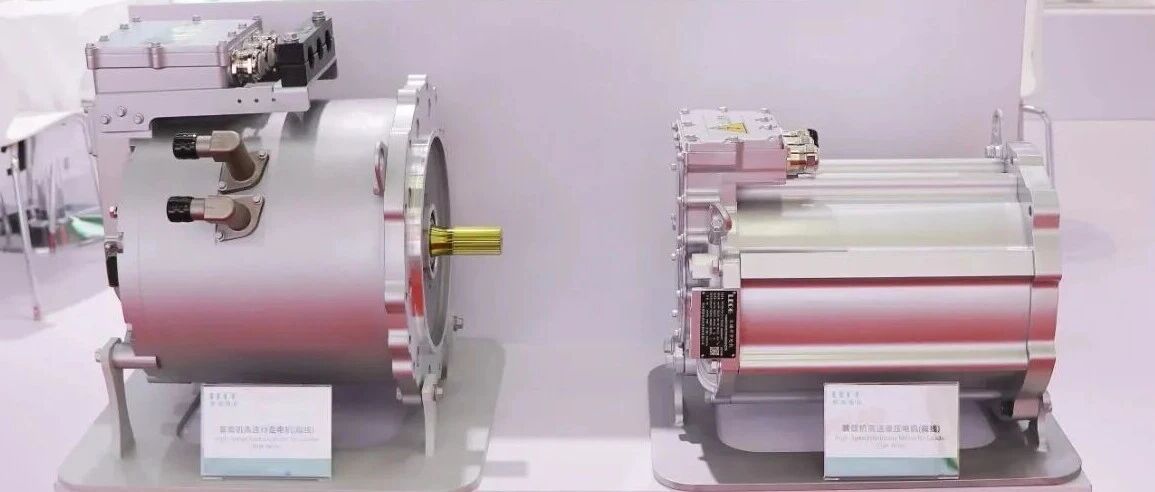
Core Viewpoint - In 2025, Suzhou Langgao Motor Technology Co., Ltd. achieved significant growth driven by the dual forces of the "dual carbon" strategy and the rapid development of the new energy market, solidifying its position as a leading player in the core components of China's new energy sector [1][3]. Group 1: Performance Highlights - In 2025, Langgao Motor's total output value and sales reached historical highs, with over 70% market share in the domestic new energy mining truck motor market and over 30% in the new energy heavy truck motor market [3]. - The company maintained a stable overseas sales growth rate of over 35%, expanding its customer base through deepened cooperation with various domestic and international enterprises [5]. Group 2: Product Innovations - At BICES 2025, Langgao Motor launched a new flat wire motor platform, showcasing a range of products including flat wire stator windings and various electric motors for mining trucks and loaders [6][8]. - The introduction of the flat wire motor platform highlights Langgao's rapid technological iteration and its alignment with industry electrification needs [8]. Group 3: Global Engagement - In 2025, Langgao Motor participated in three major international industry events, showcasing its core technologies and innovative applications across various sectors [9][11]. - The company's presence at these events not only garnered industry recognition but also facilitated global collaboration opportunities [11]. Group 4: Industry Recognition - Langgao Motor received multiple prestigious awards in 2025, including recognition as a "2025 Automotive New Quality Productivity" case, affirming its leadership in the new energy commercial vehicle sector [12][14]. - The company was also awarded the "Annual Heavy Truck Motor Quality Leading Award," reinforcing its status as a quality benchmark in the heavy truck motor field [16]. Group 5: Strategic Financing - In June 2025, Langgao Motor completed a new round of strategic financing led by Guotou Investment, aimed at supporting technological innovation, capacity expansion, and global market layout [18][20]. - This financing is expected to enhance the company's competitive edge in the new energy commercial vehicle and engineering machinery sectors [20]. Group 6: Research and Development - In March 2025, Langgao Motor established a national-level postdoctoral research workstation, marking a new phase in its core technology development and innovation ecosystem [21][23]. - The company has significantly increased its R&D investment in 2025, with over 200 authorized patents and a growing pool of high-level talent to support continuous innovation [23]. Conclusion - Langgao Motor's achievements in 2025 reflect its robust growth and global footprint in the new energy commercial vehicle sector, driven by strategic financing, international presence, and industry accolades [24][25].
新春值守保投产:西安地铁细柳零碳能源中心冲刺调试收尾
Zhong Guo Neng Yuan Wang· 2026-02-11 03:20
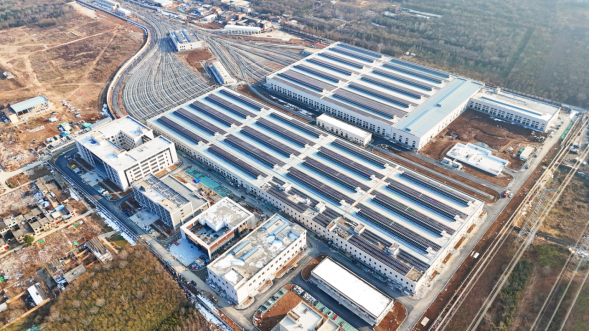
Core Insights - The Xi'an Xiliu Vehicle Depot project is the first hydrogen-powered zero-carbon smart energy center demonstration project in China, which has completed its main construction and is entering the final debugging phase after achieving a key breakthrough in photovoltaic grid connection [1][2]. Group 1: Project Overview - The project, undertaken by China State Construction Engineering Corporation (CSCEC) Silk Road, began construction in May 2025 and has been completed in 8 months, utilizing an innovative energy supply model combining "photovoltaics + electrochemical energy storage + hydrogen fuel cells" [1]. - The project features a complete zero-carbon energy supply system, including an energy exchange station, hydrogen energy, energy storage, control systems, and geothermal heat pump systems, supported by a 7MWp distributed photovoltaic system [1]. Group 2: Current Status and Future Plans - The current focus is on completing system integration testing to ensure all equipment meets production standards, with project manager Lei Qiang emphasizing the importance of addressing technical parameters and details during the final stages [2]. - The project is expected to create over 1,000 jobs and involve more than 30 supporting enterprises during its construction, contributing to the establishment of a hydrogen energy demonstration base in Northwest China [3]. Group 3: Environmental Impact - Upon completion, the project is projected to reduce carbon dioxide emissions by approximately 30,000 tons annually, equivalent to planting 1.67 million trees, thereby supporting the green transformation of the rail transit industry and contributing to the national "dual carbon" strategy in the Northwest region [3].
欧派家居入围国家级绿色工厂
Zheng Quan Ri Bao· 2026-02-11 01:39
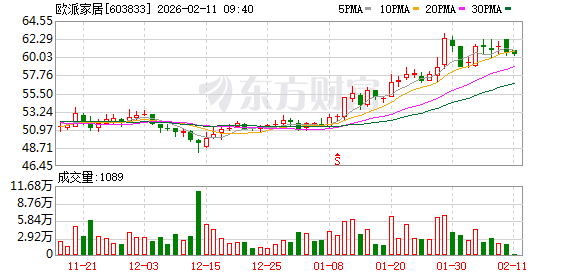
Group 1 - The core point of the article is that Oppein Home Group has been recognized as a "National Green Factory" by the Ministry of Industry and Information Technology, highlighting its commitment to sustainable development and alignment with China's dual carbon strategy [2] - The "National Green Factory" designation represents the highest level of green standards in China's manufacturing industry, focusing on facilities, energy consumption, resources, emissions, and management [2] - The selection process for the green factory designation involved local recommendations and expert evaluations, aiming to identify benchmark enterprises for industrial green development [2] Group 2 - Oppein Home Group's recognition as a green factory complements its existing accolades, including "National Industrial Design Center," "National Service-oriented Manufacturing Demonstration Enterprise," and "2025 China Consumer Brand," creating a comprehensive sustainable development blueprint [2] - The company emphasizes that high-quality development can coexist with green and low-carbon initiatives, ultimately enhancing the quality of life for millions of families [2]

首批混行IGV试跑!这个码头按下智慧港口加速键!
Xin Lang Cai Jing· 2026-02-10 12:41
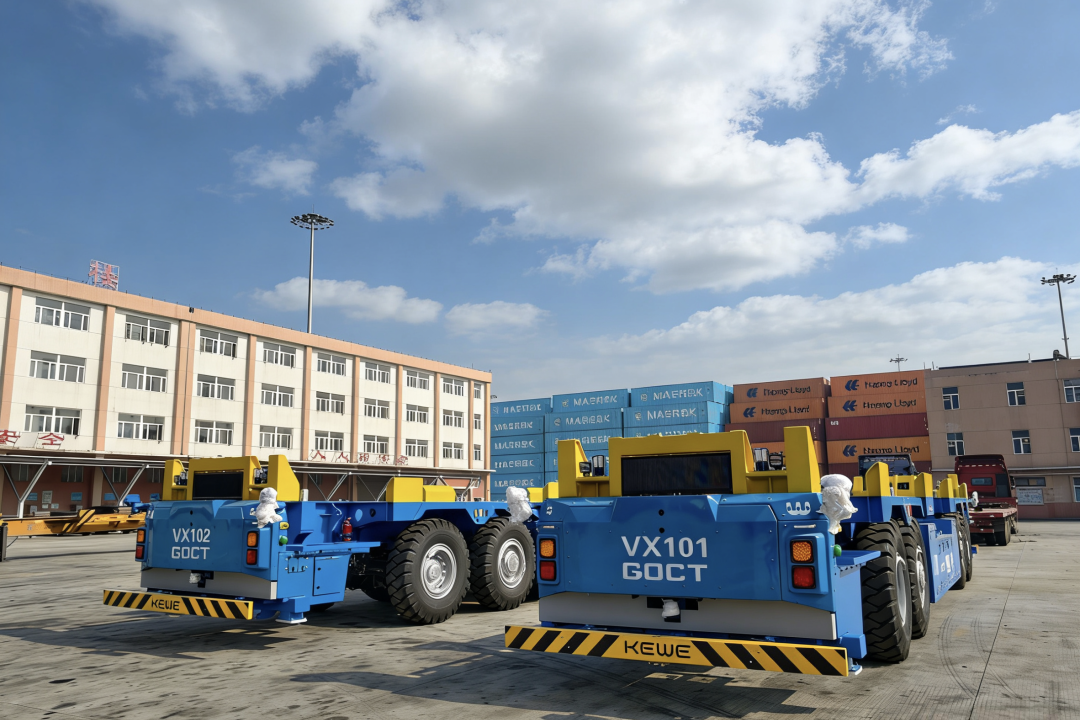
Core Viewpoint - The Nansha Phase II project has successfully implemented autonomous driving technology in container transportation, marking a significant step towards smart and unmanned operations in the port industry [1][5]. Group 1: Autonomous Vehicle Implementation - Two autonomous guided vehicles (IGVs), VX101 and VX102, have been deployed in the Nansha Phase II project, demonstrating the ability to navigate container yards autonomously and safely alongside traditional manned vehicles [1][5]. - The IGVs operate in an open environment, overcoming the limitations of traditional closed operations, allowing for mixed operations with manned vehicles in complex port traffic [3][7]. Group 2: Technological Innovations - The project utilizes a "vehicle-road-cloud" integrated architecture, incorporating 5G networks, Beidou high-precision positioning, AI vision, and multi-modal perception for real-time monitoring and dynamic scheduling in high-risk scenarios [3][7]. - The first batch of IGVs features advanced four-axis, eight-wheel dual-drive design, enabling flexible movement and significantly reducing turning radius, addressing the challenges of maneuvering heavy vehicles in narrow port spaces [3][7]. Group 3: Safety and Efficiency Features - The IGVs are equipped with multiple safety systems, including electronic collision avoidance laser radar and mechanical collision protection devices, enhancing operational safety [3][7]. - The vehicles employ four "smart engines" for enhanced functionality: high-precision environmental perception, global scheduling and path planning, human-machine collaborative operation systems, and a zero-carbon energy system [4][8]. Group 4: Environmental Impact and Sustainability - The IGVs are powered by a pure electric drive platform with an efficient energy recovery system, significantly reducing energy consumption; it is estimated that each vehicle can reduce carbon emissions by approximately 55 tons annually when fully utilizing green electricity [9]. - The Nansha Phase II project aligns with national "dual carbon" strategies, focusing on the smart transformation of traditional ports and integrating digital technology with green development [9].
中国燃气与宁德时代签署战略合作协议 携手推进绿色能源转型
Zheng Quan Ri Bao Wang· 2026-02-10 09:15
Core Insights - China Gas Holdings Limited has signed a strategic cooperation agreement with Contemporary Amperex Technology Co., Limited (CATL) to enhance collaboration in the energy sector and support the national "dual carbon" strategy [1][2]. Group 1: Strategic Cooperation - The cooperation aims to leverage the strengths of both companies to achieve sustainable development in the energy field [1]. - The partnership is seen as a milestone for both companies and the industry, marking a new chapter in the green transformation of traditional energy enterprises [1]. Group 2: Company Strengths - China Gas has a vast energy network covering 200 million people, providing a strong user base and distributed implementation advantages across the country [2]. - CATL is recognized as a global leader in renewable energy innovation, possessing world-class energy storage technology and extensive industrial experience [2]. Group 3: Future Collaboration - The two companies will focus on key areas such as energy storage, biomass energy, and integrated energy services for in-depth collaboration [3]. - They plan to expand their cooperation beyond the domestic market to explore opportunities in the global renewable energy sector [3].


研判2026!中国呋喃二甲酸(FDCA)合成路线、发展历程、产业链图谱、市场规模、竞争格局及发展趋势分析:行业处于发展初期,未来增长潜力巨大[图]
Chan Ye Xin Xi Wang· 2026-02-10 01:30
Overview - Furan-2,5-dicarboxylic acid (FDCA) is recognized as a significant bio-based platform compound, with potential to replace petroleum-based products, particularly in the production of high-performance polymers and chemicals [2][11] - The global FDCA market is projected to grow from $13.8 million in 2022 to $160.32 million by 2025, indicating a strong upward trend in demand [11][12] Industry Development - The FDCA industry in China has evolved through four stages: technical exploration, pilot breakthroughs, industrialization initiation, and scale expansion, with significant projects launched since 2022 [6][10] - The market is currently dominated by European and Chinese companies, with a notable increase in R&D investments in bio-based FDCA [11][12] Market Structure - The FDCA supply chain includes upstream suppliers of raw materials like corn and sugarcane, midstream FDCA production companies, and downstream application markets [8] - The primary application of FDCA is in producing polyethylene furanoate (PEF), which is expected to account for over 90% of demand by 2024, showcasing its advantages over traditional PET materials [10][11] Competitive Landscape - The FDCA market is characterized by high concentration, with the top five companies expected to hold over 90% market share by 2024 [13][14] - Companies like Wanhua Chemical and Hefei Leaf Biotech are actively pursuing technological advancements and production capacity expansions in the FDCA sector [13][14] Future Trends - The FDCA industry is anticipated to focus on technological breakthroughs and optimization of existing production processes, with an emphasis on green and low-carbon production methods [16][18] - The application scope of FDCA is expected to broaden, particularly in green packaging and high-performance engineering plastics, driven by increasing market demand and supportive policies [17][18]


3个月造出千吨甲醇动力船 武昌造船布局新能源船舶前沿技术
Chang Jiang Ri Bao· 2026-02-10 00:33
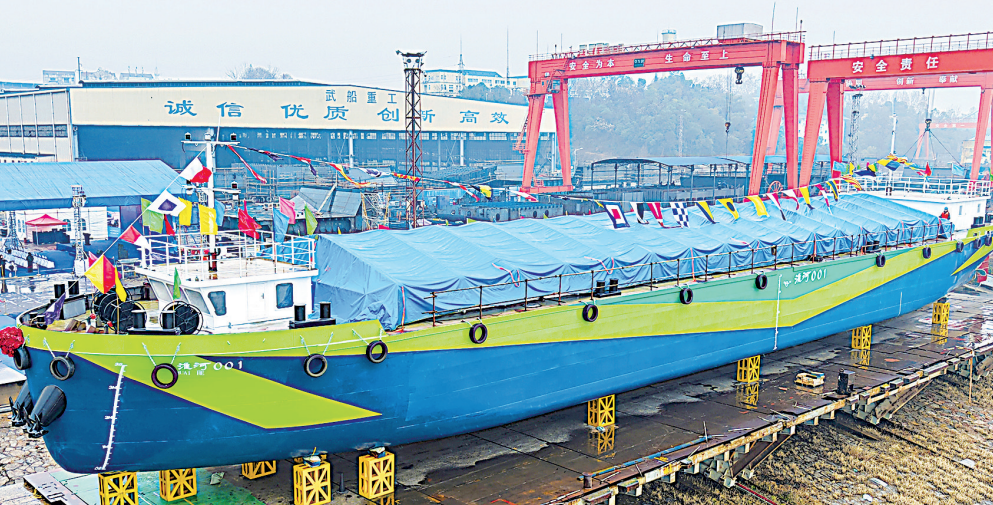
2月6日,由安徽江淮绿色船舶科学研究院投资研发、中船集团武昌造船建造的甲醇动力新能源船舶"淮河001"号在阳逻港 顺利下水,标志着这艘承载绿色航运使命的新型船舶正式迈入系泊试验与交付筹备的全新阶段。 该船是全面践行国家"双碳"战略、助力内河航运绿色高质量发展的又一标志性成果。 该船总长67.4米、型宽11.4米、设计吃水3.40米,为纯甲醇燃料动力散货船,主要承担燃煤运输任务,是目前国内千吨级 船舶中节能效果最优、装载量最大、标准化程度最高的船型之一,也是淮河流域首艘纯甲醇动力船舶,具备显著的示范引领 效应。 甲醇是一种绿色、清洁的燃料,燃烧时可有效减少一氧化碳和碳氢化合物排放。在全球航运业绿色转型加速、"甲醇燃 料"作为低碳清洁能源备受关注的背景下,武昌造船积极布局新能源船舶前沿技术。 项目从设计研发到分段建造,从总组合拢到顺利下水,仅用时3个月。 湖北省港航事业发展中心港口处负责人冯红武表示,"湖北造"电动船舶核心动力系统市场占有率达62%、位居全国第 一,运营绿色动力船舶145艘、位居长江流域第一位。这些成果不仅为长江黄金水道注入了绿色新运力,更成为推动湖北工业 经济发展的强劲动能。 编辑:代婧怡 "内 ...
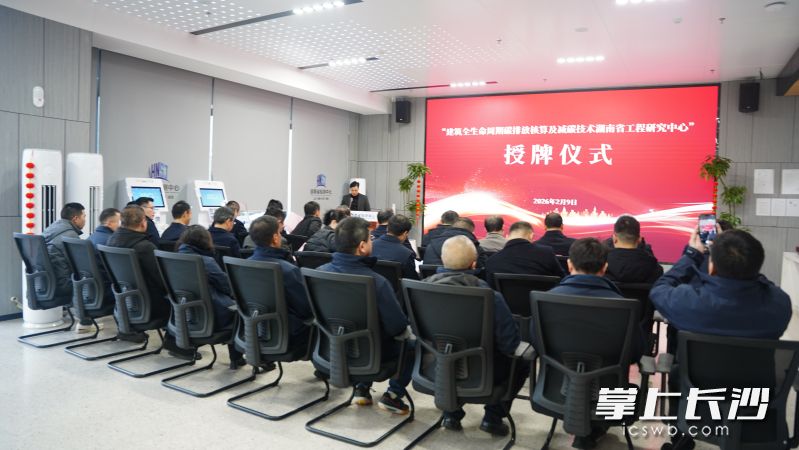
“建筑全生命周期碳排放核算及减碳技术湖南省工程研究中心”正式授牌
Xin Lang Cai Jing· 2026-02-09 13:06
据悉,该中心由湖南省建筑科学研究院有限责任公司牵头,联合湖南省交通科学研究院有限公司、湖南省第六工 程有限公司、湖南建工集团有限公司、中南大学、湖南大学、湘潭大学、湖南城建职业技术学院、长沙市绿色建 筑发展中心等多家企业、高校、科研机构及行业管理部门共同组建,形成了产学研用管深度融合的"创新共同 体"。 湖南省建筑科学研究院党委书记、董事长戴勇军介绍,中心将聚焦"绿色建材、低碳设计、碳计算分析、施工碳 核减、低碳运维、推广孵化"六大研究方向,构建覆盖建筑"研发—设计—计算—施工—运维—推广"全链条的闭环 研究体系,致力于成为连接顶层设计与一线实践的关键桥梁。 长沙晚报掌上长沙2月9日讯(全媒体记者 刘嘉)2月9日,"建筑全生命周期碳排放核算及减碳技术湖南省工程研 究中心"正式授牌成立。记者从参与共建的长沙市绿色建筑发展中心了解到,该中心旨在系统性破解建筑领域碳 减排的关键瓶颈。 该中心是今年1月湖南省发展和改革委员会批复同意设立的46个湖南省工程研究中心之一,标志着湖南省在推动 建筑业绿色低碳转型、服务国家"双碳"战略方面迈出了坚实一步。 长沙市绿色建筑发展中心相关负责人表示,作为该中心的共建单位之一,下一步 ...
刘宁在看望慰问院士专家并调研推动科技创新工作时强调 一体推进教育科技人才改革发展 推动科教强省建设迈出坚实步伐
He Nan Ri Bao· 2026-02-09 11:47
2月8日、9日,省委书记刘宁先后到龙子湖新能源实验室、郑州航空工业管理学院、河南农业大学、省 医学科学院看望慰问院士专家并调研推动科技创新工作,向全省广大教育和科技工作者致以新春祝福。 他强调,要深入贯彻习近平总书记关于科技创新的重要论述和在河南考察时重要讲话精神,一体推进教 育科技人才改革发展,大力引育领军人才和创新团队,全面增强创新体系整体效能,推动科教强省建设 迈出坚实步伐。 "习近平总书记在北京考察科技创新工作时作出重要指示,为我们做好教育科技人才工作进一步指明了 前进方向。"刘宁说,希望广大教育和科技工作者牢记殷殷嘱托,肩负时代重任,勇于开拓创新,聚焦 国家战略需求和我省发展实际,不断激发创业创新创造活力,努力实现更多"从0到1"、"从1到N"的跨 越,为谱写中原大地推进中国式现代化新篇章作出新的更大贡献。有关部门要科学谋划好"十五五"时期 教育科技人才工作,强化"投资于人"理念,深化人才发展体制机制改革,落实落细服务保障措施,不断 做大人才总量、优化人才结构、提升人才素质,为奋进"十五五"、谱写新篇章提供坚实人才支撑。 王刚、陈星参加。(记者 刘婵 张笑闻) 责任编辑: 张家祺 龙子湖新能源实验室 ...