
国资国企改革

Search documents
金元证券资讯晨报-20251223
Jinyuan Securities· 2025-12-23 03:29
Core Insights - The report highlights a mixed performance in international stock markets, with U.S. indices showing gains while European indices experienced slight declines [4][9] - Key developments in the Chinese market include a stable LPR rate and significant corporate announcements, indicating ongoing economic adjustments and strategic initiatives [10][12][13] International Market Overview - U.S. markets saw all three major indices rise, with the Dow Jones up 0.47% to 48,362.68 points, the S&P 500 up 0.64% to 6,878.49 points, and the Nasdaq up 0.52% to 23,428.83 points [4][9] - European markets experienced slight declines, with the DAX down 0.05%, CAC40 down 0.37%, and FTSE 100 down 0.32% [9] - In the Asia-Pacific region, the Hang Seng Index rose 0.43% to 25,801.77 points, and the Nikkei 225 increased by 1.81% to 50,402.39 points [9] Domestic News - The Chinese government is focusing on major projects to stimulate economic growth, as indicated by the recent meeting led by Premier Li Qiang [10] - The Central Economic Work Conference has outlined key reform tasks, including the establishment of a unified national market and the deepening of state-owned enterprise reforms [11] - The People's Bank of China has introduced a one-time credit repair policy aimed at small personal overdue debts, which is expected to support consumer confidence [12] Key Company Developments - In the Chinese concept stock market, the Nasdaq Golden Dragon China Index rose by 0.53%, with notable individual stock performances including a nearly 11% increase for Canadian Solar [13] - Nvidia is reportedly seeking to export its H200 series chips to China by mid-February, with initial orders expected to be between 5,000 to 10,000 modules [13] - Huawei launched its nova15 series smartphones, priced starting at 2,699 yuan, and introduced standardized packages for smart home solutions [13] Research Recommendations - The report recommends monitoring the bond market, noting that the People's Bank of China has restarted 14-day reverse repos to stabilize liquidity, while the bond market is showing signs of weak recovery [14] - The low-altitude economy sector is highlighted, with significant developments such as the establishment of a low-altitude traffic association and the launch of new drone networks by Meituan [14]
解码中央经济工作会议丨破立并举 重点领域改革靶向发力
Xin Hua She· 2025-12-23 02:17
Group 1 - The central economic work conference has outlined key reform tasks focusing on establishing a national unified market construction regulation, addressing "involution" competition, and implementing further state-owned enterprise reforms [1][2] - Experts indicate that the targeted reform tasks for the coming year aim to enhance economic vitality by balancing institutional construction and removing obstacles [1][2] - The conference emphasizes the need for specific measures to improve the efficiency of resource allocation within the unified market, addressing market distortions and promoting fair competition [1][2] Group 2 - The government aims to refine market operation rules, accelerate the establishment of a unified market construction regulation, and eliminate barriers in areas such as resource acquisition and government procurement [2] - The dual approach of activating micro-entity vitality includes further deepening state-owned enterprise reforms and enhancing policies to support the private economy [2][3] - The National Development and Reform Commission highlights the importance of opening competitive sectors to various business entities and supporting capable private enterprises in national projects [3] Group 3 - A series of fiscal and financial reforms have been proposed, including improving the local tax system and advancing the quality and reduction of small and medium-sized financial institutions [3][4] - The reform of the tax system aims to address local fiscal challenges and enhance the financial capacity of local governments [4] - The conference also indicates a potential acceleration in the consolidation of small and medium-sized financial institutions as part of risk prevention and resolution efforts [4]
中原期货晨会纪要-20251223
Zhong Yuan Qi Huo· 2025-12-23 01:54
1. Report Industry Investment Rating No information provided in the content. 2. Core Viewpoints of the Report - The market may have entered a small year - end rally. Overseas liquidity has improved with the Bank of Japan's dovish rate hike and the Fed's dovish stance. A - share liquidity has also been enhanced by large - scale ETF subscriptions and the trend of RMB appreciation. The operation strategy is to focus on the policy mainline, use dips for layout, take profits during rallies, and keep a flexible position [18]. 3. Summary by Relevant Catalogs 3.1 Chemical and Agricultural Product Price Changes - **Chemical Products**: On December 23, 2025, among chemical products, PVC had the largest increase with a rise of 2.679% to 4,714.00 yuan, while yellow soybean 2 had the largest decrease in the agricultural products sector, dropping 7.489% to 3,434.00 yuan [4]. 3.2 Macro - economic News - The central bank introduced a one - time credit repair policy for small - amount personal overdue information. Vanke's 20 - billion - yuan bond extension plan was rejected again, but it won a 30 - trading - day grace period. Precious metals soared on December 22, with gold breaking through $4,440 per ounce and silver exceeding $69 per ounce [6]. - The State Council held a meeting on the preparation of the "15th Five - Year Plan". China's December LPR remained unchanged for the 7th consecutive month. The National People's Congress heard a report on the rectification of audit problems in the 2024 central budget [7]. - The Central Economic Work Conference deployed multiple key reform tasks. The draft of the Childcare Service Law was submitted for its first review [8]. 3.3 Morning Meeting Views on Main Varieties 3.3.1 Agricultural Products - **Sugar**: On December 22, the sugar price rose 0.75%. In the short term, it may show a volatile and slightly stronger pattern, with support near the cost line. One can consider going long on dips [11]. - **Corn**: The corn futures price was flat on December 22. It has entered a volatile pattern, and short - term interval trading can be considered [11]. - **Pigs**: The current hog futures market shows a contradiction between weak reality and strong expectations. There is a weak rebound opportunity, and one can focus on the reverse spread of monthly spreads [11]. - **Eggs**: The egg market is still bearish, and the reverse spread of monthly spreads can be held [11]. - **Cotton**: On December 22, the cotton price rose 0.39%. In the short term, positive factors dominate, and one can go long on dips with support at 14,000 yuan [13]. 3.3.2 Energy and Chemicals - **Urea**: The domestic urea market price is stable. The supply - demand pattern shows a double - reduction, and the UR2605 contract may run in the range of 1,650 - 1,750 yuan [12]. - **Caustic Soda**: The caustic soda market is in an oversupply situation, and the main contract continues to be weak [14]. - **Coking Coal and Coke**: The coking coal supply is relatively loose, and the coking coal and coke market tends to be volatile [13]. - **Logs**: The log market shows a pattern of weak supply and demand, and the price oscillates between 760 - 800 yuan [14]. - **Pulp**: The pulp price has broken through the previous range, but the supply exceeds demand. One should not chase the high price and can pay attention to the support near 5,550 - 5,580 yuan [14]. - **Offset Printing Paper**: The offset printing paper price has broken through the previous pressure level. One should not chase the high and can pay attention to the support at 4,000 yuan [14]. 3.3.3 Non - ferrous Metals - **Copper and Aluminum**: The copper and aluminum market is strong, and they continue to run at high levels, but macro risks should be noted [14]. - **Alumina**: The alumina market is in an oversupply situation and continues to be weak [15]. - **Rebar and Hot - Rolled Coil**: The rebar and hot - rolled coil market maintains an interval oscillation pattern, with rebar in the range of 3,000 - 3,200 yuan and hot - rolled coil in the range of 3,200 - 3,300 yuan [15]. - **Ferroalloys**: The ferroalloy market follows the trend of the black series. One should not chase the high price at the current high level [15]. - **Lithium Carbonate**: The lithium carbonate futures price has broken through the previous range. The short - term upward trend is strong, but the risk of high - level fluctuations increases [15]. 3.3.4 Options and Finance - **Stock Index Futures and Options**: On December 22, the A - share market was strong. Trend investors can focus on the strength - weakness arbitrage opportunities among varieties, and volatility investors can short volatility through the short straddle strategy [16]. - **Stock Index**: The A - share market has shown signs of stabilization. The market may have entered a small year - end rally. One should focus on the policy mainline and keep a flexible position [18].
破立并举 重点领域改革靶向发力
Xin Lang Cai Jing· 2025-12-22 20:23
(来源:经济参考报) 其中,市场层面,要持续完善市场运行规则,加快制定全国统一大市场建设条例,完善市场准入、公平 竞争、质量标准等基础制度。着力破除要素获取、资质认定、招标投标、政府采购等方面壁垒。政府层 面,要持续规范地方政府经济促进行为。加快出台地方招商引资鼓励和禁止事项清单,划清红线底线。 企业层面,要深入整治"内卷式"竞争,加快完善重点行业产能调控机制。 "以制度统一破解市场分割,通过制定全国统一大市场建设条例、整治'内卷式'竞争,打通要素流动堵 点,消除地方保护和市场壁垒,引导企业转向创新驱动的质量竞争,为公平竞争筑牢根基。"中国经济 体制改革研究会副会长彭绍宗说。 双向发力激发微观主体活力 中央经济工作会议提出,制定和实施进一步深化国资国企改革方案,完善民营经济促进法配套法规政 策。"会议以双向发力激活微观主体,落实'两个毫不动摇',夯实经济增长内生动力。"彭绍宗说。 相关部门已明确下一步具体改革举措。国务院国资委日前召开会议传达中央经济工作会议精神,提出围 绕制定和实施进一步深化国资国企改革方案,完善主责主业管理,提升战略功能履行实效;完善中国特 色现代企业制度,提升治理体系建设实效。 近日召开 ...
张玉卓:做强做优做大国有企业和国有资本
Ren Min Ri Bao· 2025-12-22 07:55
Core Viewpoint - The interview with Zhang Yuzhuo, Secretary of the Party Committee and Director of the State-owned Assets Supervision and Administration Commission (SASAC), emphasizes the importance of state-owned enterprises (SOEs) as a pillar of the party's governance and the need for deepening reforms to strengthen and optimize SOEs and state capital during the 14th Five-Year Plan period [2]. Group 1: Enhancing Innovation Capabilities - Central enterprises are identified as the national team for technological innovation, with R&D investments exceeding 1 trillion yuan for three consecutive years, focusing on key technologies such as industrial mother machines and software [3]. - The goal is to enhance mission awareness and focus on solving major technological issues that affect national development and security, aiming for high-level technological self-reliance [3]. - There is a commitment to increase high-quality technological supply and tackle "bottleneck" areas, ensuring more original achievements in critical technologies [4]. Group 2: Reforming State-Owned Enterprises - The 14th Five-Year Plan outlines clear requirements for deepening SOE reforms, with a focus on enhancing core functions and competitiveness [5]. - The strategy includes improving the service capabilities of SOEs in relation to national strategies, emphasizing the importance of aligning SOE functions with national security and public service needs [5]. - There is a push to enhance the modern enterprise system with a focus on governance, management, and talent cultivation to boost operational efficiency [5]. Group 3: Optimizing Industrial Layout - SOEs are working on upgrading traditional industries while simultaneously fostering emerging industries, with an average annual investment growth rate of over 20% in new industries during the 14th Five-Year Plan [7]. - The focus will be on transitioning the industrial system towards higher value-added and technology-intensive sectors, playing a leading role in building a modern industrial system [7]. - Efforts will be made to promote digital transformation in traditional industries and integrate advanced technologies such as AI and big data [8]. Group 4: Developing New and Future Industries - The strategy includes identifying and nurturing new industries with significant growth potential, such as renewable energy and aerospace, while also planning for future technologies like quantum science and 6G [8]. - A specialized and market-oriented investment and financing system will be established to support the development of these industries, utilizing various financial tools and funds [8].
人民日报访张玉卓
财联社· 2025-12-22 00:19
Core Viewpoint - The article emphasizes the importance of strengthening, optimizing, and expanding state-owned enterprises (SOEs) and state capital, highlighting the need for innovation and strategic focus in emerging industries and future sectors [2][3]. Group 1: Enhancing Innovation Capabilities - State-owned enterprises are positioned as the national team for technological innovation, with R&D investments exceeding 1 trillion yuan for three consecutive years, focusing on key technologies such as industrial mother machines and software [4]. - The goal is to enhance self-innovation and original innovation to support high-level technological independence and the construction of a strong technological nation [4]. - There is a commitment to increasing high-quality technological supply and tackling critical areas where other enterprises lack capability, particularly in foundational and common technologies [4]. Group 2: Reforming State-Owned Enterprises - The "14th Five-Year Plan" calls for deepening the reform of state-owned enterprises, with a focus on enhancing core functions and competitiveness [6][7]. - The reform will clarify the functional positioning of various state-owned enterprises, concentrating capital in sectors crucial for national security and public welfare [7]. - There is an emphasis on improving corporate governance and management efficiency, alongside innovative talent recruitment and retention strategies [7]. Group 3: Optimizing Industrial Layout - State-owned enterprises are actively upgrading traditional industries while fostering new industries, with an average annual investment growth rate exceeding 20% in emerging sectors during the "14th Five-Year Plan" [9]. - The focus will be on digital transformation and integrating advanced technologies like AI and big data into traditional industries to enhance productivity and sustainability [9][10]. - Future efforts will include nurturing new industries such as renewable energy, aerospace, and quantum technology, with a structured approach to investment and development [10]. Group 4: Building Investment and Financing Systems - The establishment of a professional and market-oriented investment and financing system is crucial, leveraging state capital investment and operational companies [10]. - The aim is to create a comprehensive investment framework covering all stages from seed to growth, ensuring effective decision-making in industrial investments [10].

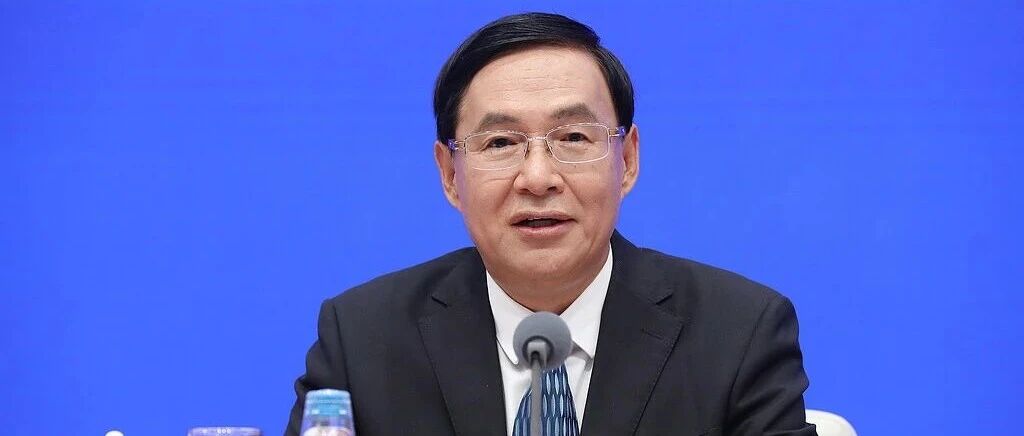
国资委主任张玉卓:做强做优做大国有企业和国有资本
Xin Lang Cai Jing· 2025-12-21 23:57
Group 1: Core Views - The emphasis on state-owned enterprises (SOEs) as a crucial pillar for the governance and prosperity of the party is highlighted by General Secretary Xi Jinping [1][8] - The "14th Five-Year Plan" suggests deepening the reform of state-owned assets and enterprises, aiming to strengthen and optimize SOEs and state capital [1][8] Group 2: Enhancing Innovation Capability - Central enterprises are identified as the national team for technological innovation, with R&D investments exceeding 1 trillion yuan for three consecutive years [2][9] - The focus is on enhancing independent and original innovation to address major technological challenges affecting national development and security [2][9] Group 3: Efficient Transformation of Achievements - There is a push for high-efficiency transformation of technological achievements, including the establishment of major pilot verification platforms and increasing procurement of first sets and first batches of products [3][10] - The aim is to help more innovative results enter the market and create tangible productivity [3][10] Group 4: Reform of State-Owned Enterprises - The next five years will focus on enhancing the service capabilities of SOEs in relation to national strategies, emphasizing strategic security and public service [4][11] - There is a commitment to improving the governance structure of SOEs while strengthening the leadership of the party [4][11] Group 5: Regulatory Effectiveness - The establishment of specialized regulatory bodies for state assets is planned to enhance strategic coordination among management departments [5][12] - A more flexible and targeted regulatory policy framework will be developed to improve the efficiency of oversight [5][12] Group 6: Optimizing Economic Layout - Central enterprises are expected to focus on upgrading traditional industries and nurturing emerging industries, with an annual investment growth rate exceeding 20% in new industries during the "14th Five-Year Plan" [6][13] - The goal is to transition the industrial system towards higher value-added and high-tech sectors [6][13] Group 7: Cultivating Emerging Industries - The implementation of actions to cultivate emerging and future industries will be prioritized, focusing on sectors like renewable energy, aerospace, and advanced materials [7][14] - A comprehensive investment and financing system for industries will be established to support the development of the real economy [7][15]
做强做优做大国有企业和国有资本(权威访谈·学习贯彻党的二十届四中全会精神)
Ren Min Ri Bao· 2025-12-21 22:20
Core Viewpoint - The Chinese government emphasizes the importance of state-owned enterprises (SOEs) as a crucial pillar for governance and national development, with a focus on enhancing their strength and efficiency through reforms outlined in the 14th Five-Year Plan [1]. Group 1: Innovation and Technology - State-owned enterprises are identified as the national team for technological innovation, with R&D investments exceeding 1 trillion yuan for three consecutive years, focusing on key technologies such as industrial mother machines and software [2]. - The goal for the 14th Five-Year Plan is to enhance independent and original innovation capabilities, addressing major technological challenges that affect national security and long-term interests [2]. - There is a commitment to improve the conversion of research results into practical applications, with initiatives to establish major testing platforms and promote the market entry of innovative outcomes [3]. Group 2: Reform of State-Owned Enterprises - The 14th Five-Year Plan outlines clear objectives for deepening the reform of SOEs, focusing on enhancing their core functions and competitiveness [4]. - The reform will prioritize the alignment of SOEs with national strategic needs, ensuring that capital is directed towards critical industries and public services [4]. - There is an emphasis on improving corporate governance within SOEs, strengthening the leadership role of the Communist Party, and enhancing management efficiency [4]. Group 3: Optimization of Economic Layout - SOEs are actively involved in upgrading traditional industries and fostering new ones, with an average annual investment growth rate of over 20% in emerging sectors during the 14th Five-Year Plan [6]. - The focus will be on transitioning the industrial system towards higher value-added and technology-intensive sectors, with SOEs playing a leading role in this transformation [6]. - Initiatives will include digital transformation and the integration of advanced technologies such as AI and big data into traditional industries [6]. Group 4: Future Industry Development - The strategy includes nurturing new and future industries, with a focus on sectors like renewable energy, aerospace, and advanced materials, while also exploring cutting-edge fields such as quantum technology and 6G [7]. - A specialized and market-oriented investment and financing system will be established to support the development of these industries, leveraging state capital and various investment funds [7].
不断增强国有企业核心功能、提升核心竞争力——访国务院国资委党委书记、主任张玉卓
Jing Ji Ri Bao· 2025-12-19 22:09
Core Viewpoint - The article discusses the strategic framework and key tasks outlined in the "Suggestions for Formulating the 15th Five-Year Plan for National Economic and Social Development" approved by the 20th Central Committee of the Communist Party of China, focusing on how state-owned enterprises (SOEs) can implement these directives effectively [1]. Group 1: Strengthening Innovation - State-owned enterprises are identified as a crucial part of the national strategic technology force, with a focus on enhancing independent and original innovation capabilities [2]. - R&D investment by SOEs has exceeded 1 trillion yuan for three consecutive years, targeting critical technologies in areas such as industrial mother machines and software [2]. - The plan emphasizes increasing high-quality technology supply, particularly in areas where other enterprises lack the willingness or capability to invest [2]. Group 2: Efficient Results Transformation - SOEs will leverage their role as "chain leaders" to accelerate the construction of major pilot verification platforms and enhance the application of technological achievements [3]. - There will be a focus on increasing procurement of first sets and first batches of products to promote market entry and productivity [3]. Group 3: High-Level Innovation Ecosystem - The plan aims to gather high-level innovation resources and improve the mechanisms for R&D funding, particularly increasing the proportion of basic research investment [3]. - It calls for deeper integration of industry, academia, and research, as well as international cooperation in innovation [3]. Group 4: Modernizing the Industrial System - The article highlights the need for SOEs to optimize industrial layouts by upgrading traditional industries and developing strategic emerging industries [4]. - Investment in emerging industries has seen an annual growth rate of over 20% during the 14th Five-Year Plan, with a focus on sectors like new energy and high-end equipment manufacturing [4][5]. Group 5: Reforming State-Owned Enterprises - The next phase of SOE reform will focus on enhancing core functions and competitiveness, with an emphasis on strategic security and public service [6]. - The governance structure of SOEs will be improved to strengthen the leadership of the Communist Party and enhance management efficiency [6][7]. Group 6: Building World-Class Enterprises - The plan aims to cultivate a number of world-class enterprises as a reflection of national economic and technological strength [8]. - SOEs will focus on enhancing value creation, innovation capabilities, and modern governance structures to align with global standards [8][9].
国资委主任张玉卓:深入开展新一轮中央企业数字化转型行动 推动人工智能等信息技术与传统产业全过程、全要素深度融合
Xin Hua She· 2025-12-19 13:32
Core Viewpoint - The article discusses the strategic framework outlined in the "Suggestions for Formulating the 15th Five-Year Plan for National Economic and Social Development," emphasizing the role of state-owned enterprises (SOEs) in enhancing innovation, solidifying the real economy, and deepening reforms in state-owned assets and enterprises [1]. Group 1: Strengthening Innovation - State-owned enterprises are identified as a key force in national technological innovation, with R&D investments exceeding 1 trillion yuan for three consecutive years, focusing on critical technologies [2][3]. - The plan includes increasing high-quality technological supply, particularly in areas where private enterprises lack capability, to produce more original and leading results [2]. - The transformation of technological achievements into practical applications will be accelerated, with a focus on building major pilot platforms and enhancing procurement of first sets of products [3]. Group 2: Modernizing the Industrial System - The article highlights the need for SOEs to optimize industrial layouts by upgrading traditional industries and developing strategic emerging industries, with an average annual investment growth rate of over 20% in emerging sectors during the 14th Five-Year Plan [4][5]. - Emphasis is placed on digital transformation and the integration of advanced technologies like AI, big data, and 5G into traditional industries to promote intelligent and green development [5]. Group 3: Reforming State-Owned Enterprises - The article outlines the next steps in the reform of state-owned enterprises, focusing on enhancing core functions and competitiveness while aligning with national strategic needs [6][7]. - A new regulatory framework will be established to improve the effectiveness of state asset supervision, ensuring a balance between flexibility and control [7]. Group 4: Building World-Class Enterprises - The article stresses the importance of cultivating world-class enterprises as a reflection of national economic and technological strength, with SOEs leading initiatives to enhance value creation, innovation, and governance [8][9]. - The focus will be on improving internal value, integrating innovation with industry, and enhancing resource allocation capabilities to better engage in global markets [8].