多元化发展

Search documents
从扫地机器人到"超豪华纯电",追觅官宣造车!
Guo Ji Jin Rong Bao· 2025-08-28 07:00
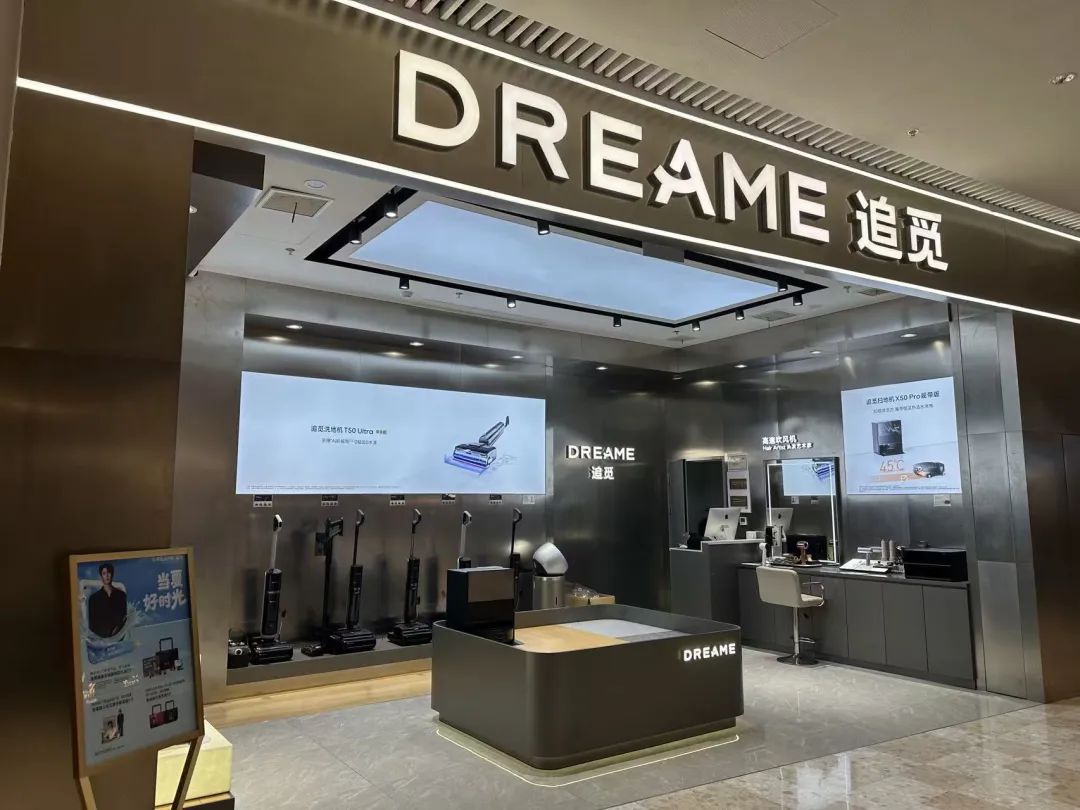
Core Viewpoint - The company, Chasing Technology, has officially announced its entry into the automotive industry, planning to launch its first ultra-luxury electric vehicle by 2027, aiming to establish a new order in the ultra-luxury market as a "Chinese brand" [1][3]. Company Summary - Chasing Technology has formed a nearly 1,000-person team dedicated to vehicle manufacturing and is continuously expanding its efforts in the automotive sector [1]. - The company has a strong foundation in technology, leveraging its experience in smart hardware to transition into the automotive field, particularly in electric drive systems, intelligent cockpits, and autonomous driving [3][4]. - As of May 2025, Chasing Technology has obtained 3,155 global authorized patents and has filed a total of 6,379 patent applications, providing substantial support for its automotive ambitions [3]. Industry Summary - The electric vehicle industry has seen rapid evolution, with major tech companies like Huawei and Xiaomi also entering the market, indicating a highly competitive landscape [3]. - The global market for robotic vacuum cleaners is projected to reach 20.603 million units in 2024, reflecting an 11.2% compound annual growth rate from 2022, with market size expanding from $7.8 billion to $9.31 billion, a growth of 19.4% [4]. - The competitive landscape in the cleaning appliance market is intensifying, with the top five brands expected to capture over 60% of the global market share by 2024, four of which are Chinese brands [4].


华润置地20250827
2025-08-27 15:19
Summary of China Resources Land Conference Call Company Overview - **Company**: China Resources Land - **Period**: First half of 2025 Key Financial Performance - **Revenue**: Achieved revenue of 949.2 billion RMB, a year-on-year increase of 19.9% [3] - **Net Profit**: Shareholder net profit reached 118.8 billion RMB, up 16.2% year-on-year; core net profit slightly decreased by 6.6% to 100 billion RMB [3] - **Settlement Revenue**: Recorded settlement revenue of 744 billion RMB with a signed contract amount of 1,103 billion RMB, maintaining a top-three position in the industry [2][3] - **Retail Revenue**: Shopping center retail revenue reached 1,101 billion RMB, a 20.2% increase year-on-year, with same-store sales growth of 9.4% [2][3] Financial Management Highlights - **Debt Ratios**: Total interest-bearing debt ratio maintained at 40.7%, with net interest-bearing debt ratio at 39.2% [2][4] - **Cash Reserves**: Cash reserves amounted to 1,202 billion RMB [2][4] - **Weighted Financing Cost**: Decreased to 2.79%, the lowest in nearly a decade [2][6] Business Diversification and Growth - **Recurring Revenue**: Over 50% of revenue derived from recurring business [2][8] - **Market Capitalization**: China Resources Commercial's market value surpassed 100 billion RMB, with a 70% increase since the listing of China Resources Youchao REITs [2][8] - **Event Revenue**: Sports venue business generated 1.4 billion RMB in revenue [8] Strategic Business Model - **3+1 Integrated Business Model**: Focus on high-quality assets in core cities, product reshaping, and organizational transformation to enhance competitiveness [2][9] - **Response to Market Changes**: Emphasis on diversified brand combinations and high-energy national strategies to adapt to structural changes in consumer markets [2][20] Shopping Center Performance - **Occupancy Rates**: Overall occupancy rate improved to 97.3% [10] - **Customer Engagement**: Daily average foot traffic increased to 48,000, with membership numbers rising by 18.5% to 72.37 million [10] Office and Hotel Business Performance - **Office Revenue**: Rental income from office business was 8.2 billion RMB, a decline of 14.2% [11] - **Hotel Revenue**: Hotel business revenue fell to 8.7 billion RMB, down 16.3% [12] Asset Management and Light Asset Management - **Asset Management Scale**: Reached 4,835 billion RMB, a 4.6% increase from the end of 2020 [13] - **Light Asset Management**: Managed 125 shopping centers with a total area of 13.56 million square meters [14] Future Outlook and Strategic Planning - **Growth Strategy**: Focus on high-quality development through integrated business lines and sustainable practices [19] - **Market Positioning**: Aim to maintain a leading position in the industry while adapting to market dynamics and consumer needs [19][36] Challenges and Responses - **Market Environment**: Acknowledgment of pressures in the real estate market, with strategies in place to stabilize performance [26][36] - **Sales Strategy**: Emphasis on optimizing project management and enhancing customer acquisition capabilities [36] Conclusion China Resources Land demonstrates strong financial performance and strategic adaptability in a challenging market environment, focusing on diversified growth, effective financial management, and a commitment to high-quality development. The company is well-positioned to leverage its competitive advantages and respond to evolving market conditions.

海底捞上半年业绩双降,员工比年初减少6794人
Jing Ji Guan Cha Wang· 2025-08-27 11:47
Core Insights - Haidilao's revenue for the first half of 2025 was 20.703 billion yuan, a year-on-year decrease of 3.66%, with net profit attributable to shareholders at 1.759 billion yuan, down 13.72% [1] - The company experienced a shift in its restaurant operations, with a decrease in self-operated restaurants and a significant increase in franchise locations [1][2] - The decline in performance is attributed to a decrease in table turnover rates and initial adjustments in product and service innovation [1][2] Financial Performance - Restaurant operating income for the first half of 2025 was 18.58 billion yuan, a decrease of 8.97% compared to the same period in 2024 [2] - The takeaway and other restaurant income saw significant increases, recording 928 million yuan and 596 million yuan respectively, which helped mitigate the overall decline [2] - Employee count decreased to 130,384 as of June 30, 2025, down from 143,034 a year earlier, with total employee costs amounting to 6.988 billion yuan [2] Market Position and Competition - The competitive landscape in the hot pot sector is intensifying, with emerging competitors like Banlu Maodu and the rise of Cantonese hot pot posing challenges to Haidilao's market share [2] - Haidilao is exploring both high-end and lower-tier market segments, including the launch of a premium store in Beijing and a budget-friendly self-service hot pot brand [3] - The company plans to continue diversifying its operations and enhancing dining experiences while strategically seeking acquisitions to enrich its business model [3]

大千生态:积极探索应对挑战,多元布局初显增长潜力
Zheng Quan Shi Bao Wang· 2025-08-27 11:19
Core Viewpoint - Daqian Ecological's performance in the first half of 2025 shows mixed results, with a significant decline in its core ecological construction business, while the cultural tourism operation business has seen substantial growth [1][2] Financial Performance - The company reported a revenue of 55.15 million yuan in the first half of 2025, an increase of 10.02% year-on-year [1] - The net profit attributable to shareholders was -15.90 million yuan, and the net profit excluding non-recurring items was -16.31 million yuan [1] - The ecological construction business experienced a revenue decline of 86.64% compared to the same period last year [1] Business Development - The cultural tourism operation business achieved a revenue growth of 116.85% year-on-year, becoming a significant contributor to the company's overall revenue [1] - The company is focusing on expanding its business in economically developed regions and prioritizing orders with guaranteed payments to stabilize its ecological construction business [1] Diversification Strategy - Daqian Ecological established a wholly-owned subsidiary, Jiangsu Qianchongjia Technology Co., Ltd., in March 2025, entering the pet services and sales sector [2] - The pet services and sales business generated a revenue of 9.08 million yuan during the reporting period, with 20 "Chongpangpang" brand stores opened in major cities [2] - The company plans to continue expanding its pet business and enhance its online and social media sales channels to create a diversified sales network [2]

“世界超市”新变化:圣诞用品出货忙 商户创新谋突围
Shang Hai Zheng Quan Bao· 2025-08-24 17:47
Core Insights - The article highlights the significant changes in the Christmas goods export market in Yiwu, with a notable increase in production and shipment timelines, driven by evolving customer demands and market dynamics [1][3]. Group 1: Market Trends - Yiwu's Christmas goods export peak has advanced by 1 to 2 months compared to previous years, with orders starting as early as February and March due to concerns over logistics delays and tariff fluctuations [3]. - In May alone, Yiwu's export volume saw a year-on-year increase of over 90%, with an average of more than 1,200 containers cleared daily at Yiwu Port [3]. Group 2: Customer Base Evolution - There is a noticeable shift in the customer base, with orders from Latin America and countries involved in the Belt and Road Initiative significantly increasing, becoming a new driving force for exports [4]. - In the first half of the year, sales of Christmas goods rose by approximately 5%, with orders from Colombia and Mexico increasing nearly fivefold compared to previous years [4]. Group 3: Innovation and Adaptation - Many Yiwu enterprises are responding to external pressures by diversifying their product offerings and enhancing brand development, moving beyond simple processing to focus on innovation [5][6]. - Companies are introducing new design concepts and personalized, intelligent products, while also participating in international exhibitions and expanding online channels to boost product visibility and value [5].

京东健康上半年营收352.9亿元 单一依赖与竞争加剧或致隐忧
Xi Niu Cai Jing· 2025-08-22 03:21
Core Viewpoint - JD Health has demonstrated strong growth in its financial performance for the first half of 2025, yet it continues to be labeled as an "internet pharmacy" due to its reliance on pharmaceutical sales [2][5][8]. Financial Performance - For the first half of 2025, JD Health reported revenue of 35.29 billion RMB, a year-on-year increase of 24.5% [3]. - The non-IFRS profit for the same period was 3.57 billion RMB, reflecting a growth of 35.0% [2][3]. - Gross profit reached 8.89 billion RMB, up 32.7% compared to the previous year [2][3]. Revenue Composition - The revenue from pharmaceutical and health product sales amounted to 29.33 billion RMB, representing a year-on-year growth of 22.7% [6]. - Revenue from online platforms, digital marketing, and other services contributed 6 billion RMB, with a growth rate of 34.4% [3][6]. - Over 83% of JD Health's revenue is derived from the sale of pharmaceuticals and health products, indicating a heavy reliance on this segment [5][6]. Marketing and User Engagement - Marketing expenditures for JD Health increased to 1.8 billion RMB, a rise of 28.8% year-on-year, primarily due to higher promotional and advertising costs [4]. - User growth has slowed, and the rising cost of customer acquisition poses challenges, especially with competitors like Alibaba Health and Ping An Good Doctor entering the market [7]. Challenges and Future Outlook - The heavy dependence on pharmaceutical sales may weaken JD Health's resilience to market fluctuations and regulatory changes [5][6]. - Recent marketing campaigns have faced criticism from users, highlighting issues with customer service and engagement [7]. - To ensure sustainable growth, JD Health must diversify its business model and move beyond the "internet pharmacy" label [8].


泸州老窖跨界文旅,3000万注册资本成立新公司!
Sou Hu Cai Jing· 2025-08-21 02:26
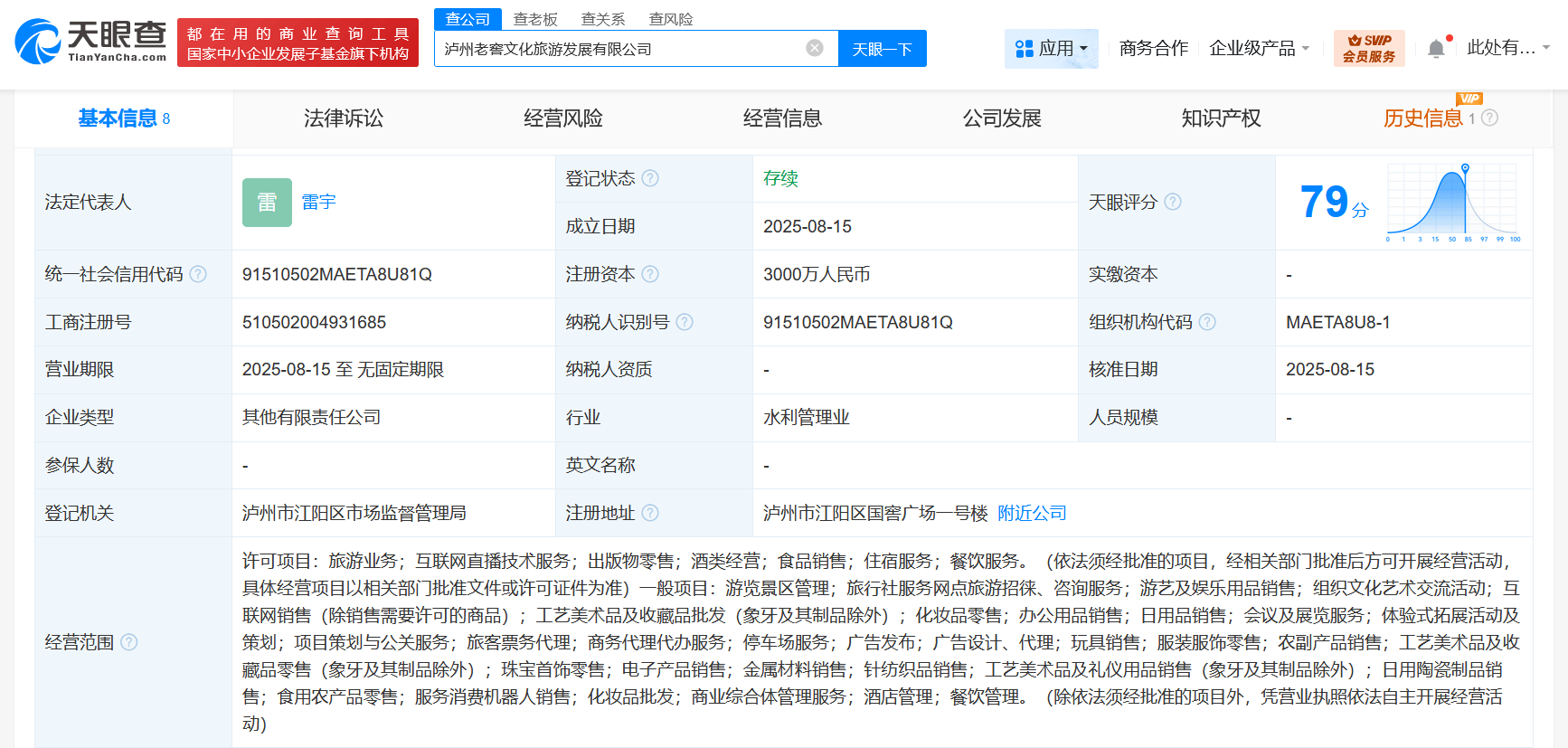
Core Viewpoint - The establishment of Luzhou Laojiao Cultural Tourism Development Co., Ltd. signifies Luzhou Laojiao Group's strategic expansion into the cultural tourism sector, reflecting its ambition to diversify its business operations [1][3]. Company Overview - Luzhou Laojiao Cultural Tourism Development Co., Ltd. has a registered capital of 30 million RMB and is legally represented by Lei Yu [1][2]. - The company operates in various sectors, including tourism, internet live streaming services, retail of publications, liquor sales, food sales, accommodation services, and catering services [1][2]. Business Scope - The company's business scope includes management of scenic spots and travel agency services, indicating a comprehensive approach to cultural tourism [1][2]. - The diverse business layout demonstrates Luzhou Laojiao's ambition in the cultural tourism field [1]. Market Trends - The rise in living standards and changing consumer attitudes have made cultural tourism a new consumption trend, which Luzhou Laojiao is responding to by leveraging its cultural resources and brand advantages [3]. - The establishment of the new company is expected to inject vitality into the local economy, promoting employment and economic growth through the development of the cultural tourism industry [3]. Strategic Importance - The formation of Luzhou Laojiao Cultural Tourism Development Co., Ltd. represents a strategic choice for the company in response to market trends and is a significant step towards diversification [3]. - The company is anticipated to enhance Luzhou Laojiao's brand influence and market competitiveness, laying a solid foundation for future development [3].

格力 “董明珠健康家” 更名引猜测 或为加码上线做铺垫
Xi Niu Cai Jing· 2025-08-19 09:15
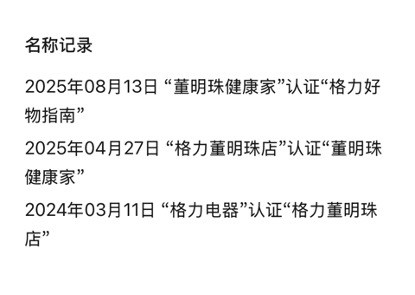
Core Viewpoint - Gree Electric's recent renaming of its WeChat public account from "Dong Mingzhu Health Home" to "Gree Good Product Guide" has sparked speculation about the potential abandonment of the former name, but internal sources clarified that the change is part of preparations for the launch of an online store [1][2]. Group 1 - The renaming of the WeChat account is due to Tencent's platform rules that prevent two accounts from sharing the same name, necessitating the change to facilitate the upcoming online store [2]. - Dong Mingzhu, the leader of Gree, has been highly visible recently, making bold statements about the company's products, emphasizing the importance of using Gree appliances [2]. - Gree is actively reforming its distribution channels and focusing on enhancing its online sales presence, indicating a strategic shift towards e-commerce [2]. Group 2 - Gree has been diversifying its business beyond traditional air conditioning, venturing into refrigerators, washing machines, small appliances, and even the new energy vehicle sector, although air conditioning remains its primary revenue source [2]. - The public account was renamed back to "Dong Mingzhu Health Home" shortly after the initial change, indicating a possible reconsideration of branding strategy [3].

和而泰半年净利增78.6%现金流转正 投超3亿研发市场份额进一步提升
Chang Jiang Shang Bao· 2025-08-18 00:19
Core Insights - The company, Heertai, achieved significant growth in revenue and profit in the first half of 2025, with revenue reaching 5.446 billion yuan, a year-on-year increase of 19.21%, and net profit attributable to shareholders of 354 million yuan, up 78.65% [1][3] - The growth is attributed to the increase in new customers and project deliveries, as well as a continuous rise in market share [1][3] - The company's operating cash flow turned positive, amounting to 147 million yuan, a significant improvement from the previous year's negative cash flow [3][4] Financial Performance - In the first half of 2025, Heertai's net profit approached the total for the entire year of 2024, while the non-recurring net profit exceeded the full-year figure for 2024 [3] - The non-recurring net profit for the first half of 2025 was 347 million yuan, reflecting a year-on-year increase of 97.24% [3] Business Segments - The home appliance controller business remains the core of Heertai's operations, generating 3.563 billion yuan in revenue, a 22.14% increase [5] - The electric tools segment, serving major clients like TTI and HILTI, reported revenue of 535 million yuan, up 8.32% [5] - The intelligent products segment, including smart controllers and AI service platforms, generated 618 million yuan, a 9.92% increase [6] - The automotive electronics segment achieved revenue of 415 million yuan, growing by 5.20% [6] Research and Development - Heertai's R&D expenses reached a record high of 309 million yuan in the first half of 2025, marking a 16.81% increase year-on-year [6] - The company has invested a total of 1.926 billion yuan in R&D over the past five years, with over 2,000 patents filed [6] Global Expansion - Heertai has established manufacturing bases in multiple countries, including China, Vietnam, Italy, Romania, and Mexico, enhancing supply chain resilience and delivery agility [7] - In the first half of 2025, international revenue grew by 22.13% to 3.608 billion yuan, outpacing domestic revenue growth of 13.86% [7]

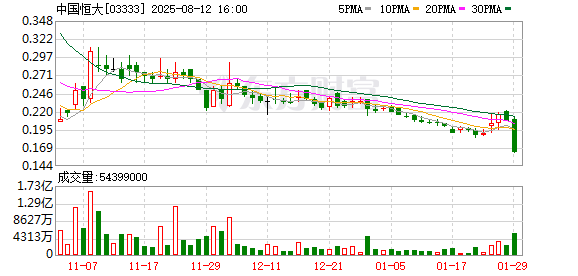
从“万亿”到终局,许家印的中国恒大进入“倒计时”,将于8月25日9时起取消上市地位
Mei Ri Jing Ji Xin Wen· 2025-08-12 12:20
Core Viewpoint - China Evergrande Group, once a leading real estate company, is facing delisting from the Hong Kong Stock Exchange due to failure to meet the resumption guidelines set by the exchange, marking the end of its capital market journey after four years of turmoil [2][4]. Group 1: Company History and Performance - China Evergrande was listed on the Hong Kong Stock Exchange on November 5, 2009, with a closing price of HKD 4.7 per share, marking a significant entry into the capital market [14][15]. - The company rapidly expanded using a high-leverage model, becoming a major player in the real estate sector, particularly in third- and fourth-tier cities in China [16]. - In 2017, the company's market capitalization peaked at HKD 400 billion, and its founder, Xu Jiayin, became the richest person in China with a net worth of CNY 290 billion [17][19]. Group 2: Financial Troubles and Legal Issues - In January 2024, the Hong Kong High Court issued a winding-up order against China Evergrande, leading to a countdown to delisting [4]. - The company has faced multiple winding-up orders for its subsidiaries, and the appointed liquidators are focused on investigating the company's affairs and recovering assets for creditors [5][6]. - The liquidators have filed lawsuits against Xu Jiayin and other executives for alleged breaches of duty related to financial statements from 2018 to 2020, seeking approximately USD 6 billion in dividends and compensation [6][13]. Group 3: Recent Developments - As of March 2023, the liquidators have not found a restructuring plan that would allow the company to meet the resumption guidelines and resume trading [6]. - Following a 500-day suspension, China Evergrande resumed trading in August 2023, but the stock price plummeted, leading to a final delisting announcement on August 12, 2025 [20].