
对等关税

Search documents
美国关税最新“B计划”曝光:《贸易法》第301条、122条
Xin Lang Cai Jing· 2025-11-23 14:49
Core Points - The White House is gradually changing its tariff strategy in response to high domestic inflation and uncertainties following a Supreme Court tariff hearing [1] - The Trump administration is preparing a backup plan to impose tariffs unilaterally under Sections 301 and 122 of the Trade Act if "reciprocal tariffs" are overturned [1][3] - The Supreme Court is currently hearing lawsuits led by small importers and Democratic states, challenging the legality of tariffs imposed under the International Emergency Economic Powers Act (IEEPA) [3] Group 1 - The Trade Act Section 301 allows investigations into "unreasonable or unjust trade practices" and has been used over 130 times historically, with 35 investigations initiated post-1995 [1] - Section 122 of the Trade Act permits the President to impose tariffs of up to 15% for a maximum of 150 days [3] - The Department of Commerce has initiated new investigations under Section 232 of the Trade Expansion Act, targeting industries such as metals and automobiles, with potential implications for a wide range of manufacturing sectors [3] Group 2 - The White House has recently adjusted the scope of "reciprocal tariffs," excluding various agricultural products such as coffee, bananas, and beef from additional tariffs [4] - The updated tariff exemptions and potential adjustments for "allied partners" have been released [4] - The changes took effect starting November 13 [5]

申万宏观·周度研究成果(11.15-11.21)
赵伟宏观探索· 2025-11-22 17:10
Group 1 - The article discusses the macroeconomic outlook for 2026, emphasizing the need to leverage reforms for economic benefits and identifying potential opportunities in various sectors [7][8]. - It highlights the "15th Five-Year Plan" as a crucial period for China's modernization, focusing on restructuring economic growth logic and promoting inclusive growth [11][12]. - The article outlines three main themes for the "15th Five-Year Plan": intelligent transformation, green transformation, and integrated development [11]. Group 2 - The article provides insights into the recent sharp decline in fiscal spending, attributing it to high base effects, declining revenues, and a reduction in government debt financing [14]. - It raises questions about the implications if "reciprocal tariffs" are deemed illegal, suggesting potential shifts in trade dynamics [15].

印度跌倒,越南吃饱!特朗普扶一踩一?
Sou Hu Cai Jing· 2025-11-21 12:53
Core Viewpoint - The article discusses the contrasting economic outcomes for India and Vietnam due to U.S. tariff policies, highlighting Vietnam's unexpected economic growth while India struggles under the same conditions [1][15]. Group 1: Economic Performance - Vietnam's GDP growth for Q3 reached 8.23%, a significant increase compared to the previous 5-7% range over the past decade [3]. - The manufacturing sector in Vietnam is thriving, with production value growth exceeding 10% in Q3 2025, a rare occurrence amid global manufacturing downturns [6]. Group 2: Export Dynamics - Vietnam's exports to the U.S. have surged, particularly in clothing, furniture, and electronics, positioning the country as a key supplier for American consumers [4][5]. - The U.S. tariff agreement inadvertently provided Vietnam with exemptions for critical products, allowing its GDP engine to remain intact and leading to a surge in exports [8]. Group 3: Foreign Investment - Foreign Direct Investment (FDI) in Vietnam has seen a 45% increase in committed amounts for 2025, with major companies like Samsung and Apple expanding their operations [7]. Group 4: Risks and Dependencies - Vietnam's economy is heavily reliant on the U.S., with 30% of its exports directed there, making it vulnerable to changes in U.S. policies [11]. - The manufacturing sector's reliance on foreign investment is high, with 74% of exports coming from foreign entities, raising concerns about sustainability if major companies withdraw [12]. - Domestic demand in Vietnam is weak, with retail growth projected to be below 3% in 2025, indicating a reliance on external factors for economic stability [13].

物价上涨引不满 特朗普取消部分巴西农产品40%关税
Zhong Guo Xin Wen Wang· 2025-11-21 09:41
物价上涨引不满 特朗普取消部分巴西农产品40%关税 中新网11月21日电(记者 宫宏宇)据路透社报道,美国总统特朗普20日宣布,取消对部分巴西农产品加征 的40%关税,范围包括牛肉、咖啡、可可和水果。 根据白宫法令,这一措施从11月13日零点起生效,13日零点后相应产品已收的关税或将被退还。 编辑:王永乐 就在上周五,特朗普还签署行政令,调整此前发布的"对等关税"清单,豁免了4月来对多个国家牛肉、 西红柿等农产品加征的关税。 路透社指,白宫相关关税政策的"急转弯",旨在回应美国民众对生活成本上涨的担忧,标志着特朗普立 场的重大转变。 一段时间来,特朗普政府关税已推高美国食品价格。近期,牛肉价格大涨至历史高位,引发民众不满。 在价格影响下,不少美国消费者转向鸡肉作为替代蛋白质来源。 巴西牛肉行业组织ABIEC对此次关税调整表示,这显示了贸易谈判的有效性。 路透社提到,当前,美国是全球最大咖啡消费国,巴西供应着美国所需三分之一的咖啡。此外,巴西最 近还成为了美国重要的牛肉供应国,提供制作汉堡包的牛肉来源。(完) 来源:中国新闻网 广告等商务合作,请点击这里 本文为转载内容,授权事宜请联系原著作权人 中新经纬版权所 ...


Top Charts | 如果“对等关税”被判违法?
申万宏源证券上海北京西路营业部· 2025-11-21 02:08
Group 1 - The article discusses the potential legal outcomes regarding the "reciprocal tariffs" in the U.S., with a high probability of being deemed illegal but possibly delayed in effect to avoid public disorder [4][20]. - The Supreme Court's debate shows a split opinion, with 6 justices leaning towards declaring the tariffs illegal and 3 supporting their legality, citing reasons such as the authority of Congress over tariffs and the original intent of the IEEPA legislation [4][20]. - Three possible scenarios for the Supreme Court's ruling are outlined: a high probability of ruling illegal with a delay, a moderate probability of partial illegality, and a low probability of upholding the legality of the tariffs [6][20]. Group 2 - If the reciprocal tariffs are invalidated, Trump may resort to other tariff provisions such as Sections 232, 301, and 338, with a short-term transition using Section 122 global tariffs [9][21]. - The current investigations under Section 232 cover an import scale of $544.4 billion, with most reports expected in the first half of next year [9][21]. - The likelihood of comprehensive tariff refunds is low, while targeted refunds are more probable, as judicial remedies must align with the harm suffered by plaintiffs [21]. Group 3 - The current tariff structure shows reciprocal tariffs accounting for 45%, Section 301 tariffs for 18%, Section 232 tariffs for 17%, and base tariffs for 19% [11][22]. - For the fiscal year 2025, the expected revenue from reciprocal tariffs is $89 billion, with significant contributions from fentanyl tariffs and Section 301 tariffs [11][22]. - If reciprocal tariffs are deemed illegal, the overall tariff levels may decrease by 25%, with potential revenue dropping to $255.4 billion [22].

特朗普突发!降息大消息!美股跳水暴跌!黄金突变!
Zheng Quan Shi Bao· 2025-11-20 23:55
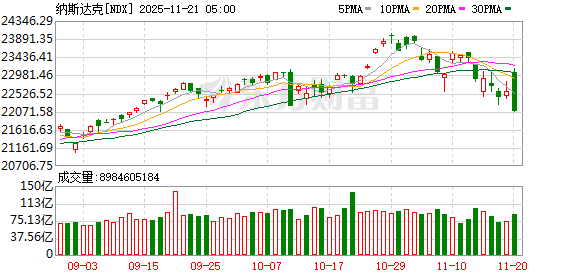
美股,突现集体暴跌。虽然9月经济数据出炉,但两位美联储官员突然"鹰派"表态,反对12月降息,而 特朗普此前威胁,若美联储不降息,他将解雇财政部长斯科特·贝森特。此外,所谓对等关税方面,特 朗普也有新消息。 昨夜,美股高开后集体跳水,截至收盘,道指跌0.84%报45752.26点,标普500指数跌1.56%报6538.76 点,纳指跌2.15%报22078.05点。 中概股普遍下跌,纳斯达克中国金龙指数跌3.26%,个股方面,阿特斯太阳能跌近19%,信也科技跌超 14%。 黄金方面,震荡突然加剧,昨日一度冲上4100美元后回落,今早现货黄金拉升,截至发稿,涨至4080美 元附近。 周四,美国一系列经济数据终于姗姗来迟,美国9月季调后非农就业人口增11.9万人,预期增5万人,前 值增2.2万人,失业率为4.4%,升至2021年10月来最高,预期4.3%,前值4.3%。 虽然相关数据加大了交易员对美联储降息的押注,但预计美联储仍将跳过今年12月的降息。 美联储方面,又有两位官员表态。 美联储哈马克对进一步降息提出明确反对,她认为,持续高企的通胀水平要求央行采取更具限制性的货 币政策立场,这为市场未来的利率预期增添了 ...
畅途融资租赁(用心聆听需求:联通志愿者让畅途融资租赁科技智能服务更有温度)
Sou Hu Cai Jing· 2025-11-20 05:14
Group 1 - Chuangtu Financing Leasing has published a notice regarding its customer service hotline for handling early repayment and account cancellation issues [1] - The hotline number is 0085268746528, and it aims to improve user service [1] Group 2 - U.S. President Trump stated that Russian President Putin offered assistance in resolving issues related to Iran [3] - U.S. Vice President Pence mentioned that Trump made the final decision to proceed with a military strike just minutes before it occurred [3] - The World Trade Organization held a meeting in Geneva where China announced it has granted zero tariff treatment on 100% of products to all least developed countries that have diplomatic relations with it [3] Group 3 - The article discusses how the Federal Reserve utilizes interest rate cycles to exert influence globally, suggesting that there are opportunities for risk-free profits during these cycles [4] - It critiques the U.S. narrative on "reciprocal tariffs," highlighting the significant trade surplus the U.S. has from intangible goods like patents and financial services [4][6] - The article argues that the current profitable avenues are not in traditional manufacturing but in financial markets and intellectual property [6]

特朗普带美国去往何方?美B计划曝光,对等关税会被取消吗?
Sou Hu Cai Jing· 2025-11-18 09:10
Group 1 - The core issue revolves around the legality of Trump's "reciprocal tariffs" policy, which has led to significant legal challenges in the U.S. [1][4] - The U.S. International Trade Court (CIT) initially ruled to suspend the tariffs, but the federal government has appealed, and the case is ongoing [4][5] - The legal basis for the tariffs is the International Emergency Economic Powers Act (IEEPA), allowing the president to impose tariffs under a state of emergency [4][5] Group 2 - The ongoing legal disputes may extend beyond Trump's term, indicating a prolonged period of litigation regarding the tariffs [5] - There are alternative legal frameworks that the government may invoke if the current appeal fails, including the Smoot-Hawley Tariff Act and the Trade Expansion Act [4][5] - The potential for a drawn-out legal battle suggests that global markets should not expect immediate changes in tariff policies [5] Group 3 - Concerns are rising regarding the impact of Trump's economic policies, with warnings from prominent investors about potential economic collapse due to rising national debt [10] - The U.S. government is increasing its stake in key technology companies, which raises questions about the effectiveness of government ownership in a market economy [10] - Trump's interference with the Federal Reserve is causing unease, potentially undermining confidence in the U.S. dollar and leading to a shift towards gold investments [10][11] Group 4 - The U.S. fiscal situation is alarming, with annual revenues of $5 trillion against expenditures of $7 trillion, leading to a national debt exceeding $32 trillion [11] - The possibility of a debt crisis looms, which could mirror the economic difficulties of the Great Depression [11] - The article suggests that countries should prepare for a more diversified trade system rather than relying on the U.S. judicial system to resolve tariff issues [11]
财达期货|贵金属周报-20251117
Cai Da Qi Huo· 2025-11-17 06:07
Report Summary 1) Report Industry Investment Rating No information provided. 2) Core Viewpoints of the Report - The precious metals market experienced significant fluctuations last week, with gold and silver prices soaring mid - week and silver hitting a record high, but then sharply correcting on Thursday and Friday. The international gold price returned to $4000 per ounce, and the silver price returned to around $50 per ounce. The long - term upward trend remains unchanged despite high volatility [3]. - Trade war easing has a bearish impact on gold prices, while the escalation of geopolitical tensions is favorable for gold [3][4]. - The probability of the Fed cutting interest rates in December has decreased, but it is likely to accelerate rate cuts next year. The short - term decline in gold and silver prices is directly related to the reduced probability of a December rate cut [9][10]. 3) Summary by Related Content Market Performance - Last week, the gold and silver markets were highly volatile. Gold and silver prices rose sharply mid - week, and silver set a new record high. However, they declined significantly on Thursday and Friday. The international gold price reached $4000 per ounce, and the silver price was around $50 per ounce [3]. Trade Policy - On November 14, the US White House announced that President Trump signed an executive order to adjust the scope of "reciprocal tariffs", excluding some agricultural products from the additional tariffs. The updated tariff exemption list will take effect on November 13, 2025, at 0:01 EST [3]. - This is a sign of trade war easing, which has a bearish impact on gold prices [4]. Geopolitical Situation - Geopolitical tensions have escalated. In the Russia - Ukraine situation, a German military official said Germany is ready to fight Moscow, and Ukraine stated it will not negotiate with Russia for the time being, intensifying regional tensions [5][6]. - On November 14, Russian Foreign Ministry Spokesperson Zakharova said Russia has no plan to attack NATO countries but will respond with all means if attacked [8]. Fed's Interest Rate Policy - The US government reopened, and some economic data affected by the shutdown will be released later. The uncertainty of data makes it more likely for the Fed to pause rate cuts before getting reliable new data [9]. - Some Fed officials, represented by Logan, find it difficult to support another rate cut in December, indicating a growing internal divide. The market's expectation of a December rate cut dropped from 62% to 51% last Thursday and further to 46% by Friday [9]. - Although the probability of a December rate cut has decreased, it is still possible. If the US stock market continues to fall, it may force the Fed to cut rates. A new Fed chair, likely a dovish figure approved by Trump, is expected to accelerate rate cuts next year [9][10].
中泰期货晨会纪要-20251117
Zhong Tai Qi Huo· 2025-11-17 02:58
Report Industry Investment Rating No relevant content provided. Core Viewpoints of the Report - The overall market shows a complex and volatile situation, with different sectors having different trends and influencing factors. For example, the A - share market is affected by macro - data and shows an upward - then - downward trend; the steel and ore market is expected to be weak in the medium - to - long - term; and the energy market is influenced by geopolitical conflicts and supply - demand relationships [10][12][35]. Summary by Related Catalogs Macro Information - The 22nd issue of Qiushi magazine published President Xi Jinping's important article. The National Bureau of Statistics released October economic data, showing a slowdown in multiple indicators. The prices of commercial housing in 70 cities declined. The Chinese government reminded citizens to avoid traveling to Japan. The State Council studied "two - important" construction and consumption - promotion policies. The central bank will conduct a large - scale reverse - repurchase operation. The US will release multiple economic data. The Guangzhou Futures Exchange will list platinum and palladium futures. The market supervision department issued an anti - monopoly compliance guide. The national child - rearing subsidy system has been implemented, and the lithium - battery industry chain has seen a price increase. Trump adjusted the scope of "reciprocal tariffs" [4][5][6][7][8]. Macro Finance - **Stock Index Futures**: Adopt a volatile mindset and temporarily hold off on trading. The A - share market rose and then fell, affected by macro - data. The decline in industrial growth, consumption, and investment may be due to technical factors, export slowdown, anti - involution, and the real - estate downturn [10]. - **Treasury Bond Futures**: The market's expectation of monetary easing has declined, but interest - rate cuts cannot be ruled out. Maintain the view of increased easing in Q4. The money market is affected by the approaching tax period, and the stock - bond seesaw effect is weakly effective [11]. Black - **Steel and Ore**: In the short - term, expect a volatile consolidation; in the medium - to - long - term, maintain a bearish view when prices are high. The supply - demand relationship is weak, with high inventory and low profit for steel mills. The price is affected by low - price transactions and may remain weak [12][13]. - **Coking Coal and Coke**: The prices may continue to decline in the short - term. In the medium - term, the mine's production is restricted by policies, and the demand for steel is weak in the off - season, but the strong thermal - coal price provides some support [14]. - **Ferroalloys**: In the long - term, the oversupply situation is difficult to alleviate, so maintain a bearish view when prices are high. In the short - term, it is recommended to wait and see. The prices are fluctuating narrowly, and the cost of manganese - silicon is relatively stable [15]. - **Soda Ash and Glass**: Currently, it is recommended to wait and see. The soda - ash industry has production fluctuations and cost increases, while the glass industry's strong sales have not continued, and the market is concerned about demand and inventory [16]. Non - ferrous Metals and New Materials - **Lithium Carbonate**: The short - term fundamentals are good, but the demand may weaken in Q1 next year, limiting price increases. After the demand weakens, the price may correct, and it is advisable to buy on dips [18]. - **Industrial Silicon and Polysilicon**: Industrial silicon has no prominent supply - demand contradictions and can be bought on dips or sell out - of - the - money put options. Polysilicon is expected to continue to fluctuate, influenced by policy expectations and supply - demand relationships [19]. Agricultural Products - **Cotton**: The supply pressure is large, and the demand is weak. The price is undervalued compared to the spot, which limits the decline. It is expected to oscillate at a low level [23][24]. - **Sugar**: The domestic sugar supply - demand situation is expected to be bearish. Before the large - scale arrival of new sugar, it is advisable to wait and see. In the long - term, there is still supply pressure [25][27]. - **Eggs**: The spot price is weak, and the futures price may oscillate. The in - production laying - hen inventory is high, but it is expected to decline. It is recommended to short the near - term contracts [28]. - **Apples**: The price is expected to be strong in a volatile manner. The inventory is low, and the price is high. The future consumption trend will be the focus [30]. - **Corn**: The spot price has rebounded, but the supply pressure is still accumulating. It is necessary to pay attention to the new - grain sales progress and the release of policy wheat [31]. - **Red Dates**: Temporarily wait and see. The weak spot market in the sales area has a negative impact on the new - date ordering price [32]. - **Pigs**: The supply pressure continues, and the demand is average. The spot price is likely to oscillate weakly. It is recommended to short the near - term contracts [33]. Energy and Chemicals - **Crude Oil**: In the short - term, it is expected to be strongly volatile, but the long - term downward trend of oversupply remains unchanged. The price is affected by geopolitical conflicts and supply - demand forecasts [35]. - **Fuel Oil**: The price will follow the oil price, with a supply - abundant and demand - weak structure. The short - term focus is on supply concerns after the sanctions on Russia [36]. - **Plastic**: The supply pressure is large, and it is expected to be weakly volatile. The current price provides some support for producers [36][37]. - **Rubber**: Pay attention to the strategy of expanding the ru - nr spread. The price may oscillate in the short - term, with supply in the peak season and support at the bottom [37]. - **Methanol**: The near - term contracts are expected to be weakly volatile, and the far - term contracts can be moderately long after the rebound drive appears. The supply pressure is large, and the inventory is high [38][39]. - **Caustic Soda**: Wait for long - position opportunities after a significant decline. Pay attention to the cost support. The spot price is falling, and the futures price is weak [40]. - **Asphalt**: The price fluctuation is expected to increase, and the focus is on the price bottom after the winter - storage game [41]. - **Polyester Industry Chain**: It is expected to continue to be strong in the short - term, driven by improved supply - demand and market sentiment [42]. - **Liquefied Petroleum Gas**: Although there are short - term positive factors, it is not advisable to chase the rise. Consider shorting at high prices in the medium - to - long - term [43]. - **Paper Pulp**: The fundamentals are relatively stable, and it is expected to maintain a wide - range oscillation. Observe the digestion of old warehouse receipts and spot transactions [45]. - **Logs**: The fundamentals are weakly oscillating, and the price is under pressure. The inventory is expected to increase, and the market is in the off - season [46]. - **Urea**: Wait and see, subject to specific policies. The spot price is falling, and the futures price is oscillating [47]. - **Synthetic Rubber**: The short - term price will oscillate within a range. Be cautious when going long and consider selling call options after the rebound [48].