第二增长曲线

Search documents
兴蓉环境(000598) - 2025年12月16日投资者关系活动记录表
2025-12-16 13:16
Group 1: Company Operations - The company currently operates and has under construction water supply projects with a scale of approximately 4.3 million tons/day, wastewater treatment projects exceeding 12,000 tons/day, and waste incineration power generation projects with a scale of 480 tons/day [2] - The company focuses on integrated water treatment and environmental protection, emphasizing both organic growth and external acquisitions to expand its market presence [3] Group 2: Market Expansion Strategy - The company aims to enhance its market expansion by deepening cooperation within Sichuan province and exploring opportunities in external markets, leveraging economies of scale to create incremental performance [3] - Future strategic initiatives will align with national and local "14th Five-Year" plans, focusing on optimizing business structure and exploring new growth avenues to improve profitability and operational efficiency [3] Group 3: Financial Management - The company has established a dedicated team for managing accounts receivable, actively pursuing collection efforts, and integrating these efforts into performance assessments [5] - Capital expenditures have been significant due to multiple water supply and solid waste projects, but are expected to decrease as these projects become operational, leading to improved free cash flow [6] Group 4: Dividend Policy - The company is considering a sustainable profit distribution mechanism that takes into account operational funding needs, profitability, and cash flow status, with a focus on enhancing dividend levels to improve investor satisfaction [8]

这一年 潍柴向世界一流迈出坚实一步
Zhong Guo Qi Che Bao Wang· 2025-12-16 01:17
Core Insights - The core focus of the news is on Weichai Group's strong performance and strategic initiatives showcased during its 2026 Business Conference, highlighting its advancements in green low-carbon products and innovative service models [2][3]. Group Performance and Growth - Weichai has evolved into a leading industrial equipment multinational group in China, with an annual revenue exceeding 300 billion yuan, and has established a diverse industrial matrix across various sectors including power systems and commercial vehicles [3]. - The brand value of Weichai reached 83.048 billion yuan, ranking second in China's machinery manufacturing sector, and it was ranked 87th in the "2025 China Top 500 Enterprises" list with a revenue of 312.29 billion yuan in 2024 [3]. - Weichai is expected to maintain stable growth in revenue and profit in 2025, with a focus on high-end power upgrades and rapid growth in new energy power [5]. Innovation and Product Development - Weichai has reinforced its market leadership, maintaining the highest market share in the domestic industry, with significant sales growth in strategic markets such as Southeast Asia and Latin America [5]. - The company has introduced high-efficiency products, including the world's first 5-megawatt high-speed diesel generator set, and has made breakthroughs in solid oxide fuel cell technology [5][6]. - The new energy industry park in Yantai has a production capacity of 20 GWh for battery packs, with battery sales expected to grow by 170% year-on-year, becoming a key growth area for the company [6]. Strategic Initiatives and Future Outlook - Weichai aims to enhance its competitive edge by focusing on customer-centric solutions, expanding into new energy and high-end hydraulic markets, and fostering a collaborative ecosystem with global partners [4][7]. - The company plans to transition its after-market business from a parts-selling model to a service solution model, which is expected to drive sustainable growth and improve profitability [6]. - Looking ahead to the "15th Five-Year Plan," Weichai will prioritize technological innovation, market expansion, and ecosystem development to strengthen its position in the global high-end equipment industry [6][7].


融通基金总经理商小虎:锚定“央企指数工厂” 差异化布局夯实第二增长曲线
Zheng Quan Shi Bao· 2025-12-15 05:16
Core Insights - The article discusses the transformation of Rongtong Fund under the control of China Chengtong, highlighting its strategic shift towards serving state-owned enterprises and wealth management for residents, which has led to significant growth in assets [1][2]. Group 1: Company Growth and Strategy - As of June 2025, Rongtong Fund's total asset scale reached 339.8 billion yuan, an increase of 107.9 billion yuan or nearly 50% since being integrated into China Chengtong [1]. - The public fund asset scale reached 154.3 billion yuan, growing nearly 35% compared to before the integration [1]. - The company is focusing on a dual-driven development strategy centered on "serving state-owned capital operations" and "serving resident wealth management" [2]. Group 2: Investment Strategy and Product Development - Rongtong Fund is concentrating on state-owned enterprise (SOE) themed investments, launching several indices in collaboration with China Chengtong and the China Securities Index Company, which are being converted into investable ETF products [3]. - The introduction of patent data as a criterion for evaluating corporate innovation in the new indices represents a significant innovation in value assessment [3]. - The Rongtong CSI Chengtong SOE Technology Innovation ETF raised 1.785 billion yuan, setting a record for annual thematic index ETF fundraising during a market downturn [3]. Group 3: Research and Development Transformation - The company is transitioning from a reliance on individual fund managers to a platform-based, team-oriented, and integrated multi-strategy research and investment system [4]. - A major reform includes the establishment of a cross-departmental asset allocation committee to enhance collaboration and decision-making across various asset classes [4]. - The investment research system has evolved through three dimensions: from manual dispersion to intelligent aggregation, from experience-driven to process-driven, and from isolated strategies to collaborative multi-strategy approaches [4]. Group 4: Technological Empowerment - Rongtong Fund is enhancing its "AI-CORE" asset allocation system, which utilizes a unified data and AI platform to improve the breadth and depth of asset allocation [5]. - The introduction of AI Agent technology is advancing the investment research system towards a "human-machine symbiosis" model, enabling continuous learning and decision support [5]. - Over the past three years, the company's asset management scale has grown nearly 50%, with only a 5% increase in personnel, indicating significant efficiency gains from AI empowerment [5]. Group 5: Future Outlook - The company aims for a "three-year transformation and five-year elevation" strategy, focusing on a systematic strategic layout around unique resource endowments [6]. - Plans include developing three major SOE index product lines, enhancing the influence of SOE thematic investments, and creating innovative index products focused on key industrial clusters [6]. - Rongtong Fund is also expanding internationally, with the establishment of its first Cayman-listed fund and a successful public fund launch in Hong Kong [6][7]. Group 6: Global Strategy - The company is developing QDII funds to provide mainland investors access to global assets while exploring the issuance of SOE-themed ETFs in Hong Kong for foreign capital [7]. - This "dislocated development" approach reflects the company's commitment to leveraging its unique state-owned enterprise background to create a sustainable "second growth curve" [7].
传统巨头跨界布局新兴产业 培育第二增长曲线
Shang Hai Zheng Quan Bao· 2025-12-12 19:25
Core Insights - Traditional companies are actively pursuing cross-industry collaborations to create new growth opportunities in emerging industries, driven by economic pressures and dual carbon goals [1][6] - Companies like Wuliangye and Ningde Times are signing strategic agreements to integrate traditional sectors with new energy technologies, aiming to build zero-carbon factories [1] - The trend of traditional companies entering the new energy sector is becoming more pronounced, with various firms leveraging their existing capabilities to enhance their competitive edge in high-growth areas [2][4] Cross-Industry Integration - Wuliangye Group and Ningde Times have signed a strategic cooperation agreement to deepen the integration of the liquor industry with new energy technology, focusing on project co-construction, capital collaboration, and supply chain integration [1] - Xue Tian Salt Industry is directly entering the new energy sector by acquiring a 41% stake in Meite New Materials, which specializes in lithium battery materials, indicating a strategic shift towards sodium battery materials [2] - Analysts suggest that traditional consumer companies have a potential foundation for entering high-growth sectors like new energy due to their accumulated manufacturing capabilities and supply chain management experience [1][2] Emerging Growth Opportunities - Companies that have previously engaged in cross-industry initiatives are beginning to see positive results, with Lianhua Holdings reporting a 75.32% year-on-year increase in revenue from its computing power services [3] - Huaren Power and Yueda Investment have established two new energy companies in Jiangsu, focusing on wind and solar power services, indicating a strategic pivot towards renewable energy [4] - Yueda Investment has shifted its business focus to new energy, new materials, and intelligent manufacturing, with its core growth areas now centered on energy storage and photovoltaics [4] New Production Capacity Development - In the context of the real estate industry's adjustment, several listed real estate companies are increasingly investing in new energy sectors, such as distributed photovoltaics and green energy in industrial parks [6] - Jiangxi Fengyuan Thermal Energy Co., established by Ganfeng Lithium and Sehon Real Estate, is entering the clean energy production sector, reflecting a commitment to technological innovation and sustainable development [6] - Wolong New Energy has announced an investment of 804 million yuan in a key energy storage project, marking a significant step in its strategic layout in the new energy sector [6][7]
华润饮料董事迎新 前康师傅与今麦郎高管王德刚被任命为非执行董事
Xi Niu Cai Jing· 2025-12-12 09:42
Group 1 - The core point of the announcement is the appointment of Wang Degang, a veteran with over 34 years of experience in the food and beverage industry, as a non-executive director and chairman of the Strategic and Investment Committee at China Resources Beverage [2][4] - The company aims to leverage external expertise to seek breakthroughs in strategy, product, and channel development, as indicated by the recent board change [4] - In the first half of 2025, the company reported a revenue of 6.206 billion yuan, a year-on-year decline of 18.52%, and a net profit attributable to shareholders of 805 million yuan, down 28.63% [4] Group 2 - The gross profit margin decreased by 2.2 percentage points to 46.67%, reflecting challenges in the competitive landscape [4] - The core business of packaged drinking water, represented by Yibao, saw a revenue decline of 23.1%, facing intense competition from major players like Nongfu Spring and Master Kong [4] - Although the beverage business achieved a 21% year-on-year growth in the first half of 2025, it only accounted for 15.39% of total revenue, indicating a long way to go before it can support the company's stable development as a "second growth curve" [4]
中国金茂的“第二曲线”:以精品持有重塑城市商业版图
Xin Hua Wang· 2025-12-12 02:55
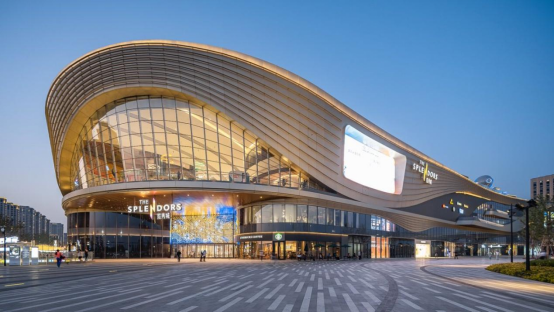
Core Viewpoint - The Chinese real estate industry is undergoing a significant transformation from "development logic" to "operation logic," with China Jinmao emerging as a pioneer in this shift, leveraging its full-cycle asset management capabilities to create a stable and certain "second growth curve" through premium holding businesses [1]. Group 1: Business Strategy and Growth - China Jinmao is focusing on a full-cycle asset management approach, which includes investment, financing, construction, management, and exit strategies, to establish a new commercial ecosystem that spans from urban cores to community ends [1]. - The company has expanded its portfolio to 80 held and operational projects, totaling approximately 3.6 million square meters, with an additional nearly 6 million square meters in construction or planning, covering major cities like Beijing, Shanghai, and Shenzhen [1]. Group 2: Commercial Development - The "second growth curve" is supported by three main commercial product lines: "Lanxiu City," "Jinmao Hui," and "Fengmao Li," which cater to urban-level, regional quality, and community-specific commercial developments, respectively [2]. - The Lanxiu City project in Changsha serves as a benchmark for urban commercial development, maintaining a rental rate of 98% over nine years and leading regional sales and foot traffic [2][3]. Group 3: Community and Regional Projects - The Nanjing Lanxiu City is branded as a "young energy field," attracting a new generation of consumers with trendy stores and quality dining experiences [3]. - The Tianjin Jinmao Hui showcases unique industrial heritage transformation, preserving historical elements while integrating modern commercial spaces [5]. Group 4: Light Asset Management - China Jinmao is exploring light asset management strategies, as seen in the Qinwang Water Street project in Hangzhou, which opened with over 100,000 visitors on its first day and features nearly 70 quality brands [9]. - The company is also expanding its hotel operations through light asset management, with successful openings planned for 2025 [9]. Group 5: Financial Performance and Market Position - China Jinmao ranks 14th in the "2024 Domestic Real Estate Company Operating Income Ranking" by CRIC, recognized as one of the fastest-growing state-owned enterprises in terms of operating income [10]. - The company is building a sustainable long-term development ecosystem supported by premium holdings, light asset operations, and REITs listings, ensuring a stable cash flow and strong performance [10].
成都银行20251210
2025-12-11 02:16
Summary of Chengdu Bank Conference Call Company Overview - **Company**: Chengdu Bank - **Industry**: Banking and Financial Services Key Points and Arguments Credit Growth and Loan Structure - In 2026, credit growth will primarily focus on corporate loans, with a slight increase in single customer ratios. Overall credit growth is expected to slow compared to 2025, influenced by regulatory limits on asset scale growth [2][8] - The bank's credit issuance in Q4 2025 met initial expectations, with corporate loans remaining the main focus. Retail assets showed no significant improvement [3] - Future growth in corporate business will mainly come from national and Chengdu-Chongqing economic circle infrastructure projects, with stricter approvals for provincial and municipal projects due to debt resolution impacts [4][5] Retail Loan Performance - The real estate market in Chengdu is relatively stable, but the overall environment is poor, making mortgage loans unlikely to be a primary growth driver. The focus will shift to consumer loans, which have significant growth potential [6] - Current mortgage loans total approximately 100 billion, while consumer loans are around 20 billion, indicating a strong potential for consumer loan growth [6] Interest Rates and Pricing - New loan pricing is generally on a downward trend, with retail asset pricing remaining stable. Corporate loans face downward pressure due to weak demand and competition [11] - The bank expects the asset yield to remain stable in 2026, with minimal fluctuations unless there are significant changes in the Loan Prime Rate (LPR) [11][14] Cost of Liabilities - The cost of liabilities is expected to improve, particularly for Chengdu Bank compared to other city commercial banks, due to a larger space for cost reduction [12] - Active liabilities, such as bond issuance, have a minimal impact on profit margins due to the bank's smaller scale [13] Non-Performing Loans and Risk Management - Chengdu Bank's non-performing loan generation rate is around 0.2%, which is low compared to the industry average. Risks are mainly concentrated in the wholesale and retail sectors, particularly in the fuel vehicle business [19] - The quality of mortgage loans remains stable, with a significant portion of loans secured by collateral, reducing risk exposure [21][20] Future Growth and Strategic Planning - The bank's international business will be a key focus for future growth, aiming to enhance financial service capabilities and customer loyalty [24] - The bank aims to maintain a dividend payout ratio of no less than 30%, with potential increases contingent on future earnings and regulatory approvals for equity financing [23] Regional and Competitive Advantages - Chengdu Bank benefits from its strategic location in a growing region, with strong demand for financing in infrastructure and industry projects. The region's social financing growth has been leading nationally for over 30 months [28] - The bank competes directly with larger banks rather than other city commercial banks, maintaining a strong market position in loan and deposit growth since 2020 [28] Profitability and Return on Equity (ROE) - The bank anticipates a gradual decline in ROE over the coming years, with current estimates around 15% for the year [26] - Profit growth targets are not strictly quantified but are aligned with key performance indicators set by regulatory bodies [27] Conclusion - Chengdu Bank is positioned to navigate a challenging economic environment with a focus on corporate loans and consumer lending growth. The bank's strategic initiatives and regional advantages are expected to support its performance and profitability in the coming years [28][29]
昌敬套现9亿转身,“扫地茅”褪色!石头科技港股IPO能否破局中年危机?
Sou Hu Cai Jing· 2025-12-10 02:43
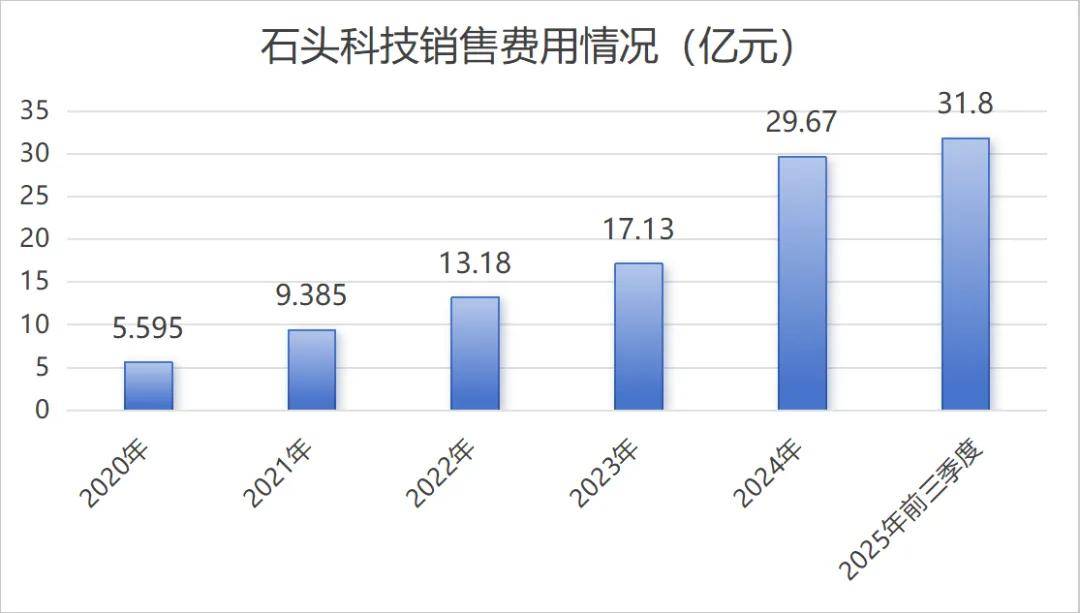
Core Viewpoint - Stone Technology, once a leading player in the sweeping robot market, is facing a mid-life crisis characterized by significant stock price decline, shareholder exits, and operational challenges as it prepares for a Hong Kong IPO [1][5][22]. Financial Performance - In Q3 2025, Stone Technology reported a revenue increase of 72.2% year-on-year, but its net profit attributable to shareholders decreased by 29.51%, highlighting a situation of rising revenue without corresponding profit growth [2]. - The company's stock price has dropped over 60% from its peak of 384.06 CNY per share to 152.79 CNY as of December 1, 2025 [4][20]. Market Position and Competition - The sweeping robot market has become increasingly competitive, with Stone Technology's market share at 23.69%, closely trailing behind competitor Ecovacs at 24.8% [12]. - Traditional home appliance giants like Midea and Haier are entering the sweeping robot market, intensifying competition and pressuring profit margins [11]. Sales and Marketing Expenses - Sales expenses have risen significantly, reaching 31.8 billion CNY in the first three quarters of 2025, surpassing the total for the previous year, with a daily expenditure of approximately 11.65 million CNY [9]. - The sales expense ratio for Stone Technology was 26.34%, nearly three times that of traditional appliance companies like Midea and Haier [9]. New Business Ventures - In 2023, Stone Technology announced its entry into the major appliance market with a smart washing machine, aiming to find a "second growth curve" [13]. - However, reports of significant layoffs (over 70%) in the washing machine division surfaced in June 2025, indicating challenges in this new venture [14]. Shareholder Behavior - Founder Chang Jing has sold shares worth nearly 900 million CNY through block trades in 2023 and 2024, raising concerns among investors [19]. - Other major shareholders have also exited, with total cash-outs exceeding 8.36 billion CNY since 2021, leading to a loss of confidence among smaller investors [20]. Strategic Outlook - The company's intention to pursue a dual listing in Hong Kong is seen as a necessary move for survival amid its strategic transformation, although it raises questions about the sustainability of its business model [22][24]. - Analysts suggest that while a Hong Kong listing could enhance international visibility and funding opportunities, it does not address the underlying issues affecting the company's fundamentals [23][24].

【金融头条】隆基入局 光伏巨头抢滩储能赛道
Jing Ji Guan Cha Wang· 2025-12-06 04:28
Core Insights - The frequency of discussions around "energy storage" has significantly increased in the renewable energy sector, indicating a shift in focus among companies towards energy storage solutions as a response to market pressures and competition in the photovoltaic (PV) industry [2][3]. Industry Trends - Major players in the photovoltaic sector, such as Trina Solar and LONGi Green Energy, are increasingly integrating energy storage into their business models, with LONGi officially entering the energy storage market by acquiring a controlling stake in Suzhou Jingkong Energy Technology [4][5][6]. - The trend of "photovoltaic + energy storage" is becoming a new competitive landscape, with all leading PV companies now participating in the energy storage sector [7]. Company Strategies - Companies like Trina Solar and Canadian Solar have been early entrants into the energy storage market, with Trina Solar's storage business entering a growth phase and Canadian Solar adjusting its business structure to focus on the U.S. market [9][16]. - The energy storage market is viewed as a critical component of the renewable energy system, with companies recognizing the need to adapt to market-driven demands rather than solely relying on policy incentives [11][12]. Market Dynamics - The global photovoltaic market is experiencing a slowdown, with projections indicating that the growth rate of new installations will decline in the coming years, prompting companies to seek alternative growth avenues such as energy storage [15][17]. - The demand for energy storage is driven by the increasing need for grid stability and the integration of renewable energy sources, with significant growth expected in both domestic and international markets [13][20]. Future Outlook - The energy storage sector is anticipated to become a standard component of renewable energy projects within the next 3 to 5 years, supported by favorable policies and market conditions [18][19]. - Companies are expected to see substantial growth in their energy storage business, with projections indicating that the shipment of energy storage systems will double in the coming year, particularly in high-margin markets like Europe and North America [20].





两轮电动车增长放缓 爱玛“攀上”飞行器寻找新增长点?
Zhong Guo Jing Ying Bao· 2025-12-05 20:52
Core Insights - The two-wheeled electric vehicle market has transitioned from a "replacement wave" to a mature stage, leading to slower growth rates. Companies like Aima Technology, Yadea, and Tailg are focusing on structural growth opportunities in this saturated market [3][6] - Aima Technology has launched a commercial sub-brand "Aima Mahe" to extend its reach from consumer (C-end) to business (B-end) markets, targeting sectors such as food delivery, home services, and rentals [3][8] - The company has also made a strategic investment in the electric vertical takeoff and landing (eVTOL) aircraft sector, indicating a broader strategic vision beyond traditional two-wheeled vehicles [3][5] Company Strategy - Aima Technology's Vice President, Ning Huashan, emphasized the need to capture the B-end market, which has significant growth potential due to a lack of specialized products and solutions [3][5] - The company has invested approximately 32.4 million yuan in the eVTOL company VOLANT, with the total fund size being around 108 million yuan, aimed at supporting the certification and commercialization of the VE25 eVTOL model [4][5] - Aima's financial performance shows a steady revenue growth of 20.78% year-on-year in the first three quarters, with revenues reaching 21.093 billion yuan, while net profit increased by 22.78% to 1.907 billion yuan [7] Market Dynamics - The implementation of new safety standards for electric bicycles has driven demand in the past three years, but the market is now maturing, leading to a shift in competition from quantity to quality and structure [6][10] - New entrants like Ninebot and Niu are leveraging technology and high-end products to create new demand, challenging traditional players like Aima Technology [7][10] - The commercial vehicle market is becoming increasingly competitive, with companies not only competing on vehicle models but also on comprehensive service offerings [10] Product Development - Aima Mahe aims to address specific needs in commercial scenarios, such as long range, strong power, and durability, with models like the Mahe S1Max designed for food delivery [8][9] - The company is establishing a comprehensive product line that includes female-targeted, tech-focused, and commercial vehicles, as well as three-wheeled and high-end models [8][9] - Aima Technology plans to create "Aima Mahe category stores" nationwide, which will serve as service stations for riders, emphasizing the importance of a full lifecycle service approach [9][10]