
老龄化

Search documents
高盛:通往2075(全球老龄化的机会)未来30年养老市场大爆发
Xin Lang Cai Jing· 2025-06-09 01:29
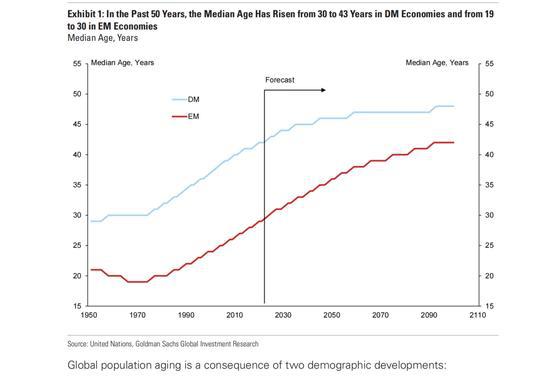
Global Population Trends - The median age of the global population has increased significantly over the past 50 years, with developed economies rising from 30 to 43 years and emerging economies from 19 to 30 years, projected to reach 47 and 40 years respectively by 2075 [2] - The average life expectancy has steadily increased, with developed economies rising from 72 to 82 years and emerging economies from 58 to 73 years, indicating a healthier aging population [4] - The global fertility rate has declined from 5.4 in 1963 to approximately 2.1 today, which is at the replacement level, but the actual threshold to maintain population stability is lower due to increased life expectancy [6] Labor Market Dynamics - Despite a decrease in the proportion of the working-age population in developed economies, the actual employment rate has increased, indicating a rise in labor force participation [10] - The trend of delayed retirement is largely driven by individuals' choices rather than policy changes, with many older adults opting to work longer due to improved health and longevity [11] - Women's participation in the labor force has also increased, contributing positively to overall employment rates and helping to mitigate the effects of an aging population [13] Longevity Economy - The aging population presents opportunities for economic growth through technological advancements and productivity improvements, particularly in sectors catering to elderly care [16] - The rise of "silver technology" is creating new markets, including smart healthcare solutions and elder care services, which are essential as the demand for elderly care increases [16] - The perception of older adults is shifting from being seen as a burden to being recognized as valuable consumers and contributors to the economy [16] China's Aging Population - China has officially entered a moderate aging phase, with over 310 million people aged 60 and above, representing 22% of the total population, indicating significant potential for the "silver economy" [18] - The market for silver economy in China is currently valued at approximately 8 trillion yuan and is rapidly expanding, driven by policy support and changing consumer demands [18] - The Chinese government is prioritizing the development of the silver economy as a national strategy, with various initiatives aimed at enhancing the quality of life for the elderly [19] Consumer Behavior Changes - The consumption patterns of older adults in China are evolving, with a shift from basic needs to quality consumption, including healthcare, cultural activities, and travel [20] - The demand for non-medical services among the elderly is expected to exceed 60% by 2030, indicating a significant market opportunity in sectors like entertainment and education [21] - The segmentation of the elderly population into different age groups allows for more targeted products and services, enhancing the potential for growth in the silver economy [21] Policy and Industry Development - China is actively developing its silver industry as a new driver of high-quality economic growth, focusing on urban-rural integration and technological innovation [22] - The silver economy encompasses a wide range of sectors, including smart devices, healthcare services, and financial products tailored for the elderly [22] - The integration of technology in elder care services is expected to enhance service quality and efficiency, leading to the emergence of a "smart elder care" ecosystem in China [22]

高债务实质是“老年病”——拉长时间看国家由盛转衰
李迅雷金融与投资· 2025-06-08 07:36
Group 1 - The article discusses the high levels of government debt in developed countries, with Japan exceeding 250% and the US around 125%, while emerging economies maintain lower debt levels, such as ASEAN countries at approximately 30-40% [1] - It raises the question of whether economic development leads to increased debt levels and the potential for countries to collapse under high debt burdens [1] - The article suggests that the phenomenon of high debt is akin to an "aging disease" affecting economies, indicating a slow decline in economic vitality [30] Group 2 - The article highlights that global public debt is projected to reach 95.1% of GDP, potentially rising to 99.6% by 2030, with significant increases following crises such as the 2008 financial crisis [7][10] - It notes that developed countries have higher average macro leverage ratios compared to developing countries, with developed nations at 255% and developing nations at 217% as of Q3 2024 [7][10] - The article emphasizes that the rapid increase in government debt is driven by factors such as economic stagnation, demographic changes, and the need for increased military spending [10][32] Group 3 - The article discusses the implications of aging populations on economic structures, with rising dependency ratios leading to increased fiscal pressures and healthcare costs [30][32] - It points out that the global average life expectancy has risen significantly, which correlates with higher incidences of age-related diseases, further straining healthcare systems [4][5] - The article suggests that the economic decline of nations may mirror the aging process, where the vitality of economies diminishes over time, similar to biological aging [20][30] Group 4 - The article compares the life cycles of nations to those of individuals and corporations, noting that while nations can endure for long periods, they also experience phases of growth and decline [20][21] - It highlights historical examples of once-dominant nations that have since declined, such as Spain and the UK, drawing parallels to current economic trends in developed countries [22][24] - The article concludes that the current global economic landscape is characterized by high debt levels and aging populations, which may lead to prolonged periods of economic stagnation [30][32]

“无退休社会”突袭日本,会是中国未来的样本吗?
混沌学园· 2025-06-07 04:33
Core Viewpoint - The article discusses Japan's "no retirement society" phenomenon, highlighting the implications of an aging population and the challenges it poses for both Japan and China as they face similar demographic shifts [1][2]. Group 1: Japan's "No Retirement Society" - Japan's aging population has led to a significant increase in the workforce participation of older individuals, with 29.1% of the population aged 65 and above, and 15% aged 75 and above [2][3]. - The economic pressure on the pension system is evident, with a public pension replacement rate of only 40%, leading many elderly individuals to continue working to fill financial gaps [3][5]. - Cultural factors, such as the traditional view of retirement as "social death," contribute to the reluctance of older individuals to leave the workforce [3][4]. - Government policies have progressively raised the retirement age, with mandates for companies to employ workers until the age of 70 [3][4]. Group 2: Challenges of the "No Retirement Society" - The reliance on older workers raises health concerns, as many are not physically capable of performing demanding jobs, leading to increased health risks [5][6]. - Many older workers are forced into low-paying, unstable jobs, resulting in a cycle of poverty where they must continue working despite financial insecurity [5][6]. - The presence of older workers in the job market creates tension with younger generations, who feel their opportunities are being diminished [6][7]. - The over-reliance on older labor can stifle innovation and dynamism in the workforce, as older workers may be less inclined to adopt new technologies [7][8]. Group 3: Implications for China - China is facing a similar aging crisis, with projections indicating that the population aged 60 and above will exceed 400 million by 2035, and a pension replacement rate of less than 50% [9][10]. - Unlike Japan, China's economic context and family structures may provide different pathways to address aging, including leveraging technology and maintaining traditional family support systems [9][10]. - The article emphasizes the need for China to proactively design solutions that respect individual choices and enhance the dignity of older workers, rather than merely extending working years [13][14].

2025年易凯资本中国健康产业白皮书-医疗与健康服务篇-易凯资本
Sou Hu Cai Jing· 2025-06-06 10:44
Core Insights - The report indicates that the Chinese healthcare service market is expected to exceed 10 trillion RMB in 2024, driven by an aging population and increasing demand for chronic disease management and rehabilitation care [1][5][7] - The integration of technology and healthcare is transforming the industry, with AI models and robotic technologies enhancing diagnostic and treatment efficiency [1][19] Market Overview - The Chinese healthcare service market has grown from approximately 4 trillion RMB in 2015 to about 9 trillion RMB in 2023, with a projected compound annual growth rate (CAGR) of 10-12% [7][8] - By the end of 2024, the total number of healthcare institutions in China is expected to reach 1.092 million, with a notable increase in grassroots medical institutions [9][10] Demographic Changes - The aging population is a significant driver of healthcare demand, with 60 years and older population reaching 310 million (22% of the total population) by 2024 [10][11] - The low birth rate is impacting obstetrics and pediatrics, leading to a decline in resources in these areas, while assisted reproductive technology is gaining traction due to policy support [11][15] Policy and Regulatory Environment - The healthcare reform in 2024 is characterized by stringent drug price controls and anti-corruption measures, which are reshaping the industry towards quality over quantity [16][20] - The implementation of DRG (Diagnosis-Related Group) payment systems and the promotion of the Sanming healthcare reform model are driving hospitals to optimize service structures [22][23] Investment Trends - The A-share healthcare service sector experienced volatility in 2024, with a total of 29 merger and acquisition transactions valued at 6.3 billion RMB, focusing on consumer and serious medical fields [2][24] - The Hong Kong market has become a key exit for domestic healthcare companies, with several firms successfully listing and attracting significant investment [41][42] Technological Integration - The integration of AI and other advanced technologies is revolutionizing healthcare delivery, with AI models achieving high accuracy in clinical applications [19][20] - The development of smart healthcare systems is essential for improving service delivery and efficiency in the face of increasing demand [23][24] Market Challenges and Opportunities - The healthcare service sector is facing challenges from regulatory pressures and market fluctuations, but opportunities exist in specialized medical fields and technological advancements [24][29] - The shift towards value-based care and the emphasis on high-quality services are expected to create new growth avenues for healthcare providers [22][23]

找不到工作,开个养老机构怎么样?
集思录· 2025-05-30 14:03
Core Viewpoint - The article discusses the challenges and considerations of starting a nursing home business, highlighting the complexities of the healthcare industry and the potential difficulties in profitability and competition [1][3][9]. Group 1: Industry Insights - The aging population is a significant trend, making the nursing and elderly care industry a potentially lucrative field, but the path to profitability remains uncertain [3]. - There is a noted lack of major capital investment in the nursing home sector, suggesting that if it were a highly profitable industry, it would have already attracted significant players [3]. - The nursing profession is described as demanding and often unappealing, with many young individuals discouraged from pursuing it due to the nature of the work [7]. Group 2: Employment and Income Challenges - Entry-level positions in healthcare, such as nursing assistants, often come with low pay and lack of benefits, as illustrated by a case where a caregiver earned only 190 yuan per day after agency fees [7]. - The competitive landscape for healthcare jobs is tough, with many positions requiring at least a bachelor's degree, making it difficult for those with lower qualifications to secure stable employment [5][6]. - The financial burden of healthcare services can be significant, as demonstrated by a case where a patient's total medical expenses exceeded initial estimates, highlighting the unpredictability of healthcare costs [8]. Group 3: Entrepreneurial Considerations - Starting a nursing home is viewed as a high-risk venture, with potential losses being substantial compared to other business opportunities, such as a small café or retail shop [9]. - The article suggests that aspiring entrepreneurs should consider less capital-intensive business models before venturing into the nursing home industry, which requires significant investment and operational expertise [9].

东吴证券研报:20-39岁消费下降严重,60以上老人对消费贡献最大
Sou Hu Cai Jing· 2025-05-30 12:30
Group 1 - The report from Dongwu Securities indicates that the consumption growth rate among the 20-39 age group has significantly declined, contributing to approximately 44% of the overall consumption decrease from 2018 to 2022, compared to a 30.3% increase from 2010 to 2018 [1][5] - The consumption decline is most pronounced in the 20-30 age group, where their contribution to consumption growth plummeted from 13.8% (2010-2018) to just 0.8% (2018-2022) [5][24] - The elderly population (60 years and older) has become the largest contributor to consumption growth, particularly in food and healthcare sectors, contrasting sharply with the declining consumption in entertainment categories like KTV and bars [7][24] Group 2 - The average age in China has reached a median of 40 years, indicating a demographic shift where the primary consumer base will transition from those under 40 to those over 40 in the next decade [10][40] - The report highlights a concerning trend of increasing youth unemployment, which is linked to the decline in consumption among younger demographics, creating a chain reaction affecting overall consumption [5][17] - The elderly population, while contributing significantly to consumption growth, faces challenges as their income and average consumption levels have not kept pace with the rapid aging of the population [29][30] Group 3 - The consumption tendency among the youth has dropped dramatically, with a decline of 46.1 percentage points for the 20-39 age group since 2020, indicating a shift towards more conservative spending behaviors [34][35] - The report suggests that as the population ages and the youth demographic shrinks, businesses will increasingly target consumers aged 40 and above, who tend to be more rational and less impulsive in their spending [27][28] - The overall consumer landscape is changing, with brands likely to shift focus from younger consumers to older demographics, reflecting the broader societal changes in consumption patterns [39][40]


上海的老龄化有点超乎想象了
虎嗅APP· 2025-05-24 09:19
Core Viewpoint - Shanghai is experiencing significant population aging, with the elderly population growing rapidly, which poses both challenges and opportunities for the city and its economy [3][6][67]. Group 1: Population Aging Data - As of 2023, the elderly population (aged 60 and above) in Shanghai exceeds 5.77 million, accounting for 37.6% of the total population [6][17]. - The elderly population has increased by nearly 940,000 from 2017 to 2024, averaging an annual increase of 130,000 [11][12]. - The ratio of elderly to newborns in 2023 is approximately 58 times, highlighting the severe demographic imbalance [16]. Group 2: Age Structure Changes - The proportion of the elderly population (60 years and above) has risen from 20.8% in 2007 to 37.6% in 2024, while younger age groups (18-34 and 35-59) have seen a decline [18]. - The population aged 65-79 has doubled in proportion from 11.7% to 23.8% over the past decade [21]. - By the end of 2024, the number of individuals aged 80 and above in Shanghai is projected to reach 860,000, the highest in the country [24]. Group 3: Pension System and Economic Impact - The number of retired workers in Shanghai has increased from 3.52 million in 2010 to 5.43 million in 2023, with pension expenditures rising from 78.3 billion to 346.4 billion yuan, a 442% increase [30][33]. - The average monthly pension has increased from 4,668 yuan in 2021 to 5,039 yuan in 2023, ranking second in the country [35][39]. - Shanghai's pension growth strategy combines fixed adjustments with performance-based increases, ensuring steady growth in pension benefits [39]. Group 4: Regional Aging Trends - By the end of 2024, the elderly population in Pudong is expected to reach nearly 1.14 million, while several other districts also report significant elderly populations [42]. - The proportion of elderly individuals in core districts like Hongkou and Huangpu exceeds 40%, indicating severe aging in these areas [44]. - Districts such as Chongming and Jinshan are experiencing rapid increases in the elderly population ratio, with Chongming's proportion reaching 42.3% [46][54]. Group 5: Solutions and Initiatives - Shanghai has implemented a "9073" elderly care service model, aiming for 90% home care, 7% community care, and 3% institutional care [58]. - The city is enhancing "age-friendly" infrastructure, including home modifications and the establishment of smart nursing homes [59][60]. - The "silver economy" is emerging, with increased consumer spending among the elderly on leisure, health, and technology, driving growth in related industries [62][64].

大胆预测:今明两年,若无异常情况,社会可能迎来“五大趋势”
Sou Hu Cai Jing· 2025-05-19 00:08
Group 1: Real Estate Trends - Housing prices are expected to stabilize with a slight decline, but a crash is unlikely. Policies such as lifting purchase restrictions and lowering interest rates have been implemented, but they only prevent drastic drops rather than reversing the trend. By 2025, a new normal of "stability with decline" is anticipated [4] - In 2022, national commercial housing sales area decreased by 5%-10%, and new construction area fell by 10%-15%. The enthusiasm for home buying among younger generations has significantly decreased, with over 60% of young people considering homeownership as non-essential [4] Group 2: Employment Trends - Employment pressure is high, with over 10 million new graduates entering the job market and companies becoming increasingly selective. The global youth unemployment rate is projected to reach 12.6% in 2024, with a significant decline in low-skill job opportunities [5][6] - Many individuals are turning to flexible employment options such as food delivery and ride-sharing, with the food delivery sector alone absorbing over 7 million jobs, 35% of which are held by college graduates [7] Group 3: Financial Trends - Bank interest rates have dropped significantly, with one-year fixed deposit rates falling below 1.5%, the lowest in history. This is part of an effort to encourage spending and investment in the real economy [8][9] - Despite lower interest rates, total deposits have increased by 8%, indicating a cautious consumer sentiment. Recommendations include diversifying investments into government bonds and structured deposits, which offer higher returns [10][11] Group 4: Technology Trends - Artificial intelligence (AI) is becoming an integral part of daily life, with applications in various sectors, including food service and banking. For instance, AI has replaced 30% of bank tellers and is being used in delivery services [12][13] - AI primarily replaces repetitive jobs, while roles requiring creativity and interpersonal skills are becoming more valuable. Embracing AI and acquiring new skills is encouraged [15][16] Group 5: Aging Population Trends - The aging population in China is accelerating, with the proportion of individuals aged 65 and older expected to rise from 16% in 2020 to 18% by 2025. This demographic shift poses challenges for pension systems as the ratio of contributors to beneficiaries declines [17][18] - Innovative solutions such as intergenerational cohabitation, where younger individuals rent rooms from elderly residents while providing assistance, are emerging as potential strategies to address aging-related issues [19][20] - The aging industry is projected to see significant innovation and growth, with opportunities in smart caregiving and senior community services, representing a trillion-dollar market [21]

医药行业周报:慢性心衰大品种JK07潜力,继续重点推荐信立泰-20250512
Hua Yuan Zheng Quan· 2025-05-11 23:39
Investment Rating - The report maintains a "Positive" investment rating for the pharmaceutical industry [4] Core Viewpoints - The chronic heart failure (CHF) market has significant potential, particularly for the innovative drug JK07, which is recommended for continued focus [3][4] - The pharmaceutical sector is expected to benefit from multiple positive growth factors, including the transition from generic to innovative drugs, increasing international market capabilities, and the aging population driving demand for chronic disease treatments [4][6] Summary by Sections 1. CHF Market Potential and JK07 - The CHF market is vast, with existing treatment methods having considerable room for improvement, particularly for new mechanism drugs [9] - Current CHF medications primarily alleviate symptoms, and there is a need for drugs that can directly improve myocardial cell function [9] - The innovative drug JK07, designed to target NRG-1, shows promising early clinical data and is expected to be a leading product in the CHF market [9][24] 2. Industry Perspective - The report emphasizes the importance of innovation, international expansion, and addressing the needs of an aging population as key themes for the industry [4][6] - Domestic innovation in pharmaceuticals is reaching a scale where several companies are beginning to reap the rewards of their R&D investments [4] - The report highlights the increasing importance of AI in the pharmaceutical sector, which is expected to unlock new growth opportunities [4][6] 3. Key Investment Recommendations - The report suggests focusing on innovative pharmaceutical companies such as Xinlitai, Keren Pharmaceutical, and Kexing Biotech, as well as companies involved in medical devices and AI healthcare solutions [6]

羚锐制药(600285):业绩稳健增长 期待并购整合进展
Xin Lang Cai Jing· 2025-04-29 02:35
Core Insights - The company reported a revenue of 3.501 billion yuan for 2024, representing a year-on-year increase of 5.7%, and a net profit attributable to shareholders of 723 million yuan, up 27.2% year-on-year [1] - In Q1 2025, the company achieved a revenue of 1.021 billion yuan, a 12.3% increase year-on-year, with a net profit of 217 million yuan, reflecting a 13.9% year-on-year growth [1] Business Performance - The orthopedic segment showed steady growth, with revenue of approximately 2.32 billion yuan in 2024, a 9.5% increase year-on-year, and a gross margin improvement of 3.9 percentage points [2] - The sales of the Tongluo Pain Relief Plaster exceeded 1 billion yuan, and the "Two Tigers" series products sold over 1 billion patches, indicating strong brand strength [2] - The cardiovascular segment generated about 450 million yuan in revenue, a 3.3% year-on-year increase, with the Peiyuan Tongnao capsule gradually gaining market traction [2] Product Expansion and Acquisitions - The tablet segment saw significant growth, with revenue of approximately 360 million yuan, a 35.6% increase year-on-year, driven by strong sales of Danlu Tongdu tablets [3] - The company acquired 90% of Yingu Pharmaceutical for 704 million yuan, enhancing growth potential and filling gaps in its nasal spray product line [3] - The acquisition is expected to strengthen the company's hospital sales capabilities and enhance the sales channels for Yingu's products [3] Dividend Policy - The company announced a cash dividend of 0.90 yuan per share for 2024, totaling approximately 510 million yuan, which represents 70.64% of the net profit attributable to shareholders [3] Financial Forecast - The orthopedic business is expected to benefit from an aging population, with projected revenues of 4.2 billion yuan, 4.68 billion yuan, and 5.23 billion yuan for 2025-2027, reflecting year-on-year growth rates of 19.9%, 11.6%, and 11.7% respectively [4] - The net profit attributable to shareholders is forecasted to be 840 million yuan, 950 million yuan, and 1.07 billion yuan for the same period, with growth rates of 15.9%, 13.1%, and 13.0% respectively [4] - The estimated earnings per share (EPS) for 2025-2027 are projected to be 1.48 yuan, 1.67 yuan, and 1.89 yuan, with corresponding price-to-earnings (PE) ratios of 15, 13, and 12 times [4]
