
资本配置

Search documents
2025年A股上市公司分红创新高,药明康德跨周期兑现投资价值
Cai Fu Zai Xian· 2026-01-05 07:57
Core Viewpoint - In 2025, the level of cash dividends from listed companies is expected to rise, transitioning capital returns from an "optional" to a "mandatory" aspect, influenced by strengthened regulatory constraints and a clearer preference for long-term capital [1][3] Group 1: Company Performance and Shareholder Returns - As of December 25, A-share listed companies have distributed over 2.61 trillion yuan in cash dividends this year, marking a historical high [1] - WuXi AppTec, as a leading CXO enterprise, has demonstrated a strong shareholder return strategy through a combination of cash dividends and share buybacks, signaling stable and clear returns to the market [1] - WuXi AppTec has announced a total cash dividend of 4.88 billion yuan for 2024 and 2025, along with two share buybacks totaling 2 billion yuan, enhancing shareholder value by reducing the number of shares outstanding [1][2] Group 2: Financial Stability and Cash Flow - WuXi AppTec's net cash flow from operating activities reached 10.87 billion yuan, reflecting a 35% year-on-year increase, which supports high levels of shareholder returns [2] - The company has maintained a stable cash dividend policy since its IPO in 2018, with a long-term payout ratio around 30%, further reinforcing its commitment to shareholder returns [2] Group 3: Market and Regulatory Context - Regulatory bodies have increasingly enforced cash dividend policies, shifting from "advisory arrangements" to "binding rules," which enhances the importance of capital return methods in valuation structures [3] - Sustainable and predictable dividend arrangements, along with share buyback strategies aligned with stock price cycles, are becoming key indicators of corporate governance quality and capital efficiency [3] - WuXi AppTec's approach to dividends and buybacks is viewed as a long-term commitment to providing tangible and sustainable capital returns, addressing market expectations for certainty and long-term value [3]

伯克希尔,跳水!
券商中国· 2026-01-03 12:40
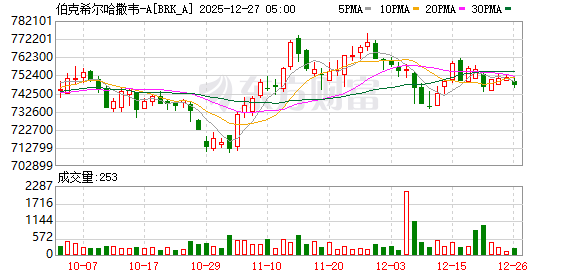
Core Viewpoint - Berkshire Hathaway's stock price experienced a significant drop on the first trading day after Warren Buffett's retirement, reflecting investor concerns about the transition to new CEO Greg Abel and the company's future performance [1][2]. Group 1: Stock Performance - On January 2, 2026, Berkshire's stock fell over 2% during trading, closing down 1.41% at $744,100 per share, resulting in a market value loss of over $15 billion [1][2]. - In 2025, Berkshire's stock rose 10.9%, lagging behind the S&P 500's 16.4% increase, marking the tenth consecutive year of positive returns [2]. Group 2: Leadership Transition - Greg Abel officially took over as CEO on January 2, 2026, marking the end of Buffett's 60-year tenure, with investors evaluating Abel's ability to manage the company's vast operations and investment portfolio [2][5]. - Abel is expected to maintain Berkshire's decentralized structure, allowing subsidiary executives significant decision-making power, while also potentially implementing more traditional management practices [3][5]. Group 3: Cash Reserves and Investment Strategy - As of September 2025, Berkshire's cash reserves reached a record $381.6 billion, following a prolonged period of net stock sales [2][5]. - Abel will have the final say on capital allocation decisions, with Buffett expressing confidence in Abel's capabilities [2][5]. Group 4: Future Outlook - Investors are closely watching for changes in Berkshire's trajectory under Abel's leadership, although no drastic shifts are anticipated [5][6]. - Abel faces pressure to effectively utilize Berkshire's substantial cash reserves, which could lead to discussions about initiating dividends or stock buybacks if performance does not meet expectations [5][6].


上市公司回购与增持:是信心信号,还是市场博弈(二)
Sou Hu Cai Jing· 2026-01-02 15:07
Core Viewpoint - The actions of stock buybacks and insider purchases by companies like Luxshare Precision signal confidence in their undervalued stock and financial health, but the market's reaction can be complex and influenced by various factors [1][2]. Group 1: Buybacks and Insider Purchases - Stock buybacks involve companies using their cash reserves to repurchase shares, which can enhance earnings per share by reducing the number of shares outstanding, signaling that management believes the stock is undervalued [1]. - Insider purchases, particularly by controlling shareholders or executives, indicate a strong belief in the company's actual value, as these individuals invest their own money [1]. - Luxshare Precision's controlling shareholder invested 201 million yuan to buy 4.4145 million shares at an average price of 45.52 yuan, followed by a company announcement to repurchase shares worth 1 to 2 billion yuan at a price ceiling of 86.96 yuan, showcasing a coordinated effort [1]. Group 2: Market Reactions - The market's response to buybacks and insider purchases is not straightforward; it can be influenced by market sentiment and the broader economic context [2]. - In bearish markets, buyback announcements may temporarily halt stock price declines, while in bullish markets, they might be interpreted as a lack of better investment opportunities, causing concern among investors [2]. - The long-term impact on stock prices is ultimately determined by the company's ability to create value rather than just capital maneuvers [2]. Group 3: Signal Interpretation - The timing of buybacks and insider purchases can raise questions about their sincerity, as insiders may buy before good news or use buybacks to facilitate future sell-offs [3]. - The efficiency of capital allocation is crucial; funds used for buybacks could potentially yield higher returns if invested in high-return projects instead [3]. - The phenomenon of "herding" in the market can lead to companies with poor fundamentals engaging in buybacks to mask underlying issues, rather than genuinely creating value [4]. Group 4: Beyond the Surface - The dual actions of buybacks and insider purchases by Luxshare Precision suggest a strong value signal, but investors must assess the sustainability of these actions [5]. - It is essential to consider whether buybacks align with the company's strategic direction and the competitive landscape [5]. - Critical thinking is necessary; even positive signals should not replace independent analysis of financial statements, business models, and industry trends [5]. Group 5: Conclusion - The actions of buybacks and insider purchases serve as a unique communication tool between company management and the market, but their true intentions can vary [6]. - The ongoing narrative of Luxshare Precision will ultimately reveal whether these actions represent a genuine discovery of value or a temporary market maneuver [6]. - Investors should focus on the ability to create sustained value rather than being swayed by individual market actions [6].


股神巴菲特交棒倒计时
Guo Ji Jin Rong Bao· 2025-12-29 08:33
Core Viewpoint - The transition of leadership at Berkshire Hathaway marks the end of an era defined by Warren Buffett's investment philosophy, which has significantly influenced global investors for decades [3][12]. Group 1: Leadership Transition - Warren Buffett will officially step down as CEO of Berkshire Hathaway on December 31, 2025, passing the role to long-time partner Greg Abel [3]. - This leadership change is characterized by its long preparation and high transparency, symbolizing a new chapter for Berkshire Hathaway [3][12]. - Buffett will continue to serve as chairman, indicating his ongoing involvement with the company despite stepping down as CEO [8]. Group 2: Investment Philosophy - Buffett's investment legacy is not solely about financial gains but also about a distinct investment philosophy that emphasizes intrinsic value over market sentiment [5]. - His principles include a focus on companies with a "moat," long-term holding, and prioritizing risk management over immediate returns [6]. - Buffett's annual letters to shareholders have become a reference for value investing, shaping the thought processes of both institutional and individual investors [6]. Group 3: Current Financial Position - As of now, Berkshire Hathaway holds over 25% of its total assets in cash equivalents, amounting to more than $380 billion, reflecting a defensive strategy amid high market valuations [8][12]. - The S&P 500's forward P/E ratio stands at 21.5, indicating that the overall market is relatively expensive, which influences Berkshire's cautious approach to investments [8]. Group 4: Portfolio Composition - Berkshire's portfolio continues to reflect Buffett's investment style, with Apple being the largest holding, accounting for slightly over 20% of the portfolio [9]. - The investment strategy remains focused on long-term profitability rather than short-term trends, with a stable base including companies like American Express and Coca-Cola [10]. Group 5: Market Perception and Challenges - Since the announcement of Buffett's retirement, Berkshire's B shares have seen a nearly 12% decline, contrasting with a 21% rise in the S&P 500, indicating investor caution during the leadership transition [12]. - The stock price is currently facing resistance levels between $507 and $517, with significant support around $490, suggesting limited short-term upside potential [12]. - The market is reassessing Berkshire's positioning as Buffett steps back, highlighting the challenges ahead for the company in maintaining its legacy without the "Oracle of Omaha" [11][12].
人民币破6关口,美国押注国运,未来难回头?
Sou Hu Cai Jing· 2025-12-26 05:27
Core Viewpoint - The Federal Reserve's recent interest rate cuts are seen as a response to political pressures and a means to support the economy, particularly in the technology and manufacturing sectors [1][3]. Economic Indicators - In August, the U.S. added only 22,000 jobs, and the unemployment rate rose to 4.3%, highlighting economic challenges that influence decision-making [3]. - Some Federal Reserve members suggested a rare 50 basis point cut, indicating internal tensions and the influence of political factors on monetary policy [3]. Capital Flows - There is a noticeable shift in capital flows from U.S. equity and debt markets to perceived "stable and growing" RMB assets, reflecting changing investment strategies [3]. - Foreign investment teams are increasingly focusing on long-term RMB products, citing marketization and the stability of China's complete industrial chain as key reasons for their investments [3]. Trade and Supply Chain - Changes in customs clearance times and freight indices indicate a revaluation of supply chains, with a stronger RMB improving import costs and subtly shifting consumption structures [5]. - Tariff policies are increasing costs for businesses, and the Fed's rate cuts aim to mitigate these effects, although this approach may be seen as addressing weaknesses with further weaknesses [5]. Monetary Policy and Technology - The Fed's strategy includes using monetary easing to attract capital into the technology sector, representing a gamble on the future of industry [6]. - Venture capitalists express concerns that short-term liquidity may not translate into long-term innovation, fearing that market sentiment could drive funds into overvalued assets [6]. Global Currency Dynamics - The political use of interest rate cuts raises questions about the independence of the U.S. dollar in the international community, which could have long-term implications beyond immediate market fluctuations [8]. - The strengthening of the RMB is prompting international investors to reassess currency risk exposure in their asset portfolios, a process that takes time [8]. Structural Challenges - The U.S. dollar's status as a global reserve currency is at risk if institutional trust erodes, affecting cross-border contracts and central bank reserves [10]. - The Fed's rate cuts provide temporary relief but do not address fundamental structural issues such as declining labor participation, manufacturing offshoring, and persistent fiscal deficits [10]. Industry Adjustments - Chinese companies are adjusting their cost structures in response to RMB appreciation, with some export sectors shifting towards higher value-added areas, driven by market forces [11]. - In global supply chain hubs, managers prioritize delivery times, quality, and supplier stability, indicating a practical approach to currency fluctuations [13]. Long-term Implications - A potential weakening of U.S. dollar dominance could lead to a multipolar currency landscape, requiring adaptation from multinational corporations and policymakers [13]. - Historical shifts in currency systems often accompany long-term industrial adjustments and institutional innovations, suggesting that current market disruptions may signal the beginning of another gradual restructuring [15].
这一单IPO,投资人回报超1000亿
投中网· 2025-12-23 06:46
Core Viewpoint - The article highlights the significant IPO of Medline, marking a major success for the PE industry after a prolonged period of IPO stagnation, with Medline's market capitalization reaching $54 billion on its debut [3][4]. Group 1: Medline's IPO and PE Industry Impact - Medline's IPO on December 18, 2025, saw a first-day surge of 41%, establishing it as the largest IPO in the U.S. since 2025 and the largest in the healthcare sector in nearly 14 years [3]. - The IPO is viewed as a critical test for the recent "IPO wave" in the U.S. stock market, with the potential to set a new record for PE-backed IPOs [4]. - The three PE firms involved in Medline's acquisition—Blackstone, Carlyle, and H&F—are expected to achieve returns of approximately two times their equity capital, netting over $17 billion (approximately 110 billion RMB) in profits [4]. Group 2: Medline's Historical Context and Business Model - Medline, a century-old family business, transitioned from a textile manufacturer to a leading medical supplies company, generating over $17 billion in annual sales [6][8]. - The company historically resisted external capital, opting for a family-owned model until the need for re-capitalization arose due to the family's inability to access their wealth [7][6]. - Medline's business model emphasizes vertical integration, controlling its own brands, manufacturing, distribution, and logistics, which has allowed it to maintain superior margins and rapid response to market demands [17]. Group 3: Financial Performance and Market Position - Medline's revenue grew from $17.5 billion in 2020 to $25.5 billion in 2024, with EBITDA increasing from an estimated $2 billion to $3.4 billion during the same period [18]. - The company boasts a customer retention rate of 98%, indicating strong demand stability for its products, which are essential in the healthcare sector [18]. - Despite market challenges, Medline's valuation has continued to rise, demonstrating the resilience of high-quality companies in various market conditions [19].

Embattled BP replaces CEO, naming Woodside Energy chief as first-ever woman leader of a Big Oil giant
Yahoo Finance· 2025-12-17 23:06
Group 1: CEO Transition - BP appointed Meg O'Neill as the first female CEO of a major oil company, effective April 1, 2024, following the resignation of Murray Auchincloss [1][4] - Auchincloss will remain in an advisory role until the end of 2026 after leading a cost-cutting initiative and a shift back to fossil fuels [2][3] Group 2: Strategic Direction - The board believes the leadership change will accelerate BP's strategic vision to become a simpler, leaner, and more profitable company, indicating that previous efforts under Auchincloss were insufficient [5] - O'Neill is recognized for her proven track record in driving transformation and disciplined capital allocation, which the board believes will be crucial for BP's next growth phase [6]

美国砸出资本大招!私人市场向全民开放,全球资本要变天?
Xin Lang Cai Jing· 2025-12-13 21:16
Core Insights - The U.S. House of Representatives passed the Investment Act with a vote of 302, breaking down barriers for ordinary investors to access private markets, previously reserved for the wealthy [3][4] - The act allows individuals to invest in unicorns by passing an SEC-approved exam, eliminating the previous wealth threshold of $1 million in net assets or $200,000 in annual income [3][4] - The cap on venture capital fund sizes has increased from $10 million to $50 million, significantly expanding access to private market investments [3][4] Investment Landscape - The U.S. private market has seen a 15.7% annual return over the past decade, compared to 9.2% for the S&P 500, indicating a strong demand for alternative investment channels [4] - The number of publicly listed companies in the U.S. has decreased from 7,322 in 1996 to less than 4,000 in 2025, while the number of unicorns has surged from 39 in 2013 to 1,207 in 2025, highlighting a shift in asset availability [4][5] - The act aims to address capital misallocation by allowing ordinary investors access to high-potential startups, thus injecting capital into underfunded regions [5] Global Capital Flow - The reform is expected to attract high-quality startups to the U.S., with financing costs for U.S. startups projected to decrease by 15%-20% [7] - Foreign investors held $21.2 trillion in U.S. equities as of September 2025, and the act is anticipated to reverse the trend of capital outflow from the U.S. [7] - Other regions, including Europe and Southeast Asia, are beginning to explore similar reforms, indicating a potential global shift towards capability-based investor access [7] Implications for China - The reform presents both challenges and opportunities for China, with potential short-term capital outflows to the U.S. but a long-term need for China to enhance its capital market openness [8][9] - China's Qualified Foreign Institutional Investor (QFII) system could be optimized to allow more ordinary investors to participate in innovative enterprises [9] - The competition will push Chinese startups to enhance their core competencies and accelerate the evolution of the domestic venture capital industry [9][11] Strategic Insights for Entrepreneurs and Investors - Entrepreneurs must focus on core technologies and sustainable business models to thrive in a more competitive global capital environment [11] - Investors should leverage China's capital market openings to invest in high-growth companies benefiting from global capital flows [11] - The essence of the Investment Act is to innovate the system to release capital vitality, emphasizing the importance of efficiently matching capital supply and demand [11][12]

20亿收购自家股权遭董事弃权,沃森生物再陷治理与估值争议
Xin Lang Cai Jing· 2025-12-12 08:29
Core Viewpoint - The board's unanimous vote of "9 in favor, 0 against" is undermined by a notable abstention from director Fan Yongwu, highlighting concerns over a nearly 2 billion yuan cash expenditure amid performance pressures and governance issues at Watson Bio [1][6]. Group 1: Financial Challenges - Watson Bio plans to spend approximately 19.98 billion yuan to acquire a 13.78% stake in its subsidiary Yuxi Watson, despite only reporting a net profit of 1.63 billion yuan for the first three quarters, indicating a cash outflow equivalent to 12 times its quarterly profit [2][8]. - The acquisition involves payments of 16.39 billion yuan to "Huixiang Yuetai" and 3.59 billion yuan to "Tianjin Lanwo," with no expected enhancement in product lines or market expansion, raising concerns about prioritizing cash usage [2][8]. Group 2: Valuation Paradox - The valuation logic of the transaction appears contradictory during a downturn in the vaccine market, with Yuxi Watson's estimated value at around 14.5 billion yuan, while Watson Bio's total market capitalization is only about 19.5 billion yuan [9][10]. - This discrepancy raises questions about whether the subsidiary is overvalued or if the parent company's stock is undervalued, suggesting that a more rational approach would be to repurchase shares rather than overpay for non-tradable subsidiary equity [10]. Group 3: Governance Concerns - The transaction involves complex relationships, with one counterparty, "Huixiang Yuetai," having partners that include members of Watson Bio, suggesting a potential internal transaction [4][10]. - The decision to use scarce cash for a high-valuation acquisition amid uncertain future profitability raises doubts about whether this move is aimed at long-term growth or facilitating exits for specific investors [4][10]. - Watson Bio's history of controversial capital operations, including past attempts to sell subsidiaries at low prices, reflects a governance structure lacking effective control, leading to potential internal management issues [5][11].

Live Ventures rporated(LIVE) - 2025 Q4 - Earnings Call Transcript
2025-12-11 23:00
Financial Data and Key Metrics Changes - Total revenue for Fiscal Year 2025 decreased approximately $27.9 million, or 5.9%, to approximately $444.9 million compared to $472.8 million in the prior year [5] - Operating income increased by $10.2 million, or 231.7%, compared to the prior year, excluding an $18.1 million goodwill impairment recorded in Fiscal Year 2024 [4] - Net income for Fiscal Year 2025 was approximately $22.7 million, with diluted EPS of $4.93, compared to a net loss of approximately $26.7 million and a loss per share of $8.48 in the prior year [10] - Adjusted EBITDA for Fiscal Year 2025 was approximately $33.4 million, an increase of approximately $8.9 million, or 36.3%, compared to $24.5 million in the prior year [11] Business Line Data and Key Metrics Changes - Retail entertainment segment revenue increased by approximately $6.5 million, or 9.1%, to approximately $77.5 million, driven by strong consumer demand for vintage and collectible media [6] - Retail flooring segment revenue decreased by approximately $14.7 million, or 10.7%, to approximately $122.3 million, primarily due to the disposition of certain stores and decreased consumer demand [6] - Flooring manufacturing segment revenue decreased by approximately $11.5 million, or 8.6%, to approximately $121.6 million, attributed to reduced consumer demand [7] - Steel manufacturing segment revenue decreased by approximately $7.2 million, or 5.1%, to approximately $132.6 million, primarily due to lower sales volumes, partially offset by incremental revenue from Central Steel [7] Market Data and Key Metrics Changes - Continued softness in the new home construction and home refurbishment markets negatively impacted the retail flooring and flooring manufacturing segments [4][5] - The company reported a year-over-year improvement in revenue for the fourth quarter of 2025 compared to the fourth quarter of 2024, despite overall revenue decline for the fiscal year [5] Company Strategy and Development Direction - The company is focused on building a durable platform of businesses that are resilient and efficient, with an emphasis on operational discipline and cost structure optimization [12] - The company plans to continue paying down debt while evaluating the best use of capital for shareholder returns, including potential acquisitions [20][22] - The management expressed optimism about future performance, citing actions taken to position the company for sustainable profitability [12] Management's Comments on Operating Environment and Future Outlook - Management acknowledged the challenges posed by a mixed economy but highlighted the successful execution of strategic initiatives that led to improved operating performance [4][12] - The company anticipates that interest rate reductions will benefit its financials and stimulate the housing market, which could positively impact flooring sales [23][24] Other Important Information - General and administrative expenses decreased by approximately $4.3 million, or 3.6%, to $113.7 million, due to targeted cost reduction measures [9] - The company repurchased 59,704 shares of common stock at an average price of $8.85 per share during the fiscal year [12] Q&A Session Summary Question: Regarding share repurchases and issuance strategy - Management indicated that shares may be issued in connection with acquisitions and that repurchase levels are monitored based on market conditions [20] Question: Debt repayment intentions - Management confirmed a commitment to continue paying down debt and will evaluate the optimal debt level for long-term operations [22] Question: Impact of interest rate reductions - Management noted that recent interest rate cuts have positively impacted the company and are expected to benefit future financial performance [23][24]
