
自动驾驶

Search documents
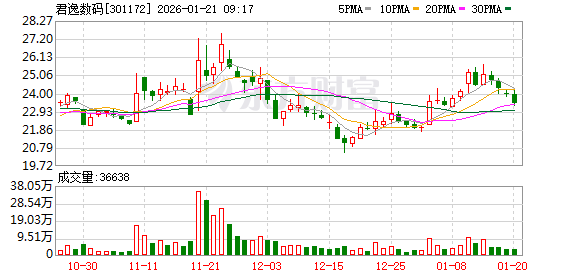
君逸数码:广东光宏精密的精密光学元组件可应用于激光雷达领域
Zheng Quan Ri Bao Wang· 2026-01-21 06:47
Core Viewpoint - Junyi Digital (301172) is actively engaging in the laser radar sector through its subsidiary, Guangdong Guanghong Precision, which produces precision optical components essential for laser radar applications [1] Group 1: Company Developments - Guangdong Guanghong Precision's optical lenses and core devices provide critical functions such as beam control and signal transmission for laser radar, catering to needs in autonomous driving and surveying [1] - The optical products from Guanghong Precision are characterized by high performance and stability, indicating potential for expansion into satellite optical systems [1] - The company is currently advancing technology validation and market expansion efforts, with specific progress to be announced through official company announcements [1]
研报掘金丨华鑫证券:予锐明技术“买入”评级,25年业绩高增,无人巴士加速落地
Ge Long Hui· 2026-01-21 06:22
Core Viewpoint - Rui Ming Technology is experiencing significant growth in its performance, particularly in the autonomous bus sector, with a projected net profit increase in 2025 [1] Financial Performance - The company achieved a cumulative net profit attributable to shareholders of 274 million yuan in the first three quarters of 2025, with an estimated net profit of approximately 385 million yuan for the entire year [1] - The fourth quarter is expected to see a substantial increase in net profit, projected at around 111 million yuan, a significant rise from 71 million yuan in Q3 [1] - The annual net profit is expected to maintain a high growth rate of about 30% year-on-year, aligning with expectations [1] Business Development - The company is expanding its customer base by leveraging high-value products and increasing penetration among existing customers, driving synchronized growth in revenue and profit [1] - The development of an AI large model aims to provide data and intelligent value-added services at the fleet level, with a gross margin exceeding 60%, which is expected to contribute additional profits by 2026 [1] Industry Positioning - With accumulated experience in the public transport sector, the company is making strong inroads into the autonomous bus market, focusing on the implementation of the Robobus project [1] - The rapid development of the company's assisted driving business and the strengthening of its autonomous driving attributes support a "buy" investment rating [1]

智驾产业驶入AI新阶段,智能驾驶ETF(516520)有望助力把握产业拐点下的长期机遇
Xin Lang Cai Jing· 2026-01-21 05:08
Core Viewpoint - The smart driving sector has experienced a pullback this week, but there remains a strong willingness for medium to long-term investment amidst market fluctuations [1] Fund Performance - The smart driving ETF (516520) has attracted significant capital since the beginning of 2026, with a total inflow of 525 million yuan over 12 trading days, which is 1.5 times the total net inflow for the entire year of 2025 [1] - The fund's scale and shares have increased to 1.212 billion yuan and 886 million shares, representing a rise of 88% and 77% respectively compared to the beginning of the year [1] - As of December 31, 2025, the fund's scale and shares were 645 million yuan and 502 million shares, with a net inflow of 334 million yuan for 2025 [1] Industry Dynamics - The smart driving industry is entering a new phase driven by AI large models, with advancements in L3-level autonomous driving regulations, decreasing hardware costs, accelerated open-source AI models, and deepening commercialization of Robotaxi [1] - McKinsey research predicts that 2025-2027 will be a critical turning point for the industry, with the unit cost of autonomous driving expected to reach economic parity with human driving, thereby driving market demand [1] - By 2030, China is projected to become the largest autonomous driving market globally, with new car sales and mobility service revenues expected to exceed 500 billion dollars [1] Index Composition - The smart driving ETF closely tracks the CSI Smart Car Theme Index, which includes companies providing terminal perception and platform applications for smart vehicles, as well as other representative companies benefiting from the smart car industry [1] - The top five secondary industries in the index are automotive parts (24.0%), semiconductors (19.6%), passenger vehicles (14.4%), software development (11.3%), and communication equipment (7.1%), covering multiple segments of the smart car industry chain [1] - The index's price-to-earnings ratio is currently 33.94, which is within the lower historical percentile range of 15.23% over the past five years [1] Fund Management - The smart driving ETF is managed by Huatai-PB Fund, one of the first ETF managers in China, with a strong track record in broad-based and dividend-themed indices [1] - The fund's "Dividend Family" series includes various ETFs, providing options for defensive strategies in investment portfolios [1]
马斯克大度开放FSD授权,为何其他车企不买账?
Feng Huang Wang· 2026-01-21 02:51
Core Viewpoint - Traditional automakers are hesitant to adopt Tesla's Full Self-Driving (FSD) system, which Elon Musk describes as "unreasonable," but this hesitation is rooted in strategic considerations [1][2]. Group 1: Industry Trends - More automakers are opting to develop key modules for autonomous driving systems in-house rather than outsourcing, as automotive technology is seen as a crucial part of brand identity [1]. - Rivian is deepening vertical integration by designing proprietary chips for its autonomous driving computer, indicating a shift towards self-reliance in technology development [1]. - Ford announced plans to develop a "hands-free driving" system by 2028, stating that in-house development could reduce costs by 30% and provide better control over software integration [2]. Group 2: Reasons for In-House Development - Experts indicate that traditional automakers' choice to develop technology internally is driven by the need to meet specific customer demands and the competitive nature of the industry [3]. - The differentiation in consumer needs between brands like Ford and Mercedes necessitates a tailored approach to advanced driver-assistance systems (ADAS) [3]. - The integration of software, sensors, and braking systems is complex and costly when relying on multiple suppliers, making in-house development more cost-effective [3]. Group 3: Technological Advancements - NVIDIA has introduced Alpamayo, a suite of AI inference models and simulation tools that make it easier for automakers to develop autonomous driving technologies, reducing the commercial appeal of Tesla's FSD licensing [5][6]. - Mercedes has become the first major customer of NVIDIA's Alpamayo, planning to launch an advanced driver-assistance system by the end of the year that meets Tesla's FSD standards [6]. - The Alpamayo platform aims to democratize the development of autonomous driving systems by lowering training costs and time, although automakers still need proprietary data and talent for implementation [6].


特斯拉(TSLA)周报:Robotaxi:特斯拉选择三星为其提供5G调制解调器
First Shanghai Securities· 2026-01-21 02:35
Investment Rating - The report does not explicitly state an investment rating for the automotive industry or Tesla [6]. Core Insights - Tesla has transitioned its Full Self-Driving (FSD) service to a subscription model, significantly lowering the entry price from $8,000 to $99 per month, which is expected to increase user adoption and experience [3]. - The company has confirmed the operational status of its lithium refining plant in Texas, which processes spodumene directly into battery-grade lithium hydroxide, simplifying the refining process and reducing costs [5][7]. - Tesla's AI5 chip design is nearing completion, with plans for rapid iteration on future AI chips, indicating a strong focus on enhancing its autonomous driving capabilities [4]. - The expansion of Tesla's Supercharger network includes plans for over 200 additional charging stations, which supports the anticipated growth of the Tesla Semi truck project [8]. - The Tesla Model Y has been recognized as the safest vehicle in 2025 by ANCAP, highlighting the company's commitment to safety in its vehicle offerings [9]. Summary by Sections Robotaxi - Samsung has developed a dedicated automotive-grade 5G modem for Tesla, currently in testing, which will enhance data exchange for autonomous driving [2]. FSD - Tesla will stop one-time purchases of FSD, moving to a subscription model to make the service more accessible [3]. Chips - The AI5 chip is close to completion, with the AI6 in early development, and a new patent allows older chips to run high-precision models without replacement [4]. Battery - The lithium refining plant in Texas is now operational, producing battery-grade lithium hydroxide more efficiently [5][7]. Energy Storage - Tesla plans to expand its Supercharger network significantly, including large charging stations for the Semi truck [8]. Electric Vehicles - The Model Y has been awarded the highest safety rating by ANCAP for 2025, reinforcing Tesla's safety standards [9].
人均64万元年终奖!这家供应商是如何实现逆势上扬的?
Zhong Guo Qi Che Bao Wang· 2026-01-21 02:11
Core Viewpoint - SK Hynix announced a record year-end bonus of over 136 million KRW (approximately 640,000 RMB) per employee, attributed to a historic labor agreement and strong company performance, with projected operating profits nearing 45 trillion KRW (approximately 212.7 billion RMB) by 2025 [2][3]. Group 1: Record Bonuses and Labor Agreements - The significant bonuses are a result of a historic labor agreement that removed the previous cap on profit-sharing, allowing 10% of annual operating profits to be allocated to the bonus pool [3]. - The total bonus pool is expected to reach 4.5 trillion KRW (approximately 21.3 billion RMB), with an average of 136 million KRW per employee based on the company's workforce of 33,000 [3]. Group 2: Market Dynamics and Stock Performance - The memory market is reportedly in a "super bull market," surpassing previous highs due to increased demand from sectors like smart cars and AI, with prices for DDR5 memory rising over 300% since July 2025 [4]. - SK Hynix's stock price surged from approximately 204,000 KRW at the end of 2024 to about 760,000 KRW by the end of 2025, marking a 275% increase, making it one of the best-performing chip stocks globally [4]. Group 3: Automotive Memory Business Growth - The automotive memory segment has seen significant growth, driven by the rapid development of smart vehicles and the increasing demand for high-performance memory to support advanced features like autonomous driving [5][6]. - SK Hynix has strategically positioned itself in the automotive memory market, leveraging its technological advancements and securing ASIL-D certification, which is crucial for automotive safety standards [6]. Group 4: Technological Innovations and Collaborations - SK Hynix is focusing on both traditional memory technology and innovative AI-driven memory solutions for automotive applications, enhancing performance and reliability [6][7]. - Collaborations with major players in the autonomous driving sector, such as Waymo, are expanding, indicating a growing market for HBM technology in automotive applications [7]. Group 5: Future Market Outlook - The demand for memory is expected to continue rising, particularly in the context of AI and smart automotive technologies, with significant implications for market competition and pricing strategies [8]. - The memory market is dominated by three major players—Samsung, SK Hynix, and Micron—who collectively hold over 90% market share, indicating a highly concentrated competitive landscape [8][9].

华泰证券今日早参-20260121
HTSC· 2026-01-21 01:55
Group 1: Electric Equipment and New Energy - The German government announced a €3 billion subsidy for families purchasing electric vehicles, providing up to €6,000 per household, aimed at boosting the electric vehicle industry and supporting lithium battery demand [2] - The report recommends companies in the lithium battery supply chain, including CATL, Yiwei Lithium Energy, and others, due to expected performance growth driven by increased lithium battery demand [2] Group 2: Automotive Industry - Key changes in the automotive industry include rising costs from storage chips and copper, Bosch's performance challenges reflecting European supply chain transitions, and Canada's reduction of tariffs on Chinese electric vehicles to 6.1%, creating opportunities for Chinese automakers in North America [3] - The report suggests focusing on automakers with comprehensive industry chain advantages and global expansion strategies [3] Group 3: Basic Chemicals - The demand for yellow phosphorus is expected to improve due to growth in downstream phosphoric acid and new energy materials, with high sulfur prices enhancing the competitiveness of thermal phosphoric acid [4] - Domestic production capacity for yellow phosphorus is strictly controlled, leading to a favorable supply-demand dynamic that may benefit integrated companies in the phosphorus industry [4] Group 4: Consumer Sector - In December, China's retail sales increased by 0.9% year-on-year to CNY 4.5 trillion, with a focus on durable goods like automobiles and home appliances [6] - The report highlights structural opportunities in high-growth sectors, recommending investments in domestic brands, technology consumption, and high-dividend stocks [6] Group 5: Fixed Income - The ABS market is expected to recover in 2026, with a shift in supply structure and increased activity in consumer finance and real estate ABS [7] - The report anticipates a gradual recovery in financing demand, although total ABS issuance may not see significant growth [7] Group 6: Utilities - China's electricity prices have been declining, while the U.S. faces electricity shortages, leading to a divergence in electricity stock valuations between the two countries [8] - The report recommends undervalued power operators, as stable coal prices could support electricity prices and valuations in the sector [8] Group 7: Key Companies - TCL Electronics announced a strategic partnership with Sony to enhance its global leadership in home entertainment, projecting a 45%-60% increase in adjusted net profit for 2025 [10] - Yanjing Beer expects a 50%-65% increase in net profit for 2025, driven by operational improvements and market strategies [11] - Sony's strategic partnership with TCL aims to streamline its home entertainment business, focusing on high-growth areas and enhancing operational efficiency [12] - Xingyu Co. is advancing its Micro-LED technology through a strategic partnership, aiming to accelerate the commercialization of this technology [13] - China Duty Free Group plans to acquire DFS assets to strengthen its position in the Hong Kong and Macau markets, enhancing its competitive edge [15]
君逸数码:目前子公司光学产品正积极推进卫星光学系统相关领域技术验证与市场拓展
Mei Ri Jing Ji Xin Wen· 2026-01-21 01:16
Group 1 - The core viewpoint of the article is that Guanghong Precision, a subsidiary of Junyi Digital, is actively involved in the laser radar field, providing key optical components for applications in autonomous driving and surveying [2] - Guanghong Precision's optical products, such as optical lenses, are designed to offer critical functions like beam control and signal transmission, which are essential for laser radar technology [2] - The company is exploring the potential application of its high-performance and stable optical components in satellite optical systems, and is currently advancing technology validation and market expansion efforts [2]
马斯克、奥特曼隔空互怼:别用ChatGPT,特斯拉自动驾驶不安全
Feng Huang Wang· 2026-01-21 01:11
Group 1 - The core conflict involves OpenAI CEO Sam Altman and Tesla CEO Elon Musk engaging in a public dispute on social media, with Musk criticizing OpenAI's ChatGPT and Altman defending it while attacking Tesla's Autopilot technology [1][2] - Musk's criticism was sparked by a post claiming that nine deaths were linked to the use of ChatGPT since its release in 2022, urging people not to let loved ones use the chatbot [1] - Altman defended ChatGPT, emphasizing the importance of user safety and the need for protective measures without hindering user access to tools [2] Group 2 - Altman highlighted safety concerns regarding Tesla's Autopilot, noting that over 50 deaths have been associated with accidents involving the system, and expressed skepticism about its safety [3] - Altman accused Musk of projecting his own issues onto others, suggesting that Musk's criticisms reveal his vulnerabilities [3] - The dispute is further complicated by a legal battle, with Musk suing Altman and other OpenAI leaders for allegedly misleading him regarding the company's shift to a profit-oriented structure, diverging from its original non-profit mission [3]
君逸数码(301172.SZ):广东光宏精密的精密光学元组件可应用于激光雷达领域
Ge Long Hui· 2026-01-21 00:54
Core Viewpoint - Junyi Digital (301172.SZ) is actively involved in the precision optical components sector, particularly for applications in the LiDAR field, which is crucial for autonomous driving and surveying [1] Group 1: Company Overview - Junyi Digital's optical components, including optical lenses, provide essential functions such as beam control and signal transmission for LiDAR systems [1] - The optical products from Guanghong Precision are characterized by high performance and stability, making them suitable for various applications [1] Group 2: Market Applications - The technology developed by Guanghong Precision is being validated and expanded into markets related to satellite optical systems [1] - The company is focusing on meeting the demands of autonomous driving and surveying through its advanced optical solutions [1]