人民币国际化

Search documents
继续实施适度宽松的货币政策
Nan Fang Du Shi Bao· 2025-11-13 23:08
Core Insights - The People's Bank of China (PBOC) emphasizes the continuation of a moderately accommodative monetary policy while introducing "maintaining relatively loose social financing conditions" as a new focus in its latest report [2][3] - The report highlights the importance of balancing short-term and long-term economic goals, as well as internal and external equilibria, while reinforcing the need for both counter-cyclical and cross-cyclical adjustments in monetary policy [3] Monetary Policy Strategy - The PBOC aims to create a suitable monetary and financial environment by closely monitoring changes in overseas central bank policies and analyzing liquidity supply and demand within the banking system [3] - The report reiterates the commitment to a supportive monetary policy stance, with no immediate plans for reserve requirement ratio (RRR) cuts or interest rate reductions, indicating that further economic data will be needed to trigger any significant policy changes [4] Credit Policy Initiatives - The report introduces measures to support personal credit repair, addressing the impact of past debt defaults on individuals' credit records, particularly those affected by the COVID-19 pandemic [5][6] - The PBOC plans to implement a one-time personal credit relief policy, which will not display certain default information in credit systems for individuals who have repaid loans below a specified amount [5][6] Financial Market Development - The report outlines plans to enhance the bond market, particularly through the development of a "technology board" for bonds, aimed at supporting private technology enterprises and investment institutions [6] - The PBOC's approach to promoting the internationalization of the Renminbi has shifted from a cautious expansion to a more proactive stance, focusing on increasing the use of the currency in cross-border trade and investment [6]


野村陆挺:提升中国资产证券化率需四管齐下 人民币国际化与企业全球化是关键路径
Sou Hu Cai Jing· 2025-11-13 11:43
Core Insights - The article discusses the need for a systematic solution to enhance China's asset securitization rate, which is currently low compared to the U.S. stock market [1][2] Group 1: Current Market Analysis - China's total stock market capitalization is approximately 80% of its GDP, significantly lower than the U.S. market, which is about 200% of its GDP, indicating substantial growth potential [1] - The U.S. stock market's development is supported by the unique status of the U.S. dollar as the world's reserve currency, its global leadership in scientific innovation, and the presence of multinational corporations [1] Group 2: Recommendations for Improvement - The first recommendation is to steadily advance the internationalization of the Renminbi, aiming to establish China as a true global trade and financial center [1] - The second recommendation focuses on cultivating the global operational capabilities of Chinese companies, encouraging more firms to become genuine multinational corporations like Huawei [1] - Emphasis is placed on the importance of improving investor protection systems and enhancing the effectiveness of industrial policies as part of a comprehensive approach to increase asset securitization [2] Group 3: Long-term Strategy - The article concludes that a multi-faceted, long-term effort is necessary to steadily improve China's asset securitization rate, allowing the capital market to play a more significant role in the national economic landscape [2]
特朗普没想到中国敢这么干,发行美债狂揽1182亿,美联储急刹车
Sou Hu Cai Jing· 2025-11-13 10:22
Group 1 - The core point of the article is that China's Ministry of Finance successfully issued USD sovereign bonds in Hong Kong, raising a total of $4 billion, with an unprecedented subscription amount of $118.2 billion, marking a record in the history of USD sovereign bond issuance [1][4][11] - The subscription rate for China's bonds significantly exceeded that of U.S. bonds, indicating strong international investor confidence in China [3][6] - The issuance of these bonds serves multiple purposes, including improving the yield curve of USD sovereign bonds and balancing China's sovereign debt structure, which currently has a low proportion of foreign debt [9][11] Group 2 - The issuance is also aimed at demonstrating global investor confidence in China's economy, as evidenced by the willingness of investors to accept a bond yield of 3.646%, only slightly higher than that of U.S. bonds [11][13] - The successful bond issuance reflects China's economic stability and healthy environment, countering recent credit ratings from Wall Street agencies that rated China lower than the U.S. [15] - The deeper strategic intent behind issuing these bonds includes providing financial support to smaller countries burdened by debt, thereby enhancing China's economic cooperation with these nations and promoting the Belt and Road Initiative [23][25] Group 3 - The funds raised from the bond issuance can be used to help these smaller countries repay their debts to the U.S., reducing their vulnerability to U.S. financial institutions [20][22] - Additionally, the repayment of these loans could potentially be made in RMB, indirectly promoting the internationalization of the Chinese currency [25] - The article suggests that the successful bond issuance will lead to increased global capital inflow into China, enhancing the influence of the RMB and potentially reducing the dominance of the USD in international markets [25][27]

伦敦对人民币下狠手,封杀非美货币,一天之内,3大突破狠狠反击
Sou Hu Cai Jing· 2025-11-13 08:47
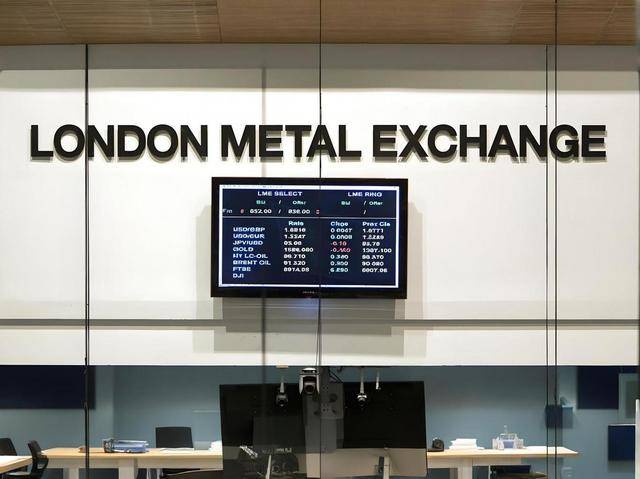
Core Viewpoint - The London Metal Exchange (LME) has announced a complete ban on all non-USD denominated metal options trading, effectively sidelining currencies like the RMB and Euro, which has caused immediate turmoil in the international commodity market. This move is seen as a defensive reaction to the rapid rise of the RMB in the industrial metal sector [2][4]. Group 1: RMB's Rise and Market Dynamics - Over the past three years, the RMB's trading volume in the global metal options market has surged from 30,000 contracts to 270,000 contracts, a ninefold increase, indicating its growing influence [4]. - The share of RMB-denominated orders for key metals like copper, nickel, and cobalt is expected to exceed 30% by the second half of 2024 [4]. - The Shanghai Futures Exchange has seen its copper futures holdings become the largest globally, with aluminum contract holdings surpassing LME's by 18% for the first time [6]. Group 2: Market Reactions to LME's Ban - In response to LME's exclusionary policy, Alfanar, a prominent copper wire manufacturer in the Middle East, announced that it would settle long-term orders in RMB starting from Q4 2025, directly referencing Shanghai Futures Exchange prices [9]. - The Dubai Commodity Exchange plans to launch RMB-denominated copper futures contracts in 2026, indicating a shift towards embracing the RMB in the Middle East [11]. - The Hong Kong Monetary Authority has increased the RMB liquidity pool to 110 billion HKD to support cross-border metal trade settlements in RMB [11]. Group 3: Implications for Global Currency Dynamics - The LME's ban is viewed as a short-sighted move that undermines its international credibility and limits its cooperation with resource-rich countries [6][8]. - The weakening of the USD's dominance in global resource allocation is prompting countries to seek alternative currencies, with the RMB emerging as a viable option due to its growing acceptance and the stability it offers [8][13]. - The RMB's rise is not about replacing the USD or Euro but about creating a more balanced and stable multi-currency system, especially in light of the risks associated with over-reliance on a single currency [17][19]. Group 4: Future Outlook for RMB Internationalization - The RMB's internationalization is expected to continue as countries look for more stable and convenient alternatives to the USD, particularly in resource-rich nations [19]. - The LME's attempt to counter market forces with administrative measures is unlikely to succeed, as market demand and industrial needs cannot be easily manipulated [21]. - The ongoing evolution of the global currency system will be a long-term process, with the RMB's role becoming increasingly significant as China solidifies its industrial advantages and enhances financial services [21].
美联储降息预期仍存 金价11月处于高位震荡
Jin Tou Wang· 2025-11-13 08:40
11月12日,沪金前20名期货公司(全月份合约加总)多单持仓16.84万手,空单持仓7.01万手,多空比 2.4。净持仓为9.83万手,相较上日减少2513手。 11月13日,上期所黄金期货仓单90426千克,环比上个交易日增加810千克。 分析观点: 数据显示,11月13日上海黄金现货价格报价957.80元/克,相较于期货主力价格(961.22元/克)贴水3.42 元/克。 (11月13日)全国黄金价格一览表 | 规格 | 报价 | 报价类型 | 交货地 | 交易商 | | --- | --- | --- | --- | --- | | Au不小于(%):99.99 | 957元/克 | 市场价 | 上海 | 上海黄金现货市场 | | Au不小于(%):99.99 | 958.72元/克 | 市场价 | 上海市/黄浦区 | 上海黄金 | 期货市场上看,11月13日收盘,沪金期货主力合约报961.22元/克,涨幅1.56%,最高触及963.96元/克, 最低下探945.96元/克,日内成交量达307850手。 【市场资讯】 恒泰期货研报:首先,美联储年内降息预期仍存。"宽松预期+弱美元"修复通道持续。其次,避 ...
特朗普没料到中国敢这么干,发行美债增持1182亿,美联储急刹车
Sou Hu Cai Jing· 2025-11-13 08:24
Core Insights - The issuance of $4 billion in Chinese sovereign bonds attracted a staggering $118.2 billion in subscriptions, achieving a subscription rate 30 times higher than the amount issued, indicating a strong global interest in Chinese dollar bonds compared to U.S. Treasury bonds [4][6]. Group 1: Bond Issuance Details - The Chinese bonds had competitive interest rates, with a 3-year rate of 3.646% and a 5-year rate of 3.787%, which are nearly on par with U.S. Treasury rates [3][4]. - The distribution of investors showed that 53% of the subscription funds came from Asia, 25% from Europe, 16% from the Middle East, and 6% from U.S. investors, highlighting a diverse global interest [3][4]. Group 2: Financial Context - The U.S. national debt has surpassed $38 trillion, with annual interest payments exceeding $1.1 trillion, raising concerns about fiscal sustainability [6]. - China, with over $3 trillion in foreign exchange reserves, is not issuing dollar bonds due to a cash shortage but rather as a strategic financial maneuver [6][10]. Group 3: Market Implications - The issuance sets a new interest rate benchmark for Chinese enterprises seeking to raise funds in international markets, providing a reference point for future dollar bond issuances [8]. - The funds raised will support infrastructure projects along the Belt and Road Initiative, creating a cycle where international capital flows into China and then is reinvested globally [8][10]. Group 4: Global Financial Dynamics - This issuance allows China to redefine the concept of "safe assets" in the international financial system, challenging existing credit ratings by demonstrating strong market demand [6][10]. - By becoming an active dollar allocator rather than a passive holder, China is reshaping global capital flows and potentially paving the way for the internationalization of the renminbi [10][14]. Group 5: Hong Kong's Role - The choice to issue bonds in Hong Kong reinforces its status as an international financial center, with China having issued a total of $25 billion in sovereign bonds there since 2017 [12]. - The high subscription rates for Chinese bonds compared to U.S. Treasuries suggest that international investors view Chinese sovereign credit ratings as comparable to those of the U.S. [12][14].

俄罗斯首次发行人民币计价国债
日经中文网· 2025-11-13 08:00
受美欧制裁影响,俄罗斯减少了美元和欧元的贸易结算。俄罗斯主张称,2024年中俄贸易额达到创历史 新高的2450亿美元,99%的结算用卢布和人民币进行。自2022年以来,俄罗斯企业陆续发行了人民币计 价公司债。 由于军费不断膨胀,补充财政收入的必要性也在提高。预计俄罗斯2025年的财政赤字将占国内生产总值 (GDP)的2.6%,比2024年的1.7%扩大。匿名接受采访的俄罗斯经济学家认为:"作为被认为风险较高 的卢布计价的替代选项,决定以人民币计价发行"。 俄罗斯总统普京(资料图,reuters) 俄罗斯从海外融资依然困难。俄乌冲突后外国投资者对俄罗斯国债的交易大幅减少。俄罗斯央行的数据 显示,非居民持有俄罗斯国债(以卢布计价)的比例在10月份仅为3.9%。俄乌冲突前约为2成。 在财政赤字扩大的背景下,俄政府寻求向通过对中国能源出口而持有大量人民币的企业等筹资…… 俄罗斯财政部11月12日宣布,将首次在俄罗斯发行以人民币计价的国内债券。在乌克兰问题长期化导致 财政赤字扩大的背景下,俄政府正寻求向通过对中国能源出口而持有大量人民币的企业等筹措资金。 12月8日将发行偿还期限为3~7年的国债。发行额将根据12月2日 ...
三季度《货币政策执行报告》解读:“双降”的潜在信号
CMS· 2025-11-13 07:33
Economic Analysis - The report highlights a renewed focus on "expanding domestic demand," marking the first increase in emphasis for the year, indicating a shift from previous reports that concentrated on supply-side issues[2] - It notes that the overall economic performance is expected to improve, with a reduction in the difficulty of achieving annual economic targets due to easing US-China relations and signs of price stabilization[1] - The report identifies a significant change in policy direction, emphasizing the need for a dual-pillar regulatory framework to maintain financial market stability and prevent moral hazards[3] Policy Direction - The report suggests a high probability of a reserve requirement ratio (RRR) cut to alleviate bank liquidity constraints, with a focus on maintaining relatively loose social financing conditions[3] - It emphasizes the importance of consumer finance, proposing measures to restore personal credit limits and reduce consumer finance interest rates, with current average loan rates dropping below 24%[14] - The adjustment in the approach to RMB internationalization indicates a shift from "cautious advancement" to "promotion," suggesting an increase in available RMB assets for foreign investors[15] Market Signals - The report indicates that the central bank expects a downward trend in social financing and M2 growth rates, suggesting that demand-driven interest rates are more likely to decrease than increase[20] - It highlights the limited upward space for interest rates, as the central bank aims to maintain reasonable interest rate relationships amidst a backdrop of low credit demand and stable deposit needs[22] - The overall expectation of a "double reduction" in monetary policy remains, with potential policy surprises being a trigger for market movements towards the end of the year[25]
今天的100万,十年后值多少
第一财经· 2025-11-13 05:49
Core Viewpoint - The article discusses the evolution of wealth and investment strategies over the past decade in China, emphasizing the importance of asset allocation to maintain purchasing power and quality of life in the face of economic changes and inflation [5][18]. Historical Context - The past decade marked a transition in China's economy from high-speed growth to high-quality development, with significant asset differentiation [7]. - The Consumer Price Index (CPI) in China averaged an annual increase of approximately 2.2% from 2015 to 2024, while economic growth remained above 5% annually [7]. Real Estate Market - The real estate sector experienced a boom, particularly in first-tier cities, with prices doubling between 2015 and 2016, followed by significant increases in second-tier cities [8]. - However, by 2020, property prices began to decline, with an average correction of at least 40% from peak levels, leading to situations where homeowners could not sell properties for enough to cover their mortgages [9]. A-Share Market - The A-share market has seen significant volatility, with the Shanghai Composite Index rising from around 2000 points in 2014 to 5100 points in 2015, followed by a sharp decline [10]. - Despite this, structural opportunities emerged, particularly in sectors like consumption, pharmaceuticals, and technology, with notable stocks like Kweichow Moutai and CATL achieving substantial gains [11]. Fixed Income Assets - The domestic monetary policy has been persistently accommodative, leading to a decline in the yield on ten-year government bonds from approximately 4.5% in 2015 to around 1.8% currently [13]. - Bond funds have yielded annual returns of about 4% to 6%, while bank wealth management products have seen yields drop from around 5% to 2% [13]. Gold Market - Gold prices have surged from $1200 per ounce in 2015 to over $4000 per ounce, reflecting a more than 300% increase [14]. - The article raises questions about the sustainability of this upward trend in gold prices amid geopolitical risks and currency devaluation [15]. Future Economic Landscape - The next decade is expected to witness profound changes in China's economy and social structure, with GDP growth projected to average between 4% and 5% [20]. - Key trends include a shift from investment-driven to consumption and innovation-driven growth, alongside a rising service sector and advanced manufacturing [21]. Asset Allocation Strategies - Holding cash in a bank is projected to result in a significant loss of purchasing power, with estimates suggesting that 1 million yuan could be worth only 600,000 yuan in ten years due to inflation [28]. - Real estate investment is deemed risky, with only prime locations in first-tier cities likely to retain value, while other areas may not offer investment potential [24]. - The A-share market is expected to reflect economic quality more accurately, with sectors like high-end manufacturing and green energy seen as promising [25]. - Gold and REITs (Real Estate Investment Trusts) are suggested as potential hedges against inflation and as alternatives to traditional fixed-income investments [26]. Conclusion - The article concludes that the future value of today's 1 million yuan will heavily depend on strategic asset allocation decisions made now, emphasizing the need for financial literacy and informed investment choices to navigate economic fluctuations [30].
金价涨疯!没人买金镯了?
Jing Ji Guan Cha Wang· 2025-11-13 05:17
Core Viewpoint - The buying logic for gold is undergoing a transformation, with a decline in consumer demand for jewelry and a simultaneous rise in investment and reserve demand [3][4]. Group 1: Consumer Demand Trends - The price of gold jewelry has surpassed 1300 RMB per gram, leading many consumers to hesitate or abandon purchases of traditional gold ornaments [3]. - In the first three quarters of 2025, China's gold jewelry consumption dropped by 32.50% year-on-year, contributing to an overall decline in gold consumption of 7.95% [3][4]. Group 2: Investment Demand Dynamics - Investment demand for gold bars, coins, and ETFs is increasing, contrasting with the decline in jewelry consumption [3]. - Central banks globally are significantly increasing their gold reserves, with China's central bank adding 3,000 ounces (approximately 1 ton) in October, marking the twelfth consecutive month of increases [4]. Group 3: Macroeconomic Influences - The shift in gold demand is driven by a profound restructuring of the global macro environment, including fluctuating U.S. monetary policy, increased dollar credit volatility, and ongoing geopolitical conflicts [4]. - The demand for gold as a sovereign risk-free asset is rising, with its strategic importance in national balance sheets increasing [4][5]. Group 4: Private Sector Investment Behavior - In the first three quarters, consumption of gold bars and coins in China increased by 24.55%, while gold ETFs benefited from tax exemptions, attracting significant investment [6]. - The introduction of differentiated VAT policies has accelerated the market's shift towards an investment-led structure [6]. Group 5: Supply-Side Developments - New discoveries in gold mining, such as the Dandong gold mine with an estimated resource of nearly 1,500 tons, are expected to enhance China's long-term resource security [6]. Group 6: Market Outlook - Despite a recent slight pullback in gold prices from a high of 4,100 USD per ounce, institutions maintain an optimistic outlook, with UBS setting a 12-month target of 4,200 USD per ounce [7]. - The assessment of gold's value is shifting from traditional metrics to a focus on central bank reserve changes, global open interest, and ETF flows [7].