
绿色低碳发展

Search documents
永和股份: 浙江永和制冷股份有限公司关于2024年度“提质增效重回报”行动方案的评估报告暨2025年度“提质增效重回报”行动方案的公告
Zheng Quan Zhi Xing· 2025-06-20 12:24
Core Viewpoint - The company aims to enhance operational quality and profitability through the "Quality Improvement and Efficiency Enhancement Return" action plan for 2024 and 2025, responding to the Shanghai Stock Exchange's initiative to protect investor interests and boost confidence [1][2]. Group 1: Business Performance and Strategy - The company focuses on its four main business segments: fluorocarbon chemicals, fluorine-containing polymer materials, fluorine-containing fine chemicals, and chemical raw materials, achieving a revenue of 4.605 billion yuan in 2024, a year-on-year increase of 5.42% [2][3]. - Domestic sales showed strong growth, with revenue reaching 2.988 billion yuan in 2024, up 15.30% year-on-year, increasing its share of total revenue from 60.97% in 2023 to 67.30% in 2024 [3]. - The company successfully raised 1.736 billion yuan through a targeted stock issuance, which will support the construction of a new energy materials industrial park [2][3]. Group 2: Innovation and Development - The company is committed to product iteration and upgrading, focusing on the development of second and third-generation refrigerants and accelerating the innovation of fourth-generation refrigerants [4]. - A total of 17 new patents were added in 2024, including 3 invention patents and 14 utility model patents, enhancing the company's technological capabilities [5]. - The company has established a research and development system that integrates various research institutes to improve innovation efficiency and protect intellectual property [5]. Group 3: Investor Relations and Communication - The company emphasizes high-quality information disclosure, having published 6 regular reports and 122 temporary announcements in 2024, and has received an "A" rating for information disclosure from the Shanghai Stock Exchange for two consecutive years [6][7]. - A cash dividend of 57 million yuan was distributed to shareholders in 2024, with a planned increase to 117 million yuan in 2025, representing a year-on-year growth of 105.82% [5][6]. Group 4: Corporate Governance - The company is enhancing its internal governance structure and compliance awareness, conducting training for board members and senior management to improve operational efficiency [8][9]. - An employee stock ownership plan was implemented, covering 388 employees and aligning their interests with those of the company and shareholders [9][10].

首届共享电单车行业发展论坛将举办 探讨诸多行业发展议题
Xin Hua Cai Jing· 2025-06-20 06:31
Core Viewpoint - The first "Urban Shared Electric Bicycle Comprehensive Governance and Industry Development Forum" will be held from July 9 to 11 in Beijing, focusing on the scientific governance paths for shared electric bicycles to promote the healthy, scientific, and sustainable development of the industry [1][2]. Group 1: Industry Development and Governance - The forum aims to address issues such as market access, parking order, safety hazards, and operational management faced by the shared electric bicycle industry [1]. - The Ministry of Housing and Urban-Rural Development has emphasized the importance of green and low-carbon development, promoting the construction of urban green slow-moving transportation systems [1]. - The shared electric bicycle industry has contributed positively to urban travel efficiency, green low-carbon development, and optimization of public resource utilization [1]. Group 2: Research and Collaboration - In 2024, the Ministry of Housing and Urban-Rural Development commissioned the China Urban Public Transport Association to initiate a special project on "Shared (Electric) Bicycle Urban Safety Operation and Governance," which will promote refined management practices across multiple cities [2]. - The project will compile a report on the safety operation and governance of shared (electric) bicycles for reference by various regions, showcasing successful governance experiences and models [2]. - The forum will bring together government departments, industry experts, shared electric bicycle operators, financial institutions, and research institutes to create a dialogue platform for discussing scientific governance paths and guiding fair competition among enterprises [2]. Group 3: Forum Focus Areas - The forum will focus on topics such as multi-party governance, collaborative development, standard formulation, and technological innovation [2]. - Key discussion areas will include fair competition mechanisms in the shared electric bicycle industry, comprehensive governance systems, collaboration between new travel modes and public transport, safety guarantees for shared electric bicycles and private electric vehicles, planning and management of electric bicycles in universities, and the industry's social responsibility reports and new safety technologies [2].
路易达孚全球首席商务官兼亚太区总裁周学军:中国已成为跨国企业的“投资沃土”
Mei Ri Jing Ji Xin Wen· 2025-06-20 03:32
Group 1 - The attractiveness of the Chinese market for foreign investment is continuously increasing, with China becoming a "fertile ground" for multinational companies due to its fair competition environment, expanded domestic demand, and accelerated industrial upgrades [1] - Louis Dreyfus Group, a global leader in agricultural products and food trading, has significantly increased its investment in China, with sales in the Chinese market accounting for approximately 25% of the group's global sales over the past five years [1] - The company has established several facilities in China, including a food technology industrial park in Guangzhou, a global R&D center in Shanghai, a shared services center in Tianjin, and a specialty feed protein factory [1] Group 2 - The recent project in Qingdao aims to fill a market hub gap in East China and will create synergies with local port logistics and feed processing industries, promoting integrated development of port, industry, and city [2] - Global challenges such as population growth, climate change, and macroeconomic fluctuations pose severe threats to food supply security, necessitating a focus on green low-carbon development and innovation to stabilize agricultural and food supply chains [2] - Louis Dreyfus Group has set a target to reduce greenhouse gas emissions by 33.6% by 2030, based on 2022 levels, and aims to incorporate clean energy sources in new project construction and operations [2]
安徽长丰:能源焕新,向绿而行
Ren Min Wang· 2025-06-19 11:35
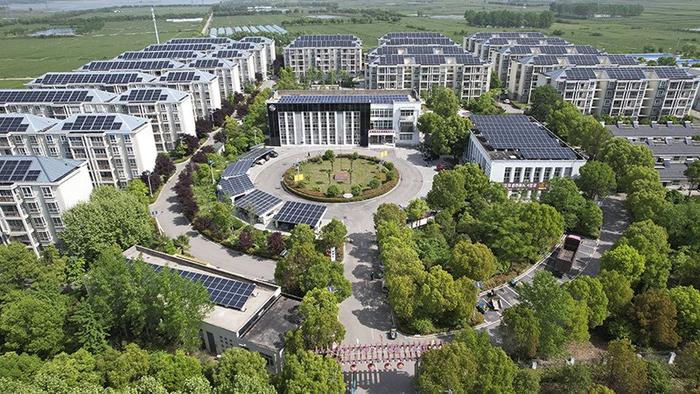
胡雨松 6月中旬,不到中午,安徽省合肥市长丰县气温上升至33℃。 皖丰长能公司陶楼"光伏+智慧农业"示范园负责人黄成茁很享受此刻的温度和光照,这意味着依靠光伏 发电,光伏项目又能获得一笔可观的收入。 从哪能找到成本可控的能源?答案藏在示范园的天花板上。 顶棚一排排光伏板,成为示范园"工业化"养鱼的底气所在。通过光伏板发电,这里不仅能在白天实现用 电自给自足,剩下的电还能上网交易,仅发电一项一年就能带来26万元左右的净收益。 经济账之外,生态账则更让人惊喜,这块总面积不到15亩的园区,光伏发电一年能达到68万度电,节约 碳排放480吨。 楼镇陶西社区屋顶光伏发电。韩芳摄 以"能源+"为产业更新赋能 走进陶楼"光伏+智慧农业"示范园,仿佛置身于一片花园。 38个集装箱堆成二层小楼,箱体内饲养的鲈鱼、鲫鱼、鳊花鱼活力十足,水循环系统两小时一次实现自 净化,产生的"废水"经过处理,成为院内芹菜、辣椒等蔬菜生长的有机肥。 以往养鱼都是在水塘,集装箱内大规模养鱼,怎么听都是一件新鲜事。"好处显而易见,机器精准放 料,避免农药使用,水体实现自循环。但也有难点,就是能源成本控制。"黄成茁说。 陶 作为安徽省唯一的能源综合改革 ...


奋力谱写中原大地推进中国式现代化新篇章 丨追青逐绿 美丽前行——河南践行“两高四着力”系列述评之三
He Nan Ri Bao· 2025-06-18 23:24
Core Viewpoint - The article emphasizes the importance of ecological protection and its direct correlation with the well-being of the people and high-quality development in Henan province, as highlighted by President Xi Jinping's directives during his visit [1][4]. Group 1: Environmental Quality Improvement - Henan province has seen a continuous improvement in air quality, with 101 days of good air quality recorded by the end of May, an increase of 6.9 days year-on-year, and only 1.9 days of heavy pollution, a decrease of 4.6 days [2]. - The province has implemented significant measures to tackle pollution, including the closure of over 120,000 "scattered and polluting" enterprises and the completion of ultra-low emission transformations in the thermal power industry [3]. Group 2: Ecological Protection Initiatives - Henan has established 351 various types of natural protected areas, safeguarding 95% of nationally protected wild animals and 80% of typical ecosystems, making it one of the provinces with the richest biodiversity in China [3]. - The province has completed afforestation of 6.45 million acres and wetland restoration of 27,800 acres along the Yellow River since 2019, contributing to improved ecological conditions [4]. Group 3: Sustainable Development Strategies - The province is focusing on green development, with 85.6% coverage of green transformation in key industries and the establishment of 11 zero-carbon factories and 301 green factories [6]. - The South-to-North Water Diversion Project has maintained water quality at Class II or above, ensuring a stable supply of clean water to northern regions [5]. Group 4: Ecological Civilization and Economic Growth - Henan has built 7 national-level innovation bases for the "Green Mountains and Clear Waters are Gold and Silver Mountains" concept and 19 national ecological civilization demonstration zones, transforming ecological advantages into developmental strengths [7]. - The province is committed to integrating ecological protection with economic development, promoting a harmonious coexistence between nature and human activities [5][6].
以高质量发展的确定性应对各种不确定性(深入学习贯彻习近平新时代中国特色社会主义思想)
Ren Min Ri Bao· 2025-06-18 21:53
Group 1 - The core viewpoint emphasizes the need for high-quality development to address uncertainties in the external environment, as highlighted in recent statements from the Central Political Bureau and President Xi Jinping [1][2][3] - The article discusses the importance of maintaining political direction and stability while focusing on building a new development pattern and enhancing technological self-reliance [1][2] - It asserts that China's economic strength has significantly increased, positioning it as the world's second-largest economy, and is on a path toward more sustainable and equitable development [2][4] Group 2 - High-quality development is supported by the centralized and unified leadership of the Communist Party, which has been crucial for achieving historical economic accomplishments [3][5] - The article notes that China's solid material and technological foundation is essential for addressing various uncertainties, with significant advancements in manufacturing and a robust industrial system [4][5] - It highlights the importance of a scientific and effective institutional framework to ensure the successful implementation of economic policies and strategies [5][11] Group 3 - The article emphasizes the need for a stable and predictable policy environment to boost confidence among businesses and promote high-quality development [11][12] - It discusses the importance of expanding domestic demand as a primary driver of economic growth, with a focus on enhancing consumption and investment [12][13] - The need for improving the quality of the industrial supply system is highlighted, with a call for structural reforms to enhance the efficiency of the economy [13][14] Group 4 - The article stresses the significance of coordinated urban and regional development to enhance overall economic performance and leverage regional advantages [14][15] - It advocates for a comprehensive green transformation of the economy, emphasizing sustainable practices and resource efficiency [15] - The importance of expanding high-level opening-up policies to foster innovation and competitiveness in the global market is also discussed [15][16]
石化产业与新能源耦合发展大会(鄂尔多斯)暨中科合成油储能示范成果发布会嘉宾观点集萃
Zhong Guo Hua Gong Bao· 2025-06-18 02:19
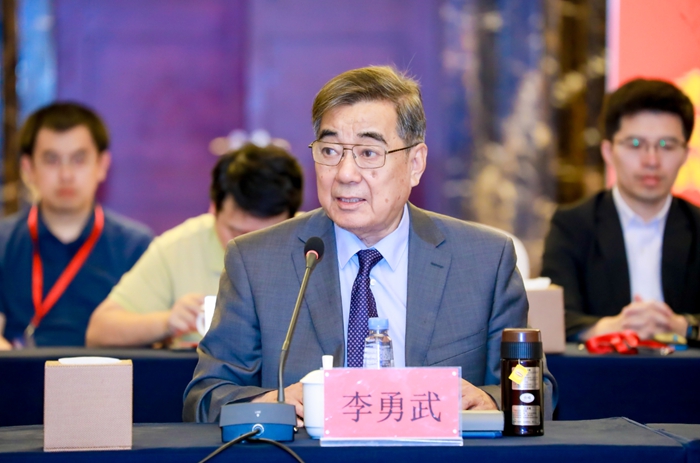
编者按 协同推进降碳减污扩绿增长,推动石化产业与新能源耦合发展既是绿色转型的破题之策,也是 高质量发展的必由之路。6月14日,由《中国化工报》有限公司主办,国家能源煤基液体燃料研发中 心、中科合成油技术股份有限公司承办的石化产业与新能源耦合发展大会(鄂尔多斯)暨中科合成油储能 示范成果发布会在内蒙古自治区鄂尔多斯市召开,业内专家围绕石化与新能源耦合发展的机遇与趋势展 开深入交流。 原化工部副部长、中国石油和化学工业联合会原会长李勇武:耦合新能源 打造产业新增长点 石化耦合新能源 绿色转型新引擎 《中国化工报》社有限公司总经理、总编辑张健秋:汇集行业智慧 推动绿色发展 习近平总书记强调:"绿色发展是高质量发展的底色"。党的二十届三中全会提出要"聚焦建设美丽中 国,加快经济社会发展全面绿色转型"。能源绿色低碳转型是以绿色能源助推经济社会高质量发展的必 然选择。协同推进降碳减污扩绿增长,推动石化产业与新能源耦合发展已经成为我国石油和化工行业绿 色转型可持续高质量发展的必由之路,也必将成为两大行业"十五五"融合优势强力发展的重中之重。 中国石油和化学工业联合会副会长兼秘书长赵俊贵:耦合新能源成石化转型"绿色引擎" 推 ...

特稿|屠光绍:深化资产管理功能,加快上海国际金融中心建设
Di Yi Cai Jing· 2025-06-18 01:28
Core Viewpoint - The construction of Shanghai International Financial Center is entering a new phase, emphasizing the importance of enhancing asset management functions to support high-quality development and adapt to global economic changes [1][2]. Group 1: Importance of Asset Management - Asset management is a core function of financial centers, crucial for asset valuation, allocation, and risk management [1]. - The integration of stock and incremental asset management is essential, focusing on revitalizing "dead" assets and transforming ineffective assets into effective ones [2]. - The role of mergers and acquisitions (M&A) is highlighted as a strategic tool for activating stock assets and expanding the asset management industry's business scope [2]. Group 2: Traditional vs. Emerging Asset Management - The fusion of traditional and emerging asset management is necessary, especially with the rise of new asset forms driven by technological advancements and green development [3][4]. - Attention must be given to managing traditional assets while also integrating new asset types, such as intellectual property and data assets, into the asset management framework [3][4]. - The management of carbon assets is emphasized as a strategic direction for supporting green finance and industry transformation [4]. Group 3: Domestic and International Asset Management - The importance of balancing domestic and international asset management is underscored, with a focus on enhancing the capability to manage international assets priced in RMB [6]. - The development of an international financial asset trading platform is crucial for facilitating the integration of domestic and international markets [6]. Group 4: Ecosystem Development for Asset Management - Emphasis on institutional development and regulatory coordination is necessary for building a global asset management center [7]. - The impact of technology, particularly AI, on asset management is recognized as a transformative force [7]. - Enhancing the capabilities of the asset management industry is vital for deepening asset management functions [7].

四川乐山:清洁能源筑基 低碳生活成风
Ke Ji Ri Bao· 2025-06-18 00:42
Core Viewpoint - Leshan is actively promoting green transformation in its industries and is recognized as a national carbon peak pilot city, focusing on low-carbon projects and sustainable development [1][2][7] Group 1: Energy Transition - The Leshan government has prioritized "green low-carbon transformation of energy" in its carbon peak implementation plan, leveraging abundant hydropower resources to support urban development [2][3] - Leshan has 327 hydropower stations with a total installed capacity of 7.8579 million kilowatts, generating approximately 26.5 billion kilowatt-hours annually, contributing significantly to the region's energy needs [2] - The Tianfu South Substation is a key hub for clean energy transmission, facilitating the "West-to-East Power Transmission" strategy and enhancing the capacity of the regional power grid [3] Group 2: Industrial Upgrades - The Desheng Vanadium-Titanium Circular Economy Park has undergone significant upgrades to achieve ultra-low emissions, with a reduction in sulfur dioxide emissions by 490 tons (47.69%) and nitrogen oxides by 518 tons (43.63%) compared to 2020 [4][5] - The park has become the first in Southwest China to meet full-process ultra-low emission standards, setting a benchmark for green industrial development in Leshan [5] Group 3: Green Living Initiatives - Leshan is enhancing urban green spaces, with plans to establish 10 new parks in the central urban area, contributing to improved air quality and environmental conditions [6] - The city has implemented energy-saving upgrades to streetlights, significantly reducing energy consumption while improving service efficiency [6] - The introduction of electric buses in Emeishan City reflects a growing trend towards green transportation, enhancing the quality of urban mobility for residents [6]
中国驻智利大使:中企积极参与智公共交通电动化进程,助力智方加速能源转型
news flash· 2025-06-18 00:06
中国是全球绿色公共交通、特别是电动化交通的引领者,已在百余座城市成功实现公共交通100%零排 放,其中绝大多数是电动公交,构建起覆盖全产业链的技术体系与运营经验。近年来,在"一带一路"倡 议下,中国企业凭借持续的技术创新、完善的产供链体系、优质的服务能力,积极参与智利公共交通电 动化进程,助力智利加速能源转型,得到智利社会与民众的认可。未来,中方愿秉持开放、合作、共赢 的理念,充分发挥技术、产业、金融等方面优势,继续推动中国企业在清洁能源、电动汽车产业等领域 与阿塔卡马大区、与科皮亚波市开展更多高水平务实合作,为可持续交通发展注入强劲动力。 还需要强调,电动交通使用大量的铜和锂,这也将给智利带来更大收益。可以说,中国和智利是矿业和 电动公交领域的天然合作伙伴和利益共同体,两国加大在这些领域的合作,也是对应对气候变化、保护 人类共同家园的重要贡献。 科皮亚波市希望成为南美首个实现公共交通100%电动化的城市,您与阿塔卡马大区政府举行了会谈, 在这一目标中中国将扮演什么角色? 答:科皮亚波市致力于成为南美首个实现公共交通100%电动化的城市,这一目标高度契合全球绿色低 碳发展趋势和智利政府能源发展转型,彰显了城市 ...