
数智化转型

Search documents
金融“组合拳”激活消费引擎 哈银消费金融以数智化创新助力4000亿普惠目标
Zhong Guo Chan Ye Jing Ji Xin Xi Wang· 2025-06-27 03:18
在线上业务方面,哈银消费金融依托自主研发的APP、小程序及公众号等数字化平台,实现全流程线上 操作。通过整合征信数据与大数据分析技术,公司构建智能风控系统,精准评估客户信用并快速授信, 同时提供灵活分期还款服务。线下业务则由专业化直营团队运营,采用"数字化+属地化"服务模式,城 市经理提供面对面金融服务,严格执行"实地尽调"风控标准,确保业务合规,客户扫码即可完成线上申 请,结合线下专业服务与智能审批,享受安全可靠的消费信贷体验。与此同时,哈银消费金融积极创 新,聚焦智能养老等新兴趋势,围绕场景化需求创新金融产品。截至2025年5月,哈银消费金融已助力 普惠金融消费总额超4000亿元,服务触达1800余万人,充分彰显科技创新在提振消费中的核心支撑作 用。 秉承"普惠金融、和谐共富"理念,哈银消费金融以稳健经营为根基,通过数智化转型优化产品供给结 构、扩大服务覆盖范围。其创新实践不仅丰富了金融市场层次,也为消费金融行业高质量发展提供了示 范样本。未来,随着《意见》政策红利持续释放,哈银消费金融有望进一步发挥金融科技优势,为扩内 需、稳增长注入新动能。 作为持牌消费金融机构,哈银消费金融公司积极响应国家号召,自2 ...
从快递小镇到多元供应链 详解中国物流产业的“青浦样本”
Zheng Quan Ri Bao Zhi Sheng· 2025-06-26 17:10
Core Insights - The express delivery industry in China is experiencing significant growth, with a projected volume of 1.745 billion packages in 2024, maintaining its position as the world's largest market for 11 consecutive years, while the average delivery price has decreased to 8 yuan [1] - Qingpu District in Shanghai is emerging as a vital hub for logistics, housing over 400 logistics companies, including major players like Zhongtong and Yunda, contributing to a total express delivery volume of 2.05 billion packages in 2024 [1][2] Group 1: Industry Growth and Trends - The express delivery sector has evolved from a labor-intensive model to a high-tech industry, with companies like Zhongtong and Yunda investing in automation and smart logistics solutions [10][11] - The average transportation cost per package for Zhongtong, Yunda, and Round Express has decreased significantly, indicating improved operational efficiency [11] Group 2: Qingpu District's Strategic Advantages - Qingpu's strategic location near major transportation hubs, including the Hongqiao International Comprehensive Transportation Hub, provides logistical advantages that reduce transportation costs for express delivery companies [3][4] - The local government has adopted a supportive approach, fostering a favorable business environment that encourages logistics companies to establish operations in Qingpu [6][10] Group 3: Technological Advancements - Companies are leveraging advanced technologies such as automated sorting systems, drones, and unmanned vehicles to enhance delivery efficiency and reduce operational costs [7][9][10] - Zhongtong has implemented a "drone + unmanned vehicle" delivery model, resulting in a 50% increase in delivery efficiency and a significant reduction in costs [8][9] Group 4: Future Directions and Innovations - Qingpu District is focusing on high-value logistics sectors, including cold chain and cross-border logistics, to enhance the overall value proposition of its logistics ecosystem [13][14] - The integration of various logistics services, such as supply chain management and digital platforms, is expected to create a more comprehensive logistics ecosystem in Qingpu [14][15]


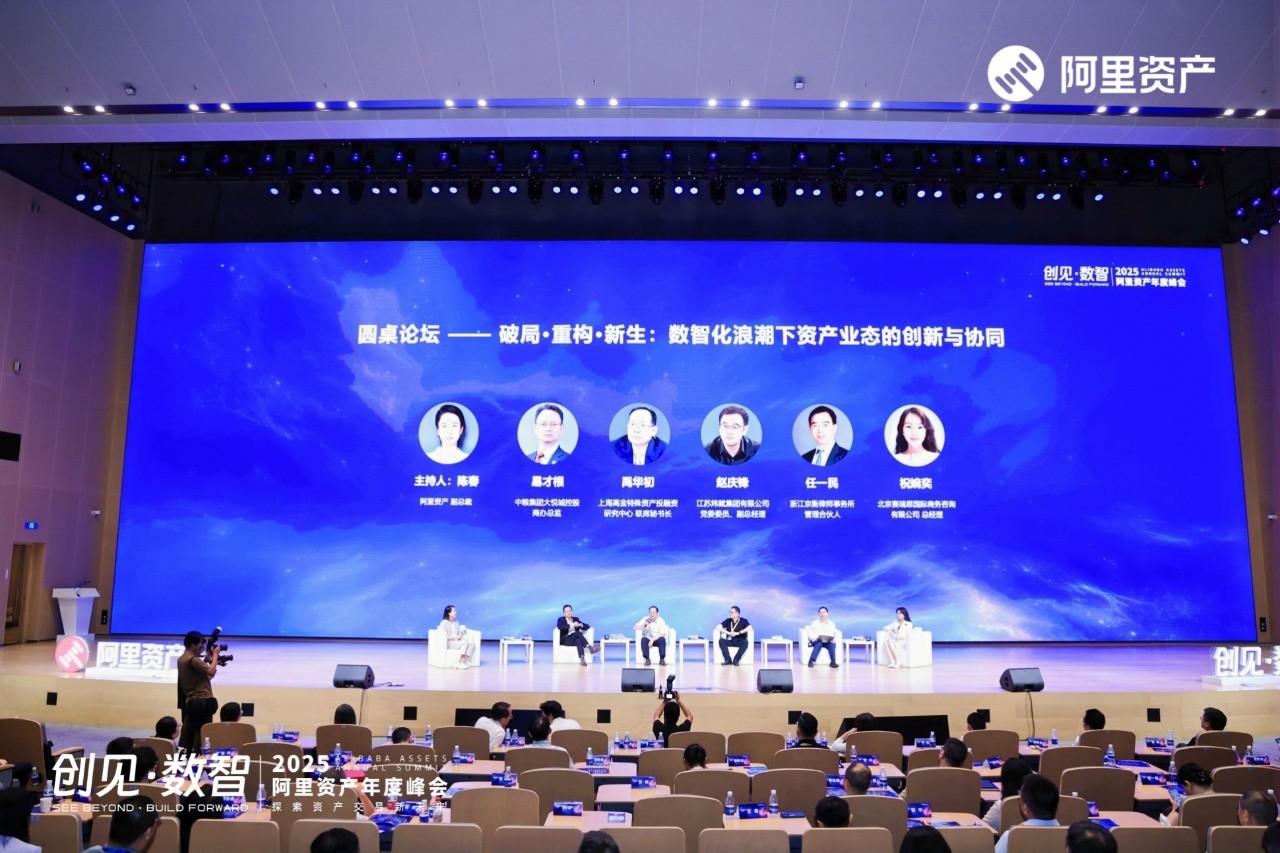
破局·重构·新生 阿里资产峰会圆桌共话数智化浪潮下的资产生态协同新范式
Cai Fu Zai Xian· 2025-06-26 08:51
Core Insights - The roundtable forum at the "2025 Alibaba Asset Annual Summit" focused on the theme of innovation and collaboration in the asset industry under the wave of digital transformation [1][6] - Experts discussed the challenges and opportunities in asset disposal and revitalization, emphasizing the need for market-oriented solutions to address these issues [3][4] Group 1: Asset Revitalization Challenges - Asset disposal and revitalization are crucial for high-quality economic development, with the industry facing unprecedented challenges and opportunities [3] - Jiangsu Weifu Group has successfully revitalized a large number of idle assets through online auctions, achieving a transaction amount of 1.719 billion yuan with a premium rate of 44% [3] - The future direction for asset revitalization is to build a sustainable ecosystem centered on efficiency, value, and risk over the next 3-5 years [3] Group 2: Market-Oriented Risk Mitigation - The role of asset management companies is evolving, focusing on innovative practices and market-oriented methods to effectively mitigate risks [4] - The trend of "out-of-court restructuring" and self-rescue by entrepreneurs is expected to become significant, requiring new approaches to address complex legal relationships [4] Group 3: Ecological Collaboration for Future Growth - The transformation of state-owned asset revitalization faces six major pain points, necessitating more proactive and effective measures [6] - The future of asset transactions will be increasingly professional, complex, and diversified, requiring deep collaboration among various stakeholders [6] - The consensus from the forum highlighted that technology empowerment is a means, while ecological collaboration is key to achieving dynamic value growth in state-owned assets [6][5] Group 4: Strategic Upgrades and Future Vision - Alibaba Assets plans to upgrade from an "asset trading platform" to a "one-stop asset service platform," driving digital transformation and enhancing service systems [7] - The company aims to build an open and intelligent asset service ecosystem, enhancing the value of the entire asset chain and defining the future landscape of asset management [7]

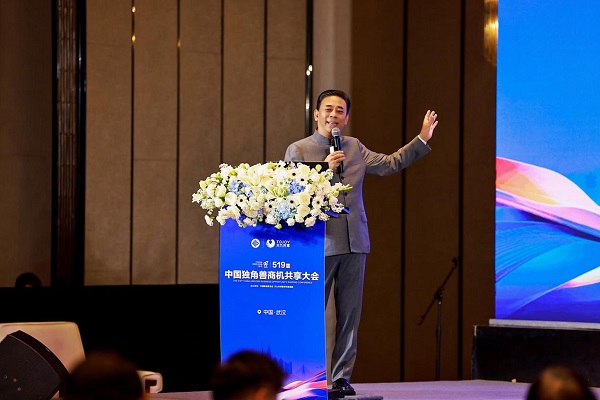
卢俊卿民企巡讲图谱:健康筑基×财富换轨×传承破局
Sou Hu Wang· 2025-06-26 05:33
Core Insights - The tour led by Lu Junqing, founder of Tianjiu Shared Group, aimed to empower private enterprises across six cities, focusing on themes of "health revolution, wealth leap, and inheritance awakening" [1][3][5] - The event highlighted the need for private enterprises in Wuhan to shift from a "heavy manufacturing, light innovation" mindset to embrace digital transformation through strategies of "changing tracks, changing models, and changing methods" [3][5] - The series of talks served as a strategic compass for private enterprises navigating challenges such as digital transformation and generational succession, emphasizing the importance of resource integration and wisdom in competition [5] Summary by Sections Event Overview - The tour concluded in Wuhan, marking the end of a series of speeches that began in Beijing, covering key economic regions in China [1][5] - Over 5,000 entrepreneurs participated, receiving systematic guidance on generational inheritance and industrial upgrading [1] Regional Focus - The Wuhan event specifically addressed the "Central China Rise" national strategy, emphasizing local industrial characteristics like intelligent manufacturing and innovation in the Optics Valley [3] - Lu Junqing referenced data indicating a 68% turnover rate for passive successors within three years, urging local businesses to adopt a "strategic inheritance" mindset [3] Strategic Insights - The tour's overarching philosophy was to "say goodbye to tragedy and embrace composure," aiming to provide a clear path for entrepreneurs facing dual crises in their careers [3][5] - The series of talks is described as a full-chain empowerment system, transitioning from "sweat for growth" to "wisdom for value creation" [5] - The initiative is set to continue expanding to more cities, aiming to inject innovative momentum into the high-quality development of the private economy [5]
北方铜业(000737) - 000737北方铜业投资者关系管理信息20250625
2025-06-25 11:46
Group 1: Company Overview - North Copper Industry Co., Ltd. specializes in the mining, selection, smelting, and processing of copper metal, covering the entire copper business value chain [2] - Main products include cathode copper, gold ingots, silver ingots, copper alloy strips, and rolled copper foil, with a production capacity of 320,000 tons/year for cathode copper and 1.22 million tons/year for sulfuric acid [2] Group 2: Financial Performance - In 2024, the company reported a revenue of CNY 24.107 billion and a net profit of CNY 613 million [3] - For Q1 2025, revenue was CNY 6.838 billion with a net profit of CNY 371 million [3] Group 3: Debt and Cash Flow Management - As of March 31, 2025, the company's debt-to-asset ratio was 64.88%, with CNY 965.5 million raised in 2024 to support new projects [4] - Current cash flow situation is normal, supporting operational needs [4] Group 4: Competitive Advantages - Significant copper ore reserves of 213 million tons, with ongoing exploration to extend service life [5] - Advanced mining technology leading to high production efficiency and low costs [5] - Integrated industry chain from exploration to processing, enhancing operational risk management [5] Group 5: Operational Risks - Price volatility of products and raw materials, particularly cathode copper, directly impacts profit levels [6] - Safety risks associated with mining operations, including potential natural disasters and operational accidents [6] Group 6: Expansion and Development Plans - No current plans for expanding smelting capacity [6] - Focus on strengthening the upstream supply chain and enhancing recycling of copper resources [8] - Plans to establish large-scale waste copper recycling bases and promote integrated development of recycling and processing [8] Group 7: Gold Production and Market Impact - The company plans to produce 6 tons of gold ingots in 2025, with gold prices influenced by supply-demand dynamics and economic factors [8] Group 8: High-Performance Copper Foil Project - The high-performance rolled copper foil project has completed its first phase, with a production capacity of 25,000 tons/year for copper alloy strips and 5,000 tons/year for rolled copper foil [8]

AI驱动油气产业数智跃迁
Zhong Guo Hua Gong Bao· 2025-06-25 04:30
中化新网讯 6月20日,以"AI赋能,驱动油气产业数智跃迁"为主题的2025海南油气行业发展交流会在海 口举行,活动汇聚海南省油气行业和相关领域的行业学者和企业代表,共同探讨数智技术与油气产业融 合发展。 "AI作为石化行业数智化升级的重要赋能技术,正加速向石化行业新材料研发、炼化生产、安全环保、 设备管理、经营管理等各业务领域融合。"石化盈科智能制造板块专家高瑞建议,石化企业在AI探索、 试点和推广应用过程中,应结合自身的企业规模、业务需求、数据基础、IT基础设施能力和投资预算等 方面,围绕"能力—效率—成本"进行统筹考虑,系统谋划AI大、小模型的部署和应用方向,与石化工艺 和装备的深度融合,更好推动企业数智化升级。 华为油气行业人才发展解决方案专家陈浩泉在《数字化人才转型实践经验分享》中系统介绍了华为人才 发展理念、数字化人才培养实践以及油气行业人才培养实践案例。他表示,数智化人才队伍建设是数智 化战略落地的重要保障力量,需要面向管理人才、业务人才、技术人才开展体系化培养。面向不确定性 场景,企业需要通过训战结合的模式,探索业务新模式,打造数智化人才特种兵队伍,孵化企业数智化 转型落地应用的战略能力。 华 ...
湘江新引力 | 三诺生物发展的“三级跳”:湘江新区沃土共育新高度
Zhong Guo Xin Wen Wang· 2025-06-25 03:34
Core Insights - The establishment of the global R&D center by Sanofi Bio in Hunan Xiangjiang New Area represents a significant investment of 500 million RMB and aims to enhance research and development in the biosensor industry, particularly in wearable and high-end implantable medical devices [1][5] - The company has successfully expanded its blood glucose meter products to 187 countries, becoming the fourth largest blood glucose meter manufacturer globally [1][9] - The chairman of the company, Li Shaobo, emphasizes the importance of aligning with future market demands and technological advancements for the company's evolution [1][4] Company Development - Sanofi Bio was founded in 2002 by Li Shaobo, who recognized the potential for diabetes management solutions in China, where the diabetes prevalence rate increased significantly from 0.7% in 1980 to 4.5% in urban areas by 2002 [3][4] - The company has benefited from favorable policies and a supportive entrepreneurial environment in Hunan Xiangjiang New Area, which has facilitated its growth and innovation [5][7] - Sanofi Bio has established long-term partnerships with local universities and hospitals, enhancing its research capabilities and technological advancements [5][9] International Expansion - In 2012, Sanofi Bio became the first publicly listed company in China's biosensor industry, marking a significant milestone in its internationalization strategy [8] - The company has pursued overseas acquisitions to enhance its global presence and operational efficiency, focusing on integrating financial, IT, HR, and management systems across its international operations [8][9] - The establishment of an international talent service center in Hunan Xiangjiang New Area has supported the recruitment of overseas talent, further strengthening the company's international capabilities [8][9] Adaptation to AI Era - In 2021, the company adjusted its vision to become a global leader in diabetes digital management, recognizing the need to embrace AI technology for future growth [10][11] - The company is implementing a digital transformation strategy to enhance customer interactions and operational efficiency through data-driven solutions [11][13] - Sanofi Bio's new product, the Continuous Glucose Monitoring System (CGM), reflects its commitment to integrating smart devices and big data technology for improved patient management [13] Future Outlook - The completion of the global R&D center is expected to position Sanofi Bio as a leader in diabetes management, leveraging cutting-edge technologies to drive innovation in the biomedicine sector [1][13] - The company aims to build a comprehensive diabetes management system that incorporates AI and digital technologies, contributing to the development of Hunan's biomedicine industry [13]

广发证券(000776) - 2025年6月24日投资者关系活动记录表
2025-06-24 11:42
Group 1: Business Strategy and Development - The company focuses on integrating into national development, serving the real economy, and maintaining high-quality development, with core tasks including enhancing competitiveness and resource allocation efficiency [2] - Key strategies include deepening business transformation, optimizing business structure, and accelerating digital transformation to improve operational efficiency [2] - The company maintains a leading position in several core business areas, including research, asset management, and wealth management [2] Group 2: Wealth Management Business - The company emphasizes high-quality client engagement and efficient online operations in its wealth management sector, balancing online and offline services [3] - Continuous reforms in wealth management are aimed at enhancing organizational capabilities, resource allocation, and talent support for high-quality development [3] - The company is committed to compliance and aligning investor interests with its advisory services [3] Group 3: Investment Banking Business - The company adheres to national strategies and regulatory requirements, prioritizing financial services for the real economy [4] - Focus on resource accumulation, client development, and professional capability in key sectors, particularly in the Greater Bay Area [4] - The company is enhancing its comprehensive financial service capabilities through integrated domestic and international operations [4] Group 4: Investment Management Business - The investment management segment includes asset management, public fund management, and private fund management, leveraging resources to offer diverse products [5] - The company aims to strengthen its role as a wealth manager, enhancing research and investment capabilities while expanding product offerings [5] - As of March 2025, the public fund management scale of Guangfa Fund and E Fund ranks third and first in the industry, respectively, excluding money market funds [5]

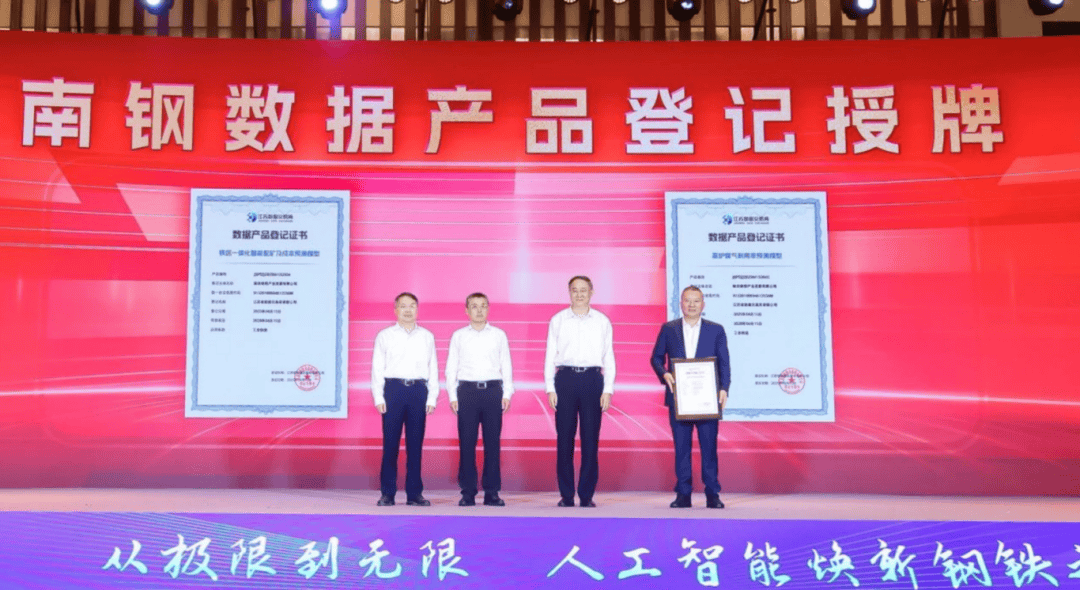
钢铁与AI融合新纪元:南钢“元冶·钢铁大模型”引领行业智能化变革
Sou Hu Cai Jing· 2025-06-23 23:49
Core Insights - The steel industry in China is undergoing a significant transformation through the integration of information technology, highlighted by the launch of the "Yuanye Steel Model" in collaboration with Huawei [1][6] - Nanjing Steel Group aims to become an internationally respected enterprise by fully digitizing its operations and exploring new business models, focusing on both "industrial intelligence" and "intelligent industry" [3] - The company has established a unique digital operation management system, enhancing capabilities in energy management, quality control, delivery efficiency, cost control, and procurement marketing [3][6] Digital Transformation - Nanjing Steel's digital transformation journey includes the implementation of a "one brain, three centers" management system, achieving comprehensive process integration from production to operations [3] - The company has initiated data governance and is among the first to include data assets in financial statements, receiving accolades in national data competitions [3] Intelligent Development - The "Artificial Intelligence Hundred Scenes Thousand Models" initiative has led to the development of over 120 AI models, significantly boosting the company's resilience [4] - A collaborative effort with Huawei aims to accelerate the intelligent transformation of the steel industry through the "Steel Big Model Hundred-Day Campaign" [4] Innovation in Data Management - The launch of the "Yuanye Steel Model" signifies a major step in Nanjing Steel's digital transformation, integrating various AI models with industry mechanisms to create a dual-driven intelligent model cluster [6] - The company has built a "cloud-edge-end" big data platform for data aggregation and real-time monitoring, ensuring data quality and reliability [6] Achievements in Smart Manufacturing - Nanjing Steel has achieved notable results in smart R&D and quality control, reducing R&D costs and time through AI capabilities [8] - The application of mechanical performance prediction models has improved product yield and delivery efficiency, while visual models have enhanced quality inspection processes [8]

奶业闯关
Jing Ji Ri Bao· 2025-06-23 22:10
Core Viewpoint - The Chinese dairy industry is transitioning from rapid growth to high-quality development, facing challenges such as supply-demand imbalance and price fluctuations, while also showing significant potential for future growth in consumption and production efficiency [1][10][16]. Industry Overview - The dairy industry is recognized as a strategic sector for national health and agricultural integration, with strong government support for quality improvement and international competitiveness [1][3]. - China's per capita dairy consumption has increased from 7 kg in 2000 to approximately 42 kg currently, indicating a growing market [3][4]. Production and Supply Chain - The dairy production volume is projected to reach 40.79 million tons by 2024, recovering from previous setbacks due to consumer confidence issues [3][4]. - The number of dairy cows in Hebei province has increased from 1.06 million in 2019 to 1.45 million in 2024, with fresh milk production rising from 3.85 million tons to 5.6 million tons in the same period [3][4]. - The implementation of the Quality Milk Project has led to significant advancements in milk quality and production technology, with 97% of pasteurized milk produced in 2024 being classified as high-quality [4][5]. Challenges and Market Dynamics - The industry is currently experiencing a phase of oversupply, with raw milk prices dropping significantly, leading to financial strain on dairy farms [10][11]. - The average purchase price of fresh milk fell to 3.90 yuan per kg in 2023, a decrease of 8.2% from the previous year, with many farms facing losses [10][11]. Consumption Trends - Domestic dairy consumption is still below recommended nutritional standards, with significant potential for growth as consumer awareness and dietary habits evolve [17][18]. - The market share of domestic infant formula has risen to over 60%, with brands like Feihe capturing more than 20% of the national market [8][9]. Strategic Recommendations - To stimulate consumption, the industry should focus on addressing consumer education, product diversity, and pricing strategies to make dairy products more accessible [19][20]. - There is a need for policy support to stabilize production and enhance the integration of dairy farming and processing to improve overall industry resilience [12][27]. Future Outlook - The dairy industry is expected to continue evolving, with a focus on technological innovation, quality improvement, and market expansion, particularly in rural areas [16][30]. - The establishment of a more integrated supply chain and better risk-sharing mechanisms among stakeholders is crucial for sustainable growth [27][28].