
现代化产业体系

Search documents
金观平:标准引领助产业强而优
Jing Ji Ri Bao· 2025-11-13 08:17
Group 1 - The core viewpoint emphasizes the need to upgrade standards to support high-quality development and enhance the role of standards in guiding and ensuring industrial progress [1][3] - China's standardization efforts have yielded positive results, with over 47,000 national standards established, including successful cases that have led to the upgrade of industries, such as standards for lithium-ion batteries in energy storage [1] - The current manufacturing sector faces challenges such as low-level repetitive competition and reliance on foreign core technologies, which are often linked to outdated or absent standard systems [1] Group 2 - Optimizing standard supply requires focusing on the pain points, difficulties, and growth areas of economic and social development, particularly in upgrading traditional industries and addressing public concerns [2] - Strengthening the implementation of standards is crucial, necessitating robust supervision and support for enterprises to innovate and adhere to high standards [2] - Enhancing the internationalization of standards is essential for Chinese enterprises to expand globally, promoting participation in international standard-setting and aligning with advanced international standards [2]
人工智能会怎样全面赋能高质量发展?
Tai Mei Ti A P P· 2025-11-13 04:44
Group 1: Core Insights of the "15th Five-Year Plan" - The "15th Five-Year Plan" emphasizes "high-quality development" and adjusts growth targets to "maintain within a reasonable range," highlighting a shift towards quality and efficiency in economic growth [1] - The plan introduces the concept of "new quality productivity" and aims to build a modern industrial system centered on advanced manufacturing, indicating a strategic upgrade in the national technology strategy [1] - The focus on artificial intelligence (AI) has significantly increased, with the term mentioned 8 times in the plan, reflecting its importance as a key strategic engine for national development [2] Group 2: AI Application and Industry Impact - The shift from focusing on AI technology to promoting AI applications across various industries marks a fundamental change in national strategy [3] - AI applications are expected to drive productivity and improve living standards, with significant potential already demonstrated in various sectors [9] - The "AI+" initiative outlines six key areas for AI application: scientific technology, industrial development, consumption stimulation, public welfare, governance capability, and global cooperation [4] Group 3: AI in Specific Sectors - In scientific research, AI is revolutionizing drug development by significantly shortening the time required for identifying disease-related biological targets and enhancing the efficiency of molecular design [5] - In industrial development, AI is integrated into production and management processes, improving product quality and operational efficiency, with reports indicating procurement efficiency improvements of over 30% [6] - In the consumer sector, AI enhances user experience through personalized recommendations and intelligent customer service, leading to increased sales conversion rates [7] Group 4: Challenges and Future Directions - Despite the initial successes of AI applications, challenges remain in expanding these applications from isolated breakthroughs to widespread adoption across industries [13] - Data quality and accessibility issues, including the prevalence of "data silos," hinder the training of AI models and the effectiveness of AI applications [13][14] - The need for improved algorithms and models, as well as addressing the challenges of computing power, particularly in the context of high-performance chips, is critical for the future of AI development in China [15]
财政政策将延续积极有为主基调
Jin Rong Shi Bao· 2025-11-13 02:05
Core Viewpoint - The "15th Five-Year Plan" emphasizes the role of proactive fiscal policy in promoting economic growth, structural adjustment, and risk prevention while ensuring fiscal sustainability [1][3]. Fiscal Policy and Economic Development - Fiscal policy will focus on expanding domestic demand, supporting high-level technological self-reliance, and improving people's livelihoods during the "15th Five-Year Plan" period [2][4]. - The government aims to enhance fiscal sustainability while maintaining an active fiscal stance, balancing development and security, efficiency and equity, and short-term and long-term goals [1][3]. Major Tasks and Strategic Goals - Key tasks include building a modern industrial system, accelerating technological self-reliance, optimizing productivity layout, and promoting green transformation [3][4]. - Significant public investment is required for these tasks, which often have strong externalities and long return cycles, necessitating government leadership [3]. Technological Modernization and Support - The plan highlights the importance of fiscal support for technological modernization, focusing on basic research and key core technology breakthroughs [4]. - The strategy includes using various fiscal tools to optimize traditional industries and foster emerging sectors [4][5]. Demand and Supply Dynamics - The emphasis is on shifting fiscal support from supply-side policies to demand-side initiatives, enhancing social welfare for households [4][5]. - The goal is to create a dynamic balance where new demand leads to new supply and vice versa, supporting a new development pattern [5]. Fiscal Sustainability and Taxation - The plan calls for enhancing fiscal sustainability through structural adjustments in tax policies, including improving local tax systems and maintaining reasonable macro tax burdens [7][8]. - Experts suggest optimizing existing tax reduction policies for precision and efficiency, particularly for technology innovation and small enterprises [7]. Local Government Debt Management - The government aims to prevent and mitigate local government debt risks by implementing a comprehensive debt management strategy and ensuring no new hidden debts are created [8]. - A unified long-term regulatory system for local government debt is to be established, with strict accountability for violations [8].
专精特新中小企业超14万家,工信部探索建设专精特新赋能中心
Di Yi Cai Jing Zi Xun· 2025-11-13 00:54
Core Insights - The development of small and medium-sized enterprises (SMEs) is crucial for innovation, employment, and economic stability in China, with over 600,000 technology and innovation-oriented SMEs cultivated to date [1][2] - The "specialized, refined, distinctive, and innovative" (专精特新) approach is being promoted to enhance the vitality and growth of SMEs, contributing significantly to the industrial sector [1][2] Group 1: Current Status of SMEs - As of 2024, the number of registered SMEs in China is expected to exceed 60 million, accounting for 99.9% of all enterprises, 84.3% of employment, and 78% of total assets [1] - SMEs have shown superior growth rates compared to large enterprises, with average annual growth rates of 6.4% in value-added, 7.4% in revenue, and 5.4% in profit [2] Group 2: Government Initiatives and Support - The establishment of the second phase of the National SME Development Fund has been approved, aimed at attracting more social capital to support the growth of early-stage SMEs [1] - The government is focusing on building national innovation platforms and specialized empowerment centers to enhance the innovation capabilities of SMEs [2] Group 3: AI and Digital Transformation - The Ministry of Industry and Information Technology has identified 238 typical application scenarios for AI to empower SMEs, focusing on optimizing business processes and innovating products and services [4] - The selected AI applications include 61 for smart hardware and 118 for smart software, highlighting the potential of AI in enhancing decision-making and automating complex tasks [4] Group 4: Financial Support and Capital Markets - The establishment of "specialized, refined, distinctive, and innovative" boards has been announced, with 30 provinces and cities participating, facilitating financing for over 15,000 enterprises and raising more than 50 billion yuan [5] - The ongoing development of these boards is expected to enhance the multi-tiered capital market and improve the financing support system for SMEs [5]

中金 | 深度布局“十五五”:宏观篇
中金点睛· 2025-11-12 23:26
Core Viewpoint - The article emphasizes the importance of the "15th Five-Year Plan" in enhancing technological innovation, optimizing internal economic structure, and promoting domestic demand while maintaining a confident approach to external openness [2][3][4]. Group 1: Macroeconomic Context - The "15th Five-Year Plan" is positioned as a critical phase for China's economic development, focusing on higher requirements for technological innovation and the importance of industrialization and scale [2]. - The development environment has changed significantly compared to the "14th Five-Year Plan," with breakthroughs in technological innovation, a downward financial cycle, and a more complex geopolitical landscape [3]. Group 2: Supply-Side Enhancements - The emphasis on building a modern industrial system is crucial, with a focus on enhancing supply capabilities and increasing the demand for technological innovation [4][5]. - The plan outlines specific directions for traditional industries, including strengthening their global competitiveness, while also highlighting strategic emerging industries such as new energy and quantum technology [5][6]. Group 3: Innovation and Technology - The "15th Five-Year Plan" aims to enhance independent innovation capabilities across core technologies, industries, talent, and the digital economy [6]. - Key areas for technological breakthroughs include integrated circuits, advanced materials, and biomanufacturing, with a focus on full-chain support for innovation [6][7]. Group 4: Demand-Side Strategies - The plan recognizes the need to boost domestic demand, with a target to increase the consumer spending rate significantly [9][10]. - Strategies to enhance consumption include improving institutional mechanisms, increasing quality supply, and removing unreasonable restrictions on consumption [10][11][12]. Group 5: Social Welfare and Employment - The plan emphasizes the importance of improving social welfare and employment to support consumer spending, with a focus on high-quality employment and equitable income distribution [12][13]. - Policies aimed at enhancing social security and reducing the financial burden on households are highlighted as essential for stimulating demand [13][14]. Group 6: External Openness - The "15th Five-Year Plan" promotes a more proactive and autonomous approach to external openness, emphasizing the importance of balancing imports and exports [15][16]. - Financial openness is identified as a key area for enhancing China's global financial standing, with a focus on increasing the internationalization of the RMB [17][18].

发展新质生产力塑造竞争新优势
Jing Ji Ri Bao· 2025-11-12 22:53
党的二十届四中全会明确提出,加快高水平科技自立自强,引领发展新质生产力。新质生产力,作为由 技术革命性突破、生产要素创新性配置、产业深度转型升级而催生的先进生产力质态,不仅符合新发展 理念要求,而且已经在实践中形成并展示出对高质量发展的强劲推动力、支撑力。面对新一轮科技革命 和产业变革的历史性机遇,唯有牢牢把握新质生产力这一关键变量,才能从根本上增强我国经济发展的 内生动力,在日趋激烈的全球竞争中重塑优势、掌握战略主动。 强化创新驱动培育核心动能 科技创新决定着新质生产力的发展高度,也影响着中国经济未来在全球竞争格局中的战略位势。尽管我 国一些关键领域核心技术受制于人的局面还没有从根本上得到改变,但这些亟待突破的卡点堵点,正是 我们未来发力的主攻方向,其背后蕴藏着构筑国家竞争新优势的巨大潜力和战略空间。 科技创新是发展新质生产力的核心要素。不同于传统生产力,新质生产力更加注重生产力"质"的变革。 新质生产力的新质就在于,它是由革命性、颠覆性新技术所催生,并由此系统集成出新动能、培育出新 优势的一种先进生产力质态,具有高技术、高效能、高质量特征。加快发展新质生产力,有利于实现高 水平科技自立自强,增强经济竞争力 ...
标准引领助产业强而优
Jing Ji Ri Bao· 2025-11-12 22:18
Group 1 - The core viewpoint emphasizes the need to upgrade standards to support high-quality development and enhance the role of standards in guiding and ensuring industrial progress [1][3] - China's standardization efforts have yielded positive results, with over 47,000 national standards established, including successful cases that have led to the upgrade of industries, such as standards for lithium-ion batteries for energy storage [1][2] - The current manufacturing sector faces challenges such as low-level repetitive competition and reliance on foreign core technologies, which are often linked to outdated or absent standard systems [1][2] Group 2 - Optimizing standard supply requires focusing on the pain points, difficulties, and growth areas of economic and social development, particularly in upgrading traditional industries and addressing public concerns [2] - Strengthening the implementation of standards is crucial, necessitating robust supervision and support for enterprises to innovate and adhere to high standards [2] - Enhancing the internationalization of standards is essential for Chinese enterprises to expand globally, promoting participation in international standard-setting and aligning with advanced international standards [2]
深圳广州拿下冠亚军:广东“老板经济”新质涌动
2 1 Shi Ji Jing Ji Bao Dao· 2025-11-12 12:41
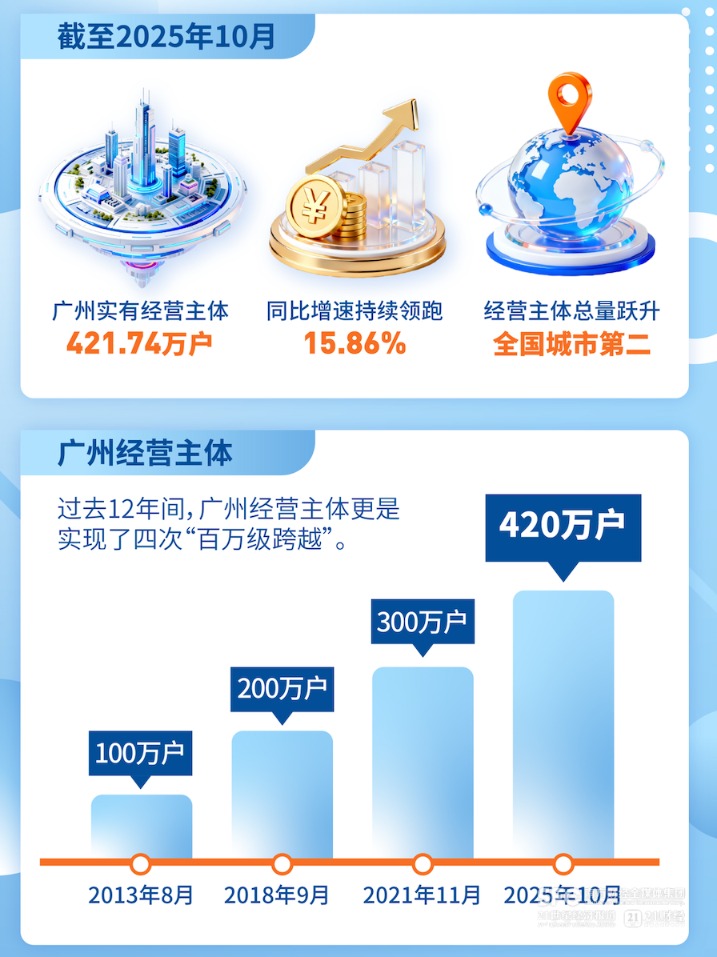
Group 1 - The core observation is that the phenomenon of "boss economy" in Guangdong, particularly in Guangzhou and Shenzhen, reflects the high-quality development of the region's economy, with a significant number of business entities emerging in various sectors [1][2][3] - As of October 2023, Guangzhou has over 4.217 million registered business entities, a year-on-year increase of 15.86%, ranking second nationally, while Shenzhen has surpassed 4.57 million, ranking first [1][3] - The concentration of business entities in Guangdong is notable, with nearly 9 million combined in Guangzhou and Shenzhen, contributing to the construction of the Guangdong-Hong Kong-Macao Greater Bay Area [3][7] Group 2 - The private sector plays a crucial role in Guangzhou's economy, with 95% of business entities being private enterprises, contributing significantly to job creation and economic growth [4][6] - Guangdong's business environment is characterized by a robust industrial foundation, favorable location, and supportive policies, making it an attractive destination for businesses [6][11] - The rapid growth of new business entities in Guangdong, particularly in emerging industries, indicates a shift towards high-tech and innovative sectors, with significant increases in registrations in fields like artificial intelligence and quantum technology [10][12] Group 3 - The average annual increase of business entities in Guangdong from 2017 to 2024 is 1.256 million, demonstrating a strong trend in entrepreneurial activity [8] - The economic contributions of emerging industries are substantial, with Guangzhou's strategic new industries contributing 35.2% to GDP growth in the first three quarters of 2023 [12] - Shenzhen's high-tech product output has seen significant growth, with increases in the production of civilian drones, industrial robots, and 3D printing equipment [12]
“感知无锡”调研行 | 科创赋能创新突围 无锡现代化产业体系建设加速推进
Xin Hua Cai Jing· 2025-11-12 12:38
Core Viewpoint - Wuxi is leveraging technological innovation to drive the development of a modern industrial system, focusing on key industries such as the Internet of Things (IoT), integrated circuits, and biomedicine, while also fostering future industries like artificial intelligence and aerospace [1][2][9]. Group 1: Technological Innovation and Industry Development - Wuxi has successfully developed the first domestically produced 28-nanometer electron beam measurement equipment, marking a significant breakthrough in semiconductor technology [1]. - The city has established itself as a global leader in the IoT sector, with over 3,500 IoT companies and an industry revenue exceeding 250 billion yuan [2]. - Wuxi's integrated circuit industry has over 600 companies, generating a total output value of 251.2 billion yuan, ranking second in the country [3]. Group 2: Major Projects and Collaborations - At the 2025 World Internet of Things Expo, Wuxi showcased significant innovations and signed 26 major projects worth over 32 billion yuan [2]. - The establishment of key innovation platforms has been crucial for the development of Wuxi's landmark industries, including the creation of national and provincial manufacturing innovation centers [4]. Group 3: Digital Transformation and Upgrading - Wuxi is focusing on digital transformation in traditional industries, emphasizing high-end equipment, textiles, and new energy sectors to enhance competitiveness [6][7]. - The city has implemented action plans to support the digital transformation of manufacturing, aiming to reduce costs and improve efficiency [6]. Group 4: Future Industry Development - Wuxi is strategically targeting future industries such as artificial intelligence, quantum technology, and commercial aerospace, with specific measures to promote the aerospace sector [9][10]. - The establishment of a 12 billion yuan fund for low-altitude economy and aerospace industries aims to support long-term development in these sectors [11]. Group 5: Ecosystem and Collaboration - Wuxi is fostering a collaborative ecosystem involving government, industry, academia, and finance to enhance innovation and industrial support [11]. - The integration of technology research, market operations, and talent development is being emphasized to create a sustainable innovation model [8][11].
工信部:强化金融精准支持 引导更多社会资本支持初创期中小企业成长
Zheng Quan Shi Bao Wang· 2025-11-12 11:34
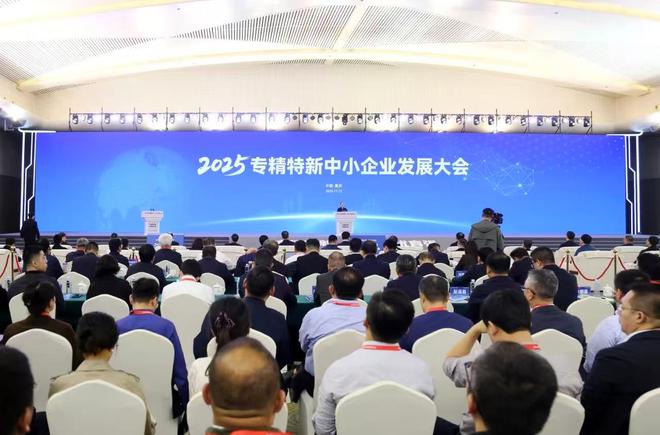
Core Viewpoint - The 2025 Specialized and Innovative Small and Medium Enterprises Development Conference emphasizes the importance of nurturing high-quality enterprises as a key support for developing new productive forces and modern industrial systems [1] Group 1: Enterprise Innovation - The Ministry of Industry and Information Technology aims to strengthen the role of enterprises as innovation subjects by establishing more national-level innovation platforms and exploring the creation of specialized innovation empowerment centers [1] - There is a focus on promoting seamless connections between innovation chains and industrial chains [1] Group 2: Industry Chain Support - The initiative includes enhancing the role of high-quality enterprises in supporting the industry chain, particularly in addressing weak links within the industry [1] - The goal is to solidify the foundational strength of technology and innovation-driven small and medium enterprises, while also expanding the backbone of specialized, innovative small and medium enterprises and high-tech companies [1] - The strategy aims to strengthen the core of "little giant" enterprises and manufacturing champions [1] Group 3: Development Ecosystem - The conference highlights the need to optimize the development ecosystem for enterprises by establishing a comprehensive service network for small and medium enterprises [1] - There is an emphasis on building an overseas service system for small and medium enterprises and enhancing financial support to guide more social capital towards the growth of early-stage small and medium enterprises [1]