
财政政策

Search documents
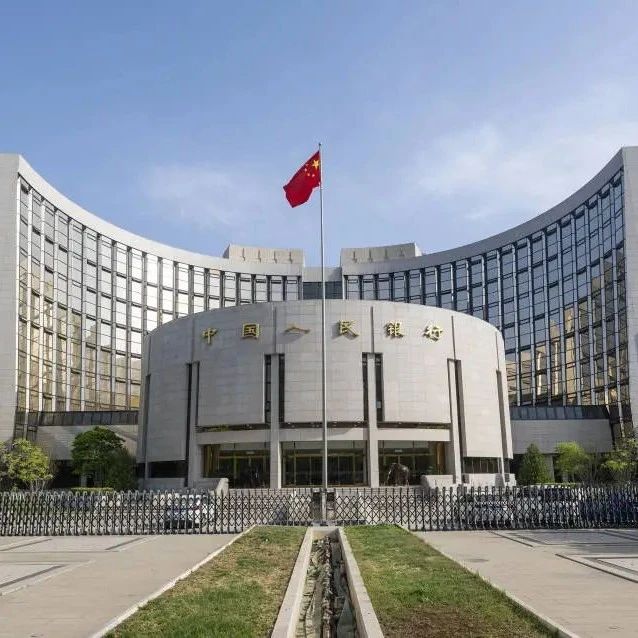
央行连续四个月超额续作!释放重要信号
21世纪经济报道· 2025-06-25 23:44
Core Viewpoint - The People's Bank of China (PBOC) is actively managing liquidity through various monetary policy tools to address seasonal liquidity pressures and support economic stability amid increasing market uncertainties [1][2][6]. Group 1: Monetary Policy Actions - On June 25, 2025, the PBOC conducted a 300 billion MLF operation with a one-year term to maintain ample liquidity in the banking system, following the maturity of 182 billion MLF in June [1]. - The PBOC has implemented a total of 1.4 trillion yuan in reverse repos in June, including 1 trillion yuan for 91 days and 400 billion yuan for 182 days, resulting in a net liquidity injection of 318 billion yuan for the month [1][2]. - The adjustment of MLF operations to a fixed quantity, interest rate bidding, and multiple price levels indicates a shift in its role from a policy interest rate tool to a mid-term liquidity management tool [4][5]. Group 2: Market Conditions and Expectations - The liquidity supply-demand imbalance is particularly pronounced at mid-year, with significant seasonal increases in bank reserve requirements and a record high of 4.2 trillion yuan in maturing certificates of deposit [2]. - The government bond issuance pressure remains high, with an average net financing pressure of around 1 trillion yuan from June to December, necessitating PBOC's intervention to stabilize liquidity [2][6]. - The expectation of increased government bond issuance in August and September could further strain liquidity, with a projected monthly net financing scale of 1.5 to 1.6 trillion yuan [6][7]. Group 3: Fiscal Policy Outlook - The Ministry of Finance plans to implement more proactive fiscal policies to stabilize employment, businesses, and market expectations, with potential incremental fiscal measures expected in the second half of the year [9][10]. - The central government's focus on enhancing fiscal support for consumption and investment indicates a strategic shift towards using fiscal policy as a primary tool for economic stabilization, with an expected additional funding of 500 to 1 trillion yuan [10].

0625:午后大金融爆发,三个大阳线意味着什么?
Sou Hu Cai Jing· 2025-06-25 15:41
Group 1 - The article discusses the recent developments in the A-share market, highlighting a significant upward trend over the past three days, suggesting that recent gains may outweigh efforts made over the previous two months [3][7] - The potential for a third wave rally in the A-share market is identified, with the current phase being a part of a larger upward trend that is expected to exceed the previous wave in both time and space [6] - The article emphasizes the importance of both internal fiscal policies and external monetary policies, with expectations for a potential interest rate cut by the Federal Reserve in September [6][7] Group 2 - Recent comments from several Federal Reserve officials indicate a consensus towards considering interest rate cuts, with some suggesting that action should be taken as early as July [8][9] - The article notes that the market's recent performance may not solely be attributed to geopolitical events but rather to underlying financial dynamics and policy expectations [7] - The Federal Reserve's current interest rate outlook suggests a gradual reduction in rates over the next year, which could diminish the dollar's interest rate advantage [11]
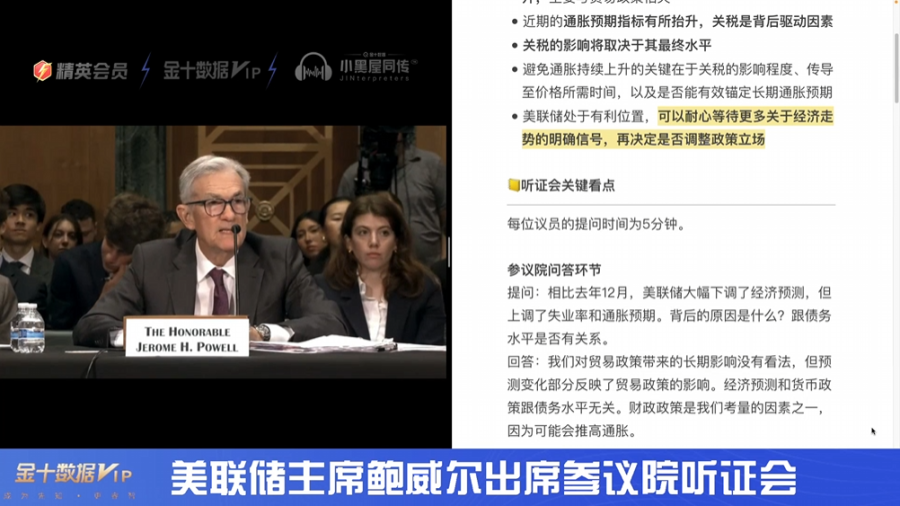
美联储主席鲍威尔:通胀预期已较今年四月略有下降。
news flash· 2025-06-25 14:45
参议院问答环节 提问: 相比去年12月,美联储大幅下调了经济预测,但 上调了失业率和通胀预期。背后的原因是什么? 跟债务 水平是否有关系。 回答:我们对贸易政策带来的长期影响没有看法,但预 测变化部分反映了贸易政策的影响。经济预测和货币政 策跟债务水平无关。财政政策是我们考量的因素之一, 因为可能会推高通胀。 美联储主席鲍威尔出席耆议院听证会 另十数据Vip 美联储主席鲍威尔:通胀预期已较今年四月略有下降。 多 精英会员 乡 显十数据 Kp ケ THE HONORABLE JEROME H. POWELI ■听证会关键看点 每位议员的提问时间为5分钟。 ● 近期的通胀预期指标有所抬升,关税是背后驱动因素 ● 关税的影响将取决于其最终水平 · 避免通胀持续上升的关键在于关税的影响程度、传导 至价格所需时间,以及是否能有效锚定长期通胀预期 ● 美联储处于有利位置,可以耐心等待更多关于经济走 势的明确信号,再决定是否调整政策立场 ...
鲍威尔:不会在FOMC货币政策决定中考虑联邦债务问题。财政政策能加重通胀(压力),但美联储不会对这种风险表态。
news flash· 2025-06-25 14:38
Core Viewpoint - The Federal Reserve, led by Powell, will not consider federal debt issues in its monetary policy decisions, indicating a separation between fiscal and monetary policy considerations [1] Group 1 - Fiscal policy can exacerbate inflationary pressures, but the Federal Reserve will not publicly address this risk [1]
央行连续四个月超额续作MLF,多管齐下稳住跨季流动性
Sou Hu Cai Jing· 2025-06-25 13:18
Group 1 - The People's Bank of China (PBOC) announced a 300 billion MLF operation to maintain liquidity in the banking system, with a maturity of one year, as part of its strategy to ensure ample liquidity [1] - In June, the PBOC conducted significant reverse repo operations totaling 1.4 trillion yuan, indicating a proactive approach to manage liquidity ahead of maturing financial instruments [1][2] - The liquidity supply-demand imbalance is heightened during mid-year, with a notable increase in maturing certificates of deposit and government bond issuance pressures [2][4] Group 2 - The adjustment of MLF operations to a multi-price bidding system marks a shift in its role from a policy rate tool to a liquidity management tool, allowing for more market-driven pricing [3] - The decline in interbank deposit rates suggests potential for further decreases in MLF rates, influenced by the new bidding mechanism [3] - The PBOC is expected to continue utilizing various liquidity management tools, including reverse repos and MLF, to address liquidity needs and stabilize market expectations [5] Group 3 - The upcoming fiscal pressures in July, including tax payments and government bond issuance, are anticipated to create significant liquidity gaps, necessitating PBOC intervention [4][5] - The Ministry of Finance plans to implement more proactive fiscal policies to support economic stability and growth, with potential additional funding of 500 billion to 1 trillion yuan expected [6][7] - The focus on fiscal policy is expected to complement monetary policy efforts, with an emphasis on supporting consumption and effective investment [6][7]
沥青策略:单边观望、逢低做多沥青09-12价差
Guan Tong Qi Huo· 2025-06-25 09:47
【冠通研究】 沥青:低开震荡 制作日期:2025年6月25日 单边观望/逢低做多沥青09-12价差 期货方面: 今日沥青期货2509合约下跌1.89%至3574元/吨,5日均线下方,最低价在3537元/吨,最高价 3783元/吨,持仓量减少17999至251579手。 基差方面: 山东地区主流市场价下跌至3750元/吨,沥青09合约基差下跌至176元/吨,处于偏高水平。 投资有风险,入市需谨慎。 本公司具备期货交易咨询业务资格,请务必阅读最后一页免责声明。 【策略分析】 供应端,上周沥青开工率环比回落1.1个百分点至30.4%,较去年同期高了4.7个百分点,沥青开 工率转而回落,处于近年同期中性偏低水平。据隆众资讯数据,6月份地炼预计排产130.9万吨,环 比增加6.5万吨,增幅为5.2%,同比增加37万吨,增幅为39.3%。上周沥青下游各行业开工率涨跌互现, 其中道路沥青开工环比下降3个百分点至22.6%,仍处于近年同期最低水平,受到资金制约。上周山 东地区个别炼厂复产,加之原油价格上涨带动交投气氛,出货量增加较多,全国出货量环比增加 5.99%至28.83万吨,处于中性水平。沥青炼厂库存存货比本周环比继续 ...
央行大动作,降准降息新信号!
Sou Hu Cai Jing· 2025-06-25 07:47
央行连续超额续作中期借贷便利(MLF)净投放中长期资金。 为保持银行体系流动性充裕, 6月25日,央行以固定数量、利率招标、多重价位中标方式开展3000亿元 MLF操作,期限为1年期。 本月有1820亿元1年期MLF到期,这意味着,6月央行MLF净投放达到1180亿元,为连续第4个月加量续 作。叠加央行开展的2000亿元买断式逆回购操作,6月中期流动性净投放总额达3180亿元。业内人士表 示,面对政府债发行高峰与同业存单集中到期等因素,央行持续释放稳流动性、稳信心的政策信号,叠 加财政支出加快、银行资金融出意愿较强因素,季末资金面整体可控, 预计后续货币政策仍将保持适 度灵活,强化对实体经济的支持。 具体来看,央行5月净投放3750亿元、4月净投放5000亿元、3月净投放630亿元。此外,从3月起,为保 持银行体系流动性充裕,更好满足不同参与机构差异化资金需求,央行调整MLF操作方式,由单一价 位中标调整为多重价位中标(即美式招标)。不再有统一的中标利率,标志着MLF利率的政策属性完 全退出,利率市场化进程加速。 MLF持续净投放背后有着深刻的政策考量。东方金诚首席宏观分析师王青认为, 在5月降准释放长期流 ...
积极调整应对贸易环境变化
Jing Ji Ri Bao· 2025-06-24 22:08
据世界经济论坛对多位机构首席经济学家的最新调查显示,当前全球经济发展前景不容乐观。对此,专 家学者有着怎样的思考和建议?如何看待地缘经济格局变化和技术加速演进背景下的全球经济增长前 景?6月24日,在第十六届夏季达沃斯论坛上,与会人士就此展开了深入讨论。 同时,与会专家普遍认为,经济全球化大势难以逆转。"经济全球化有力促进了世界商业繁荣和经济发 展,当前这个进程受阻,是众多跨国企业不愿意看到的局面,因为他们的业务及其增长都是基于经济全 球化。"波士顿咨询集团董事总经理兼高级合伙人阿帕那·巴拉德瓦杰表示,很多国家包括欧洲和"全球 南方"国家,都在鼓励本国企业参与全球化竞争,希望本国企业具有全球竞争力,众多企业也在迎头赶 上。 萨蒂拉泰介绍说,"从东南亚的情况看,经济全球化在加强而不是减弱。"疫情后东南亚旅游业快速恢 复,资本逐渐流入,越来越多国际化人才进入,当地消费者也从全球购买商品,世界很关注东南亚市 场。 "未来,经济全球化依然会存在,但其进程将深化,发展方式也将改变。"巴拉德瓦杰认为,跨国企业需 要适应更为复杂的国际化规则,包括如何更好地利用本地合作关系去开展业务,更好地融合"在地 化"和"全球化"。 ( ...
不确定性扰动全球市场 经济学家看好中国经济韧性
Zheng Quan Shi Bao· 2025-06-24 19:06
证券时报记者韩忠楠 6月24日,2025夏季达沃斯论坛拉开帷幕。 在论坛首日超50场分论坛活动中,围绕着世界经济秩序、贸易格局走势、AI技术发展、气候变化、能 源应用等方面的讨论不绝于耳,与会嘉宾在思想交锋的过程中,不约而同地将"不确定性"作为上述话题 讨论的核心背景。 "从实际经济指标来看,前几个季度的出口、工业生产等数据表现良好,反映出经济韧性犹存,这在一 定程度上得益于政府出台的提振消费等政策措施。"黄益平认为,虽然房地产行业在进行调整,外部世 界也充满不确定性,但中国总体的经济活动仍然表现坚毅。 世界经济论坛总裁博尔格·布伦德也表达对中国经济的看好。他表示,在世界经济形势严峻复杂背景 下,中国经济展现出强劲韧性。无论从中期看还是长远看,他都对中国经济抱乐观态度。 谈及如何应对全球经济面临的不确定性时,黄益平认为,短期内需要更加积极的财政政策;长期来看, 财政的可持续性需要充分考虑。 今年1月初,世界经济论坛发布的《首席经济学家展望报告》显示,全球经济将在2025年面临重大挑 战,56%的受访首席经济学家预计经济形势会走弱,仅17%的受访者认为经济形势会改善。 而在此次2025夏季达沃斯论坛首席经济学家 ...