
大食物观

Search documents
以“以种适地”理念破题,盐碱地治理迈向生态与产业双赢新局
Qi Lu Wan Bao Wang· 2025-10-23 02:52
Core Insights - The strategic shift from "water washing and desalination" to "breeding salt-tolerant varieties" has fundamentally changed the approach to saline-alkali land management [1][2] - The "suitable species for the land" concept emphasizes the selection and cultivation of salt-tolerant plants, leading to resource savings and dual ecological and economic benefits [1] Group 1: Research and Development - The Xinjiang team, as one of the 16 core teams in the national collaborative system, focuses on high-value utilization research of halophytes for over 100 million mu of saline-alkali farmland, with approximately 40% severely salinized [1] - The team has successfully cultivated salt-tolerant plants like Salicornia in heavily salinized areas, improving soil structure and reducing salinity, while also providing vegetables during the seedling stage and feed after maturity [2] Group 2: International Collaboration and Future Outlook - The technology model has gained international attention, with Uzbekistan's Environment Minister inviting the team to co-establish five wild plant gardens to promote ecological management and resource utilization in Central Asia [2] - The emphasis on "big agriculture and big food" aims to accelerate the domestication and variety upgrading of salt-tolerant plants, leveraging modern biotechnology for quicker adaptation of wild resources [2] - The integration of salt-tolerant plants into medicine and health sectors is encouraged, promoting a collaborative approach among industry, academia, and government to transform saline-alkali land from marginal to valuable land for regional development [2]
减少粮食损耗 形成节约粮食的系统合力
Ren Min Ri Bao· 2025-10-21 21:50
Core Viewpoint - Food security is a fundamental issue concerning human survival, and reducing food loss is a crucial way to ensure food security [1] Group 1: Importance of Food Waste Reduction - Food waste reduction is essential for enhancing the resilience of the food security system and ensuring national development [2] - It is viewed as a systematic governance project that can lower losses at various stages and improve food security levels [2] - The initiative is also a pathway to alleviate resource and environmental constraints, promoting sustainable development [2] Group 2: Achievements and Challenges - Since the 18th National Congress, significant progress has been made in food waste reduction, with the loss rate of major grains gradually decreasing [3] - The storage loss rate for farmers has dropped to about 3%, a 5 percentage point decrease from ten years ago [3] - However, challenges remain, including unreasonable dietary structures and food waste, structural issues in supply, and an incomplete loss reduction mechanism [3] Group 3: Cultural and Systemic Approaches - Promoting food waste reduction as a conscious action among citizens is vital, rooted in traditional virtues of thrift [4] - There is a need to bridge the gap between cultural advocacy, institutional constraints, and behavioral changes regarding food waste [4] - Systematic governance and demand management should be employed to promote initiatives like the "Clean Plate Campaign" and "small portion meals" [4] Group 4: Supply Structure Optimization - The concept of a "big food perspective" is proposed to reshape the food supply logic, focusing on efficient resource collaboration [5] - Emphasis is placed on optimizing the supply structure through technological innovation, policy support, and industry restructuring [5] - The goal is to reduce production losses and resource pressure from the source, enhancing food security resilience and sustainability [5] Group 5: Full Chain Governance - A systematic approach is needed to connect all stages of food production, storage, transportation, processing, and consumption [6] - The focus is on breaking down traditional governance models that are fragmented and inefficient [6] - Establishing a comprehensive governance mechanism across the entire food chain is essential for improving food security governance effectiveness [6]
固原农文旅推介大会苏州启幕,泾源黄牛“链”上江南餐桌
Zhong Guo Shi Pin Wang· 2025-10-21 08:26
Core Insights - The event "Ningxia Guyuan City 2025 Agricultural, Cultural, and Tourism Promotion Conference" showcased local specialties and aimed to connect regional brands with national markets, emphasizing the importance of ecological products in rural revitalization [1][4] Group 1: Ecological and Agricultural Development - Guyuan City is leveraging its ecological resources to develop high-end beef, quality cool-season vegetables, and traditional Chinese medicinal herbs, establishing itself as a national base for these products [3][6] - The region's unique climate and rich natural resources contribute to the production of high-quality agricultural products, including the renowned Guyuan Yellow Cattle and various organic vegetables [3][7] Group 2: Cultural and Culinary Promotion - The promotion event featured immersive experiences showcasing the production process of local delicacies, such as the Guyuan crispy beef pie, highlighting the connection between ecological farming and culinary culture [9][12] - Guyuan's rich cultural heritage, including historical sites and traditional crafts, enhances its appeal as a tourist destination, integrating cultural experiences with agricultural products [6][12] Group 3: Market Expansion and Collaboration - The conference emphasized the need for collaboration among various stakeholders to enhance the market presence of Guyuan's agricultural products, focusing on health, quality, and cultural significance [12][13] - There is a consensus on the importance of modernizing sales strategies and integrating digital tools to create a stable supply chain from production to consumption [12][13]


食品行业焕新提质
Jing Ji Ri Bao· 2025-10-19 21:58
Core Insights - The food industry has maintained stable operations this year, contributing significantly to domestic demand, consumption, economic growth, and livelihood protection through deep integration of technological and industrial innovation [1] Industry Performance - From January to July this year, the revenue of large-scale food enterprises reached 5.1 trillion yuan, with profits exceeding 330 billion yuan and imports and exports surpassing 82 billion USD [1] - The investment in the agricultural and sideline food processing industry grew by 17.8%, while investment in the food manufacturing industry increased by 15.4% [1] - The food industry accounted for 35.6% of light industry assets, achieving 39% of operating income and creating 43.8% of profits [1] Innovation and Technology - The food industry is accelerating its innovation pace, with 4 awards for technological invention and 56 for technological progress expected in 2024, marking a 140% increase in awards [1] - Companies are encouraged to enhance technological supply, support basic research, and accelerate breakthroughs in key technologies, focusing on digital and green technologies [2] - The application of digital technology in food enterprises is improving product innovation and food safety, with 86.2% of light industry utilizing digital R&D tools and 62.4% of key processes being numerically controlled [2] Future Development - The food industry is urged to advance smart manufacturing, detection, and circulation to improve production efficiency and product quality [3] - There is a focus on developing functional foods, physiological regulation foods, personalized nutrition foods, and special diets to meet health demands [2][3] - The health food sector is projected to produce approximately 800,000 tons in 2024, with an industry scale of about 450 billion yuan [3] Strategic Goals - The strategic task of food resource exploration aims to achieve global sustainable food development, ensure food supply security, and enhance public nutrition and health [4] - The transition from "Made in China" to "Created in China" is crucial, with a need to overcome "involution" competition that hampers high-quality development [4][5]
韩俊在“强农论坛”上指出:我国农产品供给体系正在加快从“量的满足”向“质的提升”转变
Nan Fang Nong Cun Bao· 2025-10-18 09:31
Core Viewpoint - The Chinese agricultural supply system is transitioning from "quantity satisfaction" to "quality improvement," emphasizing the need for high-quality agricultural development and modernization [16][17]. Group 1: Agricultural Development Strategy - The construction of an agricultural powerhouse is a strategic deployment by the central government, focusing on five key areas: supply security, technological strength, operational systems, industry resilience, and competitiveness [8][9][10]. - The grain production reached a record of 1.4 trillion jin last year, with a per capita grain availability of over 500 kg, and a grain self-sufficiency rate exceeding 95% [11][12]. Group 2: Key Dimensions for Agricultural Strength - **Enhancing Comprehensive Production Capacity**: Ensuring national food security remains a top priority, with a focus on increasing grain production capacity and optimizing agricultural production structure [22][26]. - **Advancing Agricultural Technology and Equipment**: Emphasizing the importance of agricultural technology as a tool for development, including seed industry revitalization and smart agriculture [30][31]. - **Innovating Agricultural Operating Systems**: Promoting new agricultural operating entities and socialized agricultural services to connect small farmers with modern agricultural practices [33][34]. - **Improving Industry Resilience**: Addressing extreme weather and market fluctuations by enhancing climate resilience and strengthening supply chains [36][37]. - **Boosting Quality, Efficiency, and Competitiveness**: Committing to a path of technological, green, quality, and brand-driven agriculture, with strict quality supervision and the promotion of ecological agriculture [39][40].


“脑机接口”实现“意念采摘” 农交会秀出智慧农业新图景
Yang Shi Wang· 2025-10-18 04:14
Core Insights - The 22nd China International Agricultural Products Fair opened on October 17 in Tianjin, focusing on "Strengthening Brands to Revitalize and Boost Consumption" with nearly 4,000 exhibitors and approximately 25,000 products showcased [1][3] - New technologies and equipment were highlighted, including a brain-machine interface that allows remote control of robotic arms for fruit picking, demonstrating advancements in agricultural technology [1][3] Group 1: Exhibition Highlights - Over 200 cutting-edge agricultural machines from more than 80 research institutions and companies were featured, including multifunctional field management robots for spraying, fertilizing, and weeding [3] - The fair introduced new exhibition areas, such as the "Practicing the Big Food Concept" area, showcasing a variety of food products like golden pomfret and edible fungi, attracting professional buyers and visitors [3][5] Group 2: Brand and Market Development - The fair established a brand zone for 320 selected agricultural products from the "Agricultural Brand Boutique Cultivation Plan," with participation from 1,200 enterprises across 31 provinces and regions, drawing significant attention from professional buyers and consumers [5] - The Ministry of Agriculture and Rural Affairs invited over 50,000 professional buyers to create a high-quality platform for production and sales connections, facilitating a series of matching activities to enhance market integration [7]


扛牢保障国家粮食安全重任
Jing Ji Ri Bao· 2025-10-17 21:46
Core Viewpoint - Food security is a fundamental national priority, with a focus on ensuring that China's food supply remains stable and self-sufficient, particularly during the "14th Five-Year Plan" period [1][2]. Group 1: Food Production and Supply - China's grain production is set to exceed 1.4 trillion jin (approximately 700 million tons) in 2024, an increase of 74 billion jin (approximately 37 million tons) compared to 2020 [2]. - Per capita grain availability has reached 1,000 jin (approximately 500 kg), an increase of 50 jin (approximately 25 kg) from the end of the "13th Five-Year Plan" [2]. - The area of arable land has increased to 1.94 billion mu (approximately 129 million hectares), up by 28 million mu (approximately 1.87 million hectares) since 2020 [2]. Group 2: Agricultural Structure and Resilience - The domestic production of soybeans has reached 20.65 million tons in 2024, with a self-sufficiency rate improvement of 4 percentage points since 2020 [3]. - The agricultural sector has enhanced its disaster resilience through improved early warning systems and infrastructure, addressing the challenges posed by extreme weather [3]. Group 3: Grain Circulation and Emergency Response - The number of emergency grain processing enterprises has increased from 5,448 to 6,872, a growth of 26%, while daily processing capacity has risen from 1.2 million tons to 1.78 million tons, a 48% increase [5]. - The number of emergency supply points has grown from 43,000 to 59,000, marking a 37% increase [5]. Group 4: Food Security Mechanisms - The food security responsibility system has been strengthened, with local governments now held accountable for food security, enhancing political responsibility [7][8]. - The implementation of minimum purchase price policies for wheat and rice aims to stabilize farmers' incomes and encourage grain production [8]. - The introduction of the Food Security Guarantee Law marks a significant step in establishing a comprehensive legal framework for food security in China [8].
新华鲜报|守护好“食”光!世界粮食日话“饭碗”
Xin Hua She· 2025-10-17 03:17
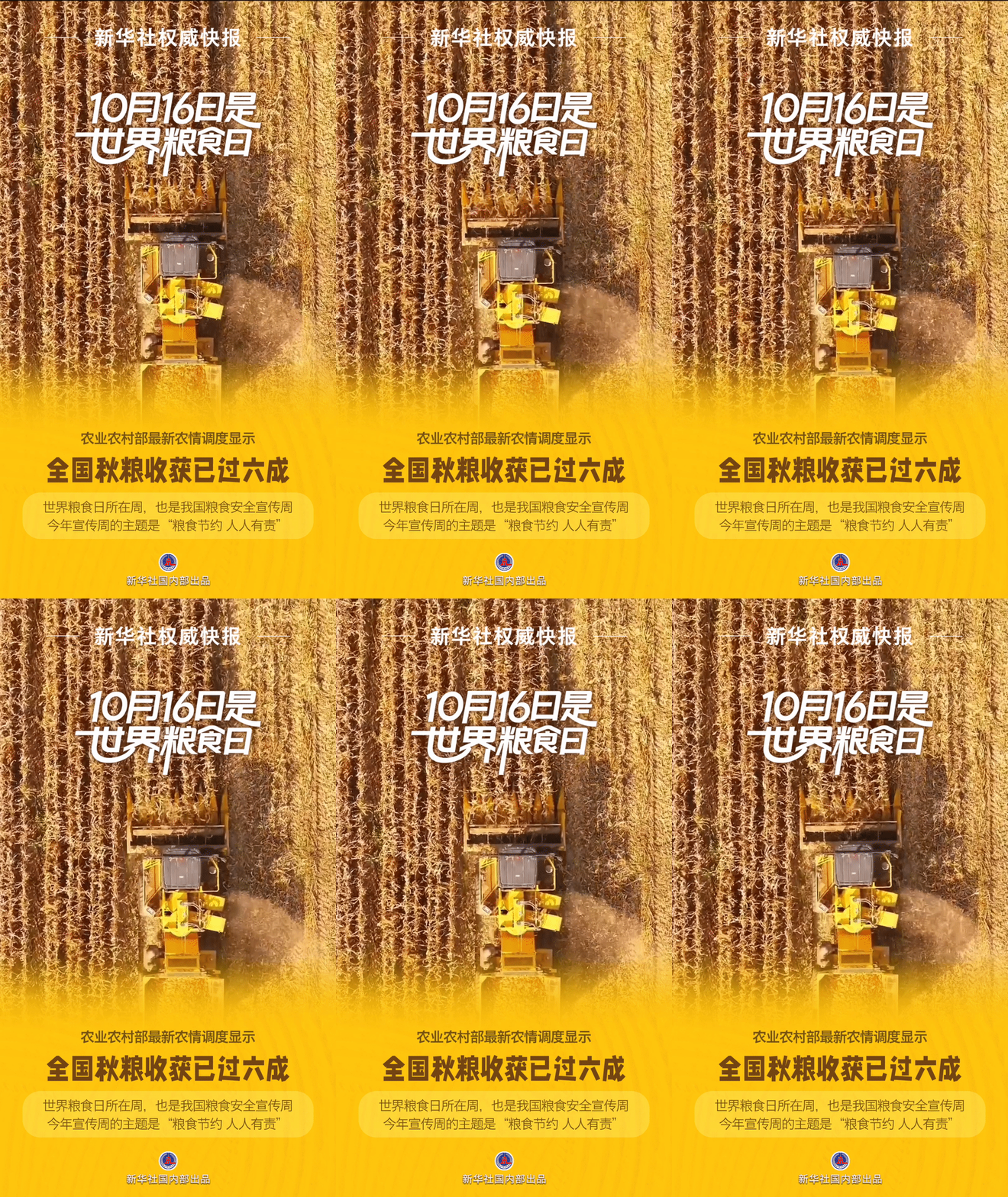
Core Points - The theme for this year's World Food Day is "Hand in Hand to Advocate for Diverse Foods, Uniting Efforts to Create a Better Future" [1] - China's food security is emphasized as a top priority by President Xi Jinping, with a focus on ensuring national food safety [3] - The average grain possession per capita in China has reached 500 kg, surpassing the international safety line of 400 kg [3] Group 1: Food Production and Security - China's grain production has consistently exceeded 1.3 trillion jin, with last year's output reaching over 1.4 trillion jin for the first time [4] - Recent adverse weather conditions, particularly in the Huang-Huai region, have impacted the autumn harvest progress [6] - Various regions are implementing measures to ensure the smooth completion of the autumn grain harvest, including upgrading harvesting machinery and providing real-time service information [6] Group 2: Storage and Preservation Technologies - Advanced storage technologies are being utilized to maintain grain quality, such as temperature control and carbon dioxide storage methods [6][8] - These technologies aim to reduce storage losses and enhance the quality of stored grains, ensuring fresher and higher-quality food for consumers [8] Group 3: Food Waste Reduction Initiatives - The theme for the food security awareness week is "Food Conservation is Everyone's Responsibility," promoting the importance of reducing food waste [8] - Restaurants are adopting practices to minimize waste, such as providing portion size guidance to customers and repurposing unsold food [10] - The "Clean Plate Campaign" is gaining traction across the country, reflecting a cultural shift towards food conservation [10] Group 4: Diversified Food Supply - The food supply system is being diversified to include not only grains but also meat, dairy, vegetables, and seafood, enhancing overall food security [10] - By the end of 2024, China's total production of meat, eggs, and dairy products is projected to reach 175 million tons, an 18.8% increase from 2020 [10] - The total output of aquatic products is expected to reach 73.58 million tons, a 12.3% increase from 2020 [10]
守护好“食”光!世界粮食日话“饭碗”
Xin Hua Wang· 2025-10-17 02:45
Core Points - The theme of this year's World Food Day is "Hand in hand to advocate for diverse cuisine, gathering strength to create a better future" [1] - China's grain security is emphasized as a top priority, with a current per capita grain availability of 500 kg, surpassing the international safety line of 400 kg [3] - Continuous grain production has been maintained above 1.3 trillion jin, with a record of over 1.4 trillion jin last year [4] Grain Production and Security - The recent harvest progress shows over 60% of autumn grain has been collected, despite adverse weather conditions affecting some regions [3][4] - Technological advancements in grain storage, such as temperature control and CO2 storage techniques, are being implemented to enhance grain quality and reduce losses [6][8] Food Waste Reduction Initiatives - The theme for the food security awareness week is "Food Saving is Everyone's Responsibility," promoting the importance of reducing food waste [8][10] - Restaurants are adopting practices to minimize waste, such as portion size guidance and repurposing unsold food into animal feed [10][11] Diverse Food Supply System - The total output of livestock products reached 175 million tons by the end of 2024, marking an 18.8% increase since 2020, while aquatic products reached 73.58 million tons, a 12.3% increase [11]
粮食安全宣传周活动启动
Liao Ning Ri Bao· 2025-10-17 01:05
Core Viewpoint - The theme of this year's provincial food security publicity week is "Food Conservation is Everyone's Responsibility," emphasizing the importance of food security amidst global supply chain challenges [1] Group 1: Food Security Initiatives - The event highlights the need for society to adopt the mindset that reducing waste is equivalent to increasing production, promoting a long-term mechanism for food conservation [1] - The province aims to showcase its active practices in maintaining national food security during the publicity week [1] Group 2: Public Awareness and Education - The activities are designed to deepen public understanding of the province's achievements in food production, food products, and food security assurance [1] - The initiative encourages individuals to consciously value and conserve food in their daily lives [1]