房地产市场调整

Search documents
广州“铜钱大厦”三上拍卖台,八折甩卖能否等来“接盘侠”?
Mei Ri Jing Ji Xin Wen· 2025-11-13 13:25
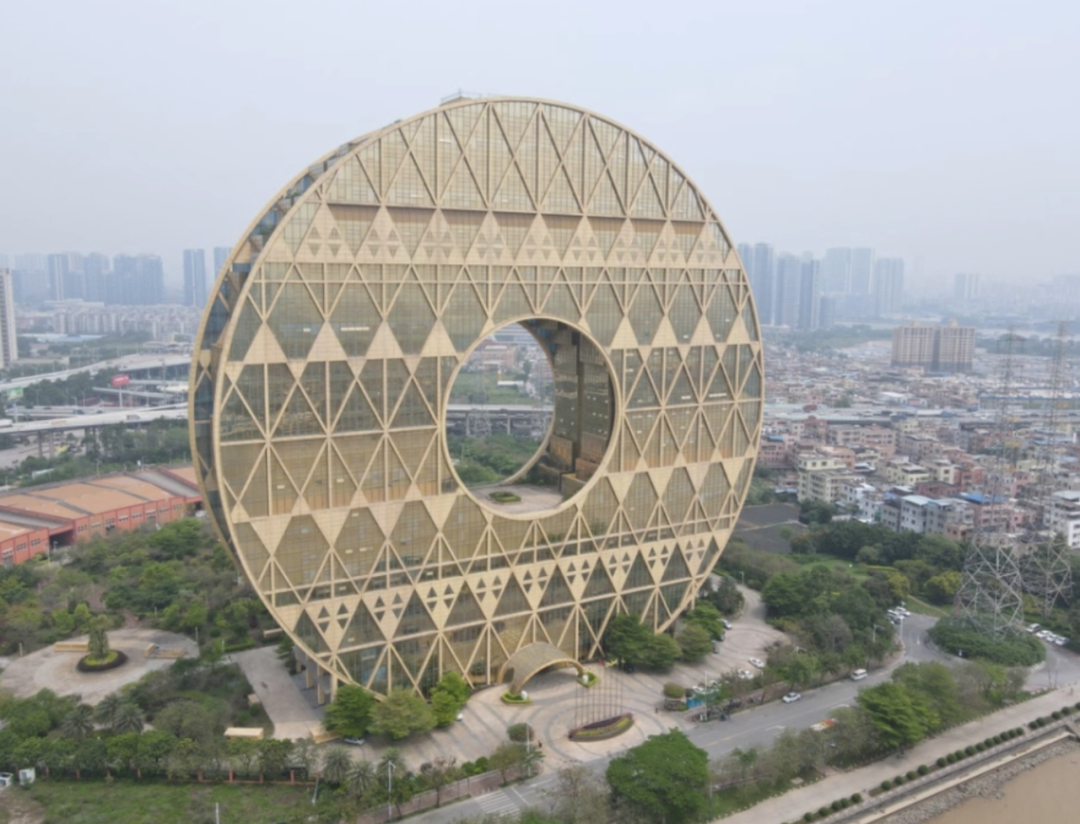
Core Viewpoint - The Guangzhou Round Building, also known as the "Copper Coin Building," is being auctioned on the Alibaba Asset Platform with a starting price of 1.36 billion yuan, which is 80% of its assessed value. This is the third auction attempt for the property, which is tied to the restructuring rights of Guangdong Xingye International Industrial Co., Ltd. [2][4] Group 1: Auction Details - The auction is set to take place from November 13 to November 14, with nearly 28,000 views and over 500 reminders set, but no bidders have registered as of November 13 [2][8]. - The starting price of approximately 1.36 billion yuan is based on an assessed value of around 1.7 billion yuan, representing an 80% discount [8]. - The auction includes the restructuring investment rights of Guangdong Xingye International, which encompasses various assets, including the Guangzhou Round Building and associated land use rights [5][8]. Group 2: Company Background - Guangdong Xingye International was established by Hongda Xingye Group and Guangdong Dongsha Logistics Co., Ltd., holding 96% and 4% of shares, respectively [10]. - The company has faced significant financial difficulties, with a reported debt of 19.075 billion yuan and a history of annual losses since 2020 [10][11]. - The Guangzhou Round Building, completed in December 2013, has been controversial due to its design and is located in a non-core business area of Guangzhou, which may affect its marketability [10][12]. Group 3: Market Considerations - The current real estate market is undergoing adjustments, with commercial properties, especially those in non-core locations, facing rental and sales pressures [10]. - Potential bidders must consider the historical valuation and market conditions, as well as the costs associated with the acquisition and potential renovations [13]. - The auction's success hinges on the approval of the restructuring plan by creditors and the court, which adds a layer of uncertainty for bidders [9][10].

曹德旺预言成真了?我国二三十层的电梯房,或将面临同一个结局?
Sou Hu Cai Jing· 2025-11-12 12:43
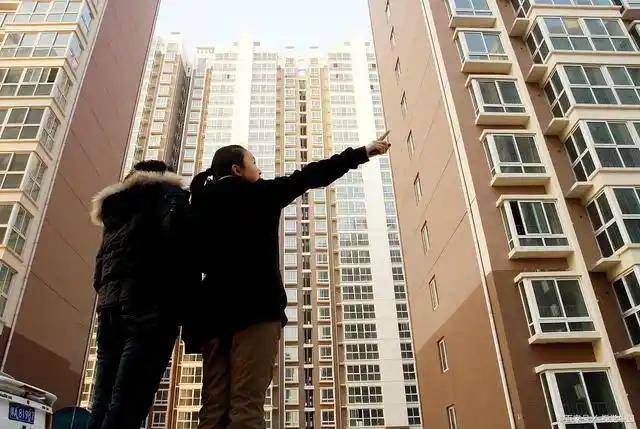
在房地产市场迅猛扩张的年代,曹德旺的洞见如一缕清风,刺破了浮躁的泡沫。早在2018年,这位福耀 玻璃创始人就直言,住宅不过是钢筋水泥的堆积,无法生出价值,早晚会回归尘土。 那时,房价高歌猛进,普通家庭为一套房背负半生负担,谁料七年光阴转瞬即逝,2025年的市场已然印 证他的判断。 二三十层电梯房,曾是城市天际线的骄傲,如今却步履维艰,库存积压,成交低迷。这不仅仅是价格的 回落,更是居住模式的深刻反思。 曹德旺的预言并非空穴来风,而是源于他对产业脉络的深刻把握。身为企业家,他目睹了玻璃从原料到 汽车窗的转变,也见证了房地产从刚需到投机的变迁。2018年论坛上,他强调多套房产宜早出手,避免 后期困局。 设备老化是另一重枷锁。高层电梯房的核心是电梯系统,每日承载千人流量,使用强度远超低层建筑。 高层电梯房的兴起,本是城市化进程的必然产物。二十世纪末至本世纪初,土地资源紧缺,开发商转向 垂直扩张,二三十层建筑如雨后春笋,遍布北上广深及二线城市。这些楼宇配备电梯,象征现代化生 活,吸引了无数中产家庭。 起初,它们确实提升了居住密度,优化了土地利用。但随着房龄增长,隐忧渐显。公摊面积过大,成为 首当其冲的痛点。通常,高层 ...
经济学家朱宁:房价尚未真正触底,建议持有“老破小”的居民尽早出手
Ge Long Hui· 2025-11-11 06:08
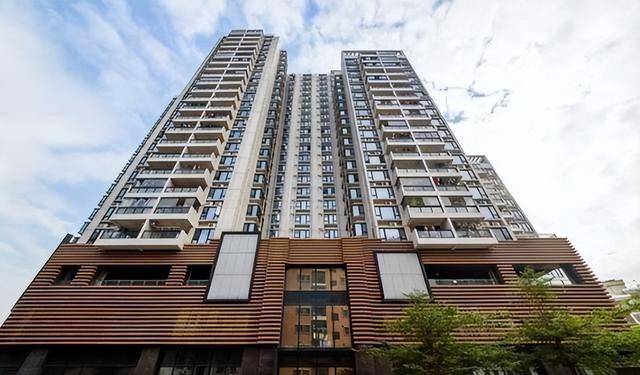
格隆汇11月11日|上海交通大学上海高级金融学院金融学教授朱宁表示,房地产正如他在2024年初预测 的那样,"仍需要3-5年再调整20-30%才能最后触底"。他认为当前房价还有进一步调整的空间和时 间。"偏乐观的说法是我们在逐渐进入整个市场底部的区域,但是还没有达到真正的底部。"他进一步分 析指出,一些三四线城市的房价下降幅度在收窄,但成交量和流动性在快速枯竭;而一线城市的二手房 市场调整幅度在加大。 "国内房地产不是一个简单的消费品,也不是一个简单的投资品,它和很多社会 公共福利和保障的体系联系在一起。"谈及城市差异,他认为一线城市由于具有更宝贵的公共资源,房 地产从估值和投资的角度而言仍具有吸引力。对于社会持续关注的"老破小"房产问题,他指出"房地产 是流动性比较差的资产",在市场调整期应"现金为王",他表示:"如果在短期没有明显看到需求改善的 话,我建议大家还是考虑尽早地出手流入市场,能够持币观望,有更多其他选择的机会。"对于未来五 年房地产行业的期许,他指出两个方向,一个方向是房地产开发更多回归到原来建筑相关的职能;另一 个方向是新型城镇改造或旧城的功能性提升将会带来新的增长点。 ...
冠通期货PVC周报-20251110
Guan Tong Qi Huo· 2025-11-10 11:47
Report Summary 1. Report Industry Investment Rating No relevant information provided. 2. Core View of the Report The PVC market is expected to experience weak and volatile trends in the near future due to factors such as increased supply, decreased downstream demand, reduced export expectations, high inventory, and a sluggish real - estate market [4]. 3. Summary by Relevant Catalogs Supply Side - PVC开工率环比增加2.49个百分点至80.75%,处于近年同期偏高水平,宁波镇洋、内蒙亿利等装置产量提升 [17] - 新增产能方面,40万吨/年的天津渤化已满负荷生产,30万吨/年的甘肃耀望和30万吨/年的嘉兴嘉化试车后低负荷运行 [4] - 内蒙三联等生产企业检修即将结束,成本支撑减弱 [4] Demand Side - PVC下游开工率小幅回落,虽超过过去两年同期,但仍是偏低水平 [4] - 2025年1 - 9月房地产仍在调整阶段,投资、新开工、竣工面积同比降幅较大,投资、销售、施工等同比增速进一步下降。全国房地产开发投资67706亿元,同比下降13.9%;商品房销售面积65835万平方米,同比下降5.5%;商品房销售额63040亿元,下降7.9%等 [23] - 截至11月9日当周,30大中城市商品房成交面积环比继续回落32.15%,处于近年同期最低水平 [23] Export - 印度将BIS政策再次延期六个月至2025年12月24日执行,中国台湾台塑11月份报价下调30 - 40美元/吨,8月14日印度公示最新的进口PVC反倾销税,中国大陆地区上调50美元/吨左右,四季度中国PVC出口预期减弱,上周出口签单环比回落 [4] Inventory - 截至11月6日当周,PVC社会库存环比增加1.13%至104.16万吨,比去年同期增加26.42%,社会库存小幅增加,目前仍偏高 [24] Market - 目前01基差在 - 51元/吨,基差处于中性偏低水平 [12] - PVC期价跌破前低,市场低迷 [4]
业绩有韧性,工业厂房和能源工程合同增速快
Yin He Zheng Quan· 2025-11-07 12:21
Investment Rating - The report maintains a "Recommended" rating for the company, indicating an expected relative performance exceeding the benchmark index by more than 10% over the next 6 to 12 months [4][11]. Core Insights - The company reported a revenue of 449.91 billion yuan for Q3 2025, a year-on-year decrease of 6.64%, and a net profit attributable to shareholders of 7.778 billion yuan, down 24.14% year-on-year [4]. - For the first three quarters of 2025, the company achieved a total revenue of 1,558.22 billion yuan, a decline of 4.20% year-on-year, with a net profit of 38.182 billion yuan, down 3.83% year-on-year [4]. - The decline in performance is attributed to the ongoing adjustment in the real estate market and a slowdown in infrastructure investment growth [4]. - The company signed new contracts worth 3,293.6 billion yuan in the first three quarters, reflecting a year-on-year growth of 1.4% [4]. - The forecast for net profit attributable to shareholders for 2025-2027 is 48.452 billion, 50.110 billion, and 52.347 billion yuan, respectively, with corresponding P/E ratios of 4.62, 4.47, and 4.28 [4]. Financial Projections - The projected operating revenue for 2025 is 2,187.148 million yuan, with a revenue growth rate of -3.5% [5]. - The expected net profit attributable to shareholders for 2025 is 46.187 billion yuan, with a profit growth rate of -14.9% [5]. - The gross profit margin is projected to be 9.9% in 2025, slightly decreasing over the forecast period [5]. - The diluted EPS is expected to be 1.12 yuan in 2025, with a gradual increase in subsequent years [5].

房价下跌或成真?一线2万、二线8000、三四线4000,可能实现吗?
Sou Hu Cai Jing· 2025-11-05 06:00
Core Viewpoint - The domestic real estate market is undergoing a profound transformation, with significant declines in both sales and prices observed in 2022, indicating a shift from a wealth-generating engine to a struggling sector [1][3][4]. Market Trends - In November 2022, 51 out of 70 major cities in China saw a month-on-month decline in new residential property prices, while 62 cities experienced a drop in second-hand housing prices, indicating that over 70% of the new housing market and nearly 90% of the second-hand market are under price pressure [4]. - The total sales of the top 100 real estate companies from January to November 2022 amounted to 67,268.1 billion yuan, reflecting a significant year-on-year decrease of 42.1%, highlighting the market's downturn [4]. Economic Impact - The decline in the real estate market is attributed to a retreat in speculative investment demand and adverse macroeconomic conditions, including repeated pandemic impacts that have strained the real economy, leading to layoffs and reduced income expectations for residents [4]. - Many families have postponed their home-buying plans due to these economic challenges, severely suppressing market demand [4]. Price Predictions - There are aggressive predictions circulating that suggest future price drops could see first-tier city prices fall to 20,000 yuan per square meter, second-tier cities to 8,000 yuan, and third/fourth-tier cities to 4,000 yuan, representing potential declines of over 60% to 70% from current levels [6]. - Current prices in first-tier cities range from 60,000 to 70,000 yuan per square meter, indicating that such drastic reductions would require unprecedented declines [6]. Stability Concerns - The likelihood of a "cliff-like" price drop in the short term is considered extremely low due to several factors, including the real estate sector's critical role in the national economy and the potential for government intervention to stabilize the market [7]. - A significant drop in housing prices could lead to severe financial risks, including increased defaults on mortgages, which would burden banks with unsold properties and could trigger systemic financial risks [7]. - The real estate industry is interconnected with numerous sectors, providing substantial employment and contributing to local economic development; thus, a sharp decline in property prices could have widespread negative effects [7].
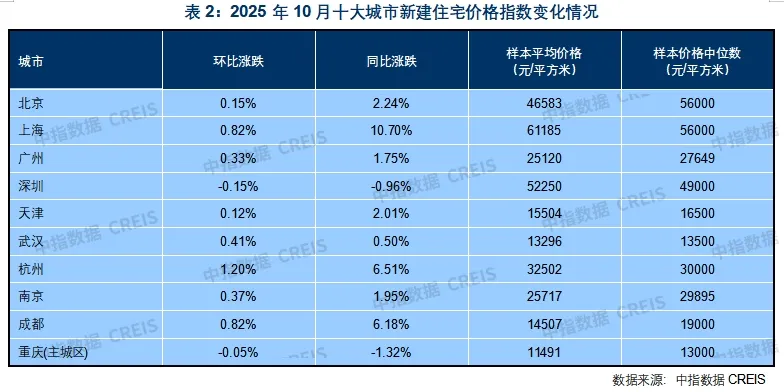
上海“10万+”新盘有所降温,10月这些城市新房价格还在涨
Mei Ri Jing Ji Xin Wen· 2025-11-03 13:37
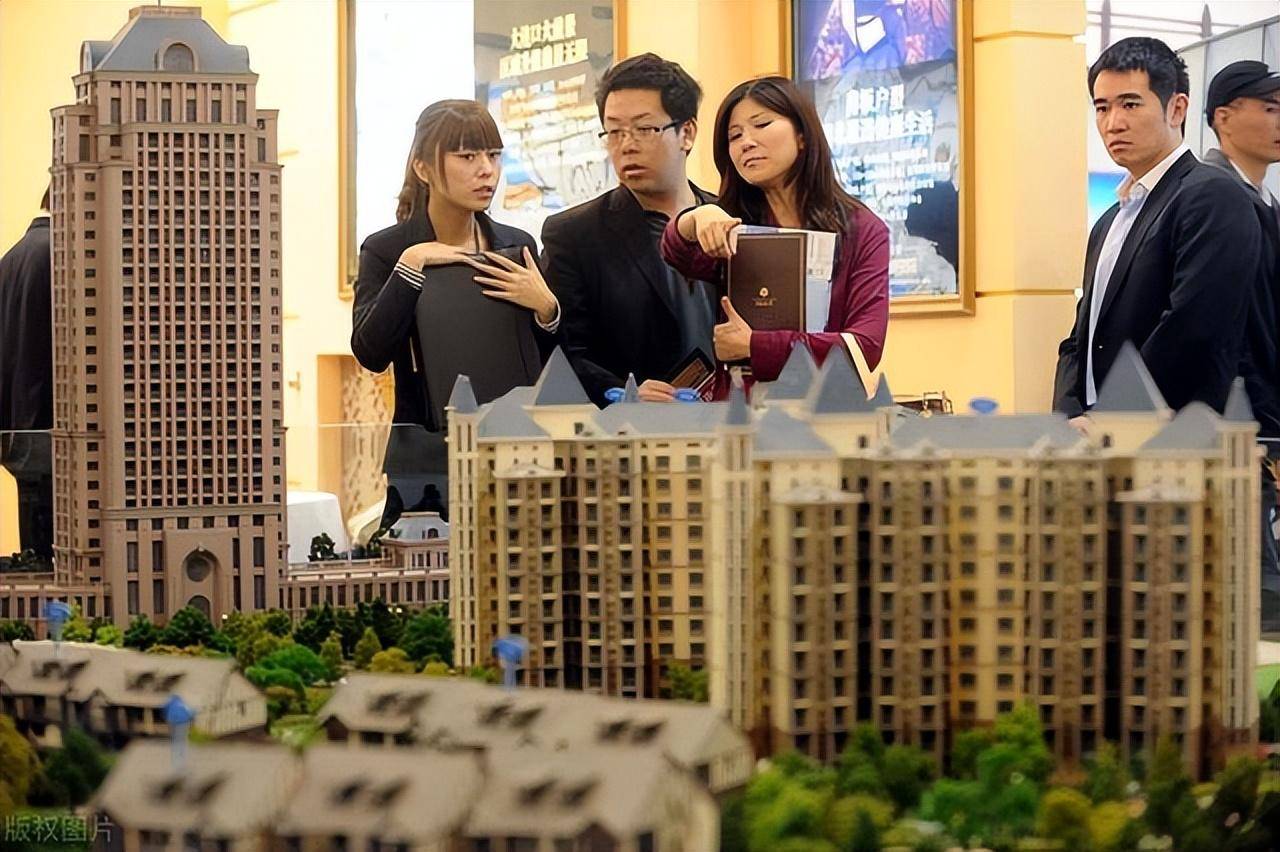
每经记者|包晶晶 每经编辑|程鹏 陈梦妤 楼市"银十",上海新房价格同比涨幅依然超过了10%。 不仅如此,据中指研究院《中国房地产指数系统百城价格指数报告》,十大城市中,有8个城市10月份新房价格同环比均上涨。 | 城市 | 环比涨跌 | 同比涨跌 | 样本平均价格 (元/平方米) | 样本价格中位数 (元/平方米) | | --- | --- | --- | --- | --- | | 北京 | 0.15% | 2.24% | 46583 的花 | 56000 | | 上海 | 0.82% | 10.70% | 61185 | 56000 | | 广州 | 0.33% | 1.75% | 25120 | 27649 | | 深圳 | -0.15% | -0.96% L | 52250 | 49000 | | 天津 | 0.12% | 2.01% | 15504 - 歌词 | 16500 | | 武汉 栏 | 0.41% | 0.50% | 13296 | 13500 | | 杭州 | +1.20% | 6.51% | 32502 | 30000 | | 南京 | 0.37% | 1.95% ~ | 2571 ...
中国建筑(601668):业绩短期承压,海外业务表现亮眼
Hua Yuan Zheng Quan· 2025-11-03 05:11
Investment Rating - The investment rating for the company is "Buy" (maintained) [4] Core Views - The company's performance is under short-term pressure, but overseas business shows strong performance [4] - Revenue and profit have declined due to a slowdown in the real estate and infrastructure sectors [6] - The company maintains a leading position in the industry with significant advantages in business scale and asset quality, indicating potential for valuation recovery [6] Financial Performance Summary - For the first three quarters of 2025, the company achieved operating revenue of 1,558.22 billion yuan, a year-on-year decrease of 4.20%, and a net profit attributable to shareholders of 38.18 billion yuan, down 3.83% year-on-year [6] - The company's gross profit margin for the first three quarters of 2025 was 8.72%, a decrease of 0.11 percentage points year-on-year [6] - The company’s cash flow from operating activities showed a marginal improvement, with a net outflow of 69.48 billion yuan, which is 7.53 billion yuan less than the previous year [6] Revenue and Profit Forecast - The company is expected to achieve net profits of 47.5 billion yuan, 49.4 billion yuan, and 51.2 billion yuan for 2025, 2026, and 2027 respectively, with year-on-year growth rates of 2.86%, 3.88%, and 3.73% [5][6] - The price-to-earnings ratio (P/E) for the current stock price is projected to be 4.72, 4.55, and 4.38 for the years 2025, 2026, and 2027 respectively [5][6] Business Segment Performance - The company’s construction and infrastructure segments reported revenues of 988.6 billion yuan and 370.6 billion yuan respectively for the first three quarters of 2025, with year-on-year declines of 5.3% and 3.6% [6] - The overseas business generated revenue of 91.9 billion yuan, representing a year-on-year increase of 8.8% [6] - The real estate development segment achieved revenue of 177.1 billion yuan, a slight increase of 0.6% year-on-year, with contract sales of 255.3 billion yuan, down 2.0% year-on-year [6]
百强房企2025年10月销售情况解读
2025-11-03 02:35
Summary of Real Estate Market Conference Call Industry Overview - The conference call discusses the performance of the real estate market in October 2025, particularly focusing on the top 100 real estate companies in China. The overall sales amount for these companies was 253 billion yuan, reflecting a year-on-year decline of 42% [1][2][7]. Key Points Sales Performance - The sales performance of the top 100 real estate companies in October 2025 was significantly impacted by ongoing market pressures, with a cumulative decline of 16% over the first ten months of the year, which is an increase of 4.2 percentage points compared to the previous nine months [2][7]. - Major state-owned enterprises like China Resources and China Overseas experienced year-on-year declines exceeding 50% due to high base effects from the previous year [7]. Market Dynamics - The luxury housing market showed signs of differentiation, with high-end areas in cities like Shanghai, Beijing, and Shenzhen maintaining some demand, but overall sales were weak, particularly in secondary locations [4][5]. - The second-hand housing market continued to see rapid price declines, with no signs of stabilization. New building regulations in Shanghai have pressured prices of older properties, leading to expectations of continued price drops in the short term [6][12]. Supply and Demand - The new supply of properties in 30 cities dropped significantly, with a month-on-month decrease of 51% and a year-on-year decrease of 21%, marking the lowest monthly supply since 2020 [8][9]. - The land auction market has cooled, with a notable decline in both the area and monetary value of land sold across 300 cities, reflecting cautious behavior from developers [19]. City-Specific Insights - In first-tier cities, new home transactions have cooled, with significant month-on-month declines in cities like Shanghai (down 15%) and Shenzhen (down over 20%) [11][12]. - The performance of second and third-tier cities showed some resilience, with an average month-on-month increase of 1%, although year-on-year figures still reflected a decline of 36% [13]. Future Outlook - The market is expected to see increased supply and promotional efforts from developers in November and December to boost sales performance, although year-on-year declines may widen to around 50% due to high base effects from the previous year [4][21]. - The anticipated market stabilization point may be pushed further into the future, with predictions suggesting a potential turning point in 2026 or 2027, indicating a longer-term adjustment cycle rather than a short-term fluctuation [20]. Additional Insights - The impact of recent policy changes, such as the lifting of certain purchase restrictions in major cities, has dissipated without leading to sustained market recovery [3][4]. - The average premium rate in land auctions has dropped below 3%, indicating a more cautious approach from developers regarding land acquisition [19][17]. This summary encapsulates the critical insights from the conference call regarding the current state and future expectations of the real estate market in China.
2025年是尽快卖房,还是咬牙买房?曹德旺给出了明确方向
Sou Hu Cai Jing· 2025-11-01 20:15
Core Insights - The current real estate market is experiencing fluctuations, leading to confusion among potential buyers and sellers regarding whether to sell or buy properties in 2025 [1][3] - Notable entrepreneur Cao Dewang emphasizes that housing should primarily serve as a residence rather than an investment, suggesting that families with genuine needs should consider purchasing homes if financially feasible [1][3] Market Overview - In 2024, the national sales area of commercial housing was 1.02 billion square meters, a year-on-year decrease of 8.7%, with sales amounting to 9.5 trillion yuan, down 12.3% [3] - In the first quarter of 2025, 42 out of 70 major cities saw new home prices decline, with an average drop of approximately 3.2% [3] - The market shows significant differentiation, with first-tier and strong second-tier cities maintaining stable prices, while third and fourth-tier cities experience larger declines, some exceeding 15% [3][6] Population Dynamics - Over 25 million people moved between cities in 2024, with about 65% relocating to first-tier and strong second-tier cities, driving housing demand in these areas [3] Future Predictions - The real estate market adjustment is expected to continue, but a sharp decline is not anticipated, with average price drops projected to remain under 5% in 2025 [6] - The differentiation among cities will become more pronounced, with first-tier cities likely to maintain stability while third and fourth-tier cities face ongoing downward pressure [6] Policy Environment - The policy landscape is expected to remain relatively loose, with measures aimed at stabilizing the market rather than stimulating investment demand [6] - Approximately 70% of homebuyers view the current policy environment as favorable for genuine housing needs [6] Recommendations for Buyers - For genuine homebuyers, if financial conditions allow (with a down payment not exceeding 50% of total assets and monthly payments under 40% of monthly income), 2025 may present a good opportunity to enter the market [6][8] - For investors holding properties in third or fourth-tier cities, it may be wise to consider divesting during stable market conditions to reallocate funds to other investment channels or properties in quality cities [8][10] Investment Considerations - The average return on real estate investment in 2024 was 2.1%, lower than the average return of 3.5% from bank financial products, indicating that real estate may no longer be the optimal investment choice [8] - Diversifying asset allocation is recommended, as real estate should not dominate a household's asset portfolio, which averaged 68% in China compared to 40% in developed countries [12] Conclusion - The real estate market in 2025 is in a state of adjustment but also presents opportunities for informed decision-making based on individual needs and financial situations [13]