无人驾驶

Search documents
无人机巡飞、AI研新药、无人车上路数智生活照进现实
Chang Jiang Ri Bao· 2026-02-04 01:03
Group 1 - The core focus of the news is on Wuhan's development of a smart economy, emphasizing the integration of artificial intelligence and smart technologies into urban governance and industrial upgrades [1][2] - The city has implemented a public safety intelligence system that significantly reduces response times for crime-related incidents, showcasing the effectiveness of AI in urban safety management [1] - The "City Eye" low-altitude remote sensing monitoring system has been established as the first nationwide network covering a super-large city, enhancing urban governance from a flat to a three-dimensional and intelligent model [2] Group 2 - Companies and new research institutions in Wuhan are leveraging AI and data-driven approaches to achieve substantial growth, marking a shift in scientific research paradigms [3] - The city has seen advancements in autonomous driving, with significant policy iterations and the establishment of a comprehensive data set for autonomous vehicle development [3] - The integration of AI in the textile and apparel industry has led to improved supply chain efficiency and the creation of new business ecosystems that combine industry, AI, and cross-border trade [4]
马斯克亲手杀死「汽车公司」特斯拉
3 6 Ke· 2026-02-04 00:50
Core Insights - Elon Musk is reshaping his business landscape by acquiring xAI through SpaceX, aiming to create a highly integrated innovation engine with a valuation soaring to $1.25 trillion [1] - During Tesla's 2025 annual earnings call, Musk indicated that sales volume is no longer the core focus for the company, signaling a significant shift in strategy [1][2] - The automotive industry is facing a challenge to its century-old concept, as companies like Tesla, Xpeng, Li Auto, and BYD are evolving beyond traditional automotive roles [1] Group 1: Tesla's Strategic Shift - Tesla's 2025 revenue declined by 3%, marking the first annual revenue drop in the company's history, with Q4 net profit plummeting by 60% [2] - Musk announced the retirement of Model S and Model X, indicating a departure from Tesla's identity as a car manufacturer [2] - Tesla plans to invest $20 billion in 2026, primarily focusing on AI, autonomous driving, and robotics rather than new vehicle development [2][4] Group 2: Fremont Factory Transformation - The Fremont factory, previously dedicated to Model S and Model X production, is undergoing significant changes, with automotive assembly lines being replaced by Optimus robot production lines [3][7] - Tesla aims to establish a massive production base capable of producing 1 million robots annually, indicating a complete shift in business focus [3][8] - The transition reflects a broader strategy where Tesla leverages its automotive manufacturing experience to enter the robotics market [7][8] Group 3: Market Dynamics and Competition - The automotive market has become a zero-sum game, with consumers now prioritizing cost-effectiveness over novelty in electric vehicles [4] - If Tesla remains focused solely on automotive production, its price-to-earnings ratio could revert to levels comparable to traditional manufacturers like Toyota and GM, around 10 times [5] - The $20 billion investment is seen as a critical move for Tesla to escape the competitive automotive landscape and pivot towards the burgeoning embodied intelligence market [5][6] Group 4: Challenges for Chinese New Energy Vehicle Companies - Chinese new energy vehicle companies like Xpeng and Li Auto are increasingly showcasing their advancements in robotics, reflecting a growing anxiety about competition with Tesla [10][11] - These companies are adopting strategies that allow for independent financing of their robotics initiatives, creating a firewall between their automotive and robotics businesses [13] - The competition is characterized by a struggle between top-down destruction and reconstruction versus bottom-up evolution and defense [12][13] Group 5: The Future of the Automotive Industry - The automotive industry is experiencing a cognitive dissonance, with traditional manufacturers still focused on horsepower and luxury features, while advanced companies view these as basic functionalities [15] - Musk's perspective that cars are essentially robots on wheels suggests that the automotive sector is merely a stepping stone towards achieving general artificial intelligence [15][17] - The end of the Model S signifies not just the retirement of a flagship model but also the decline of the automotive company definition in the face of AI advancements [17][18]

里昂:维持佑驾创新(02431)“优于大市”评级 目标价23港元 无人物流领域动力增强
智通财经网· 2026-02-03 04:57
智通财经APP获悉,里昂发布研报称,维持佑驾创新(02431)"优于大市"评级,予目标价23港元,对其稳 健的收入增长前景保持信心。考虑到佑驾创新已具备围绕L4级自动驾驶算法的能力,凭借在服务燃油 车(ICE)及国际市场方面的先发优势以及政策刺激,公司的智能驾驶与智能座舱业务预计将持续增长。 汽车前装业务赋能无人物流车竞争力 佑驾创新并未选择直接与Robotaxi公司或高级驾驶辅助系统(ADAS)解决方案供应商竞争,而是选择差 异化策略,瞄准无人驾驶货车细分市场。在该行业从基于规则的算法向端到端模型转型期间,该行认为 作为后来者的佑驾创新,凭借其源自无人驾驶巴士的L4算法、L2+智能驾驶解决方案的数据以及在汽车 行业的底盘控制经验,至少能在产品竞争力方面跟上同行。 无人物流车的商业化潜力有望推动渗透率快速提升 该行认为无人驾驶货车是L4级自动驾驶的最佳实践;其强大的商业化特性应能推动渗透率快速提升(目 前<2%)。该行预计该行业将从2025年的价格竞争中复苏,预计短期内不会出现激烈的价格竞争,佑驾 创新能够凭借其产品能力脱颖而出。 里昂主要观点如下: 既有业务稳健增长;无人物流车成为第二增长引擎 该行预计,凭 ...
希迪智驾20260202
2026-02-03 02:05
Summary of the Conference Call for Xidi Zhijia Company Overview - **Company**: Xidi Zhijia - **Focus**: L4 autonomous driving, intelligent connected products, and high-performance perception products in mining and logistics sectors - **Commercialization**: Achieved in unmanned mining and logistics, with flagship product "Yuanyuan Mining" connecting virtual and physical worlds, enabling remote scheduling and deployment of hundreds of vehicles in large mines [2][6] Industry Insights - **Market Potential**: The potential market size for China's unmanned mining sector is projected to reach 550 billion yuan in 2023, with the vehicle sales market around 200 billion yuan [2][9] - **Government Policy**: National policies are pushing for automation in mining, aiming for unmanned operations by 2030, with some regions targeting 80% unmanned vehicles by 2027 [3] Financial Performance - **Revenue Growth**: Revenue started at over 30 million yuan in 2022, expected to reach 410 million yuan in 2024, and projected to double in 2025 [12] - **Customer Base**: Increased from over 40 customers in 2022 to over 100 currently, with strong order backlog indicating continued growth [12] - **Gross Margin**: Maintains a gross margin of 20%-25%, which is high for autonomous driving companies [4][13] Technological Advantages - **Technical Barriers**: Key advantages include multi-agent cluster control and heavy vehicle motion control, which are difficult for competitors to replicate [17] - **Product Lines**: Three main product lines include L4 autonomous driving for mining and logistics, B to X intelligent connected products, and high-performance perception for rail transport [5] Commercialization Strategy - **Sales Model**: Focuses solely on product sales rather than vehicle operation, ensuring no conflict of interest with customers [28] - **International Expansion**: Actively pursuing overseas markets, with contracts signed in Australia and orders in Mongolia, aiming to expand into Russia and the Middle East [20][22] Market Dynamics - **Competition**: The mining autonomous driving market is competitive, but Xidi Zhijia has differentiated itself through its comprehensive technology stack and focus on product reliability [35] - **Operational Efficiency**: Autonomous vehicles can operate 21-22 hours a day, significantly improving efficiency compared to human drivers [27] Future Outlook - **Sales Projections**: Expected to maintain close to double growth in 2026 and 2027, with a focus on product sales [15] - **Pricing Strategy**: Currently employs a one-time payment model, with potential future adjustments to SaaS or per-transportation pricing based on customer type [39] Additional Insights - **Impact on Employment**: Automation in mining is expected to alleviate labor shortages and improve safety without significantly impacting employment levels [26] - **R&D Expenses**: Total expenses for 2024 are projected at around 450 million yuan, with a significant portion attributed to stock-based compensation [29] This summary encapsulates the key points from the conference call, highlighting the company's strategic focus, market potential, financial performance, technological advantages, and future outlook.
Waymo完成160亿美元融资,计划今年拓展无人驾驶出租车至全球多地
Sou Hu Cai Jing· 2026-02-02 23:45
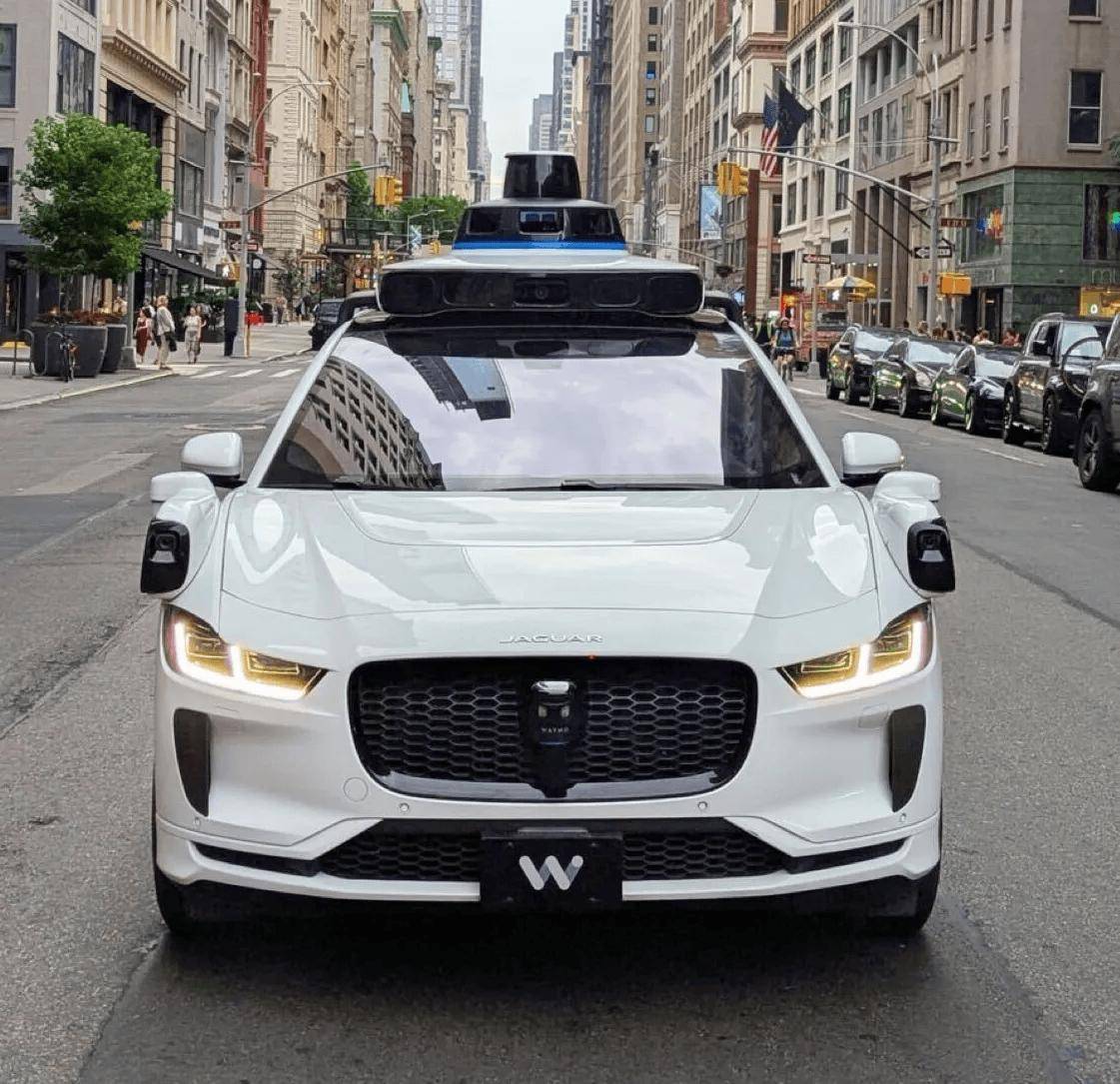
Core Insights - Waymo, a subsidiary of Alphabet, has completed a $16 billion financing round, aiming to expand its autonomous taxi fleet to over ten new cities globally, including London and Tokyo [1][3] Financing and Valuation - The financing round was led by Dragoneer Investment Group, DST Global, and Sequoia Capital, resulting in a company valuation of $126 billion [3] - Major investors included Andreessen Horowitz, Mubadala Capital, and several others, with Alphabet maintaining its status as the controlling shareholder [3] Business Expansion - Waymo plans to use the funds to drive business expansion, having significantly accelerated its development over the past year [3] - The company has received approval to operate autonomous ride-hailing services to and from San Francisco International Airport, covering all of Northern California and several major U.S. urban areas [3][4] Operational Scale - Waymo currently provides 400,000 rides per week across six major U.S. urban areas, with a projected annual ride total of 15 million by 2025, tripling its previous figures [5] - The cumulative ride total has surpassed 20 million, indicating a strong operational scale [5] Safety and Regulatory Challenges - Despite rapid expansion, Waymo's autonomous taxis have faced operational errors, leading to increased regulatory scrutiny and public criticism [5] - Investigations have been launched by the National Highway Traffic Safety Administration and the National Transportation Safety Board regarding incidents involving the autonomous vehicles, including a recent case where a child was injured near a school [5]


剔除非经常性利润后,特斯拉股票估值已创历史新高
财富FORTUNE· 2026-02-02 13:05
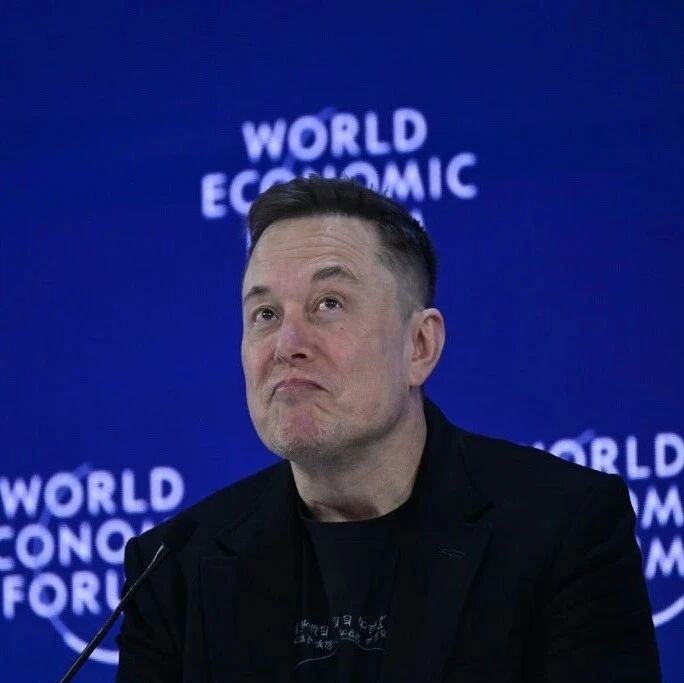
Core Viewpoint - Tesla's fourth-quarter performance and future vision presented by Elon Musk received positive reviews from Wall Street analysts, despite disappointing financial data, indicating a disconnect between market perception and actual performance [1] Financial Performance - Tesla reported a GAAP net profit of $3.79 billion, a 75% decline from the peak of $15 billion in 2023 [1] - Revenue from the electric vehicle business decreased by 16% over the past two years, while overall operating expenses increased by 44%, negatively impacting profitability [1] - The growth in battery and charging station services was insufficient to offset the decline in electric vehicle revenue, as these services accounted for only half of the electric vehicle business [1] Asset Management - Tesla has been increasing its asset base, adding $31 billion in assets over the past two years, a nearly 30% increase, while facing significant profit declines [1] - The company's capital intensity is rising, leading to lower capital allocation efficiency [1] Revenue Sources - A significant portion of Tesla's profits comes from selling regulatory credits to other automakers, which is a declining revenue stream [1] - In 2025, Tesla's after-tax regulatory credit income is projected to be $1.45 billion, along with $69 million from digital asset sales, totaling $1.51 billion, which constitutes nearly 40% of its net profit [1] - After excluding these non-core revenue sources, Tesla's core repeatable profit is only $2.28 billion [1] Valuation Concerns - There is a substantial gap between Tesla's market value and its disclosed profits, raising concerns about the company's ability to generate returns for investors [1] - With a current market capitalization of $1.44 trillion, Tesla's adjusted price-to-earnings ratio stands at 632 times, significantly higher than that of other tech companies like Palantir, which has a P/E ratio of about 353 times [1] - The high valuation suggests that investors are paying a premium for minimal profit, indicating challenges ahead for Tesla in delivering shareholder returns [1]
中光学:车载镜片、车载镜头等可应用于无人驾驶领域或辅助驾驶相关领域
Zheng Quan Ri Bao· 2026-02-02 11:41
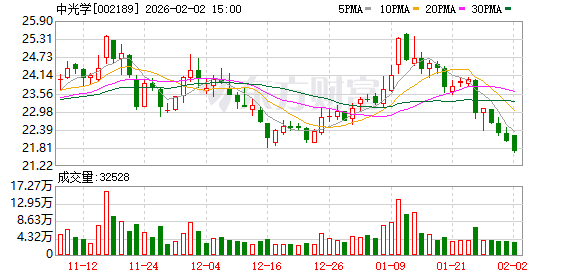
Core Viewpoint - The company, Zhongguangxue, emphasizes its core optical technology and related optoelectronic products, which have broad application scenarios, particularly in the automotive sector, including autonomous driving and advanced driver-assistance systems [2]. Group 1: Product Applications - The company's optical products, such as vehicle-mounted lenses and camera modules, are applicable in the fields of autonomous driving and related assistance technologies [2]. - New technologies and products like HUD (Head-Up Display) and automotive panoramic imaging are closely linked to the realization of intelligent driving in vehicles [2].

Waymo估值1100億砸Tesla?@Tesla @elonmusk #Robotaxi #Waymo #特斯拉
大鱼聊电动· 2026-02-02 10:15
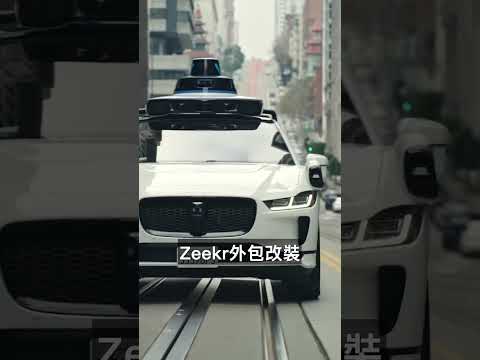
Waymo要融資 160億美元 估值衝到 1100億! 谷歌砸130億 親自帶頭 紅杉 DST全跟進 這氣勢是要把 Tesla Robotaxi 按在地上摩擦? 等等 先別慌! Waymo 現在牛在哪? 多個城市跑 無人駕駛 2000多萬趟 真金白銀 年收3.5%億美元 看起來 領先一大截 但致命短板是 他們不會 自己造車! 七年才搞到 2500輛 Robotaxi 還在靠捷豹 Zeekr外包改裝 每趟都在燒錢 反觀Tesla? 一年能噴出 165萬輛車! 半天的產量 就能頂上 Waymo 整個車隊 更狠的是數據 Tesla FSD 累積75億英里 Waymo 根本追不上 Waymo 這波融資 是強心針 但燒錢模式 能撐多久? Tesla一旦 無監督FSD爆發 規模雪球滾起來 誰超誰 還真不好說. ...
特斯拉即将推出第三代人形机器人,预计年产百万台
Xin Lang Cai Jing· 2026-02-02 08:43
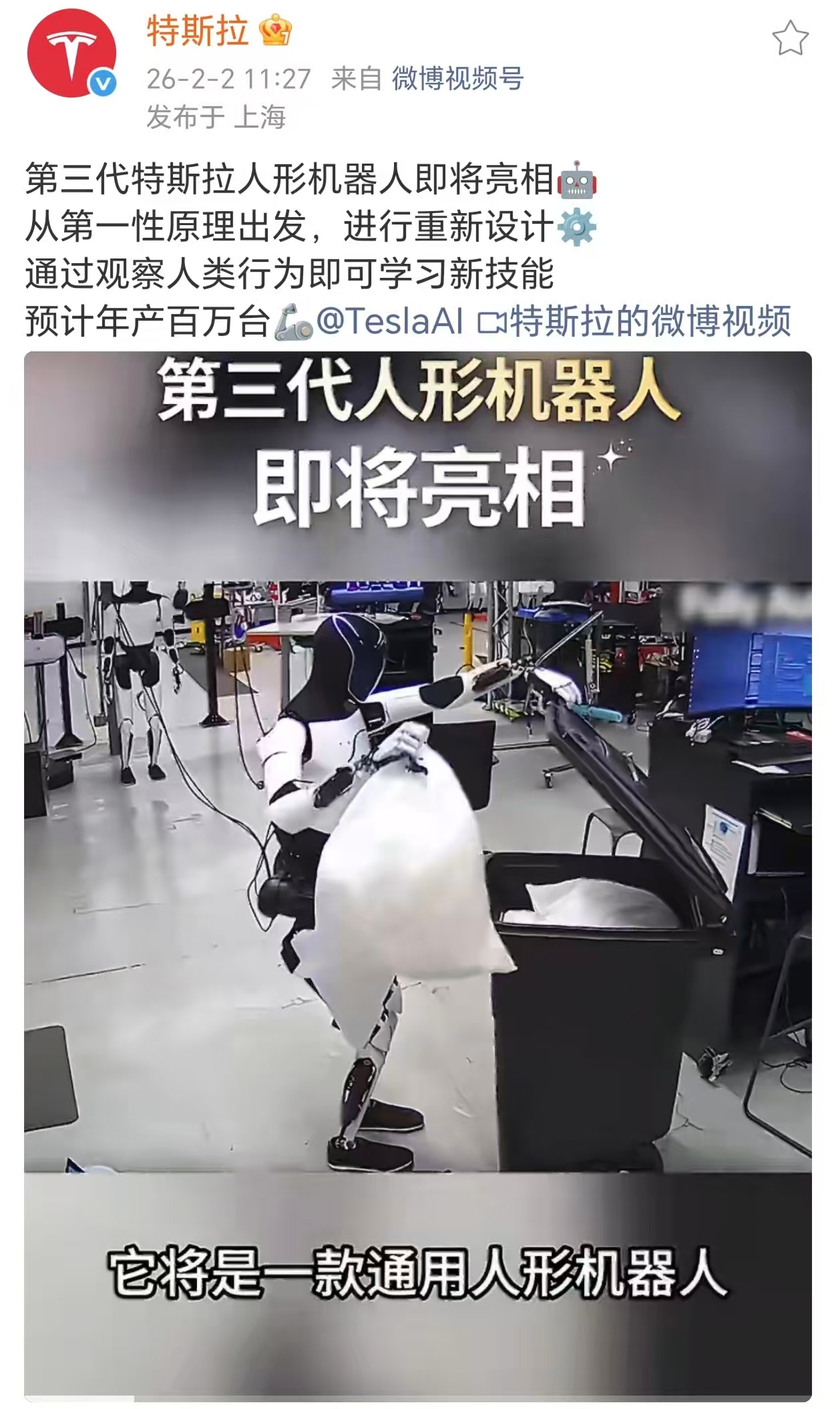
Core Viewpoint - Tesla is set to unveil its third-generation humanoid robot, which will learn new skills by observing human behavior, with an expected annual production capacity of one million units [1][4]. Group 1: Product Development - The third-generation humanoid robot will be released in Q1 2026, building on the advancements of the 2.5 version, including an upgraded hand design [4]. - The production line for Model S/X at the Fremont factory will be converted to manufacture humanoid robots, with mass production expected to start by the end of 2026 [4]. - The Optimus humanoid robot has entered the countdown to mass production, currently performing basic tasks like screw tightening and material handling, with plans to validate complex assembly and quality inspection tasks by the end of 2026 [4]. Group 2: Previous Versions and Challenges - Tesla has already launched the first (Gen1) and second (Gen2) generations of the humanoid robot, with Gen1 introduced in October 2022 and Gen2 released in 2023, which features a 30% increase in walking speed and a 22-degree-of-freedom dexterous hand [4]. - Significant engineering challenges remain, particularly in the design of the robot's hand and forearm, which have previously caused production delays [6]. Group 3: Financial Performance and Strategic Focus - Tesla's Q4 2025 revenue was $24.901 billion, a year-over-year decline of approximately 3%, with net profit down 61% to $840 million [6]. - The automotive business revenue fell 11% year-over-year to $17.69 billion in Q4 2025, with a total annual automotive revenue of $69.5 billion, marking a 10% decline [6]. - In response to declining automotive revenue, Tesla announced a capital expenditure plan of $20 billion for the year, focusing on AI, autonomous driving, and robotics [6]. Group 4: Competitive Landscape - Elon Musk identified Chinese companies as Tesla's strongest competitors in the humanoid robot market, noting their manufacturing scale and advancements in AI technology [7]. - The Chinese humanoid robot industry is expected to experience rapid growth, with improvements in AI model capabilities, hardware maturity, cost reductions, and accelerated application scenarios by 2026 [7].

中信建投:汽车板块景气预期或已筑底 特斯拉(TSLA.US)年报强化物理AI拐点
智通财经网· 2026-02-02 07:08
Group 1: Automotive Sector Overview - The automotive sector is currently experiencing weak performance during the off-season, but market pessimism regarding sales expectations is gradually stabilizing, indicating a potential bottoming out of negative sentiment [1] - Tesla's recent quarterly report shows a year-on-year increase in gross profit for Q4 2025, with gross margin reaching a two-year high, driven by higher sales prices in the Asia-Pacific region and an increase in FSD subscriptions [1] - Capital expenditures for Tesla in 2026 are expected to exceed $20 billion, focusing on computing infrastructure and new factory capacity expansion [1] Group 2: Autonomous Driving Developments - 2026 is anticipated to be a pivotal year for the commercialization of autonomous driving, with Tesla's FSD subscription rates increasing significantly throughout 2025 [2] - The FSD subscription model will shift to a monthly subscription starting in 2026, with a current fee of $99 per month [2] - As of the end of 2025, FSD has accumulated over 7 billion miles (approximately 11.5 billion kilometers) of driving distance, with ongoing localization efforts in China and Europe pending regulatory approval [2] Group 3: Humanoid Robotics Sector - The robotics sector is experiencing volatility, with recent adjustments in trading volumes and external rumors affecting market sentiment [3] - Key catalysts for the T-chain include the release of Gen3 in Q1 2025 and the commencement of overseas production capacity construction later in the year [3] - There is a positive outlook for specific investment targets within the robotics sector, focusing on high-probability Tesla supply chain participants and undervalued companies with growth potential [3] Group 4: Commercial Vehicle Outlook - The heavy-duty truck and bus segments are expected to benefit from policy support for domestic demand and ongoing export growth in 2026 [4] - Weichai Power is favored due to the recovery of domestic bidding and the pressing electricity shortages in North America, which are expected to boost market expectations for its products [4] - Recommended stocks include Jianghuai Automobile, Hengbo Technology, Longsheng Technology, Weichai Power, Yutong Bus, King Long Automobile, and Cao Cao Mobility, focusing on low-valuation leaders with strong performance [4]