智能座舱

Search documents
宝马大幅降价的阳谋
Bei Jing Shang Bao· 2026-01-05 00:45
Core Viewpoint - BMW has adjusted the official guide prices of several models, with some reductions reaching up to 300,000 yuan, but the actual transaction prices have not significantly decreased, indicating a strategic response to market dynamics rather than a price war [1][2][3]. Group 1: Price Adjustments - The flagship electric model i7 M70L has seen a price drop of 30.1%, now priced at 1.598 million yuan, while the 7 Series and other fuel models have been reduced by approximately 12%, with the lowest starting price dropping to 208,000 yuan [2]. - Despite the official price reductions, actual transaction prices have not changed significantly, with some dealers reporting only a 10,000 yuan decrease in the 7 Series and X6 models [2][3]. - The price adjustments aim to alleviate the "price inversion" issue faced by dealers, where the actual selling price is lower than the manufacturer's suggested price, thus improving dealer profitability [3]. Group 2: Market Dynamics - BMW's price adjustments reflect the increasing pressure from domestic high-end electric vehicle brands, which have captured a significant market share, with Chinese brands accounting for nearly 70% of passenger car sales and over 80% in the high-end electric vehicle segment [4]. - BMW's sales in China have declined, with a reported 11.2% drop in cumulative sales to 465,000 units, making it the only major market to experience a double-digit decline [2][4]. - The traditional luxury car market is undergoing a transformation, with BMW's historical advantages being eroded by new entrants offering advanced technology and features [5]. Group 3: Strategic Responses - BMW is focusing on technological transformation to address competitive pressures, showcasing new technologies such as the sixth-generation eDrive system and a long-wheelbase version of the BMW iX3, which is set to be produced in Shenyang in 2026 [5]. - The company is also restructuring its dealer network, with plans to complete this by mid-2026, which includes converting some sales points to service-only locations [3]. - Analysts suggest that BMW's price cuts may dilute its brand value and identity, emphasizing the need for the company to enhance its electric and intelligent branding to avoid a detrimental cycle of "price for volume" [6].
宝马大降价,“以前想都不敢想”
Zhong Guo Zheng Quan Bao· 2026-01-03 08:06
Core Insights - BMW China announced a "systematic value upgrade" on January 1, 2026, marking a significant price reduction across 31 key models, including a notable drop of 301,000 yuan for the flagship electric model i7 M70L, now priced at 1,598,000 yuan [1] - The price cuts are seen as a response to declining market performance in China, with a 11.2% year-on-year drop in sales for the first three quarters of 2025, totaling 465,000 units, which is a stark contrast to a global sales increase of 2.4% [3] Price Adjustments - The price reductions set new records in the luxury car market, with the iX1 eDrive25L seeing a 71,900 yuan decrease (24%), now starting at 228,000 yuan, directly competing with mid-range electric models like Tesla Model Y and BYD Tang EV [2] - The flagship 7 Series also experienced significant price cuts, with the 735Li dropping from 919,000 yuan to 808,000 yuan (12% reduction), and the 740Li leading model decreasing to below 900,000 yuan [2] Market Challenges - BMW's market share in China has been under pressure, with the X5 SUV's sales plummeting to 5,498 units in October 2025, ranking 12th, and the 5 Series lagging behind competitors like Audi A6L [3] - The luxury car market is undergoing a transformation, with new entrants like AITO and Li Auto reshaping consumer perceptions, making traditional brand premiums less relevant [4] Competitive Landscape - The rapid penetration of electric vehicles in China is intensifying competition, with retail penetration rates for new energy passenger vehicles reaching 53.6% in the first 11 months of 2025, and peaking at 59.3% in November [5] - Other luxury brands are also facing sales pressures, with Mercedes-Benz reporting a 14% decline in sales in the first half of 2025, prompting price reductions on key models [5] Strategic Response - BMW's price cuts may trigger a chain reaction in the luxury car market, reflecting a broader shift from brand competition to value competition, posing challenges for traditional luxury automakers in balancing brand equity with market share [5]
新能源汽车售后,谁是一条龙,谁是一条虫
3 6 Ke· 2025-12-31 12:09
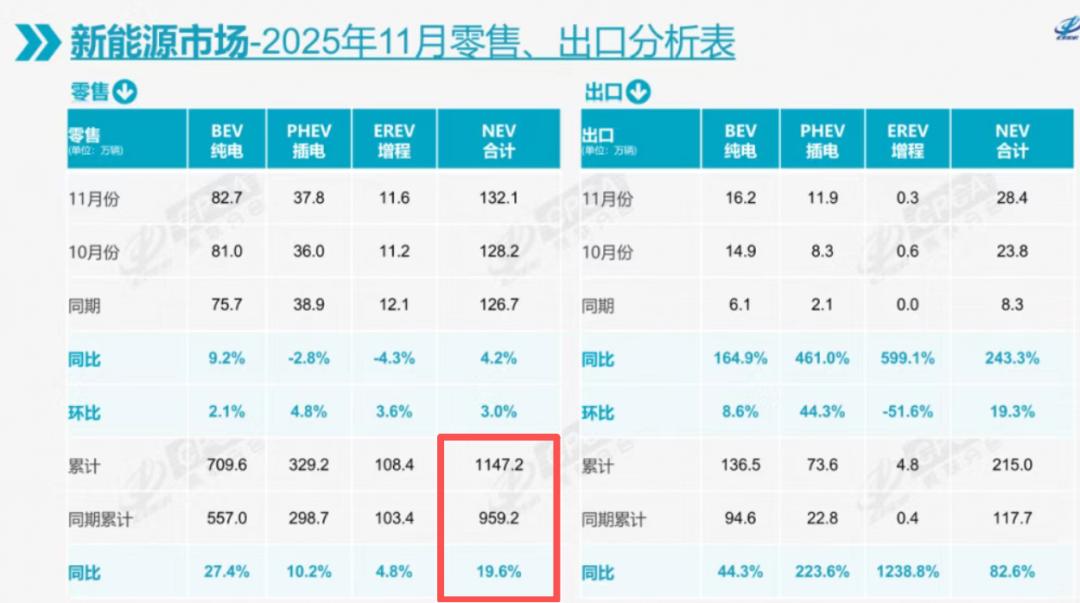
Core Insights - The retail sales of new energy passenger vehicles reached 11.472 million units in the first 11 months, a year-on-year increase of 19.6%, surpassing traditional fuel vehicles by 1.462 million units [1] - In November, the domestic retail penetration rate of new energy vehicles surged to 59.3%, an increase of seven percentage points year-on-year [1] Sales Data Summary - In November, the retail sales of new energy vehicles included 827,000 BEVs, 378,000 PHEVs, and 116,000 EREVs, totaling 1.321 million units [2] - Compared to October, November saw a 2.1% increase in BEV sales, a 4.8% increase in PHEV sales, and a 3.6% increase in EREV sales [2] - Cumulatively, from January to November, BEV sales reached 7.096 million units, PHEV sales reached 3.292 million units, and EREV sales reached 1.084 million units, totaling 11.472 million units [2] Customer Experience Challenges - Many new energy vehicle owners report dissatisfaction with post-purchase experiences, particularly regarding after-sales service [3] - Common complaints include delays in service response, issues with vehicle systems, and inadequate support for charging infrastructure [4][6] - The gap between sales promises and actual service delivery is becoming a significant concern for consumers [3][7] After-Sales Service Issues - Customers have expressed frustration over the reliability of charging stations and the responsiveness of customer service when issues arise [4][6] - Repair experiences can be lengthy and complicated, especially in areas lacking official service centers [8][19] - The high technical complexity of electric vehicles creates challenges for maintenance and repair, leading to longer wait times for parts and service [16][19] Industry Response and Strategies - Different companies are adopting varied strategies to address after-sales service challenges [21] - NIO has focused on building a high-quality service ecosystem, including extensive battery swap networks and dedicated service centers [25] - Tesla integrates sales and service through a direct sales model, ensuring transparency and efficiency in service delivery [27] - Other companies, like Hongmeng Zhixing, leverage existing networks to enhance service offerings, creating a more customer-centric experience [30] Conclusion - The new energy vehicle market is experiencing rapid growth, but the disparity between sales and service quality poses risks to customer satisfaction and brand loyalty [31] - Companies must prioritize after-sales service as part of their long-term strategy to remain competitive in the evolving market landscape [31]


蓝思科技:深度参与北美大客户智能座舱、人形机器人、商业航天等业务
Bei Jing Shang Bao· 2025-12-30 14:23
Core Insights - The company has a decade-long deep collaboration with a major North American client, serving as a primary core supplier [1] - The company is involved in key business areas such as smart cockpits, humanoid robots, and commercial aerospace, leveraging its comprehensive material technology and ODM capabilities [1] - In the commercial aerospace sector, the company has begun mass shipments of satellite ground receiver appearance parts and structural component modules [1] Technology and Product Development - The company has developed ultra-thin photovoltaic glass modules with a thickness of less than 1mm and large-size UTG flexible glass, utilizing advanced multi-coating processes [1] - These products meet the demanding requirements of space photovoltaic technology, including resistance to atomic oxygen erosion, radiation, and thermal control [1] - The company is currently collaborating with relevant clients for the development of these technologies [1]


ThinkPad×极豆科技:重构人车边界,与思考者同行
36氪· 2025-12-30 13:13
在极豆科技的实践中,自研"沧海大模型"正将这一愿景变为现实。它实时融合处理来自摄像头、麦克风、生物传感器的多模态数据流,情感引擎解析情绪细 微变化,场景引擎预测潜在需求。"我们不再满足于让座舱'听懂指令',而是要让其'理解人心',"极豆科技CEO汪奕菲解释道,"当系统感知到驾驶疲劳时, 它会联动灯光、音响、空调、导航系统,主动调亮氛围色调、空调香氛开启、播放提神旋律、建议最近休息区,提供一套有温度的关怀方案,而非机械的功 能响应。" ThinkPad助力极豆科技, 以自研AI大模型重新定义人车关系。 过去十年,汽车座舱虽从物理按键进化到触摸屏,交互逻辑却陷入"指令迷宫",功能割裂,数据孤立,体验拼凑。更深层的是,系统缺乏对人的场景化理 解:能执行"调低温度"的命令,却读不懂阳光透过车窗的真实体感。 变革始于认知重构。当座舱从"功能容器"转向"数字神经网络",技术全面升级驱动着质的跨越:多模态感知让座舱能"看见"表情、"听见"情绪;情感计算捕 捉状态变化;场景引擎理解出行情境;而大模型,最终赋予系统理解复杂意图的认知能力。 从车迷到产业破局者 汪奕菲的办公桌上,至今还保留着2014年创业初期使用的那台Think ...
蓝思科技:公司与北美大客户已有10年深度合作
Zheng Quan Ri Bao Wang· 2025-12-30 13:12
Core Viewpoint - The company, Lens Technology, has established a deep partnership with a major North American client over the past 10 years, positioning itself as a primary core supplier [1] Group 1: Business Collaboration - The company has engaged in various core business areas for the major client, including smart cockpits, humanoid robots, and commercial aerospace [1] - The company has successfully shipped satellite ground receiver appearance parts and structural module components in the commercial aerospace sector [1] Group 2: Technological Advancements - The company has developed ultra-thin photovoltaic glass modules with a thickness of less than 1mm, leveraging its leading global technology in ultra-thin glass post-processing [1] - The company employs a complex multi-coating process to meet the demands of space photovoltaic technology, including resistance to atomic oxygen erosion, radiation, and thermal control [1] - The company is currently collaborating with relevant clients to develop these advanced technologies [1]
蓝思科技:在商业航天方面 公司已批量出货卫星地面接收器外观件、结构件模组
2 1 Shi Ji Jing Ji Bao Dao· 2025-12-30 07:29
Core Insights - The company has established a deep partnership with a major North American client for 10 years, serving as a primary core supplier [1] - The company leverages comprehensive material technology and complete technical routes, along with ODM capabilities from modules to complete machines, to engage in key projects such as smart cockpits, humanoid robots, and commercial aerospace [1] - In the commercial aerospace sector, the company has begun mass shipments of satellite ground receiver appearance parts and structural component modules [1] - The company has developed ultra-thin photovoltaic glass modules with a thickness of less than 1mm and large-sized UTG flexible glass, utilizing advanced multi-coating processes to meet the demands of space photovoltaic technology [1] - Current collaborations are underway with relevant clients for the development of these advanced technologies, which address challenges such as atomic oxygen erosion resistance, radiation resistance, and thermal control [1]
奥比中光涨2.02%,成交额3.88亿元,主力资金净流出763.50万元
Xin Lang Zheng Quan· 2025-12-30 05:26
Group 1 - The core viewpoint of the news is that Aobo Zhiguang's stock has shown significant performance, with a year-to-date increase of 90.99% and a recent rise of 9.37% over the last five trading days [1] - As of December 30, Aobo Zhiguang's stock price is 88.81 yuan per share, with a total market capitalization of 35.626 billion yuan [1] - The company has experienced a net outflow of 7.635 million yuan in principal funds, with large orders showing a buy of 84.4442 million yuan and a sell of 89.5330 million yuan [1] Group 2 - Aobo Zhiguang, established on January 18, 2013, and listed on July 7, 2022, specializes in the design, research, development, production, and sales of 3D visual perception products [2] - The company's revenue composition includes 61.83% from consumer-grade application devices, 31.35% from 3D visual sensors, and 2.60% from industrial-grade application devices [2] - As of September 30, 2025, Aobo Zhiguang reported a revenue of 714 million yuan, a year-on-year increase of 103.50%, and a net profit of 108 million yuan, a year-on-year increase of 279.12% [2] Group 3 - As of September 30, 2025, the top ten circulating shareholders of Aobo Zhiguang include new entrants such as Hong Kong Central Clearing Limited and E Fund National Robot Industry ETF, with significant holdings [3] - The number of shareholders has increased by 45.86% to 29,200, while the average circulating shares per person decreased by 22.41% to 9,998 shares [2]

均胜电子涨2.05%,成交额10.52亿元,主力资金净流入13.87万元
Xin Lang Zheng Quan· 2025-12-30 05:26
Group 1 - The core viewpoint of the news is that Junsheng Electronics has shown significant stock performance and financial growth in 2023, with a notable increase in share price and market capitalization [1][3]. - As of December 30, Junsheng Electronics' stock price increased by 2.05% to 30.34 CNY per share, with a total market capitalization of 47.05 billion CNY [1]. - The company has experienced a year-to-date stock price increase of 96.83%, with a recent 3.94% rise over the last five trading days [1]. Group 2 - Junsheng Electronics, established on August 7, 1992, and listed on December 6, 1993, specializes in providing smart automotive technology solutions, operating in five business segments [2]. - The main revenue sources for Junsheng Electronics are automotive safety systems (62.53%), automotive electronic systems (27.53%), and other segments [2]. - As of September 30, the company reported a revenue of 45.84 billion CNY for the first nine months of 2025, reflecting a year-on-year growth of 11.45% [3]. Group 3 - The company has distributed a total of 1.53 billion CNY in dividends since its A-share listing, with 862 million CNY distributed over the past three years [4]. - As of September 30, 2025, the number of shareholders increased by 38.21% to 126,500, while the average circulating shares per person decreased by 28.33% [3][4]. - Major shareholders include Hong Kong Central Clearing Limited, which increased its holdings by 26.29 million shares, and Southern CSI 500 ETF, which reduced its holdings by 307,400 shares [4].

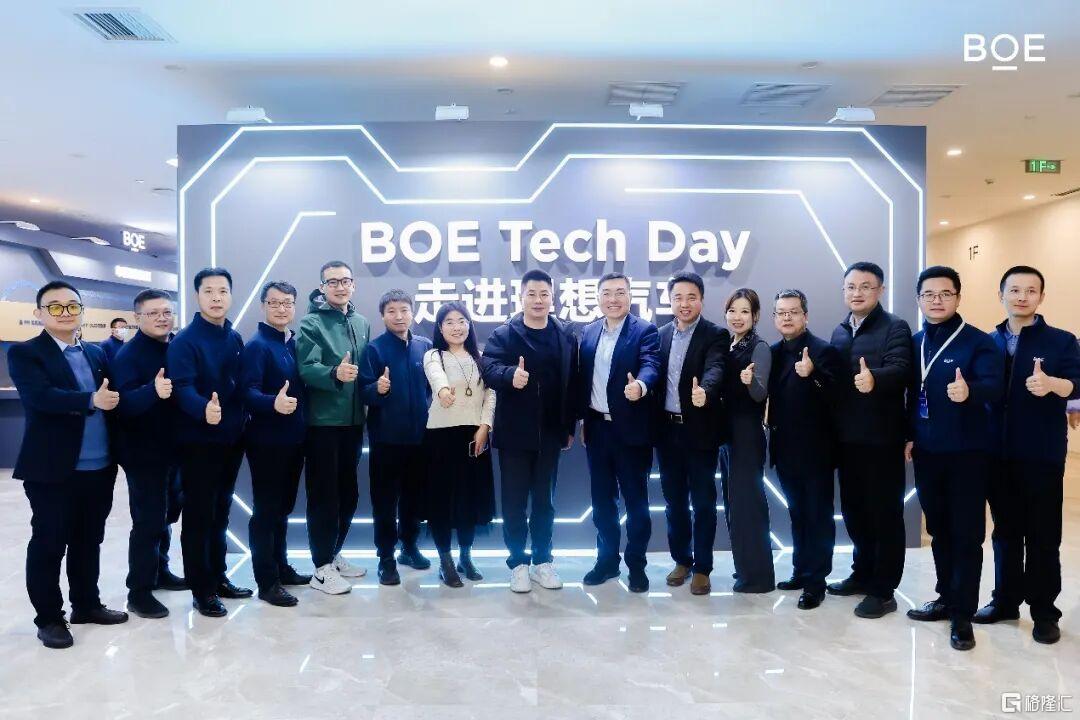
京东方精电亮相“BOE Tech Day走进理想汽车”活动 科技创新引领智能座舱新未来
Ge Long Hui· 2025-12-30 04:54
Core Viewpoint - The "BOE Tech Day" event at Li Auto's Beijing R&D headquarters showcased advanced smart cockpit technologies, emphasizing collaboration between BOE Technology Group and Li Auto to explore future innovations in intelligent cockpit applications [1]. Group 1: Industry Trends - The automotive industry is experiencing a "new four modernizations" wave, with in-car displays rapidly evolving towards high-end, intelligent, and diversified solutions [3]. - Innovative applications such as pillar-to-pillar large-size displays, in-car entertainment for passengers, and smart windows are emerging as key trends in the automotive electronics sector [3]. Group 2: Product Innovations - BOE showcased a series of cutting-edge smart cockpit technologies, receiving high praise for their superior image quality and interactive experiences [4]. - The global debut of enhanced image quality technology significantly improves detail and color saturation, setting a new benchmark for in-car display quality [6]. - The dual 15.05-inch OLED screens feature an ultra-high contrast ratio of 1,000,000:1, enhancing the visual experience while catering to both driving and entertainment needs [8]. Group 3: Interactive Experience - The innovative headrest light field screen allows users to view a large virtual image from a small screen, enhancing the immersive experience in confined spaces [10]. - A 15.6-inch anti-peep screen can switch modes to protect user privacy, particularly useful in business settings [13]. - The introduction of a 417 PPI glasses-free 3D product and a smart steering wheel with multiple interaction technologies showcases advancements in user engagement and safety [12]. Group 4: Future Outlook - BOE aims to lead the automotive display market with its "HERO" smart cockpit ecosystem, integrating health, entertainment, and office functionalities into a cohesive user experience [15]. - The company plans to continue collaborating with global partners like Li Auto to drive innovation in smart cockpit technologies and enhance user experiences in intelligent mobility [15].