
汽车电动化转型

Search documents
汽车金融变局:资产规模同比下降一成, 电动化转型滞后
2 1 Shi Ji Jing Ji Bao Dao· 2025-08-27 07:01
Core Insights - The automotive finance industry in China is undergoing significant changes, with total assets of 24 automotive finance companies declining to 855.134 billion yuan by the end of 2024, a year-on-year decrease of 11.37%, marking the largest drop in history [1][3][8] Group 1: Industry Overview - The decline in asset scale is attributed to multiple pressures, including the accelerated electrification of the automotive industry, with new energy vehicle sales expected to grow by approximately 40.8% in 2024, while traditional energy vehicle sales are projected to shrink by about 14.1% [1][3] - The competition from commercial banks in the automotive finance sector is intensifying, as banks shift their focus from personal consumption loans to automotive loans due to pressures in the real estate market [4][5] Group 2: Financial Performance - The overall non-performing loan (NPL) rate for the automotive finance industry is 0.65% at the end of 2024, a slight increase from 0.58% in 2023, but still significantly lower than the 1.50% average for commercial banks [2][8] - The industry maintains a high provision coverage ratio of approximately 450%, well above the 211.2% level of commercial banks, providing a robust buffer against future risks [2][9] Group 3: Market Dynamics - The financial penetration rate of automotive finance companies has decreased from 29% in 2023 to 23% in 2024, with new energy vehicle financial penetration dropping sharply to 14% [5][6] - Despite a 17.31% year-on-year decline in the total number of retail financing vehicles financed by automotive finance companies, the loan balance for new energy vehicles has increased by 23.44% to 204.096 billion yuan [4][6] Group 4: Regulatory Environment - Recent regulatory actions have aimed to address issues related to high-interest and high-reward loan models in the automotive finance sector, which may lead to a more favorable competitive environment for automotive finance companies [7] - A new government subsidy policy for personal consumption loans may pose challenges for automotive finance companies, as it does not include them, potentially diverting some customers to commercial banks [7]
A+H丨年营收超500亿元、全球拥有25个研发中心,均胜电子(600699.SH)再次递表港股IPO
Sou Hu Cai Jing· 2025-08-25 07:35
Core Viewpoint - Junsheng Electronics is applying for a secondary listing on the Hong Kong Stock Exchange, marking its second attempt since its initial public offering in 2011 on the A-share market. The company specializes in smart automotive technology solutions, focusing on key areas in the automotive parts industry, particularly automotive electronics and safety [1] Financial Performance - Junsheng Electronics reported revenues of 497.93 billion RMB, 557.28 billion RMB, 558.64 billion RMB, and 197.07 billion RMB for the years 2022 to 2024 and the first four months of 2025, respectively. The gross profit for the same periods was 55.42 billion RMB, 80.57 billion RMB, 90.64 billion RMB, and 35.14 billion RMB, with net profits of 2.33 billion RMB, 12.40 billion RMB, 13.26 billion RMB, and 4.91 billion RMB [2] - The gross margin for the reported periods was approximately 11.13%, 14.46%, 16.22%, and 17.83%, while the net profit margin was around 18.28%, 18.21%, 20.48%, and 18.83%, indicating an overall upward trend in performance [2] Research and Development - The company invested significantly in R&D, with expenditures of 21.39 billion RMB, 25.41 billion RMB, 25.85 billion RMB, and 11.08 billion RMB for the years 2022 to 2024 and the first four months of 2025, which supports its competitiveness in the automotive electrification transition [3] Global Strategy and Market Position - Junsheng Electronics has evolved into the fourth-largest provider of smart cockpit domain control systems globally, ranking 41st in the automotive parts industry by revenue in 2024. It is the second-largest supplier of passive automotive safety products in both China and globally [4] - The company has engaged in over ten cross-border acquisitions since its A-share listing, with a total transaction value exceeding 30 billion RMB, establishing a business structure that spans both automotive safety and electronics [5] - As of April 2025, Junsheng Electronics operates 25 R&D centers and over 60 production bases worldwide, reflecting its global operational scale [5] Debt and Financial Strategy - The total liabilities of Junsheng Electronics were reported at 364.1 billion RMB, 377.6 billion RMB, 443.2 billion RMB, and 468 billion RMB for the years 2022 to 2024 and the first four months of 2025, with corresponding debt-to-asset ratios of 67.3%, 66.4%, 69.1%, and 69.8% [6] - The increase in debt is attributed to loans and borrowings aimed at enhancing liquidity and supporting business needs, including share repurchases and production expansion [7] Market Outlook - The global automotive market is expected to recover, with sales projected to reach 92.4 million vehicles in 2024, with China accounting for 32.5% of this market. The global automotive passive safety industry is anticipated to grow to 49.7 billion RMB by 2029, with a compound annual growth rate of 7.8% from 2025 [8] - Junsheng Electronics holds significant market shares in various automotive components, ranking second in China's passive safety industry with revenues of 90 billion RMB, capturing 26.1% of the market. It ranks second globally in steering wheels and safety belts, and third in airbags, with respective market shares of 35.9%, 22.1%, and 19.0% [9]

一汽奥迪 PPE 核心高管离任,Q6L 产销两端如何打配合
3 6 Ke· 2025-08-25 02:16
Core Insights - The departure of Wang Kaiyu, Vice President of Audi FAW New Energy, poses new challenges for the domestic Audi PPE project, which has been in preparation for nearly four years [1][5] - The first model from the PPE platform, the Q6L e-tron family, has recently been launched, but the project faces difficulties in both production and sales [4][6] Production Challenges - Wang Kaiyu was responsible for production and logistics at Audi FAW, focusing on localizing the production of the PPE platform, which requires a significant amount of imported components due to the lack of domestic sourcing [1][4] - The production of the Q6L e-tron family was delayed due to team coordination and software issues, but the most challenging phases have now been overcome, with plans for further models like the A6L e-tron and E6 entering pre-production [4][8] Sales and Market Position - Initial sales of the Q6L e-tron family in Shanghai have been underwhelming, with pricing not competitive enough against other popular electric SUVs like NIO ES8 and Li Auto i8 [7][8] - Audi FAW is attempting a "fusion direct sales" model for the Q6L e-tron and A5L, which may impact short-term sales due to the need for strong digital capabilities and resource allocation [10][11] - The separation of production and sales functions within Audi FAW and Audi FAW Sales Company may hinder decision-making efficiency and market responsiveness, especially in a competitive landscape dominated by integrated players like Tesla [11]


观车 · 论势 || 跨国车企的利润去哪儿了
Zhong Guo Qi Che Bao Wang· 2025-08-18 10:12
Core Viewpoint - The global automotive industry is experiencing a significant decline in profits across major multinational companies, attributed to various external and internal factors, including new U.S. tariff policies and the transition to electric vehicles [1][2][4]. Group 1: Financial Performance - Major automotive companies reported either revenue growth without profit increase or declines in both revenue and profit, with substantial profit drops noted [1]. - German automakers saw drastic profit reductions: Volkswagen Group's operating profit fell by 33%, Mercedes-Benz's net profit dropped by 56%, and BMW's net profit decreased by 29% [1]. - U.S. automakers also faced challenges, with General Motors' net profit down 21%, Ford's net profit shrinking from $3.2 billion to $400 million, and Stellantis reporting a net loss of €2.256 billion [1]. - Japanese automakers like Toyota and Honda reported net profit declines of 37% and 50%, respectively, while Nissan continued to incur losses [1]. Group 2: Impact of Tariff Policies - The new U.S. tariff policies have significantly impacted all automotive companies, leading to increased costs and reduced profit margins [2]. - Toyota reported a loss of ¥450 billion due to tariffs in Q2, with an estimated total loss of ¥1.4 trillion for the fiscal year [2]. - Hyundai indicated a loss of ₩828 billion in Q2 due to tariffs, with expectations of greater impacts in Q3 [2]. - Volkswagen, BMW, and Mercedes-Benz also cited tariff impacts on their profit declines, with Volkswagen reporting a loss of €1.3 billion due to tariffs [2]. Group 3: Strategic Adjustments - Many automotive companies are adjusting their strategies in response to tariff pressures, including shifting production to the U.S. to mitigate costs, although this may lead to increased production expenses [3]. - The transition to electric vehicles presents structural challenges, as current electric vehicle sales do not yet match the profitability of traditional fuel vehicles, necessitating high R&D expenditures [3]. - Volkswagen's electric vehicle sales grew by 47% in H1, but profitability remains lower than that of fuel vehicles, impacting overall profit levels [3]. - Companies like Stellantis and Nissan are undergoing leadership changes and implementing cost-cutting measures, including workforce reductions and factory closures, to address financial pressures [4]. Group 4: Future Outlook - The collective profit pressure on global automotive companies results from a combination of external factors like tariffs and internal challenges such as market positioning and strategic adjustments [4]. - The industry faces the critical task of balancing profitability from traditional vehicles while investing in electric vehicle development amidst changing global trade environments and geopolitical factors [4].


德国车企比惨,巨头加速关厂、裁员
21世纪经济报道· 2025-08-13 14:16
Core Viewpoint - The German automotive industry, represented by the "Big Three" (Mercedes-Benz, Volkswagen, and BMW), is facing significant challenges due to a sharp decline in profits and ongoing tariff issues with the U.S. market, which could lead to long-term structural changes in production and employment [1][3]. Group 1: Financial Performance - Mercedes-Benz reported a net profit drop of over 50% year-on-year for the first half of the year, with the CEO stating that the current situation is more challenging than ever [1]. - Volkswagen's after-tax profit decreased by 38.3% year-on-year, and the company has revised its full-year performance expectations downward three times within six months [1]. - BMW experienced a 29% year-on-year decline in after-tax net profit, indicating that while it is less affected than its peers, it still faces significant pressure [1]. Group 2: Tariff Impact - The German automotive sector is projected to see a combined cash flow reduction of approximately €10 billion due to U.S. tariff policies [1]. - Despite a recent trade agreement reducing the tariff on EU car exports to the U.S. from 27.5% to 15%, the current tariff level remains significantly higher than the pre-Trump administration rate of 2.5% [3]. - The direct impact of tariffs is evident in sales and revenue, but the long-term implications include potential supply chain restructuring and job losses in Germany if production shifts to the U.S. [1]. Group 3: Market Dynamics - In 2022, Germany exported approximately 447,000 cars to the U.S., which accounted for less than 6% of total U.S. car imports, but the value of these exports was significant, reaching $24.8 billion [4]. - The luxury segment dominates German car exports to the U.S., which helps mitigate the impact of the 15% tariff due to higher profit margins [4][5]. - Companies like Audi and Porsche, which lack U.S. manufacturing facilities, are more vulnerable to tariff impacts, with Audi recently lowering its revenue expectations and profit margins [5][6]. Group 4: Strategic Responses - In response to tariffs, German automakers are planning to increase investments in U.S. manufacturing, with companies like BMW and Volkswagen already having established production bases in the U.S. [8]. - However, the shift to U.S. production comes with challenges, including increased costs from tariffs on imported components, which could raise overall manufacturing expenses by $107.7 billion for U.S. automakers [9]. - The pressure to invest in the U.S. may lead to reduced production capacity in Europe, with significant job cuts announced by major companies, including Audi and Volkswagen, which could affect up to 70,000 jobs in Germany [9][10]. Group 5: Electric Vehicle Transition - The push for electric vehicle development may be hindered by the current tariff environment, as German automakers may focus more on traditional fuel vehicles to maintain competitiveness in the U.S. market [10]. - The U.S. government's emphasis on traditional energy vehicles and the reduction of electric vehicle subsidies complicate the transition for German manufacturers, potentially delaying their shift towards electric mobility [10].
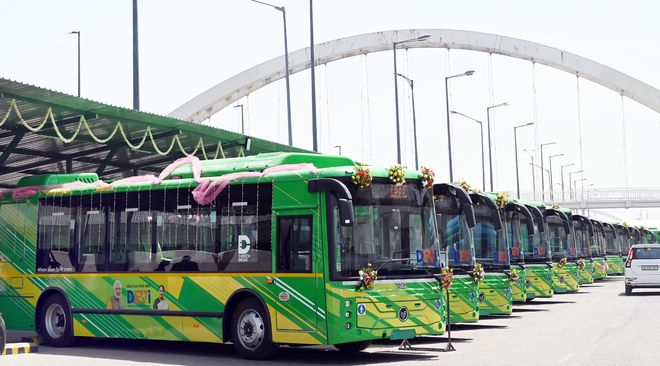
价值超1000亿卢比,印度电动车补贴实施期限将延长两年
Guan Cha Zhe Wang· 2025-08-11 06:41
Group 1 - The Indian government has extended the deadline for its electric vehicle subsidy program from March 2026 to March 2028, with a total value of ₹109 billion (approximately ¥8.94 billion) [1] - The subsidy program, which started in September 2024, aims to promote the rapid adoption of electric vehicles in India, providing a total of ₹36.8 billion (approximately ¥3 billion) for electric two-wheelers, three-wheelers, ambulances, and trucks [1][2] - The government has allocated ₹43.9 billion (approximately ¥3.6 billion) for public transport agencies to purchase 14,000 electric buses [1] Group 2 - The program includes large-scale charging infrastructure development to facilitate convenient charging for electric vehicle users and aims to strengthen the domestic electric vehicle manufacturing supply chain [2] - The Indian government has faced challenges in promoting electric trucks and buses, as well as difficulties for testing agencies, which have impacted the normal progress of the project [2][5] - The extension of the subsidy deadline reflects the real challenges India faces in the transition to electric vehicles, including the complex technology requirements and the need for longer research and testing cycles [5][7] Group 3 - India is the third-largest automotive market globally, with car sales reaching 5.23 million units in 2024, a year-on-year increase of 3% [7] - From January to July this year, cumulative car sales in India reached 3.01 million units, showing a year-on-year growth of 2% [7] - However, the penetration rate of new energy vehicles in India is less than 1%, compared to 50% in China and 10% in the United States [7]
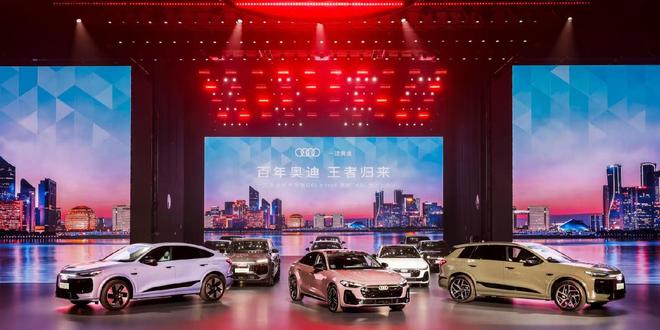
一汽奥迪的“双车棋局”:燃油与电动并行,在核心价格带打响反击战
Jing Ji Guan Cha Bao· 2025-08-10 09:21
Group 1 - The core viewpoint of the article highlights the strategic launch of two new models by FAW Audi, the A5L fuel vehicle with Huawei's intelligent driving system and the Q6L e-tron electric SUV, as a response to the competitive pressures from new energy vehicle manufacturers like BYD and Tesla [2][3] - The A5L represents an attempt by FAW Audi to challenge the perception that fuel vehicles cannot be intelligent, featuring advanced driving assistance capabilities based on the Audi PPC luxury fuel intelligent platform [2][3] - The Q6L e-tron, as the first product on the Audi PPE luxury electric platform, signifies FAW Audi's transition to a new phase of "original intelligent electric" vehicles, moving away from the "oil-to-electric" transition [3][4] Group 2 - The pricing strategy for the A5L starts at 239,800 yuan, which is significantly lower than traditional luxury B-class fuel vehicles, aiming to leverage intelligence to drive consumer upgrades [3] - The Q6L e-tron targets the 350,000 yuan electric SUV market, directly competing with emerging Chinese electric vehicle brands like Li Auto and NIO [3] - FAW Audi maintains a strong influence in the fuel vehicle market, with sales of 37,000 units in July and holding the top market share in the domestic luxury fuel vehicle segment from January to July [3]
利润集体大幅下滑 BBA上半年交出最“惨”财报
经济观察报· 2025-08-10 04:27
Core Viewpoint - The BBA (Benz, BMW, Audi) brands are facing significant challenges in the Chinese market, leading to a substantial decline in profits and necessitating a strategy of deep localization to strengthen their market position [2][4][8]. Financial Performance - In the first half of 2025, BBA reported a collective profit decline, with Benz's net profit dropping by 55.8%, Audi's by 37.5%, and BMW's by 29% [2][4]. - Benz's revenue was €66.377 billion, down 8.6%, with a net profit of €2.688 billion, while BMW's revenue was €67.7 billion, also down 8%, and net profit at €4 billion [4]. - Audi's revenue increased by 5.3% to €32.57 billion, but net profit fell by 37.5% to €1.346 billion, indicating a trend of increasing revenue without corresponding profit growth [4]. Market Challenges - BBA is experiencing dual challenges from U.S. tariffs and declining sales in China, exacerbated by fierce competition from local luxury brands and an overall price war in the Chinese automotive market [2][5]. - The U.S. imposed a 25% punitive tariff on EU-imported cars, significantly impacting BBA's profitability, with Audi estimating losses exceeding €600 million due to tariffs and transformation costs [4][5]. Sales Performance - In the first half of 2025, Benz's global sales fell by 8% to 1.0763 million units, with a 14% decline in China [5][6]. - Audi's sales decreased by 5.9% globally, with a 10.2% drop in the Chinese market, while BMW's sales remained stable globally but saw a 15.5% decline in China [5][6]. Electric Vehicle Strategy - BBA is under pressure to accelerate their electric vehicle (EV) strategies, with Benz's EV sales down 14%, Audi's down 23.5%, while BMW's EV sales grew by 18.5% globally [6][10]. - BBA is focusing on localizing production and product offerings in China, with plans for new EV models and collaborations with local tech firms to enhance smart features [9][10]. Strategic Responses - To counter U.S. tariffs, BBA is increasing production capacity in the U.S., with Audi planning a $4.6 billion investment in a new factory [8]. - In China, BBA is emphasizing deep localization, including transferring headquarters functions and adapting products to meet local consumer demands [8][9]. Future Outlook - BBA has adjusted its financial forecasts downward due to ongoing challenges, with Audi lowering its revenue expectations and Benz revising its sales return rate [6][11]. - The competitive landscape in the luxury car market is shifting, with BBA needing to navigate a period of slower growth and increased competition from domestic brands [11].
沃尔沃也卖不动了:销量连续5个月下滑,全球裁员7%没止住亏损
3 6 Ke· 2025-08-07 01:51
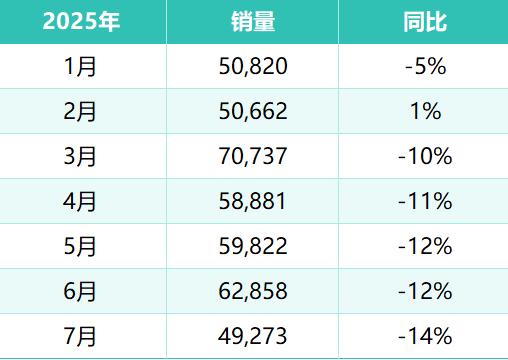
Core Viewpoint - Volvo is experiencing a significant decline in sales, with July 2023 global deliveries dropping to 49,273 units, a 14% year-on-year decrease, marking the lowest sales point of the year and continuing a five-month downward trend [1][2][3] Sales Performance - In July 2023, Volvo's global sales were 49,273 units, down 14% year-on-year, continuing a downward trend for five consecutive months [2][3] - In the first half of 2023, Volvo's cumulative sales in China were 70,300 units, a 10% year-on-year decline, accounting for about 20% of its global sales [3][5] - The company reported a revenue of 93.5 billion Swedish Krona (approximately 69.45 billion RMB) for Q2 2023, an 8% decrease year-on-year [5][7] Financial Performance - Volvo recorded an operating loss of 10 billion Swedish Krona (approximately 7.4 billion RMB) in Q2 2023, marking its first loss since going public in 2021, significantly down from a profit of 8 billion Krona (approximately 5.9 billion RMB) in the same period last year [7][9] - The market had expected a profit of 2.3 billion Swedish Krona (approximately 1.7 billion RMB) for Q2 2023, indicating a substantial miss in expectations [7] Strategic Challenges - The decline in sales is attributed to both external tariffs and internal strategic missteps, particularly in the U.S. and Chinese markets [10][12] - In the U.S., Volvo's focus on sedans like the S60 and S90 has not aligned with market demand, which favors SUVs [10][12] - In China, Volvo faces challenges due to slow electrification and inadequate brand marketing, leading to poor competitiveness against domestic new energy vehicle manufacturers [12][15] Product Development and Market Response - Volvo's electric vehicle strategy has been criticized for relying on a "fuel-to-electric" platform rather than a native electric architecture, impacting performance and market appeal [12][15] - The company has announced plans to shift production focus in the U.S. to SUVs and crossovers, with the XC60 being a key model that saw a 23% sales increase in the first half of 2023 [19] - In China, Volvo is launching a new hybrid SUV, the XC70, which is expected to be available for pre-sale soon, aiming to regain market traction [19][21]
国际观察丨欧美贸易协议难解德国汽车业困境
Xin Hua She· 2025-08-06 13:46
新华社柏林8月6日电 题:欧美贸易协议难解德国汽车业困境 新华社记者李函林 今年4月以来,美国政府挥舞关税大棒,大幅提高自欧盟进口汽车关税,重创欧洲汽车产业,导致 德国主要车企集体陷入利润暴跌的"寒冬"。 欧美日前达成新协议,欧盟输美汽车关税从25%降至15%。分析人士指出,该协议或将暂时避免欧 美之间爆发全面贸易战,但德国制造业的困境远未解除,仍然高企的出口成本与政策反复所带来的不确 定性,正在持续削弱车企信心。 关税冲击车企业绩 宝马、梅赛德斯-奔驰、大众等德国主要车企近日公布的财报显示,2025年上半年,企业利润普遍 大幅下滑。多家企业明确指出,美国高关税政策是造成其财务承压的重要因素。 宝马财报显示,2025年上半年,该集团收入同比下降8.2%,净利润下滑29%。公司指出,高关税是 其核心业务利润率下降的主要因素之一。梅赛德斯-奔驰上半年净利润从去年同期的约61亿欧元"腰 斩"至约27亿欧元。 大众集团2025年上半年销售收入同比下降0.3%,旗下保时捷汽车业绩也受到显著影响。保时捷公 司表示,上半年因关税额外支出约4亿欧元。 与此同时,德国车企现金流状况持续恶化。英国《金融时报》报道,受美国关税政策 ...