
绿色制造

Search documents
AI驱动中国智造跃升
Xin Lang Cai Jing· 2025-12-29 23:10
Core Insights - China's manufacturing industry is rapidly transitioning into a new era driven by artificial intelligence (AI), with significant advancements in smart manufacturing and industrial models [1][10] - The integration of AI is reshaping the manufacturing landscape, enhancing efficiency and enabling a shift from scale advantages to intelligent advantages [1][16] Group 1: Smart Manufacturing Developments - Over 35,000 basic-level, 7,000 advanced-level, and 230 excellent-level smart factories have been established in China since the start of the 14th Five-Year Plan [1][10] - Smart manufacturing is evolving from isolated production lines to comprehensive value chain integration, exemplified by Haier's COSMOPlat system that allows for large-scale personalized customization [2][11] Group 2: AI and Robotics Integration - Human-like robots are increasingly being utilized in factories, with significant advancements in their capabilities, such as precise handling and complex assembly tasks [13][14] - The application of robots in various manufacturing scenarios has led to notable improvements in production efficiency, such as a 20% increase in output and a 90% improvement in changeover efficiency [13][14] Group 3: Digital Transformation and Sustainability - The integration of digital technologies, including AI and 5G, is enhancing manufacturing flexibility and sustainability, with companies like Lenovo implementing zero-carbon factories [6][14] - The shift towards intelligent manufacturing is not only improving production efficiency but also contributing to sustainable development goals [6][14] Group 4: Global Integration and Policy Support - Chinese manufacturing is increasingly integrating into global supply chains, with companies establishing R&D centers abroad and adapting to local standards [7][15] - Continuous policy support from the Ministry of Industry and Information Technology is driving the digital transformation of the manufacturing sector, emphasizing the importance of AI in all aspects of production [16][17]
“点”上突破 “线”上贯通 “面”上蔓延 AI驱动中国智造跃升
Zheng Quan Ri Bao· 2025-12-29 17:03
Core Insights - China's manufacturing industry is rapidly transitioning into a new era driven by artificial intelligence (AI), with significant advancements in smart manufacturing and industrial transformation [1][7] - The integration of AI into manufacturing processes is reshaping the industry, moving from scale advantages to intelligent advantages, and enhancing productivity and efficiency across various sectors [1][7] Group 1: Smart Manufacturing Developments - Over 35,000 basic-level and 7,000 advanced-level smart factories have been established in China since the start of the 14th Five-Year Plan, promoting innovation in processes, equipment, and software [1] - In smart factories like those of Changan Automobile and Haier, AI-driven systems enable real-time data analysis and personalized production, transforming manufacturing from mass production to customized solutions [2][3] Group 2: Technological Innovations - The introduction of humanoid robots in factories marks a significant evolution in smart manufacturing, with robots performing complex tasks such as precise assembly and quality control [4][5] - Companies like ProRobot are developing flexible robotic solutions that adapt to small-batch, multi-variety production needs, enhancing efficiency and precision [5] Group 3: Sustainability and Digital Transformation - The integration of digital twin technology in factories, such as Lenovo's zero-carbon factory, allows for detailed management of carbon emissions and resource usage, showcasing the synergy between smart and green manufacturing [5] - The push for digital transformation is supported by regional platforms that provide verified solutions and services to facilitate the transition for manufacturers [3] Group 4: Global Integration and Market Positioning - Chinese manufacturing is increasingly integrating into global supply chains, with companies establishing R&D centers abroad and adapting to local standards, thereby enhancing their competitive edge [6] - The narrative of Chinese manufacturing is shifting towards sustainability, with innovations in solar energy, energy storage, and electric vehicles resonating with global decarbonization efforts [6] Group 5: Policy Support and Future Outlook - The Chinese government is actively promoting the digital transformation of the manufacturing sector, emphasizing the importance of AI in enhancing the entire production process from design to supply chain management [7][8] - The ongoing evolution of smart manufacturing is expected to continue, with a focus on deeper integration of AI technologies and the development of skilled professionals who can bridge manufacturing and AI expertise [7][8]
盐城新增83家省级绿色工厂
Xin Hua Ri Bao· 2025-12-29 08:36
Core Insights - Yancheng has achieved significant breakthroughs in green manufacturing and corporate innovation, with 83 enterprises recognized as green factories and 5 industrial parks listed as green industrial parks, ranking among the top in Jiangsu Province [1] - At the 2025 Enterprise Technology Innovation Development Forum in Shenzhen, 4 Yancheng enterprises were identified as potential unicorns, highlighting the city's synergy in industrial transformation and technological innovation cultivation [1] Green Manufacturing - The evaluation of green factories focuses on core indicators such as energy decarbonization and resource efficiency, with Yancheng's 83 green factories located across various regions including Yandu, Dongtai, and Jianhu [1] - The industries represented include high-end equipment, new materials, new energy, electronic information, and automotive components, forming a "multi-point support, all-region collaboration" development pattern in green manufacturing [1] Potential Unicorn Enterprises - The 4 potential unicorns from Yancheng are involved in cutting-edge fields such as power batteries, smart logistics, and new semiconductors [1] - Notable achievements include Yao Ning New Energy's lithium iron phosphate short blade battery passing multiple stringent international tests, and Zhongjiao Huiyun's big data platform for freight resource integration [1] - Hengchuang Nano's lithium battery cathode material has a leading global shipment volume, while Yaohong Electronics' high-end copper-clad laminates meet international advanced performance standards [1]
云南“十五五”规划建议:做强做优做大资源型产业
Xin Hua Cai Jing· 2025-12-29 05:20
Core Viewpoint - The Yunnan Provincial Party Committee has released recommendations for the 15th Five-Year Plan, emphasizing the strengthening and expansion of resource-based industries through technological advancements and deep processing [1] Group 1: Resource-Based Industries - The plan aims to enhance the position of aluminum, silicon, phosphorus, non-ferrous, and rare metals in the national industrial chain and supply chain [1] - There is a focus on promoting green aluminum towards deep processing and terminal manufacturing, with the goal of establishing a "Green Aluminum Valley" [1] - The initiative includes upgrading the silicon photovoltaic industry and creating major production bases for leading enterprises [1] Group 2: Phosphorus and Non-Ferrous Metals - The development of fine phosphorus chemicals is prioritized, aiming to couple phosphorus resources with new energy battery materials and create a national advanced manufacturing cluster for green phosphorus chemicals [1] - The plan emphasizes the deep processing of non-ferrous metals and the extension of rare metals from materials to devices and equipment, with a focus on building a national advanced manufacturing cluster for rare metals in central Yunnan [1] Group 3: Mineral Resource Exploration and Utilization - A new round of strategic actions for mineral exploration is proposed to promote the exploration, development, and increase of important mineral resources [1] - The plan aims to improve the comprehensive utilization of mineral resources and strengthen the coordinated development of strategic and advantageous minerals [1] - There is an emphasis on the comprehensive utilization of recycled resources such as aluminum, copper, and platinum group metals [1] - The initiative includes the transformation and upgrading of industries such as mining, metallurgy, chemicals, building materials, and light industry [1]
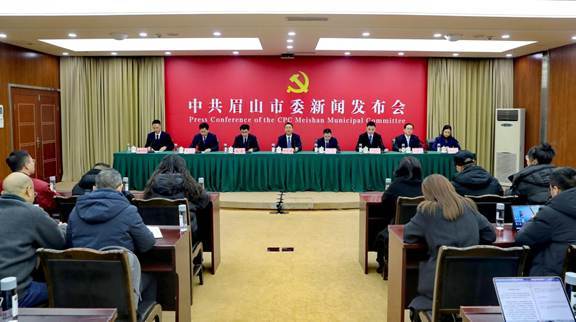
眉山新闻发布会:解码“十五五”制造业高端智能绿色发展新路径
Xin Lang Cai Jing· 2025-12-29 04:48
展望"十五五",眉山将认真贯彻落实省委、市委全会部署,紧扣兴产聚人目标,突出新型工业化主导作 用,因地制宜发展新质生产力,全力推动制造业向高端化、智能化、绿色化迈进,加快打造成渝地区先 进制造创新转化高地。黄文利介绍,重点将从三大方面协同发力: 一是聚焦产业能级提升,夯实高端化根基。眉山将继续壮大以新能源新材料为引领的"1+3"产业集群, 前瞻布局空天信息、生物制造等未来产业。深度融入成渝地区双城经济圈产业分工,加快嵌入锂电、光 伏等国家级产业集群建设。 同时,以打造"西部中试转化基地"为核心,构建"1+N"中试体系,强化企业创新主体地位,推动固态电 池、钙钛矿电池等前沿技术成果在眉山加速转化落地。 二是聚焦数实深度融合,激活智能化引擎。全市将实施"智改数转"诊断全覆盖,建设一批先进级智能工 厂和数字化车间,推动规上工业企业关键工序数控化率大幅提升。积极开展人工智能赋能行动,建 设"新型储能+""空天+"等示范应用场景。夯实数字基础设施,深化"5G+工业互联网"融合应用,推进大 数据中心、智算中心建设,打造数智融合示范区。 12月26日,中国共产党眉山市第五届委员会第十二次全体会议胜利召开。会后,市委举行新闻 ...

新闻分析|大规模设备更新促进产业变革
Xin Lang Cai Jing· 2025-12-27 00:11
Group 1 - The core viewpoint is that large-scale equipment updates are driving industrial transformation in Hebei, with significant investment growth in equipment and tools [1][2] - From January to November, Hebei's investment in equipment and tools increased by 34.2% year-on-year, outpacing the provincial fixed asset investment growth by 28.1 percentage points [1] - The carbon four new materials integration project by Kaiyi New Materials has generated significant revenue, with 1.2 billion yuan in revenue and 150 million USD in export earnings from methyl tert-butyl ether [2][3] Group 2 - The industrial sector is the main battlefield for equipment updates, with Hebei being a major manufacturing province that has substantial potential for equipment renewal [4] - The provincial government has implemented various supportive policies to promote equipment updates, including financial incentives and comprehensive communication strategies to ensure businesses are informed [4][5] - The equipment updates are not only modernizing production lines but also enhancing efficiency and sustainability, with companies reporting significant improvements in production capabilities and cost savings [5][6] Group 3 - Hebei's industrial investment grew by 13.4% year-on-year, ranking fifth nationally, and contributing to a 4.1 percentage point increase in overall fixed asset investment [7][8] - The manufacturing sector's investment increased by 6.2%, surpassing the national average of 4.3%, indicating a robust growth trajectory [7][8] - The province has selected 1,600 projects for recommendation to the Ministry of Industry and Information Technology, with a total planned investment exceeding 600 billion yuan [7]
培优塑强推动服务型制造跃升
Xin Lang Cai Jing· 2025-12-26 23:07
Core Viewpoint - The recent implementation plan by seven departments, including the Ministry of Industry and Information Technology, aims to develop an upgraded version of service-oriented manufacturing by 2028, marking a new phase in China's service-oriented manufacturing development [1]. Group 1: Current State and Challenges - China's service-oriented manufacturing has transitioned from concept to practical implementation, with continuous innovation in models and an extension of service components [1]. - Current challenges include insufficient depth in service transformation for some enterprises, which remain at the basic service level, and the underutilization of collaborative efficiency across the industrial chain [1]. Group 2: Strategic Directions for Improvement - To enhance service-oriented manufacturing, the focus should be on deepening integration, shifting from single product offerings to "product + service" solutions, and moving from transactional to relational manufacturing [1]. - Emphasis on digital and intelligent integration is crucial, accelerating the fusion of technologies like industrial internet and artificial intelligence with the entire manufacturing process [2]. - Promoting value integration through service elements embedded in the lifecycle of products is essential for transitioning from "selling products" to "selling value" [1][2]. Group 3: Innovation and Systematic Approaches - The essence of service-oriented manufacturing lies in innovation, which is vital for reshaping industrial competitiveness [2]. - The "14th Five-Year Plan" suggests promoting technological upgrades and digital transformation in manufacturing, focusing on smart, green, and service-oriented manufacturing [2]. - A systematic approach is necessary for quality upgrades in service-oriented manufacturing, requiring multi-party collaboration and comprehensive strategies [2]. Group 4: Local Adaptation and Implementation - Strengthening service-oriented manufacturing is a systematic project that relates to high-quality development in manufacturing [3]. - Localities should explore transformation paths based on their industrial foundations, aiming for a leap from quantitative to qualitative changes in service-oriented manufacturing [3].
44项新国标驱动工业设备更新,加快制造业高端化绿色化转型
Xin Jing Bao· 2025-12-26 07:20
Core Viewpoint - The industrial sector is a key focus for large-scale equipment upgrades and consumer product replacement initiatives, driven by national policies aimed at enhancing manufacturing capabilities and promoting sustainable development [1][2]. Group 1: Standards and Regulations - The Ministry of Industry and Information Technology (MIIT) has completed the revision of 44 important national standards to accelerate the high-end, intelligent, and green development of the manufacturing industry [1]. - The MIIT, along with six other departments, will issue an implementation plan in March 2024 to guide the replacement of outdated equipment and the adoption of advanced technologies through standardized measures [1]. Group 2: Focus Areas of Standard Development - The MIIT is focusing on three main areas for standard development: - Strengthening product quality and safety standards, with the release of 24 mandatory national standards, including those for elevator wire ropes and electrical devices in explosive environments [1]. - Accelerating the upgrade of energy consumption and emission standards to promote technological transformation and equipment updates in industries [2]. - Increasing the supply of recycling and circular economy standards, including guidelines for the reuse of retired photovoltaic components and the recycling of vehicle batteries [2]. Group 3: Impact on Industry - The ongoing "Two New" policy is accelerating the implementation of equipment updates in the industrial sector, which is expected to stimulate investment growth, promote industrial upgrades, and unleash domestic demand potential [2]. - The MIIT aims to continue implementing high standards to drive the renewal of industrial equipment and the replacement of consumer products [2].
前11个月湖南“新三样”出口增长81.5% 长沙出口146.7亿元,占比84.6%,继续领跑全省
Chang Sha Wan Bao· 2025-12-26 03:57
Core Insights - Hunan Province's exports of "new three items" (electric vehicles, lithium-ion batteries, and photovoltaic products) reached 17.34 billion yuan in the first 11 months of 2025, marking an 81.5% year-on-year increase [1] Group 1: Export Performance - Electric vehicle exports amounted to 10.7 billion yuan, growing by 105.3% [2] - Lithium-ion battery exports totaled 6.08 billion yuan, with a growth rate of 61% [2] - Photovoltaic product exports were recorded at 560 million yuan [2] Group 2: Regional Highlights - Changsha led the province with exports of "new three items" at 14.67 billion yuan, an increase of 86.7%, accounting for 84.6% of the total exports [2] - Xiangxi and Shaoyang emerged as significant contributors, with export values of 620 million yuan and 290 million yuan, respectively, reflecting increases of 6.9 times and 15.3 times [2] Group 3: Role of Private Enterprises - Private enterprises dominated the export landscape, with a total of 16.63 billion yuan in exports, an 88% increase, representing 95.9% of the total [2] - Leading companies like BYD and Anker Electronics have shown strong performance, with export growth rates exceeding 25% [2] Group 4: Trade Partners and Market Structure - ASEAN remained the largest trading partner, with exports to the region reaching 5.14 billion yuan, a staggering growth of 467.9% [3] - Exports to countries involved in the Belt and Road Initiative totaled 9.75 billion yuan, increasing by 93% [3] - Key markets such as Indonesia, Mexico, and the United States have become essential pillars for export growth [3] Group 5: Strategic Recommendations - The customs authority suggests promoting a "diversification + localization" strategy to explore emerging markets in Africa, the Middle East, and Southeast Asia [3] - Emphasis on "green manufacturing + unified standard certification" to address carbon tariff barriers and support the development of low-carbon technologies [3] - Encouragement of "gradient transfer + cluster advantage" to enhance the supply chain and achieve balanced industrial development across the province [3]

为绿色工厂建设注入金融“活水”
Zhong Guo Hua Gong Bao· 2025-12-26 02:50
Core Viewpoint - The construction of green factories has become a core carrier for industrial green and low-carbon development, driven by the dual forces of the "dual carbon" strategy and manufacturing transformation, with a strong demand for green financing emerging since the 14th Five-Year Plan [1][2]. Group 1: Green Manufacturing Achievements - The national level has cultivated a total of 6,430 green factories, 491 green industrial parks, and 727 green supply chains, promoting over 40,000 types of green products [2]. - The output value of green factories has increased from 9% of total manufacturing output in 2020 to 20% [2]. - Green industrial parks have energy and water consumption per unit of industrial added value at only two-thirds and one-fourth of the national average, respectively, with an average solid waste disposal utilization rate exceeding 95% [2]. Group 2: Green Financing Demand - Since the 14th Five-Year Plan, over 10,000 green low-carbon transformation and upgrading projects have been implemented, with a total investment exceeding 300 billion yuan, leading to a strong demand for green financing [2][3]. - The newly released "Notice on Utilizing Green Financial Policies to Support Green Factory Construction" aims to address this financing demand by proposing four core content areas to increase funding for energy-saving, low-carbon, water-saving, environmental protection, and resource utilization projects [2][3]. Group 3: Financial Support Mechanisms - The "Notice" establishes four mechanisms: collaborative promotion, financial supply, supporting guarantees, and risk prevention to provide comprehensive financial service guarantees for green factories [4]. - The People's Bank of China will support financial institutions in developing work plans for supporting green factories, optimizing business approval processes, and encouraging the issuance of green bonds and transformation bonds [4][5]. - A risk-sharing mechanism will be established to encourage local governments to set up interest subsidy or risk compensation funds, guiding policy financing guarantee institutions to provide credit enhancement services for green factories [4][5]. Group 4: Deepening Industry-Finance Cooperation - The Ministry of Industry and Information Technology (MIIT) is working with the People's Bank of China and other departments to deepen industry-finance cooperation, guiding financial resources to support industrial green development [6][7]. - A special area for "Industrial Green Development" will be established on the national industry-finance cooperation platform, optimizing enterprise green labels and enriching the supply of financial products and services [7]. - The MIIT plans to enhance the cooperation between technology and finance, organizing roadshows for green low-carbon hard technology projects that have already secured 600 million yuan in financing [7]. Group 5: Future Goals for Green Manufacturing - The MIIT aims to increase the output value proportion of green factories at national, provincial, and municipal levels to 40% by 2030, with plans to develop a gradient cultivation management approach for green factories [8]. - The MIIT will promote green supply chain enhancement actions, encouraging large enterprises to support the green transformation of suppliers through green procurement policies [8]. - Plans are in place to implement a green industrial park enhancement plan, supporting the establishment of carbon emission dual control management systems and promoting the construction of zero-carbon industrial parks [8].