
能源保供

Search documents
今年是“十四五”以来能源保供成效最好一年
Ren Min Ri Bao· 2025-12-16 22:55
Group 1 - The 2026 National Energy Work Conference highlighted that 2025 was the best year for energy security and supply since the 14th Five-Year Plan, with coal production and supply being effectively stabilized [1] - In 2025, China's raw coal production exceeded 4.8 billion tons, with imports around 470 million tons, and a reserve capacity of over 90 million tons was established [1] - The total electricity consumption in 2025 surpassed 10 trillion kilowatt-hours, marking a significant increase in energy demand due to economic and social development [1] Group 2 - The "Seven-Year Action Plan" for increasing oil and gas reserves and production concluded successfully, with crude oil production reaching approximately 215 million tons and natural gas production exceeding 260 billion cubic meters in 2025 [1] - The national capacity for electricity transmission from west to east reached 340 million kilowatts, and the total length of long-distance oil and gas pipelines reached 200,000 kilometers [2] Group 3 - The share of non-fossil energy consumption is expected to exceed the 20% target, with energy investment projected to reach 3.54 trillion yuan in 2025, a year-on-year increase of 11% [3] - New energy sources, particularly wind and solar power, are expected to see significant growth, with an estimated 370 million kilowatts of new installations in 2025 [3] - The construction of major hydropower and nuclear power projects is accelerating, with total hydropower installed capacity exceeding 440 million kilowatts [3] Group 4 - Significant progress has been made in building a unified national electricity market, with 28 provinces participating in electricity spot trading, and the market transaction volume expected to reach 6.6 trillion kilowatt-hours in 2025 [4] - The market-based trading volume is projected to account for 64% of total electricity consumption, indicating a growing trend towards marketization in the energy sector [4]
西王寨煤电一体化项目750千伏送出工程陕清Ⅲ线投运
Shan Xi Ri Bao· 2025-12-16 22:44
Core Viewpoint - The successful operation of the 750 kV transmission project of the Xiwangzhai coal-electricity integration project enhances energy supply and efficiency in the Shaanxi region, supporting regional economic development and sustainable energy utilization [1][2]. Group 1: Project Overview - The 750 kV transmission project consists of two segments: one from Xiwangzhai Power Plant to Qingshuichuan Power Plant, and the other from Xiwangzhai Power Plant to the ±800 kV Shanbei converter station [1]. - The project includes the construction of 130 new transmission towers over a total length of 63.422 kilometers, serving as a crucial power source for the Shaanxi-Hubei ±800 kV UHVDC transmission project [1]. Group 2: Operational Impact - The project alleviates output limitations for the second and third phases of the Qingshuichuan Power Plant, releasing 800 MW of capacity and expected to generate an additional 10 billion kWh of electricity annually [2]. - It enhances the overall transmission efficiency of the Shaanxi-Hubei ±800 kV UHVDC project, contributing to regional energy supply stability, promoting renewable energy consumption, and optimizing energy resource allocation [2].
今年能源保供成效“十四五”以来最好
Ren Min Ri Bao· 2025-12-16 22:11
能源是现代化的重要基础和动力。记者从国家能源局获悉:今年能源保供成效是"十四五"以来最好的一 年,非化石能源消费比重将超额完成20%的目标任务,能源行业在防范应对各种冲击挑战中展现出强大 韧性,有力支撑经济总体平稳、稳中有进。 看成绩—— 油、气产量双创历史新高,新能源实现更高质量跃升式发展 能源安全保障方面,今年有几组数据值得关注—— 全社会用电量预计首超10万亿千瓦时。7月、8月我国全社会用电量连续超过1万亿千瓦时,在全球尚属 首次,我国有力有效应对迎峰度夏电力负荷20次超去年峰值考验; 油、气产量双创历史新高,原油产量约2.15亿吨,天然气产量突破2600亿立方米、连续9年增产超百亿 立方米,油气增储上产"七年行动计划"胜利收官; 西电东送能力达到3.4亿千瓦,长输油气管道里程达到20万公里,煤炭主要产区外运量超19亿吨。 总的来看,全国电力供应保持安全稳定,油气勘探开发力度大幅提升,能源资源互补互济水平持续提 升,能源安全保障有力有效。"十四五"时期,我国能源自给率从80%左右增至84%以上,煤炭、电力保 供水平世界一流,建成全球最大的可再生能源体系,能源体量规模稳居世界第一。 能源绿色低碳转型步伐也 ...
湖北能源(000883):Q4来水大幅修复,火电进入投产周期
GUOTAI HAITONG SECURITIES· 2025-12-16 11:09
Investment Rating - The report maintains a rating of "Buy" for Hubei Energy with a target price of 5.70 CNY, while the current price is 4.59 CNY [6][20]. Core Views - The report is optimistic about the company's performance recovery due to significantly improved water inflow and the expected contribution from new thermal power units. Additionally, the company is entering a stable operational phase, which is likely to enhance dividends [2][12]. Financial Summary - Total revenue is projected to be 18,669 million CNY in 2023, increasing to 20,031 million CNY in 2024, followed by a slight decline to 18,919 million CNY in 2025, and then recovering to 20,248 million CNY in 2026 and 20,333 million CNY in 2027 [4]. - Net profit attributable to the parent company is expected to rise from 1,749 million CNY in 2023 to 2,707 million CNY in 2025, before slightly declining to 2,403 million CNY in 2026 and recovering to 2,454 million CNY in 2027 [4]. - Earnings per share (EPS) is forecasted to be 0.25 CNY in 2023, increasing to 0.38 CNY in 2025, and then slightly declining to 0.34 CNY in 2026 and 0.35 CNY in 2027 [4]. Company Overview - Hubei Energy is a regional comprehensive energy generation enterprise under the Three Gorges Group, focusing on energy supply across multiple sectors including hydropower, thermal power, new energy, natural gas, coal, and finance [22][25]. - The company has a total installed capacity of 18.33 million kW, with hydropower, thermal power, wind power, and photovoltaic power capacities of 4.57 million kW, 6.63 million kW, 1.25 million kW, and 5.71 million kW respectively [22][30]. Performance Expectations - The company is expected to achieve a net profit of 27.1 billion CNY in 2025, representing a year-on-year increase of 49% due to improved water inflow and the commencement of new thermal power projects [12][20]. - The report anticipates that the company will realize net profits of 24.0 billion CNY and 24.5 billion CNY in 2026 and 2027 respectively [12][20]. Market Position - Hubei Energy is positioned as a leading energy operator in Hubei province, with significant investments in both traditional and renewable energy sectors, ensuring a diversified energy portfolio [22][25].

压力与韧性双双双双
Zi Jin Tian Feng Qi Huo· 2025-12-16 06:48
1. Report Industry Investment Rating No relevant content provided. 2. Core Views 2.1 Coking Coal - In 2025, China's cumulative raw coal production from January to October was 3.97 billion tons, with coking coal production at about 397 million tons, a cumulative year - on - year increase of 1.16%. The annual production was high in the first half and low in the second half. In 2026, domestic coking coal production is expected to have a ceiling, with an estimated output of about 479 million tons, a year - on - year increase of 0.6%. From January to October 2025, coking coal imports were 94.12 million tons, a year - on - year decrease of 5%. In 2026, imports are expected to rise slightly, mainly due to an increase in Mongolian coal, while US coal imports may remain at 0 due to tariffs. The estimated import volume in 2026 is 114 million tons, a year - on - year increase of 0.8% [3]. - In 2025, domestic coking coal consumption is expected to be about 597 million tons, a year - on - year increase of about 1.9%. In 2026, steel demand and supply are not expected to change significantly, and coking coal demand will lack drivers. The estimated consumption in 2026 is 595 million tons, a year - on - year decrease of 0.6% [3]. - In 2025, the coking coal inventory structure changed significantly. In the first half, inventory accumulated upstream, while in the second half, it shifted from upstream to mid - and downstream, showing a de - stocking pattern throughout the year. In 2026, coking coal consumption may not have strong drivers, domestic supply is expected to increase slightly, and the focus for imports is on the increase in Mongolian coal. The total supply is expected to increase by about 4 million tons, and the demand is difficult to absorb, resulting in a supply - demand surplus. However, supply policies will provide a bottom - support, and the price floor is expected to rise [3]. 2.2 Coke - From January to October 2025, China's cumulative coke production was 419 million tons, a cumulative year - on - year increase of 3.3%. In 2026, coke production is expected to decrease by about 3 million tons, with a cumulative output of 494 million tons and an actual supply of 410 million tons, a cumulative year - on - year decrease of 0.6% [4]. - From January to October 2025, the average daily hot metal production of 247 steel mills increased by 3.3% year - on - year. In 2025, domestic coke consumption is expected to be about 399 million tons, a year - on - year increase of 2.2%. In 2026, steel supply and demand have no strong drivers, and pig iron production is expected to be flat year - on - year, so domestic coke consumption will remain at 399 million tons. In terms of exports, China's coke has a price advantage, but the increase in Indonesia's production and exports has an impact. In 2026, coke exports are estimated to drop to about 7.5 million tons [4]. - In 2025, the coke inventory structure was similar to that of coking coal. In the first half, coke enterprises had high inventory pressure, and in the second half, upstream inventory shifted downstream, showing a de - stocking pattern. In 2026, there will still be surplus pressure, and inventory is expected to accumulate slightly. Overall, coke prices mainly follow coking coal. In 2026, considering semi - coke and losses, the actual supply growth rate is expected to be about - 0.6%, and total demand will be flat or slightly lower than this year, still showing a supply - demand surplus. Future attention should be paid to changes in coal cost and macro - policies [4]. 3. Summary by Related Catalogs 3.1 Double - Coking Market Review - In 2025, the double - coking futures market fluctuated greatly. In the first quarter, the market expected an oversupply of domestic coal mines and weak demand, causing the futures price to decline. In the second quarter, macro - tariff shocks and the lack of production cuts by coal enterprises led to a bear - dominated market. In June, the market rebounded due to overcrowded short positions and low valuations. In July, the anti - involution policy was implemented, and coking coal prices strengthened significantly. From August to October, coking coal prices fluctuated widely at a high level under the support of over - production inspections. From November to December, the market weakened again due to an increase in Mongolian coal imports and early winter stockpiling [7]. 3.2 Coking Coal 3.2.1 Spot and Price - Coking coal spot prices first declined and then rose. In the first half, they declined in tandem with the futures market, bottomed out in late June, and rebounded in July. After September, the spot market tightened, and some coking coal varieties faced structural shortages. The strong thermal coal market also provided support, making the coking coal spot market firm [15]. - The price of Mongolian No. 5 coking coal fluctuated greatly throughout the year. It dropped to a low of 700 yuan/ton in the first half and then increased due to a decrease in its proportion in customs clearance, reaching a high of 1170 yuan/ton at the end of October. The long - term contract price in Q4 was 57.3 US dollars/ton, 3 US dollars higher than Q3, and is expected to increase slightly in Q1 2026. The price of imported seaborne coal fluctuated within a relatively small range, and it became cost - effective after the domestic coal price bottomed out in the middle of the year [22]. 3.2.2 Policy and Market Impact - In July 2025, the National Energy Administration launched over - production inspections, which made the market shift its expectation of coal supply to "over - production inspection." Coking coal became a benchmark for the "anti - involution" of the black industry, and actual production shrank in the second half of the year. In November, the National Development and Reform Commission emphasized energy supply during the heating season, and the policy focus was adjusted temporarily. In the long term, "anti - involution + over - production inspection" will continue to have an impact [23]. - In 2021, after coal prices reached a historical high, the profit of the black industry chain gradually shifted to raw materials, promoting investment and a new capacity - expansion cycle in the coal industry. In recent years, coal industry profits have declined year by year, and new capacity has decreased significantly compared with 2021 - 2023. Currently, the coal industry may be at the end of the capacity - expansion cycle [26]. - In June 2025, coal prices dropped below the cost. Some coal mines adopted a "quantity - for - price" strategy and even over - produced, disrupting the market order. The "over - production inspection" policy ended this vicious cycle and promoted the coal industry to control capacity and production, moving towards high - quality supply [30]. 3.2.3 Production - According to the National Bureau of Statistics, from January to October 2025, the production of above - scale industrial raw coal was 3.97 billion tons, a year - on - year increase of 1.5%. Production was high in the first half, but "anti - involution + over - production inspection" policies took effect in the second half, and production decreased year - on - year from July [31]. - By province, from January to October 2025, Shanxi's cumulative raw coal production was 1.08 billion tons, a cumulative year - on - year increase of 3.9%, providing the largest increase in coal production this year. The production of Shanxi, Xinjiang, and Shaanxi increased steadily, while Inner Mongolia's production declined due to environmental protection and capacity integration. In 2026, Xinjiang may be the main area for production growth, and the growth rate of raw coal production may decline under the over - production inspection policy [34]. - Coking coal production was high in the first half and low in the second half of 2025. There were few supply disruptions from January to May, but production decreased in June due to factors such as work - face changes, maintenance, and full storage. After the over - production inspection in July, production remained low in the second half. In 2026, the impact of over - production inspection will be long - term, and domestic coking coal production has a ceiling, with limited growth compared to 2025 [41]. - Based on Fenwei's data, from January to October 2025, the cumulative production of coking clean coal was 397 million tons, a cumulative year - on - year increase of 1.16%. The annual output is expected to remain at the current level or decline slightly, with a year - on - year increase of about 3.8 million tons. In 2026, under the over - production inspection policy, coking coal production is expected to be about 479 million tons, a year - on - year increase of 0.6% [46]. 3.2.4 Import - In the first three quarters of 2025, global coal production increased. China's production from Q1 - Q3 was 3.57 billion tons, ranking first with a stable year - on - year growth rate of 2%. India was the second - largest coal - producing country with high - speed growth, while Indonesia actively reduced production, with a year - on - year decrease of 7.5% in the first three quarters [49]. - From January to October 2025, China imported 387.62 million tons of coal, a year - on - year decrease of 11%. Coal imports decreased significantly this year, especially in the first half, due to the lack of cost - effectiveness of imported coal after price declines. In the second half, as domestic coal prices rebounded, import profits increased, and import volume recovered but remained lower than the previous year [57]. - From January to October 2025, coking coal imports totaled 94.12 million tons, a year - on - year decrease of 4.8%. "Mongolian coal + Russian coal" accounted for 78% of imports, while the proportion of seaborne coal decreased. Imports were low in the first half, mainly due to large decreases in Mongolian and US coal imports. In the second half, as domestic production decreased, Mongolian coal imports increased [61]. - In 2026, the main import growth is expected to come from Mongolian coal, with an estimated total import volume of 114 million tons, a year - on - year increase of 1% [62]. - In 2025, Mongolian coal imports were low in the first half and high in the second half. In the first half, customs clearance was significantly lower than last year due to high inventory and weak demand. In the second half, as domestic production decreased and demand recovered, customs clearance increased. In 2026, Mongolia plans to increase coal exports to China to 100 million tons, but the core factors affecting customs clearance are regulatory - area storage and terminal demand [63][66]. - In 2025, from January to October, Russian coal imports were 26.42 million tons, a cumulative year - on - year increase of 4%. Russian coal enterprises' losses increased, and coal production and exports declined, but metallurgical coal exports increased. India's imports of Russian coking coal increased, diverting some of China's imports. In 2025, Russian coal imports are expected to be 32 million tons, and in 2026, it is expected to increase slightly by 1 million tons [71]. - In 2025, from January to April, US coal imports totaled 2.91 million tons. After May, imports dropped to 0 due to tariffs. In 2026, considering the un - lifted tariffs and poor cost - effectiveness, US coal imports are still difficult to resume. From January to October 2025, Canada coal imports were 9.17 million tons, a year - on - year increase of 28%. Due to the significant decrease in US coal imports, Canada coal imports increased significantly. In 2025, Canada coal imports are expected to be about 11 million tons, and next year may remain flat or increase slightly [76]. - In 2025, from January to October, Australian coal imports were 6.23 million tons, a cumulative year - on - year decrease of 10%. In the first half, imported Australian coal lacked cost - effectiveness due to falling domestic coal prices. After July, import profit opportunities emerged, and imports recovered. In 2025, Australian coal imports are expected to be about 8 million tons. In 2026, considering the production increase plans of Australian coal enterprises, Australian coal imports may increase [77][82]. 3.2.5 Inventory - In the first half of 2025, coking coal inventory accumulated upstream, while downstream maintained low inventory. In the second half, inventory shifted from upstream to downstream, showing a de - stocking pattern throughout the year. The change in mid - stream inventory was one of the main reasons for the large market fluctuations this year. In 2025, coking coal winter stockpiling may be weak. Considering the growth potential of production and imports and limited demand changes, coking coal inventory may accumulate in 2026 [102]. 3.3 Coke 3.3.1 Capacity and Production - The coke industry has a low industrial concentration and is mainly composed of private enterprises, so it is more likely to trigger "capacity reduction" during industry downturns. Currently, the total in - production coking capacity in China is about 567 million tons, with about 52.49 million tons of capacity from coke ovens with a carbonization chamber height of 4.3 meters or less (including heat - recovery coke ovens) and about 514.85 million tons of capacity from ovens with a height of 5.5 meters or more. Coke ovens with a height of 4.3 meters or less are expected to be phased out, mostly by 2026. Some small - scale coking enterprises with weak anti - cycle risk capabilities may also be cleared, and there is room for capacity reduction [112]. - As of the end of November 2025, 16.82 million tons of coking capacity were eliminated, and 15.77 million tons were newly added, resulting in a net elimination of 1.05 million tons. It is expected that in 2025, 16.82 million tons of capacity will be eliminated, and 21.5 million tons will be newly added, resulting in a net increase of 4.68 million tons. In 2025, capacity reduction mainly occurred in Shandong, while new capacity was concentrated in Inner Mongolia and Shanxi [115]. - According to the National Bureau of Statistics, from January to October 2025, China's cumulative coke production was 419 million tons, a cumulative year - on - year increase of 3.3%. This year, coking enterprises had poor profitability but higher average profits than last year, with medium - to - high production levels. In 2026, considering the possible continued low profitability of coking enterprises and the lack of demand drivers, coke production is expected to remain flat or decline slightly [122]. 3.3.2 Export - From January to October 2025, China's total coke exports were 6.22 million tons, a significant year - on - year decrease of 22%. The main export destinations were Indonesia, Japan, India, and Malaysia. China's coke still has a price advantage, but the increase in Indonesia's production and exports has impacted China's export market. In 2026, China's coke exports are estimated to be about 7.5 million tons [125]. 3.3.3 Inventory - In 2025, coke production - end inventory gradually decreased, while steel mills had sufficient inventory throughout the year [131]. 3.4 Demand - From January to October 2025, the real estate market continued to decline, with a 19.8% decrease in new housing starts and a 1.7% year - on - year decrease in fixed - asset investment. Infrastructure investment decreased by 0.1%, manufacturing investment increased by 2.7%, and real estate development investment decreased by 14.7%. From January to October, cumulative steel exports were 97.74 million tons, a year - on - year increase of 6.6%. This year, the main story of steel demand was exports. In 2026, steel demand is expected to change little from this year, and attention should be paid to the impact of overseas policies on direct and indirect exports [141]. - From January to October 2025, China's crude steel production was 818 million tons, a year - on - year decrease of 3.9%. The average daily hot metal production of 247 steel mills increased by 3.3% year - on - year, and hot metal production was mostly at a high level compared to the previous year. In 2026, steel supply and demand are not expected to change significantly, and pig iron production is expected to be similar to this year [144]. 3.5 Balance Sheet 3.5.1 Coking Coal - In 2026, coking coal production is expected to be about 479 million tons, a year - on - year increase of 0.6%. Imports are expected to recover slightly, mainly due to an increase in Mongolian coal
神东煤炭日均产煤超50万吨 筑牢民生温暖防线
Zhong Guo Fa Zhan Wang· 2025-12-16 02:03
12月11日,受较强冷空气影响,我国大部地区出现降温雨雪天气,局部降温超10℃。国家能源集团神东 煤炭闻令而动,广大干部员工坚守能源保供一线,以日均煤炭产量超52万吨、发运量111列的硬核实 绩,全力保障能源可靠稳定供应,用实际行动守护人民群众温暖过冬。 图为神东煤炭大柳塔煤矿大采高工作面检修。 神东煤炭以高效协同的生产组织、精准有力的防控举措、持续稳定的保供实绩,充分履行央企责任担 当,为极端天气下的煤炭能源安全供应提供了坚实支撑。 图为环线雪景。 为筑牢严寒保供多重防线,神东煤炭科学统筹13个矿井、11个选煤厂生产运行,将采掘接续、设备检 修、劳动组织纳入一体化管控,实现生产、洗选、装车全链条协同联动,确保煤炭稳产稳供"不断档"。 密切追踪天气变化动态,严格压实安全责任,细化防范措施并完善应急预案,做到未雨绸缪;深入排查 生产全环节风险隐患,第一时间组织清雪除冰作业,为生产安全筑牢"第一道防线";根据气温波动动态 调整防冻液配比,最大限度降低冻车风险,保障生产链条连续高效运转;通过实时采集生产现场信息, 构建全天候、全方位安全监管网络,确保严寒天气下生产安全有序推进。 ...


人民日报︱能源保供成效“十四五”最好一年,全社会用电量、油气产量三创新高
国家能源局· 2025-12-16 00:46
Core Viewpoint - The article highlights significant advancements in China's energy sector, including record power generation capacity, increased energy security, and accelerated green energy transition efforts. Group 1: Power Generation and Consumption - National power generation capacity is expected to exceed 3.8 billion kilowatts, a year-on-year increase of 14%, with total electricity consumption surpassing 10 trillion kilowatt-hours for the first time, equivalent to Japan's annual electricity consumption [2] - In July and August, electricity consumption exceeded 1 trillion kilowatt-hours, demonstrating China's effective response to peak summer electricity load challenges [2] Group 2: Energy Security and Production - Energy security has been robust this year, with supply guarantees being the best since the 14th Five-Year Plan began [3] - Oil and gas production reached historical highs, with crude oil production at approximately 215 million tons and natural gas production exceeding 260 billion cubic meters, marking a continuous increase for nine years [4] - Coal production is projected to exceed 4.8 billion tons, with imports around 470 million tons, maintaining a reasonable supply margin and enhancing supply flexibility [4] Group 3: Green Energy Transition - The share of non-fossil energy consumption has exceeded the 20% target, with strong investment in energy projects expected to reach 3.54 trillion yuan, a year-on-year increase of 11% [5] - Significant investments are being made in nuclear power, onshore wind, distributed solar, and grid infrastructure, with private sector investment increasing by 15% [5] - Wind and solar power installations are projected to add approximately 370 million kilowatts, with utilization rates above 94%, contributing to 22% of total electricity consumption [5] Group 4: Major Projects and Infrastructure - Major hydropower and nuclear projects are accelerating, with national hydropower capacity exceeding 440 million kilowatts and over 64 million kilowatts in pumped storage capacity [6] - Ten new nuclear power units have been approved for construction, bringing the total operational and under-construction nuclear units to 112, with a combined capacity of 125 million kilowatts [6]
宝城期货动力煤早报(2025年12月15日)-20251215
Bao Cheng Qi Huo· 2025-12-15 02:32
期货研究报告 投资咨询业务资格:证监许可【2011】1778 号 ◼ 主要品种价格行情驱动逻辑—商品期货黑色板块 品种:动力煤现货 观点参考 宝城期货动力煤早报(2025 年 12 月 15 日) ◼ 品种观点参考 时间周期说明:短期为一周以内、中期为两周至一月 | | | 备注: 1.有夜盘的品种以夜盘收盘价为起始价格,无夜盘的品种以昨日收盘价为起始价格,当日日盘收盘 价为终点价格,计算涨跌幅度。 2.跌幅大于 1%为弱势,跌幅 0~1%为震荡偏弱,涨幅 0~1%为震荡偏强,涨幅大于 1%为强势。 3.震荡偏强/偏弱只针对日内观点,短期和中期不做区分。 日内观点: 中期观点: 参考观点:震荡 核心逻辑:12 月以来,国内动力煤价格加速下跌,截至 12 月 11 日,秦皇岛港 5500K 动力煤平仓 价 761 元/吨,12 月内已经累计下跌 57 元,本轮动力煤的下跌受多重利空共同驱动。首先,国家 发改委要求采暖季能源保供,近期主产区煤矿生产平稳,未受安监影响,加之煤炭行业暂无新增 "反内卷"措施出台,动力煤供应整体趋稳。其次,从需求来看,截至本周国内南部沿海城市气 温偏暖,电厂煤耗虽季节性提升,但改善速度 ...
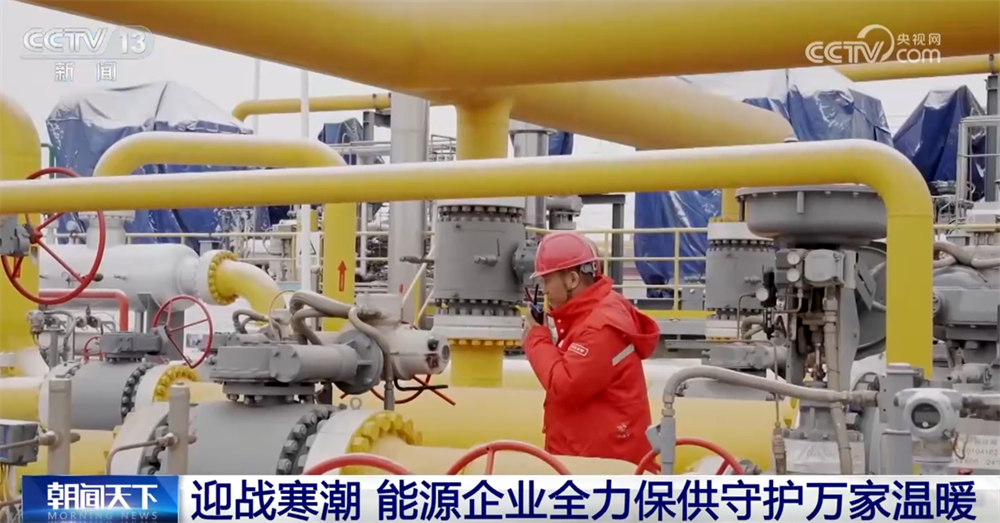
能源企业多措并举筑牢保供防线 守护千家万户“暖意融融”
Yang Shi Wang· 2025-12-15 02:28
央视网消息:受强寒潮影响,我国多地出现大范围雨雪降温天气,供暖用气需求随之攀升。面对极寒考验,能源企业多措并举筑牢能源保 供防线,守护千万家庭温暖。 能源企业在加快推进油气勘探开发的同时,也在通过智能化手段加强对关键设备的检查和巡护。在位于沙漠腹地的新疆油田克拉美丽气田 天然气处理站,一台智能巡检机器人正搭载着高清摄像头、红外热像仪和气体传感器,穿梭在厂区中进行全方位检测。 中石化中原油田储气库管理中心生产指挥中心副主任刘铁英称:"目前我们供气量峰值是480万方/天,能够满足1000万户三口之家一天的 用气量,希望我们的付出能温暖更多的家庭。" 位于渤海湾的南港油田试验井产量不久前获得突破,日产油气当量340吨,预计今年新增原油产量1.5万吨、天然气2000万立方米以上。在 江苏如东液化天然气接收站,一艘满载15万立方米液化天然气的船舶进行装卸,自冬供以来,中国石油累计接卸液化天然气船舶20艘,单日气 化外输量最高可达8400万立方米,气化能力创历史新高。 为应对寒潮用气高峰,各地储气库全力保供。作为离北京最近的储气库集群,华北油田储气库群的单日采气量已突破2500万立方米,全力 守护京津冀区域百姓温暖过冬。 ...


寒潮暴雪来袭 能源央企全力筑牢保暖保供防线
Xin Hua Wang· 2025-12-12 11:25
Group 1 - A severe cold wave has swept across most regions of China, leading to a significant increase in energy demand for electricity, coal, and heating as temperatures plummet [1] - Major state-owned energy companies, including China Energy Group, China Huadian, and China Huaneng, have activated emergency supply mechanisms to ensure energy security during this challenging period [1] - China Energy Group has supplied over 11 million tons of coal, generated over 21 billion kilowatt-hours of electricity, and provided over 27.6 million gigajoules of heating by December 11 [1] Group 2 - China Huaneng has optimized operations at its Beijing thermal power plant, achieving over 20% green heat supply and a combined cycle efficiency exceeding 95% during the first snowfall in Beijing [2] - In response to extreme weather, China Huaneng's Inner Mongolia company has reported a daily transportation volume of 90,000 cubic meters from its open-pit mines, with a cumulative electricity generation of over 1.083 billion kilowatt-hours since December [2] - China Huadian's Xinjiang company has effectively managed the impact of heavy snowfall in Urumqi, generating 9.2 billion kilowatt-hours of electricity and providing over 17 million gigajoules of heating, serving over 2.5 million residents [2]