
虚假宣传

Search documents
地方新闻精选 | 河南新蔡县就疑似“萝卜岗”招聘致歉 澳门大学生被骗800万港元
Xin Lang Cai Jing· 2025-10-27 10:18
Group 1 - The recruitment process in Xincai County, Henan, has been criticized for potential favoritism, leading to an official investigation by the county's disciplinary committee [1] - A male driver in Haikou, Hainan, was detained for assaulting a police officer during a traffic incident, with no alcohol or drug involvement confirmed [1] - A female university student in Macau fell victim to a scam, losing a total of 800 million HKD after being misled by individuals posing as law enforcement [2] Group 2 - An orange alert for heavy pollution has been issued in eight cities in Hebei, with a Level II emergency response activated due to expected air quality deterioration [3] - A company in Hunan was fined 200,000 CNY for misleading advertising involving a fictitious "female hacker" to promote course sales [4] - In Guangxi, two missing teenagers were found deceased, with authorities ruling out foul play and determining the cause of death as drowning [5] - In Zhejiang, two main perpetrators were sentenced to death for orchestrating a fatal car accident to claim insurance money, highlighting severe ethical violations [6] - Li Shuguang, former chairman of Wuliangye Group in Sichuan, was expelled from the party and public office for multiple violations, including engaging in superstitious activities and corruption [6]
二手交易平台出现卢浮宫珠宝?闲鱼回应
Di Yi Cai Jing Zi Xun· 2025-10-23 02:05
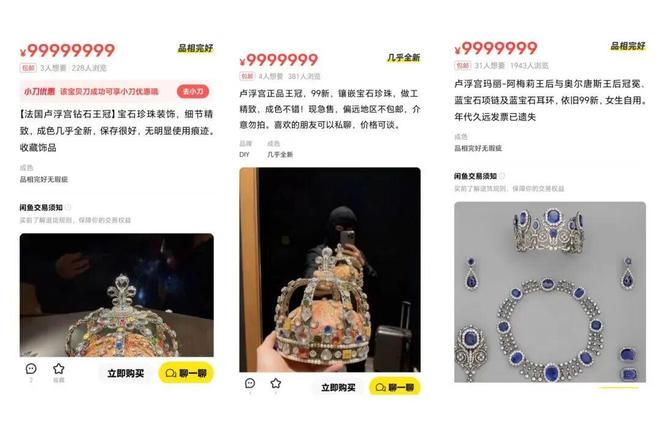
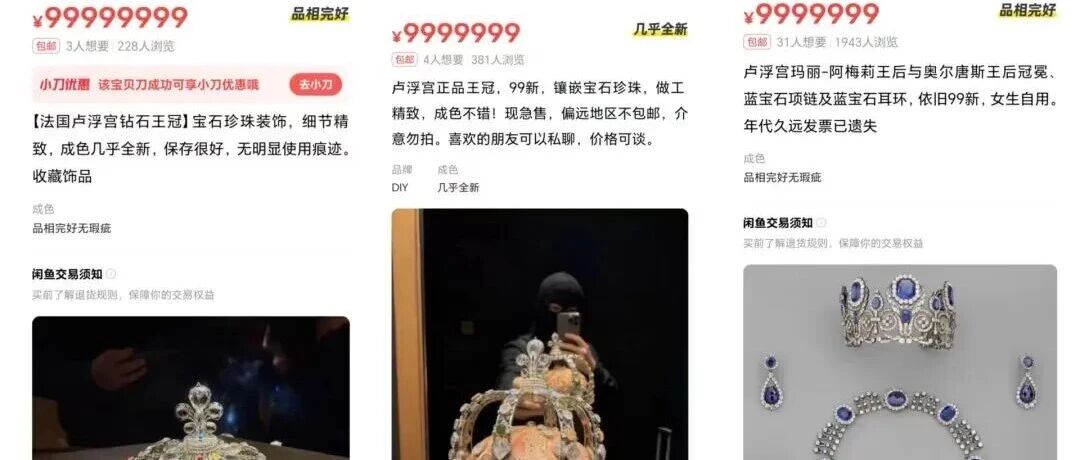
Core Insights - The emergence of "Louvre authentic" jewelry for sale on second-hand trading platforms has attracted significant attention [2][4] Group 1: Product Listings - Multiple listings for "Louvre jewelry" have been found on the Xianyu platform, including a crown priced at 9.99999 million yuan, described as "99% new, urgent sale" [4] - The highest price for a listed item reaches 99.9999 million yuan [5] Group 2: Authenticity Concerns - There is currently no confirmation that these listed items are genuine, and analysts suggest that until official verification is provided, these claims should be regarded as false advertising [7] - Customer service from the Xianyu platform indicated that they are monitoring such listings through big data and users can report suspicious items for further review [7]


二手交易平台出现卢浮宫珠宝?闲鱼回应
第一财经· 2025-10-23 01:56
Core Viewpoint - The emergence of "Louvre genuine" jewelry for sale on second-hand trading platforms has attracted significant attention, raising concerns about authenticity and potential false advertising [3][5]. Summary by Sections Sale Listings - Multiple listings for "Louvre genuine" jewelry have been found on the Xianyu platform, including a crown priced at 999.9999 million yuan, with claims of being "9.9 new" and "urgent sale" [5]. - The highest price for the crown listed is 9999.99 million yuan, indicating a wide range of pricing for these items [5]. Authenticity Concerns - There is currently no confirmation that these items are genuine, and analysts suggest that until official verification is provided, it should be assumed that these listings may be misleading [7]. - A report to Xianyu regarding the "Louvre jewelry" sales resulted in a response from customer service indicating that the platform is monitoring such listings and encourages users to report suspicious items for further review [7].
旗下多款产品涉嫌虚假宣传!韩国知名品牌子公司步美十美被罚
Nan Fang Du Shi Bao· 2025-10-20 11:56
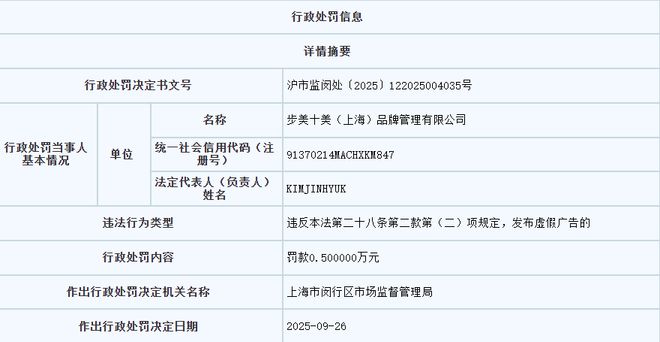
Core Viewpoint - BMSMILE Co.Ltd's subsidiary in China, Bumei Shimei (Shanghai) Brand Management Co., Ltd., faced administrative penalties for false advertising on multiple e-commerce platforms [1][4][6] Administrative Penalty Information - The administrative penalty was issued by the Shanghai Minhang District Market Supervision Administration, with the decision number 沪市监闵处(2025)122025004035号 [2] - The company was fined 5,000 RMB for violating advertising laws by publishing false advertisements [2][6] - The penalty was issued on September 26, 2025 [2] Product and Advertising Issues - The brands "PETHROOM" and "wiggle wiggle" were found to have misleading promotional language on platforms like Tmall, Douyin, and Xiaohongshu [4][6] - Specific examples include claims such as "soothing skin irritation" and "blocks 99% of UV rays," for which the company could not provide valid evidence [4][5] - A product, "pet shower," was noted for not displaying the required water efficiency label and remains available for sale despite the penalty [6][7] Company Background - Bumei Shimei (Shanghai) Brand Management Co., Ltd. was established in 2018 and is part of the Korean company BMSMILE Co.Ltd, which operates in various sectors including pet products and lifestyle brands [10][12] - BMSMILE has expanded its business significantly, achieving over 600 million RMB in sales by 2023 and securing investment from SK Networks [12][14] - The company aims to establish a strong presence in Shanghai and other cities with plans for physical store openings [14]
充电宝容量“文字游戏”何时休?
Guang Zhou Ri Bao· 2025-10-20 03:03
Core Viewpoint - The article highlights the misleading marketing practices in the power bank industry, where companies emphasize battery cell capacity over actual usable capacity, leading to consumer confusion and potential rights violations [1][5][7]. Group 1: Consumer Experiences - Consumers report dissatisfaction with power banks, where advertised capacities do not match actual performance, leading to feelings of being misled [1][2]. - Complaints on platforms like Black Cat reflect a widespread issue, with many consumers experiencing significant discrepancies between advertised and actual usable capacities [2][3]. Group 2: Industry Practices - Companies commonly use battery cell capacity as a marketing strategy, often neglecting to clearly indicate the rated capacity, which is significantly lower due to energy loss during usage [3][4]. - The typical rated capacity for a 10,000 mAh power bank is around 5,500 to 6,000 mAh, indicating a reduction of 40% to 50% from the advertised capacity [3][4]. Group 3: Legal and Regulatory Insights - Legal experts argue that the current marketing practices may constitute false advertising, as they do not meet the requirements of the Consumer Rights Protection Law [5][7]. - There is a call for clearer labeling regulations that require both battery cell capacity and rated capacity to be displayed prominently to prevent consumer deception [8]. Group 4: Recommendations for Improvement - Suggestions include enhancing labeling standards, increasing regulatory enforcement, promoting industry self-regulation, and raising consumer awareness regarding the importance of rated capacity when purchasing power banks [8].
市场监管总局:重拳出击“私域围猎老年人”乱象
Zhong Guo Jing Ying Bao· 2025-10-17 18:02
Core Viewpoint - The National Market Supervision Administration is intensifying efforts to combat false advertising in private domain live streaming, particularly targeting misleading promotions of drugs and health products aimed at the elderly [1][2][3]. Group 1: Regulatory Actions - A total of 30 cases of false advertising in private domain live streaming have been filed, with 6 cases involving platforms and 24 involving merchants, resulting in penalties totaling 2.93 million yuan and proposed penalties of approximately 6.63 million yuan [1][3]. - The market supervision system has collected 7,415 problem leads from the public and businesses, leading to the investigation of 4,516 illegal cases with fines totaling 68.77 million yuan [2][3]. - Since July, platforms have banned 5,904 illegal videos and 11,000 live streams, with 1,877 stores facing live streaming bans [4]. Group 2: Targeted Demographics - Unscrupulous merchants are using tactics like "free health lectures" and "expert consultations" to lure elderly consumers into private domain live streams for false marketing [2][3]. - The focus of the crackdown includes false advertising and price fraud related to elderly drugs and health products, which are seen as violations of the rights of elderly consumers [2][3]. Group 3: Challenges in Enforcement - The private domain live streaming model presents challenges for regulatory enforcement due to its closed and hidden nature, making it difficult to collect evidence and trace the supply chain [7][8]. - Merchants often destroy evidence and evade responsibility through tactics like "closing after the broadcast" and blocking information [7]. Group 4: Technological Support - Technological advancements are aiding regulatory efforts, with initiatives like "You Shoot, I Check" for collecting leads and the use of AI for monitoring illegal activities [8]. - The introduction of third-party monitoring and big data analysis is enhancing the ability to detect and address violations in private domain live streaming [8]. Group 5: Legal Framework - The newly revised Anti-Unfair Competition Law, effective October 15, strengthens regulations against false advertising and clarifies the responsibilities of platform enterprises [9][10]. - The law aims to promote fair competition and address current market challenges, providing a solid legal foundation for combating false advertising [9][10].
AI伪造名人带货首案 揭示数字治理底层逻辑
Zheng Quan Shi Bao· 2025-10-16 22:25
Core Viewpoint - The case highlights the misuse of AI technology in creating fraudulent advertisements by impersonating well-known personalities, raising concerns about the erosion of trust in the digital economy [1][2][5] Legal Perspective - The enforcement of existing advertising laws against deepfake technology marks a significant legal milestone, demonstrating the need for both expanded interpretations of current laws and the development of specific regulations [2][5] - The fraudulent claims made by the involved company regarding their product's medical benefits constitute a systematic violation of consumer rights [2] Regulatory Challenges - The investigation revealed significant gaps in the current regulatory framework, particularly in the content review processes of platforms, which allowed the fraudulent activities to persist [3] - The emergence of a professionalized black market for deepfake technology poses challenges for regulatory authorities, necessitating a collaborative regulatory approach across platforms [3] Social Governance - The case has catalyzed a shift in consumer behavior, with increased awareness and active participation in reporting fraudulent activities, indicating a move towards a more engaged public in digital governance [4] - There is a pressing need for education on digital literacy to help the public identify deepfake content, as many still struggle to discern such manipulations [4] Industry Implications - The incident serves as a stress test for the digital economy, revealing the tension between technological innovation and legal regulation, and emphasizing the importance of maintaining integrity in digital content [5] - A balanced approach involving legal frameworks, ethical standards, and social consensus is essential for fostering a sustainable digital ecosystem [5]
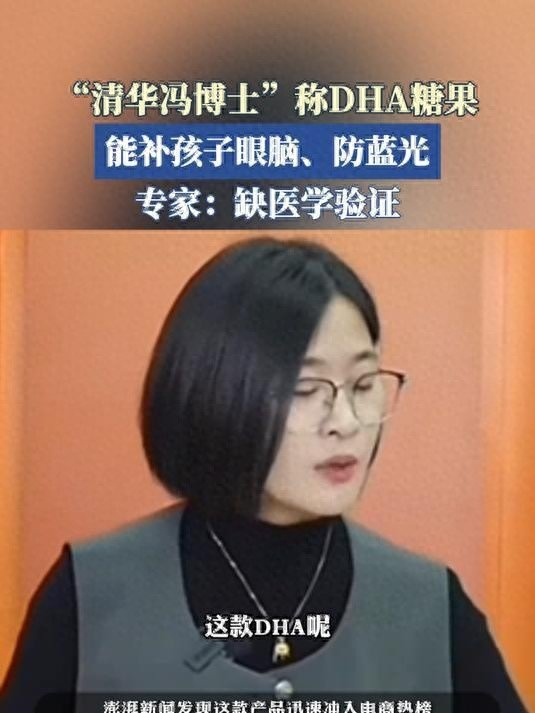
爆款榜第一!“清华冯博士”被查
Xin Lang Cai Jing· 2025-10-16 18:21
Core Viewpoint - The article highlights the controversy surrounding the popular live-streaming host "Dr. Feng from Tsinghua" and a product called "Yangnengjian School-age DHA Algal Oil Lutein Ester Gel Candy," which claims to enhance children's cognitive abilities and protect their eyes from blue light. The product has faced scrutiny for potential false advertising and regulatory violations [1][3][4]. Group 1: Product and Sales Performance - The product "Yangnengjian School-age DHA Algal Oil Lutein Ester Gel Candy" achieved remarkable sales, ranking first on the Douyin platform's best-selling list within a short period [1][3]. - The product is marketed as a dietary supplement rather than a health food or special medical food, which raises questions about its claims and marketing practices [4][6]. Group 2: Regulatory Investigation - The market supervision authority in Jimei District, Xiamen, has initiated an investigation into the product and its marketing practices, citing potential false advertising [4][10]. - The investigation revealed that the live-streaming channel associated with "Dr. Feng" is suspected of engaging in illegal promotional activities, leading to a halt in broadcasts and a requirement for corrective actions [4][10]. Group 3: Legal and Ethical Concerns - Legal experts suggest that the promotional language used by the host may exceed the permissible claims for ordinary food products, potentially misleading consumers about the product's health benefits [7][10]. - The article discusses the broader issue of misleading advertising in live-streaming sales, particularly concerning health-related products, and emphasizes the need for stricter regulations and qualifications for hosts selling such items [9][13].
假专家、假神药精准“围猎”老年人 市场监管总局严打私域直播间
2 1 Shi Ji Jing Ji Bao Dao· 2025-10-15 15:10
Core Viewpoint - The market regulatory authority is actively addressing illegal promotional practices in private domain live streaming, particularly targeting the exploitation of vulnerable groups such as the elderly through deceptive marketing strategies [1][2]. Group 1: Regulatory Actions and Outcomes - Since the initiation of the special rectification work, 7,415 problem clues have been collected, resulting in 4,516 illegal cases being investigated, with a total penalty amounting to 68.7691 million yuan [1]. - A total of 30 cases related to illegal private domain live streaming have been filed, with penalties amounting to approximately 6.63 million yuan, including 2.93 million yuan already imposed [2]. Group 2: Characteristics of Private Domain Live Streaming - Private domain live streaming is characterized by precise user targeting, high conversion rates of purchase intent, strong closure and concealment, and diverse operational models [2]. - The prominent issues in this sector include false advertising, fake expert personas, counterfeit product qualifications, and difficulties in consumer rights protection [3]. Group 3: Challenges in Regulation - The unique characteristics of private domain live streaming present challenges for regulatory enforcement, including difficulties in proactive monitoring, evidence collection, and tracing the supply chain [4]. - Regulatory authorities are enhancing their capabilities through electronic evidence collection, cross-regional collaboration, and comprehensive regulatory measures [4]. Group 4: Technological Integration in Regulation - The Guangdong market regulatory department is utilizing AI and data analysis to detect illegal activities, having filed 516 cases related to false advertising of drugs and health products for the elderly [5]. - The Henan market regulatory authority employs big data analysis and AI recognition for risk monitoring across various platforms, creating a comprehensive evidence network [6]. Group 5: Legal Framework Updates - The newly revised Anti-Unfair Competition Law, effective from October 15, aims to address current competitive issues by refining the legal provisions against false advertising and enhancing regulatory standards [6].
老年消费者被“围猎”?监管部门整治私域直播虚假宣传
Zhong Guo Xin Wen Wang· 2025-10-15 14:08
Core Viewpoint - The article discusses the regulatory efforts to combat false advertising in private domain live streaming, particularly targeting the elderly consumer group, highlighting the rise of deceptive marketing practices and the measures taken by market regulatory authorities to address these issues [1][2][3][4]. Group 1: Regulatory Actions - The market regulatory authority has collected 7,415 problem leads and has handled 4,516 illegal cases, resulting in fines totaling 68.7691 million yuan, with 3,611 entities ordered to rectify their practices [1]. - A total of 30 cases have been filed against illegal activities in private domain live streaming, including 6 cases against platforms and 24 against merchants, with penalties amounting to 2.93 million yuan and proposed penalties of approximately 6.63 million yuan [2]. Group 2: Identified Issues - Key issues in private domain live streaming include false advertising and exaggerated claims, where ordinary products are misrepresented as miraculous cures, often targeting elderly consumers with low-priced goods and free experiences [2]. - There is a prevalence of fake "expert" personas in live streams, misleading consumers through pseudo-scientific health courses and consultations, with many so-called experts lacking genuine qualifications [2]. - Some products sold in private domain live streams lack legitimate qualifications, with instances of counterfeit approval numbers and misleading health claims, such as promoting regular food as having medicinal properties [2]. Group 3: Consumer Protection Challenges - Consumers face difficulties in asserting their rights due to merchants' tactics like "closing the stream immediately," blocking information, and disbanding groups to destroy evidence, further complicating the recovery of funds [3]. - The regulatory authorities are enhancing their capabilities in electronic evidence collection, cross-regional collaboration, and comprehensive monitoring to tackle these challenges effectively [3]. Group 4: Legal Framework - The newly revised Anti-Unfair Competition Law, effective from October 15, strengthens regulations against false advertising and enhances the responsibilities of platform enterprises, providing a solid legal foundation for addressing these issues [4].