AI时代

Search documents
人大重阳王文:企业家不要躺平,想休息就出国旅游,会发现很多机会
Xin Lang Cai Jing· 2025-12-09 03:47
Core Insights - The "2025 China Enterprise Competitiveness Conference" highlighted the increasing uncertainty in the international environment and the intensifying great power competition, which poses various challenges for enterprises, including supply chain disruptions, market access restrictions, technological decoupling pressures, and rising compliance costs [1][5]. Group 1: Short-term Strategies - Companies need to strengthen risk defense and adopt flexible response strategies, including establishing supply chain backup mechanisms to avoid "putting all eggs in one basket" and promoting compliance upfront while enhancing legal literacy and learning capabilities [3][7]. Group 2: Long-term Strategies - In the long term, companies should focus on independent innovation and global integration, laying out strategies for technological autonomy, global operations, international standards, and ecosystem co-construction to uncover deeper development opportunities [3][7]. Group 3: Personal Development Recommendations - Individuals should develop the ability to "go out and integrate into key nodes of the global value network." The example of lower labor costs in regions like Africa and Southeast Asia was cited, where local costs can be as low as 1/4 to 1/10 of domestic costs, prompting many Chinese companies to relocate low-value-added industries there [4][7]. - Continuous skill enhancement is essential, especially in the AI era, where past leisure activities are deemed insufficient for modern entrepreneurs. Engaging in reading and attending training programs is encouraged over low-level leisure activities [4][8]. - Investment diversification is crucial, not only in expanding industrial sectors but also in achieving a diversified asset allocation to enhance risk resilience [4][9].

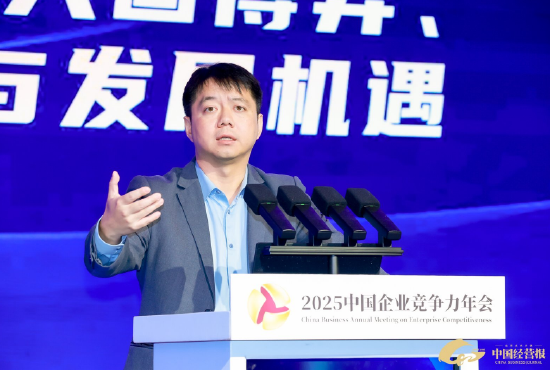
人大重阳王文:企业家要不断学习,报培训班都被打“掼蛋”强
Xin Lang Cai Jing· 2025-12-09 03:47
Core Insights - The "2025 China Enterprise Competitiveness Conference" highlighted the increasing uncertainty in the international environment and the intensifying great power competition, which poses various challenges for enterprises, including supply chain disruptions, market access restrictions, technological decoupling pressures, and rising compliance costs [1][5] Group 1: Short-term Strategies - Companies need to strengthen risk defense and adopt flexible response strategies, including establishing supply chain backup mechanisms to avoid "putting all eggs in one basket" and promoting compliance upfront while enhancing legal literacy and learning capabilities [3][7] Group 2: Long-term Strategies - In the long term, companies should focus on independent innovation and global integration, laying out strategies for technological autonomy, global operations, international standards, and ecosystem co-construction to uncover deeper development opportunities [3][7] Group 3: Personal Development Recommendations - Individuals should develop the ability to "go out and integrate into key nodes of the global value network." The speaker noted that labor costs in regions like Africa and Southeast Asia are significantly lower, with some companies successfully relocating low-value-added industries there [3][7] - Continuous skill enhancement is crucial, especially in the AI era, where past leisure activities are deemed insufficient for modern entrepreneurs [4][8] - Investment diversification is essential, not only in expanding industrial scope but also in achieving a diversified asset allocation to enhance risk resilience [4][9]
2026年大宗商品展望:全球秩序面临重构 有色金属和贵金属或延续涨势
Xin Hua She· 2025-12-08 14:21
Group 1: Precious Metals - Precious metals have shown significant price increases, with gold up over 50% and silver up over 70% year-to-date, leading the commodity market [2][4] - The average price of gold jewelry in Shanghai reached 1320 yuan per gram on December 8, a 65% increase from 799 yuan per gram at the beginning of the year [2] - Analysts expect continued demand for precious metals driven by central bank purchases and investment diversification, with gold prices potentially reaching $5000 per ounce by 2026 [4][5] Group 2: Silver Market - The silver market is experiencing a supply-demand imbalance, with analysts predicting a price range of $50 to $60 per ounce by 2026 due to limited supply and high demand [6][10] - The gold-silver ratio has increased to a range of 85-90, indicating a strong performance for silver relative to gold [6] - Analysts suggest that silver will benefit from both industrial and financial demand, with expectations of continued price volatility [5][6] Group 3: Industrial Metals - Copper prices have reached historical highs, with LME copper futures hitting $11,771 per ton, a year-to-date increase of over 30% [7][8] - The rise in copper prices is attributed to structural supply shortages and increased demand driven by the anticipated AI era [7] - Forecasts indicate that copper prices may average $11,750 per ton in 2026, with potential peaks of $13,000 per ton in the second quarter [8][9] Group 4: Aluminum Market - The aluminum market is expected to face supply constraints, with forecasts indicating a supply deficit in 2026, supporting higher prices [10] - Analysts predict that LME aluminum prices could exceed $3200 per ton in 2026 due to limited domestic supply growth and resilient global demand [10] - The price dynamics between copper and aluminum are expected to maintain a ratio of 3-4, with aluminum prices projected to fluctuate throughout 2026 [10]
【环球财经】2026年大宗商品展望:全球秩序面临重构 有色金属和贵金属或延续涨势
Xin Hua Cai Jing· 2025-12-08 12:00
Core Viewpoint - The commodity market is showing a mixed performance characterized by rising safe-haven assets, differentiated trends in industrial metals, and pressure on energy and agricultural products [1] Precious Metals - Precious metals have benefited from a return of cyclical demand, with gold prices up over 50% and silver prices up over 70% year-to-date [2] - The average price of gold jewelry in Shanghai reached 1320 yuan per gram on December 8, a 65% increase from 799 yuan per gram at the beginning of the year [2] - Central banks in emerging markets have accelerated gold purchases, contributing to structural support for gold prices, while cyclical demand from ETFs has driven recent price increases [2] - Analysts expect continued investment demand for precious metals in 2026, with gold prices potentially reaching $5000 per ounce due to ongoing macroeconomic factors [4][5] Silver Market - The silver market is expected to benefit from both industrial and financial demand, with analysts predicting a price range of $50 to $60 per ounce in 2026 [6] - The gold-silver ratio has increased to the 85-90 range, indicating a strong demand for silver, which may continue to outperform gold [6] - Silver's strategic resource attributes are becoming more pronounced, with supply constraints expected to intensify [6] Industrial Metals - Copper prices have reached historical highs, with LME copper futures hitting $11,771 per ton, a year-to-date increase of over 30% [7] - The rise in copper prices is driven by structural imbalances in global supply and inventory, alongside expectations of increased demand from the AI sector [7] - Analysts predict that copper prices will remain strong, with forecasts suggesting an average price of $11,750 per ton in 2026 [8] - Aluminum prices are also expected to rise due to supply constraints, with projections indicating that LME aluminum prices may exceed $3200 per ton in 2026 [10]
佰维存储拟港股上市 中国证监会要求补充说明近三年技术出口业务的开展情况及合规性
Zhi Tong Cai Jing· 2025-12-08 06:07
Group 1 - The China Securities Regulatory Commission (CSRC) has published supplementary material requirements for overseas listing applications, specifically requesting additional information from Bawei Storage regarding its technology export business and compliance over the past three years [1] - Bawei Storage has submitted its application to the Hong Kong Stock Exchange on October 28, with Huatai International acting as the sole sponsor [1] - The CSRC has requested Bawei Storage to clarify the use of raised funds for overseas investments and to provide legal opinions on compliance with foreign investment regulations [1] Group 2 - Bawei Storage is a leading independent semiconductor storage solution provider tailored for the AI era, possessing unique capabilities in main control chip design, innovative storage solutions, and advanced packaging technology [2] - The company converts NAND and DRAM wafers into diverse storage solutions, meeting the evolving demands of applications in the AI era [2] - Bawei Storage serves numerous global clients, including Meta, Google, Xiaomi, OPPO, Vivo, Honor, and others, establishing a strong market position across various verticals [2]

何小鹏谈拥抱AI时代:CEO要懂、多招年轻人、小步快跑
Xin Lang Cai Jing· 2025-12-08 05:55
专题:2025《中国企业家》影响力企业家年会 小鹏汽车董事长、CEO何小鹏在2025(第二十三届)影响力企业家年会谈到如何拥抱AI时代时表 示,以前企业是用人+工具,现在是用人+服务器,将来是人+AI Agent。在生产力变成了Agent,生产关 系有了巨大变化的情况下,如何拥抱AI? 责任编辑:李思阳 "我们做了三四年,失败了非常多次,总结下来我有以下三点建议:第一,CEO要真懂AI,不懂很难推 进;第二,多招年轻人,因为他们天生就拥抱变化;第三,要小步快跑,趋势是肯定对的,在各行各业 的落地时间是很长的,要根据每个企业的需求快速自我迭代。"他说。 新浪声明:所有会议实录均为现场速记整理,未经演讲者审阅,新浪网登载此文出于传递更多信息之目 的,并不意味着赞同其观点或证实其描述。 责任编辑:李思阳 专题:2025《中国企业家》影响力企业家年会 小鹏汽车董事长、CEO何小鹏在2025(第二十三届)影响力企业家年会谈到如何拥抱AI时代时表 示,以前企业是用人+工具,现在是用人+服务器,将来是人+AI Agent。在生产力变成了Agent,生产关 系有了巨大变化的情况下,如何拥抱AI? "我们做了三四年,失败了非常 ...

榜单揭晓|2025海外上市公司首席财务官峰会暨CFO百强榜颁奖盛典圆满举行
Zhong Jin Zai Xian· 2025-12-08 02:35
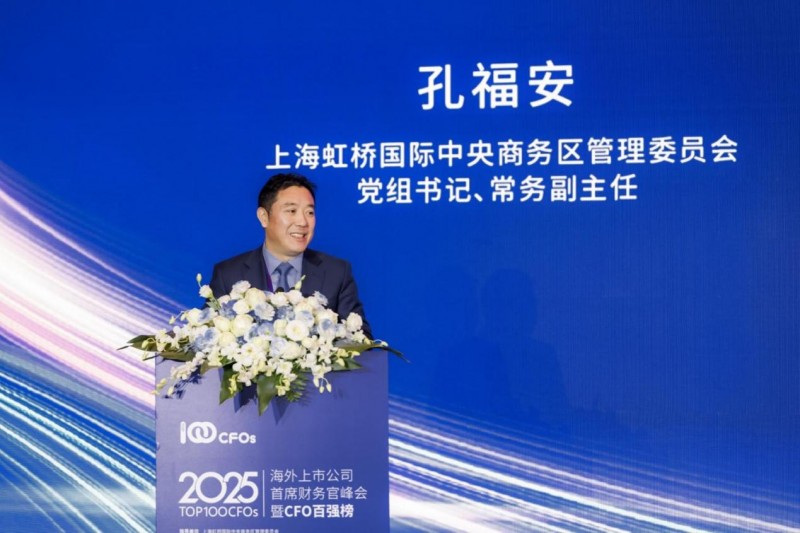
Core Insights - The "2025 Overseas Listed Companies CFO Summit and CFO Top 100 Awards Ceremony" was successfully held in Shanghai, attracting over 100 guests from various stock markets to share experiences and discuss future trends [1] Group 1: Event Overview - The event was guided by the Shanghai Hongqiao Management Committee and involved multiple supporting institutions, including Ernst & Young, SoftBank China, and Gobi Partners [1] - The summit featured keynote speeches and roundtable discussions, focusing on the challenges and opportunities in international capital markets [3][4] Group 2: Keynote Speeches - Professor Li Ruoshan from Fudan University discussed the opportunities and challenges for Chinese companies going global, emphasizing the need for CFOs to enhance compliance awareness and governance structures [3] - Ernst & Young's partner, Mr. Tang Zhehui, highlighted the importance of "security, technology, and development" as strategic cores for the next five years amid global geopolitical tensions [6] Group 3: Roundtable Discussions - The "Consumer Retail" session focused on financial resilience and value reconstruction, with CFOs sharing practical experiences on store returns, inventory optimization, and AI applications [8] - The "Pharmaceutical and Medical" session discussed the hot topics and outlook for 2025, emphasizing Hong Kong as a crucial bridge for companies going global [10] - The "Going Global" session highlighted the evolving role of CFOs from financial controllers to strategic integrators and risk managers in international operations [12] - The "ESG and Capital Markets" session underscored the necessity of ESG compliance for companies, linking it directly to valuation and financing efficiency [14] Group 4: Awards and Recognition - The CFO Top 100 list was unveiled, reflecting the evolving expectations of CFO roles in the global capital market [16] - The founder and CEO of YaoDa, Mr. Zhang Jianfeng, emphasized the summit's role as a professional platform for CFOs to showcase and exchange ideas [18][24] - The launch of the "TOP100 CLUB" community plan aims to enhance collaboration and value creation among CFOs [22][28]
未来3年,它将成为一个人的核心竞争力
3 6 Ke· 2025-12-08 01:33
Core Viewpoint - In the age of AI, the ability to ask critical questions is essential for discerning valuable information and making informed decisions, as AI provides answers but does not inherently validate their accuracy or relevance [1][48]. Group 1: Information Absorption in the AI Era - Two thinking modes are identified: sponge-like thinking, which passively absorbs information, and gold-panning thinking, which actively questions and evaluates information [2][4]. - AI enhances the convenience of sponge-like thinking, but this convenience comes with risks, such as unreliable sources and hidden biases [3][4]. - Gold-panning thinkers can avoid being misled by AI and make better decisions by validating evidence and using logic [4]. Group 2: Dimensions of Critical Thinking - The first dimension is awareness, focusing on actively seeking out "gaps" in information and questioning its validity [6]. - The second dimension is attitude, which emphasizes humility and openness to different viewpoints to avoid cognitive biases [8]. - The third dimension is skill, which involves mastering questioning techniques to effectively analyze information [9][10]. Group 3: Key Questions for Critical Thinking - The first step is to clarify the topic and conclusion, ensuring that the analysis has a clear focus [11][13]. - The second step involves exploring the reasons behind conclusions to ensure they are supported by evidence [14][15]. - The third step is to identify ambiguous terms to avoid misunderstandings in discussions [16]. Group 4: Evaluating Assumptions and Evidence - It is crucial to uncover hidden assumptions that may underlie conclusions, as these can significantly impact their validity [18][19]. - Evaluating the credibility of evidence is essential, as not all data or expert opinions are equally reliable [20][21]. - Identifying alternative explanations helps avoid oversimplified conclusions and encourages a more nuanced understanding of issues [27]. Group 5: Recognizing Data Manipulation - Awareness of common data traps, such as percentage traps and average traps, is vital to avoid misinterpretation of statistics [30][31]. - Recognizing omitted information is important to ensure a comprehensive understanding of arguments [32]. - Avoiding binary thinking allows for a broader perspective on complex issues, recognizing that most problems exist in shades of gray [33]. Group 6: Practical Methods to Enhance Critical Thinking - Identifying common logical fallacies can help avoid pitfalls in reasoning [38]. - Being aware of confirmation bias encourages seeking out opposing viewpoints to achieve a balanced perspective [43]. - Distinguishing between facts and opinions is fundamental for effective analysis and debate [44][46].
黄仁勋和马斯克,谁才是「时代的司机」?
Xin Lang Ke Ji· 2025-12-08 00:50
Group 1 - The core issue highlighted is that despite Nvidia's impressive quarterly performance, the stock price has declined, indicating that market expectations may be too high [2][7] - Jensen Huang expressed frustration that the market does not fully recognize Nvidia's strong quarterly results, leading to a "no-win" situation where any performance shortfall could be interpreted as evidence of an AI bubble [2][7] - Nvidia's stock fell by 9% in November and over 13% in the past month, despite a 62% year-over-year revenue growth and a 65% increase in net profit, surpassing Wall Street expectations [7][11] Group 2 - Huang's concerns echo the historical experiences of Intel and Microsoft, who faced similar market pressures despite strong performance, leading to stock price declines due to concerns over future sustainability [10][11] - The article draws parallels between Nvidia's current situation and past experiences of tech giants like Microsoft and Intel, emphasizing the challenges of being a market leader under high expectations [10][11] - The narrative also touches on the competitive landscape in the AI sector, with companies like Google and Meta vying for leadership, indicating a fierce battle for dominance in the AI era [20][21] Group 3 - Nvidia is currently positioned as a dominant player in the AI chip market, akin to the "Wintel" alliance of the PC era, but faces increasing competition from companies developing their own AI chips [19][20] - Google's advancements with its TPU technology pose a significant threat to Nvidia, as TPU servers reportedly have a lower total cost of ownership compared to Nvidia's offerings [22][21] - The article concludes with a warning that Nvidia must remain vigilant against emerging competitors, as the landscape of AI technology continues to evolve rapidly [28]


激荡讲堂冬季课学习心得:产品仍是根基,而技术正在改写竞争方式
吴晓波频道· 2025-12-08 00:29
Core Insights - The article emphasizes the exploration of Chinese business models, focusing on their underlying logic, iterative directions, and key factors for success [2][25] - It highlights the importance of adapting to technological advancements, particularly in the context of AI, and how this can reshape industries and optimize business models [25][30] Group 1: Business Model Insights - The essence of Chinese business models lies in their inclusive nature and adaptability, which are crucial for navigating market challenges [5][25] - Companies are encouraged to focus on product quality as a foundational element of their business strategy, ensuring that they maintain a competitive edge through superior offerings [7][20] - The dynamic evolution of core competencies is essential, as demonstrated by companies like Tencent and Moutai, which have successfully adapted to changing market demands [8][9] Group 2: Market Trends and Strategies - The current Chinese consumer market is undergoing significant changes, including a shift towards online channels and a rise in rational consumption, necessitating strategic adjustments from businesses [17][19] - Companies are advised to build emotional connections with consumers, transitioning from mere transactional relationships to more symbiotic partnerships [10][21] - The article discusses the importance of focusing on niche markets and developing unique advantages that are difficult for competitors to replicate, particularly in specialized fields [14][15] Group 3: Future Directions - The upcoming event in Xiamen aims to further explore the integration of technology and business, addressing how companies can leverage technological advancements for growth [26][30] - The need for continuous learning and adaptation is emphasized, as businesses must align their strategies with technological trends to remain competitive [29][30] - The article concludes with a call for businesses to engage in deep learning about the fusion of technology and commerce, which is seen as vital for future success [25][30]