
资产配置

Search documents
Gold price today, Friday, November 14: Gold hangs around $4,200 amid unclear rate outlook
Yahoo Finance· 2025-11-10 13:00
Core Insights - Gold futures opened at $4,174.90 per ounce, down 0.3% from the previous close of $4,186.90, indicating a decline in early trading [1] - Central bank demand and investor interest in gold for safety continue despite uncertainty in short-term interest rates, influenced by a pause in government data releases [1] - The one-year gain for gold as of October 30 was 42.1%, reflecting strong performance over the past year [3][7] Interest Rate Impact - Minneapolis Federal Reserve President Neel Kashkari disagreed with the rate reduction in October, awaiting more data for December [2] - Cleveland Federal Reserve President Beth Hammack expressed concerns about inflation, favoring steady rates, which typically support gold prices as lower rates enhance gold's competitiveness against yield-bearing assets [2] Gold Price Trends - The current gold price has shown significant changes: a 4.9% increase over the past week, 1% over the past month, and 63.4% over the past year [7] - The opening price of gold futures on Friday reflects a slight decrease compared to the previous day, indicating ongoing volatility in the market [3] Investment Strategies - Experts recommend varying gold allocations based on investment goals, with suggestions ranging from 0% to 20% [4][5][8][10][11][13] - Robert R. Johnson advises against gold investing for long-term returns, while others suggest allocations of 2% to 15% depending on individual risk tolerance and financial asset composition [5][8][11] - Vince Stanzione advocates for a 20% allocation in gold as a wealth protection strategy, emphasizing gold's ability to retain purchasing power amid currency devaluation [13]
每日报告精选-20251110
GUOTAI HAITONG SECURITIES· 2025-11-10 12:53
Macroeconomic Insights - Global asset performance shows mixed results, with the Hang Seng Index up 1.29% and the Shanghai Composite Index up 1.08%, while developed markets like the S&P 500 fell by 1.63%[6] - In October, the U.S. ISM Manufacturing PMI declined, indicating economic slowdown, while consumer confidence continued to drop according to the University of Michigan index[7] Inflation and Prices - October CPI in China rose by 0.2% year-on-year, while PPI decreased by 2.1%, indicating a stable inflation environment with core service prices reaching their highest level since March 2024[11] - The rise in core CPI is attributed to reduced food drag and increased service contributions, with gold prices significantly impacting jewelry costs[13] Trade and Exports - In October, China's exports fell by 1.1% year-on-year, while imports grew by 1.0%, leading to a slight decrease in trade surplus[16] - The export structure shows weakness in non-U.S. markets, particularly the EU, while exports to the U.S. and ASEAN remained strong[18] Investment Strategies - The asset allocation report suggests an overweight position in Chinese A-shares and industrial commodities, with equity allocation set at 45% and bonds at 45%[22] - The report emphasizes the importance of AI industry trends and the potential for volatility in global equity markets, recommending a focus on quality assets[23] Market Dynamics - The trading activity has decreased, with turnover rates and transaction volumes declining across indices, indicating a cautious market sentiment[28] - The report highlights a decrease in northbound capital flow, with a net outflow of 2.6 billion CNY in the recent week, reflecting investor sentiment shifts[34]




全球股市狂欢能否跨年?游学重庆与付鹏、郁乐畅聊2026资产风向
华尔街见闻· 2025-11-10 10:24
Group 1 - The core concern in the market as 2025 ends is whether the "celebration" of global risk assets can continue into 2026 [1] - The Federal Reserve announced a 25 basis point rate cut and will end its "balance sheet reduction" process on December 1, which has contributed to the rise of the US stock market, reaching a historical high of 6920 points, up over 40% since April [1] - The A-share market also experienced a bull market in 2025, with the Shanghai Composite Index surpassing 4000 points, driven by strong performances in technology and innovative pharmaceutical sectors, with some tech stocks rising over 500% this year [3] Group 2 - Gold has seen rapid price increases, breaking through the $3000 and $4000 per ounce marks, but recently experienced a significant 10% pullback, raising questions about whether this is a temporary technical correction or a shift in its long-term bullish trend [3] - Japan's stock market has surged, with the Nikkei 225 index rising over 70% since April, influenced by political changes and monetary easing policies introduced by the new Prime Minister, who announced a 14 trillion yen stimulus plan [4][7] - The upcoming APEC summit in South Korea is expected to impact global economic and financial market trends, with significant events in the political and economic landscape anticipated in the next two months [8]


如何把握机遇,规避风险?五矿证券这场ETF大讲堂活动“干货满满”
Sou Hu Cai Jing· 2025-11-10 09:51
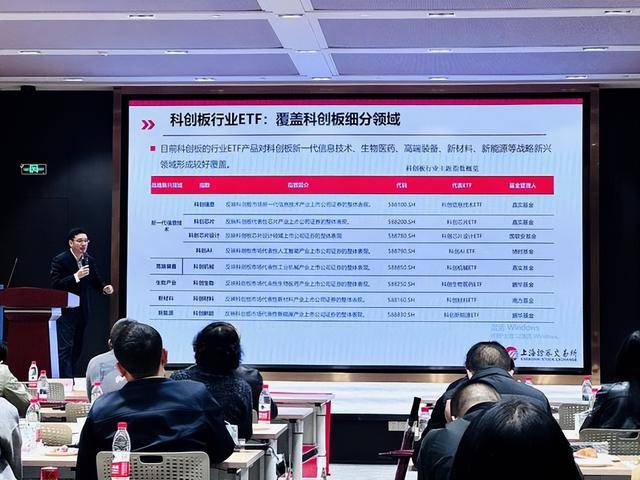
Core Insights - The current A-share market is experiencing fluctuations around the key 4000-point level, prompting investors to seek better asset allocation strategies and opportunities to mitigate risks [1] - An ETF seminar hosted by Minmetals Securities in Chengdu featured expert insights on ETF products, strategies, options basics, and index investments, aimed at enhancing investor knowledge [1] Group 1: ETF Advantages - The primary advantage of ETFs is risk diversification, as they consist of a basket of securities, which helps investors avoid the impact of individual stock failures, making them suitable for conservative investors [2] - ETFs generally have lower management fees compared to actively managed funds, leading to significant compounded returns over the long term; they also offer flexible trading mechanisms and are exempt from stamp duty, enhancing capital efficiency for investors [4] Group 2: Investment Strategies - Investors are advised to consider a high allocation of 70%-80% in ETFs for beginners, while more experienced investors can allocate 30%-40% to ETFs to enhance returns while maintaining stability [4] - Current market conditions suggest a "slow bull" trend in A-shares, with increased volatility; investors are encouraged to focus on sectors such as technology growth, energy transition, and strategic resources, including AI, solid-state batteries, energy storage, and nuclear energy [6] Group 3: ETF Selection Criteria - When selecting ETFs, investors should consider factors such as scale and liquidity, tracking error, and management fees; larger and more actively traded ETFs tend to have lower transaction costs and tracking errors [7] - Various investment strategies suitable for different market conditions include long-term holding of broad-based or high-dividend ETFs, dollar-cost averaging to avoid emotional trading, and a "core-satellite" approach to manage drawdowns while capturing rotation opportunities [9] Group 4: Derivative Tools and Investor Education - The use of derivative tools like ETF options can help hedge risks, enhance returns, and leverage positions; for instance, selling out-of-the-money call options during market fluctuations can generate premium income [9] - The seminar served as a platform for investor education, with the company emphasizing its commitment to enhancing financial literacy and risk awareness among investors to promote a healthy and stable capital market [9]
2025“银华基金杯”新浪理财师大赛团队复赛答辩(深圳场)成功举办
Xin Lang Cai Jing· 2025-11-10 09:33
专题:2025第9届"银华基金杯"新浪·理财师大赛 11月8日,2025"银华基金杯"新浪理财师大赛团队复赛答辩(深圳场)在深圳前海深港基金小镇成功举办。本场复赛汇聚了全国15支优秀理财团队,他们通 过资产配置方案讲演同台竞技,充分展现了专业能力与职业素养,他们将与北京场、上海场共计45支理财团队一同角逐,争夺全国总决赛的十强席位。答辩 结束后,在现场理财分享会上,银华基金投资者教育部副总经理杨静、银华基金资产配置与投顾服务委员会办公室副主任付伟与北京大学汇丰商学院长聘副 教授,院长助理、MBA项目主任刘柏霄,聚焦未来理财趋势、投资方向及理财师的能力提升与职业成长等热点话题进行分享。 本次大赛由新浪财经和银华基金联合主办,今年已是第9届,已成为业内极具影响力、前沿性、权威性的专业赛事。 本届比赛,经过线上报名的踊跃参与和初赛答题的筛选,45 支实力突出的理财团队成功突围,顺利晋级本次理财大赛复赛阶段。45支理财团队,按照初赛 成绩和团队所在地域等综合评估,分成北京、上海、深圳三场复赛答辩。 复赛以团队答辩为核心考核形式,重点聚焦选手的资产配置专业能力、风险预判素养与方案落地可行性。各参赛团队需围绕赛前公布的真 ...

帮主郑重:黄金中长线建仓时间表,20年老兵的落地打法
Sou Hu Cai Jing· 2025-11-10 05:19
Core Insights - The article emphasizes that gold serves as a "safety cushion" in asset allocation rather than a short-term speculative tool, highlighting the importance of timing over specific price points [1][3]. Investment Strategy - The first buying opportunity is identified at the price range of $3900-$3920, suggesting a small initial investment of 3%-4% of total funds to establish a position and avoid missing out on future gains [3]. - A second buying point is indicated at around $3850, where an additional 3%-4% investment is recommended, bringing the total allocation to 6%-8% [3]. - If prices drop below $3800, it is considered an opportunity to purchase more, completing the full allocation of 10% [3]. Key Principles - The article advises against trying to perfectly time the market, stating that there is no "lowest point" in medium to long-term investing, and recommends a phased buying approach to average down costs [3]. - It also cautions against chasing prices if they rise without a correction, advocating for patience and discipline in investment strategy [3]. Supporting Factors - The ongoing trends supporting gold prices include central bank purchases and geopolitical tensions, which remain unchanged, reinforcing a positive long-term outlook for gold [3].
比黄金稳定!比黄金值钱!老精稀才是最保值的!
Sou Hu Cai Jing· 2025-11-10 00:11
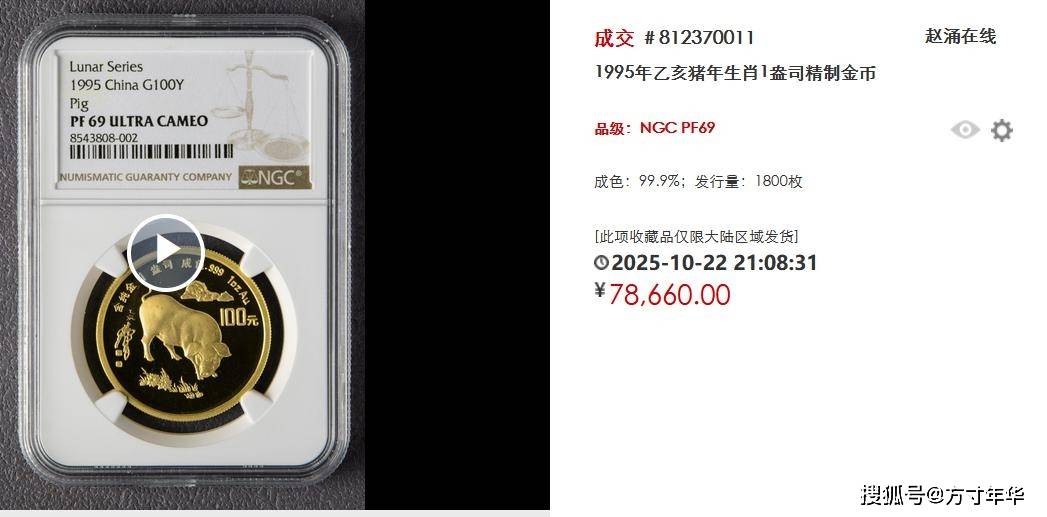
银行理财,现在的收益是越来越微薄了,当通胀悄悄啃食着资产的购买力的时候,你有没有想过给生活和财富找一个既"有面儿"又靠谱的出口? 不妨看看"老精稀"金银币:"老精稀"是金银币收藏领域的核心概念,"老"指发行年代久远,具有历史积淀;"精"指铸造工艺精制、品相等级高(如PF 评级);"稀"指发行量少、存世稀缺。三者结合,使这类金银币兼具历史价值、工艺价值与稀缺价值,成为收藏投资的优质标的。 比如1995年那枚乙亥猪年生肖1盎司精制金币,在一周前的成交中,还有7.86万元的交易额。1盎司≈31.1035克,按周大福今日金价1198元/克计算,1 盎司黄金的原料价值为:31.1035克×1198元/克≈37,262元。 可以看出,这枚金币的成交价显著高于其黄金原料价值,核心原因是"老精稀"属性赋予的收藏溢价。对投资者和收藏者而言,这类金银币不仅具备黄 金的保值底色,更因稀缺性和文化价值,在长期中展现出远超原料金价的增值潜力。 对老精稀交易感兴趣的话,可以下载赵涌在线APP,里面办理绿卡就可以查询近15年成交价和成交记录,买金银币更稳妥。 见过股市的大起大落得你,应该也懂"鸡蛋别放一个篮子"的道理。老精稀金银币既有黄金 ...
私人银行客户数两位数增长
Di Yi Cai Jing Zi Xun· 2025-11-10 00:07
Core Insights - The private banking sector in China continues to experience robust growth, with several banks reporting double-digit increases in the number of private banking clients and assets under management (AUM) [2][3][4] Group 1: Client Growth and Market Dynamics - As of the end of Q3 2025, the number of private banking clients at Ping An Bank surpassed 100,000 for the first time, joining six other banks in the "100,000 club" [2][3] - China now has seven banks with over 100,000 private banking clients, an increase of one from the end of last year, reflecting a growing high-net-worth population and evolving wealth management needs [2][4] - The number of private banking clients at China Merchants Bank reached 191,418, a 13.20% increase from the previous year, maintaining its leading position among joint-stock banks [3][4] Group 2: Asset Management and Performance - Ping An Bank's AUM reached 1.974659 trillion yuan, with a year-on-year growth rate of nearly 20%, indicating strong performance in asset management [3][5] - Other banks, such as Minsheng Bank and Industrial Bank, also reported significant growth in private banking clients and AUM, with increases of 18.21% and 11.39%, respectively [3][4] Group 3: High-Net-Worth Population and Wealth Management Trends - The number of high-net-worth individuals in mainland China, defined as those with a net worth exceeding $10 million, has reached 470,000, accounting for 20% of the global total [4][5] - New economic groups, including entrepreneurs and mid-level managers from technology, manufacturing, and pharmaceuticals, are increasingly becoming private banking clients, driven by stock incentives and wealth repatriation [5][6] Group 4: Technological Advancements and Service Transformation - Banks are leveraging technology to enhance service delivery, with initiatives like AI wealth management tools and digital banking apps improving client engagement and transaction efficiency [6][7] - The shift from a product-centric sales model to a client-centric advisory model is evident, with banks focusing on comprehensive wealth planning and asset allocation strategies [7][8] Group 5: Competitive Landscape and Future Outlook - The competition among private banks is intensifying, with a focus shifting from the number of clients to average AUM and long-term client value [8] - Industry experts predict that banks may start to prioritize high-potential clients while reducing focus on lower-contribution clients, reflecting a strategic shift in client management [8]


国海富兰克林基金徐荔蓉: 资金结构发生质变 港股成配置“必选项”
Zhong Guo Zheng Quan Bao· 2025-11-09 22:28
Core Insights - The Hong Kong stock market is undergoing a fundamental value reassessment driven by changes in capital structure, asset quality, foreign capital trends, and market expectations [1][2] - Domestic capital has significantly increased its presence in the Hong Kong market, capturing a substantial share of quality assets and gradually gaining pricing power [1][2] Investment Landscape Changes - The investor structure in the Hong Kong market is shifting, with domestic funds increasingly participating and now accounting for a significant portion of trading volume [2][3] - Historically, the Hong Kong market was heavily influenced by offshore capital, which primarily focused on core assets, leaving many other assets under-researched and illiquid [2] - Domestic institutional investors, particularly public funds, have expanded their investment scope to include Hong Kong stocks, with nearly half of the public funds now able to invest in this market [2] Market Valuation and Opportunities - Despite recent fluctuations, the Hong Kong market has not shown signs of a bubble, with valuations merely returning to normal levels [4][5] - The core assets in the Hong Kong market, particularly internet companies, are expected to see a recovery in their traditional revenue streams, while AI-related business segments are still developing [5] - The banking sector in Hong Kong is viewed as undervalued, with price-to-book ratios significantly lower than global averages, indicating potential for long-term investment [5] Asset Allocation Perspective - The current asset allocation structure in China shows a low proportion of overseas investments, with public fund QDII products accounting for less than 4% [6] - A more balanced approach to asset allocation, including a reasonable increase in overseas investments, is suggested to enhance risk diversification and returns [6][7] - The Hong Kong market remains a crucial component for residents seeking to diversify risks and enhance their sources of returns [7] Investment Strategy and Product Development - The company emphasizes a bottom-up investment approach, focusing on fundamental research to uncover value in the Hong Kong market [8] - The investment team has developed capabilities in covering various sectors within the Hong Kong market, aiming for long-term returns while managing risk [8][9] - The company is expanding its product offerings to include passive index funds and thematic funds, targeting sectors such as dividends, consumption, innovative pharmaceuticals, and the internet [9]
资金结构发生质变 港股成配置“必选项”
Zhong Guo Zheng Quan Bao· 2025-11-09 20:15
□本报记者 王鹤静 国海富兰克林基金总经理、投资总监、基金经理徐荔蓉入行已有二十余年的时间,这位投资老将始终坚 守在市场一线,保持着对市场的紧密跟踪和敏锐嗅觉。此次在接受中国证券报记者采访时,徐荔蓉分享 了自己及投研团队近期对于港股市场的最新观察。 在徐荔蓉看来,当前无论是基于资金结构、资产质量,还是外资风向、市场预期等因素判断,港股市场 正在经历根本性的价值重估。当"跨过香江去,夺取定价权"不再是口号,近一年来内资充分释放的流动 性正汹涌奔向港股市场,迅速占领优质资产的权重高地,逐步以合围之势夺取港股定价权。 投资者结构生变 近年来,关于南向资金对港股市场定价权的讨论几度升温又沉寂。直到近来,徐荔蓉发现,这一趋势已 变得尤为显著。 徐荔蓉表示,港股市场过去是典型的离岸市场,十分容易受到海外因素的影响。离岸市场的典型特征是 资金只对核心资产定价,其余资产都被边缘化且缺乏流动性。主流资金覆盖的范围十分有限,也不愿意 接触非核心资产标的,外资在港股市场覆盖的只有一两百只个股。 "随着过去这一年A股市场流动性充分释放,南向资金开始涌向港股市场,并且逐步占据港股市场交易 量的半壁江山,定价权正在慢慢向内资投资者转移。 ...