
避险需求

Search documents
山金期货贵金属策略报告-20250827
Shan Jin Qi Huo· 2025-08-27 14:42
Report Industry Investment Rating - Not provided in the content Core Viewpoints - Gold and silver prices show different trends today, with gold strong and silver weak. The short - term trade agreements are reached in batches, leading to a decline in risk - aversion demand. The risk of stagflation in the US economy increases, employment weakens, inflation is moderate, and the expectation of the Fed's interest rate cut rebounds. It is expected that precious metals will be oscillating strongly in the short - term, oscillating at a high level in the medium - term, and rising step - by - step in the long - term [1]. - The gold price trend is the anchor of the silver price. In terms of capital, CFTC silver net long positions and iShare silver ETF have slightly reduced their positions. In terms of inventory, the recent explicit inventory of silver has slightly increased [6]. Summary by Directory Gold - **Price Performance**: Comex gold and London gold have risen, while domestic gold prices such as the closing price of the Shanghai Gold Exchange's main contract and gold T + D have also shown different degrees of increase. The basis and spreads, and ratios have also changed [2]. - **Position and Inventory**: Comex gold and Shanghai Gold Exchange's main contract positions have decreased, while gold T + D positions have increased. LBMA inventory remains unchanged, Comex gold inventory has decreased, and Shanghai Gold Exchange's gold inventory has increased [2]. - **Strategy**: Conservative investors are advised to wait and see, while aggressive investors can buy low and sell high. Good position management and strict stop - loss and take - profit are recommended [3]. - **Net Position Ranking**: The top 10 net long and net short positions of futures companies' members in the Shanghai Gold Exchange have different changes in net positions and daily ratios [4]. Silver - **Price Performance**: The closing price of the Comex silver main contract has risen, while the London silver price has fallen. Domestic silver prices such as the closing price of the Shanghai Silver Exchange's main contract and silver T + D have decreased [7]. - **Position and Inventory**: Comex silver positions have increased, while Shanghai Silver Exchange's main contract positions have decreased, and silver T + D positions have increased. Silver inventories in different places have different changes, and the total explicit inventory has slightly decreased [7]. - **Strategy**: Conservative investors are advised to wait and see, while aggressive investors can buy low and sell high. Good position management and strict stop - loss and take - profit are recommended [7]. - **Net Position Ranking**: The top 10 net long and net short positions of futures companies' members in the Shanghai Silver Exchange have different changes in net positions and daily ratios [8]. Fundamental Key Data - **Fed - related Data**: The upper limit of the federal funds target rate, the discount rate, and the reserve balance interest rate have all decreased by 0.25. The Fed's total assets have decreased slightly, and M2 has increased year - on - year [9]. - **Other Key Indicators**: The ten - year US Treasury real yield, the US dollar index, and the US Treasury yield spreads have all changed. US inflation, economic growth, labor market, real estate market, consumption, industry, trade, and economic survey data have also shown different trends. Central bank gold reserves in different countries and regions have different changes, and some currency - related ratios have also changed [9][11][13]. - **Fed Interest Rate Expectation**: According to the CME FedWatch tool, the market's expectation of the Fed's interest rate cut in different meeting dates from September 2025 to December 2026 is different [14].
富格林:欺诈套路从容应对 7月PCE曝光通胀态势
Sou Hu Cai Jing· 2025-08-27 09:32
Core Viewpoint - The recent dismissal of Federal Reserve Governor Cook by President Trump has raised concerns about the independence of the Federal Reserve, leading to increased demand for gold as a safe-haven asset, pushing its price to a two-week high [1][4][5]. Group 1: Market Reaction - On August 26, gold prices surged to $3,393.7 per ounce, marking a 0.83% increase and reaching a two-week high due to heightened safe-haven buying [2]. - The market's expectation for a rate cut in September has risen to over 87% following Trump's actions, indicating a strong sentiment for monetary easing [5][8]. Group 2: Political and Economic Context - Trump's dismissal of Cook is seen as a direct challenge to the Federal Reserve's independence, reflecting his dissatisfaction with the Fed's cautious stance on interest rate adjustments [4][5]. - The ongoing trade tensions, including threats of new tariffs on advanced technology and semiconductors, are contributing to market uncertainty and further supporting gold prices [6]. Group 3: Upcoming Economic Indicators - Key upcoming economic data, including GDP and PCE inflation reports, are expected to influence gold prices significantly, with the core inflation rate projected to rise to 2.9% by the end of 2023 [8]. - If economic data confirms weakness, it could further increase the likelihood of rate cuts, potentially pushing gold prices above the $3,400 mark [8].

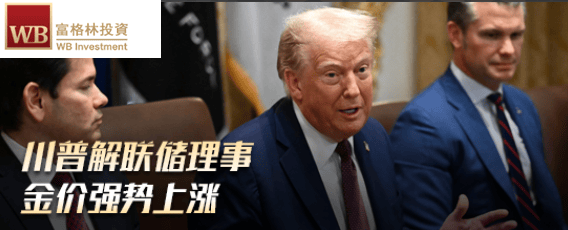
威尔鑫点金·׀特朗普染指美联储 避险需求提振金价逼近3400美元
Sou Hu Cai Jing· 2025-08-27 07:49
Group 1 - The core viewpoint of the article highlights the impact of President Trump's interference with the Federal Reserve, which has led to increased demand for gold as a safe-haven asset, pushing gold prices close to $3,400 [5][9][17] - On Tuesday, the international spot gold price opened at $3,365.98, reaching a high of $3,393.51 and closing at $3,393.25, marking an increase of $27.30 or 0.81% [5] - The U.S. dollar index opened at 98.43 points and closed at 98.21 points, down 0.22%, indicating a weakening dollar which typically supports gold prices [3][5] Group 2 - The increase in gold prices is attributed to two main factors: Trump's actions against the Federal Reserve, which have shaken dollar confidence, and economic data indicating recession fears in the U.S. [5][9] - The consumer confidence index in the U.S. fell by 1.3 points to 97.4, with the expectations index dropping to 74.8, below the recession threshold of 80, reflecting concerns about the economic outlook [9][11] - The article notes that the U.S. housing market is cooling, with the S&P Case-Shiller home price index showing a year-on-year increase of only 1.86% as of June, indicating a potential downturn in the real estate sector [11][15] Group 3 - Trump's recent comments about appointing his nominees to the Federal Reserve could lead to significant changes in monetary policy, potentially resulting in higher long-term interest rates and impacting financial markets negatively [8][9] - The article suggests that if the current trends continue, the credibility of the dollar could be severely impacted, further strengthening the demand for gold and silver as safe-haven assets [9][17] - The overall commodity market may benefit from potential inflationary pressures if the U.S. economy continues to show signs of distress [9][17]

机构看金市:8月27日
Xin Hua Cai Jing· 2025-08-27 03:06
Core Viewpoint - The recent dismissal of Federal Reserve official Lisa Cook by Trump has heightened concerns over the independence of the Federal Reserve, leading to increased demand for gold as a safe-haven asset [1][2][3] Group 1: Market Reactions - Trump's unexpected action has intensified fears regarding the Federal Reserve's independence and has raised expectations for potential interest rate cuts, pushing investors towards gold [1] - Following the dismissal, the gold price rebounded to a two-week high, supported by a decline in the dollar index [2] - The market now anticipates a greater than 87% probability of a 25 basis point rate cut by the Federal Reserve in September [1] Group 2: Economic Indicators - The upcoming U.S. core PCE inflation data is being closely monitored as it may provide insights into the Federal Reserve's policy direction [1][2] - Powell's dovish remarks at the global central bank meeting suggest a shift to a straightforward 2% inflation target, which may further support the case for a rate cut [2] Group 3: Long-term Outlook - The trend of central banks purchasing gold, combined with global monetary expansion and de-dollarization, is expected to support a long-term upward trend in gold prices [2] - Zang Enterprises highlights that physical precious metals may become the only safe haven amid potential financial crises triggered by inflationary policies and vulnerabilities in the U.S. debt market [3] Group 4: Technical Analysis - The next resistance level for gold is identified at $3,409, with subsequent levels at $3,439 and $3,451, while the first support level is at $3,268 [3]
美联储面临史诗级危机 国际黄金多头爆发
Jin Tou Wang· 2025-08-27 02:56
Core Viewpoint - The independence of the Federal Reserve is facing a significant crisis, leading to increased demand for gold as a safe-haven asset, with gold prices rising to their highest level in over two weeks [1][3]. Group 1: Market Reaction - Gold prices experienced a notable increase, closing at $3,393.25 per ounce, marking a daily rise of 0.81% [1]. - The announcement of President Trump's dismissal of Federal Reserve Governor Cook has shaken investor confidence in the Fed's independence, contributing to the surge in gold prices [3]. Group 2: Technical Analysis - On the trading day, gold prices fluctuated, reaching a low of $3,351 and a high of $3,393, closing positively at $3,393 [4]. - The technical outlook suggests that gold prices may continue to rise, with resistance levels at $3,400 and $3,420, while support levels are noted at $3,370 and $3,360 [4].
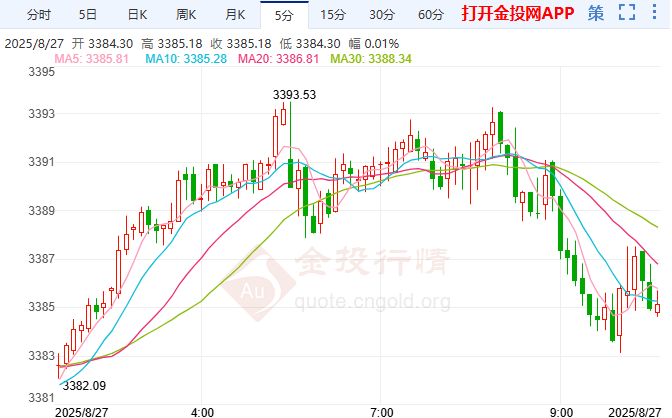
曾金策8月27日:今日黄金会再创新高吗,黄金走势分析操作指南
Sou Hu Cai Jing· 2025-08-27 01:54
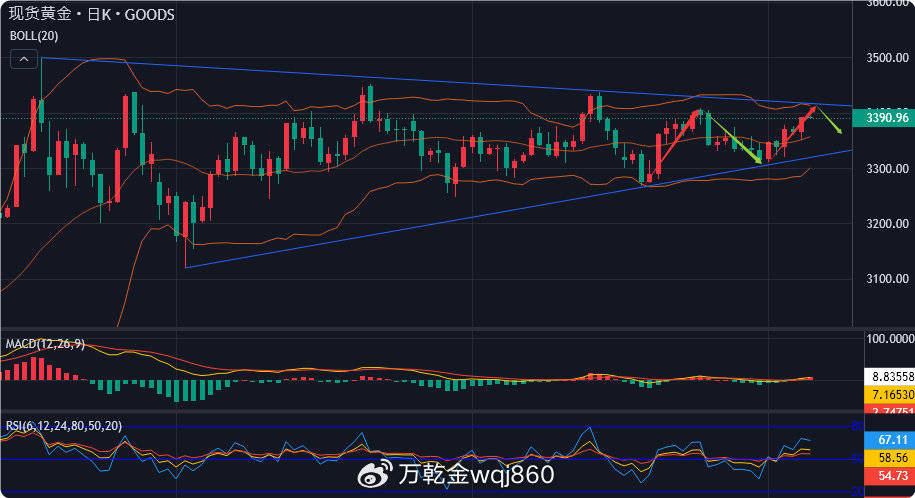
Group 1: Gold Market Overview - The recent strategy of positioning for a long position in gold at low levels has yielded positive results, with successful entry points and a subsequent price rebound [1] - Gold prices were influenced by the firing of Federal Reserve Governor Cook by Trump, which shook investor confidence and increased safe-haven demand, leading to a 0.83% increase on Tuesday, marking the highest level since August 11 [2] Group 2: Technical Analysis - On the daily chart, the Bollinger Bands are opening slowly, with gold prices operating above the middle band, and MACD showing a bullish crossover while RSI indicates a clear demand for a rebound from oversold conditions [3] - On the 4-hour chart, the Bollinger Bands are opening upwards, with gold prices below the upper band; MACD shows a bullish crossover, while RSI indicates a state of overbought retreat, suggesting a slowing upward trend with support at 3300 and resistance at 3400 [3] - On the hourly chart, the Bollinger Bands are also opening upwards, with gold prices below the upper band; MACD shows a narrowing bullish crossover, and RSI indicates a state of overbought retreat, signaling a potential decrease in upward momentum with support at 3300 and resistance at 3400 [3] Group 3: Future Trading Strategies - For aggressive traders, a long position can be initiated near the support level of 3300 USD/oz, while conservative traders may consider entering around 3270-3280 USD/oz, relying on the support at 3250 USD/oz [4] - For short positions, aggressive traders can consider selling near the resistance level of 3400 USD/oz, while conservative traders may look to sell around 3445-3435 USD/oz, depending on the pressure at 3450 USD/oz [4] - Recommendations for various gold trading instruments include light long positions in futures at 780 CNY/g with a target of 785 CNY/g, and a focus on support at 775 CNY/g for domestic gold prices, with a target of 790 CNY/g [4]
纽约金价26日刷新两周新高
Xin Hua Cai Jing· 2025-08-27 00:52
Group 1 - The core viewpoint of the article highlights the significant rise in gold prices due to political events, specifically President Trump's unprecedented dismissal of a Federal Reserve board member, which raised concerns about the independence of the Fed and increased demand for safe-haven assets like gold [1] - On December 26, 2025, the most actively traded gold futures price rose by $32.5, closing at $3443.2 per ounce, marking a 0.95% increase, with an intraday high of $3443.3, the highest since August 12 [1] - Market analysts suggest that Trump's direct intervention in the Federal Reserve and the government's direct investments in private enterprises could severely impact the economic system [1] Group 2 - Reports indicate that India may lift restrictions on pension funds investing in gold ETFs, which is expected to stimulate demand for gold investments [1] - On the same day, silver futures for December delivery increased by 16 cents, closing at $39.210 per ounce, reflecting a 0.41% rise [1] - The U.S. durable goods orders for July were reported at a month-on-month rate of -2.8%, slightly better than the expected -4% [1]
【环球财经】特朗普“罢免”美联储理事提振避险需求 纽约金价26日刷新两周新高
Xin Hua Cai Jing· 2025-08-27 00:40
Core Viewpoint - The gold futures market experienced a significant increase in prices following President Trump's unprecedented dismissal of Federal Reserve Governor Cook, raising concerns about political interference in monetary policy and boosting safe-haven demand [1] Market Reaction - On August 26, the most actively traded December 2025 gold futures price rose by $32.5, closing at $3443.2 per ounce, marking a 0.95% increase [1] - During the trading session, gold prices reached a peak of $3443.3 per ounce, the highest level since August 12 [1] - The market's reaction included a reversal from an initial decline during the Asian trading session, leading to a two-week high near the close [1] Economic Impact - Analysts believe Trump's direct intervention in the Federal Reserve's leadership and the government's direct investments in private enterprises could severely impact the economic system [1] - The reported potential lifting of restrictions on pension fund investments in gold ETFs in India is expected to stimulate gold investment demand [1] Additional Data - The U.S. durable goods orders for July recorded a month-on-month decline of 2.8%, which was slightly better than the expected decline of 4% [1] - Silver futures for December delivery increased by 16 cents, closing at $39.210 per ounce, reflecting a 0.41% rise [1]
万乾论金:8.27黄金价格行情走势分析与操作建议
Sou Hu Cai Jing· 2025-08-27 00:35
Group 1 - The core viewpoint of the article highlights the recent fluctuations in gold prices, driven by increased safe-haven demand following the dismissal of Federal Reserve Governor Cook by Trump, which has shaken market confidence in the Fed [1] - Gold prices experienced a rebound after initially declining, with a low of $3351 per ounce and a peak of $3393 per ounce during the trading session [1] - The daily chart indicates a bullish trend with a long lower shadow candlestick pattern, suggesting potential upward movement despite facing resistance [1] Group 2 - The article provides specific trading strategies for gold, recommending a long position on pullbacks between $3358 and $3363, with a target of $3385 to $3395 [3] - For short positions, aggressive traders are advised to consider selling lightly between $3400 and $3396, while more conservative traders should wait for a rebound between $3410 and $3415 [3] - The support levels are identified at $3350-$3355, while resistance levels are noted at $3408-$3413 and potentially $3435-$3438 if broken [1]
亚市早盘黄金小幅走低 可能为头寸调整
Sou Hu Cai Jing· 2025-08-26 23:54
Core Viewpoint - Gold prices in Asia experienced a slight decline due to potential position adjustments, with spot gold down 0.1% at $3,390.64 per ounce. However, the decline may be limited due to increased safe-haven demand stemming from concerns over the independence of the Federal Reserve and political risks in France [1]. Group 1 - Spot gold decreased by 0.1% to $3,390.64 per ounce [1]. - Concerns regarding the independence of the Federal Reserve have been heightened following President Trump's dismissal of Fed Governor Cook, introducing uncertainty [1]. - Political risks in France are exacerbated by the Prime Minister's austerity plans and an upcoming confidence vote on September 8, increasing the risk of government collapse [1].