技术创新

Search documents
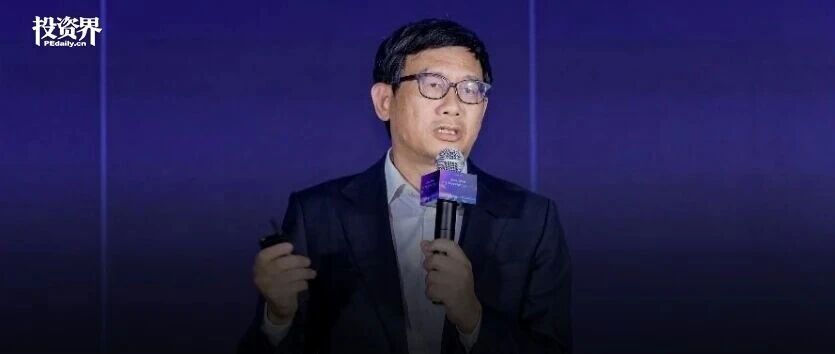
达晨肖冰:中国科技牛市已经来临
投资界· 2025-10-25 06:33
Core Viewpoint - In an era of uncertainty, companies must seek certainty in growth by embracing technological revolutions, particularly the AI wave, which presents both challenges and opportunities for new business models and industries [4][6]. Group 1: Changes in the Current Landscape - The relationship between China and the world is shifting, with a notable tilt towards China, impacting capital markets significantly [7]. - The Chinese economy is under pressure due to changing economic conditions, affecting businesses [7]. - The AI revolution is destroying some industries while creating new opportunities for innovative companies [7]. Group 2: Strategies for Growth - Companies should focus on "self-control and import substitution" as a key strategy, particularly in addressing critical technological challenges [8][9]. - Investing in emerging, high-growth industries is crucial, as the economic landscape is undergoing structural changes [10][11]. - Cost reduction is essential for building competitive strength and endurance in the current market environment [12]. - Emphasizing technological innovation can help companies transition from "stock competition" to "incremental competition" [13]. - Companies should consider expanding internationally to tap into larger markets and improve financial performance [14][15]. Group 3: Embracing AI and Ecosystem Development - Companies must identify new business opportunities within the AI wave, which is creating a new incremental market [16][17]. - Building an ecosystem is vital for sustainable growth, as it provides a competitive edge [18]. - Companies should actively engage with the capital market, as a new tech bull market is emerging in China, with significant IPO activity [18].

Kinsale Capital (KNSL) - 2025 Q3 - Earnings Call Transcript
2025-10-24 14:00
Financial Data and Key Metrics Changes - Kinsale's operating earnings per share increased by 24% year-over-year, reaching $5.21 per share compared to $4.20 in Q3 2024 [4][10] - Gross written premium grew by 8.4% over Q3 2024, while net earned premium increased by 17.8% [5][8] - The combined ratio for the quarter was 74.9%, benefiting from 3.7 points from net favorable prior year loss reserve development [7][8] - Book value per share increased by 25.8% since year-end 2024, and float grew to $3 billion from $2.5 billion [5][9] Business Line Data and Key Metrics Changes - The commercial property division saw a premium drop of 8% in Q3, an improvement from a 17% drop in Q2 [5] - Excluding the commercial property division, the overall growth rate was 12.3% [5] - Submission growth was 6% for the quarter, down from 9% in the first quarter, primarily driven by the commercial property division [13] Market Data and Key Metrics Changes - E&S market conditions were steady and competitive, with varying growth rates across segments [5][6] - The pricing trends in the commercial property market showed a decline, but management noted an inflection point where the rate of decline is stabilizing [14][62] Company Strategy and Development Direction - Kinsale's disciplined underwriting and low-cost business model provide a competitive advantage, allowing for competitive policy terms without compromising margins [5][6] - The company is focusing on technology as a core competency, enhancing its enterprise system and utilizing AI tools to drive automation [22][23] - Management expressed confidence in growth opportunities across various segments, including transportation, agribusiness, and high-value homeowners [19][53] Management's Comments on Operating Environment and Future Outlook - Management remains optimistic about future growth prospects, citing a durable competitive advantage and strong financial performance [14][36] - The company is cautious about releasing reserves and maintains a conservative approach to loss reserving [26][67] - Management acknowledged increased competition in the E&S market but believes their efficiency will allow them to capture market share from higher-cost competitors [6][61] Other Important Information - Management announced significant changes, including Brian Haney's election to the Board and his transition to Senior Advisor [3][4] - The company is generating excess capital, leading to increased share repurchases [75] Q&A Session Summary Question: Future opportunities outside of commercial property - Management sees opportunities across the entire book, particularly in transportation, agribusiness, and high-value homeowners [19][20] Question: Technology innovations and implementation - Kinsale has made technology a core competency, focusing on enhancing their enterprise system and utilizing AI tools [22][23] Question: Changes in assumptions for construction liability - Management conducts quarterly reviews of loss reserves, with no specific changes noted for the construction segment [25][26] Question: Growth opportunities in excess casualty - Rates in excess casualty remain strong, with good growth opportunities [28] Question: State E&S data and growth perceptions - Management advised against reading too much into state-specific growth data, suggesting a broader view over time [46][47] Question: Impact of alternative capital on property market - Management acknowledged the potential for alternative capital to enter the market but emphasized their focus on maintaining competitive pricing [84]

呵呵,美国人抱怨:把稀土矿卖给中国后,无法再从中国买回来了
Sou Hu Cai Jing· 2025-10-24 13:04
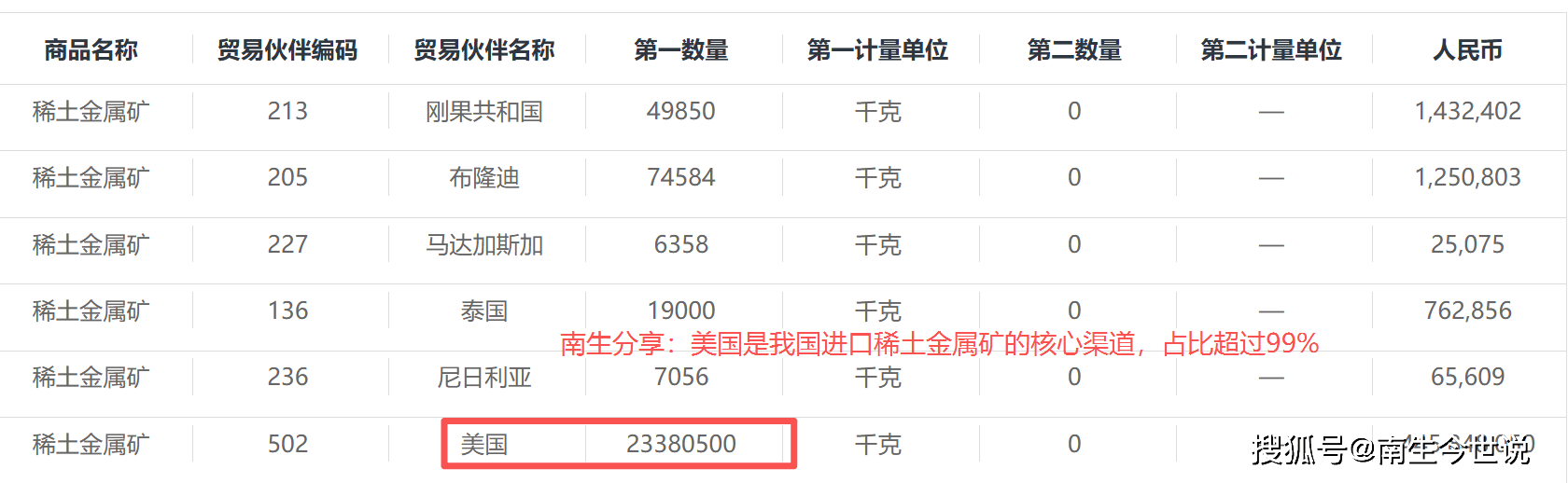
Core Insights - China's rare earth imports from the United States have reached 23,380,500 kilograms in the first three quarters of 2025, accounting for 99.33% of its total rare earth metal imports, highlighting a long-standing dependency on U.S. sources [1][2] - The average price of imported rare earth minerals from the U.S. is approximately 19.07 RMB per kilogram, raising concerns about the low pricing dynamics in the global rare earth market [2] - The U.S. possesses significant rare earth resources but struggles with processing capabilities, leading to a reliance on China for the refining and separation of rare earth elements [3][6] Trade Dynamics - In 2025, China imported a total of 23,380.5 tons of rare earth minerals, with a total transaction value of approximately 445.85 million RMB (around 44.6 million USD) [2] - The trade pattern indicates that the U.S. exports raw rare earth materials to China at low prices, which undermines its position in the global value chain [3][6] Strategic Shifts - China has transitioned from exporting raw materials to controlling the entire rare earth industry chain, achieving significant advancements in refining and separation technologies [7] - Currently, China handles about 90% of global rare earth refining and separation tasks, with a remarkable 98% capability in processing heavy rare earths [7] Future Competition - The competition in the global rare earth sector is expected to intensify, focusing on technological innovation and restructuring of supply chains [10] - The U.S. is attempting to develop alternative rare earth technologies and reduce dependency on China, but faces challenges in achieving breakthroughs in complex separation and purification processes [10] Industry Insights - China's strategic management of rare earth resources demonstrates the importance of mastering core technologies and maintaining a complete industrial chain to thrive in international competition [13] - The ongoing dynamics in the rare earth market reflect a significant shift in roles, with China moving from a low-cost exporter to a strategic player leveraging rare earths as a geopolitical tool [11][13]
协鑫集成:终止向特定对象发行股票事项
Zheng Quan Shi Bao Wang· 2025-10-24 10:56
Core Viewpoint - GCL-Poly Energy Holdings Limited (协鑫集成) has decided to terminate its plan for a private placement of shares due to the current phase and structural adjustments in the photovoltaic industry, focusing instead on enhancing core competitiveness through technological innovation, product performance improvement, cost reduction, and deepening global market channels [1] Group 1 - The company announced the termination of the private placement plan after actively working on it since its announcement [1] - The decision reflects the company's strategy to concentrate resources on key areas such as technology innovation and efficiency improvements [1] - The photovoltaic industry is currently experiencing significant phase and structural adjustments, influencing the company's decision [1]

告别“躺平”!英特尔打响复兴战
格隆汇APP· 2025-10-24 10:28
Core Viewpoint - Intel has experienced significant challenges over the past five years, losing 12% of its CPU market share to AMD and falling behind in advanced manufacturing processes compared to TSMC. However, the release of its Q3 financial report in October 2025 marked a potential turning point, with a revenue of $13.65 billion, a gross margin of 40%, and an adjusted EPS of $0.23, signaling a recovery from a year and a half of declining year-on-year performance [2]. Group 1: Historical Context and Challenges - In the late 1990s, Intel dominated the CPU market with an 82% share, investing heavily in R&D and manufacturing, which established its leadership in the PC era [3]. - The rise of mobile internet in the 2010s led to critical misjudgments by Intel's management, particularly in neglecting mobile chip development, which resulted in a loss of market relevance [4]. - By 2018, Intel faced a crisis as AMD regained market share and Intel struggled with its 10nm manufacturing process, leading to a significant decline in its market position [4]. Group 2: Leadership and Restructuring - In March 2025, new CEO Pat Gelsinger initiated a major restructuring, addressing the company's "big company disease" by reducing the workforce from 110,000 to 88,400, with plans to further cut to 75,000 by year-end [6]. - Gelsinger emphasized that layoffs were not merely cost-cutting measures but aimed at creating space for true innovators within the company [6]. - The company implemented a "transformation plan" to support laid-off employees, including severance packages and skills training, reflecting a commitment to its workforce [6]. Group 3: Financial Recovery and Investments - Intel's financial recovery is supported by significant cash reserves of $30.9 billion, bolstered by $15.9 billion in investments from the U.S. government, NVIDIA, and SoftBank [8][10]. - The U.S. government became Intel's largest shareholder with an investment of $8.9 billion, aimed at preserving the U.S. semiconductor industry [9]. - Intel's strategic asset optimization included selling Altera for $4.3 billion and reducing its stake in Mobileye for $900 million, with savings redirected to core technology development [7]. Group 4: Production Challenges and Strategic Focus - Intel is currently facing production capacity constraints, with a 60% increase in demand for AI server CPUs and a 41% rise in AIPC orders, leading some customers to turn to AMD due to insufficient capacity [12]. - The company is prioritizing the production of its 18A process technology at the Fab52 facility, which is expected to significantly enhance its competitive position once operational [12]. - Intel's strategy includes focusing on high-value customers and improving margins in its data center business, which saw a gross margin increase of 18 percentage points year-on-year [12]. Group 5: Cultural and Technological Revival - Intel is fostering a culture of innovation by allowing engineers to explore projects outside their primary responsibilities, which has historically led to significant technological advancements [14]. - The company is also investing in social responsibility initiatives, such as scholarships for underrepresented groups in semiconductor education, reflecting a commitment to broader societal values [14]. - Gelsinger's leadership philosophy emphasizes balancing technical excellence with a human-centered approach, aiming to restore Intel's reputation and market position [16].

荣盛石化:公司通过技术创新、绿色转型及战略布局积极响应国家政策导向
Zheng Quan Ri Bao Wang· 2025-10-24 09:17
Core Viewpoint - The company is actively responding to national policy directions through technological innovation, green transformation, and strategic layout, promoting its transformation and upgrading efforts [1] Group 1: Business Strategy - The company is focusing on vertical integration to strengthen its refining and chemical integration resource integration and scale effect [1] - It is leveraging the cost reduction and efficiency enhancement advantages of the "refining and chemical integration" model and the potential of "oil conversion" to continuously improve operational efficiency [1] Group 2: Financial Health - The company has excellent cash flow and strong debt repayment capability, indicating stable business operations and financial health [1] - Both short-term and long-term debt repayment arrangements are well managed, with ongoing attention to debt repayment capability indicators to control repayment risks [1] - The company aims to enhance cash flow management while ensuring high-quality development and maintaining a reasonable level of debt [1]

亚太森博装备技术创新中心正式投入使用
Qi Lu Wan Bao· 2025-10-24 09:13
Core Insights - The company has launched the "Asia-Pacific Senbo Cup" pulp and paper industry skills competition alongside the inauguration of its Equipment Technology Innovation Center, which aims to enhance high-quality development and industry upgrades through talent cultivation and skill competitions [1][5] Group 1: Innovation Center Overview - The Innovation Center integrates various resources and electrical equipment to create a modern competition platform and training environment, providing high-quality facilities for participants [1] - The center repurposes obsolete equipment into innovative teaching tools, utilizing a closed-loop management system to transform outdated devices into valuable resources for training high-skilled talent [1][2] Group 2: Training Projects and AI Integration - The center has planned 19 core training projects targeting key technical bottlenecks in production, covering areas such as generators, relay protection, PLC control, and industrial network communication [2] - AI and big data analytics are employed to develop a comprehensive lifecycle management system for electrical equipment, enabling predictive maintenance and optimizing inventory management [2] Group 3: Skills Competition and Workforce Development - The Innovation Center serves as a core platform for the electrical competition, ensuring the smooth execution of events and enhancing the professional teaching level of internal trainers [3] - The competition promotes active learning and skill refinement among employees, contributing to the development of a well-structured and technically proficient workforce [3] Group 4: Future Development and Strategic Goals - The center will focus on talent cultivation and technological innovation, aiming to establish a comprehensive talent training system through collaboration with universities and research institutions [4] - Continuous efforts will be made to repurpose equipment, optimize management systems, and expand training project scope to include more elements of intelligent manufacturing and industrial internet [4][5]
嘉元科技(688388.SH):公司HVLP铜箔未直接送样AMD公司
Ge Long Hui· 2025-10-24 07:33
Core Viewpoint - The company, Jia Yuan Technology, is focused on enhancing its product offerings in the high-end electronic circuit copper foil sector, aiming to improve product quality and market share through technological innovation [1] Industry Supply Chain Structure - As an electrolytic copper foil manufacturer, the company primarily supplies products to midstream manufacturers, who then process these products for end electronic device manufacturers [1] Product Development Strategy - The company is implementing a "produce one generation, reserve one generation, and pre-research one generation" technology strategy, achieving multiple breakthroughs in high-end electronic circuit copper foil [1] - The HVLP copper foil products are currently in the customer verification stage [1] Market Trends and Product Optimization - The company plans to continuously develop new products that align with market trends, enriching and optimizing its product structure [1] - There is a focus on gradually increasing the proportion of high-value-added products, such as high-end electronic circuit copper foil, to effectively enhance product quality [1]

医疗器械行业成长逻辑重塑 迈瑞医疗持续加码国际化
Jiang Nan Shi Bao· 2025-10-24 04:10
Core Insights - The National Medical Products Administration (NMPA) is enhancing the legal and standard system for medical devices, increasing support for R&D innovation, and improving review and approval efficiency to promote high-quality development in the medical device industry [1] Industry Overview - In the first eight months of this year, Beijing's exports of medical instruments and devices reached 5.83 billion yuan, marking a year-on-year increase of 21.5% [1] - Analysts believe that the overseas market for medical devices is several times larger than the domestic market, leading to significant growth in international business for many medical device companies [1] - The valuation of companies recognized for their international capabilities is also increasing [1] Company Focus: Mindray Medical - Mindray Medical's overseas revenue proportion reached 50% in the first half of 2025, becoming a core growth engine for the company, up from 40% in 2021 [1] - The increase in international revenue is attributed to the company's sustained investments in overseas channels, R&D, and acquisitions [1] - Mindray Medical currently operates 64 subsidiaries and 5 R&D centers overseas, with products entering 80 of the top 100 hospitals globally [2] Strategic Acquisitions - In 2021, Mindray Medical acquired Finland's HyTest to address upstream material supply issues and enhance the quality of IVD consumables [2] - In 2023, the acquisition of Germany's DiaSys further deepened Mindray's IVD business layout and improved its overseas supply chain [2] Market Position - Mindray Medical has entered the global top 30 medical device companies, with several product lines ranking in the top three globally, and nearly half of its revenue coming from international business [2] - The growth momentum for the industry is shifting towards international business and technological innovation, with expectations that the international business share will surpass domestic business in the future [2]

以技术平台驱动三大场景突破|瑞浦兰钧品牌日发布多款战略新品,落地能源全链路解决方案
鑫椤锂电· 2025-10-24 02:49
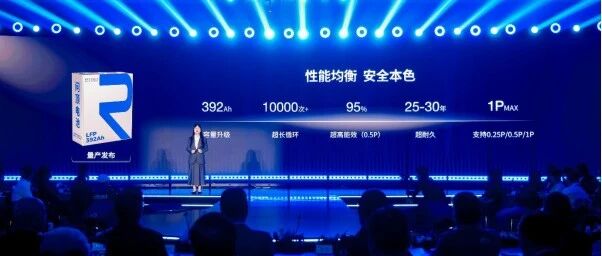
Core Viewpoint - The article highlights the launch of multiple innovative products by Ruipu Lanjun during the "Juyuan Qixin" brand day, focusing on energy storage, commercial vehicles, and passenger vehicles, showcasing the company's advancements in technology and product development [1][20]. Energy Storage Innovations - Ruipu Lanjun introduced the 392Ah energy storage cell and the 588Ah ultra-large capacity cell, emphasizing their high performance and safety features, which cater to both residential and grid-level applications [2][4]. - The new Powtrix® 6.25MWh energy storage system boasts a high energy efficiency of 95.5%, with enhanced thermal management and stability in extreme conditions, ensuring safety and reliability [5]. Passenger Vehicle Developments - The company launched the Wending® hybrid battery and Wending® 4C fast-charging battery, designed for various scenarios including PHEV and EV, achieving fast charging capabilities that allow for 80% charge in just 10 minutes [7][10]. - The Wending® solid-liquid hybrid battery features a solid-liquid co-state electrolyte system, balancing energy density, safety, and cycle life, with plans for mass production [10][12]. Commercial Vehicle Solutions - Ruipu Lanjun unveiled six innovative products targeting the commercial vehicle sector, addressing challenges such as range anxiety and charging pressure, with a focus on high energy capacity and structural strength [13][15]. - The new F battery box integrates 600kWh capacity and 1.5C fast charging, demonstrating exceptional stability and environmental adaptability [13]. - The Chensxing long-life LFP324Ah battery extends lifespan from 8 years/1.2 million km to 10 years/1.5 million km, enhancing operational efficiency and reducing maintenance costs [17]. Strategic Positioning and Future Outlook - The Chensxing ternary lithium battery leverages high-nickel materials with stable raw material supply, enhancing the company's competitive edge in the commercial power sector [19]. - Ruipu Lanjun emphasizes sustainable innovation and global collaboration to drive energy transformation, aligning with the growing demand for green energy solutions [20].