新能源汽车

Search documents
2025年中国聚合物基导热界面材料(TIM)行业政策、发展现状、细分市场及未来发展趋势研判:新兴需求持续放量,国产替代加速破局[图]
Chan Ye Xin Xi Wang· 2026-01-17 01:02
Core Viewpoint - The polymer-based thermal interface materials (TIM) industry is experiencing steady growth driven by advancements in AI, 5G, and electric vehicles, with the Chinese market expanding at a faster rate than the global market. The demand for high-end thermal management solutions in sectors like data centers and ADAS is expected to significantly increase, with the ADAS TIM market projected to reach $600 million by 2033 [1][6]. Industry Overview - Polymer-based TIMs are essential for electronic thermal management, designed to fill microscopic gaps between heat-generating devices and heat sinks, thereby reducing thermal resistance and ensuring efficient operation [1][3]. - TIMs are categorized into TIM1, which is used between chips and packaging, and TIM2, which is used between packaging and heat sinks, with TIM1 requiring higher performance standards [3][4]. Industry Policies - The polymer-based TIM industry is part of the new materials sector, which is a strategic focus for national development. Various policies have been implemented to support technological research, industrial application, and market promotion, facilitating breakthroughs in high-end technology and accelerating domestic substitution [5][6]. Industry Chain - The upstream of the TIM industry includes polymer matrices and high thermal conductivity fillers, while the midstream focuses on material formulation and composite process innovation. The downstream applications span consumer electronics, electric vehicles, 5G communication, and data centers, with electric vehicles and data centers being key growth drivers [5][6]. Market Size and Growth - The global TIM market is projected to grow from $2.012 billion in 2024 to $4.148 billion by 2031, with a compound annual growth rate (CAGR) of 10.74%. The Chinese TIM market is expected to grow from $1.027 billion in 2024 to $2.164 billion by 2031, with a CAGR of 11.09%, indicating strong growth potential [6][7]. Competitive Landscape - The competitive landscape shows a dynamic balance where international giants dominate the high-end market while local companies like Huitian New Materials and Feirongda are making significant advancements. These local firms are transitioning from cost advantages to competing directly in high-end supply chains through technological breakthroughs [7][8]. Development Trends - The industry is expected to evolve around three core directions: technological upgrades focusing on high thermal conductivity and multifunctional integration, deepening industry chain collaboration for domestic substitution, and expanding application scenarios that drive customized solutions [8][9][10]. - Future innovations will emphasize high-performance materials with integrated functionalities, while collaboration between upstream and downstream players will enhance the self-sufficiency of the supply chain [10][11].



高盛预测铜价将下跌11000美元/吨,因市场基本面放宽
Huan Qiu Wang· 2026-01-17 00:50
Core Viewpoint - Recent surges in copper prices may face significant declines in the future, with Goldman Sachs analysts predicting LME copper prices could drop to $11,000 per ton by December 2026 due to easing market fundamentals [1]. Group 1: Price Movements - Copper prices have recently retreated from historical highs, with a 0.6% decline noted on January 15, following a record rebound in physical demand [2]. - On January 14, LME copper prices reached an all-time high of $13,407 per ton, while domestic futures also surged past the 100,000 yuan per ton mark [2]. Group 2: Supply and Demand Dynamics - The rapid increase in copper prices is attributed to a structural imbalance in supply and demand, alongside market sentiment and speculative trading [2]. - South American countries control 40% of global copper reserves, but energy constraints have limited the release of copper mining capacity [2]. - Emerging sectors such as AI data centers, electric vehicles, and industrial robots are significantly increasing copper demand, supporting high copper price levels [2].
2025中国车市:新势力猛追,比亚迪放缓
日经中文网· 2026-01-17 00:33
Core Viewpoint - The article highlights the significant growth of the new energy vehicle (NEV) market in China, with domestic brands capturing a dominant market share while foreign brands lag behind in electrification efforts [4][6]. Group 1: NEV Sales Growth - NEV sales reached 16.49 million units, growing by 28.2%, accounting for 47.9% of total vehicle sales, an increase of 7 percentage points [4][6]. - Pure electric vehicles (EVs) saw a growth of 37.6%, reaching 10.62 million units, while plug-in hybrid vehicles (PHVs) grew by 14%, totaling 5.86 million units [4][6]. Group 2: Market Share Dynamics - Domestic brands now hold 69.5% of the passenger car market share, up by 4.3 percentage points from 2024, while foreign brands have seen declines, with German brands at 12.1% (down 2.5 points) and Japanese brands at 9.7% (down 1.5 points) [6][9]. - Notable declines in sales were observed for Honda, with a 20% drop in annual sales, indicating challenges for Japanese brands [6]. Group 3: Emerging Players and Competition - New entrants like Leap Motor and Xiaomi have shown remarkable growth, with Leap Motor's sales doubling to 590,000 units, and Xiaomi delivering 410,000 vehicles since its entry into the market in March 2024 [6][8]. - The competition is intensifying, with established players like BYD experiencing a slowdown, projecting only an 8% growth in 2025, while state-owned enterprises like Guangzhou Automobile Group face declining sales [7][8]. Group 4: Future Outlook - The China Association of Automobile Manufacturers predicts that new car sales (including exports) will reach 34.75 million units in 2026, a modest increase of 1% from 2025 [8]. - Domestic sales growth is expected to slow to 0.2%, reaching 27.35 million units, with challenges arising from reduced tax incentives for NEV purchases [9]. - The competitive landscape is characterized by aggressive pricing strategies, which may lead to industry consolidation and the exit of weaker players [9].


大众25年销量下滑,丰田连续6年全球首位
日经中文网· 2026-01-17 00:33
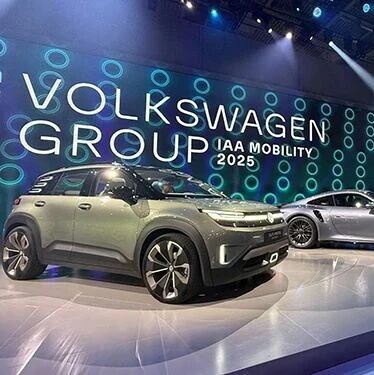
Core Viewpoint - Volkswagen's global new car sales are projected to slightly decrease in 2025, primarily due to a significant decline in the Chinese market, where sales are expected to drop by 8% [2][7]. Group 1: Global Sales Performance - Volkswagen's global new car sales are expected to reach 8,983,900 units in 2025, a slight decrease from 2024 [2]. - The company's electric vehicle (EV) sales globally increased by 32% to 983,100 units, with the proportion of EVs in new car sales rising from 8.2% in 2024 to 10.9% in 2025 [4]. - In Europe, EV sales rebounded significantly, growing by 66% to 742,800 units, driven by an expanded product line at competitive prices [4]. Group 2: Performance in China - Volkswagen's new car sales in China fell by 8% to 2,693,800 units, resulting in a market share of 10.9%, which is lower than BYD's 14.7% and Geely's 11% [2][7]. - The decline in EV sales in China was stark, with only 115,500 units sold, a 44% decrease, attributed to intense price competition and a strategic focus on maintaining profit margins over volume [6]. - Volkswagen plans to introduce new EV models in China starting in 2026, emphasizing a strategy that prioritizes high-margin engine vehicles [6].
这一车型第30万辆整车下线
Si Chuan Ri Bao· 2026-01-16 22:11
Group 1 - Lynk & Co's model 06 has officially reached its 300,000th unit production since its launch in 2020, maintaining a leading position in the fuel small SUV market [1] - The company plans to expand its market reach in 2024 to regions including the Middle East, Southeast Asia, and Latin America, with a goal of over 350,000 units produced this year [1] - The Chengdu factory is a significant automotive manufacturing base, producing multiple models including Lynk & Co 06, Lynk & Co Z20, Zeekr X, and Geely Xingyuan [1] Group 2 - Chengdu Economic Development Zone is enhancing the automotive industry with a focus on "stabilizing oil and strengthening electricity," aiming for significant upgrades in 2025 [2] - Major projects such as Geely Group's new energy vehicle transformation and Dongfeng New Energy are set to be signed and implemented [2] - The total vehicle production in the region is projected to reach 870,000 units, with 210,000 units being new energy vehicles, reflecting a year-on-year growth of 177% [2]

南京泉峰汽车精密技术股份有限公司2025年年度业绩预告
Shang Hai Zheng Quan Bao· 2026-01-16 18:48
Core Viewpoint - Nanjing QuanFeng Automotive Precision Technology Co., Ltd. is forecasting a net loss for the year 2025, with expected losses narrowing compared to the previous year due to increased sales and improved production efficiency [2][5][8]. Group 1: Performance Forecast - The company anticipates a net profit attributable to shareholders of the parent company in the range of -340 million to -290 million yuan for 2025 [2][5]. - The forecasted net profit, excluding non-recurring gains and losses, is expected to be between -350 million and -300 million yuan [3][6]. - The performance forecast covers the period from January 1, 2025, to December 31, 2025 [4]. Group 2: Previous Year Performance - In the same period last year, the company reported a total profit of -569.994 million yuan, with a net profit attributable to shareholders of -516.7451 million yuan [8]. - The net profit, after excluding non-recurring gains and losses, was -521.6202 million yuan, with a basic earnings per share of -1.9745 yuan [8]. Group 3: Reasons for Performance Changes - The company expects sales revenue to grow year-on-year due to the increasing penetration of the new energy vehicle industry and the ramp-up of designated models [8]. - The Anhui Ma'anshan production base is projected to achieve an output value exceeding 1.1 billion yuan for the year [8]. - Despite the competitive pressure in the new energy vehicle market affecting product margins, improvements in production efficiency and cost management are expected to lead to a significant narrowing of net losses compared to the previous year [8]. Group 4: Future Outlook - In 2026, the company plans to focus on market expansion, product mass production, and cost reduction to enhance profitability [9].

天海电子IPO过会 拟募资24.6亿元
Zheng Quan Shi Bao· 2026-01-16 17:37
Core Viewpoint - Tianhai Electronics has successfully passed the IPO review by the Shenzhen Stock Exchange, marking a significant milestone for the company in the automotive parts industry [1][2]. Group 1: Company Overview - Tianhai Electronics specializes in automotive transmission systems, connection systems, and intelligent control solutions, focusing on the research, production, and sales of automotive wiring harnesses, connectors, and electronic components [1]. - The company has established a strong brand image and customer reputation in the domestic automotive parts sector, becoming a primary supplier for major automakers such as Chery, SAIC Group, Geely, and Changan [2]. Group 2: Market Position - In 2024, the Chinese automotive wiring harness market is projected to reach 119.6 billion yuan, with Tianhai Electronics holding a leading market share of 8.45% [1]. - The company ranks among the top three in the automotive connector market, which is valued at 47.8 billion yuan, with a market share of 3.52% [1]. Group 3: Financial Performance - Tianhai Electronics reported revenues of 11.549 billion yuan, 12.523 billion yuan, and 10.898 billion yuan for the first three quarters of 2023 to 2025, with net profits of 652 million yuan, 614 million yuan, and 537 million yuan respectively [2]. Group 4: IPO Fund Utilization - The company aims to raise 2.46 billion yuan through its IPO, which will be allocated to projects including connector technology upgrades, wiring harness production base construction, automotive electronics production base, smart transformation and information technology projects, and the Tianhai Intelligent Connected Vehicle Industry Research Institute and supporting industrial park [2].
税率从100%降至6.1%,中国电动汽车迎利好!机构看好行业景气度
Zheng Quan Shi Bao Wang· 2026-01-16 15:45
中国电动汽车,传来利好消息! 今日晚间,据《环球时报》援引外媒报道,加拿大总理卡尼表示,加拿大将以优惠关税税率进口4.9万辆中国电动汽车。值得关注的是,卡尼宣布,上述优 惠关税税率为6.1%,而此前加拿大对中国电动汽车征收100%的关税。 另据新华社报道,近日,中国人民银行与加拿大银行(即加拿大中央银行)续签双边本币互换协议,互换规模为2000亿元人民币。 事关中国电动汽车,卡尼宣布大消息 据《环球时报》综合法新社、《纽约时报》等多家外媒16日报道,正在中国访问的加拿大总理卡尼表示,加拿大将以优惠关税税率进口4.9万辆中国电动汽 车。 卡尼16日告诉记者:"加拿大已同意允许最多4.9万辆中国电动汽车进入加拿大市场,适用6.1%的最惠国关税税率……这恢复到了贸易摩擦前的水平。" 2025年我国汽车产销量再创新高 1月14日,中国汽车工业协会(下称"中汽协")发布的数据显示,2025年,中国汽车产销累计完成3453.1万辆和3440万辆,产销量再创历史新高,连续17年 稳居全球第一。 其中,乘用车市场稳健增长,作为汽车消费的核心组成部分,有效拉动汽车市场的整体增长;商用车市场回暖向好,产销实现10%以上增长,回归 ...

渗透率超50%!电动重卡12月销量破4.5万辆!2026市场被透支?| 光耀评车
第一商用车网· 2026-01-16 15:42
Core Viewpoint - The article highlights the rapid growth of the new energy heavy truck market, projecting sales to soar from 82,000 units in 2024 to over 200,000 units in 2025, marking a significant shift in the commercial vehicle sector [1] Group 1: Sales Performance - In December 2025, the monthly sales of new energy heavy trucks exceeded 45,000 units, representing a year-on-year increase of 198%, with a domestic penetration rate surpassing 50% at 53.9% [3][9] - The sales surge in December was driven by dual policy incentives, leading to a record-breaking monthly sales figure that significantly exceeded the previous record of 28,000 units in November 2025 [5][10] - The total sales for new energy heavy trucks in 2025 reached 231,000 units, a year-on-year growth of 182%, with an annual penetration rate of 28.9%, more than double the previous year's rate of 13.6% [10] Group 2: Market Dynamics - The unprecedented sales figures in December are attributed to irrational consumer behavior and a significant advance purchase effect due to expiring policies, which may lead to a demand shortfall in 2026 [7][12] - The high sales volume in the fourth quarter of 2025 accounted for 40% of the annual sales, indicating a potential decline in sales for the first quarter of 2026, raising concerns about whether sales can match the previous year's levels [12][14] - The new energy heavy trucks now represent 25-30% of the total monthly sales in the heavy truck market, suggesting that the demand pressure from 2025 will impact the entire heavy truck industry in 2026 [14]

掀翻北上广深!中国汽车第一城,时隔9年再次易主
Qian Zhan Wang· 2026-01-16 13:53
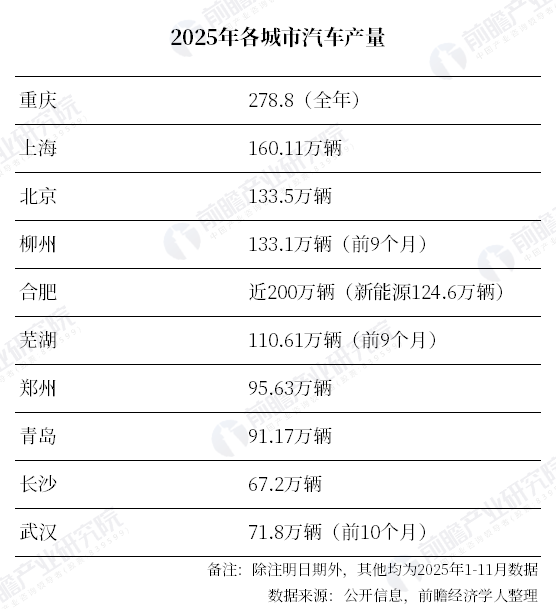
Core Insights - The article highlights that Chongqing has reclaimed its title as "China's Automobile Capital" in 2025, achieving an annual automobile production of 2.788 million units, surpassing other major cities [1][4]. Production and Market Performance - Chongqing's automobile production reached 2.788 million units in 2025, while other cities like Shanghai and Beijing produced 1.6011 million and 1.335 million units respectively [2]. - The production figures indicate a significant recovery for Chongqing, which had previously faced a decline in production due to the shift towards new energy vehicles (NEVs) [2][4]. - In the first 11 months of 2025, Chongqing's automobile exports reached 45.98 billion yuan, marking a 16.8% year-on-year increase, with electric vehicle exports alone growing by 78.9% [4]. Transition to New Energy Vehicles - In 2025, NEVs accounted for 1.296 million units of Chongqing's total production, showcasing a shift from traditional fuel vehicles to electric vehicles [7]. - The penetration rate of NEVs in China surpassed 50% in 2025, indicating a significant transformation in the automotive industry towards electrification and smart technology [5][7]. Statistical Methodology Changes - A change in the statistical methodology from "enterprise legal person location" to "production location" has provided a more accurate representation of automobile production, benefiting cities like Chongqing that focus on local production [8]. Strategic Planning and Policy Initiatives - Chongqing's success is attributed to its proactive policies aimed at upgrading the automotive industry, including the introduction of guidelines for the development of NEVs and smart connected vehicles [9][10]. - The city has established a comprehensive framework for the development of the smart connected vehicle industry, focusing on both NEVs and intelligent networking [10]. Infrastructure and Ecosystem Development - The "Super Charging City" initiative aims to alleviate consumer anxiety regarding charging infrastructure, with an investment of 10 billion yuan to build over 1,200 supercharging stations and 80,000 charging piles by the end of 2025 [13]. - This initiative creates a feedback loop between manufacturing and consumer experience, enhancing product competitiveness through data-driven improvements [13]. Future Trends and Focus Areas - The article emphasizes the importance of high-level autonomous driving and software architecture as key areas for future development in the automotive industry [14][16]. - The need for domestic substitution of core components, such as SiC power semiconductors and high-precision MEMS sensors, is highlighted as a critical challenge for the industry's high-quality development [19].