绿色转型

Search documents
以文明对话架起理解之桥(国际论坛)
Ren Min Ri Bao· 2025-11-12 22:19
Core Insights - The Spanish-speaking countries are increasingly adopting an open and rational approach towards understanding China, reshaping their relationships with the world while engaging in dialogue with China [2][5] Group 1: Development of Chinese Studies - Over the past 20 years, Chinese studies in Spanish-speaking countries have matured and diversified, with universities and research institutions in Spain, Mexico, Argentina, Chile, and Colombia establishing Chinese research centers and related degree programs [2][3] - The focus of Chinese studies has expanded from language and history to include politics, economics, law, international relations, communication, and culture, forming a systematic body of knowledge [2][3] - The year marks the 20th anniversary of the comprehensive strategic partnership between Spain and China, leading to strengthened academic and research cooperation characterized by a multidisciplinary approach [2][3] Group 2: Academic and Cultural Exchange - Increased economic ties have fostered cultural and educational exchanges, with more Spanish-speaking youth studying in China through scholarship programs and expanding collaborations between Confucius Institutes and universities [3][4] - Joint research, international forums, and collaborative publications are on the rise, laying the foundation for a sustained academic network [3][4] - Current research topics of interest include Chinese-style modernization, international relations, digital economy, green transformation, rule of law, and social governance, reflecting a diverse academic focus [3][4] Group 3: Independent Narratives and Methodologies - Spanish-speaking countries are striving to move away from reliance on Anglo-American academic paradigms, aiming to construct their own distinctive "Chinese narrative" that emphasizes historical connections, social equity, and civilizational dialogue [4] - There is a growing recognition that understanding China's development path and governance concepts should incorporate local cultural traditions and humanistic spirit [4] - The potential for growth in Chinese studies in Spanish-speaking countries is significant, with emerging research areas such as digital transformation, sustainable development, artificial intelligence ethics, and global governance [4][5] Group 4: Generational Shift and Global Civilizational Initiative - A generational shift is evident, with younger scholars in Spanish-speaking countries increasingly viewing China as a partner in addressing global challenges rather than a distant entity [5] - The global civilization initiative proposed by China offers a new platform for equal dialogue among civilizations, aligning well with the cultural traditions of Spanish-speaking countries [5] - The historical experience of multicultural coexistence in Spanish-speaking countries enhances their understanding of the necessity for civilizational mutual learning [5]


越秀资本(000987) - 2025年11月12日投资者关系活动记录表
2025-11-12 12:48
Financial Performance - In the first three quarters of 2025, the company achieved a net profit attributable to shareholders of 3.01 billion CNY, a year-on-year increase of 75.13% [1] - The net profit for the third quarter alone was 1.45 billion CNY, representing a year-on-year growth of 106.53%, marking a historical high in operational performance [1] - The significant growth is attributed to the successful green transformation, continuous growth in installed capacity of the new energy business, and improved investment management performance [1] New Energy Business - In the first half of 2025, the subsidiary Yuexiu New Energy generated operating revenue of 2.199 billion CNY, a year-on-year increase of 122.37%, and a net profit of 516 million CNY, up 133.80% [2] - The new energy financing leasing business focused on solar, wind, and energy storage, with new investments totaling 5.679 billion CNY, promoting diversification in the new energy product system [2] Investment Management Strategy - The investment management business adheres to a strategy of "industry alliance + research-driven," focusing on high-end equipment manufacturing, semiconductors, new energy, and biomedicine [3] - Since 2025, the company has added 11 new IPO projects, including 7 strategic placements, which are expected to yield significant returns [3] Shareholder Returns - The company has consistently prioritized investor returns, having distributed a total of 6.786 billion CNY in cash dividends since its listing in 2000, with a cash dividend rate of 37.04% for 2024 [4] - In 2025, the company introduced a mid-term dividend plan, distributing 450 million CNY (before tax) on November 12 [4] - Future plans include enhancing core competitiveness and maintaining a stable profit distribution policy while addressing sustainable development and investor interests [4]

A股近日大幅震荡原因,前景如何?|资本市场
清华金融评论· 2025-11-12 12:13
Group 1 - The recent significant adjustments in A-shares are attributed to large funds rebalancing their portfolios, with the Shanghai Composite Index consolidating around the 4000-point mark, indicating potential upward momentum in the future [3][4]. - Data shows that by Q3 2025, large funds increased their positions in the pan-technology sector by over 10%, reaching nearly 40%, a historical high that is unsustainable, prompting a necessary rebalancing [5]. - Historical trends indicate that large funds have previously "herded" into sectors, such as bank stocks in 2009, which were considered growth stocks due to rapid economic expansion [5]. Group 2 - The "anti-involution" stocks and resource stocks (such as precious metals) are highlighted as sectors that have not been discredited, with the Chinese government's focus on high-quality development supporting this trend [7]. - Precious metals like gold are expected to benefit from a weakening dollar and increased demand due to geopolitical risks, while copper is seen as essential for green transformation, with demand surging from sectors like AI and electric vehicles [7][8]. - Aluminum demand is also projected to rise due to its applications in lightweighting for electric vehicles and solar energy, with supply constraints leading to a bullish outlook on prices [7][8]. Group 3 - Recent economic data, particularly the positive CPI figures, have raised expectations for economic recovery, leading to a rebound in some consumer stocks [10]. - The long-term investment perspective emphasizes the importance of patience, as short-term market movements are often driven by emotions rather than fundamentals [10].

欧盟中国商会:81%在欧中企认为营商环境不确定性增高 但中企仍展现出强大韧性
Di Yi Cai Jing· 2025-11-12 10:21
Core Insights - The report highlights that over 80% of Chinese enterprises in Europe are experiencing increased uncertainty due to tightening EU regulations, with 81% of respondents indicating a heightened sense of uncertainty in the current business environment [1][2] - Despite these challenges, Chinese companies demonstrate strong resilience, with 53% reporting revenue growth in Europe and 62% expecting continued revenue increases in 2025 [2][4] Group 1: Business Environment and Challenges - The overall business environment for Chinese companies in Europe has been rated at 61 points for 2025, a significant decline from 73 points in 2019, indicating a continuous deterioration over six years [4][5] - 90% of surveyed enterprises believe that the EU's "de-risking" and "economic security" policies negatively impact their operations, leading to stricter investment reviews and increased market entry barriers [5][6] - The tightening of foreign direct investment review mechanisms by the EU has raised compliance costs and uncertainty for Chinese companies, with 43% of respondents adjusting their investment plans due to these reviews [6][7] Group 2: Investment and Growth Outlook - Despite the challenges, 50% of surveyed Chinese enterprises plan to increase their investments in Europe by 2025, reflecting a warming investment sentiment compared to previous years [2][4] - The report indicates that Chinese companies are increasingly focusing on greenfield investments, particularly in the electric vehicle and battery sectors, aligning with the EU's green transition strategy [6][7] Group 3: Strategic Cooperation and Future Directions - The report emphasizes the need for both sides to innovate dialogue mechanisms and deepen mutual understanding, particularly in areas like green manufacturing and high-end production [3][8] - As the 50th anniversary of China-EU diplomatic relations approaches, there is a call for enhanced cooperation across trade, technology, education, culture, and climate action to rebuild trust [8]
东华公司入选绿色转型典型案例
Zhong Guo Hua Gong Bao· 2025-11-12 04:09
Core Viewpoint - The 2025 China Petroleum and Chemical Industry Green High-Quality Development Conference highlighted exemplary cases of comprehensive green transformation, with a focus on sustainable practices in the coal chemical wastewater treatment sector [1] Group 1: Conference Highlights - The conference took place in Guangzhou from October 28 to 29, 2025, recognizing typical cases of green transformation in the industry [1] - China Chemical's Donghua Engineering Technology Co., Ltd. was awarded for its project on "Zero Discharge of Coal Chemical Wastewater and Collaborative Development of Resource Recycling," which serves as a replicable model for the industry [1] Group 2: Key Innovations of the Case - The project emphasizes a comprehensive lifecycle governance system that addresses key challenges in coal chemical wastewater treatment, achieving systematic breakthroughs from source reduction to resource regeneration [1] - Four major innovative highlights were presented: 1. Implementation of lifecycle governance through key technologies such as source resource collaboration, biological enhancement treatment, low-consumption concentration, and salt resource recovery, leading to efficient recovery of water and salt [1] 2. System coupling optimization of "water-energy-waste" technology paths aimed at low-carbon, economical, and stable operations, overcoming high energy consumption and carbon emissions through energy-saving unit processes and process coupling [1] 3. Development of an intelligent control platform with real-time configuration and smart diagnostic models to enhance system monitoring sensitivity and operational efficiency [1] 4. Realization of a resource recycling loop for "wastewater-salt-acid-base" through efficient quality crystallization and precise impurity control, converting recovered salts into industrial-grade products and further into acids and bases, promoting a shift towards resource circular utilization [1]

扬州广陵:“保姆”式服务伴企业闯过环保改造关 ,为营商环境增添“绿色动能”
Yang Zi Wan Bao Wang· 2025-11-12 03:50
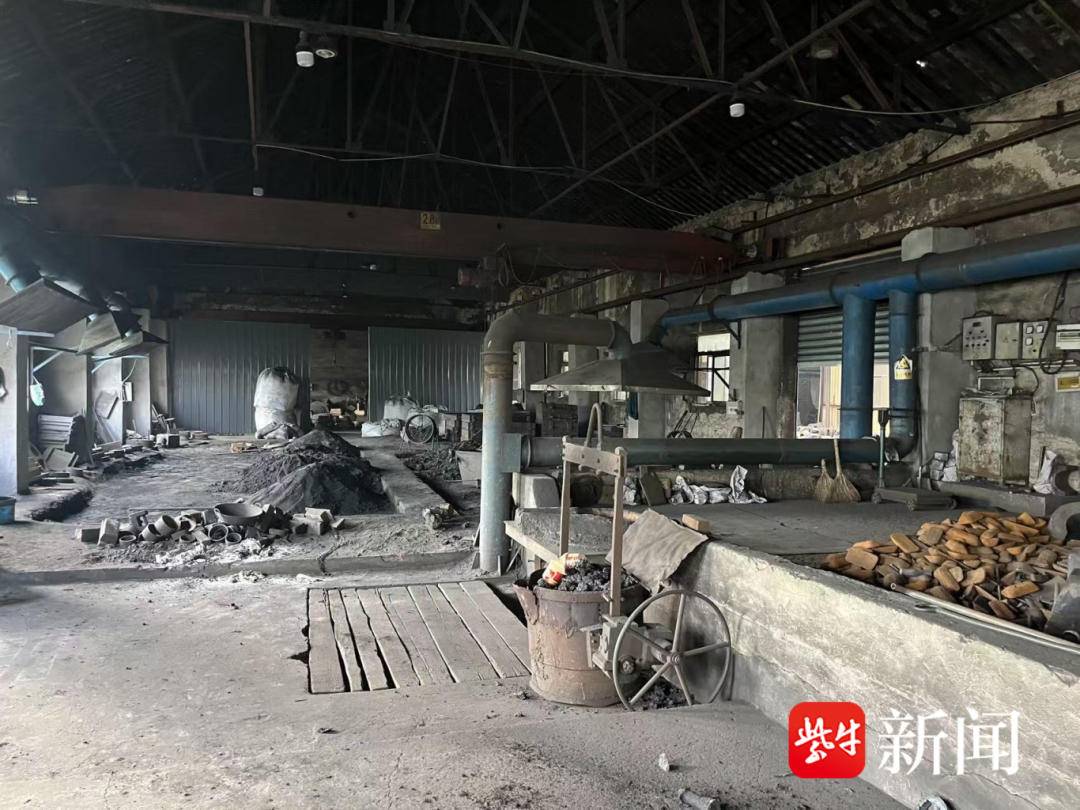
Core Insights - The article highlights the proactive approach of the Guangling Ecological Environment Bureau in assisting local foundries, particularly the Chaolong Machinery Foundry, in overcoming environmental compliance challenges while promoting green transformation [1][2][3] Group 1: Background and Challenges - The Chaolong Machinery Foundry faced multiple environmental issues, including weak control of unorganized waste gas, insufficient dust control during production, and non-compliant waste gas collection systems [1] - The foundry's challenges were exacerbated by technical shortcomings and lack of experience, which hindered timely upgrades to their environmental management systems [2] Group 2: Support and Solutions - The Guangling Ecological Environment Bureau implemented an "on-site teaching + cross-regional collaboration" model, allowing foundry personnel to learn from successful case studies, such as the Jiangsu Zijin Power Co., Ltd [2] - The bureau actively participated in the development of a tailored environmental improvement plan, ensuring compliance with the "Comprehensive Air Pollution Control Plan for the Foundry Industry" [2][3] Group 3: Implementation and Results - The bureau provided continuous support during the implementation phase, overseeing the installation of bag dust removal facilities and ensuring proper construction practices [3] - By early November, the foundry successfully completed its environmental upgrades, with operational dust removal systems and effective air collection mechanisms in place [3] Group 4: Future Directions - The Guangling Ecological Environment Bureau plans to maintain its dual focus on regulation and service, aiming to assist enterprises in achieving sustainable development while ensuring environmental protection [8]
发展绿色租赁正当其时
Jin Rong Shi Bao· 2025-11-12 02:02
Core Viewpoint - The development of green leasing is gaining momentum across the country, driven by the dual carbon goals and the need to support the real economy and promote industrial upgrades [1] Policy Framework - The "14th Five-Year Plan" emphasizes the importance of green development, aiming to integrate carbon peak and carbon neutrality goals with pollution reduction and ecological safety [1] - The central government has outlined a clear roadmap for green financing, including green equity financing and leasing, as key areas for financial tool development [3][4] Industry Trends - Green leasing is becoming a core engine for industry transformation, with total assets in the sector expected to exceed 1 trillion yuan by the end of 2024, up from less than 500 billion yuan in 2020 [4] - Financial leasing companies are expanding their service offerings beyond traditional renewable energy to include sectors like energy storage and green shipping [4] Financial Support - A significant investment of 1.7 billion yuan from Guoyin Financial Leasing is alleviating the financial burden on companies involved in energy transition projects in Inner Mongolia [2] - The financial leasing sector is encouraged to enhance its green financing capabilities, with a target for green leasing assets to account for over 30% by 2030 [4] Strategic Alignment - The leasing industry is aligning closely with national strategies, focusing on green low-carbon initiatives and technological innovation [4][5] - Companies like State Grid International Financial Leasing are committed to supporting the green transition in the energy sector, particularly in hydropower, wind, and solar energy projects [6]
大庆炼化:把精神“思想力”转化为发展“硬实力”
Zhong Guo Hua Gong Bao· 2025-11-12 01:39
Group 1 - The company emphasizes the importance of studying and implementing the spirit of the 20th Central Committee's Fourth Plenary Session as a major political task, aiming to transform the ideological strength into tangible development capabilities for building a green oil and chemical production base [1] - The company has initiated a learning wave through various methods such as centralized study sessions and self-study, ensuring that all employees understand the key points of the "14th Five-Year Plan" and the strategic designs made by the plenary session [1] - Company leaders believe in the necessity of aligning thoughts and actions with the plenary session's spirit, acting as disseminators and practitioners of the spirit, and playing a pioneering role in the company's reform and green transformation efforts [1] Group 2 - Based on the new vision outlined in the "14th Five-Year Plan," the company aims to become a leading green demonstration enterprise in the industry by promoting carbon reduction, pollution reduction, ecological expansion, and growth through a three-dimensional approach of "technology + industry + ecology" [2]
巴西临时迁都,当地居民:它是巴西最贫穷、最被遗忘的地区,我们终于被看见了
Xin Jing Bao· 2025-11-12 00:03
Core Points - The temporary relocation of Brazil's capital to Belém for COP30 highlights Brazil's commitment to addressing climate change and emphasizes the importance of the Amazon region in global environmental discussions [1][6][10] - COP30 is seen as a critical opportunity for global leaders to address climate commitments and the urgency of climate action, with expectations for significant outcomes [2][10][14] Group 1: Event Details - COP30 is scheduled from November 10 to November 21, 2023, with a high likelihood of extending beyond the planned closure date [2] - The choice of Belém as the venue is intended to bring global attention to the Amazon, which plays a crucial role in regulating the Earth's climate [3][6] - The Brazilian government aims to showcase the Amazon's significance and the need for its protection during the conference [5][6] Group 2: Local Perspectives - Local residents, such as Vinicius and his wife Melissa, express pride in Belém's recognition but also highlight the region's historical neglect and the need for development [4][5] - The local community hopes that COP30 will lead to improvements in infrastructure and urban planning, addressing long-standing issues such as traffic congestion and cultural preservation [8][9] Group 3: Climate Change Context - The Amazon rainforest is referred to as the "lungs of the Earth," and its preservation is critical for global climate stability [3][5] - Reports indicate that climate change is already impacting local weather patterns, with increasing unpredictability in rainfall and rising temperatures [8][9] - The urgency of addressing climate change is underscored by recent scientific reports indicating that the world is approaching critical climate thresholds [9][10] Group 4: Goals and Challenges of COP30 - COP30 is positioned as a "conference of implementation," focusing on actionable commitments rather than mere discussions [11][14] - Key topics include enhancing national contributions to emissions reductions, climate financing, and establishing mechanisms for a just transition for developing countries [14][15] - The conference faces challenges from geopolitical tensions and the need for multilateral cooperation to achieve climate goals [15][16]
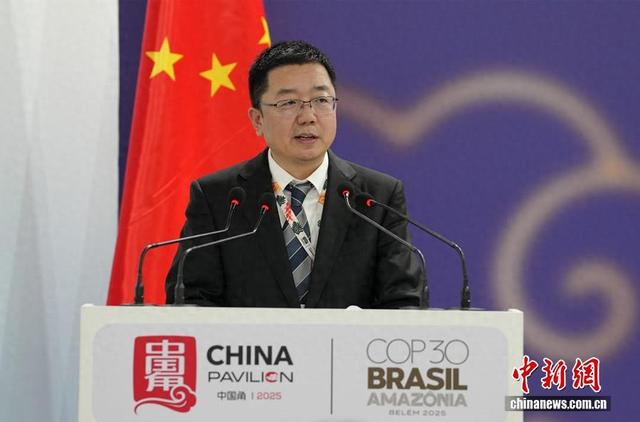
胡军:中国绿色实践为全球气候治理贡献方案
Zhong Guo Xin Wen Wang· 2025-11-11 23:47
Core Viewpoint - The report titled "Green Water and Green Mountains Create Beautiful Pictures - The Innovation and Global Significance of Ecological Civilization Construction in China" emphasizes the importance of the concept "Green water and green mountains are as valuable as mountains of gold and silver," highlighting China's contributions to global environmental governance and sustainable development [1][3][8]. Group 1: China's Contributions to Renewable Energy - In 2024, China is expected to contribute nearly 64% of the 585 GW of new global renewable energy capacity, maintaining its position as the world's leader in installed capacity for solar and wind energy for the past decade [4]. - China exports approximately 60% of the world's wind power equipment and 70% of solar components, significantly reducing carbon emissions by about 4.1 billion tons during the 14th Five-Year Plan period [4]. Group 2: Ecological Economic Models - The "Protect Green for Gold" model emphasizes that ecological protection and restoration can lead to economic returns through government-led ecological compensation and policy incentives, as demonstrated by Guangzhou's investment of 488 million yuan in wetland restoration [5]. - The "Gather Green for Gold" model focuses on developing green industries through technological innovation and brand building, as seen in Daxing'anling's cessation of commercial logging and promotion of tourism, resulting in a projected forest carbon storage of approximately 1.72 billion tons by 2024 [7]. - The "Borrow Green for Gold" model promotes the integration of ecological resources into market circulation, exemplified by Anji's creation of a carbon asset package from its bamboo forest resources, benefiting 167 villages and 51,000 households [7]. Group 3: Global Collaboration and Sustainable Development - The report serves as a systematic summary of the "Green water and green mountains" concept and China's practices, aiming to share China's story and solutions with the world, advocating for collaborative efforts in high-quality development and environmental protection [8].