
人工智能泡沫

Search documents
ASIC终于崛起?
半导体行业观察· 2025-11-28 01:22
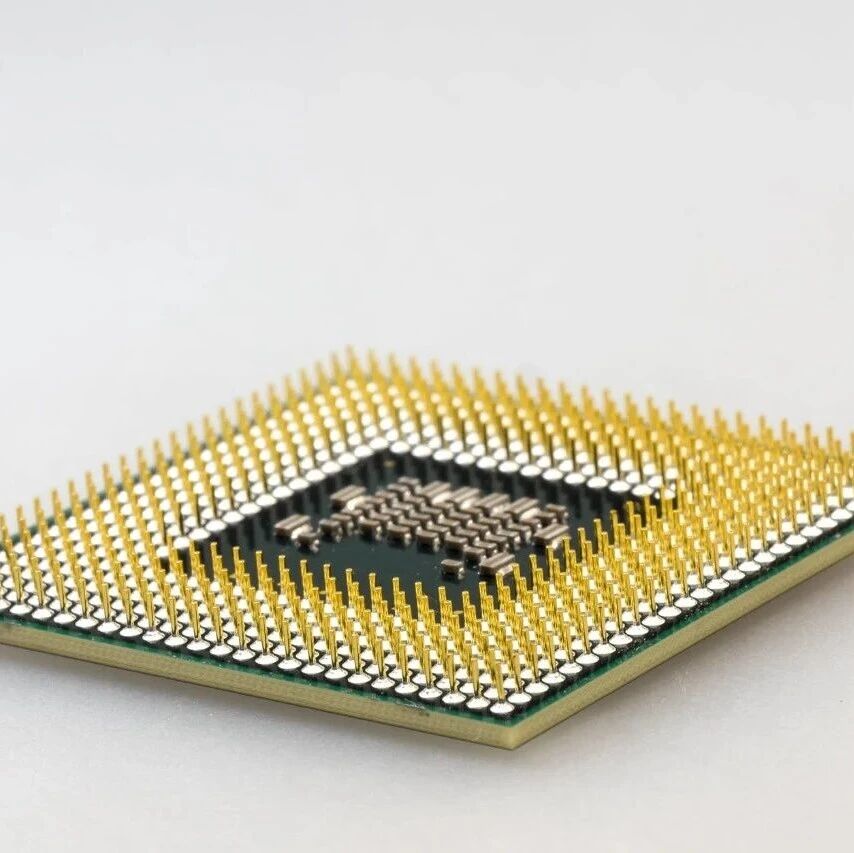
Core Insights - Nvidia's GPUs dominate the AI chip market with a 90% share, but competition is increasing as tech giants develop custom ASICs, threatening Nvidia's leadership [1][3] - The shift from "training" to "inference" in AI development favors more energy-efficient chips like TPUs and NPUs over traditional GPUs [5][6] Group 1: Nvidia's Market Position - Nvidia's GPUs are priced between $30,000 to $40,000, making them expensive and contributing to Nvidia becoming the highest-valued company globally [1] - Major tech companies are moving towards developing their own chips, indicating a potential decline in Nvidia's dominance in the AI sector [1][3] Group 2: Custom AI Chips - Google's TPU, designed specifically for AI, outperforms GPUs in certain tasks and is more energy-efficient, leading to lower operational costs [3][5] - Companies like OpenAI and Meta are investing in custom chips, with OpenAI planning to produce its own chips in collaboration with Broadcom [3][5] Group 3: Economic Factors - The cost of installing Nvidia's latest GPUs is significantly higher than that of Google's TPUs, with estimates of $852 million for 24,000 Nvidia GPUs compared to $99 million for the same number of TPUs [5] - The emergence of cheaper custom chips is expected to alleviate concerns about an AI investment bubble [5] Group 4: AI Ecosystem Changes - The AI ecosystem centered around Nvidia is likely to change as large tech companies collaborate with chip design firms, creating new competitors [6] - The current manufacturing landscape, dominated by TSMC for Nvidia chips, may shift as companies develop their own semiconductor solutions [6] Group 5: Chip Types - CPUs serve as the main processing units but are slower compared to GPUs, which can handle multiple tasks simultaneously [8] - TPUs are specialized for AI tasks, while NPUs are designed to mimic brain functions, offering high efficiency for mobile and home devices [8]


美联储12月降息预期再度升温
财富FORTUNE· 2025-11-27 13:05
Core Viewpoint - The article discusses the shifting expectations regarding the Federal Reserve's interest rate decisions, particularly the increasing likelihood of a rate cut in December, driven by changing economic indicators and comments from key Federal Reserve officials [1][3][4]. Group 1: Market Reactions - Asian stock markets declined, European markets remained flat, while U.S. markets showed resilience, fueled by renewed hopes for a Federal Reserve rate cut in December [1]. - The probability of a December rate cut by the Federal Reserve has risen to 75.5%, according to speculators [2]. Group 2: Economic Indicators - Recent comments from John Williams, President of the New York Federal Reserve, suggest a potential rate cut due to a cooling labor market and reduced inflation risks [3]. - The U.S. government shutdown has complicated the collection of employment data, but analysts believe the labor market is weakening, as indicated by rising unemployment rates and declining job creation [5]. Group 3: Analyst Predictions - Goldman Sachs reports that the delayed employment data may confirm a 25 basis point rate cut at the upcoming Federal Open Market Committee (FOMC) meeting [5]. - Analysts from Pantheon Macroeconomics assert that Williams' comments strongly indicate a forthcoming rate cut, given his historical alignment with majority opinions within the FOMC [5].
盛宝集团:进入年底,股市可能会横盘或小幅上涨
Jin Rong Jie· 2025-11-27 09:27
Core Viewpoint - Asian stocks rose on Thursday due to increased expectations of interest rate cuts by the Federal Reserve, which positively impacted the market's response and alleviated concerns over an artificial intelligence bubble [1] Group 1: Market Response - The stock market reacted positively to the renewed expectations of interest rate cuts by the Federal Reserve [1] - This response is seen as a factor that helps to cool recent worries regarding the artificial intelligence sector [1] Group 2: Future Market Outlook - As the year-end approaches, the market is expected to either consolidate or experience slight gains [1] - The combination of the Federal Reserve's interest rate cut expectations and strong seasonal factors makes it difficult to predict a bearish outlook for December, with a "Santa Claus rally" remaining a strong possibility [1]
美股感恩节休市,英国股汇承压,降息预期升温下美元走软,加密货币反弹
Hua Er Jie Jian Wen· 2025-11-27 08:20
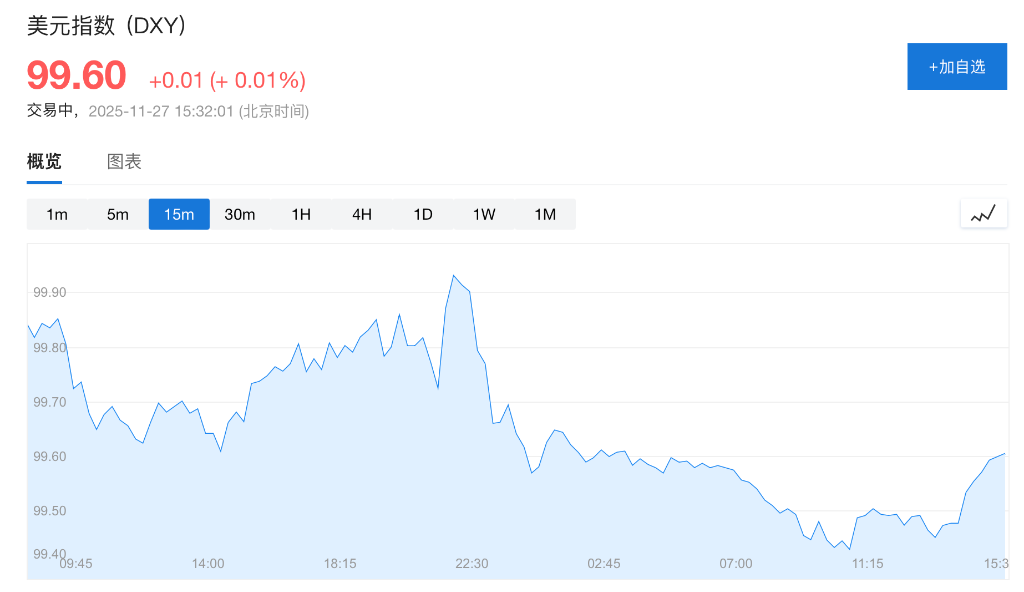
Group 1 - The global stock market is recovering as expectations for a Federal Reserve interest rate cut rise, and concerns over an AI bubble have subsided [1] - The UK budget report revealed a fiscal buffer increase to £22 billion and a significant GDP growth downgrade to 1.4% for 2026, causing volatility in the GBP [1] - Morgan Stanley has ended its bullish stance on the GBP, suggesting that the currency's appeal is diminishing due to a lack of local economic drivers and a near-zero correlation with the stock market [1] Group 2 - The Nikkei 225 index closed up 1.2% at 50,167.10 points, while the Korean Composite Index rose 0.7% [5] - The GBP/USD exchange rate remained stable at 1.3245, and the US dollar index was flat at 99.596 [5] - Silver prices increased by nearly 0.7% to $53.69 per ounce, while gold prices fell by 0.05% to $4,151.69 per ounce [5] Group 3 - The Japanese yen remains weak despite verbal intervention from Prime Minister Fumio Kishida, trading at 156.22 against the US dollar [8] - Oil prices have slightly declined as the market awaits developments regarding the Russia-Ukraine situation and the upcoming OPEC+ meeting [10]
对话硅谷风投TSVC:AI泡沫的开始,也是下一轮生产力革命的萌芽
Di Yi Cai Jing· 2025-11-26 10:49
Core Insights - The current AI market is perceived to be in a bubble phase, with many projects exhibiting inflated valuations and mislabeling issues [1][4] - OpenAI has been a catalyst for the AI spending surge, signing deals worth approximately $1 trillion for computational capabilities, while its subscription revenue from millions of customers is only $10 billion this year [2][5] - The U.S. stock market has seen a significant increase in value, with a $21 trillion rise since the launch of ChatGPT, driven largely by a handful of companies [2][5] Market Dynamics - The AI infrastructure companies have experienced a surge in stock prices, but their future is now closely tied to OpenAI's performance [2][5] - Despite concerns about high capital expenditures and low returns, the demand for computational power remains strong, with cloud service providers (CSPs) reporting potential revenue increases with capacity expansion [5][6] - Companies like CoreWeave, which focus on AI and high computational needs, have seen significant stock volatility, with a recent drop of nearly 45% despite a 99% increase over the past year [5][6] Investment Trends - Investors are becoming more stringent, leading to sell-offs of AI companies that exhibit high capital expenditures, elevated valuations, and weak competitive advantages [5][6] - The AI ecosystem is facing scrutiny regarding its sustainability, especially as companies like CoreWeave rely heavily on Nvidia's supply chain and face challenges in maintaining revenue guidance [6][7] Technological Challenges - The current trend of scaling AI models through increased computational resources is facing limitations, similar to historical computing challenges [7][8] - The need for new architectures beyond mere resource accumulation is emphasized, as existing models encounter physical and economic constraints [8][9] Future Outlook - The debate between "AI boomers" and "AI doomers" reflects differing perspectives on the impact of AI on jobs and society [9][10] - The evolution of labor dynamics is anticipated, with AI expected to replace repetitive tasks while creating opportunities for more creative and value-added roles [9][10]
转型撰稿人重出江湖!“大空头”伯里开博炮轰AI泡沫:英伟达(NVDA.US)就是当年思科(CS...
Xin Lang Cai Jing· 2025-11-25 09:16
Core Insights - Michael Burry, known for his successful shorting of the U.S. subprime mortgage crisis, has launched a paid Substack service focusing on financial markets while expressing skepticism about the current AI hype [1][2] - Burry's Scion Asset Management has officially terminated its registration, interpreted as a rational exit from a high-valuation market, although he clarified he is not retiring and is managing a personal fund [1] - Burry draws parallels between the current AI boom and the 1990s internet bubble, suggesting that history is repeating itself [2] Company and Industry Analysis - Burry's first article on his Substack discusses his early investment interests and compares the current AI hype to the internet bubble, indicating a potential overvaluation in the market [2] - Major tech companies, including Microsoft, Google, Meta, Amazon, and Oracle, are projected to invest nearly $3 trillion in AI infrastructure over the next three years, with Nvidia positioned as a central player in this trend [3] - Burry criticizes the current investment climate for ignoring profitability concerns and overestimating growth potential based on the assumption that technology will reshape the economy [3] - Burry has established short positions against Nvidia and Palantir, with a clear stance against Nvidia's accounting practices, which he believes may inflate reported profits [4] - He estimates that accounting maneuvers by cloud service providers could understate depreciation expenses by approximately $176 billion from 2026 to 2028, leading to inflated profits across the industry [4] - The debate over whether an AI bubble exists has polarized business leaders, with some warning of irrational exuberance while others, including Nvidia's CEO Jensen Huang, remain optimistic about the technological revolution driving real demand [5]
转型撰稿人重出江湖!“大空头”伯里开博炮轰AI泡沫:英伟达(NVDA.US)就是当年思科(CSCO.US)
智通财经网· 2025-11-25 09:04
Core Viewpoint - Michael Burry, known for his successful shorting of the U.S. subprime mortgage crisis, has launched a paid Substack service focusing on financial markets, expressing skepticism about the current AI hype, particularly targeting Nvidia [1][2]. Group 1: Transition from Asset Management to Paid Insights - Burry's Scion Asset Management officially terminated its registration on November 10, with plans to liquidate the fund and return capital to investors due to a prolonged divergence between market valuations and his assessments [2]. - Despite the fund's closure, Burry clarified he is not retiring and is instead focusing on a personal fund and his new Substack column titled "Cassandra Unchained," which has attracted over 21,000 subscribers at a monthly fee of $39 [2]. Group 2: Historical Parallels and AI Bubble Concerns - Burry compares the current AI boom to the late 1990s internet bubble, suggesting that investors are overly optimistic about exponential growth while ignoring profitability concerns [3][4]. - He highlights that major tech companies, including Microsoft, Google, and Nvidia, are committing nearly $3 trillion to AI infrastructure over the next three years, reminiscent of past speculative bubbles [4]. - Burry recalls past assurances from Federal Reserve officials, drawing parallels between current statements about AI profitability and previous reassurances about housing market stability before the subprime crisis [3][4]. Group 3: Short Positions and Accounting Critiques - Burry's Scion Asset Management has established short positions against Nvidia and Palantir, with the latter's short position being approximately $9.2 million, contrary to market rumors [5]. - He criticizes major cloud service providers for manipulating accounting practices by extending asset lifespans, potentially inflating reported profits by an estimated $176 billion from 2026 to 2028 [6]. - Burry questions Nvidia's recent earnings report, arguing that its supporters overlook the eventual exposure of accounting and economic realities [6]. Group 4: Diverging Opinions Among Business Leaders - The debate over whether an AI bubble exists has polarized top business leaders, with some, including OpenAI's CEO and Microsoft co-founder Bill Gates, warning of irrational exuberance similar to past tech bubbles [7]. - Conversely, optimistic leaders from hardware supply and core development sectors, such as Nvidia's CEO Jensen Huang, believe the current investment surge is driven by genuine technological demand [7]. - Figures like Meta's CEO Mark Zuckerberg and Amazon's founder Jeff Bezos maintain a cautious stance, acknowledging signs of market overheating while asserting that long-term value will materialize as technology progresses [7].
“十五五”如何布局?黄奇帆、林毅夫、朱民、吴晓求、张军发声
Zheng Quan Shi Bao· 2025-11-25 06:37
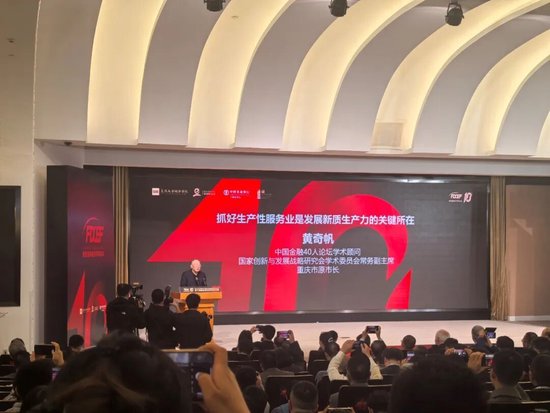
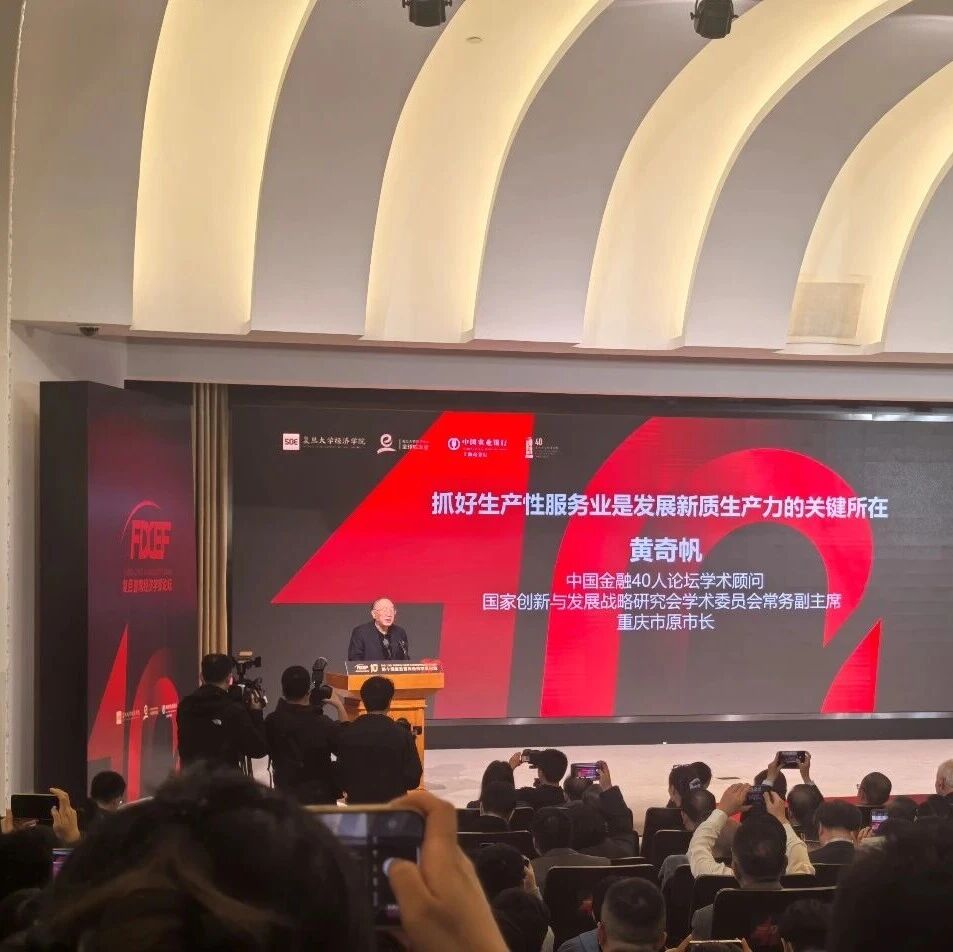
Group 1: Economic Strategy and Development - The 14th Five-Year Plan emphasizes the need for a new blueprint and new momentum for China's economic growth, with discussions led by economists like Huang Qifan and Lin Yifu [1] - Huang Qifan highlights the importance of developing the productive service industry as a key driver for GDP growth and overall productivity, suggesting that it should be a focus during the 14th Five-Year Plan [3][4] - Lin Yifu warns of a potential AI bubble in the U.S. during the 14th Five-Year Plan period, drawing parallels to the 2008 financial crisis, and suggests that China should aim for an 8% annual growth rate until 2035 [5][6] Group 2: Manufacturing and Trade - Zhu Min stresses the need for China to enhance product quality and build a new type of manufacturing industry, moving from labor-intensive to capital and technology-intensive products [7][8] - The global trade structure is changing, and China is diversifying its exports, focusing on capital and technology-intensive products rather than labor-intensive ones [7] - The goal is for manufacturing to remain a significant part of the economy, with a target of 25% by 2040, while the productive service sector should rise to 35%-40% of GDP [4] Group 3: Capital Market Reforms - Wu Xiaoqiu calls for a restructuring of the capital market ecosystem to better protect investor interests, moving away from a focus solely on financing [9][10] - The reform aims to increase the presence of high-tech companies in the stock market, with expectations that 35 out of the top 50 listed companies will be high-tech by the end of the 14th Five-Year Plan [9] - There is a push for greater transparency and improved regulatory frameworks in the capital market to enhance liquidity and attract larger investments [9] Group 4: Domestic Demand and Service Trade - Zhang Jun emphasizes the need for China to reduce reliance on exports and increase domestic demand, suggesting that trade surpluses should approach zero [12] - Recommendations include lowering barriers to service trade, adjusting exchange rate policies, and increasing investment in social sectors to support domestic consumption [12]
“十五五”如何布局?黄奇帆、林毅夫、朱民、吴晓求、张军发声
证券时报· 2025-11-25 06:34
Group 1: Core Perspectives - The "14th Five-Year Plan" emphasizes the development of the productive service industry as a key driver for GDP growth and innovation in manufacturing [4] - The international economic landscape is expected to remain weak, with potential risks of an AI bubble burst in the U.S. during the "14th Five-Year Plan" period [6] - China aims to enhance its manufacturing quality and transition to a new type of manufacturing that is not only cost-effective but also high-tech [8] Group 2: Economic Strategies - The productive service industry is identified as a crucial element for improving total factor productivity, with a target for its GDP share to rise to 35%-40% by 2040 [4] - Recommendations include adopting more proactive monetary and fiscal policies to tap into China's economic growth potential, estimated at 8% annually until 2035 [6] - The need for restructuring the capital market ecosystem to prioritize investor protection and enhance market transparency is highlighted [10][11] Group 3: Trade and Domestic Demand - The strategy to reduce reliance on exports and increase domestic demand is emphasized, with a goal to bring trade surplus close to zero [13] - Suggestions include lowering market access barriers in service trade and adjusting the exchange rate to support manufacturing upgrades and consumer spending [14] - Increased investment in social welfare sectors like education and healthcare is recommended to support the domestic demand strategy [15]
彭博:为何人们对万亿美元人工智能泡沫的担忧日益加剧
彭博· 2025-11-25 05:05
Investment Rating - The report indicates a growing concern about a potential speculative bubble in the artificial intelligence (AI) sector, comparable to the dot-com bubble of the late 1990s, with significant investments pouring in without a fully validated profit model [1][5][30]. Core Insights - Investors have injected unprecedented amounts of capital into AI, with projections suggesting total expenditures could reach trillions of dollars, driven by venture capital, debt financing, and unconventional financing arrangements [5][10][19]. - Despite the bubble concerns, proponents believe AI has the potential to transform multiple industries, cure diseases, and accelerate human progress [5][6]. - Major tech companies are increasingly relying on debt to support their unprecedented spending in AI, with a forecasted total of $108 billion in debt raised by five major players by 2025, more than three times the average of the past nine years [19][20]. Summary by Sections Investment Trends - AI companies are projected to require $2 trillion in annual revenue by 2030 to meet expected demand for computational power, yet they may fall short by $800 billion [21]. - OpenAI and other leading AI startups are utilizing criticized circular financing arrangements to fund their projects, raising concerns about the sustainability of their business models [11][12]. Market Dynamics - The AI sector is experiencing a surge in capital expenditures, with major companies like Meta, Alphabet, Amazon, and Microsoft significantly increasing their investments [18][19]. - The report highlights a notable increase in volatility among global tech stocks, reflecting investor anxiety over high valuations in the AI sector [6][11]. Competitive Landscape - The emergence of competitive AI models from companies like DeepSeek in China has raised alarms about the sustainability of investments in the U.S. AI market, as these models are developed at a fraction of the cost [25][35]. - Concerns about the efficiency and effectiveness of AI-generated content have been raised, with studies indicating that a significant percentage of AI projects yield no returns [23][25]. Future Outlook - Despite the risks, industry leaders remain optimistic about the long-term potential of AI, with expectations of significant economic value creation, although many companies may face substantial losses in the interim [37][38]. - The report concludes that while the AI sector is poised for growth, the current investment climate bears similarities to past market bubbles, necessitating caution among investors [30][36].