数字化转型

Search documents
黄山旅游跟踪报告高铁带动流量增长,新项目开启业绩弹性
GUOTAI HAITONG SECURITIES· 2026-03-07 13:20
Investment Rating - The report assigns a rating of "Accumulate" to the company with a target price of 14.70 yuan [5]. Core Insights - The company is expected to benefit from the ongoing development of the high-speed rail network, the launch of core projects such as the East Gate Cableway and high-end hotel renovations, and the growth potential brought by digital transformation [2][16]. - The company anticipates net profits attributable to the parent company of 302 million, 356 million, and 390 million yuan for the years 2025 to 2027, respectively, with corresponding EPS of 0.41, 0.49, and 0.54 yuan [12][16]. Financial Summary - Total revenue is projected to grow from 1,929 million yuan in 2023 to 2,408 million yuan in 2027, reflecting a compound annual growth rate (CAGR) of approximately 6.1% [4]. - Net profit attributable to the parent company is expected to decline from 423 million yuan in 2023 to 302 million yuan in 2025, before recovering to 390 million yuan by 2027 [4]. - The company’s return on equity (ROE) is projected to improve from 9.4% in 2023 to 7.1% in 2027 [4]. Growth Drivers - The opening of the Hangzhou-Chu High-Speed Railway in December 2025 and the Jin-Jian High-Speed Railway in January 2026 will significantly enhance accessibility to the Huangshan scenic area, leading to increased visitor numbers and secondary consumption [12][18]. - The East Gate Cableway, expected to open in July 2026, will increase the scenic area’s capacity and alleviate pressure on the South Gate, supporting steady growth in ticket and cableway revenues [12][35]. - The renovation of the Beihai Hotel, set to reopen in September 2025, is projected to contribute approximately 28.5 million yuan in annual net profit [12][36]. Digital Transformation - The company has established a comprehensive digital platform that includes over 60 scenic spots and 230 hotels, achieving online transaction volumes exceeding 60 billion yuan [45]. - The self-developed "Huangshan Cultural Tourism Model" has been registered, marking a significant step in the digital transformation of the tourism sector [46]. - The "AI Travel Assistant" has served over 3.5 million users, achieving a satisfaction rate of 99.97% and generating nearly 200 million yuan in transaction volume [46][50].

黄山旅游(600054):黄山旅游跟踪报告:高铁带动流量增长,新项目开启业绩弹性
GUOTAI HAITONG SECURITIES· 2026-03-07 13:04
Investment Rating - The report assigns a rating of "Accumulate" to the company with a target price of 14.70 CNY [5]. Core Viewpoints - The company is expected to benefit from the optimization of the high-speed rail network, the operation of core projects, and digital transformation, indicating promising growth potential in the future [2]. - The company anticipates net profits attributable to the parent company of 302 million, 356 million, and 390 million CNY for the years 2025 to 2027, respectively, with corresponding EPS of 0.41, 0.49, and 0.54 CNY [12][16]. Financial Summary - Total revenue is projected to grow from 1,929 million CNY in 2023 to 2,408 million CNY in 2027, reflecting a compound annual growth rate (CAGR) of approximately 6.1% [4]. - Net profit attributable to the parent company is expected to decline from 423 million CNY in 2023 to 302 million CNY in 2025, before recovering to 390 million CNY in 2027 [4]. - The company’s net asset return rate is projected to improve from 6.8% in 2024 to 7.1% in 2027 [4]. Investment Suggestions - The report emphasizes that the company is likely to release performance elasticity due to increased customer flow driven by transportation improvements and the gradual advancement of new projects [12][16]. - The opening of the East Gate Cableway in July 2026 is expected to significantly enhance the scenic area’s capacity, alleviating pressure on the main entrance and supporting steady growth in core ticket and cableway revenues [12][35]. - The renovation of the Beihai Hotel, set to reopen in September 2025, is projected to contribute approximately 28.5 million CNY in net profit annually [12][36]. Digital Transformation - The company has made significant strides in digital transformation, with the self-developed "Huangshan Cultural Tourism Model" successfully registered, marking it as the first cultural tourism model in Anhui Province [45][46]. - The "AI Travel Assistant" has served over 3.5 million users with a satisfaction rate of 99.97%, generating nearly 200 million CNY in transaction volume [46][50].
南京大动作,全面升级
盐财经· 2026-03-07 09:52AI Processing
一到年关,南京就变成了金陵。 过去的春节假期,南京城被挤得水泄不通,明孝陵的游客多得令网友感叹:"朱元璋来了都得排队。"这 座本就名满天下的六朝古都,叠加了苏超的热度、秦淮灯会的招牌,一时间满城烟火,人声鼎沸。 作者 | 张来 编辑 | 江江 视觉 | 诺言 其实,就算不是旅游旺季,南京似乎也总是在话题中心。 自从2016年,英国作家阿克罗伊德的《伦敦传》被引进,中国便掀起了一阵为城市写书立传的风潮。几 年间,北京、上海、成都纷纷有了自己的城市传记。但让人记忆最深刻的,还要属叶兆言的《南京 传》。 叶兆言《南京传》 倒不是因为《南京传》出得早。而是因为,南京这座城市的往事,实在太多,太重,也太复杂了。如果 非要把城市当作一个人物看待,南京作为中国历史上数一数二的"天选之子",绝对充满叙事的张力。 但也正因如此,人们对南京的记忆,似乎一直停留在江南历史、秦淮灯影,却忽视了它在现代的语境 里,到底长什么模样? 今年2月初,盐财经记者走访南京,发现了一个与"金陵"意象截然不同的"新南京"。 在中国的区域经济版图里,南京的位置向来有点微妙,因其虽是省会,但远离上海大都市圈,辐射力一 直被压制。不可否认,过去几年里,江 ...



产业研究系列报告之一:供应偏紧格局未改,有色金属行业高景气延续
East Money Securities· 2026-03-07 08:02
Industry Overview - The Chinese non-ferrous metals industry is undergoing a critical transformation, shifting from scale expansion to quality and efficiency improvement, driven by technological innovation and a transition to a modern industrial system focused on green, low-carbon, and circular economy practices [8][9] - The new policy framework for 2025-2026 emphasizes quality over quantity, with annual growth targets for ten types of non-ferrous metals set at approximately 1.5%, and industry value-added growth targeted at around 5% [8][11] Supply and Demand Dynamics - Copper prices are expected to remain high in 2025, supported by resilient demand from sectors such as renewable energy and power grid investments, despite a slower growth rate in production and limited elasticity in recycled copper supply [12][19] - The overall demand for copper may increase due to its applications in construction, electricity, machinery, electronics, and transportation, with traditional sectors providing a demand floor and emerging sectors contributing to demand growth [19][12] Financial Performance - The non-ferrous metals industry has seen a significant increase in net financing, with bond issuance rising from 1,313.07 billion yuan in 2023 to an expected 1,503.36 billion yuan in 2025, alongside a net financing increase to 230.63 billion yuan, the highest in five years [32][37] - The profitability of the industry has improved, with total profits rising from 35.37 billion yuan at the end of 2020 to 124.87 billion yuan by the end of 2025, and the sales profit margin reaching 40.48% [29][32] Company Insights - China Nonferrous Mining Group has established a complete industrial chain covering resources, smelting, new materials, and engineering and trade, with strong strategic resource security capabilities [32][37] - The company's financial structure is robust, with significant improvements in gross and net profit margins, and a notable recovery in return on equity (ROE) [32][37] Bond Market Trends - The bond yield for China Nonferrous Mining Group is relatively high, with four-year bonds yielding approximately 1.99%-2.03%, providing a competitive advantage in a low credit spread environment [37] - The overall trend shows a narrowing of credit spreads for the company, indicating an improvement in its relative credit quality compared to other entities in the sector [37]
PRADA(01913) - 2025 Q4 - Earnings Call Transcript
2026-03-05 14:02
Financial Data and Key Metrics Changes - The Prada Group reported net revenues of EUR 5.7 billion, an increase of 9% compared to fiscal year 2024 at constant FX, and an organic growth of 8% year-over-year, marking the fifth consecutive year of growth at the group level [20][21] - Retail sales totaled EUR 5.1 billion, up 8% organically versus fiscal year 2024, and up 28% versus fiscal year 2023 at constant FX [21] - EBIT adjusted reached EUR 1.32 billion with a margin of 23.2%, including the dilutive impact of Versace [21][27] - Net income increased by 2% to EUR 852 million compared to fiscal year 2024 [27] Business Line Data and Key Metrics Changes - Prada brand closed the year at -1%, with Q4 showing sequential improvement, particularly in Mainland China, Korea, Japan, and the Americas [24] - Miu Miu retail sales grew by 35% to EUR 1.6 billion, with Q4 sales up by 20% against a high base of +84% in 2024 [25] - Church's brand continued to show positive trajectory driven by like-for-like sales [25] Market Data and Key Metrics Changes - Asia Pacific region grew by 11%, with Q4 performance in line with Q3 despite higher comps [26] - Europe saw a 5% increase over the year, with softer trends in the second half due to strong multi-year comps and lower tourism [26] - The Americas experienced consistent double-digit growth, with sales up 18% [26] - Japan delivered growth of 3%, with improvements in Q4 driven by local demand and increased traveler flows [26] Company Strategy and Development Direction - The company is focused on enhancing product intrinsic value and upgrading digital technology and AI tools to improve customer engagement and store hospitality [6][8] - The acquisition of Versace is seen as a new chapter, with plans for channel repositioning towards quality and full-price sales [30][32] - The company aims to maintain a steady profitability while investing in strategic areas such as digital evolution and retail enhancements [8][28] Management's Comments on Operating Environment and Future Outlook - Management acknowledged the challenging environment in 2025 but expressed confidence in the company's ability to navigate through it, expecting solid performance in 2026 [4][10] - The company anticipates a normalization of growth, particularly for Miu Miu, with expectations of single-digit growth in the first half of 2026 [10][38] - Management highlighted the importance of agility and efficiency in the current market landscape [41] Other Important Information - The company completed the acquisition of Versace on December 2, 2025, consolidating one month of contribution from the brand into its financials [20] - The gross margin reached 80.3%, up by 50 basis points, driven by operating leverage and channel mix [27] - The board proposed a dividend per share of EUR 0.166, maintaining a stable payout ratio of 50% [29] Q&A Session Summary Question: Expectations for Prada's growth in 2026 - Management refrained from providing specific guidance but indicated that if conditions are favorable, double-digit growth for Miu Miu is possible [46][48] Question: Versace's team and store rationalization - The team is a mix of internal and external hires, with a focus on full-price retail and rationalization of the outlet channel [51][52] Question: Revenue contraction for Versace - Expected store closures and rationalization will contribute to a mid-single-digit contraction in revenue for Versace [58][60] Question: Middle East exposure and store operations - The situation in the Middle East is evolving, with varying conditions across different countries [64] Question: Prada brand cluster trends - Significant improvement in the Chinese cluster, while European demand remained resilient [87] Question: Miu Miu's growth expectations - Cautious assumptions for growth in H1, with potential for positive surprises [90] Question: Versace's margin improvement timeline - Management believes that improvements can start to be seen from 2027, with a focus on synergies and efficiencies [96]

PRADA(01913) - 2025 Q4 - Earnings Call Transcript
2026-03-05 14:00
Financial Data and Key Metrics Changes - The Prada Group reported net revenues of EUR 5.7 billion, an increase of 9% compared to fiscal year 2024 at constant FX, and an organic growth of 8% year-over-year, marking the fifth consecutive year of growth at the group level [18][19] - Retail sales totaled EUR 5.1 billion, up 8% organically versus fiscal year 2024, and up 28% versus fiscal year 2023 at constant FX [19] - EBIT adjusted reached EUR 1.32 billion with a margin of 23.2%, including the dilutive impact of Versace [19][25] - Net income increased by 2% to EUR 852 million compared to fiscal year 2024 [25] Business Line Data and Key Metrics Changes - Prada brand closed the year at -1%, with Q4 showing sequential improvement, particularly supported by Mainland China, Korea, Japan, and the Americas [21] - Miu Miu retail sales grew by 35% to reach EUR 1.6 billion, with Q4 sales up by 20% against a high comp of +84% in 2024 [22][23] - Church's brand continued on a positive trajectory driven by like-for-like sales [23] Market Data and Key Metrics Changes - Asia Pacific region showed growth of +11%, +10% organic, with Q4 performance in line with Q3 [24] - Europe reported a growth of 5% over the year, with softer trends in the second half due to strong multi-year comps and lower tourism [24] - The Americas experienced consistent double-digit growth, with sales up 18%, +15% organic, driven by local demand [24] - Japan delivered growth of +3%, with improvements in Q4 driven by solid local demand and increased traveler flows [24] Company Strategy and Development Direction - The company is focused on enhancing digital capabilities and hospitality standards, investing in strategic digital plans and AI tools to improve product value and customer engagement [5][6] - The acquisition of Versace is seen as a new chapter, with plans for creative leadership changes and a focus on quality and full-price sales [28][30] - The company aims to maintain a steady profitability while investing in brand desirability and awareness [6][19] Management's Comments on Operating Environment and Future Outlook - Management acknowledged the challenging operating environment in 2025 but expressed confidence in the company's ability to navigate through it, expecting solid performance in 2026 [3][9] - The first half of 2026 is anticipated to be more challenging for Prada, with expectations of single-digit growth, while Miu Miu is expected to achieve double-digit growth if conditions allow [9][44] - Management emphasized the importance of agility and efficiency in the current market landscape [40] Other Important Information - The company completed the acquisition of Versace on December 2, 2025, consolidating one month of contribution from the brand into its financials [18] - CapEx for fiscal year 2025 was EUR 620 million, with continued investments in retail and technology [26] - The board proposed a dividend per share of EUR 0.166, maintaining a stable payout ratio of 50% [27] Q&A Session Summary Question: Expectations for Prada's growth in 2026 - Management refrained from providing specific guidance but indicated that if conditions are favorable, double-digit growth for Miu Miu is possible [44][45] Question: Versace's team and store rationalization - The team is a hybrid of internal and external hires, with a focus on full-price retail and rationalization of the outlet channel [50][51] Question: Revenue contraction for Versace - Management confirmed expectations for mid-single-digit contraction at constant FX for Versace, with efforts to limit operating losses to a double-digit figure [59][60] Question: Store openings and closures - Prada expects to close more stores than it opens in 2026, while Miu Miu plans to add 5-10 stores [80] Question: Prada brand cluster trends - Significant improvement in the Chinese cluster, while European demand remained resilient, and North American sales showed positive growth [86]
中国银行保险报 | 中国东方旗下中华人寿前端基础服务平台破局数字化转型
Xin Lang Cai Jing· 2026-03-05 12:23
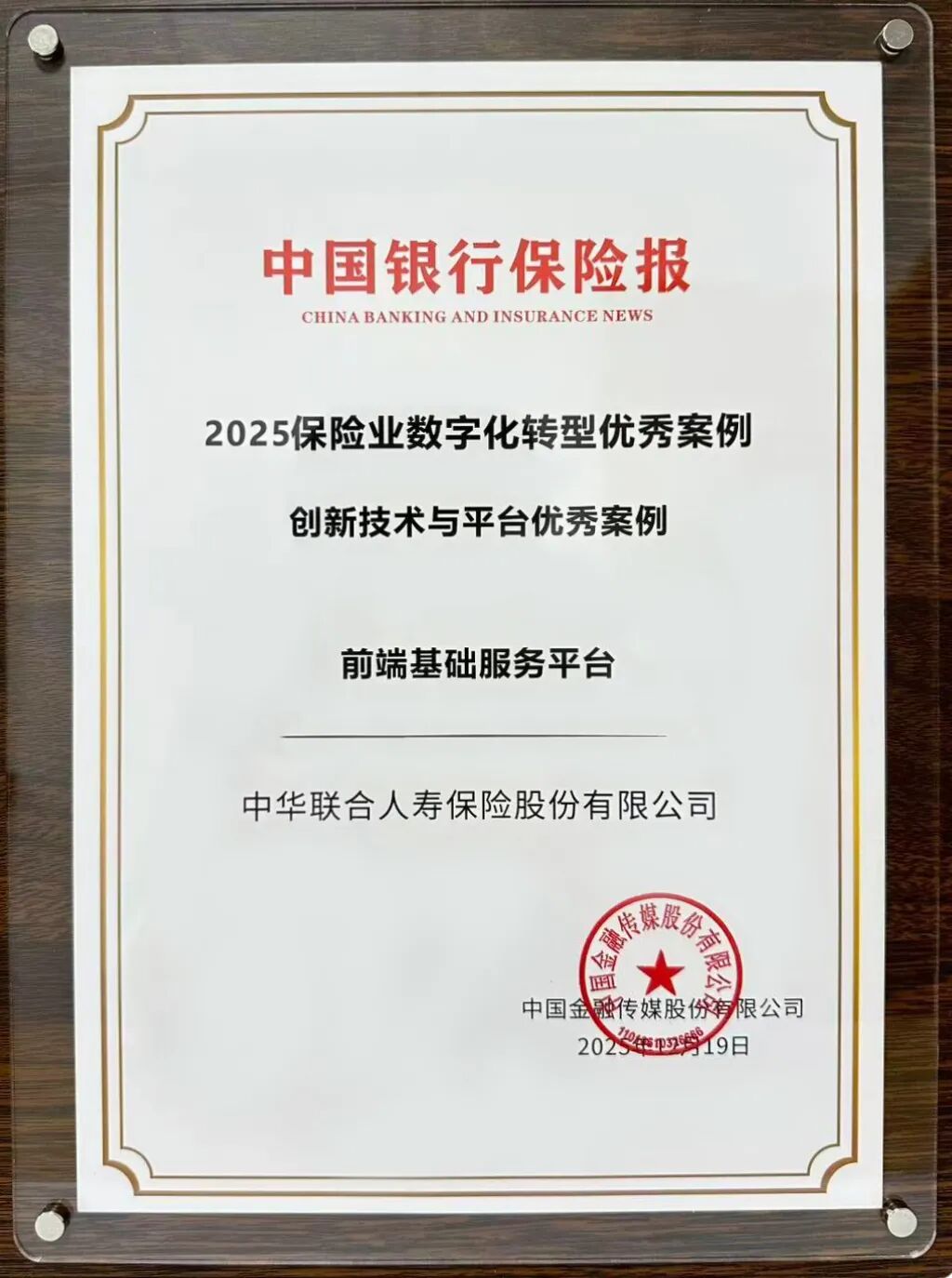
Core Insights - The core achievement of China United Life Insurance Co., Ltd. is the successful development of its "Front-End Basic Service Platform," which has earned two industry awards for innovation in digital transformation [1][10]. Industry Context - The insurance industry is undergoing a deep transformation driven by data and technology, with AI, large models, and big data increasingly integrated into product design, marketing, underwriting, and claims management [3][12]. - Despite advancements, insurance companies face challenges in data governance, system integration, and customer experience optimization [3][12]. Challenges Faced - The motivation behind the development of the Front-End Basic Service Platform stems from the widespread issue of "digital debt" within the insurance sector, particularly for companies that have been established for some time [4][13]. - As business scales transition from startup to growth phases, the complexity of front-end services such as sales, underwriting, and claims increases significantly, while outdated systems hinder efficiency and data sharing [4][13]. - The existing "siloed" system architecture leads to high operational costs, prolonged development cycles, and difficulties in launching innovative products that require cross-system collaboration [4][13]. Strategic Response - In response to these challenges, the company opted to build a new, unified "Front-End Basic Service Platform" rather than patching existing systems, aiming to resolve core issues of system fragmentation and data inaccessibility [5][14]. - The platform's development began in 2023, focusing on upgrading front-end sales and service systems to enhance business support capabilities and eliminate service barriers [5][14]. Platform Architecture - The platform employs a three-layer design philosophy centered on "business decomposition and architectural layering," standardizing widely used capabilities across various business scenarios [6][15]. - It integrates 51 tool capabilities into 13 categories, providing standardized APIs and components, which significantly reduces development pressure across business lines [6][15]. - The platform utilizes a SpringCloud microservices architecture, establishing a unified technical stack and interface standards, which enhances overall efficiency and security [6][15]. Service Integration - The platform supports diverse service integration methods, facilitating smooth connections between new and legacy systems and easing collaboration with third-party channels [7][16]. - This flexibility reduces technical barriers and costs for channel expansion, transforming the technical foundation into a competitive advantage for business ecosystem growth [7][16]. Value Realization - The establishment of the Front-End Basic Service Platform signifies a successful transformation approach, emphasizing the importance of solidifying foundational capabilities before pursuing application innovations [8][17]. - The platform has led to reduced development costs and delivery cycles for various business systems, enabling rapid upgrades of critical systems such as online policy maintenance and unified underwriting platforms [8][17]. - The case of China United Life illustrates the challenge of transitioning from isolated technology applications to systematic capability building in the insurance industry's digital transformation [8][17]. Industry Recognition - The awards received by China United Life are seen as a validation of a pragmatic and rational transformation path within the insurance industry, highlighting the need for both innovative exploration and the dismantling of outdated systems [9][18].

中炬高新20260304
2026-03-04 14:17
Summary of Conference Call for Zhongju Gaoxin Company Overview - **Company**: Zhongju Gaoxin - **Industry**: Seasoning and Condiments Key Points and Arguments Industry and Market Conditions - In 2025, the industry faced pressure due to high channel inventory and sluggish terminal sales, leading to price inversion issues in early 2025 [2][3] - By January 2026, channel inventory levels were reduced to an ideal range of 2-3 times, with only a few products still experiencing price inversion [2][3] Business Goals and Strategies - The 2026 operational goal is to restore existing business revenue to 2023 levels, with overall targets not lower than 2024, focusing on sales quality and profit margins [2][3] - The "Five-Star Plan" was initiated to expand new business areas, particularly through the "Catering Seed Plan," which aims to enhance the catering channel by integrating chefs and dishes [2][3][8] Mergers and Acquisitions - The acquisition of Sichuan Weizhi Mei is expected to be consolidated in March, serving as a platform to enhance the Chinese seasoning business and adapt to the fast-paced content e-commerce model [2][3][8][18] Channel Management and Governance - A Market Alliance Management Committee was established to empower distributors in local price and inventory management, transitioning the company from a "manager" to a "provider of products and services" [2][3][4][17] Digital Transformation and Cost Efficiency - The company is focusing on digital transformation through the S2B2b platform to build a dedicated supply chain, aiming to maintain gross margins despite rising raw material costs [2][3][4][9] Incentive Mechanisms - A new stock incentive plan is planned for 2026, utilizing over 4 million shares of treasury stock, along with an excess profit-sharing mechanism to enhance team motivation [2][3][19] Inventory Management - As of January 2026, channel inventory was approximately 3 times, with main sales areas at 2-2.5 times and non-main sales areas at 3.8 times, indicating a positive trend in inventory management [5][6] Pricing and Profitability - The price inversion issue began during the pandemic and was exacerbated by optimistic market predictions, leading to significant adjustments in sales strategies [6][7] - By January 2026, most price inversion issues were resolved, with only a few products remaining affected [6][7] Revenue and Market Share - The company aims to recover its revenue to 2023 levels while ensuring better inventory and sales conditions [10][11] - The market share loss was attributed to insufficient follow-up during supermarket adjustments, but overall impact remains manageable due to strong consumer loyalty [10][11] Product Development and Market Adaptation - The company plans to enhance product offerings by focusing on health-oriented and functional products, as well as regional specialties through acquisitions and partnerships [11][12] Competitive Landscape - The exit of small brands in the seasoning industry may alter the competitive landscape, primarily benefiting leading brands like Haidilao and Chef Bang [12][13] Catering Channel Focus - The catering channel is identified as a critical growth area, requiring a shift in organizational capabilities to provide comprehensive solutions for dishes [13][14] Financial Outlook - The net profit margin for 2026 is expected to exceed 2024 levels, with a focus on maintaining profitability amid new business developments [15][16] Distributor Support and Management - New policies will support distributors, transitioning from a management role to a service-oriented platform, enhancing local market operations [17] Acquisition Details - The acquisition of Weizhi Mei is valued at approximately 10-12 times PE, with the agreement signed before the Spring Festival [18] Stock Incentive Plans - A new stock incentive plan is anticipated for 2026, focusing on core management and broader employee engagement [19]

高盛闭门会-电网基础设施-从全球到本地的对标分析
Goldman Sachs· 2026-03-04 14:17
Investment Rating - The report indicates a strong growth outlook for Hitachi's grid infrastructure business, with a projected investment of $6 billion globally from 2024 to 2027, focusing on the US and European markets [1][3]. Core Insights - Hitachi's grid business has shown robust performance, with sales growth of nearly 25% year-on-year in the first three quarters of 2026 and a backlog of orders amounting to $57 billion, reflecting a 30% increase year-on-year [1][2]. - The demand for power infrastructure is being driven by the rise of AI data centers, which necessitate more stable power supply systems, leading to increased demand for grid construction and equipment [2][4]. - Hitachi plans to expand its workforce significantly, with an increase in employees in the US, Europe, South America, India, and China to support its growth strategy [3][5]. - The company is adopting a localization strategy to mitigate tariff risks, with most products already produced domestically in the US [1][8]. - Hitachi's profitability is improving, with an adjusted EBITDA margin reaching 13.6%, despite rising raw material costs, due to effective cost pass-through mechanisms [5][9]. Summary by Sections Business Structure and Importance - Hitachi operates in four main segments: Digital Systems and Services, Energy, Mobility, and Connected Industries, with the Energy segment being critical, accounting for approximately 25% of sales and adjusted EBITDA [2]. Performance and Demand Drivers - The energy-related business has experienced strong sales growth, particularly in Europe, North America, and the Middle East, driven by AI and data center demands [2][4]. Capacity Expansion and Supply-Demand Dynamics - Hitachi is investing $6 billion globally to expand capacity, with significant investments in the US and Europe, while monitoring supply-demand dynamics to avoid overcapacity risks [3][4]. Market Positioning and Competition - The company maintains a cooperative relationship with Chinese transformer manufacturers, integrating their products into its HVDC systems rather than competing directly [9]. Profitability and Revenue Quality - The report highlights that while profit margins are expanding, future growth in profitability may be constrained by high capital expenditures and depreciation [5][6]. Digital Strategy and Applications - Hitachi is leveraging its digital capabilities to enhance grid operations and create sustainable revenue streams, with a focus on optimizing supply and demand through its LumaDa system [5][7]. Tariff Impacts and Responses - The company has limited exposure to tariff impacts due to its domestic production strategy in the US, allowing for better price transmission in a tight supply environment [8][9].
肯德基APP,“逼疯”顾客?
虎嗅APP· 2026-03-04 14:02
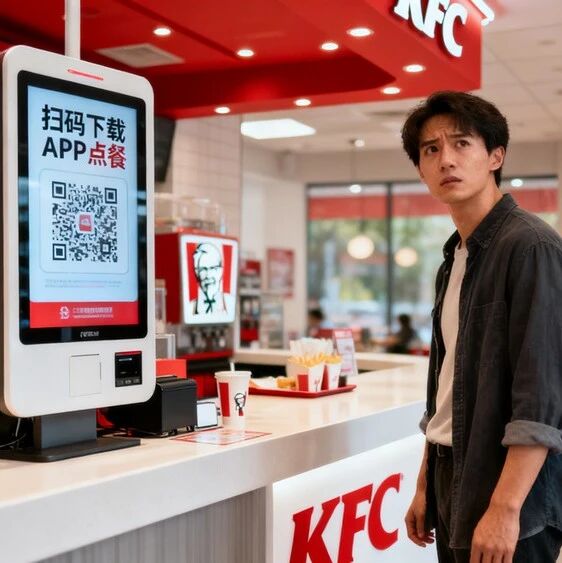
Core Viewpoint - The article discusses the challenges and consumer frustrations associated with KFC's mandatory app ordering system, highlighting the tension between digital transformation and customer experience [6][9][16]. Group 1: Consumer Experience - Many consumers express frustration over KFC's insistence on using the app for ordering, feeling coerced into downloading it to complete their purchases [7][10]. - Experiences shared by consumers indicate that attempts to order at the counter often lead to being redirected to the app, causing dissatisfaction and abandonment of purchases [10][12]. - The article notes that some customers feel that the app requirement diminishes their autonomy and complicates the ordering process, leading to negative perceptions of the brand [8][33]. Group 2: Employee Perspective - KFC employees report feeling pressured to encourage app downloads due to store performance metrics, with some locations requiring a minimum of 60% of orders to be placed through the app [13][15]. - Employees express frustration over the situation, stating that they face criticism from management if app usage targets are not met, regardless of customer satisfaction [14][16]. - The article highlights a divide between corporate expectations and frontline employee experiences, with some employees indicating that they would prefer customers to leave rather than face the pressure of app compliance [14][16]. Group 3: Business Strategy - KFC's focus on app ordering is tied to its broader digital strategy under Yum China, aiming to reduce reliance on third-party delivery platforms that charge high commissions [18][20]. - The app serves as a tool for better customer management and data collection, allowing KFC to enhance its marketing strategies and customer relationship management [21][22]. - The article emphasizes that the app's performance metrics are crucial for KFC's market positioning and investor confidence, making it a key component of the company's digital transformation narrative [23][24]. Group 4: Market Dynamics - The competitive landscape in the food service industry shows that many brands, including KFC, are leveraging app-based incentives to drive downloads and customer engagement [32]. - The article notes that while KFC offers promotions to encourage app usage, the method of enforcement has led to consumer backlash, indicating a need for a more balanced approach [33][34]. - The introduction of AI features in the app, such as the "one-sentence ordering" capability, is seen as a potential way to enhance user experience, but the core issue remains the lack of choice for consumers [29][31].