数字消费

Search documents
利好!上市公司,密集公告!
Zheng Quan Shi Bao· 2026-01-12 00:33
(原标题:利好!上市公司,密集公告!) 今日关注 近90家A股上市公司发布2025年年度业绩预告 17家净利同比预增上限超100% 两部门:4月1日起 取消光伏等产品增值税出口退税 证监会较大幅度提高证券期货违法行为"吹哨人"奖励 最高奖励100万元 重要的消息有哪些 1.全国商务工作会议:加快培育服务消费新增长点 优化消费品以旧换新政策实施 全国商务工作会议1月10日至11日在京召开。会议指出,2026年全国商务系统要重点做好八个方面工作:一是深入实施提振消费专项行动,打 造"购在中国"品牌。加快培育服务消费新增长点,释放服务消费潜力。优化消费品以旧换新政策实施,推动商品消费扩容升级。打造国际化消费 环境。发展数字消费、绿色消费、健康消费,激发下沉市场消费活力。二是健全现代市场和流通体系,推进全国统一大市场建设。加强制度保 障,优化设施载体,推动零售业创新发展,完善现代商贸流通体系,深入推进试点城市建设。推进内外贸一体化。三是推动贸易创新发展,打 响"出口中国"品牌。优化升级货物贸易,大力发展服务贸易,鼓励服务出口,创新发展数字贸易、绿色贸易,促进贸易投资一体化。四是塑造吸 引外资新优势,擦亮"投资中国"品 ...





利好!上市公司,密集公告!
证券时报· 2026-01-12 00:13
Group 1 - Nearly 90 A-share listed companies have released their 2025 annual performance forecasts, with 17 companies expecting a year-on-year net profit increase of over 100% [12] - The Ministry of Finance and the State Administration of Taxation announced the cancellation of VAT export tax rebates for photovoltaic products starting April 1, 2026, and a reduction in the VAT export tax rebate rate for battery products from 9% to 6% until the end of 2026 [4][5] - The China Securities Regulatory Commission has significantly increased the rewards for whistleblowers reporting securities and futures violations, with the maximum reward raised to 1 million yuan [6] Group 2 - The national business work conference emphasized the need to accelerate the cultivation of new growth points in service consumption and optimize the implementation of the old-for-new consumption policy [3] - The Guangzhou real estate market has shown signs of stabilization, with both transaction volume and prices increasing for eight consecutive weeks [10] - The "Tianma-1000" unmanned transport aircraft successfully completed its first flight, showcasing its capabilities for logistics, emergency rescue, and material delivery [7] Group 3 - Tongfu Microelectronics plans to raise no more than 4.4 billion yuan through a private placement to enhance packaging capacity for storage chips and other emerging applications [19] - Aerospace Chuangxin expects a net loss of approximately 220 million yuan for 2025, primarily due to insufficient revenue to cover costs and restructuring expenses [17] - Visual China reported a fair value change of 67.35 million yuan from its holdings in MiniMax, which represents about 56.53% of its 2024 net profit [16]

商务部:今年将加快培育服务消费新增长点
Xin Lang Cai Jing· 2026-01-11 20:19
Group 1 - The national business work conference emphasized the importance of boosting consumption and building a strong domestic market as part of the "14th Five-Year Plan" starting in 2026 [1][2] - Key focus areas for 2026 include consumption, circulation, trade, foreign investment, alignment with international rules, foreign investment, multilateral economic cooperation, and risk prevention [1] - The conference highlighted the need to create the "Buy in China" brand and to accelerate the cultivation of new growth points in service consumption, optimizing policies for upgrading consumer goods [1][2] Group 2 - In terms of foreign trade and investment, the conference called for promoting innovative trade development and enhancing the "Export China" brand, with a focus on optimizing goods trade and developing service trade [2] - The meeting stressed the importance of creating new advantages to attract foreign investment and enhancing the "Invest in China" brand, while also expanding the opening up of the service sector [2] - The conference noted that 2025 would be a significant year, with stable business development and positive contributions to economic recovery, highlighting the enhanced role of consumption and the optimization of foreign investment structure during the "14th Five-Year Plan" period [2]
全国商务工作会议部署今年八项重点任务 深入实施提振消费行动 推动零售业创新发展
Zheng Quan Shi Bao· 2026-01-11 16:55
Group 1 - The national business conference held on January 10-11 outlined eight key tasks for the national business system by 2026, focusing on consumption, trade innovation, foreign investment, and international economic cooperation [1] - The conference emphasized the implementation of a special action to boost consumption, aiming to create the "Buy in China" brand and enhance service consumption potential [1] - It was highlighted that there will be efforts to optimize the implementation of the old-for-new consumption policy and to develop an international consumption environment [1] Group 2 - The conference called for the promotion of trade innovation, including the launch of the "Export China" brand and the development of service trade and digital trade [2] - There is a focus on enhancing foreign investment attractiveness by expanding service sector openness and improving investment promotion levels [2] - The need for effective management of foreign investments was stressed, including the establishment of a comprehensive overseas service system and deepening cooperation under the Belt and Road Initiative [2]
今日财经要闻TOP10|2026年1月11日
Xin Lang Cai Jing· 2026-01-11 11:50
Group 1 - The "Is it dead?" app, developed with a cost of just over 1000 yuan, has gained unexpected popularity on social media and is already profitable [1] - The app was initiated around mid-2025 and took less than a month to develop with a team of three young developers [1] - The founder plans to sell 10% of the company for 1 million yuan, implying a valuation of 10 million yuan for the app [1] Group 2 - The U.S. Central Command has conducted a large-scale strike against multiple targets of the extremist group "Islamic State" in Syria, as part of the "Eagle Eye Strike" operation [2] - This military action was ordered by President Trump in response to a deadly attack by the Islamic State on U.S. and Syrian government forces [2] Group 3 - The U.S. Secretary of the Treasury indicated that the U.S. may soon lift sanctions on Venezuela to promote oil sales and facilitate international financial engagement [14] - The U.S. is considering using Venezuela's frozen IMF Special Drawing Rights for economic reconstruction, with small private energy firms expected to return to the country before larger companies [14] Group 4 - The National Business Work Conference emphasized the need to optimize the implementation of the old-for-new consumption policy to expand and upgrade commodity consumption [4] - The conference outlined eight key areas for the national business system to focus on, including enhancing service consumption, promoting trade innovation, and improving foreign investment attractiveness [4]
2026年商品消费扩容升级 电商平台在行动
Bei Jing Shang Bao· 2026-01-11 10:50
Group 1: National Business Conference Insights - The National Business Work Conference held on January 10-11, 2026, outlined key initiatives for enhancing consumption, including the implementation of a special action plan to boost consumer spending and the development of a modern commercial circulation system [1] - The conference emphasized eight key areas of focus, including the promotion of the "Buy in China" brand, fostering new growth points in service consumption, and optimizing the implementation of the old-for-new policy for consumer goods [1] Group 2: E-commerce and Subsidy Initiatives - Major e-commerce platforms like JD.com and Tmall have actively engaged in the "National Subsidy" program, offering substantial subsidies for energy-efficient appliances, with individual subsidies reaching up to 1,500 yuan [3] - JD.com has expanded its old-for-new service to over 200 categories, including home appliances and digital products, and has invested nearly 30 billion yuan in rural areas for subsidies and service enhancements [3][4] Group 3: Impact on Local Retail and Consumer Behavior - Meituan has leveraged its instant retail capabilities to connect local physical stores, significantly increasing sales of digital and home appliances due to the "National Subsidy" program [4] - From 2024 to 2025, the old-for-new policy led to the replacement of 192 million appliances, contributing to a sales increase of 3.92 trillion yuan and benefiting approximately 494 million consumers [4] Group 4: Logistics and Infrastructure Development - In Beijing, the completion of the JD.com logistics hub in Pinggu District is part of a broader plan to establish 100 central and node warehouses across the city, enhancing logistics efficiency [5] - By 2026, Beijing aims to build 50 logistics front warehouses equipped with smart sorting systems and cold chain storage to support the growing demand for efficient distribution [5]



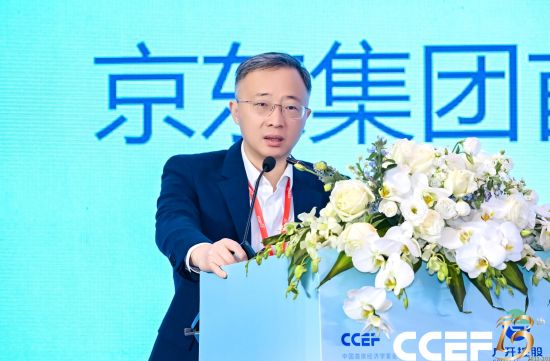
京东集团沈建光:数字消费是增长的重要动力
Xin Lang Cai Jing· 2026-01-11 03:45
Core Insights - The 2026 China Chief Economist Forum Annual Meeting was held on January 10-11 in Shanghai, focusing on the theme "Chess in the Middle Game: Building a Strong Nation" [1][2] Group 1: Digital Consumption Trends - Digital consumption is identified as a significant growth driver in China [3][5] - Five major trends in digital consumption were highlighted: 1. The development model is shifting from user scale expansion to user value exploration [3][5] 2. Sales channels are evolving from online-only to a comprehensive online-offline integration [3][5] 3. The driving force of digital consumption is transitioning from traffic expansion to AI technology empowerment [3][5] 4. The focus of development is moving from urban services to urban-rural integrated services [3][5] 5. The categories of consumption are expanding from goods to services, including green consumption [3][5] - These trends indicate that there is still significant potential for boosting consumption in China [3][5] Group 2: Support for Digital Consumption - During the "14th Five-Year Plan" period, it is essential to have policy support, technological empowerment, institutional innovation, scenario expansion, and platform internationalization to better unleash the potential of digital consumption [3][5]
数字消费贡献持续攀升 “Z世代”、银发族用户占比近四成
Di Yi Cai Jing· 2026-01-08 12:59
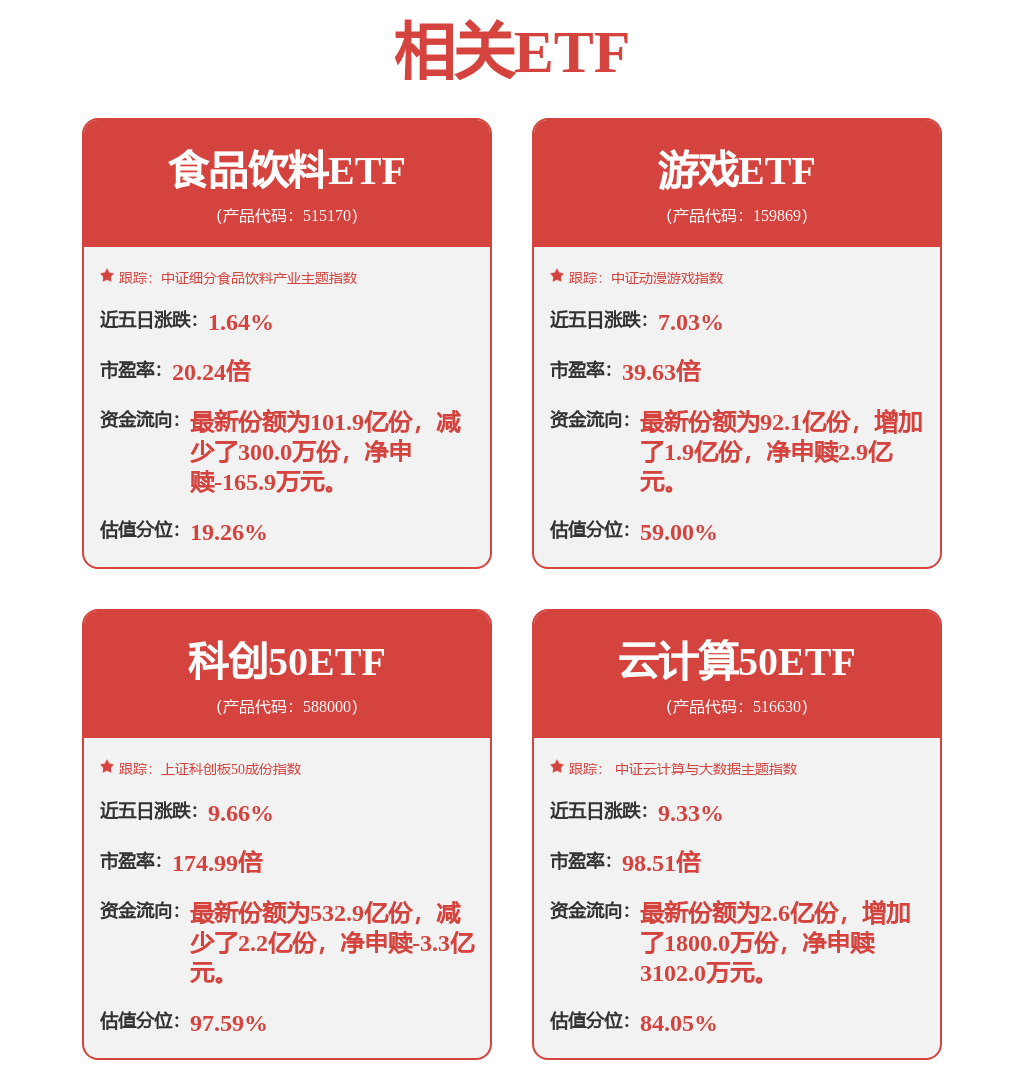
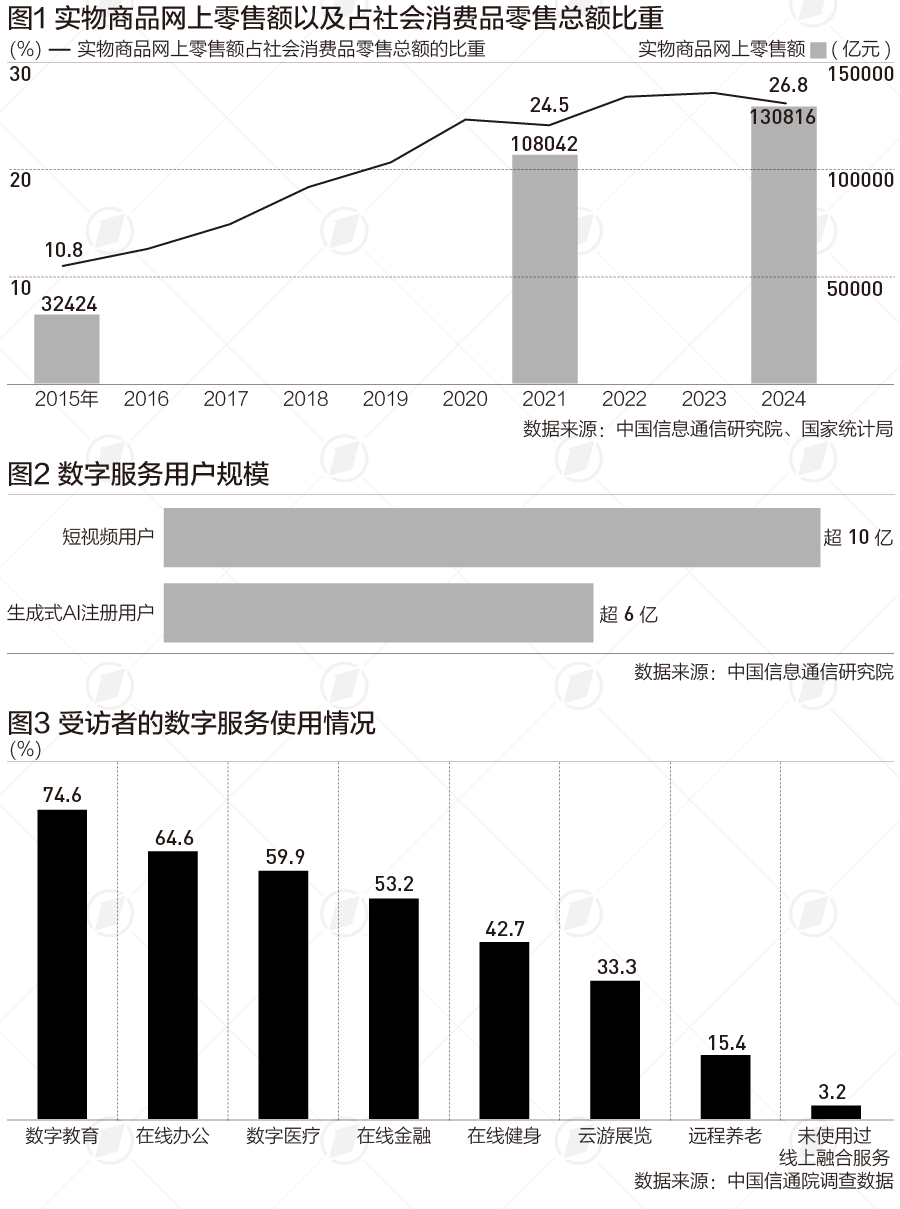
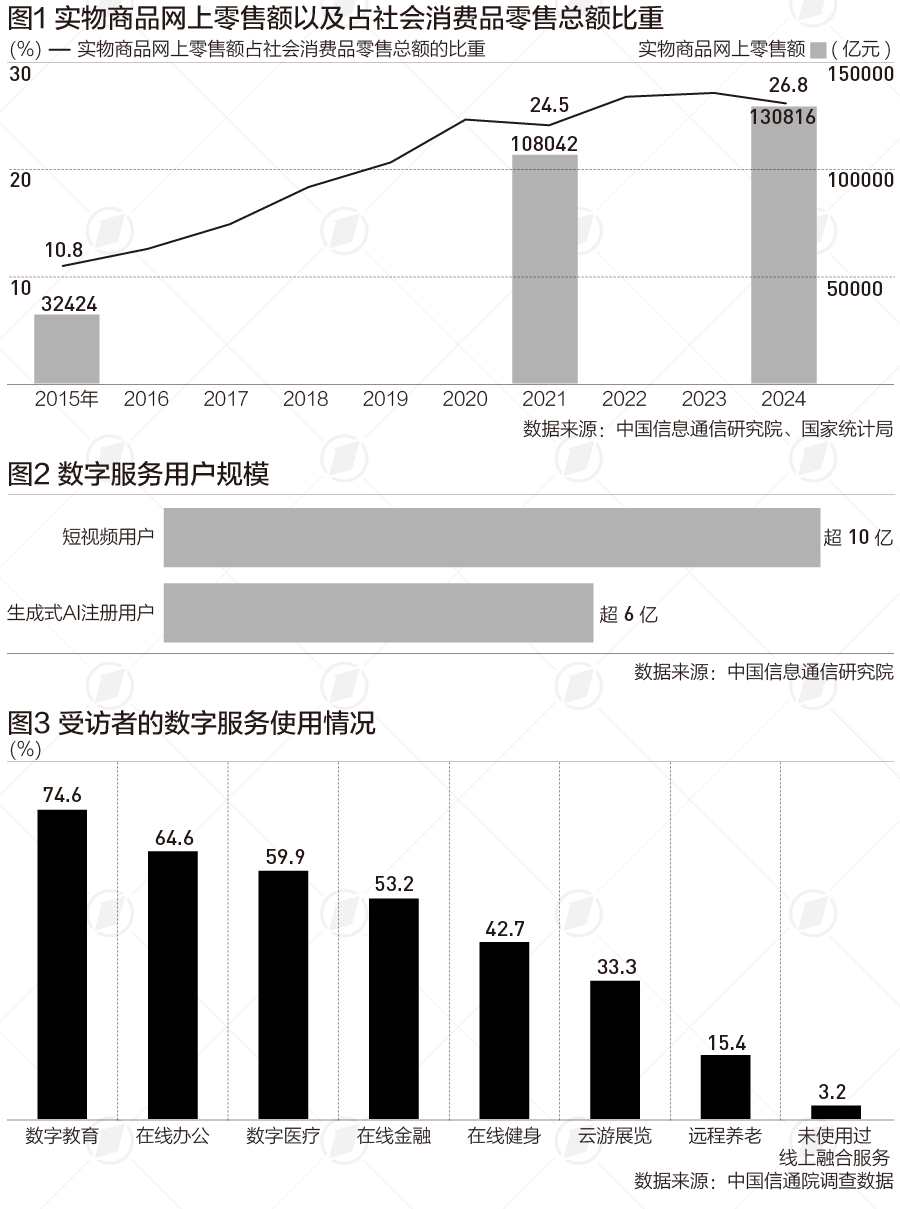
Core Insights - Digital consumption is increasingly contributing to overall consumption growth in China, driven by technological advancements, innovative product models, and changing consumer demands [1][2][4] Group 1: Digital Consumption Trends - The proportion of online retail sales of physical goods has risen from 10.8% a decade ago to an expected 26.8% in 2024 [1] - The digital consumer base is expanding across age, gender, and regional boundaries, with significant participation from the "Z generation" and the elderly [1][5] - By mid-2025, the digital consumption amount in China is projected to reach 9.37 trillion yuan, accounting for 46.5% of total household consumption expenditure [4] Group 2: User Demographics and Behavior - As of June 2025, the number of digital consumption users has surpassed 958 million, with the "Z generation" accounting for 27.2% of this group [5] - The "Z generation" shows a high engagement with digital services, with 71.4% using generative AI, significantly higher than the overall internet user rate [5] - The elderly demographic is also becoming a significant force in digital consumption, with 71.7% willing to pay for convenient online products and services [6] Group 3: Market Growth and Innovations - The digital economy's core industry value added reached 14.08 trillion yuan in 2024, growing by over 10% year-on-year [7] - The integration of AI in consumer products is expected to enhance market penetration, with AI smartphones and PCs projected to exceed 50% and 80% penetration rates, respectively, in the next three years [7] - The growth of digital services is evident in sectors like healthcare, with internet hospitals increasing from about 1,600 in 2021 to 3,340 by the end of 2024 [7] Group 4: Future Outlook - The digital consumption landscape is evolving with new consumption patterns, including online-offline integration and immersive experiences [1][2] - Emerging consumption trends such as digital and green consumption are expected to further stimulate overall consumption growth [8]
数字消费贡献持续攀升,“Z世代”、银发族用户占比近四成
Di Yi Cai Jing· 2026-01-08 12:32
Core Insights - Digital consumption is increasingly contributing to overall consumption growth in China, driven by technological advancements, innovative product models, and changing consumer demands [1][2][4] Group 1: Digital Consumption Trends - The proportion of online retail sales of physical goods has risen from 10.8% a decade ago to an expected 26.8% in 2024 [1] - The digital consumer base is expanding across age, gender, and geographic boundaries, with significant participation from the "Z generation" and the elderly [1][5] - By mid-2025, digital consumption is projected to reach 9.37 trillion yuan, accounting for 46.5% of total household consumption expenditure [4] Group 2: User Demographics and Behavior - As of June 2025, the number of digital consumers in China surpassed 958 million, with the "Z generation" accounting for 27.2% of this group [5] - The "Z generation" shows a high engagement with smart products, with 59.3% having purchased smart devices online, and a notable 71.4% using generative AI services [5] - The elderly demographic is also becoming a significant force in digital consumption, with 71.7% willing to pay for convenient online services [6] Group 3: Market Growth and Innovations - The digital economy's core industries are expected to see a value increase of 13.3 billion yuan in 2024, with a growth rate exceeding 10% [7] - The integration of AI in consumer products is leading to significant upgrades in smart devices, with projections indicating that AI smartphones and PCs will achieve over 50% and 80% market penetration, respectively, in the next three years [7] - The healthcare sector is rapidly expanding its digital services, with internet hospitals increasing from around 1,600 in 2021 to 3,340 by the end of 2024 [7]
告别“为爱发电”,小红书内测付费笔记功能
3 6 Ke· 2026-01-08 03:36
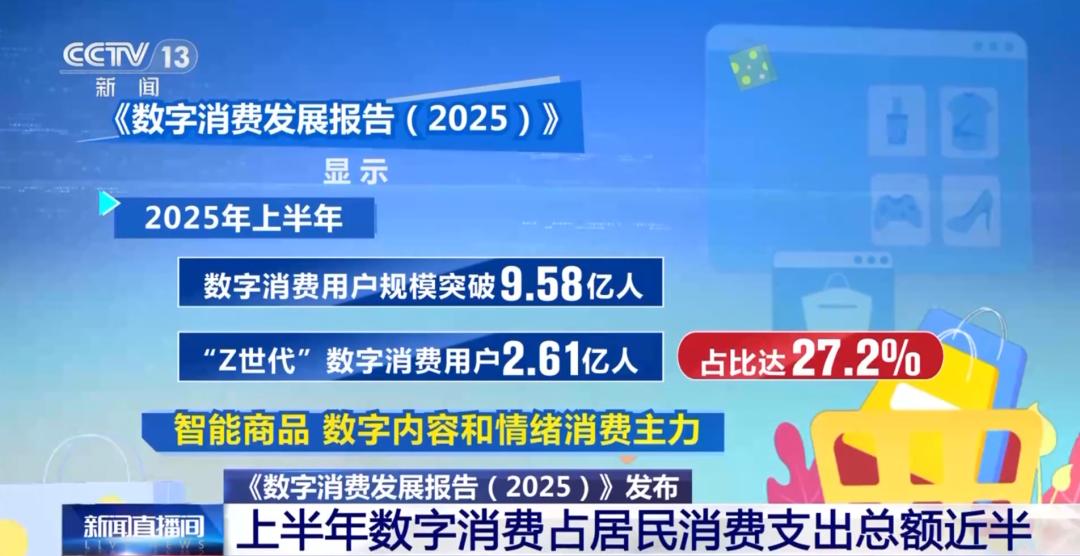
Core Insights - The report indicates that China's digital consumption user base has surpassed 958 million, with the "Z generation" accounting for 261 million users, representing 27.2% of the total, and driving demand for smart products, digital content, and emotional consumption [1] - In the first half of 2025, the total digital consumption reached 9.37 trillion yuan, nearly half of the total household consumption expenditure [1] - Xiaohongshu has launched a beta test for its "paid notes" feature, aiming to leverage paid content to capture a larger share of the digital consumption market [1] Digital Content Overview - Digital content encompasses various forms, including text, images, audio, video, and interactive media, all integrated through digital technology [1] - Xiaohongshu's paid notes feature includes three models: high-definition original images, long-form articles, and paid collections of notes, each targeting specific creator groups and user needs [3][5] Paid Notes Functionality - The high-definition original image model allows visual creators to sell high-resolution images, addressing copyright issues and enabling creators to monetize their work effectively [3] - The long-form article model offers a "free preview + paid unlock" option, allowing users to read a portion of the content for free before paying to access the full article [5] - The paid collection model targets serialized content, enabling users to pay for a bundle of related notes, enhancing user engagement and monetization opportunities [5][6] Market Potential - The market for image usage in China is substantial, with over 600 billion images used annually online, leading to a potential market size of 150 billion yuan based on low copyright compliance rates [10] - Long-form content consumption is also on the rise, with significant increases in reading volume reported, indicating a growing audience for in-depth articles [12] - The online literature market has reached 63.8 million users, with a revenue scale of 49.55 billion yuan, showing strong growth potential for Xiaohongshu's paid content initiatives [12] Creator Monetization - Xiaohongshu's paid notes feature aims to transition creators from relying solely on brand partnerships and advertising to a more direct monetization model [14] - The platform's user demographics, particularly among the Z generation, show a willingness to pay for exclusive content, aligning with the platform's strategy to enhance user engagement and satisfaction [14] Challenges Ahead - Xiaohongshu faces challenges in shifting user habits from free to paid content, requiring effective strategies to demonstrate value [15] - Ensuring high-quality content from creators is crucial to avoid content saturation and maintain user interest [15] - Protecting copyright and preventing piracy of paid content will be essential for the success of the paid notes feature [15] Future Outlook - The success of Xiaohongshu's paid notes feature will depend on balancing commercialization with the platform's community-oriented ethos [17] - This initiative represents a significant shift in Xiaohongshu's monetization strategy, potentially leading to a new era of content value realization in the digital consumption market [18]