
有效投资

Search documents
扩大投资,抓住“有效”这个关键词(记者手记)
Ren Min Ri Bao· 2025-12-07 22:02
今年"两重"建设共安排8000亿元支持1459个项目,涉及长江流域生态修复等"硬投资",也包含完善国家 物流枢纽规划布局等"软建设";今年超长期特别国债支持设备更新的投资补助资金已支持约8400个项 目,带动总投资超1万亿元,资金撬动效应达1∶5.3…… 投资是经济增长的重要推动力。今年1至10月,扣除价格因素,固定资产投资保持小幅增长。从结构来 看,1至10月,制造业投资同比增长2.7%,增速快于全部投资,航空航天器及设备制造业投资同比增长 19.7%,信息服务业投资增长32.7%,说明我国产业转型升级领域投资仍具有强劲动力。 扩大有效投资是一项关系发展全局的系统工程,政府与市场需携手共进,政府投资要在打基础、利长 远、补短板、调结构上加大力度,也要激发民间投资活力,提高民间投资比重。"十四五"收官在 即、"十五五"蓝图将展之际,多地加快谋划推进一批重大工程项目。针对扩大民间投资,国务院办公厅 近期印发文件,从扩大准入、打通堵点、强化保障三个方面提出了13项政策举措。相信各方合力必将助 推有效投资更好发挥关键作用,为扩大国内需求、经济高质量发展注入强劲动力。 《 人民日报 》( 2025年12月08日 17 ...
从四个故事看有效投资(财经眼)
Ren Min Ri Bao· 2025-12-07 21:57
Group 1: Investment Policy and Reforms - The "14th Five-Year Plan" emphasizes expanding effective investment, maintaining reasonable growth, and improving investment efficiency [1] - Investment approval reforms are being deepened to optimize government investment structure and increase the proportion of private investment [1][2] - The "container approval + commitment system" allows project units to apply for approvals even if some materials are temporarily missing, expediting the process [3][4] Group 2: Local Government Initiatives - In Anfu County, a "one-window acceptance" area has been established for all approval matters related to projects, streamlining the process significantly [4] - The county has implemented a "Tuesday parallel approval" mechanism, reducing required materials from 18 to 5 and cutting approval time from 7 days to 1 day [4] - Over the past three years, Anfu County has attracted 108 industrial projects with investments exceeding 1 billion yuan [4] Group 3: Aging Population and Healthcare Infrastructure - In Fangchenggang, the elderly population is projected to reach 178,500 by the end of 2024, highlighting a growing demand for elderly care services [6] - A comprehensive elderly care service center is being planned to address the lack of resources, with a focus on affordability and proximity to medical facilities [6][7] - The project has secured 200 million yuan in long-term credit to cover construction costs, demonstrating the role of policy-driven financial support [8] Group 4: Transportation Infrastructure Development - The Xi'an to Yan'an high-speed railway is set to open by the end of this year, significantly reducing travel time from over 2 hours to approximately 1 hour [9][10] - The project exemplifies the optimization of government investment structure and an increase in investments aimed at improving public welfare [10] - A multi-source financing system has been established to ensure funding for the high-speed railway, combining provincial capital, government bonds, and project loans [11] Group 5: Innovative Investment Models - The Jinan Energy Group has successfully launched a public REIT for heating infrastructure, raising 1.496 billion yuan to fund the "Chatou Heating into Jinan" project [12][15] - This innovative financial tool aims to revitalize existing assets and facilitate further investments in infrastructure [15] - The project has already seen significant progress, with the northern line fully connected and the southern line expected to be operational by December [15]
山西“十五五”规划建议:鼓励吸引更多民间资本参与公共事业和重大项目建设 提高民间投资比重
Mei Ri Jing Ji Xin Wen· 2025-12-05 02:05
每经AI快讯,12月5日,中共山西省委关于制定国民经济和社会发展第十五个五年规划的建议发布。其 中提到,扩大有效投资。保持投资合理增长,提高投资效益,增强投资对优化供给结构、促进产业升级 的关键作用。优化政府投资结构,提高民生类政府投资比重,高质量推进"两重"项目建设,谋划实施一 批对促进全省经济社会发展具有基础性、先导性、全局性意义的重大项目。适应人口结构变化和流动趋 势,完善基础设施和公共服务设施布局,加强人力资源开发和人的全面发展投资。统筹用好中央预算内 投资、地方政府专项债、超长期特别国债、财政建设资金等各类资金,抓好重点工程建设,扩大高技术 产业和战略性新兴产业投资。围绕产业转型、能源革命、科技教育、生态环保、公共卫生、应急保障、 防灾减灾等重点领域,推进一批强基础、增动能、利长远的重大工程和项目建设。加强政府投资全过程 管理,优化投资审批流程。更好发挥政府投资撬动作用,规范实施政府和社会资本合作新机制,用好向 民间资本推介项目长效机制,鼓励吸引更多民间资本参与公共事业和重大项目建设,提高民间投资比 重,增强市场主导的有效投资增长动力。强化项目谋划储备和要素保障。做好重大项目前期研究,加强 必要性论 ...
“十五五”系列谈 | 以扩大有效投资促进区域经济高质量发展
Sou Hu Cai Jing· 2025-12-02 00:51
Core Viewpoint - The article emphasizes that effective investment is a complex system process involving the coupling and collaborative evolution of technological innovation, institutional innovation, and spatial optimization, rather than merely a capital input behavior [1][2]. Group 1: New Requirements and Challenges - The "14th Five-Year Plan" period is crucial for China to advance towards socialist modernization, facing unprecedented challenges and requirements due to profound changes in domestic and international environments [2][4]. - The global landscape is undergoing a new round of technological revolution and industrial transformation, with disruptive technologies reshaping national core competitiveness and increasing the strategic importance of investment [3]. Group 2: Effective Investment and New Quality Productivity - Effective investment is defined as capital formation activities that serve high-quality development goals, focusing on nurturing and expanding new quality productivity [5]. - New quality productivity is characterized by technological innovation as the core driving force, with significant improvements in total factor productivity as a key indicator [6]. Group 3: "Technology-Institution-Space" Analysis Framework - The "Technology-Institution-Space" (TIS) framework illustrates that successful investment activities result from the positive interaction of technology, institutions, and spatial dimensions [7]. - The technology dimension focuses on R&D innovation, digital infrastructure, and high-skilled human capital, which directly determines the height and advancement of new quality productivity [7]. - The institutional dimension emphasizes creating an environment conducive to innovation, including a robust intellectual property protection system and a fair market environment [7]. - The spatial dimension involves optimizing regional functional layouts and constructing modern infrastructure networks to promote the clustering and scaling of new quality productivity [7]. Group 4: Progress and Challenges in Effective Investment - Despite a slowdown in fixed asset investment growth, significant progress has been made in the effectiveness of investment, with a clear trend towards structural optimization [14]. - High-tech industry investment has maintained double-digit growth, significantly outpacing overall fixed asset investment growth, indicating a shift towards new quality productivity core areas [14]. - Challenges remain in aligning technology, institutions, and spatial dimensions, leading to issues such as insufficient basic research investment and a lack of effective technology transfer mechanisms [16][18]. Group 5: Recommendations for a High-Efficiency Investment Ecosystem - To expand effective investment, a shift from "project thinking" to "ecosystem thinking" is necessary, focusing on creating a self-optimizing and virtuous cycle investment ecosystem [21]. - Recommendations include optimizing R&D investment structures, enhancing basic research funding, and establishing market-oriented concept verification centers to bridge the gap between laboratory results and market applications [22][23]. - Institutional reforms should aim to deepen financial supply-side structural reforms and enhance the protection of intellectual property rights to stimulate innovation [24][25]. - Spatial strategies should promote differentiated and specialized investments, avoiding homogeneous competition and ensuring that new infrastructure aligns with local industrial needs [26][27].
——政策周观察第57期:\十五五\扩内需,如何部署?
Huachuang Securities· 2025-12-01 13:04
Group 1: Macroeconomic Strategy - The article emphasizes the need to boost domestic consumption, noting that China's consumption rate lags behind developed countries by 10-30 percentage points, particularly in service consumption[1] - Short-term measures include optimizing supply and reducing restrictions to enhance the availability of quality consumer goods and services[1] - Long-term strategies focus on increasing residents' income and improving the share of labor remuneration in national income distribution[1] Group 2: Investment Expansion - The report advocates for effective investment expansion, particularly in infrastructure, while maintaining a balance to avoid excessive investment[2] - Key investment areas include urban renewal, strategic transportation corridors, new energy systems, and major water conservancy projects[2] - The government plans to implement significant projects in consumer-related sectors, such as elderly care and health services, to support consumption[2] Group 3: Policy Developments - A recent plan aims to create three trillion-level consumption sectors and ten hundred-billion-level consumption hotspots by 2027, focusing on areas like elderly products and smart connected vehicles[2] - The government has allocated 700 billion yuan and 800 billion yuan in special bonds for "hard investment" projects in the past two years[2] - The report highlights the importance of enhancing the efficiency of investment returns and addressing the issues of "heavy investment, light returns" in certain sectors[2]
“十五五”扩内需,如何部署?——政策周观察第57期
一瑜中的· 2025-12-01 12:04
Core Viewpoint - The article emphasizes the importance of expanding domestic demand as a strategic foundation during the "14th Five-Year Plan" period, focusing on boosting consumer spending and effective investment to counter external uncertainties and enhance economic growth [2][13]. Summary by Sections 1. Boosting Consumer Spending - Current Situation: China's consumer spending rate lags behind developed countries by 10-30 percentage points, particularly in service consumption [2]. - Short-term Measures: Focus on optimizing supply, innovating consumption scenarios, and removing unreasonable restrictions in the consumption sector [2]. - Long-term Goals: Enhance residents' income and consumption capacity, ensuring that income growth aligns with economic growth and labor productivity [2][13]. 2. Expanding Effective Investment - Infrastructure Investment: Maintain a moderate growth in infrastructure investment while avoiding excessive expansion [3]. - Investment Focus: Target major projects in urban renewal, strategic transportation corridors, new energy systems, and significant water conservancy projects, as well as investments in consumer-related sectors [3][13]. - Support Measures: Reform the investment and financing system, utilize new policy financial tools, and improve the pricing mechanisms in transportation and energy sectors to enhance investment returns [3][13]. 3. Recent Policy Developments - Consumption Policy: The Ministry of Industry and Information Technology released a plan to enhance the adaptability of supply and demand in consumer goods, aiming to establish three trillion-level consumption sectors and ten hundred-billion-level consumption hotspots by 2027 [4][11]. - Industry Meetings: The People's Bank of China held a meeting to combat speculative trading in virtual currencies, and the Ministry of Industry and Information Technology discussed regulations in the battery industry [4][11]. 4. National Development Goals - The article outlines the goal of achieving a high-quality development pattern where supply and consumption interact positively by 2030, with a gradual increase in consumption's contribution to economic growth [11][12]. - Specific sectors identified for growth include elderly products, smart connected vehicles, and consumer electronics, with a focus on addressing the needs of an aging population [12][13].


当以质量标尺看待投资放缓
Jing Ji Ri Bao· 2025-11-29 01:29
当前,我国正处于"十四五"规划收官、"十五五"规划开局的关键节点,综合施策扩大有效投资,更 加关注投资质量和效益,对于经济平稳运行至关重要。 优化政府投资工具使用,提高公共投资效率。比如,稳定并适度扩大直接用于项目建设的债券额 度,确保资金支持实物工作量形成。适度下放专项债管理事权,增强地方自主性。再如,适当加大新型 投资率过高曾是中国经济增长模式的挑战之一,也是导致供求矛盾的一大结构性根源。当前,我国 正处于"十四五"规划收官、"十五五"规划开局的关键节点,综合施策扩大有效投资,更加关注投资质量 和效益,对于经济平稳运行至关重要。 今年以来,全国固定资产投资呈现明显放缓态势。国家统计局数据显示,前10个月,全国固定资产 投资同比下降了1.7%,尤其是10月当月投资增速罕见下滑至-11.2%,一些海外媒体趁机以"投资失速"为 由,大肆渲染中国经济"通缩论""危机论",引发市场猜测与担忧。 投资率过高曾是中国经济增长模式的挑战之一,也是导致供求矛盾的一大结构性根源。中国经济经 过多年高速增长,如今面临着城镇化减速、基础设施建设需求下降等新问题,而投资增速放缓正是其具 体表现之一。当前,中国经济步入了新发展阶段, ...

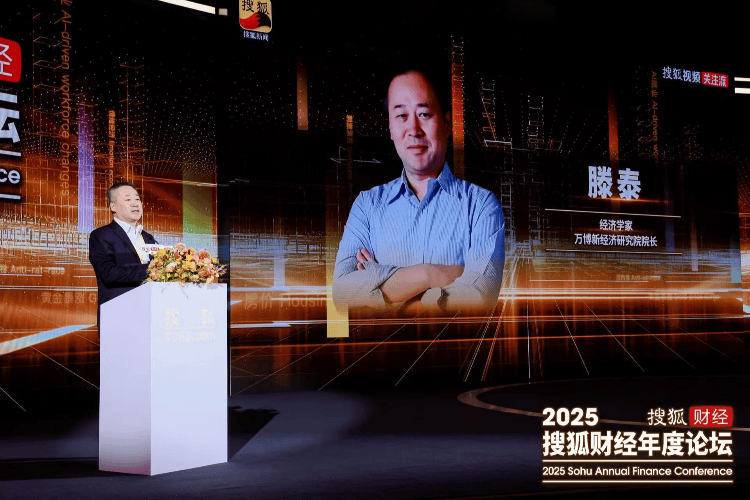
滕泰建言扩消费:发放万亿级消费补贴,提升农村老年人养老金
Sou Hu Cai Jing· 2025-11-27 14:25
Core Viewpoint - The forum emphasizes the need for unconventional measures to achieve a reasonable annual consumption growth target of 6% during the "14th Five-Year Plan" period, including substantial consumption subsidies and the transfer of state-owned equity to social security funds [2][3][4]. Group 1: Consumption Growth Strategies - The proposal includes issuing over 1 trillion yuan in consumption subsidies, which could significantly boost total demand and GDP growth by 2-3 percentage points [3][4]. - A transfer of 10 trillion yuan of state-owned equity to social security funds is suggested to enhance pension levels for low-income groups, thereby increasing their consumption capacity [4]. - The potential wealth effect from capital market expansion is highlighted, with a projection that the market value could reach 200-250 trillion yuan by 2030, supporting increased consumer spending [4]. Group 2: Current Economic Challenges - The current economic issue is identified as severe over-investment, with many projects yielding no effective output, as evidenced by fixed asset investments exceeding local GDP in 14 provinces [2]. - A shift towards accepting lower investment growth rates is recommended, focusing on effective investments in areas like artificial intelligence while reducing inefficient investments [2][3].
锚定战略基点 全方位扩大内需
Jing Ji Ri Bao· 2025-11-25 23:00
找准制约经济增长关键因素 在拉动国民经济增长的"三驾马车"中,消费和投资组成的内需是经济发展的主要依托和基本动力,也是 满足人民日益增长的美好生活需要的必然要求。2024年,我国社会消费品零售总额达48.3万亿元,同比 增长3.5%,网上零售额连续12年居全球第一位,是全球第二大消费市场;全年全社会固定资产投资52.1 万亿元,比上年增长3.1%,对外投资流量连续13年居全球前三位。但也要看到的是,2024年消费对经 济增长的贡献率为44.5%,消费需求对经济增长的拉动作用尚未充分发挥。同时,受投资回报周期长等 影响,投资增长仍较乏力。今年前三季度,全国固定资产投资(不含农户)37.2万亿元,同比下降 0.5%,民间投资同比下降3.1%。内需不足特别是消费需求不足已成为制约我国经济增长的主要矛盾和 关键因素。 "十五五"时期,我国发展处于战略机遇和风险挑战并存、不确定难预料因素增多的时期。从国内看,有 效需求不足,国内大循环存在卡点堵点;从国际看,世界变乱交织、动荡加剧,单边主义、保护主义抬 头,大国博弈更加复杂激烈。在此背景下,更加凸显了全方位扩大内需的战略意义。立足国内、依托国 内超大规模市场优势,充分挖 ...
华夏新供给经济学研究院首席经济学家贾康:中国有效投资空间巨大 下半年经济不确定性主要来自外部
Mei Ri Jing Ji Xin Wen· 2025-11-24 04:09
Core Viewpoint - The analysis emphasizes the dual nature of uncertainty and certainty in China's macroeconomic environment, highlighting the importance of internal measures to navigate external shocks [2][3]. Economic Performance - In the first half of 2018, China's GDP reached 41.8961 trillion yuan, with a year-on-year growth of 6.8%. The growth rates were 6.8% in Q1 and 6.7% in Q2 [2]. Future Economic Development Focus - Key areas for future macroeconomic development include expanding domestic demand, smart investment, and effective investment, which hold significant potential [3][4]. - The transition to a new normal in China's economy is seen as fundamentally established, with a focus on structural optimization and leveraging the potential of the "largest market" [3]. Policy Recommendations - Monetary policy has shifted to a "moderately loose" stance, which is deemed necessary to support economic growth [3]. - Fiscal policy should actively support investment and consumption while emphasizing structural optimization [4]. - Effective investment and innovation are crucial for sustaining consumption, which should be supported by a strong economic foundation [4].
