枢纽经济

Search documents
武汉获批生产服务型国家物流枢纽 成首个集齐“五型”省会城市
Chang Jiang Shang Bao· 2025-06-24 23:45
Core Viewpoint - The recent approval of Wuhan's production service-type national logistics hub marks a significant advancement in the city's logistics infrastructure, making it the first provincial capital in China to achieve a complete layout of five types of national logistics hubs [1][3]. Group 1: National Logistics Hub Development - The newly approved production service-type national logistics hub is designed to provide high-quality logistics services for the manufacturing industry, aiming to create a low-cost and efficient logistics network to enhance the vitality and competitiveness of the real economy [2]. - Wuhan has successfully established a complete layout of five types of national logistics hubs, including port-type, land port-type, air port-type, production service-type, and commercial service-type, within six years [3]. Group 2: Strategic Goals and Infrastructure - The production service-type national logistics hub is located in Wuhan Economic Development Zone, which has the largest industrial scale and the most comprehensive industrial categories in the city, serving as a key area for promoting new industrialization [2]. - The hub aims to achieve three core goals by 2030: a cargo throughput exceeding 10 million tons, an average reduction of 12% in logistics costs for enterprises, and an increase in the proportion of trunk transportation to over 30% [2]. - The hub will integrate six basic functions, including trunk logistics organization, multimodal transport, regional distribution, international logistics, logistics integration services, and supply chain logistics services, along with four extended functions such as logistics finance and emergency logistics [2]. Group 3: Infrastructure Projects and Integration - Wuhan is accelerating the construction of key projects such as the second phase of the China Railway Yitong Logistics Center and the first phase of Tongjin Port, in accordance with the national logistics hub construction plan [4]. - The city aims to optimize its multimodal transport system, adjust transportation structures, and expand domestic and international logistics channels to deeply integrate into the new development pattern of "dual circulation" [4]. - The collaboration among the five types of national logistics hubs is expected to create a three-dimensional logistics network covering central China and radiating nationwide, promoting cost reduction and efficiency improvement in logistics [4].
视频 | 国家级花都经开区启航!投资盛会签约48项目,千亿投资加速“枢纽经济”跃升
Sou Hu Cai Jing· 2025-06-20 08:39
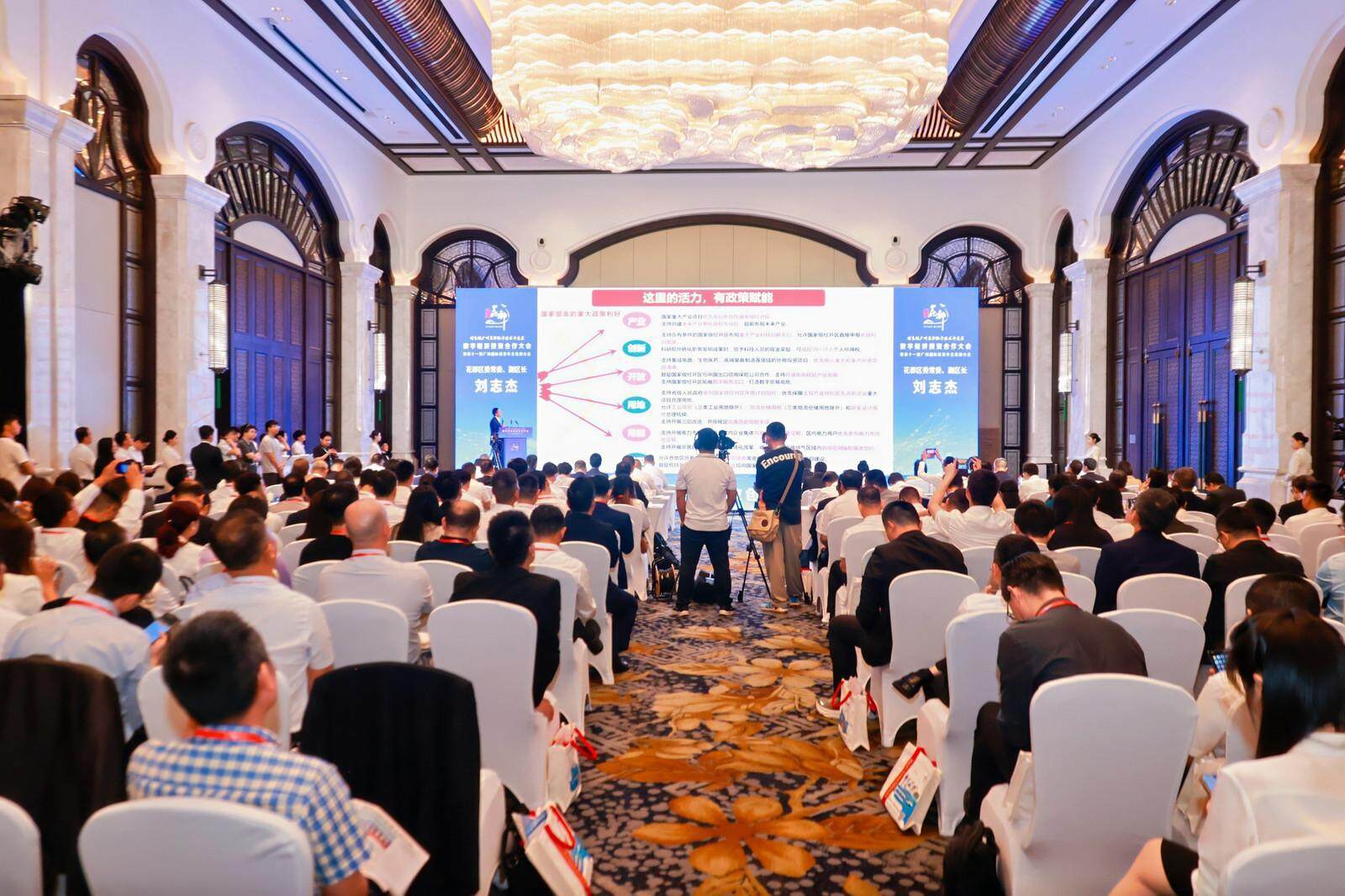
Group 1 - The conference held in Guangzhou Huadu District focused on digital economy investment and signed 48 key projects across various sectors, with a total investment exceeding 100 billion yuan this year [1][10] - The event highlighted the "Top Ten Investment Star Projects" in Huadu, showcasing the district's industrial agglomeration capabilities since 2021 [3][5] - Huadu District aims to become a global industrial strategic highland, leveraging its unique advantages in transportation and economic development [14] Group 2 - Key projects in the automotive sector include investments from Dongfeng Nissan and ZF Group, establishing Huadu as a complete automotive industry chain in South China [5][13] - In the digital economy, projects from JD.com and Meituan are pushing the development from application scenarios to underlying technologies [5] - The district is also focusing on green energy and digital economy integration, with collaborations from institutions like Xi'an Jiaotong University and Beijing University of Science and Technology [7][8] Group 3 - The Huadu Economic and Technological Development Zone has been upgraded to a national-level economic and technological development zone, emphasizing its dual mission of hub economy upgrade and industrial innovation demonstration [8][14] - The strategic positioning of Huadu as an "open hub, intelligent manufacturing highland, and vibrant new city" aims to integrate into the national development framework [10][14] - The establishment of offshore service liaison stations in Frankfurt and Singapore is part of Huadu's strategy to expand its global resource network [11]


淮安:从“内”到“外”重塑枢纽地位
Xin Hua Ri Bao· 2025-06-10 21:23
Core Viewpoint - Huai'an is re-establishing its position as a transportation hub, leveraging its comprehensive transportation network to enhance economic development and regional cooperation [1][2][3]. Transportation Infrastructure - Huai'an has a total road mileage of approximately 13,800 kilometers, serving as a vital passage for the Bohai Economic Zone, Yangtze River Delta, and eastern coastal regions [1]. - The city has established a significant high-speed rail hub, with the Xusuhai Salt Railway and Lianhuaiyangzhen Railway forming a cross-shaped railway network, connecting to over 120 major cities nationwide [1]. - Huai'an's waterways include 1,483 kilometers of navigable channels and 96 port terminals, leading the province in inland container throughput for 16 consecutive years [1]. - Huai'an Lianshui International Airport is developing into a key international air cargo hub in the northern Yangtze River Delta [1]. Economic Development - The logistics advantages of Huai'an are translating into economic benefits, with companies like Zhongtian Steel Group optimizing their operations through reduced transportation costs [2]. - The city is fostering a smart logistics hub, integrating transportation with logistics, commerce, and industry, attracting major logistics companies to establish regional distribution centers [2]. Regional Integration - Huai'an is actively aligning with the Yangtze River Delta regional integration strategy, significantly reducing travel time to Nanjing and facilitating industrial transfer and resource sharing [3]. Future Planning - The provincial government supports Huai'an in utilizing its transportation advantages for high-quality hub economic development, with ongoing infrastructure projects including highway expansions and new railways [4][5]. - Key projects include the expansion of Huai'an Airport, which will enhance passenger capacity to 7.5 million and cargo capacity to 250,000 tons [5].
“郑州-首尔”邮政货运航线复飞,未来每周3班常态化飞行
Sou Hu Cai Jing· 2025-06-06 02:50
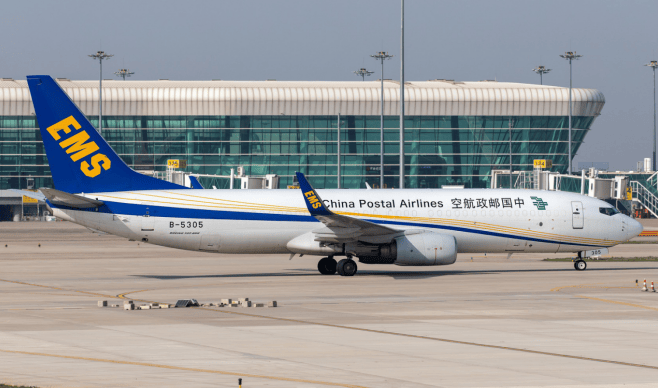
Core Viewpoint - Zhengzhou is enhancing its role as the fourth international mail hub in China, facilitating trade and logistics for the Henan province and beyond [1][3]. Group 1: Operational Developments - The 'Zhengzhou-Seoul' air cargo route has resumed regular operations post-pandemic, with a schedule of three flights per week on Tuesdays, Thursdays, and Saturdays [3]. - This regular flight operation signifies the strengthening of Zhengzhou's capabilities as an international mail hub, creating an efficient air corridor for trade between Henan and South Korea [3]. Group 2: Strategic Significance - The establishment of the China Postal Airlines hub project in Zhengzhou, signed on August 26, 2024, is expected to solidify Zhengzhou's position in international air cargo and promote rapid development in the logistics industry of Henan [3]. - The project aims to transform the transportation advantages of Henan into hub economic advantages, enhancing the province's global trade capabilities [3]. Group 3: Future Plans - China Postal Airlines plans to strengthen collaboration with Zhengzhou Airport and enhance air logistics cooperation with countries along the route, aiming for better integration and optimization of logistics resources [3].
东方枢纽,“重量级”规划方案正式出炉!
Guo Ji Jin Rong Bao· 2025-05-27 10:05
Core Insights - The approval of the "Shanghai Oriental Hub International Business Cooperation Zone Control Detailed Planning" marks a new phase in the development of this significant area [1] - The Oriental Hub International Business Cooperation Zone is the first of its kind in the country, aimed at deepening institutional openness and facilitating the efficient allocation of global resources [3] Group 1: Development Potential - The cooperation zone leverages its position as a world-class shipping hub, aiming to become a model for "air economy + hub economy" [4] - It will complement the Hongqiao International Central Business District, enhancing Shanghai's international trade capabilities [4] - The transportation planning focuses on integrating multi-modal transport systems, improving connectivity with major transport hubs [4] Group 2: Innovative Spatial Design - The planning introduces a "modular grid system" that allows flexible reconfiguration of space units to adapt to future industrial needs [5] - The spatial structure features a unique layout of "one chain, seven stars, and three rings," balancing functionality and aesthetics [5] Group 3: Core Application Scenarios - The global business exchange center will facilitate high-level business activities with advanced translation and meeting technologies [6] - The international talent training hub aims to cultivate professionals in key sectors through partnerships with top universities [6] - The world-class exhibition destination will enhance the zone's visibility and attract international attention through immersive event experiences [7] Group 4: Service and Operational Efficiency - A "one-stop" service system will be established, including commercial, professional, and public service facilities to support efficient operations [8] - The integration of various professional services will assist companies in navigating global business challenges [8] - Advanced infrastructure will provide comprehensive support for international business activities, enhancing operational efficiency [8] Group 5: Future Outlook - The detailed planning outlines a grand vision for the cooperation zone, positioning it as a key window for institutional openness and a hub for global resource aggregation [9]

牢记嘱托 奋勇争先丨开放河南向未来
He Nan Ri Bao· 2025-05-19 23:54
Group 1: Economic Growth and Trade - Henan's foreign trade has shown significant growth, with a total import and export value exceeding 270 billion yuan in the first four months of the year, marking a year-on-year increase of 29.5% [2] - The province has implemented 27 measures to stabilize and enhance foreign trade, providing practical support for enterprises to explore new markets [2] - The recent Canton Fair saw 575 enterprises from Henan achieve over 100 million USD in export transactions with 15 countries, injecting new momentum into the province's foreign trade development [2] Group 2: Investment Attraction - Henan has actively promoted investment, forming a delegation to Hong Kong and signing 52 projects with a total investment of 51 billion yuan at the 2025 Global Henan Business Conference [2] - The establishment of a factory by Brazil's BRF company in Xihua County, with an investment of nearly 600 million yuan, marks a significant foreign investment in the province [2] - In the first four months of the year, 148 new foreign enterprises were established in Henan, representing a year-on-year increase of 38.3% [2] Group 3: Infrastructure and Logistics - The Zhengzhou Comprehensive Bonded Zone has attracted major e-commerce companies, enhancing the province's logistics capabilities and connecting it to global markets [4] - Henan is focusing on developing its hub economy by improving transportation networks, including high-speed rail and air transport, to facilitate domestic and international trade [5] - The "Air Silk Road" now covers over 200 cities globally, and the China-Europe Railway Express reaches more than 40 countries and regions, showcasing Henan's expanding logistics network [6] Group 4: Regulatory Innovations - Henan has successfully launched the first cross-border e-commerce TIR card train to Moscow, indicating progress in optimizing regulatory frameworks [8] - The province's Free Trade Zone has produced 615 institutional innovation results since its establishment, with 25 of these being promoted nationwide [8] - A new regulation aimed at supporting institutional innovation in the Free Trade Zone has been implemented, highlighting Henan's commitment to high-level openness [8] Group 5: Overall Development Strategy - Henan is transforming from an inland region to a competitive frontier through continuous openness, aiming to participate more actively in global competition [9] - The province's strategy includes deepening integration into global industrial divisions and enhancing its open economic environment [3][9]
小籽粒走向大世界 外国记者聚焦中欧班列高质量发展的“内蒙古引擎”
Huan Qiu Wang· 2025-05-18 02:10
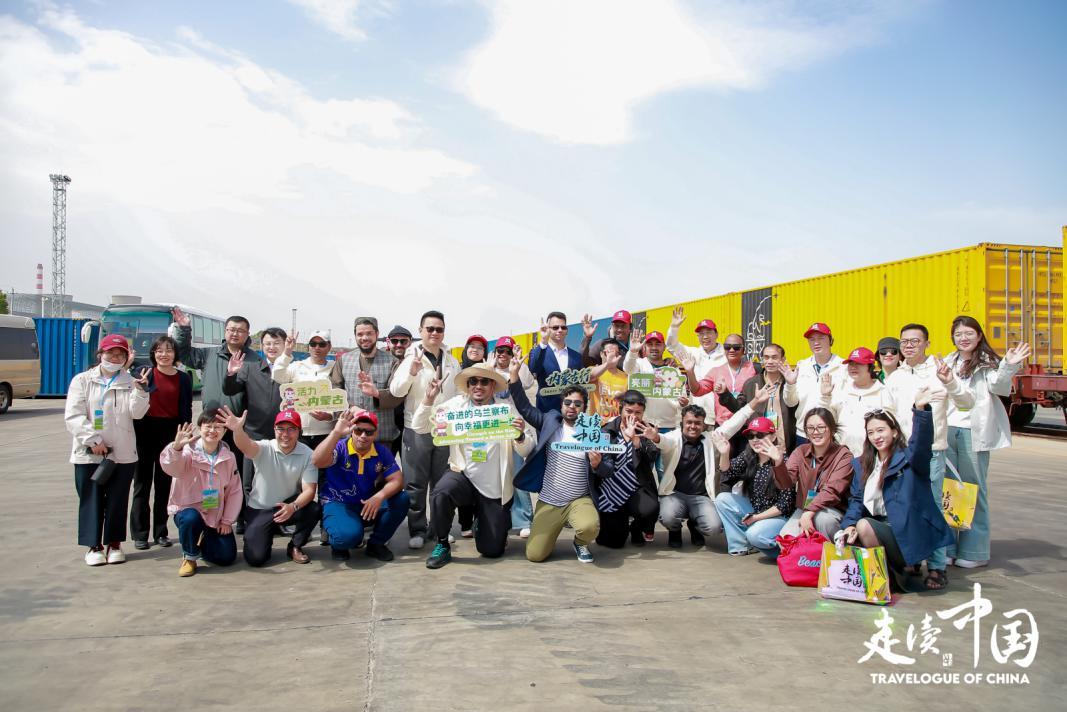
Core Viewpoint - Ulanqab City in Inner Mongolia is leveraging its unique geographical advantages and rich agricultural resources to develop a distinctive agricultural product industry, becoming a key node in the global supply chain through the international logistics hub [1][14]. Group 1: Logistics Hub Development - The Ulanqab-Donghu Logistics Hub Park, established in March 2022, is the only cross-league development zone in Inner Mongolia, featuring six distinct areas including the Qisumu International Logistics Park and the Northern Land Port Logistics Park [3]. - The Qisumu International Logistics Park is positioned as a distribution center for the China-Europe Railway Express and a processing cluster for specialty agricultural products [3][11]. Group 2: Transportation Efficiency - The China-Europe Railway Express from Ulanqab has reached destinations as far as Duisburg, Germany, covering over 10,000 kilometers in approximately 25 days, showcasing the efficiency of this logistics route [5][7]. - The railway transport is noted for its higher safety compared to road transport, with ongoing operations of six regular routes connecting Ulanqab to multiple countries including Russia, Belarus, and Germany since 2016 [5][7]. Group 3: Agricultural Product Processing - Ulanqab is located in a prime agricultural zone, known for its high-quality organic products, which supports a thriving export processing industry for items like pumpkin seeds, sunflower seeds, and various vegetables [9][11]. - The logistics advantages allow for significant cost savings in transportation, exemplified by a reduction of 2,800 kilometers in transport distance for pumpkin seed processing compared to other regions, saving approximately 600 yuan per ton in logistics costs [13]. Group 4: International Cooperation and Trade - The logistics hub is increasingly recognized for its role in enhancing international cooperation and trade, particularly under the Belt and Road Initiative, positioning Inner Mongolia as a bridge between China and the world [14][15]. - Foreign journalists have highlighted the importance of Ulanqab in the global trade network, emphasizing the city's growing significance in shaping the future of Eurasian trade and economic cooperation [14].
“四港”通江达海,“三区”连接八方
Qi Lu Wan Bao· 2025-05-15 21:28
Core Viewpoint - The development of the "Four Ports and Three Zones" initiative in Jinan is transforming the city into a significant logistics hub, enhancing its connectivity and economic potential through integrated transportation modes [2][3][4]. Group 1: Infrastructure Development - The "Four Ports" include Jinan International Airport, Jinan East Station, Dongjia Railway Freight Hub, and Xiaoqing River Jinan Port, while the "Three Zones" refer to the areas surrounding these ports [2][3]. - The initiative aims to create a comprehensive logistics network that integrates air, rail, road, and water transport, facilitating both cargo and passenger movement [3][4]. - Jinan's logistics projects have attracted significant investment, with 34 logistics projects totaling approximately 32.61 billion yuan, accounting for 51% of the city's modern logistics projects [6][7]. Group 2: Economic Impact - The establishment of the "Four Ports and Three Zones" is expected to stimulate industrial clustering and collaboration, enhancing the local economy [6][9]. - Jinan has been approved to build a national logistics hub and a national China-Europe Railway Express gathering center, marking it as a dual-type logistics hub city [6]. - The ongoing construction of the Jinan International Airport's second phase is set to increase its capacity to handle 55 million passengers and 520,000 tons of cargo annually [4][5]. Group 3: Strategic Importance - The initiative positions Jinan as a key node in the economic network, enhancing its connections with surrounding cities and regions, and expanding its economic hinterland [10]. - The development of the "Four Ports and Three Zones" is seen as a critical step in establishing Jinan as a northern commercial logistics center, leveraging successful models from other cities like Zhengzhou and Chongqing [9][10]. - The integration of various transport modes is expected to improve logistics efficiency and support the growth of industries such as cross-border e-commerce and cold chain logistics [7][10].
列国鉴·阿联酋|记者观察:迪拜如何借“枢纽经济”实现飞跃
Xin Hua She· 2025-05-15 11:27
Core Insights - Dubai has transformed from a fishing village in the 1960s to a global aviation and commercial hub through strategic infrastructure investments and a stable political environment [1][2] Infrastructure Development - Dubai, the second largest emirate in the UAE, initiated modernization efforts before the discovery of oil, focusing on infrastructure like Dubai International Airport and Dubai Port to establish itself as an international hub [2][3] - Emirates Airlines was founded in 1985 with only two leased aircraft, and as of July 2023, operates a fleet of 249 aircraft, making it the largest operator of Airbus A380 and Boeing 777 globally [3] - Dubai International Airport is one of the busiest airports in the world, projected to handle 92.3 million passengers in 2024, while Al Maktoum International Airport further strengthens Dubai's position in global air transport [3] - The city has developed an advanced highway network, including the Sheikh Zayed Road, facilitating trade and logistics [3] Trade and Logistics - Jebel Ali Port is a key player in Dubai's development, recognized as one of the busiest container ports globally, attracting international investors and establishing Dubai as a trade and logistics center [4] Development Environment - Since the UAE's establishment in 1971, Dubai has maintained a stable political environment, which has been crucial for its evolution into a global city [5] - The current ruler has introduced the "Dubai Vision" to diversify the economy into finance, technology, and tourism, while also investing in space technology [5] - Dubai's neutral foreign policy has created a favorable external environment for attracting foreign investment [5] - The introduction of a 10-year "Golden Visa" and various free trade zones enhances Dubai's appeal to global talent [5] Economic Strategy - With advancements in information technology, Dubai aims to develop a knowledge-based economy, leveraging its aviation sector to boost tourism and events [7] - The city hosts major events like the Dubai Shopping Festival and Dubai International Film Festival, enhancing its cultural vibrancy [7] - Dubai International Convention and Exhibition Centre is a key venue for global conferences and exhibitions [7] - Investments in clean energy and initiatives like the Mohammed bin Rashid Solar Park support Dubai's commitment to carbon neutrality and green economic development [7] - The promotion of blockchain technology in various sectors aims to position Dubai as a leading smart city and fintech hub [7]
东部经济大省,跑出一匹“黑马”
Mei Ri Jing Ji Xin Wen· 2025-05-08 23:14
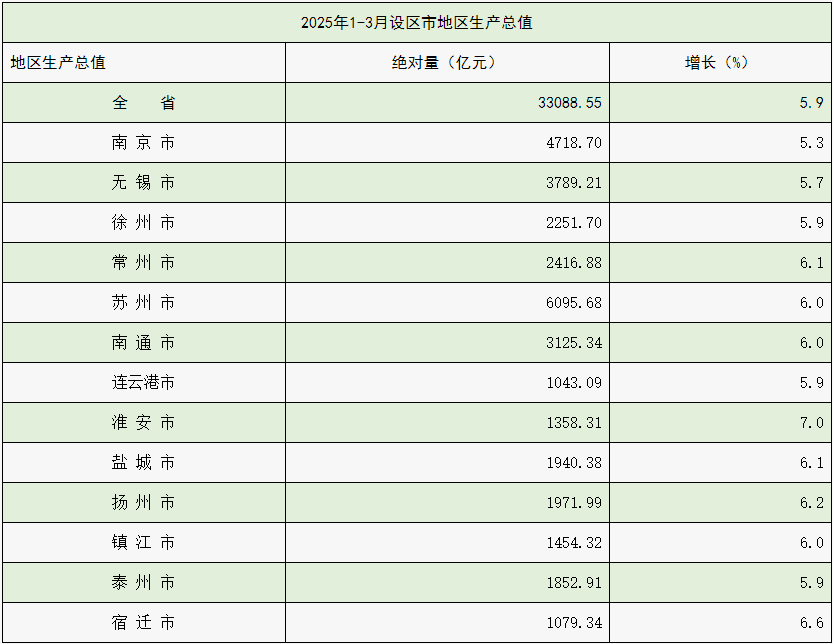
Core Viewpoint - Jiangsu Province's economic performance in the first quarter of 2025 shows significant growth, with 4 cities exceeding a GDP of 250 billion yuan and 8 cities surpassing the provincial growth rate of 5.9% [1][3] Economic Performance Summary - The total GDP of Jiangsu Province for the first quarter of 2025 is 33,088.55 billion yuan, with a growth rate of 5.9% [2] - Suzhou leads with a GDP of 6,095.68 billion yuan, accounting for nearly one-fifth of the provincial total [3] - Nanjing's GDP is 4,718.70 billion yuan, while Wuxi and Nantong exceed 3,000 billion yuan, and Changzhou and Xuzhou surpass 2,000 billion yuan [3] City Growth Rates - Eight cities outperformed the provincial growth rate of 5.9%, including Huai'an (7.0%), Suqian (6.6%), and Yangzhou (6.2%) [3] - Huai'an has shown remarkable growth, with a GDP of 5,413.02 billion yuan in 2024 and a growth rate of 7.1%, leading both Jiangsu and the Yangtze River Delta region [3][4] Huai'an's Development Factors - Huai'an's strategic location in the northern part of the Yangtze River Delta contributes to its economic success, supported by comprehensive transportation networks [4] - The Jiangsu provincial government has emphasized the development of Huai'an as a transportation hub to enhance economic growth [4] Investment and Industrial Growth - Huai'an has successfully attracted significant industrial investments, with a 33.9% year-on-year increase in new industrial projects signed in 2024 [5][6] - The city aims to establish itself as a modern urban center in northern Jiangsu, focusing on high-tech industries such as new-generation electronic information and new energy [6]