
油价波动

Search documents
供给过剩趋势下,国际油价走势纠结
Sou Hu Cai Jing· 2025-11-17 03:02
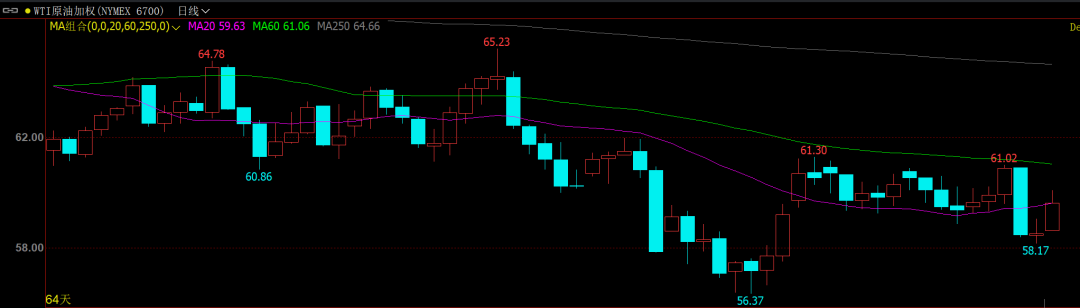
Group 1: Oil Price Overview - As of the week ending November 14, 2025, international oil prices experienced slight fluctuations, with Brent crude oil price at $64.39 per barrel (up $0.76 or +1.19%) and WTI at $59.39 per barrel (down $0.45 or -0.75%) [2][3] - Factors contributing to the price movements included an increase in China's crude oil imports, a decline in the US dollar exchange rate, and the US government's efforts to end the shutdown, which boosted market risk appetite [2][3] - OPEC's monthly report indicated a forecast adjustment to oversupply, which sent bearish signals to the market, leading to a decline in oil prices later in the week [2][3] Group 2: US Oil Supply and Demand - As of the week ending November 7, 2025, US crude oil production reached 13.862 million barrels per day, an increase of 211,000 barrels per day from the previous week [3] - The number of active drilling rigs in the US rose to 417, with an increase of 3 rigs, while the fracturing fleet also saw a rise to 175 units, up by 2 [3] - US refinery crude processing averaged 15.973 million barrels per day, an increase of 717,000 barrels per day, with a refinery utilization rate of 89.40%, up by 3.4 percentage points [3] Group 3: US Oil Inventory - As of the week ending November 7, 2025, total US crude oil inventories stood at 838 million barrels, an increase of 7.211 million barrels (+0.87%) [3] - Strategic oil reserves were at 410 million barrels, up by 798,000 barrels (+0.19%), while commercial crude oil inventories increased to 428 million barrels, up by 6.413 million barrels (+1.52%) [3] - Cushing, Oklahoma, crude oil inventories decreased to 22.519 million barrels, down by 346,000 barrels (-1.51%) [3] Group 4: Refined Product Inventory - As of the week ending November 7, 2025, US gasoline inventories decreased by 945,000 barrels (-0.46%), while diesel inventories saw a slight increase of 235,000 barrels (+1.61%) [4] - Jet fuel inventories increased by 111,900 barrels (+2.68%), while overall diesel inventories decreased by 637,000 barrels (-0.57%) [4] Group 5: Biofuel Prices - As of November 14, 2025, the FOB price for ester-based biodiesel was $1,170 per ton, down by $20 from the previous week, while hydrocarbon-based biodiesel remained stable at $1,910 per ton [4] - In China, the FOB price for bio-jet fuel was $2,550 per ton, unchanged from the previous week, while European bio-jet fuel prices increased by $60 to $2,910 per ton [4] Group 6: Related Companies - Key companies in the sector include China National Offshore Oil Corporation (CNOOC), China Petroleum & Chemical Corporation (Sinopec), and China Petroleum Corporation (PetroChina) [5]
供给过剩趋势下,国际油价走势纠结 | 投研报告
Zhong Guo Neng Yuan Wang· 2025-11-17 02:22
Group 1 - The core viewpoint of the report indicates that international oil prices experienced slight fluctuations, with Brent crude oil prices increasing slightly while WTI prices decreased slightly as of November 14, 2025 [1][2] - In the first half of the week, China's crude oil imports increased, and the US dollar weakened, contributing to a rise in oil prices due to improved market risk appetite [1][2] - The latter part of the week saw a downward adjustment in OPEC's monthly report, indicating a supply surplus, which released bearish signals to the market [1][2] Group 2 - As of November 14, 2025, Brent crude oil futures settled at $64.39 per barrel, up $0.76 per barrel (+1.19%), while WTI crude oil futures settled at $59.39 per barrel, down $0.45 per barrel (-0.75%) [2] - The price of Russian Urals crude remained stable at $65.49 per barrel, while Russian ESPO crude decreased by $1.43 per barrel (-2.51%) to $55.47 per barrel [2] Group 3 - As of November 10, 2025, the number of global offshore self-elevating drilling rigs was 370, an increase of 1 rig from the previous week, while the number of floating drilling rigs decreased by 2 to 128 [3] - As of November 7, 2025, US crude oil production was 13.862 million barrels per day, an increase of 211,000 barrels per day from the previous week [3] - The number of active drilling rigs in the US increased by 3 to 417 as of November 14, 2025 [3] Group 4 - As of November 7, 2025, US total crude oil inventories increased by 7.211 million barrels (+0.87%) to 838 million barrels [4] - The US gasoline inventory decreased by 0.946 million barrels (-0.46%), while diesel inventory decreased by 0.637 million barrels (-0.57%) [4] Group 5 - The report highlights relevant companies in the sector, including China National Offshore Oil Corporation (CNOOC), China Petroleum & Chemical Corporation (Sinopec), and China National Petroleum Corporation (PetroChina) [5]






俄乌互相打击对方能源设施,俄油出口受阻支撑油价
Ping An Securities· 2025-11-16 09:00
Investment Rating - The report maintains a "Strong Outperform" rating for the oil and petrochemical sector [1]. Core Viewpoints - The ongoing conflict between Russia and Ukraine has led to mutual attacks on energy facilities, causing disruptions in Russian oil exports and supporting oil prices. Recent data shows WTI crude futures prices increased by 0.17% and Brent crude futures by 0.85% during the week of November 7-14, 2025 [6]. - The geopolitical tensions have heightened concerns over Russian oil export disruptions, particularly with the New Novorossiysk port's daily export capacity of approximately 2.2 million barrels, which accounts for 2% of global supply [6]. - OPEC's latest report indicates a decrease in oil production from OPEC and non-OPEC countries, with a daily output of 43.02 million barrels in October, down by 73,000 barrels from the previous month. However, due to unexpected increases in U.S. oil production, the global market has shifted from a shortage of 400,000 barrels per day to a surplus of 500,000 barrels per day, indicating a structural oversupply [6]. - The International Energy Agency forecasts that global oil surplus could reach a record level of 4 million barrels per day by 2026, posing significant downward pressure on medium to long-term oil prices [6]. - The U.S. economy is showing signs of weakness, with the IMF noting a decline in GDP growth expectations for the fourth quarter below the previously predicted 1.9% [6]. Summary by Sections Oil and Petrochemicals - The report highlights the impact of the Russia-Ukraine conflict on oil prices and exports, with significant military actions affecting energy infrastructure [6][7]. - Current oil market dynamics show a transition from a supply shortage to a surplus, influenced by OPEC production adjustments and U.S. output increases [6][7]. Fluorochemicals - The market for popular fluorinated refrigerants, such as R32 and R134a, continues to thrive, with prices stabilizing at high levels due to supply constraints and strong demand from the air conditioning and automotive sectors [6][7]. - The report anticipates a recovery in air conditioning production rates towards the end of the year, with expected increases in production of 4.2%, 8.6%, and 34.5% for the months of October to December 2025 [6]. Investment Recommendations - The report suggests focusing on the oil and petrochemical sector, fluorochemicals, and semiconductor materials. It emphasizes the resilience of major oil companies in the face of price volatility and recommends monitoring companies like China National Petroleum, Sinopec, and CNOOC for their strong earnings potential [7]. - In the fluorochemical sector, it advises attention to leading companies in the production of third-generation refrigerants and upstream fluorite resources [7]. - For semiconductor materials, the report notes a positive trend in inventory reduction and a gradual recovery in end-market fundamentals, recommending companies involved in domestic substitution and growth [7].
特朗普,下调关税!原油价格大起大落,发生了什么?
Qi Huo Ri Bao· 2025-11-15 23:46
Group 1: Tariff Reduction and Economic Impact - The U.S. President Trump signed an order to lower tariffs on various goods including beef, tomatoes, coffee, and bananas to reduce grocery costs in response to voter pressure [1] - The tariff reductions apply to products that the domestic supply cannot meet, including hundreds of food items like coconuts, nuts, avocados, and pineapples, effective from November 13 [1] - This decision reflects a shift in Trump's policy focus towards affordability measures amid growing voter concerns about the economy and acknowledges that previous tariff policies increased consumer price pressures [1] Group 2: Oil Market Volatility - The oil market has experienced significant fluctuations due to various complex factors, with WTI and Brent crude oil prices dropping sharply before rebounding [3] - The initial drop was attributed to OPEC's monthly report indicating a supply surplus, while the subsequent rebound was linked to increased sanctions on Russia and drone attacks on Russian energy facilities, creating supply uncertainties [3][4] - A key Russian port, which accounts for 20%-30% of its crude oil exports, was attacked, impacting short-term exports and driving oil prices up [3] Group 3: Supply and Price Outlook - The oil market is facing a definitive supply surplus pressure, but geopolitical conflicts and sanctions are causing supply disruptions, leading to volatile price movements [4] - Analysts predict that oil prices may test previous lows and could potentially drop below $50 per barrel in the coming months due to ongoing supply concerns and economic pressures [4] - OPEC's forecast indicates a potential supply surplus by 2026, with the International Energy Agency (IEA) raising its supply surplus expectations for next year to approximately 4 million barrels per day [4] Group 4: Investment Strategies - Traders are advised to maintain short positions and monitor opportunities arising from rising oil shipping rates and cross-regional price spreads [5]

Oil climbs more than 2% after Ukrainian attack damages Russian oil depot
Reuters· 2025-11-14 02:39
Core Viewpoint - Oil prices increased by over 2% following a Ukrainian drone attack that caused damage to an oil depot in the Russian Black Sea port of Novorossiysk [1] Group 1 - The drone attack on the oil depot is a significant geopolitical event impacting oil supply dynamics [1] - The rise in oil prices reflects market reactions to supply disruptions caused by military actions [1]

建信期货PTA日报-20251113
Jian Xin Qi Huo· 2025-11-13 02:24
Report Overview - Report Title: PTA Daily Report - Date: November 13, 2025 - Research Team: Energy and Chemical Research Team of Jianxin Futures 1. Investment Rating - No investment rating provided in the report. 2. Core View - Crude oil's premium is gradually receding due to the easing of the European geopolitical situation. Despite the boost from the Middle East issue, it's difficult for oil prices to rise, providing limited cost support for PTA. PTA prices are expected to fluctuate weakly [6]. 3. Summary by Section 3.1 Market Review and Operation Suggestions - On the 12th, the closing price of PTA's main futures contract TA2601 was 4,670 yuan/ton, down 8 yuan/ton (-0.17%), with a settlement price of 4,670 yuan/ton and a daily reduction of 18,488 lots. The closing price of TA2605 was 4,732 yuan/ton, down 2 yuan/ton, with a trading volume of 60,961 lots, an increase of 6,401 lots [6]. 3.2 Industry News - Investors are evaluating the impact of US sanctions on a European country. The US government shutdown is expected to end soon, and international oil prices have risen for three consecutive days. However, concerns about oversupply have limited the increase. On November 11th, the settlement price of WTI crude oil futures for December 2025 was $61.04 per barrel, up $0.91 (1.51%); the settlement price of Brent crude oil futures for January 2026 was $65.16 per barrel, up $1.10 (1.72%). - The price of PX in the Chinese market was estimated at $825 - 827 per ton, up $5 per ton; the price in the South Korean market was estimated at $805 - 807 per ton, up $5 per ton. The oil market at the cost - end continued to rise. Domestic PX and PTA plants were operating stably, and trading was cautious during the annual contract negotiation period. The closing price of PTA's main futures contract TA2601 was 4,670 yuan/ton, down 8 yuan/ton (-0.17%), with a settlement price of 4,670 yuan/ton and a daily reduction of 18,488 lots [7]. 3.3 Data Overview - The report presents multiple charts including international crude oil futures prices, upstream raw material spot prices, PX prices, MEG prices, PTA prices, price spreads, PTA warehouse receipts, polyester factory load rates, PTA downstream product prices, and inventory [11][13][17]. All data sources are Wind and Jianxin Futures Research and Development Department.
油价过山车返场!11月上涨后暴跌,24日调整倒计时
Sou Hu Cai Jing· 2025-11-12 17:12
Core Insights - The recent fluctuations in oil prices have created uncertainty for consumers and the market, with a brief increase followed by a potential decrease in prices [1][3] - The international oil market has shown a trend of more declines than increases, impacting domestic pricing strategies [3] Price Adjustments - On November 11, domestic oil prices increased, but soon after, a downward adjustment of 30 CNY/ton was reported, closely aligning with the standard reduction threshold [3] - Following the initial increase, the price adjustment on November 12 indicated a further expected decrease of 15 CNY/ton, despite recent international price increases [3] Market Dynamics - Current international oil prices are reported at 60.73 USD/barrel for U.S. crude and 64.67 USD/barrel for Brent crude, reflecting minor daily fluctuations that influence broader market trends [3] - The relationship between oil prices and economic indicators is highlighted, suggesting that lower oil prices could reduce commuting costs but may also signal broader economic concerns [3]
供需宽松 渣油承压下调
Sou Hu Cai Jing· 2025-11-12 06:21
Core Viewpoint - The residual oil market is experiencing downward pressure due to ample supply and insufficient downstream demand, leading to a bearish market sentiment [1] Group 1: Price Trends - As of November 11, low-sulfur residual oil prices in Shandong are at 3950 yuan/ton, down 70 yuan/ton from the previous Tuesday, a decline of 1.74% [1] - Medium-sulfur residual oil prices are at 3785 yuan/ton, down 65 yuan/ton from the previous Tuesday, a decline of 1.68% [1] Group 2: Market Dynamics - The current supply of residual oil is relatively abundant, and the profitability of coking units has improved only marginally [1] - Downstream demand growth is insufficient, leading to a slowdown in procurement speed and contributing to the downward pressure on residual oil prices [1] Group 3: Future Outlook - According to Zhaochuang Information, the sustainability of oil price increases may be limited, with expectations of a price correction and no positive factors supporting the cost side in the short term [1] - The diesel market, a major downstream product, is relatively stable in the short term, but long-term pressures remain [1] - The improvement in downstream demand for residual oil is expected to be limited, with prices likely to continue weak adjustments, although the extent of these adjustments may narrow [1]
石油股延续近期涨势 中海油再创新高 地缘紧张有望支撑油价
Zhi Tong Cai Jing· 2025-11-12 03:14
Core Viewpoint - Oil stocks continue their recent upward trend, driven by geopolitical tensions and OPEC+ production decisions [1] Group 1: Stock Performance - CNOOC (00883) rose by 3.66% to HKD 23.2, reaching a new historical high [1] - PetroChina (00857) increased by 2.49% to HKD 9.04 [1] - Sinopec (00386) gained 2.28% to HKD 4.49 [1] - CNOOC Services (601808) (02883) saw a rise of 0.88% to HKD 8.03 [1] Group 2: Geopolitical Factors - The U.S. military's largest aircraft carrier strike group has entered the Caribbean, while Venezuela is conducting new military exercises [1] - Guotai Junan Securities suggests that geopolitical risks in South America may rise in the next 1-2 weeks, despite Trump's indecision on military action against Venezuela [1] Group 3: OPEC+ and Oil Price Outlook - Everbright Securities indicates that OPEC+ halting production increases may improve supply-demand balance, potentially supporting oil prices [1] - Guolian Minsheng Securities forecasts that OPEC+ will announce multiple production increases in 2025, which could suppress oil prices due to expected supply increments and Trump's "reciprocal tariffs" impacting global demand [1] - The average Brent/WTI oil prices for Q3 2025 are projected to be USD 68.17/barrel and USD 64.96/barrel, reflecting year-on-year declines of 13.40% and 13.78% respectively [1] Group 4: Company Performance and Outlook - Leading upstream oil and gas state-owned enterprises are expected to mitigate the pressure on oil prices through continuous reserve increases, production enhancements, and cost reductions [1] - If terminal consumption demand improves further, these leading state-owned enterprises may achieve performance recovery [1]


港股异动 | 石油股延续近期涨势 中海油(00883)再创新高 地缘紧张有望支撑油价
智通财经网· 2025-11-12 03:02
Core Viewpoint - Oil stocks continue to rise, with CNOOC reaching a historical high, driven by geopolitical tensions and OPEC+ production decisions [1] Group 1: Company Performance - CNOOC (00883) increased by 3.66%, reaching 23.2 HKD, a new historical high [1] - PetroChina (00857) rose by 2.49%, priced at 9.04 HKD [1] - Sinopec (00386) saw a 2.28% increase, trading at 4.49 HKD [1] - CNOOC Services (02883) gained 0.88%, with a price of 8.03 HKD [1] Group 2: Market Dynamics - The entry of the largest U.S. aircraft carrier strike group into the Caribbean and military exercises in Venezuela contribute to rising geopolitical risks [1] - Guotai Junan Securities suggests that geopolitical tensions may support oil prices despite Trump's indecision on military action in Venezuela [1] - Everbright Securities indicates that OPEC+ halting production increases improves supply-demand balance, potentially supporting oil prices [1] Group 3: Future Outlook - Guolian Minsheng Securities predicts that OPEC+ will restore production multiple times in 2025, which may suppress oil prices due to increased supply expectations [1] - The forecast for Brent and WTI average prices in Q3 2025 is 68.17 USD/barrel and 64.96 USD/barrel, reflecting year-on-year declines of 13.40% and 13.78% respectively [1] - Leading oil and gas state-owned enterprises are expected to mitigate the pressure on oil prices through continuous reserve increases and cost reductions, with potential performance recovery if terminal demand improves [1]
