
第三空间

Search documents
网红书店的生意,今年不好做了
Sou Hu Cai Jing· 2025-06-30 23:11
Core Insights - The article discusses the decline of popular bookstores in China, highlighting the shift from traditional book selling to lifestyle branding and the challenges faced by these establishments in maintaining profitability and relevance [2][4][10] Group 1: Decline of Popular Bookstores - Notable bookstore brands, including Tsutaya Bookstore, have closed multiple locations in China, reflecting a broader trend of well-known bookstores shutting down or exiting the market [2][4] - From early 2024 to April 2025, at least seven prominent bookstore brands are expected to close or withdraw from the market, with the total number of closures exceeding 50 across major cities [2][4][10] Group 2: Changing Consumer Behavior - Many consumers visit bookstores primarily for social media photo opportunities rather than purchasing books, leading to a disconnect between foot traffic and actual sales [4][10][16] - The shift in reading habits, exacerbated by the pandemic, has led to a preference for online book purchases, with physical bookstores capturing only 13.99% of the retail market in 2024 [4][10] Group 3: Business Model Transformation - Bookstores have increasingly relied on non-book sales, with only 30% of overall sales coming from book sales, while 70% is generated from food and beverage offerings [5][10] - The concept of "book+" has emerged, where bookstores aim to create a lifestyle experience rather than solely focusing on book sales [5][10][21] Group 4: Community Engagement and Sustainability - Successful bookstores are those that establish strong connections with their local communities, offering events and activities that resonate with residents [22][24] - Some independent bookstores are thriving by focusing on their core function of promoting reading and providing a welcoming environment, contrasting with the flashy, high-cost models of popular bookstores [22][24][25]


从流量导入到价值创造“国民IP+首店基因”驱动区域经济能级跃升
Nan Fang Du Shi Bao· 2025-06-26 23:12
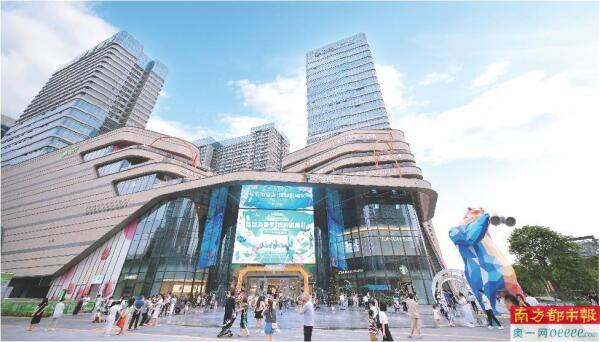
Core Insights - Huaqiang Plaza is successfully transforming foot traffic into consumer spending by creating an engaging shopping experience that appeals to families and children [4][6][8] - The plaza features a unique "Bears" theme, which has become a cultural anchor in the area, attracting a significant number of visitors and enhancing the public space [4][5][6] - The concept of a "third space" is realized through generous use of space, allowing for community engagement and a variety of activities beyond shopping [5][6][11] Consumer Engagement - The "Bears" themed immersive experience has made Huaqiang Plaza a popular destination for families, with attractions like a 22-meter high rainbow slide and themed play areas [7][8] - The plaza hosts a variety of first-store brands, enhancing its appeal and ensuring a steady flow of visitors, with over 200 brands, nearly 30% of which are making their debut in Shenzhen [8][9] - The integration of diverse activities, such as flea markets and themed events, fosters a sense of community and encourages repeat visits [6][8] Economic Impact - Huaqiang Plaza has seen a significant increase in foot traffic, from 160,000 visitors on opening day to an average of over 1 million monthly visitors [8][9] - The plaza is positioned as a key player in the local economy, contributing to the revitalization of the industrial area and attracting a young demographic [9][10] - The strategic location near major transportation hubs enhances its accessibility and potential for future growth, aligning with Shenzhen's broader commercial development plans [10][11] Community Integration - The plaza serves as a "city living room," providing a safe and comfortable space for local residents to engage in various activities, from morning exercises to late-night strolls [5][6] - By focusing on public value and community needs, Huaqiang Plaza is redefining the role of commercial spaces in urban environments [11] - The blending of industrial and commercial elements creates a unique atmosphere that caters to both consumer and cultural needs, promoting a harmonious urban development model [11][12]
星巴克中国值50-60亿美元吗?遭瑞幸库迪及新式茶饮围剿 2024财年营收、同店销售额下滑
Xin Lang Zheng Quan· 2025-06-25 09:10
Core Viewpoint - Starbucks China is facing significant challenges in the competitive landscape, with declining performance metrics and increasing pressure from local coffee brands and new tea beverage companies, raising questions about its valuation of $5-6 billion [1][6]. Group 1: Market Dynamics - Since 2019, local coffee brands like Luckin Coffee and Kudi have rapidly gained market share through aggressive pricing strategies and innovative marketing, leading to increased competition for Starbucks China [2][5]. - The ready-to-drink tea market is also saturated, prompting leading tea brands to expand into coffee, further intensifying competition in the coffee sector [2][5]. Group 2: Pricing and Product Innovation - Starbucks China has implemented significant price reductions, averaging a decrease of 5 yuan on several popular products, marking its first large-scale price adjustment in over 20 years [3][4]. - Despite these price cuts, Starbucks still struggles to compete on price, with local brands offering lower-priced options, such as Luckin Coffee's promotions at 6 yuan [3][5]. Group 3: Financial Performance - For the fiscal year 2024, Starbucks China's revenue declined by 1.4% to $2.958 billion, marking its first negative growth in recent years [4][6]. - Same-store sales fell by 8%, with average transaction value also decreasing by 8%, indicating a challenging sales environment [5][6]. Group 4: Competitive Positioning - As of March 2025, Starbucks China had 7,758 stores, while Luckin Coffee had expanded to 24,097 stores, highlighting a significant gap in market presence [7]. - Starbucks' market share has dropped from a peak of 60% to approximately 14%, while Luckin Coffee leads with a 35% market share [7][8]. Group 5: Valuation Comparison - Luckin Coffee's total revenue for 2024 was $4.724 billion, with a market capitalization of $10 billion, resulting in a P/S ratio of 2.1 [8]. - If Starbucks China is valued at $5-6 billion, it would correspond to a P/S ratio of 1.7-2.03, which is lower than Luckin's, reflecting its weaker growth prospects and market performance [8].


运动蚂蚁:运动潮玩馆正在变革,如何抓住Z世代与亲子消费的新风口
Zhong Guo Chan Ye Jing Ji Xin Xi Wang· 2025-06-25 06:22
近年来,随着消费升级与城市休闲生活方式的重构,"数字潮玩"正在成为线下文娱产业的新关键词。从 亲子家庭的周末打卡,到Z世代的社交聚会,从年轻白领的运动解压,到城市更新背景下的新兴商业配 套,新一代消费者对于"玩"的理解,已经不再局限于简单娱乐,而是融合了运动、社交、情感连接、亲 子陪伴等多重价值的复合体验。 比起传统健身或纯游乐,更多年轻人正在寻找一种"轻松不累、好玩上头"的社交方式。而数字运动的游 戏化、低门槛、强反馈特性,恰好满足了他们的"既动起来,又不费力"的需求。 这也使得数字运动潮玩馆正在成为"第三空间"的一种新形态:既不是单纯的娱乐场所,也不是专业运动 场地,而是介于其间的休闲社交场。三五好友组队挑战,情侣一起闯关竞技,甚至不期而遇的陌生人也 能并肩作战——这是线下场景最具粘性的社交动因,而这背后的体验感,正是我们持续打磨的方向。 四、新型商业空间的"标配解法" 正是在这样的背景下,运动蚂蚁自成立以来,始终以"数字运动+潮玩+社交"的创新路径,深耕潮玩场 景的构建与运营。从产品研发到场馆运营,从空间设计到用户动线,运动蚂蚁正在回应一类全新的市场 命题:在下一个线下消费周期中,潮玩场馆如何精准连接多 ...
南财观察:你多久没喝星巴克了?
2 1 Shi Ji Jing Ji Bao Dao· 2025-06-22 13:39
Group 1 - Starbucks has established a significant presence in China with 7,596 stores and 140 million members, but faces challenges as same-store sales decline by 8% and average transaction value drops by 8% in fiscal year 2024 [1] - Local competitors like Luckin Coffee and others are rapidly gaining market share, with Luckin's revenue surpassing Starbucks in 2023 and projected to reach a 32.9% market share by 2025 [1] - The overall coffee market in China is expected to grow from 46.5 billion in 2020 to 55 billion by 2025, while Starbucks' market share is projected to shrink from 42% to 17% [1] Group 2 - In June 2025, Starbucks China implemented its first price reduction in 25 years, with non-coffee beverages dropping by up to 6 yuan, aiming to maintain the premium pricing of coffee products at 39 yuan [2] - The price cut led to a 5% increase in revenue in the second quarter, but operational costs rose by 12.1%, resulting in a net profit margin of 4.4% [2] - The shift in consumer preferences indicates that 60% of coffee consumers in China prioritize products priced below 20 yuan, reflecting a change in market dynamics where coffee is viewed as an everyday consumable rather than a luxury item [2]
星巴克,从王者到学徒
首席商业评论· 2025-06-19 04:02
以下文章来源于华商韬略 ,作者华商韬略 华商韬略 . 聚焦标杆与热点、解构趋势与韬略 不再像自己,但也不像瑞幸。 作者:陈乐高 来源:华商韬略出品(ID:hstl8888) 这是入华25年来,星巴克第一次直接大规模降价。 6月10日,星巴克对旗下星冰乐、冰摇茶、茶拿铁三大非咖系列产品,做了一轮价格下调,调整后,多款饮 品价格回到了20元以下。 忘掉自己 这一切背后的动因,是中国市场剧烈震荡的业绩。 2024财年,星巴克中国营业收入约210.55亿元,同比下降1.4%,同店销售额同比下降8%,而这还是中国市 场调整后反弹的结果。 事实上改变早已开始,在最近五六年,除了门口的绿色美人鱼商标,星巴克亲手摘掉的金科玉律,远不止 于此。 第三空间,是星巴克极力打造的一种体验。在它看来,生活在大城市快节奏生活中的人,在家庭和职场 外,还应该有一个获得松弛感的栖息之所。 为了这个体验,星巴克管住的不止是三明治,还有家具材质、屋顶灯光、店内音乐,甚至是店员和顾客的 交流方式。 但随着互联网商业时代的到来,空间的传统被打破了。 2019年,星巴克推出了主打"在线点,到店取"的"啡快"服务,又很快全面接入阿里巴巴的商业平台。 当 ...
星巴克中国25年首降价的背后:市场压力下的转型与股权出售疑云
Xin Lang Zheng Quan· 2025-06-18 02:10
Core Viewpoint - Starbucks is facing significant pressure in the Chinese market, leading to its first price reduction in 25 years for non-coffee beverages, marking a strategic shift to combat local competition and a potential restructuring of its business in China [1][2][7]. Group 1: Price Adjustment and Market Response - In June 2025, Starbucks announced a price reduction for 10 non-coffee beverages, with the highest drop reaching 6 yuan, allowing consumers to save an average of 5 yuan per cup [2]. - The price adjustments reflect a direct response to the competitive landscape, particularly against local brands like Luckin Coffee, which reported a revenue increase of 41.2% year-on-year in Q1 2025 [2][3]. - Starbucks' revenue in China for FY2024 was $2.968 billion, a decline of 6.13% compared to the previous year, with same-store sales down 6% [2]. Group 2: Strategic Transformation - Starbucks is shifting its focus towards non-coffee products, aiming to enhance the "afternoon tea" experience as a key growth driver in the Chinese market [4]. - The company is implementing a "coffee + non-coffee" dual-engine model to better cater to various consumer scenarios and store types [4]. - The non-coffee segment is seen as crucial for penetrating lower-tier markets, with Starbucks expanding its presence to over 1,000 county-level markets and adding 166 new markets in FY2024 [4]. Group 3: Operational Changes and Challenges - To support its strategic shift, Starbucks has adopted cost-control measures, including tighter labor management, which has led to a reduction in workforce at individual stores [5][6]. - Despite these efforts, there are concerns about the effectiveness of labor reductions in enhancing productivity and driving sales growth [5][6]. - The company is also facing challenges in balancing its premium brand positioning with the need for competitive pricing in a rapidly evolving market [8][9]. Group 4: Ownership and Future Prospects - There are ongoing rumors regarding the potential sale of Starbucks' China business, with interest from private equity firms and local companies [7]. - Starbucks' global CEO has acknowledged the need for adjustments to enhance business performance while exploring strategic partnerships for growth in China [7]. - The company is under pressure to innovate and localize its product offerings to meet the distinct preferences of Chinese consumers [8].
星巴克降价:一场应对“低价风暴”的“有限妥协”
Sou Hu Cai Jing· 2025-06-16 15:08
Core Insights - Starbucks is facing a comprehensive challenge in China, not only in terms of price competition but also regarding brand value, consumer experience, and cultural recognition [2][32] - The company has announced a price reduction for ten non-coffee beverages, with a decrease of 2-6 yuan, averaging around 5 yuan, marking a significant strategic shift to adapt to local market conditions [3][4] Market Competition Landscape - The Chinese ready-to-drink beverage market is highly competitive, with coffee and tea categories overlapping, leading to pressure from both international and local brands [4][5] - The market for ready-to-drink tea is projected to reach 368.9 billion yuan by 2025, surpassing the coffee market by over 100 billion yuan, with both categories maintaining a growth rate of around 20% [4] Price War Dynamics - Local brands like Luckin Coffee and Kudi are aggressively lowering prices, with strategies such as Luckin's "9.9 yuan" promotions, which have put pressure on Starbucks' mid-to-high-end positioning [5][6] - The shift in consumer habits towards "morning coffee, afternoon tea" has made non-coffee beverages a significant revenue source for Starbucks [6] Consumer Preferences and Brand Perception - Local tea brands are gaining market share in the non-coffee segment due to their closer alignment with local tastes and more approachable pricing [7] - The Z generation shows lower brand loyalty and prefers products with social attributes, which local brands leverage through frequent collaborations [9] Financial Performance and Strategic Adjustments - Starbucks reported a revenue of $739.7 million in the second quarter of fiscal year 2025 in China, a 5% year-on-year increase, but faced a 6% decline in same-store sales in the first quarter [10][11] - The company's price adjustment for non-coffee beverages is a rare move, reflecting management's serious assessment of market conditions [12][13] Long-term Challenges and Opportunities - The brand's dual positioning as a "premium coffee brand" and "third space provider" is under scrutiny as price reductions may dilute its high-end image [20][21] - Effective penetration into lower-tier markets is crucial for Starbucks' growth strategy, which faces challenges from local low-cost competitors and varying consumer acceptance of coffee culture [22][23] Digital Transformation and Governance - Starbucks needs to enhance its digital capabilities to remain competitive, particularly in data-driven decision-making and marketing [25][26] - Potential changes in corporate governance, including the possibility of selling stakes in the Chinese business, could impact strategic execution [27][28][29] Conclusion - The competition in China for Starbucks is not merely a price war but a multifaceted challenge involving brand value, consumer experience, and cultural identity [32]

我们对无人驾驶的想法,竟然狭隘了?
3 6 Ke· 2025-06-16 01:43
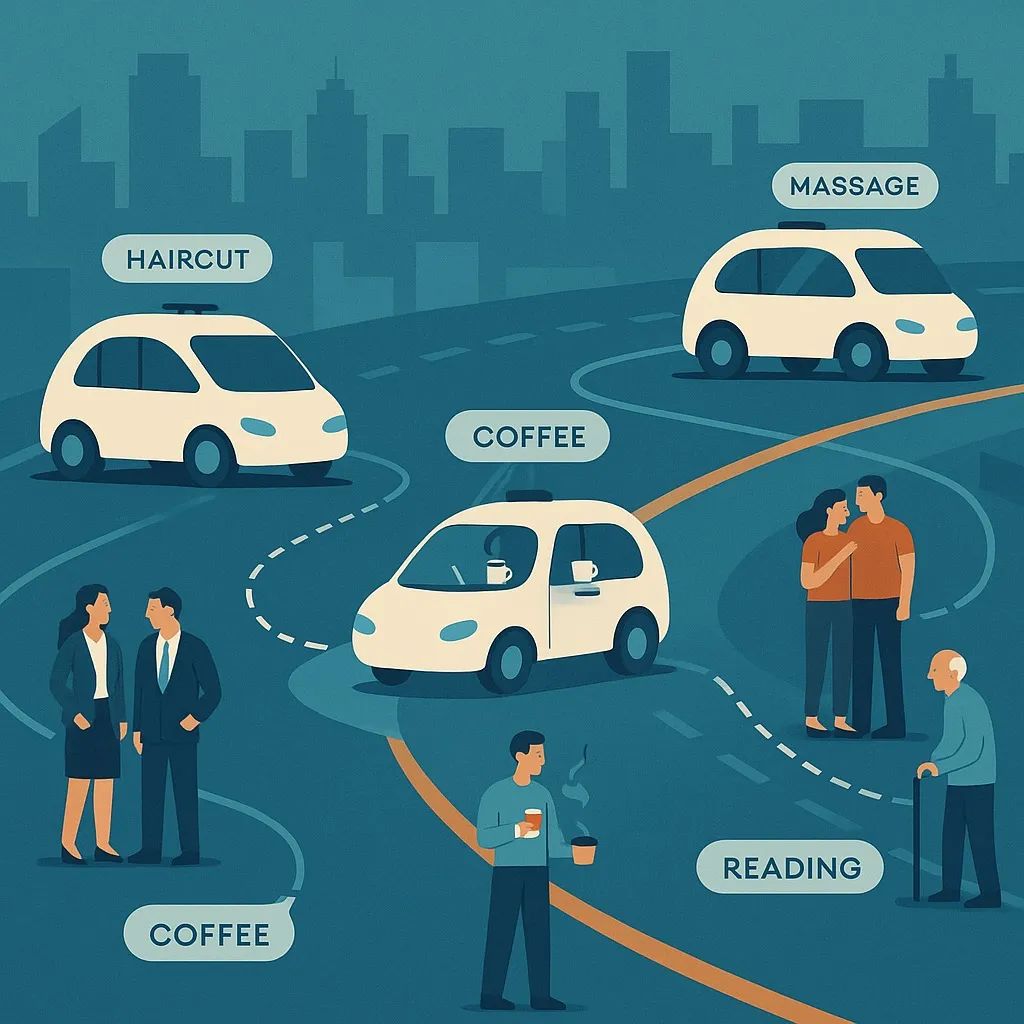
Core Insights - The integration of autonomous driving technology with new business models is creating a new, fluid industry landscape [1][35] - Autonomous vehicles have the potential to transform into mobile third spaces, redefining urban commercial structures and consumer experiences [4][22] Group 1: Autonomous Driving and Consumer Experience - The visit of European Central Bank President Christine Lagarde to Baidu's Apollo park highlighted the potential of autonomous vehicles beyond traditional transportation, suggesting they could serve as mobile service spaces [2][30] - The concept of a "third space," as proposed by sociologist Ray Oldenburg, emphasizes the need for environments where individuals can socialize outside of home and work, which autonomous vehicles could fulfill [5][14] - Consumers are already utilizing autonomous vehicles like "萝卜快跑" for purposes beyond transportation, such as mobile study rooms or quiet spaces for relaxation [27][29] Group 2: New Business Models - Traditional fixed-location businesses face challenges due to high costs and inflexibility, while mobile third spaces can adapt to real-time consumer demands [31][36] - The shift from fixed storefronts to mobile service providers allows businesses to reduce overhead costs and dynamically connect with consumers based on demand [32][36] - The emergence of a "fluid ecology" in urban spaces enables businesses to operate without being tied to a specific location, fostering a decentralized approach to consumer engagement [36][38] Group 3: Future Urban Planning - As autonomous driving technology matures, it will fundamentally alter perceptions of urban space, transportation, and commercial interactions [38][40] - The future of urban infrastructure may evolve to support intelligent networks that link services and consumers dynamically, rather than relying solely on traditional fixed locations [38][40] - The concept of a "mobile oasis" offers a new vision for urban living, where individuals can find personalized spaces for work, relaxation, or socialization on the go [40]
星巴克降价5块钱有用的话,要瑞幸做什么
3 6 Ke· 2025-06-13 09:57
星巴克想让中国消费者坐回去。 早上七点半,上早班的杨楠点了一杯送到公司的库迪加浓冰美式,免配送费,消费共计8.9元——平台 外卖大战的背景下,这样的价格并不少见。 但如果要问最喜欢哪家连锁咖啡,杨楠的回答是星巴克,库迪、瑞幸则是"班味刷锅水",需要日复一日 地在工作时间服用,以维持头脑高效运转。某种意义上,库迪、瑞幸是为了别人喝,星巴克和旅行期间 探店的高价手冲才是为了自己喝。 杨楠对咖啡连锁品牌的认知在年轻"牛马"中很具代表性:瑞幸、库迪不好喝,但便宜;星巴克口味上过 得去,但贵。过去的很多年中,即便是中国连锁咖啡市场价格战最激烈的2023年,星巴克都在努力坚持 调性,不降价。 不过,竞争带来的增长压力切实存在。过去的两年中,星巴克在股价和财务数据上都表现不佳,2024年 9月上任的CEO倪睿安提出了"重返星巴克"计划,希望通过一系列举措,抑制星巴克在全球不断下滑的 业绩。 这样的大背景下,今年6月,一向拒绝降价的星巴克中国也宣布将下调部分非咖饮品的价格。而在被问 及降价是持续性还是夏季限时,其中国部负责人也松口表示:"未来我们将视顾客反馈,决定后续活动 计划。" 留住客户 自6月10日起,星巴克的三类饮品 ...