Workflow
货币贬值
icon
Search documents
华尔街顶级机构内部分析:为什么目前美国经济还不错但是后市要大跌?
Sou Hu Cai Jing· 2025-09-13 23:43
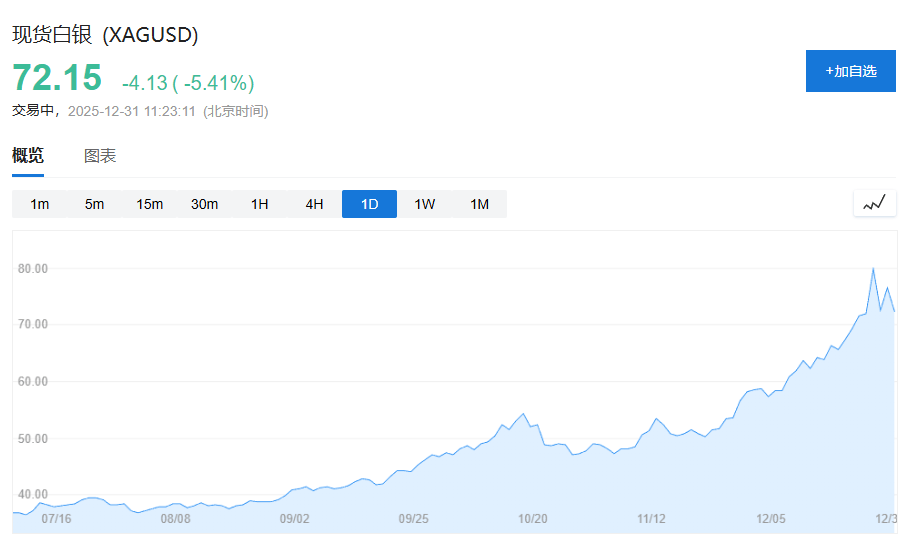
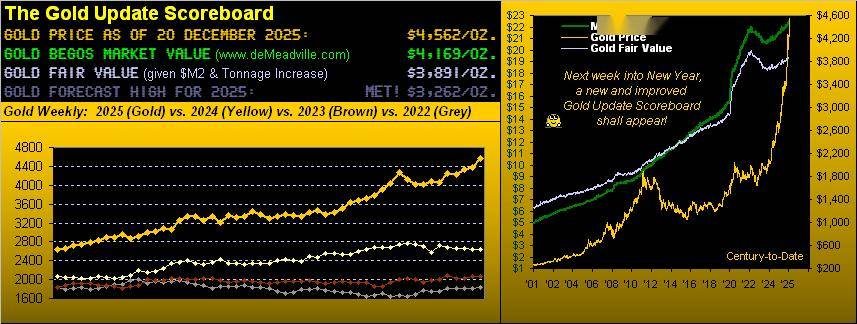
Group 1 - The Federal Open Market Committee (FOMC) has indicated that there will be no changes in the short term, and market expectations for preventive rate cuts by the Federal Reserve starting in September are deemed correct [1] - The importance of the Federal Reserve's independence is emphasized, as it is crucial for maintaining credibility in economic policy, which in turn lowers borrowing costs and supports sustainable growth [1] - The theme of currency depreciation remains unchanged, with gold prices surpassing $3,650, reflecting a monthly increase of 6% and a year-to-date increase of 40% [1] Group 2 - The current economic environment suggests a favorable outlook for the stock market, contingent on strong income and profit growth, regulatory relaxation, healthy balance sheets, record capital expenditure, lower policy rates, and upcoming fiscal stimulus measures [1] - The 10-year U.S. Treasury yield is around 4%, which is considered high, and the market has nearly priced in the peak of dovish sentiment relative to current data [1] - A significant sell-off is anticipated if future predictions hold true, indicating potential volatility in the market [1]
金价大涨!今年以来涨幅已接近40%
Sou Hu Cai Jing· 2025-09-13 09:22
Group 1: Gold Price Surge - Gold prices reached a record high of $3,674.27 per ounce, surpassing the previous peak of $850 per ounce (adjusted for inflation) [1] - The price of gold has increased approximately 5% this month and nearly 40% year-to-date, highlighting its status as a safe-haven asset amid macroeconomic uncertainties [1] - Factors such as rising unemployment claims and persistent high core CPI contributed to the recent surge in gold prices, with analysts suggesting a constructive outlook for gold in the coming months [1] Group 2: Economic Indicators and Market Sentiment - Recent economic data indicates a cooling U.S. economy, with the August CPI rising 2.9%, the largest increase in seven months, and a decline in the PPI [2] - Non-farm payrolls added only 22,000 jobs in August, with the unemployment rate rising to 4.3%, raising concerns about stagflation [2] - Market expectations for a 25 basis point rate cut by the Federal Reserve have increased, with traders fully pricing in this possibility [2] Group 3: Factors Driving Gold Prices - U.S. tax cuts and tariffs, along with challenges to the independence of the Federal Reserve, have diminished the attractiveness of the dollar and U.S. Treasuries, leading to increased investment in gold [3] - Historical perspectives on gold as a hedge against inflation and currency devaluation are being reinforced by current economic conditions and geopolitical uncertainties [3] - Goldman Sachs projects gold prices could reach $3,700 by the end of 2025 and potentially $4,000 by mid-2026, with scenarios suggesting prices could even hit $4,500 to $5,000 if there is a significant outflow from dollar assets [3] Group 4: Central Bank Trends and Future Outlook - Central banks are diversifying their foreign reserves, with gold's share in reserves rising since the Russia-Ukraine conflict, making it the second-largest reserve asset globally [4] - The future trajectory of gold prices will depend on Federal Reserve policy and global risk events, with historical trends indicating that rate-cutting periods enhance gold's appeal [4] - The ongoing gold market rally is supported by a broad investor base and policy uncertainties, positioning gold as both an inflation hedge and a beneficiary of global asset reallocation [4]
金价突破1980年通胀调整峰值
第一财经· 2025-09-12 00:24
Core Viewpoint - The article highlights the recent surge in gold prices, reaching a historical high of $3674.27 per ounce, driven by macroeconomic uncertainties and inflation concerns, reinforcing gold's status as a safe-haven asset [3][4]. Economic Slowdown and Monetary Easing Expectations - Recent data indicates a cooling U.S. economy, with the August Consumer Price Index (CPI) rising by 2.9%, the largest increase in seven months, while the Producer Price Index (PPI) unexpectedly declined [5]. - Non-farm payrolls added only 22,000 jobs in August, with the unemployment rate rising to 4.3%, and the annual employment data was revised down by 911,000 jobs [5]. - These signals of a weakening labor market alongside persistent inflation have heightened concerns about stagflation, leading traders to fully price in a 25 basis point rate cut by the Federal Reserve [5]. Multiple Factors Driving Gold Prices - Policies from the Trump administration, including tax cuts and tariffs, have diminished the attractiveness of the U.S. dollar and Treasury bonds, accelerating capital inflow into gold [6]. - Gold has historically served as a hedge against inflation and currency devaluation, a role that is being reinforced amid current economic conditions [6]. - Analysts note that unlike the volatile spikes in gold prices seen in 1980, the current price increase is characterized by reduced volatility due to enhanced market liquidity and the accessibility of gold through ETFs [6][7]. - Goldman Sachs projects that gold prices could reach $3700 by the end of 2025 and potentially exceed $4000 by mid-2026, with scenarios suggesting prices could touch $4500 to $5000 if there is a significant outflow from dollar assets [7]. Central Bank Diversification and Long-term Support for Gold - Since the onset of the Russia-Ukraine conflict, the proportion of gold in central bank reserves has increased, surpassing that of the euro, making gold the second-largest reserve asset globally [8]. - Future gold price movements are expected to depend on the Federal Reserve's policy direction and global risk events, with historical trends indicating that rate-cutting cycles tend to enhance gold's appeal [8]. Broader Investor Base and Policy Uncertainty - The sustainability of the current gold market is attributed to a broad base of investors and ongoing policy uncertainties, positioning gold not only as an inflation hedge but also as a beneficiary of global asset reallocation [9].
黄金突破1980年通胀调整历史峰值!三年暴涨驶入未知水域
Jin Shi Shu Ju· 2025-09-11 23:15
Core Insights - Gold prices have surpassed the inflation-adjusted historical peak from 45 years ago, indicating a significant shift in market dynamics amid growing concerns about the U.S. economy [1][2] - The current surge in gold prices, which has seen a nearly 40% increase this year, reflects a broader trend of investors seeking safe-haven assets in response to economic uncertainty and inflation fears [2][3] Group 1: Price Movements and Historical Context - Spot gold prices have risen approximately 5% this month, reaching a record high of $3,674.27 per ounce, marking over 30 nominal record highs since 2025 [1] - The current gold price has surpassed the inflation-adjusted peak of $850 from January 1980, which is equivalent to about $3,590 today [1] - The volatility of the current gold price surge is significantly lower compared to the parabolic rise and subsequent fall in 1980, attributed to stronger market liquidity and broader investor participation [2] Group 2: Central Bank and Investor Behavior - The value of gold stored in London has exceeded $1 trillion for the first time, making it the second-largest asset in global central bank reserves, surpassing the euro [3][6] - Central banks are increasing their gold holdings to diversify away from the U.S. dollar and mitigate risks associated with sanctions against U.S. adversaries, particularly following the Russia-Ukraine conflict [6] - The shift from a unipolar to a multipolar world is accelerating the demand for gold among central banks and high-net-worth individuals, as gold becomes a key asset for diversification [6] Group 3: Economic Indicators and Future Outlook - Recent market trends suggest that expectations of imminent interest rate cuts by the Federal Reserve are driving gold prices higher, as lower rates typically enhance gold's appeal compared to interest-bearing assets [8] - Historical parallels are drawn to the 1970s when pressure on the Federal Reserve to maintain low rates led to a significant depreciation of the dollar and a subsequent gold bull market [8] - Investors are increasingly viewing gold as a safeguard against the devaluation of currency and rising debt levels, reinforcing its status as a reliable store of value [9]
全球投资者蜂拥入市 黄金突破45年来通胀调整后峰值
智通财经网· 2025-09-11 22:30
Core Viewpoint - Gold prices have reached a historic high, reflecting increasing economic uncertainty in the U.S. and solidifying gold's status as a key hedge against inflation and currency devaluation [1][4]. Group 1: Gold Price Performance - Spot gold hit a record high of $3,674.27 per ounce this week, marking over 30 nominal record highs this year [1]. - Gold has surpassed the inflation-adjusted peak of $850 per ounce from January 1980, which is approximately $3,590 today [4]. - Since 2025, gold has cumulatively risen nearly 40% [4]. Group 2: Factors Driving Gold Prices - Key drivers for the surge in gold prices include concerns over rising U.S. fiscal deficits and inflation due to large tax cuts and escalating global trade tensions initiated by former President Trump [4]. - The recent spike in gold prices is attributed to investor expectations that the Federal Reserve will lower interest rates in response to slowing job growth and potential economic recession [4][10]. - The global liquidity of the gold market has improved, contributing to a more stable price increase compared to the dramatic rise in the 1980s [5]. Group 3: Global Central Bank Activity - Central banks are increasing gold purchases to diversify foreign exchange reserves and mitigate risks associated with U.S. financial sanctions [5]. - Since the onset of the Russia-Ukraine conflict in 2022, gold prices have nearly doubled, driven by institutional investors increasing their gold holdings [5]. Group 4: Regional Demand Insights - Thailand has emerged as a significant player in the gold market, with local demand expected to grow by 10% to 53.7 tons this year, driven by a 7% appreciation of the Thai baht [8][9]. - The cultural significance of gold in Thailand, where it is viewed as a traditional form of savings and wealth transfer, continues to fuel demand despite rising prices [9]. Group 5: Market Sentiment and Future Outlook - Historical patterns suggest that gold prices typically rise during periods of Federal Reserve rate cuts, especially in non-recessionary periods [8]. - Analysts warn that while current gold prices are high, they remain attractive compared to U.S. equities, indicating a potential for further investment in gold as a protective asset [8][10]. - The ongoing trend of de-dollarization and the increasing role of gold in global financial systems may lead to a new super bull market for gold if U.S. equities face corrections [10].
金价,创下历史新高!
Sou Hu Cai Jing· 2025-09-03 16:01
Group 1 - The international gold price has recently surged, reaching a historical high of $3616.9 per ounce [1] - Domestic gold jewelry brands have reported an increase in the price of pure gold jewelry, with brands like Chow Tai Fook and Luk Fook Jewelry pricing at 1053 yuan per gram [2] Group 2 - Gold is regaining favor among investors as a diversification option, especially when bonds fail to mitigate risks, maintaining its status as a 'safe-haven asset' against inflation and loose economic policies [3] - Despite inflation hovering around 3%, the potential for the Federal Reserve to resume interest rate cuts, along with tariff impacts and reduced labor supply, may lead to economic growth slowdown, benefiting gold [3] - The weakening of the US dollar, alongside concerns over expanding fiscal deficits, enhances gold's long-term investment appeal [3] - Structural narratives for investing in gold remain strong, with foreign exchange reserve management institutions continuing to buy gold and global gold ETF holdings on the rise [4]
美国高关税打击下印度卢比徘徊于历史低点 未来表现恐持续落后其他亚洲货币
Zhi Tong Cai Jing· 2025-09-01 07:47
Group 1 - The Indian Rupee is weakening and hovering near historical lows, with analysts predicting continued underperformance against other Asian currencies due to high tariffs imposed by the US on Indian imports [1] - The USD to INR exchange rate is reported at 88.27, slightly above the historical high of 88.3075 reached last Friday, with the Rupee down approximately 3% against the dollar this year [1] - The US has imposed a total tariff rate of 50% on all goods imported from India, effective from August 27, which includes a 25% punitive tariff due to India's continued purchase of Russian oil [1] Group 2 - High tariffs from the US may suppress exports in key Indian industries such as textiles, gems, and jewelry, potentially slowing GDP growth and increasing depreciation pressure on the Rupee [2] - Foreign investors have withdrawn $2.4 billion from the Indian stock market over the past three trading days, including nearly $950 million on the day the Rupee hit its historical low [2] - Continued capital outflows are expected to increase volatility in both the Indian currency and stock market [2]
全球外汇交易员_从美联储到(外汇)干预-Global FX Trader_ From the Fed to the Fix
2025-08-31 16:21
Summary of Key Points from the Conference Call Industry Overview - **Industry**: Foreign Exchange (FX) Market - **Key Focus**: Analysis of various currencies including CNY (Chinese Yuan), USD (US Dollar), EUR (Euro), INR (Indian Rupee), Scandi FX (Swedish Krona and Norwegian Krone), and CHF (Swiss Franc) [1][7][9][10][15] Core Insights and Arguments CNY (Chinese Yuan) - Recent strength in CNY is attributed to policy push rather than market pressure, with policymakers moving the fixing stronger despite market conditions [1] - CNY is considered significantly undervalued, comparable to the "China shock" period in the mid-2000s, supported by large export market share gains and a surge in the current account surplus [1] - Continued adjustments in CNY are expected, impacting FX markets and reducing the burden on the Euro to drive Dollar depreciation [1] USD (US Dollar) - The broad Dollar has been range-bound, but factors leading to its depreciation remain active, including a softening labor market and subpar growth expectations [7] - A significant rise in unemployment above 4.40% could impact rates-sensitive currency pairs like EUR/USD and USD/JPY [7] - Global asset allocators are likely to seek ways to hedge FX risks due to Dollar dominance, influenced by institutional governance concerns [8] EUR (Euro) - Political developments in France, including a confidence vote, are unlikely to alter the fundamental outlook for the Euro, despite potential volatility [9] - The Euro is expected to strengthen, with other currencies likely to outperform after the Euro's initial leadership in the Dollar's decline [9] INR (Indian Rupee) - The outlook for INR is clouded by new tariffs on Indian exports to the US, leading to heavy equity outflows and a return to all-time highs for USD/INR [10] - The effective tariff rate is estimated at around 32%, impacting export forecasts and current account projections [10] Scandi FX (NOK and SEK) - Both NOK and SEK are expected to strengthen against the Dollar, supported by global trends and Dollar hedging programs [10] - The upcoming Norwegian general election poses a risk for NOK, particularly regarding potential changes to the sovereign wealth fund's currency channeling policies [10] CHF (Swiss Franc) - A recommendation to short EUR/CHF is based on the belief that US importers will struggle to substitute Swiss goods, thus limiting necessary currency adjustments [15] - The risk-reward for this trade has become less favorable, but further movement towards the target of 0.93 is still anticipated [15] Additional Important Insights - The report emphasizes the importance of macroeconomic factors and policy changes in shaping currency valuations and market dynamics [1][7][9][10][15] - The analysis includes forecasts for various currency pairs over different time horizons, indicating expected movements and potential misalignments with fundamentals [21][23] - The report highlights the need for investors to consider multiple factors in their investment decisions, including geopolitical risks and economic indicators [3][27] This summary encapsulates the key points discussed in the conference call, providing a comprehensive overview of the current state and outlook of the FX market.
坚决反对提前还房贷!经济学家马光远:房贷其实在占银行的便宜。
Sou Hu Cai Jing· 2025-08-28 03:29
Core Viewpoint - The discussion centers around the financial implications of early mortgage repayment, with economist Ma Guangyuan arguing against it, suggesting that it is not a financially sound decision in the long term [4][5]. Group 1: Economic Perspective - Ma Guangyuan emphasizes that repaying a mortgage early is not advantageous from an investment standpoint, regardless of the interest rate on the loan [4]. - He argues that the value of money depreciates over time, meaning that the amount repaid in the future will be worth significantly less than today [5]. - The example provided illustrates that a loan of 2 million yuan could become equivalent to only 200,000 yuan in today's value after 20 years due to inflation [5]. Group 2: Public Reaction - The video of Ma Guangyuan's comments sparked widespread discussion and debate on social media, indicating a strong public interest in the topic [5]. - Comments from viewers reflect a mix of agreement and skepticism, with some questioning why banks may not allow early repayment if it is indeed beneficial to borrowers [6]. - A user highlighted the depreciation of money over time, supporting Ma's argument by referencing past housing prices and loan conditions [8].
X @外汇交易员
外汇交易员· 2025-08-22 08:33
路透:叙利亚将发行新钞,去掉货币上的两个零以恢复公众对货币的信心。自2011年战争爆发以来,叙利亚镑已贬值99%以上,汇率从战前为50叙利亚镑兑1美元跌至10000镑比1美元。为简化交易并提高货币稳定性,叙利亚央行于8月中旬通知银行,计划发行新货币。新钞由俄罗斯国有印钞公司Goznak印制。 ...