自动驾驶

Search documents
复盘特斯拉FSD进化史:把端到端推向无人驾驶终局
3 6 Ke· 2026-01-13 12:14
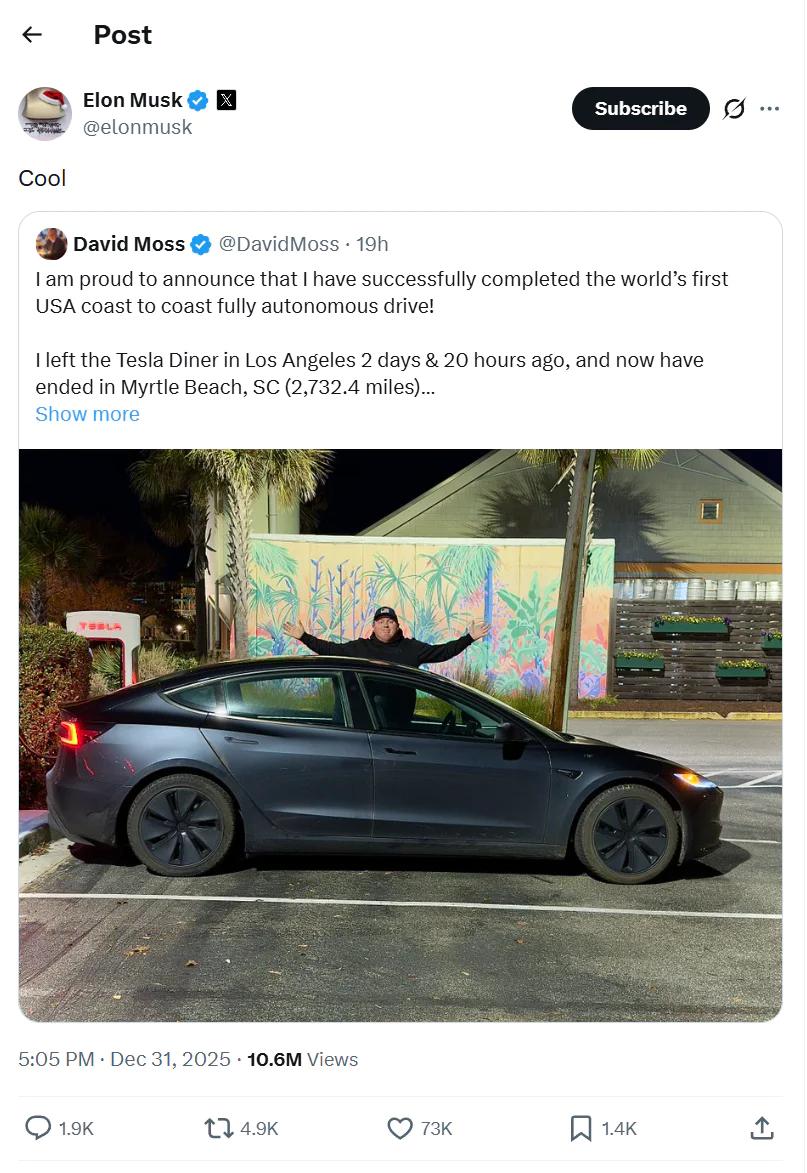
Core Insights - Tesla's FSD V14 has demonstrated significant advancements in autonomous driving capabilities, completing a cross-country journey of 2732 miles (approximately 4400 kilometers) with zero human intervention [2][7][35] - The evolution of Tesla's FSD system from V12 to V14 showcases a shift from rule-based to data-driven approaches, enhancing the system's ability to learn and adapt to complex driving scenarios [19][45][86] Group 1: Tesla's FSD Development - Tesla's FSD V14 completed a cross-country trip, showcasing its advanced autonomous driving capabilities with zero human intervention [2][7] - The previous similar test by Delphi in 2015 took 9 days with significant human intervention, highlighting Tesla's technological advancements [5][6] - FSD V14 is seen as a potential benchmark in the industry, with Nvidia's Jim Fan suggesting it may have passed a "physical Turing test" [8][9] Group 2: Technical Evolution of FSD - The transition from FSD V12 to V14 represents a significant leap in capabilities, with V12 focusing on end-to-end learning and V13 enhancing contextual understanding [18][24][35] - FSD V13 introduced a new hardware platform (HW4) with a fivefold increase in AI computing power, enabling more complex decision-making [31][32] - FSD V14 further enhances the system's capabilities, allowing it to operate in L4 conditions and paving the way for the commercial rollout of Robotaxi services [35][40] Group 3: Competitive Landscape - Domestic competitors are narrowing the gap with Tesla, with some claiming the distance has reduced from three years to one year in terms of technology [12][13] - The competitive focus is shifting from generational differences to engineering efficiency, as companies seek to optimize their models and data within limited resources [86] - Tesla's unique approach, integrating autonomous driving with robotics and leveraging extensive data and computing resources, sets it apart from domestic players [67][70][76]


北汽2025年销量突破175万辆,自主品牌成增长引擎
Bei Jing Ri Bao Ke Hu Duan· 2026-01-13 10:33
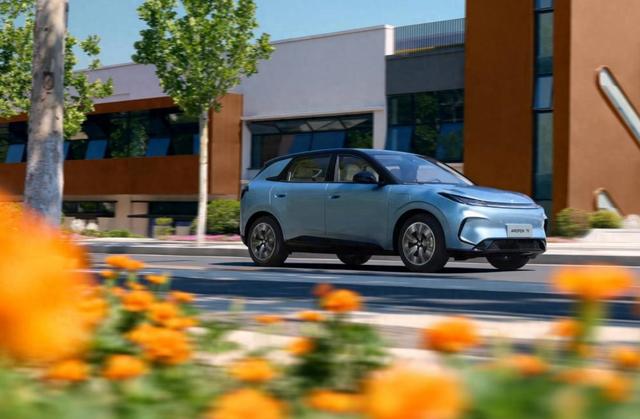
Group 1 - The core objective of the company is to achieve a vehicle sales target of 1.752 million units by 2025, representing a year-on-year growth of 5.6%, with over 60% of sales coming from its own brands [1] - The company's self-owned brands have become the main growth engine, with passenger and commercial vehicles achieving collaborative growth [1] - The electric vehicle brand Arcfox has seen significant growth, with annual sales reaching 163,000 units, doubling year-on-year, and maintaining a growth rate exceeding 100% for two consecutive years [1][3] Group 2 - The company aims for high-quality development, with internationalization and new energy businesses progressing simultaneously, achieving historical highs [3] - The export volume is projected to reach 308,000 units by 2025, a year-on-year increase of 26%, outpacing the industry growth rate by 7.3 percentage points, with products covering over 130 countries and regions [3] - The company sold over 390,000 new energy vehicles in the past year, marking a 95% year-on-year increase, with significant growth in its self-owned brands [3] Group 3 - The company has made advancements in autonomous driving, with two models receiving L3-level conditional autonomous driving product approval, including one from the Arcfox brand [3] - The company has initiated large-scale road trials for L3-level autonomous driving, positioning itself competitively in the key technology race defining future mobility [3] Group 4 - Continuous innovation in the field of intelligence is reflected in the company's efforts to create "technical highlights," such as the launch of the world's first engineering liquid hydrogen heavy truck [4] - The company has successfully developed an electric vehicle drive motor rotor that challenges ultra-high speeds of 55,000 RPM [4]

文远知行-W(00800.HK):立足国内发力海外 ROBOX商业化落地龙头
Ge Long Hui· 2026-01-13 10:09
Core Insights - The company, founded in 2017 by experts in computer vision and machine learning, has expanded its business from Robotaxi to multiple L4 scenarios including Robobus, Robovan, and Robosweeper, while also venturing into L2+ assisted driving [1] - As of Q3 2025, the company's total revenue reached 171 million yuan, a year-on-year increase of 144%, with the core growth driver being the Robotaxi business, which generated approximately 35.3 million yuan in a single quarter, reflecting a staggering year-on-year increase of 761% [1] - The company is the only entity globally to have obtained autonomous driving licenses in eight countries, achieving pure unmanned commercial operations in Beijing and Guangzhou [2] Financial Performance - The company reported a gross margin of 32.9% in Q3 2025, with a net loss of 307.3 million yuan [1] - Cash and capital reserves stood at 5.4 billion yuan as of September 30, 2025, supporting ongoing R&D investments and scaling efforts [1] Market Position and Growth Potential - The Robotaxi business is approaching a commercial tipping point, with a clear path to profitability driven by advancements in technology and cost reductions [3] - The BOM cost for hardware has decreased from over 1 million yuan to below 300,000 yuan, enhancing the unit economic model [3] - The Chinese B-end shared mobility market is steadily expanding, with optimistic projections suggesting that the Robotaxi market could reach 200 billion yuan by 2030 [3] Regulatory Environment - The company benefits from a favorable regulatory landscape, with 51 cities in China opening pilot programs for unmanned driving operations [3] - Middle Eastern countries are strategically driving the adoption of autonomous vehicles, while Singapore is cautiously promoting compliance for various autonomous driving vehicles [3] Revenue Forecast and Investment Rating - The company is projected to generate total revenues of 555 million yuan, 945 million yuan, and 1.987 billion yuan for the years 2025, 2026, and 2027 respectively [4] - The current market valuation corresponds to price-to-sales ratios of 43.0, 25.2, and 12.0 for the years 2025, 2026, and 2027, respectively, with an initial "buy" rating assigned [4]
自动驾驶的人才,正疯狂涌入具身智能......
自动驾驶之心· 2026-01-13 09:52
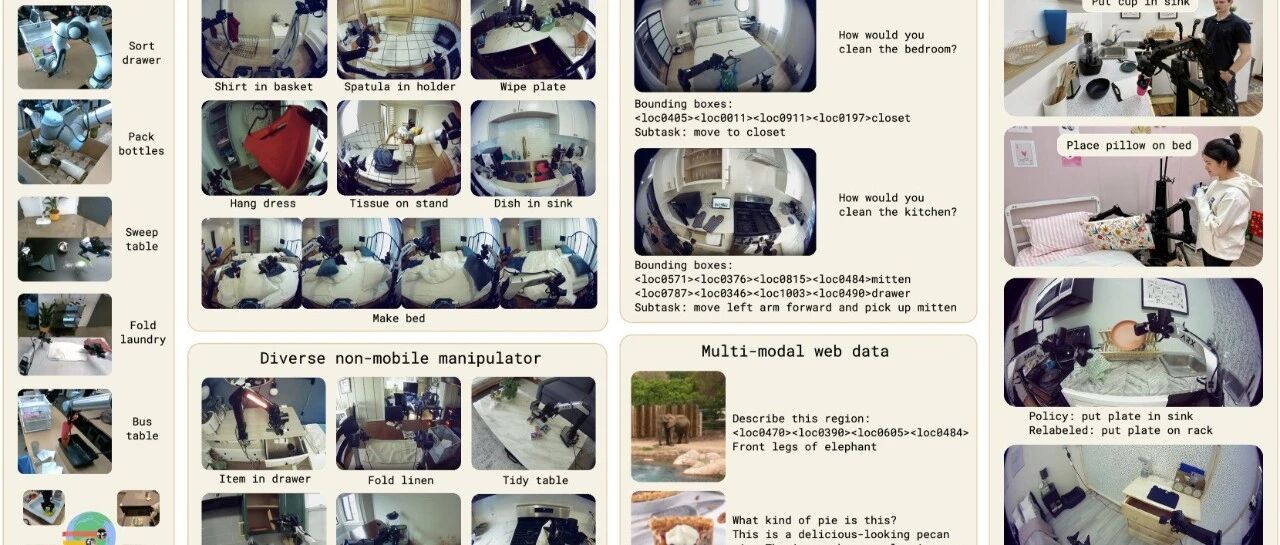
Core Viewpoint - The article discusses the transition from autonomous driving to embodied intelligence, indicating a new wave of technological advancement and talent movement within the industry [2]. Group 1: Industry Trends - The autonomous driving sector is entering a mature phase, while embodied intelligence is emerging as the next significant trend, with many professionals shifting their focus [2]. - Major players in the autonomous driving field are beginning to embrace robotics, forming teams dedicated to embodied intelligence [3]. Group 2: Technological Developments - The π series represents a milestone in the VLA (Vision-Language-Action) field, focusing on continuous technological breakthroughs that redefine the learning paradigms for robots in the generative AI era [4]. - Key developments in the π series include: - π0, which introduces Flow Matching for continuous action trajectory prediction, enhancing precision in manufacturing and autonomous driving scenarios [5]. - π0.5, which achieves a 94% success rate in generalizing complex tasks in unfamiliar environments, significantly reducing data costs by 90% [5]. - π0.6, which utilizes reinforcement learning for zero-shot generalization, achieving 100% task completion rates in industrial settings [5]. Group 3: Learning and Training Challenges - Many newcomers face difficulties in utilizing the π series effectively, often spending significant time troubleshooting without achieving satisfactory results [6][7]. - There is a demand for guided projects to enhance learning and improve job prospects in the field [8]. Group 4: Educational Initiatives - The "Embodied Intelligence Heart" platform has replicated π series methods to address the lack of real-world projects and guidance for learners [9]. - A comprehensive course has been developed, covering hardware, data collection, VLA algorithms, and real-world applications, aimed at providing practical experience [10][14]. - The course includes a SO-100 robotic arm as part of the training package, facilitating hands-on learning [17]. Group 5: Target Audience and Requirements - The course is designed for individuals seeking practical experience in the embodied intelligence field, including those transitioning from traditional CV, robotics, or autonomous driving sectors [24]. - Participants are expected to have a foundational understanding of Python and Pytorch, as well as experience with real machines and VLA algorithms [24].
【新能源周报】新能源汽车行业信息周报(2026年1月5日-1月11日)
乘联分会· 2026-01-13 08:40
Industry Information - The world's first commercially viable solid-state battery has been introduced, featuring an energy density of 400 Wh/kg and the ability to charge in just 5 minutes, with a cycle life of up to 100,000 times [11] - The Ministry of Commerce predicts that over 11.5 million vehicles will be replaced under the vehicle trade-in policy by 2025, with a total sales value exceeding 2.6 trillion yuan [11] - At CES 2026, autonomous driving technology and artificial intelligence are highlighted as key themes, with significant interest in how AI can address safety challenges in autonomous vehicles [12][13] - Contemporary Amperex Technology Co., Ltd. (CATL) has signed a five-year strategic agreement with NIO to deepen collaboration on battery swapping technology [10] - The first half-solid-state lithium battery energy storage project in Inner Mongolia has been connected to the grid, marking a significant advancement in energy storage technology [14] Policy Information - The State Council is accelerating the introduction of comprehensive management measures for the recycling of new energy vehicle batteries [22] - Various local governments are implementing policies to promote the development of electric vehicle charging infrastructure, including the construction of charging stations and the integration of charging facilities in urban planning [20][25][37] - The Guangdong provincial government is optimizing insurance services for new energy vehicles and exploring the development of smart driving liability insurance products [27] - The Ministry of Industry and Information Technology is soliciting opinions on national standards related to automatic parking and safety event data for smart connected vehicles [35] Company Information - NIO has launched 36 new power swap stations, bringing the total to 3,680 stations [8] - GAC Group has signed a contract with Huawei to deepen cooperation in the HarmonyOS ecosystem and AI technology [8] - Leap Motor has achieved a record delivery of over 160,000 units of its B series vehicles [8] - Huawei's partnership with Qian Kun has resulted in over 900,000 units sold in 2025, with a market share of 27.8% in urban navigation assistance [16]





?集AI、自动驾驶与机器人三大投资主题于一身的现代汽车股价狂飙 市值猛增240亿美元
Zhi Tong Cai Jing· 2026-01-13 08:34
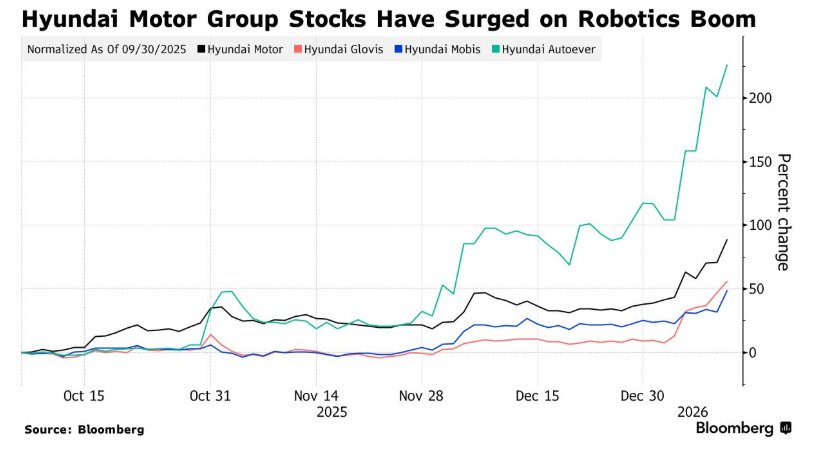
Group 1: Hyundai Motor Company Overview - Hyundai Motor Co. has increased its market value by approximately $24 billion since the beginning of 2026, equivalent to the current total market value of Rivian [1] - The company's stock price has surged by 30% this year, contributing significantly to the strong performance of the Korean Kospi index, which rose by 76% in 2025 [1] - Hyundai is no longer viewed merely as an automobile manufacturer but as a leader in AI, autonomous driving technology, and humanoid robotics, attracting positive investor sentiment [1] Group 2: Stock Market Performance - The Kospi index has reached historical highs, surpassing key levels of 4300, 4500, and 4600 points, with a record closing of approximately 4693 points on January 13 [3] - Since the start of 2026, the Kospi index has seen a cumulative increase of 8%, continuing the momentum from 2025's remarkable growth [3] - Analysts from major financial institutions predict that the Kospi index could rise by at least 20% in the coming year, supported by government stimulus measures and a strong growth trend in the semiconductor sector [3] Group 3: AI and Robotics Developments - Hyundai's deepening collaboration with Nvidia, particularly on the Atlas robot project, has sparked significant investor interest in the company's leadership in physical AI [5] - The introduction of the Alpamayo model, described as a "ChatGPT moment for physical AI," emphasizes the ability of autonomous systems to perceive, reason, and act in the real world [6] - Nvidia's recent announcements regarding partnerships with major Korean conglomerates aim to establish AI factories to support extensive AI training and inference workloads [7][8] Group 4: Investment Appeal - Despite the substantial increase in market value, Hyundai's stock remains attractive with a projected price-to-earnings ratio of only 8.3x, lower than the KOSPI's 10x [9] - The company's valuation is bolstered by its subsidiary Boston Dynamics, which is estimated to be worth approximately 68 billion USD, although there are currently no IPO plans for it [9]

A股2026年巨量首阴 什么信号?市场趋势有变吗?
Mei Ri Jing Ji Xin Wen· 2026-01-13 08:07
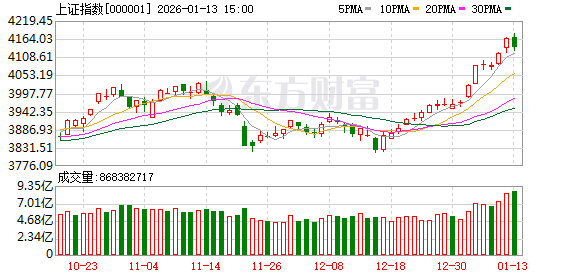
Market Overview - The three major indices experienced a collective adjustment, with the Shanghai Composite Index down by 0.64%, the Shenzhen Component down by 1.37%, and the ChiNext Index down by 1.96% [2] - Over 3,700 stocks in the market declined, and the total trading volume in the Shanghai and Shenzhen markets reached 3.65 trillion yuan, an increase of 49.6 billion yuan compared to the previous trading day [2] Market Sentiment and Risk Alerts - Multiple popular stocks issued risk alerts, including announcements of suspensions, reductions, and clarifications, indicating a cooling of market sentiment [4] - Over 20 listed companies, including Zhizhi New Materials and Aerospace Development, released announcements warning investors about risks, using terms like "speculative trading" and "prudent investment" [4] Investor Reactions - Different investors reacted variably to the market adjustment; optimistic investors saw it as an entry opportunity, while those who recently bought at high prices faced potential losses [7] - The market's strong performance prior to the adjustment led to a mix of chasing highs and bottom-fishing strategies, both of which carry risks [8] A-Share Market Dynamics - The recent continuous rise in A-shares was attributed to increased net inflows of funds, with heightened activity from retail investors and significant inflows of leveraged funds [10] - The volatility index reached 95.2% as of January 12, indicating a high level of short-term volatility, suggesting that maintaining this level of volatility may be challenging [10] Sector Performance - The commercial aerospace sector experienced significant fluctuations, closely related to the risk alerts issued by several companies [11] - AI applications and healthcare sectors showed resilience, with AI applications maintaining an upward trend despite some pullbacks [14] - The healthcare sector, particularly companies like WuXi AppTec, projected substantial profit growth, indicating potential for structural opportunities in the sector [15] Electricity Demand and Infrastructure - The electric grid equipment sector saw a rebound in the afternoon, driven by forecasts of increased electricity demand from data centers, which are expected to rise significantly by 2028 [15][16] - The U.S. Department of Energy estimated that electricity consumption for data centers could increase from approximately 176 TWh in 2023 to an additional 325-580 TWh by 2028, highlighting a potential capacity gap [15][16]
集AI、自动驾驶与机器人三大投资主题于一身的现代汽车股价狂飙 市值猛增240亿美元
智通财经网· 2026-01-13 07:20
Core Viewpoint - Hyundai Motor Co. has increased its market value by approximately $24 billion since the beginning of 2026, equivalent to the current total market value of Rivian, driven by a 30% rise in its stock price this year, contributing significantly to the strong performance of the Korean Kospi index [1] Group 1: Hyundai's Market Performance - Hyundai's market value has surged, reflecting its transformation from a traditional automaker to a leader in AI, autonomous driving, and humanoid robotics, attracting positive investor sentiment [1] - The stock price of Hyundai reached a new historical high, rising over 10% during trading, as analysts raised price targets due to the company's deepening collaboration with Nvidia and its ambitions in autonomous driving showcased at CES [1][7] Group 2: Related Companies and Market Trends - Hyundai's subsidiaries, including Hyundai Glovis, Hyundai Mobis, and Hyundai Autoever, have also reached historical highs, indicating a broader positive trend in the automotive supply chain related to the Atlas humanoid robot [4] - The Korean stock market has shown remarkable growth, with the Kospi index rising 8% since the start of 2026, following a 76% increase in 2025, driven by major players like Samsung Electronics and SK Hynix [5] Group 3: AI and Autonomous Driving Developments - Hyundai's collaboration with Nvidia on the Atlas robot project has sparked significant investor interest, positioning the company as a leader in physical AI, which emphasizes real-world perception and action by robots [7] - The introduction of Nvidia's Alpamayo, a visual-language-action model, represents a significant advancement in autonomous driving technology, focusing on decision-making logic and safety [8][9] Group 4: Future Prospects and Valuation - Despite the substantial increase in market value, Hyundai's stock remains attractive with a projected price-to-earnings ratio of 8.3x, lower than the Korean benchmark index's 10x [10] - The valuation of Boston Dynamics, a subsidiary of Hyundai, is estimated at approximately 68 billion USD, although there are currently no specific IPO plans for the company [11]
L3自动驾驶加速迈入商业化落地阶段
Zhong Guo Jing Ji Wang· 2026-01-13 06:34
Core Insights - The event themed "Leap Forward Together to Create Intelligent Mobility" showcased significant advancements in smart mobility by BAIC New Energy, including the launch of the L3 level Arcfox Alpha S for large-scale road testing and a strategic partnership with Pony.ai for L4 level developments [1][2] Group 1: L3 Level Developments - The Arcfox Alpha S (L3 version) has received approval for nationwide L3 level autonomous driving vehicle access, marking a new phase in the mass application of autonomous driving technology [1] - The initial pilot operation of the Arcfox Alpha S (L3 version) will take place on key transportation routes in Beijing, including the Jing-Tai Expressway and Daxing Airport Expressway, integrating smart mobility experiences into major traffic arteries [2] Group 2: Strategic Partnerships and Future Outlook - BAIC New Energy's collaboration with Pony.ai has entered the 2.0 phase, aiming to create a complete closed-loop from technology development to commercial operation in the autonomous driving sector [2] - The Robotaxi market is projected to reach nearly 500 billion yuan by 2030, representing a significant growth opportunity within the smart mobility landscape [2]

野村行业观察 | 新局开启,展望2026年中国汽车行业
野村集团· 2026-01-13 04:42
Core Viewpoint - The Chinese automotive industry in 2026 will shift from price competition to focusing on product quality, design, and performance, driven by tightening government policies and regulations [1][3]. Industry Trends - The automotive market is expected to experience adjustments in 2026, as it is the first year of the "14th Five-Year Plan," laying the groundwork for future developments [3]. - The supply-demand relationship in the Chinese automotive market remains unbalanced, leading to intense domestic competition [3]. - There is a trend towards tightening policies while encouraging exports, which may slightly impact domestic demand [3][5]. Challenges - The tightening policy environment introduces uncertainty in domestic market demand, creating pressure on automotive companies [5]. - Companies face challenges in enhancing product appeal without raising prices due to reduced subsidies and anti-price-cutting measures [5]. - Rising costs of materials, including memory and battery prices, add additional burdens on manufacturers [5]. - Expanding into overseas markets presents risks and challenges for automotive companies [5]. Development Strategies - Effective management of the supply chain ecosystem and cost control are essential for automotive companies to thrive [6]. - Companies need to focus on product innovation and market share expansion to gain consumer recognition [6]. - Consumer engagement and marketing efforts are crucial for success [6]. Market Structure - The future Chinese automotive market is expected to remain diverse, with a few leading companies dominating the overall market [7]. - Successful overseas expansion could alter the ecosystem of Chinese automotive companies, with some focusing more on international channels while others strengthen their domestic presence [7]. Opportunities in Hybrid Vehicles - There are significant opportunities for hybrid and plug-in vehicles in overseas markets, particularly in regions like the EU, where export requirements are stringent [8]. - If Chinese companies can navigate the regulatory landscape, they may capture a larger market share, especially as European goals for new energy vehicles evolve [8]. Differentiation Strategies - In a market with severe product homogeneity, companies should focus on achieving better cost-performance ratios, particularly in the economy segment [9]. - For high-end and luxury brands, establishing a clear target demographic and integrating advanced technology is essential for product promotion [9]. Joint Venture Reforms - Joint venture companies are making significant reforms to better cater to the Chinese market, utilizing local supply chains to develop models favored by Chinese consumers [10]. - While improvements are possible, the focus remains on replacing declining market shares of traditional fuel vehicles with more competitive offerings from domestic brands [10]. Autonomous Driving Perspective - China has a robust support system for the autonomous driving industry, encompassing components, software, and OEM manufacturers [11]. - The recent opening of L3 pilot programs aims to define L3 standards, which will require further legal and regulatory development to foster growth in the smart driving sector [11].