
高质量发展

Search documents
李强主持召开专家、企业家和教科文卫体等领域代表座谈会听取对政府工作报告、“十五五”规划纲要的意见建议
Xin Hua She· 2026-01-19 13:20
中共中央政治局常委、国务院总理李强1月19日下午主持召开专家、企业家和教科文卫体等领域代 表座谈会,听取对《政府工作报告》和《"十五五"规划纲要(草案)》两个征求意见稿的意见建议。 座谈会上,明明、贺佳、闫俊杰、张智刚、龚旗煌、余晓晖、王拥军、周莉亚、石宇奇等先后发 言。大家认为,去年是很不平凡的一年,面对复杂严峻的外部形势,我们国家加大逆周期调节力度,在 稳增长、调结构、惠民生等方面推出很多务实举措,发展中的积极因素不断积累,要素流动持续活跃, 市场信心明显增强,取得的成绩实属不易。大家还结合各自领域,就做好今年和"十五五"时期经济社会 发展工作提出了意见建议。 李强希望大家发挥各自优势,展现更大担当,积极反映经济社会发展中的实际情况,提出意见建 议,为推动高质量发展作出更多贡献。 吴政隆参加座谈会。 《政府工作报告》和《"十五五"规划纲要(草案)》两个征求意见稿已向各地区、各部门同步征求 意见。 在认真听取大家发言后,李强指出,过去一年,在以习近平同志为核心的党中央坚强领导下,我们 实施更加积极有为的宏观政策,沉着应对外部冲击,我国经济顶压前行、向新向优发展,新兴产业加快 培育壮大,市场需求持续扩容提质, ...
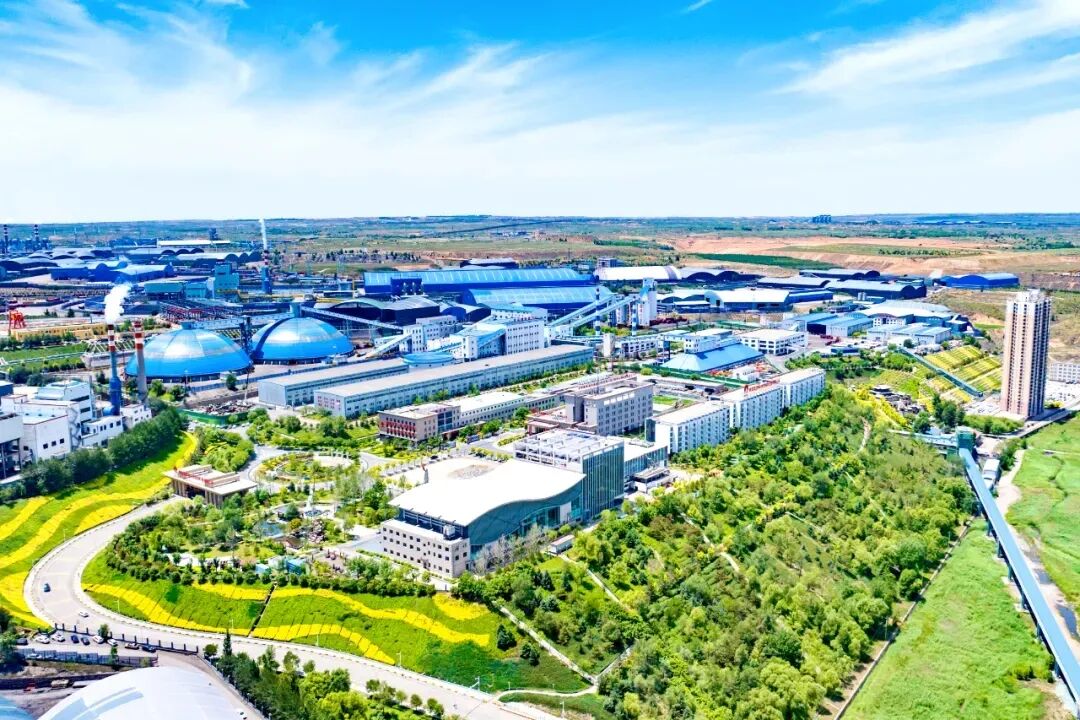
柠条塔矿业:高质量发展提速增效
Xin Lang Cai Jing· 2026-01-19 13:16
经营效益稳中向好 柠条塔矿业持续推进"合规、风险、内控"三个体系建设,坚持每季度邀请外部审计机构对招投标、项目建设工作开展一次专项审计,累计审减招标费用、 工程结算费用合计232.16万元,从源头筑牢合规经营防线。推进设备自主维修和系统自主运维,全年完成设备自修1.14亿元,智能化系统、洗选系统自主 运维2624万元,节约成本1.04亿元。开展闲置资产处置、库存压减工作,累计盘活积压物资原值2.77亿元,实现库存压降2289万元。严格煤质管控,"柠化 一号"品牌价值突破155.16亿元,全年块煤销量突破568.69万吨,创历史新高,增收2.03亿元。 (来源:陕煤集团) 2025年,柠条塔矿业深入落实四种经营理念,统筹推进生产组织、经营管理、改革创新等重点工作,加快转型升级步伐,全年煤炭产销、掘进进尺分别完 成计划的106.5%、126.3%,实物量增长突破历史新高,高质量发展势头强劲。 优质产能有序释放 柠条塔矿业科学释放先进产能,超前谋划采掘接续,高效完成综采工作面"五安四撤"。可伸缩自移装置在S1234等3个综采工作面成功应用,实现生产系统 连续推采10米不停机,综采一工区年产量突破1159万吨,连续两 ...

四连跳!
Jin Rong Shi Bao· 2026-01-19 13:07
经济发展的韧性,在稳基固本中不断筑牢。韧性是穿越周期的底气,中国经济以坚实基础抵御风浪,以 深化改革激活活力。粮食产量稳站高位,制造业规模连续领跑全球,网络基础设施覆盖广泛,坚实的产 业底盘为抗风险提供硬支撑;改革开放持续深化,全国统一大市场加快建设,民营经济活力充分释放, 外资准入门槛不断降低,制度红利持续释放;民生保障有力有效,居民收入与经济增长同步,就业形势 总体稳定,恩格尔系数稳步下降,民生底气凝聚发展合力。在开放合作中,外贸结构持续优化,民营企 业成为外贸增长主力,对"一带一路"国家贸易占比稳步提升,中国经济既是全球增长的动力源,也是国 际合作的大市场,韧性在内外联动中愈发强劲。 全年国内生产总值约140万亿元,按不变价格计算,比上年增长5.0%;全年全国城镇调查失业率平均值 为5.2%;货物贸易再创新高,外汇储备余额超过3.3万亿美元……1月19日,国家统计局公布了国民经济 运行成绩单。 没有一蹴而就的跨越,只有久久为功的积淀。中国经济五年"四连跳",是传统产业转型升级的坚守,是 新兴产业加速崛起的奋进,是改革开放持续深化的红利,更是14亿人携手前行、共促发展的磅礴合力。 站在开局的新起点,中国经 ...
李强主持召开专家、企业家和教科文卫体等领域代表座谈会
第一财经· 2026-01-19 13:01
Core Viewpoint - The meeting highlighted the importance of implementing high-quality development strategies in response to the uncertain external environment, emphasizing the need for proactive fiscal and monetary policies to enhance domestic demand and improve living standards [2][3]. Group 1: Economic Performance and Outlook - The past year was marked by significant challenges, yet the country managed to implement effective counter-cyclical measures, leading to improved market confidence and economic resilience [1]. - The government aims to maintain a positive economic trajectory despite ongoing uncertainties and challenges, with a focus on high-quality development as a long-term goal [2]. Group 2: Policy Recommendations - Emphasis on high-quality development as a guiding principle, with a call for a combination of proactive fiscal policies and moderately loose monetary policies to achieve substantial improvements [3]. - The need to strengthen innovation and deepen reform and opening-up, with a strategic focus on expanding domestic demand to enhance internal growth drivers [3]. Group 3: Social Welfare and Development - The government plans to integrate social welfare improvements with consumption and investment strategies, aiming to cultivate new economic growth points and enhance the well-being of the population [3].

上海“十五五”:增强内需主动力、壮大服贸优势
Di Yi Cai Jing· 2026-01-19 12:45
Core Viewpoint - Shanghai aims to strengthen its role as a "key node in the global city network" during a period of globalization headwinds by enhancing domestic consumption and service engines while improving its discourse power in trade and shipping rules [1][2] Economic Development Goals - The "15th Five-Year Plan" outlines major goals for Shanghai's economic and social development, emphasizing high-quality development, new leaps in urban core functions, breakthroughs in high-level reform and opening up, and significant improvements in social civilization [3] - The plan highlights the importance of building an international consumption center and enhancing domestic demand as the main driver of economic growth [3] Service Sector Expansion - Shanghai plans to expand service consumption, focusing on cultural, tourism, sports, and health services, while promoting green and smart consumption [4] - The city encourages innovation in consumption models and formats, integrating online and offline consumption, and enhancing the international influence of large consumption events [4] Policy Measures - Recent policies include the "Measures to Promote the Quality Improvement and Consumption Expansion of the Service Industry," which proposes 28 initiatives aimed at optimizing supply and expanding consumption [5] - The focus is on quality competition in the service sector, shifting from scale expansion to value enhancement [5][6] Trade and Shipping Enhancements - Shanghai's "15th Five-Year Plan" emphasizes the enhancement of trade hub functions and the optimization of trade structures, aiming to strengthen global supply chain management [7][8] - The city plans to promote high-value product exports and develop knowledge-intensive service trade, including cultural and technical trade [7] Foreign Trade Performance - In 2025, Shanghai's foreign trade is projected to reach 4.51 trillion yuan, with exports growing by 10.8% and imports by 1.8%, outperforming national averages [8] - The export of high-end manufacturing products, particularly electric vehicles and industrial robots, has shown significant growth, indicating a shift towards "Shanghai Intelligent Manufacturing" [9] Maritime and Shipping Development - Shanghai aims to solidify its position as a global maritime hub by developing modern shipping services and promoting digital and green transformations in the shipping industry [9] - Plans include establishing a world-class shipping exchange and enhancing the global service network of shipping insurance institutions [9]
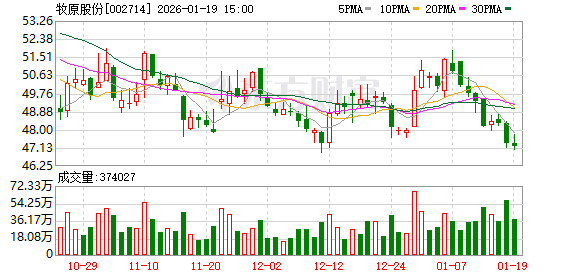
牧原股份:公司由高速发展阶段转向高质量发展阶段
Zheng Quan Ri Bao· 2026-01-19 12:37
(文章来源:证券日报) 证券日报网讯 1月19日,牧原股份在互动平台回答投资者提问时表示,公司会根据政策导向、外部市场 环境及自身生产经营情况,合理规划能繁母猪数量。同时,公司由高速发展阶段转向高质量发展阶段, 将持续做好生产管理与经营管理,通过提质增效提升盈利能力。 ...

2025全年与12月宏观经济数据
Guan Tong Qi Huo· 2026-01-19 12:33
Report Summary 1. Report Industry Investment Rating No relevant information provided. 2. Core Viewpoint In 2025, facing complex changes in the domestic and international economic environment, China's national economy withstood pressure, moved forward, and achieved new results in high - quality development under the strong leadership of the Party Central Committee and the implementation of various policies, successfully fulfilling the main goals and tasks of economic and social development and concluding the "14th Five - Year Plan" victoriously [4]. 3. Summary by Directory Macroeconomic Data - **GDP**: The annual GDP was 1,401,879 billion yuan, a 5.0% increase at constant prices. The added values of the primary, secondary, and tertiary industries increased by 3.9%, 4.5%, and 5.4% respectively. Quarterly GDP growth rates were 5.4% in Q1, 5.2% in Q2, 4.8% in Q3, and 4.5% in Q4. The Q4 GDP increased by 1.2% quarter - on - quarter [5]. - **Industry**: The annual added value of large - scale industries increased by 5.9%. The added values of the mining, manufacturing, and power sectors increased by 5.6%, 6.4%, and 2.3% respectively. The added values of equipment manufacturing and high - tech manufacturing increased by 9.2% and 9.4% respectively. In December, the added value of large - scale industries increased by 5.2% year - on - year and 0.49% month - on - month [5]. - **Services**: The annual service industry added value increased by 5.4%. In December, the service industry production index increased by 5.0% year - on - year. The business activity index and business expectation index of the service industry increased in December [6]. - **Consumption**: The annual total retail sales of consumer goods were 501,202 billion yuan, a 3.7% increase. Online retail sales increased by 8.6%. In December, total retail sales of consumer goods increased by 0.9% year - on - year and decreased by 0.12% month - on - month. The annual service retail sales increased by 5.5% [7]. - **Investment**: The annual fixed - asset investment (excluding rural households) was 485,186 billion yuan, a 3.8% decrease. Real estate development investment decreased by 17.2%. In December, fixed - asset investment (excluding rural households) decreased by 1.13% month - on - month [8]. - **Import and Export**: The annual total goods import and export volume was 454,687 billion yuan, a 3.8% increase. Exports were 269,892 billion yuan, a 6.1% increase, and imports were 184,795 billion yuan, a 0.5% increase. In December, the total import and export volume increased by 4.9% year - on - year [9]. - **Prices**: The annual CPI was flat compared to the previous year. The core CPI increased by 0.7%. The annual PPI decreased by 2.6%, and the annual purchase price of industrial producers decreased by 3.0% [10]. - **Employment**: The annual average urban survey unemployment rate was 5.2%. In December, it was 5.1%. The total number of migrant workers increased by 0.5% [11]. - **Income**: The annual per - capita disposable income of national residents was 43,377 yuan, a 5.0% nominal increase. After deducting price factors, the real growth was also 5.0%. The per - capita consumption expenditure increased by 4.4% [12]. - **Population**: The year - end national population was 1,404.89 million, a decrease of 3.39 million. The birth rate was 5.63‰, the death rate was 8.04‰, and the natural growth rate was - 2.41‰. The urbanization rate was 67.89%, an increase of 0.89 percentage points [13]. Economic Growth and Business Climate Index No specific summary content other than the index names such as GDP quarterly growth rate, sub - industry GDP growth rate, and PMI index is provided [16]. Industrial Production No specific summary content other than the names of indicators such as industrial added value, power generation, steel production, coal production, railway freight volume, and Keqiang Index is provided [18]. Import and Export No specific summary content other than the names of indicators such as import and export amounts, growth rates, main export country growth rates, and export quantity and price indices is provided [23]. Investment No specific summary content other than the names of indicators such as real estate investment, infrastructure investment, manufacturing investment, and real estate - related indicators is provided [25]. Consumption No specific summary content other than the names of indicators such as total retail sales of consumer goods, automobile and petroleum product retail sales, furniture and building decoration material retail sales, and per - capita disposable income is provided [26]. Finance No specific summary content other than the names of indicators such as M1 and M2 growth rates, M2 - M1 growth rate difference and CPI, loan and social financing total, and corporate and household medium - and long - term loan amounts is provided [32]. Inflation No specific summary content other than the names of indicators such as CPI, PPI, and prices of pork and vegetables is provided [34].
北京大学张影:做好机制保障,释放核心劳动群体的消费能力和意愿
Xin Jing Bao· 2026-01-19 12:28
Group 1 - The core viewpoint of the article highlights that China's economy is projected to grow by 5% in 2025, with GDP surpassing 140 trillion yuan, reflecting the implementation of new development concepts and the effectiveness of high-quality development, particularly in structural optimization [1] - The foreign trade data from the previous year showed strong performance, with not only total growth but also an increase in the proportion of high value-added products, indicating a robust foreign trade engine [1] - Although overall fixed asset investment has slowed, manufacturing investment has risen, demonstrating China's commitment to industrial upgrading and technological innovation during the economic transition period [1] Group 2 - Income growth is identified as the foundation for consumption growth, with rural residents' per capita disposable income growth rate (5.8%) outpacing that of urban residents (4.3%), leading to faster rural consumption expenditure growth [1] - The total rural consumption expenditure is currently only about one-sixth of that of urban areas, indicating a need to effectively enhance the income and consumption willingness of low- and middle-income groups, especially rural residents [1] - To sustainably boost consumption, a long-term mechanism must be established to ensure income growth for key groups, focusing on transforming income growth into effective consumption [2] Group 3 - Service consumption is noted as a prominent highlight of the 2025 consumption market, with service-oriented consumption, exemplified by the concert economy, thriving and driving multiple consumption sectors such as transportation, accommodation, and dining [3] - The high ceiling of service consumption is significant for promoting the shift from goods to services, transforming residents' lifestyles, and establishing habitual consumption patterns [3]
李强主持召开专家、企业家和教科文卫体等领域代表座谈会 听取对政府工作报告、“十五五”规划纲要的意见建议
证监会发布· 2026-01-19 12:23
Core Viewpoint - The meeting highlighted the importance of implementing high-quality development strategies to address uncertainties in the economic environment, emphasizing the need for proactive fiscal and monetary policies to enhance domestic demand and improve living standards [3][4]. Group 1: Economic Performance and Challenges - The past year was marked by significant challenges, but the country managed to implement effective counter-cyclical measures, leading to improved market confidence and economic resilience [2][3]. - Despite ongoing external uncertainties and internal challenges, the long-term positive trends and support conditions for the economy remain unchanged, indicating a broad prospect for high-quality development [3]. Group 2: Policy Recommendations - The focus should be on high-quality development, with a combination of proactive fiscal policies and moderately loose monetary policies to achieve substantial breakthroughs in quality improvement [4]. - There is a need to strengthen innovation-driven growth and deepen reform and opening-up, with a strategic emphasis on expanding domestic demand to enhance endogenous growth momentum [4]. Group 3: Social Development and Welfare - Ensuring the improvement of people's livelihoods is crucial, with a close integration of promoting consumption and investment in both physical and human capital to cultivate new economic growth points [4]. - Stakeholders are encouraged to leverage their strengths and actively contribute to the economic and social development by providing feedback and suggestions for high-quality development [4].

南财快评|从十万亿度电看中国经济“新能量”
2 1 Shi Ji Jing Ji Bao Dao· 2026-01-19 12:12
Core Insights - In 2025, China's total electricity consumption is projected to reach 10,368.2 billion kilowatt-hours, marking a 5% year-on-year increase, and this is the first time any country has surpassed the 10 trillion kilowatt-hours threshold [1][4] - This milestone reflects a significant transformation in China's economic structure, shifting from high energy consumption to high efficiency, indicating a transition towards high-quality development [1][4] Group 1: Electricity Consumption and Economic Transition - The increase in electricity consumption serves as a "thermometer" for high-quality development, indicating not just total consumption but also the optimization of industrial structure [2] - The proportion of electricity used by manufacturing is decreasing, while the shares for high-tech manufacturing, modern services, and residential consumption are rising, showcasing a shift from factor-driven growth to innovation-driven growth [1][2] - The rise of digital economy, smart manufacturing, and green energy sectors is enhancing the output efficiency per unit of electricity consumed, adding high-tech and high-quality value to electricity consumption [1][2] Group 2: Clean Energy and Sustainability - As electricity consumption surpasses 10 trillion kilowatt-hours, the share of clean energy generation has exceeded one-third, with wind and solar power installations leading globally [3] - This shift not only reduces carbon intensity but also injects sustainable momentum into economic growth, highlighting the synergy between economic growth and environmental protection [3] - The development of carbon trading markets, improved energy efficiency standards, and breakthroughs in energy storage technology will position electricity as a crucial link between economic growth and carbon neutrality goals [3] Group 3: Smart Energy Management - The application of big data and artificial intelligence in electricity data analysis transforms it into a valuable resource that can be collected, analyzed, and utilized in real-time [3] - Technologies such as smart grids, demand response, and virtual power plants enhance the flexibility and efficiency of electricity supply, allowing for dynamic adjustments based on actual economic needs [3] - This intelligent energy management approach not only reduces energy waste but also enhances the overall resilience of economic operations, aligning with the principles of high-quality development [3]