
绿色低碳

Search documents
我国铝产业第一大省:氧化铝年产量2960万吨,超全球五分之一!
Sou Hu Cai Jing· 2025-10-04 12:08
Core Viewpoint - Shandong province is a dominant player in China's aluminum industry, with a projected alumina production of 29.6 million tons in 2024, accounting for over 20% of global output, supported by a well-established industrial chain and strategic resource management [1][6][8]. Group 1: Production and Capacity - In 2024, Shandong's alumina production is expected to reach 29.6 million tons, significantly surpassing Shanxi's 20.33 million tons, solidifying its leading position in China [6]. - Shandong's aluminum material production is projected at 14.69 million tons, with electrolytic aluminum at 9 million tons, representing over 20% of the national total of 67.83 million tons [3][6]. - The province's electrolytic aluminum capacity is being optimized, with a reduction from approximately 12 million tons in 2018 to an expected 4 million tons by 2025, allowing for a focus on high-end production [3][6]. Group 2: Resource Management - Shandong relies heavily on imported bauxite, with Yantai Port expected to import over 50 million tons in 2024, maintaining its status as the world's largest importer [4][14]. - The efficiency of Yantai Port is highlighted by its record of unloading 290,000 tons per ship, ensuring a steady supply of raw materials for local production [4][14]. Group 3: Industry Structure and Key Players - The industry is characterized by three major players: Weiqiao, Xinfeng, and Nanshan, collectively accounting for over 50% of national production [10][12]. - Weiqiao, with a projected revenue of 73.5 billion yuan and a net profit of 10 billion yuan in 2024, has established itself as a global aluminum giant through a full industrial chain approach [10][12]. - Nanshan focuses on high-end products, supplying major aerospace companies and achieving a net profit of 1.7 billion yuan in Q1 2024, reflecting significant growth [10][12]. Group 4: Environmental and Policy Initiatives - Shandong is actively responding to national energy-saving and emission reduction policies, with a target of 25% clean energy usage in electrolytic aluminum production by 2025 [6][15]. - The province is also focusing on optimizing existing production capacity rather than adding new capacity, with a significant portion of production now meeting energy efficiency benchmarks [6][15]. Group 5: Global Influence and Future Outlook - Shandong's aluminum industry is not only significant in domestic production but also plays a crucial role in global supply chains, with alumina exports and bauxite imports facilitating international trade [8][15]. - The province is expected to maintain a tight balance between supply and demand, with a target of 130 million tons of aluminum capacity by 2025, positioning itself as a benchmark in the global aluminum market [17].


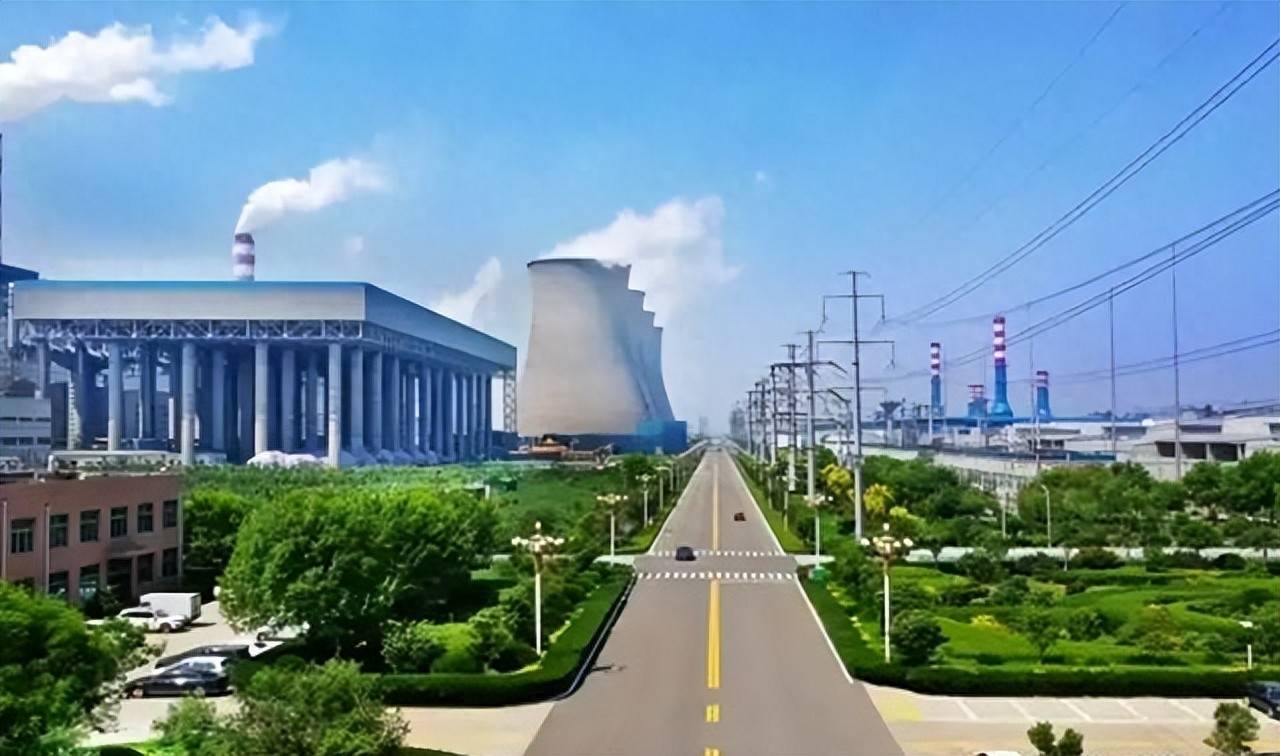
研判2025!中国除尘设备行业发展历程、产业链及市场规模分析:政策严控驱动技术革新,除尘设备智造升级加速[图]
Chan Ye Xin Xi Wang· 2025-10-04 00:22
相关上市企业:菲达环保(600526)、龙净环保(600388)、德创环保(603177)、中创环保 (300056)、远达环保(600292)、洁华控股(832537) 相关企业:中国宝武钢铁集团有限公司、河钢集团有限公司、江苏东方滤袋股份有限公司、定州宇飞电 子科技有限公司、长拓流体科技股份有限公司、卧龙电气集团股份有限公司、中山大洋电机股份有限公 司、国家电网有限公司、中国南方电网有限责任公司、国家电力投资集团有限公司、中国建材股份有限 公司、安徽海螺水泥股份有限公司、中国铝业集团有限公司、中国五矿集团有限公司、比亚迪股份有限 公司、宁德时代新能源科技股份有限公司、华为技术有限公司、中兴通讯股份有限公司、中国石油化工 股份有限公司、中国石油天然气股份有限公司 关键词:除尘设备、除尘设备市场规模、除尘设备行业现状、除尘设备发展趋势 内容概况:近年来,中国政府对环境保护的重视程度不断提高,出台了一系列严格的环保政策和法规。 特别是在大气污染防治方面,对工业企业的粉尘排放标准提出了更高的要求。这促使相关企业加大对除 尘设备的投入,以满足环保达标的需求。2024年,中国除尘设备行业市场规模为602.8亿元,同比 ...


政经|地方“十五五”规划创新与投资风向标
Sou Hu Cai Jing· 2025-10-01 13:27
Core Viewpoint - The article discusses the critical juncture of the "14th Five-Year Plan" (15th Five-Year Plan) in the context of global order restructuring, economic transformation, and China's modernization efforts, emphasizing the need for innovative planning and strategic foresight to navigate these challenges [2][38]. International Environment Trends - Trend 1: The acceleration of the "East Rising, West Declining" power structure, with emerging economies gaining influence, necessitating a focus on self-innovation in key areas like chips and energy in the planning process [5]. - Trend 2: The global economy is characterized by low growth, high debt, high inflation, and a shift towards low-carbon transformation, requiring structural reforms to mitigate debt risks and enhance supply chain resilience [6]. - Trend 3: The advent of digital civilization and industrial revolution marks a critical point, with data becoming a core productivity factor, necessitating the establishment of a dual pillar system of "data sovereignty + technology standards" [7]. - Trend 4: The emphasis on security and development, with a shift in global supply chains towards safety, necessitating a focus on domestic production and regional alternatives in strategic sectors [8]. Domestic Environment Dimensions - Dimension 1: The need for deep reforms to drive domestic demand upgrades, focusing on quality and efficiency rather than speed [9]. - Dimension 2: The "carbon peak" initiative driving green and low-carbon growth, positioning the dual carbon goals as a key economic growth driver [10]. - Dimension 3: Addressing "bottleneck" technologies through a new system that combines state-driven and market-driven innovation [12]. - Dimension 4: The digitization of social governance to reshape public service models, leveraging AI and smart city initiatives [13]. Planning Framework Structure - Focus 1: Emphasizing "four-dimensional coordination" to enhance the strategic depth of planning [16]. - Focus 2: Aligning the 15th Five-Year Plan with the 2035 long-term goals, ensuring coherence in development strategies [18]. - Focus 3: Establishing a baseline of safety and resilience across various sectors, including finance and industry [19]. - Focus 4: Integrating digital and physical spaces in urban planning to enhance resource allocation and governance [20][21]. Evaluation and Assessment - Emphasis on conducting six major assessments, including fiscal capacity, industrial competitiveness, population-service matching, resource carrying capacity, policy effectiveness, and risk resilience [22][23][24][25][26]. Strategic Mapping - Development of four key maps: strategic goal orientation, regional spatial planning, industrial upgrade pathways, and resource element layout [27][28][29][30]. Implementation Support - Focus on compiling a list of strategic deployments and conducting specialized research in key areas such as investment attraction and public service enhancement [31][32]. Innovative Planning Methods - The need for multi-level connection mechanisms, integration of big data and AI technologies, and the creation of immersive, interactive planning systems to enhance transparency and effectiveness [35][36][38].

济南黄河北岸崛起城市新地标 鹊山生态文化区启用
Zhong Guo Xin Wen Wang· 2025-10-01 02:09
Core Points - The Qiaoshan Ecological Cultural Zone (Phase I) project in Jinan officially opened on October 1, 2023, becoming a new urban landmark that integrates ecology and culture along the Yellow River [1][3] - The project is designed around the cultural imagery of "Qiaohua Autumn Colors," featuring a spatial layout of "one axis, one tower, three museums, and three areas" [1] Group 1 - The "National Day Holiday Fun at Qiaohua" series of events is planned from October 1 to 8, featuring over 20 activities including an interactive experience at the Yellow River Ecological "Curiosity Research Institute" and a themed performance [2] - The Qiaohua New Singapore Garden, the first of its kind in the country, showcases a glass dome and high space, embodying a "Crystal Palace" concept with Singaporean plants and ecological technology [2][5] - The opening day of the Qiaohua New Singapore Garden featured a themed experience called "Tide Rising from the South Seas," with activities such as "Creating South Seas," "Tide Market," and "Tide Movement" [5] Group 2 - The Qiaohua New Singapore Garden includes features like an indoor waterfall, rainforest pavilion, and wetland system, promoting a green and low-carbon concept [7] - Evening events at the Qiaohua Bridge create a vibrant atmosphere with light displays, allowing visitors to enjoy the artistic ambiance and the contemporary revival of the "Qiaohua Autumn Colors" theme [7] - The series of events aims to attract young audiences with activities such as the "First Grassland Music Festival" and a "Robot Interactive Exhibition" scheduled for October 2-4 [8]
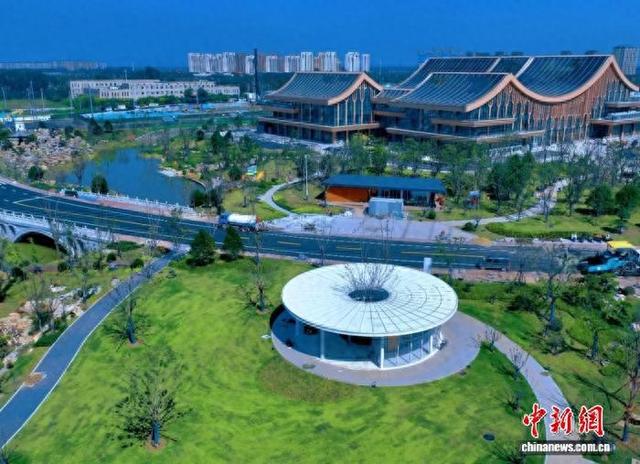
国网北京亦庄供电公司 传承主动服务基因 编译“三超”发展密码
Bei Jing Ri Bao Ke Hu Duan· 2025-09-30 22:13
Core Viewpoint - The article highlights the significant role of State Grid Beijing Yizhuang Power Supply Company in supporting the economic development of Beijing Economic-Technological Development Area (BDA) through proactive service and innovative power solutions, achieving remarkable growth in power demand and infrastructure development [1][10]. Group 1: Company Development and Achievements - Established in 1993, Yizhuang Power Supply Company has been dedicated to serving the capital's electricity needs and the development of BDA, embedding "proactive service" in its core values [1]. - In 2024, BDA is expected to lead Beijing in maximum load growth and electricity consumption growth, supporting the region's GDP growth, industrial output, and investment [1]. - The company has achieved a record of completing project approvals and construction for a 500 kV substation in just over 400 days, setting a new benchmark for similar projects [9][11]. Group 2: Innovative Power Solutions - Yizhuang Power Supply Company has adopted a non-traditional approach to substation construction, building facilities to their maximum capacity from the outset to meet the rapidly increasing electricity demands of local enterprises [10]. - The company has successfully integrated multiple substations within a limited area to support high-demand projects, such as those in the integrated circuit sector [9][10]. Group 3: Service Excellence - The company has positioned itself as an "electricity consultant," actively engaging in the site selection process for major projects, such as Sanofi's pharmaceutical center, by providing detailed electricity cost analyses [12]. - Yizhuang Power Supply Company has streamlined the electricity connection process for projects, significantly reducing the time required for project approvals and electricity access [13]. Group 4: Green Transformation Initiatives - The establishment of the "Green Electricity and Green Certificate Service Station" has led to a significant increase in green electricity purchases, with BDA users buying 12.38 billion kWh of green electricity in 2024, accounting for 20% of Beijing's total [16]. - The company is actively involved in carbon monitoring and efficiency services, helping local enterprises develop personalized green electricity reduction plans [17]. - Yizhuang Power Supply Company is exploring new energy development paths, including virtual power plants and innovative energy storage technologies [19].
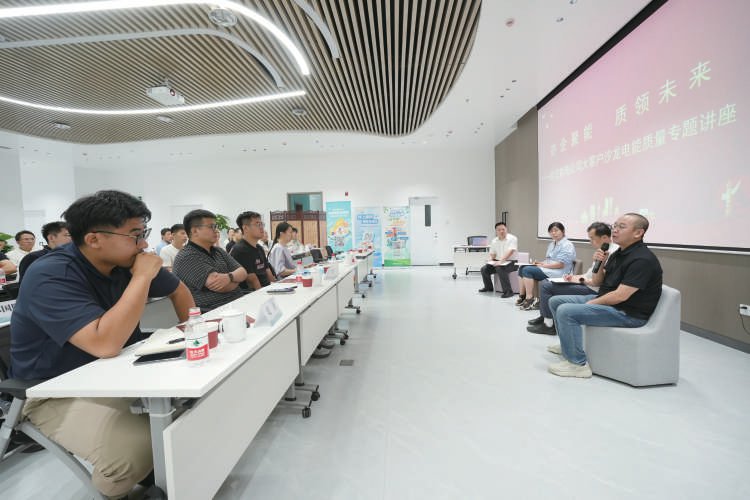
全球供应链变局下的粤商突围:从“走出去”到“走进去”
2 1 Shi Ji Jing Ji Bao Dao· 2025-09-30 14:08
Core Insights - The conference emphasized that true internationalization involves deep integration and co-creation with local markets rather than mere replication [2] - The shift from competing on price and scale to focusing on innovation, value, and brand is essential for future growth [2][4] - Innovation is now a critical necessity for survival and development, rather than an optional strategy [4] Investment and Market Expansion - In 2024, Guangdong enterprises established over 1,900 non-financial companies abroad, with actual investments exceeding $21 billion [3] - Guangdong's foreign trade has ranked first in China for 36 consecutive years, with a record total import and export value in the first eight months of this year [3] Innovation as a Driving Force - Innovation is recognized as the core driver for Guangdong businesses transitioning from "going out" to "going in" [4] - Companies are encouraged to increase R&D investments in cutting-edge fields such as AI, new information technology, biomedicine, new materials, and high-end equipment [5] Collaborative Strategies for Internationalization - The transformation of Guangdong businesses includes moving from individual efforts to collaborative ecosystems, enhancing overall competitiveness in international markets [9] - Companies are advised to diversify supply chains and utilize financial tools to mitigate risks associated with international trade [8] Green and Digital Transformation - AI and digitalization are seen as essential tools for enhancing efficiency and restructuring global operations, while green and low-carbon initiatives are becoming the new standard in international markets [11] - The establishment of a mutual recognition mechanism for carbon footprint and ESG certification between Guangdong and Hong Kong is proposed to facilitate access to European markets [11][12]
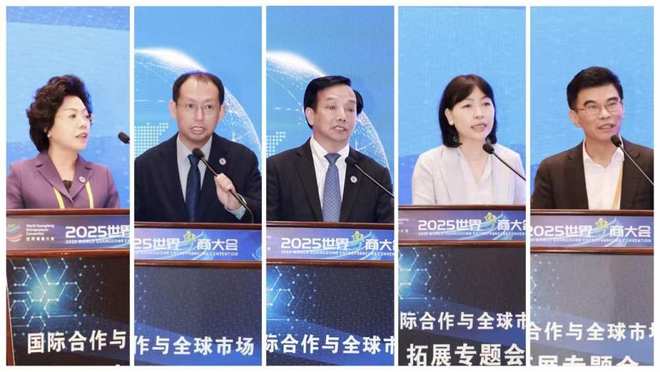
深圳推出国家绿证“居民购”
Xin Hua She· 2025-09-30 13:46
Core Insights - Shenzhen has launched the "Resident Green Certificate Easy Purchase" service, allowing residents to buy green electricity through a mobile app when paying their electricity bills [1] - Green electricity refers to renewable energy sources such as wind, solar, and hydroelectric power, which are injected into the grid via ultra-high voltage lines [1] - The green certificate, issued by the National Energy Administration, represents 1,000 kilowatt-hours of green electricity and provides traceability for the source and production details of the green energy [1] Industry Developments - The "Resident Green Certificate Easy Purchase" service is a collaboration between Southern Power Grid Shenzhen Electric Power Bureau and Guangzhou Electric Power Trading Center [1] - The initiative aims to lower the participation threshold for green electricity consumption, integrating carbon reduction actions into daily life and fostering a collective effort for carbon reduction across society [1] - This launch aligns with the guidelines issued by the National Development and Reform Commission and other departments to promote the high-quality development of the renewable energy green power certificate market [1]
泰安:以装配式建筑破题建筑业源头减量,三大举措为“无废城市”建设注入绿色动能
Qi Lu Wan Bao Wang· 2025-09-30 13:37
Core Viewpoint - The city of Tai'an is actively promoting the construction of a "waste-free city" as a key initiative for green, low-carbon, and high-quality urban development, focusing on solid waste management and reduction in construction waste through prefabricated buildings [1][2]. Group 1: Policy and Mechanisms - Tai'an has implemented a series of policy documents, including the "Guidelines for Promoting Prefabricated Buildings" and the "Implementation Plan for Carbon Peak in Urban and Rural Construction," to establish clear goals and pathways for the development of prefabricated buildings [1]. - A multi-departmental collaborative mechanism has been established to ensure compliance with prefabricated building requirements at various stages, including land transfer, planning approval, and construction licensing [1]. Group 2: Industry Development and Achievements - The city has introduced leading enterprises and cultivated five provincial-level prefabricated building industrial bases, promoting integrated development in design, production, and construction [2]. - The implementation of prefabricated buildings has reached a total of 1,579,800 square meters, significantly reducing on-site wet operations and material waste, while enhancing construction quality and safety [2]. Group 3: Demonstration Projects - Key government investment projects and public welfare initiatives have been prioritized to create benchmark projects, such as the Tai'an Normal University Affiliated School and the Water Spring Relocation Community, achieving over 65% prefabrication rates [2]. - These projects have effectively reduced construction waste and dust pollution, demonstrating a successful balance between green construction and quality improvement [2]. Group 4: Future Directions - The city plans to continue promoting prefabricated buildings, enhancing collaboration among government, industry, academia, and research to support the transition of the construction industry towards green, industrialized, digital, and intelligent development [2].
江苏发布覆盖建筑领域全链条“技术图谱”
Zhong Guo Fa Zhan Wang· 2025-09-30 13:21
Core Insights - The Jiangsu Provincial Department of Housing and Urban-Rural Development has released a comprehensive "technology map" covering various sectors including real estate, construction, and municipal infrastructure, aimed at promoting high-quality development in the housing sector [1][2][3] - The technology map includes 122 key technologies across three main directions, focusing on enhancing building quality, smart construction, and resilient urban infrastructure [1][2] Group 1: Technology Map Overview - The technology map serves as a "toolbox" and "guide" for advancing new productive forces in the housing sector, addressing the need for systematic industry transformation due to aging buildings [1] - It encompasses three main directions: "High-Quality Buildings," "Smart Construction and Industrialization," and "Resilient Smart Cities," with a total of 122 key technologies identified [1][2] Group 2: High-Quality Buildings - The "High-Quality Buildings" direction includes 14 subcategories and 46 technologies aimed at improving building functionality, quality, and user experience, such as sound insulation systems [1][2] Group 3: Smart Construction and Industrialization - The "Smart Construction and Industrialization" direction features 6 subcategories and 23 technologies, including BIM applications and construction robots, to enhance project quality and efficiency [2] - Construction robots are being utilized in tasks like putty spraying and tile laying, addressing labor shortages due to an aging workforce [2] Group 4: Resilient Smart Cities - The "Resilient Smart Cities" direction consists of 28 subcategories and 53 technologies, focusing on improving urban infrastructure efficiency and risk resilience, such as smart flood control systems [2] - These systems leverage IoT and AI to predict flood-prone areas and generate emergency response plans, significantly enhancing response efficiency [2] Group 5: Future Directions - The technology map outlines key technology directions for the next 5-10 years, guiding innovation resources towards green low-carbon and AI strategic fields [2][3] - Local governments, such as in Suzhou, are already establishing smart construction industry demonstration bases, attracting nearly 30 quality enterprises [2]
宏观经济点评报告:政策性金融工具,2025年与2022年有何不同?
SINOLINK SECURITIES· 2025-09-30 09:23
Group 1: Policy Differences - The new policy financial tools in 2023 are aimed at supporting domestic demand and technological innovation, contrasting with the 2022 focus on stabilizing growth[3] - The new tools will prioritize eight key sectors, including digital economy, artificial intelligence, and green low-carbon initiatives, with 20% of funding directed to private enterprises[3][10] - Infrastructure investment growth has declined significantly, with August's year-on-year growth rates at -5.9% and -6.4% for new and old standards respectively, indicating a shift in funding usage towards debt repayment rather than project construction[3][10] Group 2: Funding Sources and Economic Impact - The funding sources for the new policy tools differ from 2022, as the current PSL rate is higher than the issuance rate of policy bonds, reducing the necessity for PSL support[4][21] - If the new policy financial tools leverage the same 5.5 times ratio as in 2022, the 500 billion yuan allocation could mobilize 2.75 trillion yuan in new social financing, potentially driving 1.5 to 2 trillion yuan in fixed asset investment[5][30] - The net financing of local government bonds has been negative, with a cumulative net financing of -421.9 billion yuan from January to September 2023, reflecting a reduced willingness for traditional infrastructure investment[10][21] Group 3: Risks and Challenges - There may be discrepancies in understanding the policy details, which could lead to differences between expectations and actual implementation[6][31] - The timing of policy rollout and its impact on investment may fall short of expectations, particularly as the fourth quarter approaches and construction activity may slow down[6][31]