生成式AI

Search documents
腾讯研究院AI速递 20251103
腾讯研究院· 2025-11-02 16:06
Group 1: AI Security Solutions - OpenAI has launched the "white hat" Agent Aardvark powered by GPT-5, capable of automatically identifying and fixing security vulnerabilities in codebases, having recognized 92% of known and artificially injected vulnerabilities [1] - Aardvark's workflow includes threat modeling, submission scanning, sandbox validation, and Codex repair, utilizing LLM reasoning capabilities to operate like human security researchers [1] - Major tech companies such as Google, Anthropic, and Microsoft have also released similar white hat agents in October to address the increasing number of vulnerabilities and the sophistication of attack methods in the AI era [1] Group 2: AI Programming Models - The AI programming application Cursor and Windsurf's newly released models, Composer-1 and SWE-1.5, are suspected to be based on Chinese models, with Cursor showing a tendency to respond in Chinese [2] - Users discovered that Cursor Composer-1 employs the same tokenizer as DeepSeek, while Windsurf's claims of being self-developed were contradicted by its ties to the GLM model developed by Zhiyu [2] - Chinese open-source models dominate performance rankings, filling the top 5 and even top 10, making them a rational choice for startups due to their cost-effectiveness [2] Group 3: Attention Mechanisms in AI Models - Linear attention mechanisms are making a comeback, with domestic models like MiniMax-M1, Qwen3-Next, and DeepSeek V3.2 adopting linear or sub-quadratic attention variants [3] - The new MiniMax model M2 has reverted to traditional attention, citing accuracy issues with linear attention in reasoning and multi-turn dialogue tasks [3] - Kimi Linear proposes a hybrid attention strategy, combining three linear attention blocks with one full attention block, achieving a 75% reduction in KV cache and up to a 6x increase in decoding throughput [3] Group 4: Canva's AI Innovations - Canva, valued at $42 billion, has introduced a self-training foundational model capable of producing complete design files with editable layers and has made the acquired Affinity tool permanently free [4] - The core feature, Ask @Canva, is deeply integrated into the design interface, allowing users to modify elements using natural language, with AI also providing suggestions for design improvements [4] - Canva's annual revenue is approximately $3 billion, with over 240 million monthly active users, and it is expected to go public in 2026, directly competing with Adobe for a 70% market share [4] Group 5: Neuralink's Ambitions - Elon Musk announced that the first Neuralink recipient, Noland Arbaugh, may be the first to receive upgrades or dual chip implants, predicting that Neuralink users could eventually outperform others in gaming [5] - Neuralink has had 12 users with a cumulative usage of over 2,000 days and a total active time exceeding 15,000 hours, with research results from the first three trial participants submitted to the New England Journal of Medicine [5] - The company has initiated a new clinical trial called "thought-to-text," aiming to implant 20,000 individuals annually by 2031, targeting annual revenue exceeding $1 billion and applications for healthy individuals starting in 2030 [5] Group 6: AI in Speech Therapy - A research team from Stanford University tested 15 mainstream models for speech disorder recognition, with the best-performing model achieving only 55% accuracy, below the FDA's clinical standard of 80-85% [6] - The study revealed biases in the models, with better performance on male voices compared to female, and English speakers outperforming those using other languages, as well as older children over younger ones [6] - Fine-tuning techniques have shown promise, with performance accuracy improving by 10% after utilizing a small dataset of children's speech for fine-tuning, indicating the potential of multimodal language models in speech pathology applications [6] Group 7: AI Workflow Transformation - Brex, valued at $12.3 billion, is transforming its internal AI platform into a product, built on Retool and reusing external AI capabilities, maintained by a 25-person systems engineering team [7] - The COO is restructuring the operational workflow, delegating L1 tasks to AI, shifting L2 roles from managers to managing agents, and evolving L3 responsibilities from problem-solving to system design, predicting a 5 to 10 times increase in operational efficiency [7] - Recruitment strategies are shifting from favoring specialists to generalists, with interviews focusing on AI usage habits, requiring AI case studies, and assessing AI application capabilities through real business challenges [7] Group 8: OpenAI's Restructuring - OpenAI has completed a restructuring, with a non-profit foundation holding shares valued at $130 billion, becoming one of the largest charitable foundations globally, with an initial investment of $25 billion for healthcare and AI safety [8] - A new agreement stipulates that OpenAI's current and future AGI model APIs will be exclusively deployed on Azure for seven years, with Microsoft holding approximately 32.5% of OpenAI's shares valued at around $135 billion [8] - Both parties have signed a $250 billion pre-purchase contract for Azure, with Microsoft's capital expenditure reaching $34.9 billion last quarter, a 40% increase from the previous quarter, primarily directed towards new data centers and AI chip procurement [8] Group 9: Legal Issues Surrounding OpenAI - Ilya Sutskever testified for nearly 10 hours in the lawsuit filed by Elon Musk against OpenAI [9] - Ilya submitted a 52-page memorandum detailing allegations against Altman, including accusations of deceiving the board, sowing discord, creating chaos, and enabling the growth of Anthropic [9] - Following Altman's dismissal, the board seriously considered the possibility of merging with Anthropic and appointing Dario Amodei as CEO, but this plan fell through due to operational challenges and a revolt from 700 employees [10]


马斯克:五年后传统手机和APP将消失!为手机设计芯片和系统的工程师会随之消失吗?
是说芯语· 2025-11-02 08:06
Core Viewpoint - Elon Musk predicts that traditional smartphones and apps will disappear within 5 to 6 years, with AI generating most of the content humans interact with daily [1] Group 1: Predictions on Technology and AI - Musk envisions a future where smartphones will simplify to display and sound output, with AI deeply integrated into every aspect of these devices [1] - He forecasts that AI will surpass individual human intelligence by 2026 and exceed the collective intelligence of humanity by 2030 [1] Group 2: Impact on Chip Design and Engineering - Concerns arise regarding the future of mobile chip and system engineers due to Musk's predictions, as certain aspects of chip design, like analog circuit design, require human creativity and expertise that AI cannot fully replicate [3] - Current AI tools, such as NVIDIA's ChipNeMo and Synopsys.ai Copilot, can assist in coding and note organization but are not capable of independently completing the entire chip design process [3] - System design in mobile technology requires a deep understanding of user needs and hardware optimization, which AI can assist with but cannot replace the essential experience and knowledge of human engineers [4] Group 3: Future of Chip Engineering Careers - The future of chip engineers will depend on two key factors: breakthroughs in AI technology that allow for fully autonomous chip design and a potential shift in the industry towards new design models that do not rely on traditional processes [5] - Despite the technological wave indicated by Musk's predictions, the unique nature of the chip industry suggests that engineers will not be easily replaced, and continuous learning and adaptation to AI tools will be crucial for their future [5]


美国《时代周刊》评出2025年度300项最佳发明:中国宇树科技、DeepSeek、小米等20余家企业入围
新浪财经· 2025-11-02 08:00
Core Insights - The article highlights the significant presence of Chinese companies in the 2025 "300 Best Inventions" list published by TIME magazine, showcasing innovations across various fields such as AI, robotics, and consumer electronics [1][17]. Group 1: Robotics and AI Innovations - Yushu Technology's R1 robot has redefined traditional humanoid robots, featuring a weight of approximately 25 kg and the ability to perform complex movements like boxing and running, equipped with an AI system for voice recognition and image processing [1]. - DeepSeek's R1 model, a generative AI project, has achieved performance comparable to top models from OpenAI, with a training cost of only $6 million (approximately 42.7 million RMB), and remains free for users [3][17]. Group 2: Consumer Electronics - Xiaomi's 15 Ultra smartphone, developed in collaboration with Leica, features a retro design and integrated AI tools for enhanced imaging experiences [5]. - Huawei's Pura 80 Ultra smartphone stands out with its innovative imaging system, including a dual telephoto camera capable of 3.7x and 9.4x zoom, enhancing photo clarity and color representation [11]. Group 3: Sustainable Technology - Lenovo's Yoga solar-powered laptop offers a new power solution for users away from stable power sources, utilizing photovoltaic cells to charge the battery, providing one hour of video playback with just 20 minutes of sunlight exposure [7]. - BYD's Seagull electric vehicle, equipped with a 30 kWh battery, offers a range of 300 km and a top speed of 130 km/h, highlighting its significance in the electric vehicle market [9]. Group 4: Battery Technology - Honor's new battery technology, featuring a silicon content of 25% and a thickness of only 2.3 mm, extends battery life while maintaining a capacity of 6100 mAh, applied in the Honor Magic V5 smartphone with over 35 hours of battery life [13]. Group 5: Design Innovations - The Zip projector by Jizhe, with its unique pocket-sized foldable design, offers features like zero-latency autofocus and vertical full-screen mode, enhancing user experience for various applications [15].





史上最猛AI财报,市值却蒸发2000亿:微软到底哪里不对劲?
Tai Mei Ti A P P· 2025-11-02 06:19
Core Insights - Microsoft's Q1 FY2026 earnings report showed total revenue of $77.7 billion, an 18% year-over-year increase, and earnings per share of $3.72, exceeding Wall Street expectations [1] - Despite strong performance, Microsoft's stock fell 3.7% post-earnings, reflecting market concerns over rising infrastructure costs amid AI-driven growth opportunities [1][22] - The report highlights the ongoing transformation in the tech industry, particularly in cloud computing and AI, where demand is outpacing supply capabilities [2] AI Reshaping Cloud Computing Landscape - The global cloud computing market is transitioning from rapid growth to quality competition, with AI demand disrupting previous balance [2] - In Q1 2025, AWS, Azure, and GCP generated a combined revenue of $68.3 billion, a 20% increase year-over-year, but growth is limited by supply constraints [2] - Azure's market share is 22% with a 39% year-over-year growth, significantly outpacing AWS's 16.89% growth [2][5] AI Infrastructure as a Competitive Barrier - AI infrastructure, including GPU and CPU shortages, is a major bottleneck for industry growth, prompting top cloud providers to accelerate capacity investments [4] - In Q1 2025, Microsoft, Amazon, Meta, and Google collectively spent $77.1 billion on capital expenditures, a 64% increase year-over-year [4] Three Pillars Driving AI Transformation - Microsoft's Q1 performance is attributed to its "AI-first" strategy, with intelligent cloud, business applications, and personal computing working in synergy [4] - The intelligent cloud segment generated $30.9 billion in revenue, with Azure cloud services growing 39% year-over-year, exceeding market expectations [4][5] Financial Health and Growth Quality Assessment - Microsoft's Q1 gross profit reached $53.63 billion, maintaining a gross margin of approximately 69% [9] - Net profit grew 12% year-over-year to $27.747 billion, lagging behind revenue growth due to increased capital expenditures and losses from OpenAI investments [9][10] Strategic Choices in AI Dividend Period - Microsoft is in a critical window for AI growth, with a $400 billion RPO balance expected to convert into revenue over the next two years [20] - The company aims to optimize capital expenditure structure and deepen industry solutions to enhance customer value [20][21] Competitive Landscape and Regulatory Challenges - Microsoft faces increasing competition from AWS and Google, both ramping up AI infrastructure investments [19] - Regulatory scrutiny, particularly in the EU regarding bundling practices, poses risks to revenue growth [18] Conclusion - Microsoft's Q1 FY2026 results reflect both the potential and challenges of AI-driven growth, emphasizing the need for a balance between investment intensity and profitability quality [22]

“AI+影视”打造视听新体验 新质生产力焕新中国电影工业
Yang Shi Xin Wen Ke Hu Duan· 2025-11-01 06:30
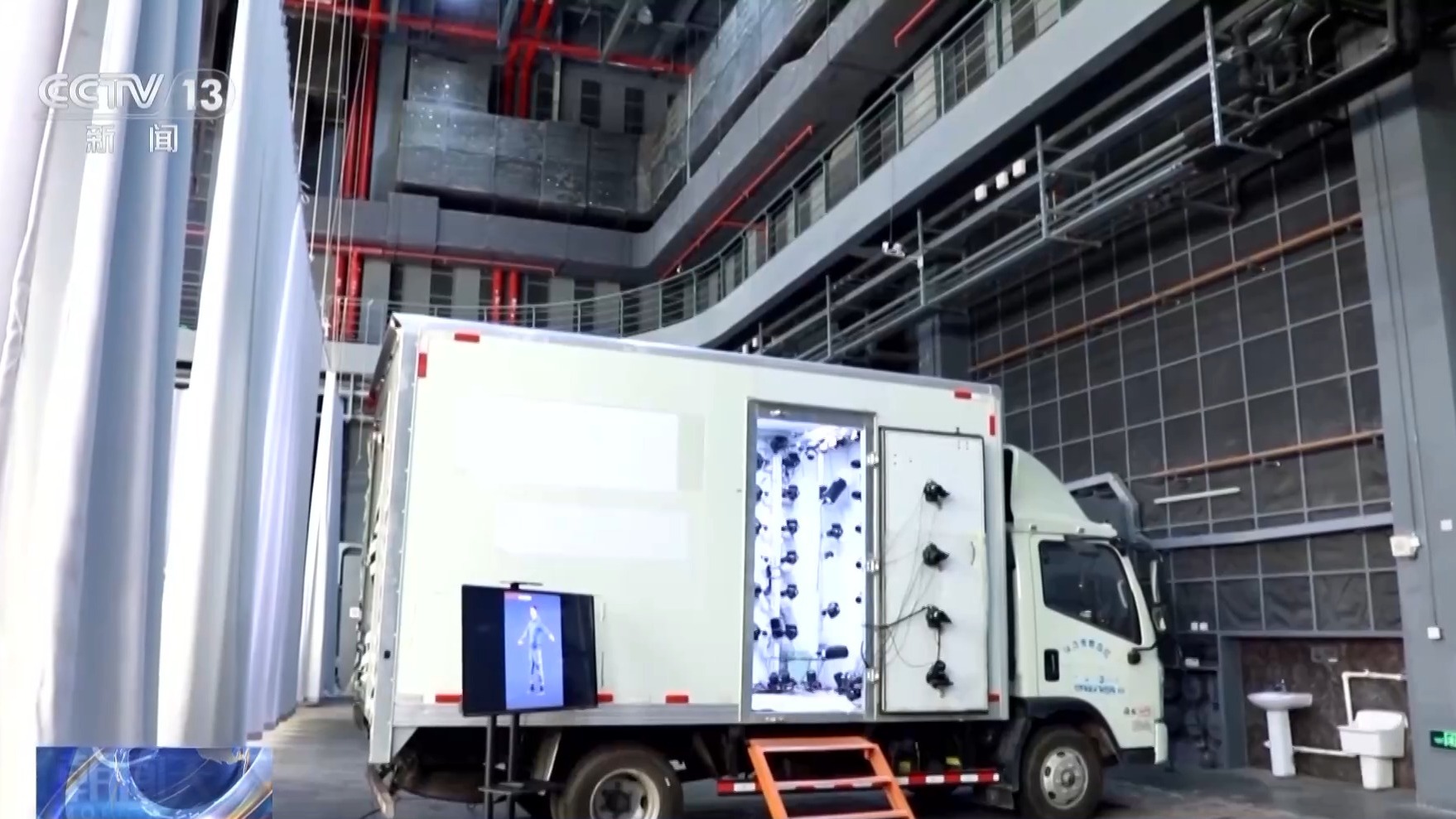
Core Insights - The film industry in China has shown significant growth, with box office revenue surpassing 41.95 billion yuan in the first three quarters, representing a year-on-year increase of 20.7% and over 984 million viewers [1] - The recent National Day holiday saw the annual box office exceed the total for the previous year, highlighting the impact of new production technologies on the industry's digital transformation [1] Group 1: Technological Advancements - The film "Assassination Novelist 2" showcases impressive visual effects made possible by virtual shooting technology, which involves scanning actors into 3D data for post-production [2] - A mobile 3D scanning array, consisting of 150 cameras, generates high-precision character models, enhancing the quality of film production [4] - The "Asia's largest constant temperature water scene shed" in Yangzhou allows for realistic water effects, significantly improving the visual experience in films [6] Group 2: Efficiency and Cost Reduction - The establishment of a digital intelligent scene-changing workshop in Chongqing has improved shooting efficiency by 55% and reduced costs for sci-fi scenes by 90% [8] - Traditional scene setup costs can reach hundreds of thousands of yuan, while virtual production systems can reduce this to tens of thousands, saving time and resources [10] Group 3: AI Integration in Film Production - Artificial intelligence (AI) is transforming the entire film production process, enhancing efficiency and creativity [13] - AI systems can assist in casting by evaluating actor suitability for roles and generating visual effects previews, thus streamlining pre-production [15] - AI translation systems can adapt dialogue to various languages while preserving character traits, facilitating international distribution of films [17] Group 4: Industry Ecosystem and Talent Development - The film industry is experiencing a surge in talent demand, with an annual increase of 20%, particularly in regions like Chongqing, which trains over 5,000 film professionals each year [30] - Collaborative efforts between industry leaders and educational institutions are fostering a new generation of talent skilled in both film artistry and new technologies [28] - The integration of "film + technology" is expected to enhance China's film industry's international influence and competitiveness [30]

机构:2年内AI手机全球累计出货量超5亿台
Huan Qiu Wang Zi Xun· 2025-11-01 03:53
Core Insights - The global shipment of generative AI smartphones has surpassed 500 million units by Q3 2025, just under two years since their debut at the end of 2023 [1][3] Group 1: Market Growth - The initial rapid growth of generative AI smartphones is primarily driven by high-end smartphones priced over $600 [3] - The growth focus is shifting from the high-end market to the mid-to-high-end market, with Chinese manufacturers being the main drivers of this transition [3] Group 2: Competitive Strategies - Chinese manufacturers are actively integrating lightweight large language models (LLMs) and multimodal AI assistants into smartphones to differentiate themselves in a competitive market [3]

声网创始人赵斌:RTE年服务时长超1万亿分钟,已成不可或缺基础设施
Xin Lang Cai Jing· 2025-11-01 03:47
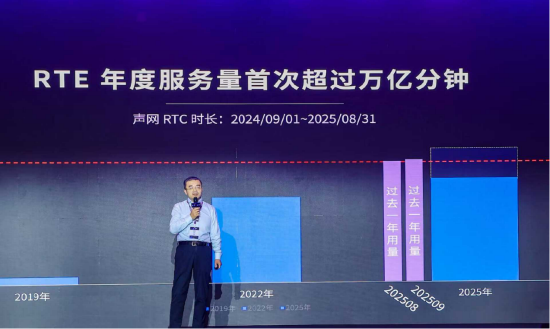
Core Insights - Agora's annual service minutes have surpassed 1 trillion for the first time, indicating that RTE technology has become an essential infrastructure [1] - The proportion of high-definition video has increased over tenfold in the past two years, with over 80% of overseas market traffic being above 720p resolution [1] - The global search interest in WebRTC has seen explosive growth, signaling a new wave of innovation in the real-time interaction industry [1] Industry Challenges - The transition from "connection" to "dialogue" remains a significant challenge in the generative AI development process, particularly in enhancing interaction quality between humans and AI [3] - Only 21% of users are satisfied with current AI dialogue experiences, with some services experiencing unacceptably high user churn rates [3] - Human conversation relies heavily on non-verbal cues, with over 90% of information perception depending on tone, expression, and body language, highlighting the need for improvements in AI interactions [3] Market Trends - 67% of enterprises have positioned voice AI agents at the strategic core, and 84% plan to increase investments in this area within the next year [4] - There is a significant surge in the developer ecosystem for real-time voice technology, with a notable increase in startups focused on conversational AI and voice agents [4] - Agora's usage of conversational AI saw a 151% quarter-over-quarter growth in Q3 2025, reflecting strong market demand [4]

押注Anthropic大获成功,谷歌、亚马逊获百亿账面收益
Hua Er Jie Jian Wen· 2025-11-01 03:33
Group 1 - The core viewpoint of the articles highlights that investments by Alphabet and Amazon in the AI startup Anthropic are translating into significant financial gains, with both companies reporting billions in profits due to these investments [1][3] - Alphabet reported a net gain of $10.7 billion from equity securities in Q3, partly attributed to its investment in Anthropic [1][2] - Amazon's Q3 profits surged by 38%, with a contribution of $9.5 billion in pre-tax earnings from its investment in Anthropic, reflected in its non-operating income [1][2] Group 2 - Alphabet has invested approximately $3 billion in Anthropic, including $2 billion in 2023 and an earlier $1 billion [2] - A significant contract between Google Cloud and Anthropic will supply 1 million dedicated AI chips starting in 2026, valued at several hundred billion dollars [2] - Anthropic's valuation skyrocketed to $183 billion after its latest funding round, nearly tripling from previous levels [2][3] Group 3 - The trend of investment in generative AI startups is shifting from strategic positioning to quantifiable financial returns, as evidenced by the substantial gains reflected in financial reports [3][4] - This investment revaluation mechanism allows tech giants to immediately reflect gains in their financial statements as the valuations of AI startups rise [4] - In contrast, Microsoft reported a $3.1 billion net income decrease due to losses from its investment in OpenAI, highlighting the varying impacts of AI investments among tech companies [4]

对冲AI泡沫 美银荐黄金与中国股票
智通财经网· 2025-10-31 13:33
Core Viewpoint - Bank of America strategists suggest that gold and Chinese stocks are the best hedging tools against the current AI-driven market bubble, as the S&P 500's forward P/E ratio is significantly above historical averages [1][2]. Group 1: Market Analysis - The S&P 500's forward P/E ratio is approximately 23 times, compared to a 20-year average of 16 times, indicating elevated valuations [1]. - The "Tech Seven" companies hold over one-third of the S&P 500 index, with a forward P/E ratio reaching 31 times [1]. - Since hitting a low in early April, the leading AI sector has contributed to an increase of about $17 trillion in the S&P 500's market capitalization [2]. Group 2: Investment Opportunities - Bank of America emphasizes gold and Chinese stocks as optimal hedges against potential economic bubbles and inflation risks stemming from loose monetary policies [2]. - Gold prices have recently retreated from a historical high of over $4,300 per ounce, partly due to investor assessments of the progress in the US-China trade truce [2]. - Chinese stocks have significantly outperformed the S&P 500 this year, with the MSCI China Index soaring 33%, driven by optimism regarding China's generative AI competitiveness [2]. Group 3: Economic Outlook - Investors are positioning for robust economic growth in 2026, anticipating a decline in US interest rates and supportive policies from the Trump administration [2]. - A record outflow of $7.5 billion from global gold funds occurred in a single week, following four months of net inflows [2].


夸克的「狡兔三窟」
3 6 Ke· 2025-10-31 11:59
Core Insights - The emergence of generative AI has shifted the entry point in the internet industry from traditional interfaces to more intuitive, language-based interactions, indicating a significant transformation in user engagement and product strategy [1][5][20] Group 1: Quark's Strategic Shift - Quark has transitioned from being a utility tool within Alibaba's ecosystem to a core player in its AI strategy, directly targeting end consumers [3][5] - The recent launch of the "Conversational Assistant" and the pre-sale of Quark AI glasses represent a dual approach to enhance both software and hardware entry points [3][6] - This shift indicates Quark's dissatisfaction with its existing ecological positioning and highlights the need for a more straightforward consumer entry in Alibaba's AI strategy [7][9] Group 2: Market Context and Competitive Landscape - Quark's actions reflect a broader industry trend where various companies, including OpenAI and ByteDance, are also exploring new entry points in AI and hardware [15][18] - The competition is intensifying as companies aim to redefine the next generation of entry points, moving from information retrieval to more interactive and service-oriented interfaces [20][22] - Quark's unique position as a tool within the entry chain makes it particularly sensitive to the risks of being marginalized if it fails to adapt to changing user habits [22][24] Group 3: User Engagement and Market Dynamics - The shift from traditional search methods to conversational AI is changing user expectations, with consumers preferring direct results over information searching [9][11] - Quark's integration of AI capabilities has led to a significant user base, but there are concerns about whether users perceive it as an AI product [25][26] - The competitive landscape shows that while Quark has a strong user engagement, it must enhance its AI attributes to maintain relevance in a rapidly evolving market [24][27]