
新能源

Search documents
北汽蓝谷2025年 亏损额料收窄 新品布局持续改善盈利能力待观察
Zhong Guo Zheng Quan Bao· 2026-01-22 23:03
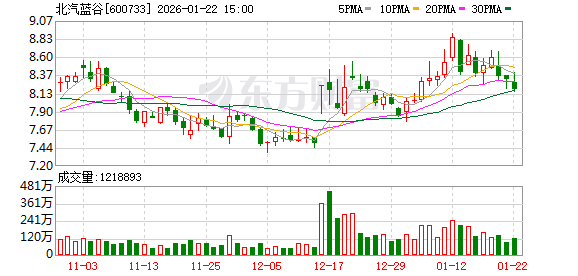
Core Viewpoint - Beiqi Blue Valley is expected to narrow its net loss in 2025, projecting a loss of 4.35 billion to 4.65 billion yuan, despite having reported losses for five consecutive years [2] Group 1: Financial Performance - The company anticipates a significant increase in sales, reaching 209,600 units in 2025, representing a year-on-year growth of 84.06% [2] - In the first three quarters of 2025, Beiqi Blue Valley's R&D expenses amounted to 1.573 billion yuan, up 43.26% from 1.098 billion yuan in the same period last year, while sales expenses rose to 1.552 billion yuan, a 22.11% increase from 1.271 billion yuan [4] - As of September 30, 2025, the total assets of Beiqi Blue Valley were 33.844 billion yuan, a decrease of 18.29% from the end of the previous year, and the equity attributable to shareholders was 2.087 billion yuan, down 62.13% [5] Group 2: Product Development and Market Strategy - Beiqi Blue Valley is in a strategic investment phase, with new product launches expected to enhance sales and improve profitability [2][3] - The company plans to launch multiple new models in the second half of 2025, including the Extreme Fox T1 and the Xiangjie S9T, which are anticipated to drive sales growth [3] - The Xiangjie brand achieved a record monthly sales of over 10,000 units in December, becoming the sales champion in the luxury new energy vehicle segment priced above 300,000 yuan [3] Group 3: Funding and Future Outlook - Beiqi Blue Valley continues to receive financial support from its controlling shareholder, Beiqi Group, which plans to invest 100 billion yuan in the development of its autonomous passenger vehicle business by 2030, focusing on new energy and intelligent technology [6] - The company has received approval for a private placement to raise up to 6 billion yuan, with 5 billion yuan allocated for new energy vehicle development and 1 billion yuan for AI and intelligent driving systems [6] - The fundraising is expected to improve the company's financial condition and enhance its profitability and competitive strength, reducing the risk of delisting [6]


601615拟跨界收购,今日复牌
Shang Hai Zheng Quan Bao· 2026-01-22 22:59
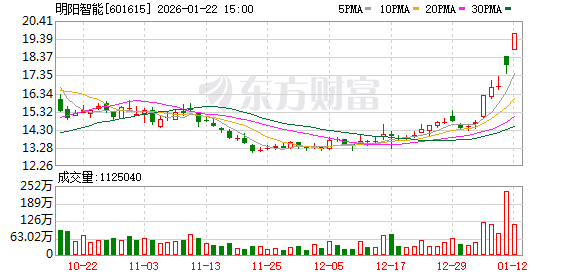
Group 1 - The core announcement is that Mingyang Smart Energy (601615) will resume trading on January 23, 2026, after being suspended since January 13, 2026, due to a planned acquisition of control over Dehua Company by issuing shares and cash payments [2][3] - The acquisition involves purchasing 100% of Dehua Chip's equity, with a share issuance price set at 14.46 yuan per share, which is not less than 80% of the average stock price over the previous 120 trading days [4] - This transaction is expected to enhance Mingyang's strategic development in the energy sector, strengthen industry chain synergy, accelerate photovoltaic business integration, and optimize business structure [4] Group 2 - Dehua Company, established in 2015, specializes in the design, research, and manufacturing of semiconductor epitaxial wafers and chips, and has capabilities in providing energy system solutions for space vehicles [5] - The establishment of the Commercial Space Administration by the National Space Administration in November 2025 and the related action plan for high-quality development in commercial space have increased market attention on the commercial space sector [6] - Mingyang Smart Energy reported a revenue of 26.304 billion yuan for the first three quarters of 2025, a year-on-year increase of 29.98%, while the net profit attributable to shareholders decreased by 5.29% to 766 million yuan [8]

北汽蓝谷2025年 亏损额料收窄
Zhong Guo Zheng Quan Bao· 2026-01-22 20:59
Core Viewpoint - Beiqi Blue Valley (600733) is expected to narrow its net loss in 2025, projecting a loss of 4.35 billion to 4.65 billion yuan, despite having reported losses for five consecutive years [1] Sales Performance - Beiqi Blue Valley's sales are projected to increase significantly, reaching 209,600 units in 2025, representing a year-on-year growth of 84.06% [1] - The company plans to launch multiple new models in the second half of 2025, including the Extreme Fox T1 and the Xiangjie S9T, which are expected to drive sales growth [2] - The Xiangjie brand achieved a historic monthly sales record of over 10,000 units in December, becoming the sales champion in the luxury new energy vehicle segment priced above 300,000 yuan [2] Financial Expenditure - In the first three quarters of 2025, Beiqi Blue Valley's R&D expenses amounted to 1.573 billion yuan, a 43.26% increase from the previous year, while sales expenses reached 1.552 billion yuan, up 22.11% year-on-year [3] Asset and Equity Status - As of September 30, 2025, Beiqi Blue Valley's total assets were 33.844 billion yuan, a decrease of 18.29% from the previous year, and the equity attributable to shareholders was 2.087 billion yuan, down 62.13% [4] - The company is primarily supported by its controlling shareholder, Beiqi Group, which holds a 23.14% stake, with additional stakes held by related parties [4] Capital Injection - Beiqi Blue Valley has received approval for a private placement to raise up to 6 billion yuan, with 5 billion yuan allocated for new energy vehicle development and 1 billion yuan for AI and intelligent driving systems [5] - The capital injection is expected to improve the company's financial condition and enhance its profitability and competitive strength, reducing the risk of delisting despite ongoing losses [5]
北汽蓝谷2025年亏损额料收窄
Zhong Guo Zheng Quan Bao· 2026-01-22 20:56
Core Viewpoint - Beiqi Blue Valley is expected to narrow its losses in 2025, projecting a net loss of 4.35 billion to 4.65 billion yuan, despite having reported losses for five consecutive years [1] Sales Performance - The company anticipates a significant increase in sales, reaching 209,600 units in 2025, representing an 84.06% year-on-year growth [1] - Monthly sales from August to December 2025 showed a steady increase, with December sales surpassing 10,000 units for the first time for the Xiangjie brand, marking a historical high [2] - The introduction of new models, including the Extreme Fox T1 and Xiangjie S9T, is expected to drive sales growth, although it may also lead to increased R&D and sales expenses [2] Financial Health - As of September 30, 2025, Beiqi Blue Valley's total assets were 33.844 billion yuan, a decrease of 18.29% from the previous year, and the equity attributable to shareholders was 2.087 billion yuan, down 62.13% [2] - The company reported R&D expenses of 1.573 billion yuan in the first three quarters of 2025, a 43.26% increase year-on-year, and sales expenses of 1.552 billion yuan, up 22.11% [2] Funding and Support - Beiqi Blue Valley continues to receive financial support from its parent company, Beiqi Group, which holds a 23.14% stake [3] - In November 2025, the company received approval for a private placement to raise up to 6 billion yuan, with 5 billion yuan allocated for new energy vehicle development and 1 billion yuan for AI and intelligent driving systems [4] - The fundraising is expected to improve the company's financial condition and enhance its competitiveness and sustainability, reducing the risk of delisting [4]
深圳市大为创新科技股份有限公司2025年度业绩预告
Xin Lang Cai Jing· 2026-01-22 19:11
Group 1 - The company expects a net profit to be negative for the fiscal year 2025, covering the period from January 1, 2025, to December 31, 2025 [2] - The company has communicated with its auditing firm regarding the performance forecast, and there are no significant discrepancies between the company and the auditors [2][3] Group 2 - The company's main business includes two sectors: semiconductor storage and new energy. In 2025, the semiconductor storage industry is expected to recover, leading to revenue growth in this segment and an overall profit increase compared to the previous year [3] - Despite the anticipated losses in the consolidated financial results due to ongoing investments in semiconductor storage R&D and the Chenzhou lithium battery new energy project, the loss is expected to be narrower than the previous year [3]

东方富海董事长陈玮:专业是创投机构的生存之本
Shang Hai Zheng Quan Bao· 2026-01-22 18:37
Core Viewpoint - The venture capital industry is increasingly recognized and supported by top-level design, positioning it at the forefront of innovation and entrepreneurship in China [2][3]. Group 1: Industry Trends - The "14th Five-Year Plan" emphasizes the importance of venture capital in supporting technological innovation, aligning the mission of venture capital with national needs [3]. - The introduction of the "Technology Board" in the bond market allows equity investment institutions to participate in bond issuance, providing new financing avenues for technology innovation [3][4]. Group 2: Investment Strategy - The company, Oriental Fortune, focuses on early-stage investments in hard technology sectors, aiming to enhance investment management capabilities and support the innovation ecosystem [2][5]. - The company manages over 60 funds with a total scale of 35 billion yuan, investing 60% in early-stage projects across sectors like artificial intelligence, semiconductors, and biotechnology [5]. Group 3: Operational Excellence - The company emphasizes the need for professional capabilities in strategic positioning, compliance, and internal management to support high-quality development in the technology sector [5][6]. - A competitive incentive mechanism is in place to enhance employee motivation and avoid mediocrity, ensuring that contributions are recognized [6]. Group 4: Ecosystem Development - The company has established a unique post-investment empowerment ecosystem to address the challenges faced by startups and support their growth [7]. - Future initiatives include promoting the listing of venture capital funds and optimizing tax policies to create a healthier and more stable environment for innovation [7].

声明:任泽平博士观点
泽平宏观· 2026-01-22 18:18
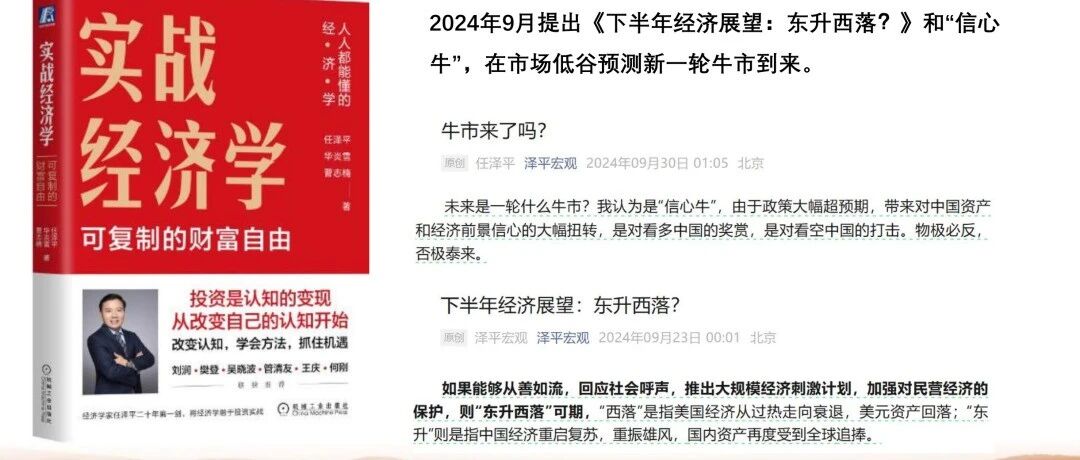
Core Viewpoint - The article emphasizes the importance of accurate interpretation of Dr. Ren Zeping's views, correcting misconceptions circulating online, and promoting research that contributes to societal progress [1]. Group 1: New Infrastructure and Economic Outlook - In 2020, the concept of "new infrastructure" was advocated early in China, focusing on sectors like renewable energy and artificial intelligence, with the book "New Infrastructure" awarded for its innovative educational content [4][5]. - At a 2021 conference, Dr. Ren stated that not investing in renewable energy now is akin to missing out on real estate opportunities two decades ago, highlighting the explosive potential of the renewable energy sector in China's economy [6]. - A bullish economic outlook was presented for the second half of 2024, predicting a "confidence bull market" driven by unexpected policy measures that would restore confidence in Chinese assets and the economy [8]. Group 2: Economic Policy Recommendations - The article suggests that if the government responds positively to societal demands and implements large-scale economic stimulus plans while protecting the private sector, a revival of the Chinese economy is likely, contrasting with a potential downturn in the U.S. economy [9]. - In 2020, Dr. Ren was among the first to advocate for the relaxation of birth policies, which gained significant attention and led to the eventual policy change [13].
大批知名投资人集聚深圳,2026机遇在哪?
Xin Lang Cai Jing· 2026-01-22 13:38
Core Insights - The Chinese private equity investment industry has reached a historic turning point in 2025, with a total fundraising amount exceeding 1.16 trillion yuan, a year-on-year increase of 8%, and the number of new funds surpassing 3,500, up 18% from the previous year [1][35] - A significant structural change is observed, with state-owned limited partners (LPs) contributing 89% of the funding, and hard technology investments accounting for over 60% of the total [1][36] Group 1: Dominance of State Capital - The role of state capital has been further strengthened, with local guiding funds and state-owned enterprises contributing over 50% of the funding, while the proportion of RMB funds exceeds 99% [2][36] - State-owned LPs are integrating national strategies and regional economic development goals into their investment decisions, focusing 70% of their funds on early-stage technology companies [2][36] - The investment strategy of VC/PE has shifted from broad-based approaches to more targeted investments, with a noticeable decrease in the concentration of large funds exceeding 5 billion yuan [2][36] Group 2: Focus on Hard Technology - Hard technology is identified as the primary investment focus for 2025 and the coming years, encompassing areas such as artificial intelligence, robotics, semiconductors, and renewable energy [3][37] - The establishment of key platforms like the Sci-Tech Innovation Board and the Hong Kong Stock Exchange has created critical windows for capitalizing on hard technology investments [3][37] - Early-stage financing transactions (A-round and earlier) accounted for 62% of total deals, with small investments under 100 million yuan making up over 67% [3][37] Group 3: Diversification of Exits - The exit landscape has improved significantly, particularly in the IPO market, with the number of IPOs in mainland China and Hong Kong accounting for 16% and 33% of the global total, respectively [4][38] - The number of IPO cases for invested companies in Hong Kong increased by 148.1% year-on-year, while A-share IPO cases rose by 26.5% [4][38] - Mergers and acquisitions (M&A) have also seen a surge, with a year-on-year increase of 84% in exit cases, highlighting the growing importance of M&A strategies for VC/PE [4][38] Group 4: Long-term Vision and Future Opportunities - Despite the positive performance in investment and exits, the private equity market faces numerous challenges, necessitating a long-term vision to navigate policy directions and market demands [5][39] - The 15th China Capital Annual Conference, themed "Visionaries Win," aims to gather industry leaders to discuss emerging trends and strategies in the investment landscape [5][39] - The conference will also unveil the "2025 Private Equity Investment Annual Series Rankings," recognizing outstanding institutions and individuals in various sectors [6][40]

东风股份发预亏,预计2025年度归母净亏损3.9亿元至4.8亿元
Zhi Tong Cai Jing· 2026-01-22 12:30
Core Viewpoint - Dongfeng Motor Corporation (600006.SH) anticipates a net loss attributable to shareholders of the parent company ranging from 390 million to 480 million yuan for the year 2025, primarily due to intensified competition in the light commercial vehicle market and challenges in transitioning from traditional fuel to new energy vehicles [1] Group 1: Performance Forecast - The company expects a net loss of 390 million to 480 million yuan for 2025 [1] - The main reasons for the performance change include increased competition in the light commercial vehicle market, leading to sales pressure and a decline in overall gross margin [1] - The company is in a critical transition period from traditional fuel to new energy, prompting adjustments in operational pace and marketing strategies [1] Group 2: Strategic Adjustments - The company is implementing marketing reforms, reducing inventory, and expanding retail efforts, which have resulted in increased channel support [1] - A reassessment of the collection situation for certain receivables has led to additional provisions for credit impairment based on accounting prudence [1] Group 3: Future Initiatives - The company plans to enhance investment in research and development in new energy and intelligent driving technologies [1] - Efforts will be made to deepen channel construction and expansion, aiming to build a customer-centric value marketing system to overcome short-term adverse impacts [1]

东风股份(600006.SH)发预亏,预计2025年度归母净亏损3.9亿元至4.8亿元
智通财经网· 2026-01-22 12:23
Core Viewpoint - Dongfeng Motor Corporation (600006.SH) anticipates a net loss attributable to shareholders of 390 million to 480 million yuan for the year 2025, primarily due to intensified competition in the light commercial vehicle market and a decline in overall gross margin [1] Group 1: Performance Forecast - The company expects a net loss of 390 million to 480 million yuan for 2025 [1] - The main reasons for the performance change include increased competition in the light commercial vehicle market, leading to sales pressure and a decline in overall gross margin [1] Group 2: Strategic Adjustments - The company is in a critical transition period from traditional fuel to new energy vehicles, prompting a proactive adjustment in operational pace and marketing transformation [1] - Measures taken include reducing inventory, expanding retail, and increasing channel support [1] Group 3: Financial Management - The company has reassessed the recovery situation of certain receivables with extended collection periods and has supplemented the provision for credit impairment of receivables based on accounting prudence [1] Group 4: Future Initiatives - The company plans to increase investment in research and development in new energy and intelligent driving technologies, deepen channel construction and expansion, and build a customer-centric value marketing system to overcome short-term adverse impacts [1]