
绿色转型

Search documents
绿色贸易领域首个专项政策文件发布
Jing Ji Wang· 2025-11-04 02:45
Core Viewpoint - Green trade has become a core indicator of national trade competitiveness amid deepening global climate governance and reshaping trade patterns, as highlighted by the Ministry of Commerce's recent implementation opinions on expanding green trade [1] Group 1: Implementation Measures - The implementation opinions propose 16 targeted measures to enhance the green low-carbon development capabilities of foreign trade enterprises, expand the import and export of green low-carbon products and technologies, create a favorable international environment for green trade, and establish a robust support system for green trade [2][3] - Specific measures include supporting enterprises in adopting green design, obtaining green product certifications, and encouraging carbon emission reductions through equipment upgrades and process modifications [2] - The establishment of a carbon footprint database and the promotion of green packaging and transportation methods are also emphasized to facilitate the transition to green trade [2][3] Group 2: Market Potential and Growth - The global market for electric vehicles, solar energy, and wind energy is projected to reach $2.1 trillion by 2030, five times its current size, indicating significant market potential for green low-carbon products [4] - China's exports of green low-carbon products have shown remarkable growth, with wind turbine exports increasing by over 30% in the first three quarters of this year, and electric vehicle exports surpassing 2 million units last year [4] - The implementation opinions aim to enhance the international competitiveness of green low-carbon products by promoting the use of recycled materials and developing sustainable fuel trade [4] Group 3: International Cooperation and Challenges - China is committed to participating in global green governance and enhancing the "green content" of its free trade agreements, despite facing challenges such as rising carbon footprint standards in international markets [6][7] - The Ministry of Commerce plans to engage in the formulation of international rules and standards, while the Ministry of Industry and Information Technology aims to increase the output share of green factories to 40% by 2030 [7] - The implementation of these measures is expected to create multiple opportunities for China's green trade, transforming trade structures and development methods [7]
帮主郑重:四筛中国铝业!三季狂赚108亿,是周期反转还是昙花一现?
Sou Hu Cai Jing· 2025-11-04 00:10
Core Viewpoint - China Aluminum's Q3 report shows a net profit of 10.872 billion yuan, a year-on-year increase of 20.65%, indicating potential cyclical recovery or peak performance [1] Valuation Screening - Current stock price is 10.17 yuan with a P/E ratio of approximately 12, reflecting market caution towards cyclical industries [3] - The P/B ratio is 2.38, suggesting concerns about potential profit peaks and aluminum price declines [3] - If the company can leverage its full industry chain advantage to smooth out cyclical fluctuations, the current valuation may represent a significant investment opportunity [3] Fundamental Screening - Profit quality has improved, with a gross margin increase to 17.31% over four consecutive quarters, indicating effective cost control and product optimization [4] - The debt ratio has decreased to 46.38%, enhancing financial health [4] - As one of the largest alumina producers globally, China Aluminum benefits from a fully integrated supply chain, leading to superior resource security and cost control [4] - Operating cash flow reached 25.38 billion yuan in the first three quarters, with a mid-term dividend of 0.82 yuan per share, reflecting strong financial fundamentals [4] Industry Trend Screening - The company is positioned at the intersection of limited supply and new demand drivers, with a production cap of 45 million tons for electrolytic aluminum under current policies [5] - The "dual carbon" goals make it challenging to introduce new production capacity, effectively locking in supply [5] - New demand from sectors like electric vehicles, photovoltaic supports, and energy storage systems is robust, potentially offsetting weakness in traditional construction sectors and driving aluminum prices into a new phase [5] Capital Flow Screening - Recent data shows a net inflow of 929 million yuan from major funds, indicating a positive attitude from large investors [6] - The number of shareholders has decreased to 356,300, suggesting a concentration of shares as retail investors exit while institutions accumulate [6] - However, the proportion of major holdings remains low, indicating that large funds have not yet formed a strong bullish consensus [6] Strategy Recommendations - For conservative investors, it is advisable to gradually accumulate shares at lower prices, particularly around the 60-day moving average of 8.05 yuan, given the current valuation's safety margin [7] - Aggressive investors may consider technical breakouts, particularly if the stock price surpasses the resistance level of 10.50 yuan with sustained inflows from major funds, while setting a stop-loss below 9.75 yuan [8]


携手绘制亚太共同体美好蓝图
Jing Ji Ri Bao· 2025-11-03 23:07
Group 1 - The core viewpoint emphasizes the need for Asia-Pacific economies to strengthen mutually beneficial cooperation to seize new opportunities and address new challenges, as highlighted by President Xi Jinping during the APEC meeting [1][2]. - China has established itself as a key player in the Asia-Pacific region, being ASEAN's largest trading partner for five consecutive years, and the implementation of the Regional Comprehensive Economic Partnership (RCEP) is a testament to the ongoing regional economic integration [1][2]. - The call for innovation and collaboration in technology, particularly in artificial intelligence and digital economy, aims to bridge the digital divide and promote sustainable development across Asia-Pacific economies [2]. Group 2 - The upcoming APEC meeting in Shenzhen in November 2024 marks China's third time hosting this significant event, following previous meetings in Shanghai and Beijing, showcasing China's ongoing commitment to APEC and regional cooperation [3]. - China's commitment to deepening reforms and expanding high-level opening-up is reinforced by the recent approval of the "14th Five-Year Plan," which aims to provide new opportunities for the Asia-Pacific and global markets [2][3].
国航远洋(920571):持续推进绿色转型、新运力投入内贸,2025Q1-3实现营收6.93亿元
KAIYUAN SECURITIES· 2025-11-03 14:12
Investment Rating - The investment rating for the company is maintained at "Outperform" [5] Core Insights - The company achieved total revenue of 693 million yuan in the first three quarters of 2025, representing a year-on-year growth of 1.83%. However, the net profit attributable to the parent company was only 205,100 yuan, a significant decrease of 99.75% year-on-year, primarily due to vessel impairment and increased financial costs [5] - The company is adjusting its profit forecasts for 2025, while maintaining forecasts for 2026 and 2027. Expected net profits for 2025-2027 are 49 million, 149 million, and 182 million yuan respectively, with corresponding EPS of 0.09, 0.27, and 0.33 yuan [5] - The company is benefiting from a strong demand for domestic bulk commodity transportation, with revenue from the domestic trade segment reaching 214 million yuan in the first half of 2025, a year-on-year increase of 100.63% [6] - The company is actively pursuing a green transition, with over 30% of its fleet now consisting of green vessels. It plans to phase out older vessels to reduce costs and improve efficiency [7] Financial Summary - For 2025, the company is projected to achieve total revenue of 1,067 million yuan, a year-on-year increase of 14.0%. The net profit attributable to the parent company is expected to be 49 million yuan, reflecting a year-on-year increase of 115.4% [9] - The gross margin is expected to stabilize at 20.3% for 2025, with a net margin of 4.6% [12] - The company's P/E ratio is projected to decrease from 125.4 in 2025 to 33.7 by 2027, indicating an improving valuation as earnings grow [9][12]
香港中小上市公司协会:香港中小上市企业喜迎“十五五”新机遇
Zhi Tong Cai Jing· 2025-11-03 13:05
Core Viewpoint - The "14th Five-Year Plan" emphasizes accelerating high-level technological self-reliance and leading the development of new productive forces, indicating a strategic shift for Hong Kong's small and medium-sized listed companies towards a dual core function of "technology + capital" [1][2] Group 1: Market Context - There are approximately 2,600 listed companies in Hong Kong, with nearly 80% having a market capitalization below 5 billion HKD, highlighting long-standing issues of low valuation, weak liquidity, and financing difficulties [2][3] - The current environment presents significant structural rebound potential, as small and medium-sized companies are at a critical point of transitioning from passive survival to proactive transformation [2][3] Group 2: Transformation Directions - The "14th Five-Year Plan" outlines six definitive mainlines, providing seven transformation directions for Hong Kong's small and medium-sized listed companies [3][4] 1. **AI-Driven Industrial Upgrade**: Companies should leverage AI to achieve asset-light transformation across various sectors [3] 2. **Integration into National Unified Market**: Companies are encouraged to align with mainland standards and supply chain certifications to access broader growth opportunities [3][4] 3. **Promotion of Consumer Technology and Innovation**: There is a push for technological upgrades in sectors like elderly care, education, and culture, creating new consumption technology markets [3][4] 4. **Innovation in Mergers and Acquisitions**: Companies should utilize the flexible advantages of the Hong Kong market to engage in cross-border industrial integration [3][4] 5. **Deepening High-Level Openness and International Connectivity**: Hong Kong can leverage its position to facilitate cross-border data flow and green finance innovations [4] 6. **Participation in New Urbanization Construction**: Companies can engage in urban renewal projects in mainland China, tapping into significant investment opportunities [4] 7. **Embracing Green Finance and Zero-Carbon Economy**: Companies should promote green certification and utilize financial instruments like green bonds to broaden financing channels [5] Group 3: Steps for Transformation - The transformation process is outlined in three steps: 1. **Industrial AI Transformation**: Companies must view AI as a strategic asset and integrate it into all operational aspects [5][6] 2. **Mergers and Acquisitions**: This is seen as an effective path for scaling and enhancing innovation capabilities through horizontal and vertical integration [6] 3. **Green Transformation**: Companies should adopt green manufacturing standards and establish systems for monitoring carbon emissions to attract ESG investments [6][7] Group 4: Policy Recommendations - Seven policy recommendations are proposed to invigorate small and medium-sized listed companies: 1. **Improve M&A Regulations**: Relax restrictions on mergers and acquisitions to facilitate corporate transformation [7] 2. **Establish a Multi-Tiered Capital Market System**: Create a more inclusive capital market structure to support companies at various development stages [8] 3. **Promote Re-Industrialization and Research Commercialization**: Align capital market reforms with re-industrialization strategies to enhance industry upgrades [8] 4. **Relax Intellectual Property Financing**: Encourage financial institutions to recognize intangible assets for financing [8] 5. **Establish Development Funds and Credit Guarantee Mechanisms**: Create funds to support AI transformation and green upgrades [9] 6. **Advance Green Finance and Carbon Asset Marketization**: Develop a carbon asset trading system to incentivize green development [9] 7. **Promote Policy Coordination and Performance Assessment**: Ensure effective implementation of supportive policies for small and medium enterprises [9] Conclusion - The "14th Five-Year Plan" marks a pivotal transition for Hong Kong's economy, urging small and medium-sized listed companies to embrace transformation and innovation to thrive in the new economic landscape [10]
协鑫再度融资45.3亿!
Sou Hu Cai Jing· 2025-11-03 10:52
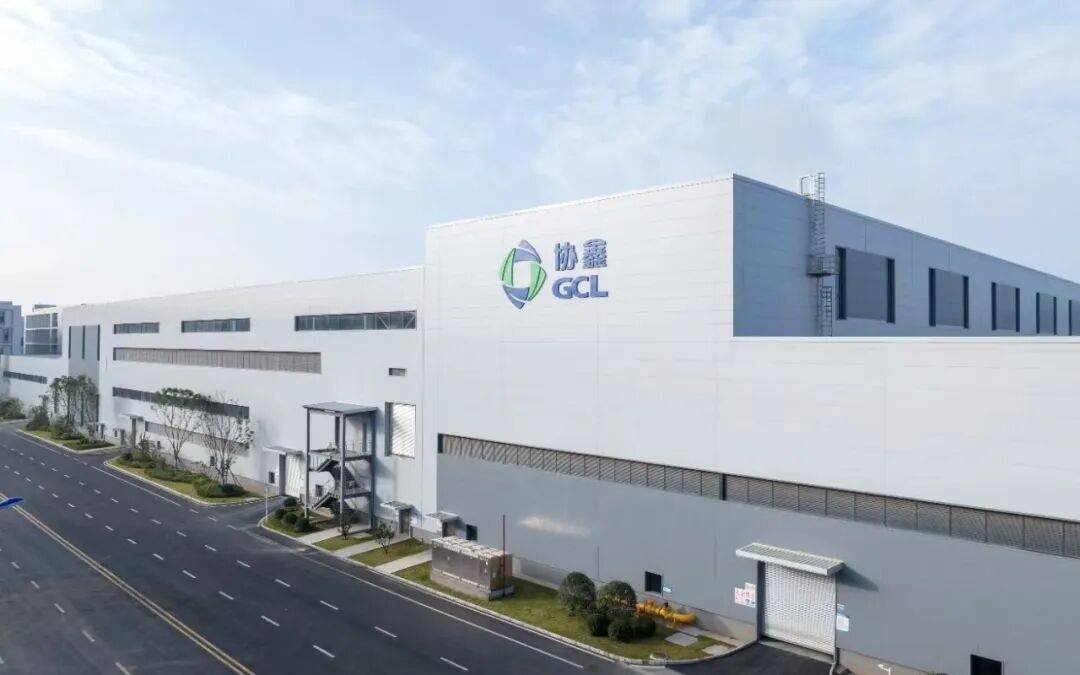
Core Insights - The article highlights the successful issuance of asset-backed notes (ABN) by Taicang Port GCL Power Co., Ltd., a subsidiary of GCL Group, with a registered amount of 4.53 billion yuan, marking a significant achievement in the capital market for private energy enterprises [2][3]. Group 1 - The ABN issuance is the largest scale recorded this year for power supply and heating-related asset-backed notes, setting a benchmark for innovative financing in the private energy sector [3]. - The underlying assets for the ABN are based on the future income from four 330,000 kW units over the next seven years, with a maximum issuance period of seven years and a debt rating of AAA, receiving high recognition from the financial market [3]. - ABN transforms non-standard debt assets into standardized notes, enhancing capital allocation efficiency and reducing financing costs while improving the company's asset-liability ratio [4]. Group 2 - GCL's operation provides a replicable model, creating a closed loop of "activating existing assets—obtaining low-cost funds—investing in green transformation," turning idle power generation assets into liquid funds at a lower financing cost than traditional loans [5]. - This combination of "industrial hard power + capital soft power" is particularly noteworthy for private energy companies to emulate [6]. - The energy industry's development logic of "renewing existing stock and improving incremental quality" establishes a virtuous cycle of "production—operation—financing—reinvestment," where the deployment of photovoltaic components enhances the cleanliness of power generation assets, leading to better market recognition and financing conditions [7]. Group 3 - The internal synergy within the industry chain makes "green transformation" a self-reinforcing positive cycle rather than an isolated investment [8]. - The current policy direction supporting the high-quality development of the private economy sends a strong signal to the market: as long as the assets are of high quality and the transformation direction is clear, private enterprises can also gain full recognition in the capital market, with capital willing to support the green transformation of private energy companies [8].
2025年中欧绿色合作推动电力行业低碳转型:挑战与机遇报告-绿色和平
Sou Hu Cai Jing· 2025-11-03 08:42
Core Insights - The report highlights the progress, challenges, and optimization paths of Sino-European green cooperation in the low-carbon transition of the electricity sector, providing references for global climate governance collaboration [1][2]. Group 1: Current Status of Sino-European Green Cooperation - Sino-European green cooperation has established a solid foundation and diverse outcomes, with the EU aiming for climate neutrality by 2050 through the European Green Deal and China planning to invest $625 billion in clean energy by 2024 [1][2]. - Both parties have reached a consensus on not building new overseas coal power projects, and significant progress has been made in renewable energy cooperation, with China's renewable energy capacity expected to reach 2.159 billion kilowatts by 2025, accounting for 59.2% of total installed capacity [2]. Group 2: Key Challenges in Cooperation - The cooperation faces multiple structural challenges, including fragmented global climate governance, intensified geopolitical competition, and differences in energy structures and political landscapes within the EU [2][3]. - The EU's "de-risking" policy towards China and trade frictions, such as the increase in electric vehicle tariffs to 45.3%, complicate regulatory coordination [2]. Group 3: Proposed Cooperation Paths - The report proposes two core cooperation paths: enhancing climate ambition through the "Sino-European +" framework and deepening electricity decarbonization cooperation, focusing on renewable energy complementarity and green electricity certification [3][21]. - Sino-European cooperation is positioned as a key force in global green transition, aiming to overcome geopolitical differences and strengthen rule compatibility and industrial collaboration [3].

反内卷持续推进 光伏行业价格和盈利修复明显(附概念股)
Zhi Tong Cai Jing· 2025-11-03 07:14
Core Insights - The photovoltaic industry in China is experiencing significant growth, with a projected 45% increase in new installed capacity in 2024 compared to the previous year, marking nearly a 20-fold increase since 2015 [1] - The "14th Five-Year Plan" emphasizes green transformation as a core goal, aiming to consolidate and expand the advantages of the wind and photovoltaic industries [1] - The industry is undergoing profound changes with the transition from P-type to N-type monocrystalline silicon technology, expected to capture over 96.9% market share by 2025, alongside advancements in TOPCon, HJT, and BC technologies [1] Industry Developments - A coalition of 17 major companies is being formed to address supply-side issues, focusing on the polysilicon segment through capacity coordination, quality grading, and self-discipline in production cuts [2] - The "anti-involution" policies initiated since mid-2025 have led to a significant expansion of participating entities and a notable recovery in product prices, with the polysilicon industry starting to increase prices above the comprehensive cost line in Q3 2025 [2] Related Companies - Key companies in the photovoltaic supply chain include GCL-Poly Energy (03800), Xinte Energy (01799), Flat Glass Group (601865), Xinyi Solar (00968), Fuyao Glass (600660), and CAISSA New Energy (600876) [3]



海马汽车:依托海南自贸港资源禀赋与政策优势,推进在氢能汽车等领域的绿色转型与布局
Ge Long Hui· 2025-11-03 07:12
Core Viewpoint - The company is focusing on hydrogen energy as a long-term strategic plan, indicating a commitment to green transformation and development in the automotive sector [1] Group 1: Hydrogen Energy Business - The company has made progress in the hydrogen vehicle sector, exploring a full industry chain from "photovoltaic power generation → electrolysis of water to produce hydrogen → high-pressure hydrogen filling → hydrogen vehicle operation" [1] - The company plans to leverage the resource endowment and policy advantages of Hainan Free Trade Port to advance its green transformation and layout in the hydrogen vehicle field [1]

海马汽车(000572.SZ):依托海南自贸港资源禀赋与政策优势,推进在氢能汽车等领域的绿色转型与布局
Ge Long Hui· 2025-11-03 07:10
Core Viewpoint - The company is focusing on hydrogen energy as a long-term strategic plan, indicating a commitment to green transformation and development in the automotive sector [1] Group 1: Hydrogen Energy Business - The company has made progress in the hydrogen vehicle sector, achieving a full industry chain exploration from "photovoltaic power generation → electrolysis of water to produce hydrogen → high-pressure hydrogen filling → hydrogen vehicle operation" [1] - The company plans to leverage the resource endowment and policy advantages of Hainan Free Trade Port to advance its green transformation and layout in the hydrogen vehicle field [1]