
成本控制

Search documents
华星控股(08237) - 有关实施行动计划以解决不发表意见之季度更新
2026-01-30 10:44
香 港 交 易 及 結 算 所 有 限 公 司 及 香 港 聯 合 交 易 所 有 限 公 司 對 本 公 告 之 內 容 概 不 負 責,對其準確性或完整性亦不發表任何聲明,並明確表示概不就因本公告全部或 任何部份內容而產生或因倚賴該等內容而引致之任何損失承擔任何責任。 Link Holdings Limited 華 星 控 股 有 限 公 司* (於開曼群島註冊成立之有限公司) (股份代號:8237) 有關實施行動計劃以解決不發表意見之季度更新 茲提述(i)華星控股有限公司(「本公司」)於二零二五年四月七日刊發之截至二零二 四年十二月三十一日止財政年度之年報(「二零二四年年報」);(ii)本公司日期為二 零二五年七月三十日及二零二五年十月三十一日的公告,內容有關( 其中包括 )實 施 行動 計劃 以 解決 不發 表意 見 之季 度更 新 ;及 (iii) 本 公司 日期 為 二零 二四 年 十二 月十二日、二零二五年八月五日、二零二五年九月五日及二零二五年十月三十一 日的公告,內容有關( 其中包括 )違反經修訂及重列融資協議以及Silverine 提交申 請委任其共同及各別清盤人( 統稱「該等公告」)。除 ...
恒鼎实业(01393) - 有关解决核数师出具不发表意见所实施的行动计画之季度更新
2026-01-30 10:04
香港交易及結算所有限公司及香港聯合交易所有限公司對本公告的內容概不負責,對其 準確性或完整性亦不發表任何聲明,並明確表示,概不對因本公告全部或任何部分內容 而產生或因倚賴該等內容而引致的任何損失承擔任何責任。 Hidili Industry International Development Limited 本公告乃由恒鼎實業國際發展有限公司(「本公司」)根據香港聯合交易所有限公司證券上 市規則(「上市規則」)第13.09(1)條以及香港法例第571章證券及期貨條例第XIVA部之內幕 消息條文(定義見上市規則)而作出。 茲提述本公司於二零二五年四月三十日發佈截至二零二四年十二月三十一日止年度的年 報(「年報」)及本公司日期為二零二五年七月三十一日及二零二五年十月三十一日的公告 (「更新公告」)。除文義另有所指外,本公告所用詞彙與年報及更新公告所界定者具有相 同涵義。 誠如年報所述,中匯安達對本集團截至二零二四年十二月三十一日止年度的合併財務報 表出具不發表意見的聲明,該聲明完全源於本集團的持續經營問題。 本公司已於更新公告內就行動計劃的實施情況提供更新,本公告旨在向本公司股東及潛 在投資者提供有關自二零二五年 ...
江苏华宏科技股份有限公司2025年度业绩预告
Shang Hai Zheng Quan Bao· 2026-01-29 19:19
Group 1 - The company expects to achieve a positive net profit for the fiscal year 2025, indicating a turnaround from previous losses [2][3] - The performance forecast period is from January 1, 2025, to December 31, 2025 [1] - The company has communicated with its accounting firm regarding the performance forecast, and there are no discrepancies between the company and the accounting firm [2] Group 2 - The significant improvement in overall performance is attributed to multiple factors, including support from national industrial policies and an improved supply-demand balance, leading to a rise in domestic rare earth product prices [3] - The company has effectively utilized its advantages in resource efficiency, cost control, and production processes to respond quickly to market changes, resulting in stable development and benefit release in the rare earth resource utilization sector [3] - The strategic layout in the rare earth permanent magnet materials industry has made solid progress, extending into high-value-added downstream sectors, driven by strong demand from end markets such as new energy vehicles, energy-saving appliances, and intelligent manufacturing [3]

Eagle Materials(EXP) - 2026 Q3 - Earnings Call Transcript
2026-01-29 14:32
Financial Data and Key Metrics Changes - Revenue for Q3 of fiscal 2026 was $556 million, down slightly from the prior year, reflecting lower wallboard and paperboard sales volume, partially offset by higher cement sales volume [11] - Earnings per share were $3.22, down 10% from Q3 of fiscal 2025, primarily due to lower net earnings from wallboard sales volume [11] - Gross profit margin was 28.9%, indicating a stable profitability level despite market challenges [3] Business Line Data and Key Metrics Changes - Heavy materials sector revenue increased by 11%, driven by a 9% increase in cement sales volume and a 22% increase in concrete and aggregates revenue [11] - Aggregate sales volume reached a record 1.6 million tons, up 81%, reflecting a 34% increase in organic aggregate sales volume [13] - Light materials sector revenue decreased by 16% to $203 million, primarily due to lower wallboard and recycled paperboard sales volume [11] Market Data and Key Metrics Changes - Cement and aggregate sales volumes grew last quarter, supported by federal, state, and local infrastructure spending [8] - Wallboard sales were challenged due to affordability issues in the housing market, with a 5% decline in wallboard sales prices [11][9] - The company announced price increases for cement in most markets for Q1 of calendar 2026, reflecting volume expectations [9] Company Strategy and Development Direction - The company aims to maintain operational flexibility and efficiency through investments in health and safety, cost control, and customer support [3][4] - Strategic projects include the modernization of the Mountain Cement plant and the Duke wallboard facility, expected to lower cost structures and enhance competitive positioning [7] - The company is focused on maintaining a strong balance sheet while pursuing growth opportunities through disciplined capital allocation [10] Management's Comments on Operating Environment and Future Outlook - Management expressed optimism about infrastructure and non-residential markets as they head into calendar 2026, despite mixed construction environments [19] - The company remains focused on operations rather than predicting demand, emphasizing their ability to manage costs effectively [9] - Management noted that while wallboard pricing has seen some downward trends, they expect stability in pricing due to structural changes in the industry [26] Other Important Information - Operating cash flow increased by 5% to $512 million, with capital spending rising to $295 million, primarily for modernization projects [14] - The company returned nearly $150 million to shareholders through dividends and share repurchases during Q3 [10] - The net debt-to-cap ratio was 48%, with a leverage ratio of 1.8x, providing significant financial flexibility [15] Q&A Session Summary Question: Is cement demand widespread across markets? - Management indicated that demand is broad-based across markets, with optimism for infrastructure and non-residential markets as they enter calendar 2026 [19] Question: What is driving the margins in cement? - Margins were impacted by slight increases in raw material costs, but maintenance and fuel costs remained largely in line [22] Question: How is wallboard pricing expected to trend? - Wallboard pricing has seen a downward trend, but management expects prices to remain range-bound due to structural changes in the industry [26] Question: What is the impact of winter storms on operations? - The company has prepared facilities for extreme cold temperatures, ensuring operations are ready for winter storms [41] Question: What portion of wallboard demand is from repair and remodel? - Repair and remodel account for about a third of wallboard demand, showing steady growth over the years [38] Question: How is the company managing capital allocation post-bond deal? - The company is focused on balancing growth through M&A and organic projects while maintaining a disciplined approach to capital allocation [51]

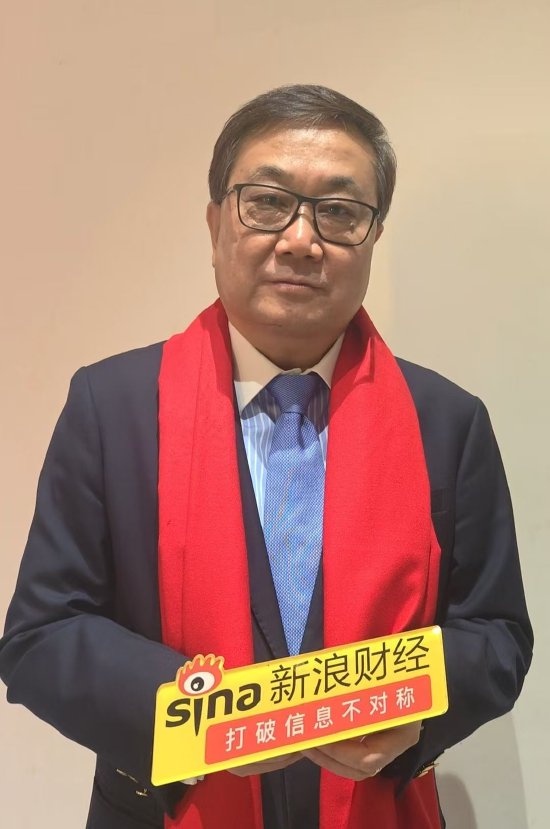
对话泛太平洋集团董事长刘持金:不少企业出海都迈出了实质性一步,建议企业家重视成本控制
Xin Lang Cai Jing· 2026-01-29 13:14
专题:为中国经济点赞——企业家之夜2025盛典 "为中国经济点赞——企业家之夜"于1月29日在北京举行,北京泛太平洋集团董事长刘持金在对话中表 示,2025年最大的惊喜是地缘政治形势非常有利于中国的国际地位,不少企业、包括中小企业的出海都 迈出了实质性一步,这一点感受最为深切。 对于2026年,他表示充满希望,建议企业家重点关注客户与成本,重视成本控制,这对高质量发展尤为 重要。 专题:为中国经济点赞——企业家之夜2025盛典 "为中国经济点赞——企业家之夜"于1月29日在北京举行,北京泛太平洋集团董事长刘持金在对话中表 示,2025年最大的惊喜是地缘政治形势非常有利于中国的国际地位,不少企业、包括中小企业的出海都 迈出了实质性一步,这一点感受最为深切。 对于2026年,他表示充满希望,建议企业家重点关注客户与成本,重视成本控制,这对高质量发展尤为 重要。 责任编辑:李铁民 责任编辑:李铁民 ...


Takeda(TAK) - 2026 Q3 - Earnings Call Transcript
2026-01-29 11:32
Financial Data and Key Metrics Changes - Revenue for the nine-month period was just over JPY 3.4 trillion, a decrease of 3.3% or -2.8% at constant exchange rate [11] - Core Operating Profit was JPY 971.6 billion, a year-on-year decrease of 3.4% at both actual effects and constant exchange rate [11] - Reported operating profit was JPY 422.4 billion, an increase of 1.2% [12] - Core EPS was JPY 428, and reported EPS was JPY 137 [12] - Adjusted free cash flow was JPY 625.9 billion, even after a $1.2 billion upfront payment to Innovent Biologics [12] Business Line Data and Key Metrics Changes - Growth and launch products represented over 50% of total revenue and grew 6.7% at constant exchange rate [12] - In GI, Entyvio grew 7.4% at constant exchange rate, with strong growth in Q3 due to a one-time gross-to-net drop [12][13] - Takhzyro in rare diseases slowed to 2.4% growth at constant exchange rate, impacted by new competing products in the U.S. [13] - Immunoglobulin growth was 4.3% year to date, driven by subcutaneous IG products [14] - Qdenga growth accelerated to 22.1%, primarily driven by Brazil [14] Market Data and Key Metrics Changes - Entyvio Pen is now on the formulary with all three large pharmacy benefit managers, achieving commercial coverage of more than 80% [13] - The impact of Medicare Part D redesign in the U.S. has affected IVIG sales, which are expected to normalize in Q4 [14] - Albumin growth returned to 1.3%, slower than expected due to softening demand in China [14] Company Strategy and Development Direction - The company is preparing for significant new product launches, focusing on oveporexton, rusfertide, and zasocitinib, expected to launch over the next 18 months [6][9] - The late-stage pipeline includes eight programs with the potential to transform the standard of care [10] - The company is committed to maintaining operational efficiency while investing in R&D for future growth [17] Management's Comments on Operating Environment and Future Outlook - Management revised revenue guidance to low single-digit decline at constant exchange rate due to stronger than anticipated Vyvanse generic erosion [18] - The company maintains full-year guidance for core operating profit and core EPS, emphasizing cost discipline [18] - Management expressed confidence in the potential of new product launches to drive future growth despite current challenges [20][41] Other Important Information - This earnings call marked Christophe Weber's last as a main presenter, with Julie Kim set to take over as CEO [29] - The company is undergoing organizational changes to enhance competitiveness and speed in preparation for multiple launches [31][55] Q&A Session Summary Question: Thoughts on next fiscal year and dividend policy - Management indicated it is too early to provide guidance for the next fiscal year, with the budget being finalized [39] - The company aims to maintain a progressive dividend policy, evaluating core EPS and cash flow to decide on potential increases [42] Question: Zasocitinib phase II outcomes and safety data - Data from UC and Crohn's disease phase II studies are expected this year, with ongoing studies assessing higher doses for efficacy [44][46] Question: Impact of MFN and organizational changes - Management does not support MFN, emphasizing that price controls could hinder future innovation [53] - Organizational changes focus on enhancing U.S. marketing and maintaining a strong oncology business unit [55] Question: Entyvio sales trends and IRA impact - Q3 sales performance was strong, with improved coverage in the U.S. [60] - The company is preparing for potential price negotiations under the IRA, with uncertainty regarding the extent of price cuts [62][63] Question: Takhzyro growth and competitive impact - Takhzyro continues to be the gold standard for HAE patients, but recent competitive entrants have impacted new starts [67] - Long-term efficacy data supports Takhzyro's market position despite current challenges [68]

紫金矿业_金价 5000 美元下的核心受益者;近期电话会要点印证我们的积极观点
2026-01-29 10:59
Summary of Zijin Mining's Conference Call Company Overview - **Company**: Zijin Mining Group - **Industry**: Basic Materials, specifically mining of copper and gold Key Takeaways Management and Strategic Focus - The new management team is committed to building a world-class, green, high-tech mining group, achieving its 2028 goals three years ahead of schedule, ranking among the top-three global mining companies with a market value exceeding Rmb1 trillion [2][4] - New 3-5 year and longer-term strategic targets are being formulated, with further updates expected [4] Production and Cost Guidance - Current production guidance is seeing upside risk, with a new set of guidance being formulated [2] - Copper output is expected to reach 1.2 million tons in 2026, with incremental volume mainly from Julong Phase II [4] - Gold production remains a priority, with confidence in further output growth [4] - Overall mining cost trends are increasing but remain under control, with unit costs for Julong Phase I at Rmb22-23k/t [5] M&A Strategy - M&A activity will focus on copper and gold assets, with an emphasis on the scarcity of high-quality copper projects and undervalued gold mines [4] - Future company-level acquisitions are possible, alongside capital management options to reduce risk [4] Lithium Strategy - No near-term M&A for lithium; focus is on developing existing lithium mines, with key contributors being Manono, Xiangyuan, and two salt lakes [4] Financial Performance and Projections - Revenue for FY25 is projected at Rmb376.5 billion, with an expected growth of 24% year-over-year [19] - Adj. EBITDA is expected to reach Rmb91.5 billion in FY25, growing to Rmb129.4 billion in FY26 [19] - Adj. net income is projected to be Rmb51.4 billion in FY25, increasing to Rmb70 billion in FY26 [19] Valuation and Price Target - Price target for Zijin-A is set at Rmb45.00 for December 2026, implying a FY26E P/E multiple of 17x and an EV/EBITDA multiple of 10.5x [12][18] - Price target for Zijin-H is set at HK$48.00 for December 2026, implying a FY26E P/E multiple of 16x and an EV/EBITDA multiple of 10x [24][29] Risks to Rating and Price Target - Upside risks include stronger-than-expected gold and copper prices and volume growth [14][25] - Downside risks include potential overpayment on M&A, geopolitical risks, and weaker-than-expected commodity prices [14][25] Additional Insights - Zijin's strong performance in the gold segment is expected to solidify its position as a core earnings driver [11][22] - The company is closely monitoring developments in Ghana regarding tax stabilization agreements and potential royalty increases [5] This summary encapsulates the key points from the conference call, highlighting Zijin Mining's strategic direction, production outlook, financial projections, and associated risks.

惠天热电:预计2025年全年净亏损3800万元—7000万元
2 1 Shi Ji Jing Ji Bao Dao· 2026-01-29 10:10
Core Viewpoint - The company, Huitian Thermal Power, has released its annual performance forecast, indicating a projected net loss for 2025, attributed to various operational factors and government subsidies [1] Financial Performance - The expected net profit attributable to shareholders for 2025 is projected to be between -70 million and -38 million [1] - The expected net profit after deducting non-recurring gains and losses is projected to be between -326.04 million and -276.04 million [1] Reasons for Performance Change - The company received approximately 250 million in government subsidies during the reporting period, which is classified as non-recurring gains and will be included in the 2025 profit and loss statement [1] - The company effectively controlled coal procurement costs by leveraging long-term coal price agreements [1] - Enhanced scheduling in the storage and transportation segment helped in controlling transportation costs [1] - The implementation of energy-saving and consumption-reduction measures has shown positive results [1]

ST应急:预计2025年净利润同比增长60.81%-141.21%
Xin Lang Cai Jing· 2026-01-29 08:01
ST应急公告,预计2025年度净利润为1389.59万元~2084.37万元,同比增长60.81%~141.21%。报告期 内,归属于上市公司股东的净利润同比上升,主要原因:一是多渠道争取外部研发资金,相应减少了自 主研发支出,引起研发费用下降;二是实施可转换公司债券提前赎回,大部分债券转换为股票,引起利 息费用下降,财务费用减少;三是深化成本工程,推进精细化管理,成本控制取得成效。 ...
宝丰能源20260128
2026-01-29 02:43
Summary of Baofeng Energy Conference Call Industry Overview - Polyolefins are important chemical products, with China's apparent consumption in 2023 approximately 75 million tons, maintaining an annual growth rate of 3-5% [2][5] - Domestic polyethylene has about 30% import dependency, while polypropylene has virtually no imports due to competitive pricing from overseas oil costs [2][6] Company Insights: Baofeng Energy - Baofeng Energy is a leader in coal-to-olefins production, with a significant profit advantage of over 1,500 RMB per ton compared to peers [2][8] - From 2016 to 2024, Baofeng's cost per ton is 960 RMB lower than Shenhua and 1,440 RMB lower than China Coal, attributed to advantages in raw materials, fuel, labor, and depreciation [2][8] - The company has optimized energy consumption and improved processes to offset raw material procurement disadvantages, achieving cost parity with peers [2][9] Financial Performance and Stock Outlook - Baofeng's stock performance has been stable, influenced by midstream asset allocation and ongoing project developments in Xinjiang [3] - If new projects are approved, growth potential in the next 2-3 years will significantly increase; if not, high cash flow and low P/E ratio may lead to increased dividends [3][14] Operational Efficiency - Baofeng has implemented measures to enhance operational efficiency and reduce unit consumption, including optimizing the ratio of pure olefins and methanol [4][12] - New equipment and high capacity utilization have further reduced energy consumption per product, lowering production costs [4][12] Project Developments - The Inner Mongolia project has advantages over the Ningxia project, including lower investment intensity and higher operational efficiency, resulting in a cost reduction of 400 to 500 RMB per ton [4][13] - Baofeng is applying for a 4 million ton annual coal-to-olefins project in Xinjiang and a 200,000 ton capacity project in Inner Mongolia, which could increase total capacity by 80% to 100% if approved [4][14] Cost Control Advantages - Baofeng's cost control is enhanced by lower labor and depreciation costs, with investment intensity for the Inner Mongolia project at 16,000 RMB per ton, significantly lower than previous projects [10][11] - The company benefits from lower local wage levels and high operational rates, which reduce labor costs per unit produced [11] Future Growth Potential - Baofeng's future growth potential is substantial, with the possibility of doubling its market value if new projects are approved, or becoming a high-dividend stock if they are not [14]
