
移民政策

Search documents
加关税、抓移民、派士兵 美政府“三板斧”砍伤华盛顿餐饮业
Yang Shi Xin Wen· 2025-08-20 19:31
Group 1 - Restaurant reservations in Washington D.C. have seen a significant decline, with a peak drop of 31% year-on-year since the deployment of the National Guard by President Trump [1][4][8] - Local restaurant owners express concerns over the impact of government enforcement actions on their revenue, citing a challenging summer for the dining industry [4][8] - The enforcement measures have led to a decrease in foot traffic, with one restaurant owner stating that the presence of law enforcement has made customers and staff feel uneasy [8][10] Group 2 - The restaurant industry is facing compounded challenges, including rising ingredient costs due to tariffs, increased labor costs from immigration policies, and inflation affecting rent prices [4][6] - The price of beef has surged, with boxed beef prices increasing by 21% in the first half of the year, further straining consumer spending on dining [6][10] - The enforcement actions have also directly impacted delivery services, with reports of delivery workers being apprehended, raising concerns among minority workers in the food delivery sector [10][12]

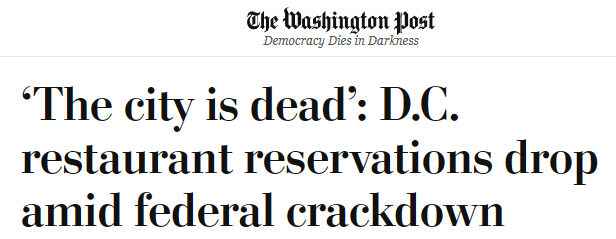
加关税、抓移民、派士兵 美政府"三板斧"砍伤华盛顿餐饮业
Yang Shi Xin Wen Ke Hu Duan· 2025-08-20 12:47
Group 1 - Restaurant reservations in Washington D.C. have seen a significant decline, with a peak drop of 31% year-on-year since the deployment of the National Guard by President Trump [1][4] - Restaurant owners express concerns that increased law enforcement and military presence are negatively impacting customer traffic and revenue during the critical summer season [3][5] - The restaurant industry is facing compounded challenges, including rising raw material costs due to tariffs, increased labor costs from immigration policies, and inflation affecting rent prices [3][4] Group 2 - The enforcement actions have led to a decrease in both dine-in and delivery business, with reports of delivery workers being apprehended, causing fear among the workforce [6][8] - The online reservation volume for restaurants dropped by 16% on the day the federal government took over security in the capital, continuing to decline thereafter [4][5] - Public sentiment is divided, with some blaming the military presence for deterring visitors, while others argue that poor local security is the root cause of the decline in tourism [10]
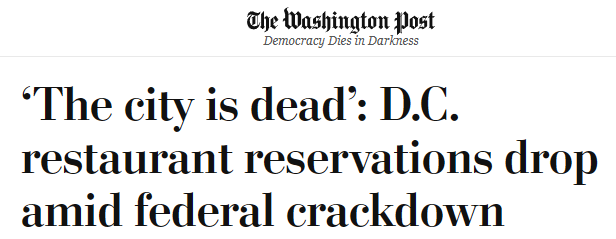
受关税等多重因素影响,美国拉斯维加斯旅游业遇冷
Sou Hu Cai Jing· 2025-08-19 15:52
Core Insights - Las Vegas has experienced a significant decline in tourist numbers in the first half of the year, indicating the impact of President Trump's trade war and immigration policies on U.S. consumer behavior [1][3]. Group 1: Tourist Statistics - In June, Las Vegas welcomed fewer than 3.1 million visitors, a year-on-year decrease of 11.3%, with international visitors down by 13% [3]. - For the first half of the year, the total number of visitors to Las Vegas decreased by 7.3% compared to the previous year [3]. - Canada, traditionally the largest source of international tourists for Las Vegas, saw a significant drop in visitor numbers during this period [3]. Group 2: Economic Impact - The decline in tourist numbers has been attributed to Trump's tariff policies and his controversial remarks regarding Canada [3]. - The local restaurant industry union described the situation as a "Trump recession," highlighting a decrease in domestic visitors from California, particularly among the Latino population concerned about immigration policies [5]. - Local officials noted that the cooling of the tourism industry is also linked to consumer fatigue and concerns about the economic outlook and personal financial situations [5].

关税大棒与移民寒冬重塑美国劳动力 疲软非农或成“特朗普2.0时代”的常态
智通财经网· 2025-08-19 03:23
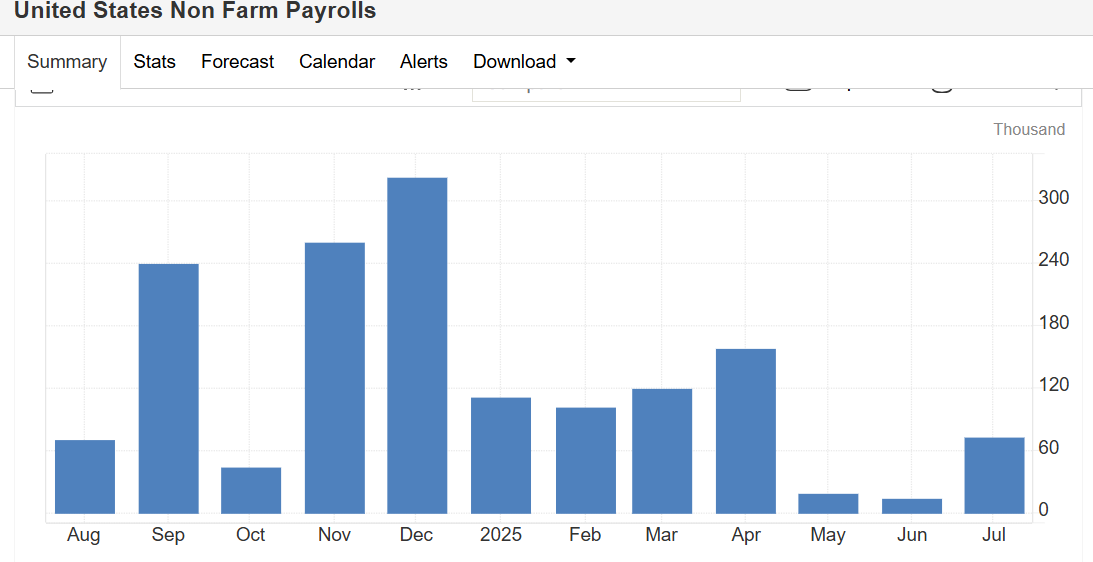
Group 1 - The core viewpoint of the articles highlights the significant decline in non-farm employment growth in the U.S., with only 73,000 jobs added in May, and an average of 35,000 jobs over the past three months, contrasting sharply with the Biden administration's average of 168,000 jobs per month during 2024 [1][2][5] - The recent employment data has raised concerns among economists and investors about the potential manipulation of data by the Trump administration, particularly following the dismissal of the BLS director [1][10][11] - The decline in immigration due to Trump's policies is expected to exert downward pressure on labor market growth, with projections suggesting that job growth could slow to as low as 10,000 to 40,000 jobs per month later this year [5][6][8] Group 2 - The Biden administration's immigration policies have contributed to a record job growth of 16.1 million jobs during his term, averaging 336,000 jobs added per month, which is now reversing due to the anticipated decline in immigration [7][9] - Goldman Sachs has adjusted its forecast for non-farm employment growth in 2025 to just 30,000 or fewer jobs per month, attributing this primarily to the decrease in immigration [8] - The potential changes in the BLS's statistical methods under Trump's administration could undermine the credibility of U.S. labor market data, which has been built over decades [10][11]
“坚定看空!”华尔街发布重大警告!
券商中国· 2025-08-14 01:22
Core Viewpoint - Multiple Wall Street institutions have issued warnings about a potential correction in the U.S. stock market, with UBS taking a notably bearish stance on the U.S. economy, dollar, and equities [2][4]. Group 1: Economic Outlook - UBS predicts a sharp slowdown in U.S. GDP growth from 2.0% in Q2 to 0.9% by Q4, significantly below the consensus estimate of 1% [4]. - Deutsche Bank warns that tariff increases and tightened immigration policies will negatively impact the U.S. economy, raising inflation while weakening growth, with limited room for future rate cuts by the Federal Reserve [10][11]. Group 2: Stock Market Predictions - Stifel analysts forecast a potential 14% decline in the S&P 500 index by the end of 2025, with a target of 5500 points [6]. - UBS sets a year-end target for the MSCI global index at 960 points, with a warning of significant downside risks in the near term [4]. Group 3: Market Sentiment and Risks - There is a growing concern about retail investor enthusiasm, with retail trading accounting for about 20% of total options trading activity, surpassing levels seen during the "meme stock" frenzy in 2021 [7][8]. - The share of stocks in household financial assets has surged to 36%, the highest level recorded since the 1950s, indicating potential market overheating [7]. Group 4: Inflation and Monetary Policy - Deutsche Bank anticipates that core CPI inflation may rise by approximately 0.5 percentage points due to tariff impacts, which is significantly higher than market consensus [10][11]. - The bank suggests that the current nominal neutral interest rate should be viewed closer to 2.5% rather than 2%, indicating limited room for rate cuts by the Federal Reserve [11].




美媒:拥抱移民,西班牙为何成西方“例外”?
Huan Qiu Shi Bao· 2025-08-13 22:32
Core Viewpoint - Spain is diverging from the Western political trend by welcoming immigrants, with new regulations easing residency and work permit conditions, potentially granting citizenship to over 1 million people [1][2]. Group 1: Immigration Trends - Between 2021 and 2023, nearly 3 million immigrants from outside the EU entered Spain, driven by the country's labor needs and low birth rate of 1.4, which is significantly below the replacement level of 2.1 [2]. - Spain's economy, bolstered by tourism, ranks fourth in the EU, creating demand for low to mid-level jobs that many locals are unwilling to fill [2]. Group 2: Public Sentiment and Historical Context - Spain has a history of being a major emigration country, which contributes to its current high level of tolerance towards immigrants. A 2019 Pew Research Center survey indicated that Spain has the most positive attitude towards immigration among European countries [3]. - The fragmented national identity in Spain, with strong regional nationalisms, makes it difficult for right-wing politicians to rally anti-immigrant sentiments, contrasting with the situation in countries like France [3]. Group 3: Government Policies and Economic Impact - Prime Minister Pedro Sánchez's pragmatic approach prioritizes immigration from Latin America, allowing applicants to seek citizenship after just two years, which facilitates integration due to shared language and culture [4]. - The Spanish government has strategically addressed labor shortages in sectors like technology, hospitality, agriculture, and elder care by issuing work permits to international students [5]. - The Spanish economy has shown resilience, achieving a growth rate of 3.2% post-pandemic, while other major European economies faced contraction, reinforcing the argument for the economic benefits of immigration [5]. Group 4: Ethical Considerations and Future Outlook - Sánchez emphasizes the moral responsibility of Spain to create a welcoming society, reflecting on the historical journeys of previous generations who emigrated [6]. - Despite some rising concerns among Spaniards regarding immigration, the current policies demonstrate that generous immigration strategies can be a resource for growth and revitalization rather than a threat [6].
“唱反调者”坚称:美联储今年仍有按兵不动的理由!
Jin Shi Shu Ju· 2025-08-13 09:20
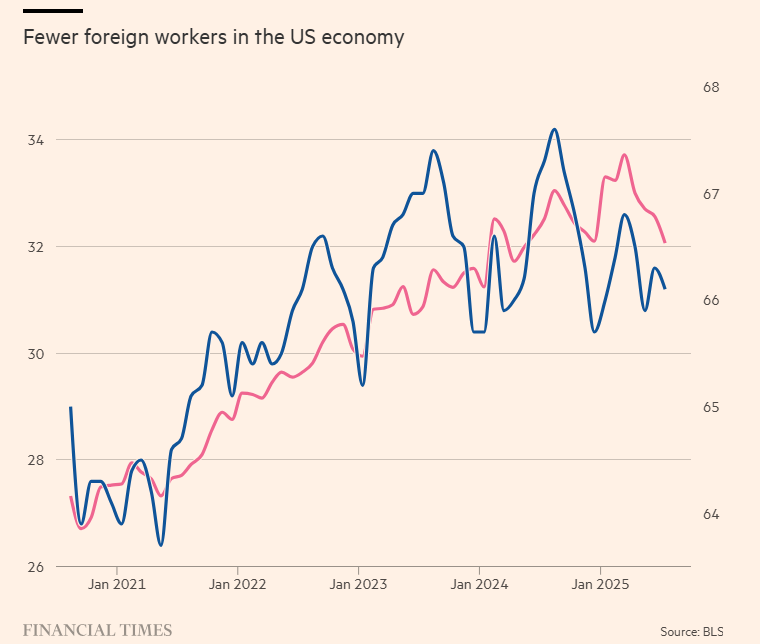
Core Viewpoint - The Federal Reserve Chairman Jerome Powell downplayed the likelihood of a rate cut in September, indicating that current economic performance does not show signs of restrictive policies dragging down growth [2] Group 1: Economic Indicators - The July non-farm payroll data fell short of expectations, with significant downward revisions for May and June, indicating weaker labor demand than previously thought [2] - The unemployment rate slightly increased in July, leading the forward rate market to fully absorb expectations for a September rate cut [2] - Analysts are questioning the prediction that the federal funds rate will remain unchanged for the rest of the year, with the outcome largely dependent on upcoming economic data releases [2][3] Group 2: Labor Market Dynamics - Concerns about restrictive immigration policies are prevalent among analysts, as the U.S. economy relies heavily on foreign labor, and recent immigration restrictions have led to a decrease in the labor supply [3] - The ratio of job vacancies to unemployed individuals has returned to pre-pandemic levels, suggesting that the labor market is not excessively loose [3] - The participation rate of foreign-born workers has significantly declined since March, indicating a tightening labor supply [4] Group 3: Future Projections - Capital Economics forecasts a slight increase in the unemployment rate to 4.3% by year-end, which may justify the Fed's decision to maintain interest rates [5] - Analysts from Bank of America believe that the current economic situation could be characterized as either recession or stagflation, with a notable decline in labor force due to immigration restrictions [5] - The upcoming non-farm payroll report on September 5 and comments from the Federal Reserve at the Jackson Hole conference will be critical in shaping future rate decisions [7]
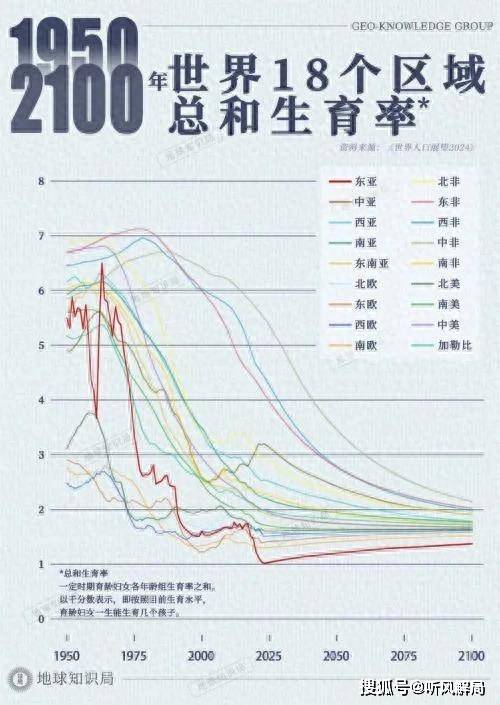
欧洲靠移民“续命”,东亚为何无路可走?
Sou Hu Cai Jing· 2025-08-12 08:41
Group 1 - The article highlights the contrasting demographic challenges faced by East Asia and Europe, with East Asia experiencing a "population avalanche" due to declining birth rates, while Europe manages to maintain population balance through immigration policies [1][3][5] - East Asian countries like South Korea, Japan, and China are witnessing alarming birth rates, with South Korea having the lowest global fertility rate and predictions indicating a significant population decline in the coming decades [1][5] - In contrast, Europe has successfully utilized immigration to offset declining birth rates, with 6 million immigrants entering the EU in 2023, particularly benefiting countries like Germany and Spain [3][4] Group 2 - The article discusses the cultural challenges arising from immigration in Europe, including identity politics and social unrest, as seen in incidents like the riots in Paris and the rise of far-right movements in Germany [4][5] - It points out that East Asia's homogeneous societies face significant barriers to large-scale immigration, making it difficult to replicate Europe's immigration strategies [5][6] - The underlying issue is the clash between modern individualism and traditional family structures, which affects birth rates and societal stability in both regions [5][6] Group 3 - The article suggests that the demographic shifts may indicate a cyclical pattern in human civilization, where Europe historically managed population pressures through colonialism and now through immigration, while East Asia faces the consequences of its previous population advantages [6] - It emphasizes that while policies can influence birth rates, the fundamental challenge remains in reconciling modern values with demographic sustainability [6] - The conclusion stresses the importance of learning from Europe's immigration experiences to avoid cultural conflicts and to address the impending demographic crises in East Asia [6]
特朗普要夺回华盛顿?美联储分歧加大,股市风险聚集!
Sou Hu Cai Jing· 2025-08-11 05:55
Group 1 - Trump announced measures to make Washington "safer and more beautiful," including relocating homeless individuals away from the city center [2] - The plan involves swift actions similar to previous border control measures, with a focus on removing homeless and criminals from the capital [3] - Trump's immigration policies have faced significant controversy, reflecting societal divisions and potential impacts on the labor market [3][4] Group 2 - The Federal Reserve is experiencing increased internal divisions, with Vice Chair Bowman advocating for three rate cuts this year due to weak labor market data [5] - Bowman's stance contrasts with current Chair Powell, indicating a potential shift in monetary policy direction [5] - Morgan Stanley and other banks predict a downturn for the S&P 500 index, citing high valuations and deteriorating economic data [7][8] Group 3 - Concerns are rising over the S&P 500 index facing a potential correction of up to 15% due to high tariffs and their impact on consumer spending and corporate balance sheets [8] - Investors are withdrawing from the stock market, with significant inflows into cash funds, indicating a shift in market sentiment [8]

美联储威廉姆斯:鉴于贸易、移民和财政政策变化范围的不确定性上升,存在分歧的观点是正常的。
news flash· 2025-08-02 01:06
Core Viewpoint - The Federal Reserve's Williams indicates that the rising uncertainty surrounding trade, immigration, and fiscal policy changes leads to divergent viewpoints being normal [1] Group 1 - The increase in uncertainty is attributed to changes in trade policies, immigration policies, and fiscal policies [1] - Divergent opinions among economic analysts and policymakers are expected due to the aforementioned uncertainties [1]