
AI泡沫

Search documents
AI股上涨的“永动机”,还能继续吗?
Hu Xiu· 2025-09-30 12:01
Group 1 - The core viewpoint of the article highlights the optimism surrounding the AI wave, with significant gains in market capitalization for major tech companies, particularly in the U.S. and China, since the launch of ChatGPT, amounting to approximately $14 trillion in value growth for the seven largest U.S. tech firms [1][2] - NVIDIA's CEO Jensen Huang predicts that global annual capital expenditure on AI infrastructure will reach $5 trillion, and OpenAI may become the next trillion-dollar company [2][3] - Huang's analysis suggests that 55% to 65% of future global GDP will be AI-driven, with AI infrastructure potentially enhancing $50 trillion in value [3][4] Group 2 - NVIDIA has established a partnership with OpenAI to deploy AI data center infrastructure, becoming OpenAI's preferred strategic computing and networking partner [8][12] - The collaboration aims to address the exponential demand for computing power, with OpenAI's CEO Sam Altman emphasizing the industry's constraints due to computing bottlenecks [8][11] - NVIDIA's market capitalization stands at $4.42 trillion, making it a major beneficiary of the AI boom [4][11] Group 3 - The article discusses the "ONO" triangle alliance between OpenAI, NVIDIA, and Oracle, where each company plays a role in providing AI infrastructure services, leading to a cycle of investment and revenue generation [17][18] - Concerns arise regarding the sustainability of this cycle, with Huang denying that revenue and investment are linked, asserting that investments are based on confidence in OpenAI's future growth [20][21] - OpenAI is projected to incur significant losses in the coming years, raising questions about its ability to sustain its ambitious infrastructure plans without new funding [25][26] Group 4 - Despite the optimism, there are doubts about the actual demand for AI services, with only 3% of ChatGPT users being paid subscribers, indicating low dependency on the service [28] - The AI industry faces a projected revenue gap of $800 billion by 2030, highlighting the challenges in meeting the anticipated demand for computing power [29][31] - The article concludes that while major tech companies are heavily invested in AI, the market's perception of a potential bubble is growing, leading to increased scrutiny from investors [31][32]

AI基建流血狂奔:支出万亿美元,芯片5年就报废
阿尔法工场研究院· 2025-09-30 07:18
Core Viewpoint - The article discusses the massive investments in AI infrastructure by major tech companies, drawing parallels to the internet bubble of the late 1990s, highlighting concerns about the sustainability and profitability of these investments [1][5][31]. Investment Scale and Context - Over the past three years, leading tech companies have invested more than $150 billion in AI data centers, chips, and energy, surpassing the total cost of the U.S. interstate highway system over 40 years [2][10]. - The AI construction boom is likened to the industrial revolution, with significant financial commitments made by companies like Microsoft and Meta, who predict substantial future expenditures [3][12]. Financial Viability and Risks - There is uncertainty regarding how and when these investments will yield returns, with estimates suggesting that $800 billion in AI products must be sold to achieve reasonable returns on the infrastructure investments made in 2023 and 2024 [10][11]. - Analysts express concerns that the current enthusiasm for AI may lead to a bubble, similar to the over-investment seen in the telecom sector during the internet boom [5][31]. Company Dynamics and Market Trends - Companies like CoreWeave have rapidly transformed from small entities to significant players in the AI infrastructure space, with a market valuation exceeding that of established firms like General Motors [8][20]. - CoreWeave's business model relies heavily on debt, with current liabilities estimated at $15 billion, and lease obligations reaching $56 billion, raising questions about long-term sustainability [20][21]. Historical Parallels and Future Outlook - The article draws historical parallels to past technology bubbles, emphasizing the risks of over-optimism and the potential for significant financial losses if the anticipated demand does not materialize [31][34]. - Despite the risks, there is a belief among some industry leaders that AI could contribute significantly to global GDP growth, potentially offsetting the high costs of investment [12][13].


黄仁勋:OpenAI或成为下一个万亿美元巨头
财联社· 2025-09-30 01:44
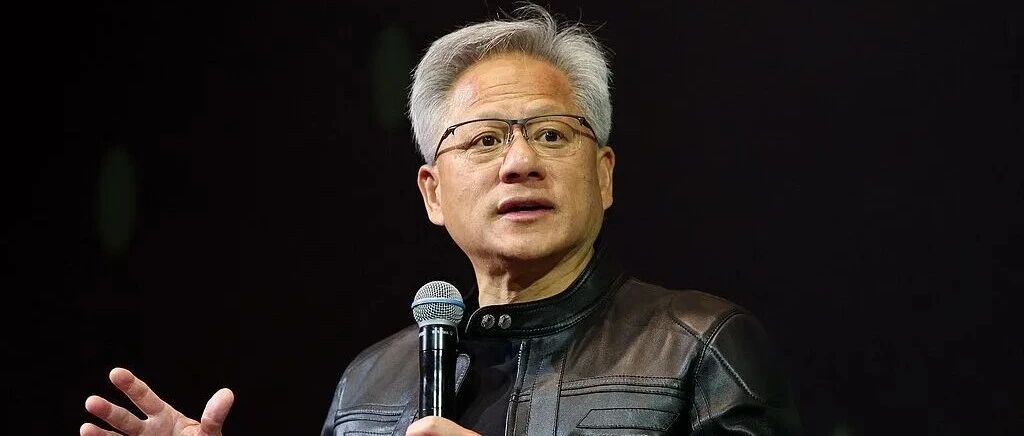
Core Viewpoint - The article discusses the contrasting perspectives on the AI industry, highlighting Nvidia CEO Jensen Huang's optimistic outlook on AI's potential for exponential growth, particularly through OpenAI, amidst warnings of an AI bubble from other industry leaders like Sam Altman and Mark Zuckerberg [2][3][9]. Group 1: AI Industry Outlook - Huang predicts that OpenAI could become the next trillion-dollar company, driven by "double exponential growth" in valuation, similar to giants like Meta and Google [3]. - Huang emphasizes that the current skepticism overlooks the deeper transformative power of AI, framing it as a generational shift rather than mere hype [4]. - He outlines three laws of AI expansion—pre-training, post-training, and inference—that will significantly increase computational demand, with inference being in its early stages [5][6]. Group 2: Nvidia's Strategic Moves - Nvidia has announced a significant partnership with OpenAI, allowing the latter to utilize Nvidia's systems to build and deploy AI data centers with a capacity of at least 10GW [8]. - The company plans to invest $100 billion in OpenAI, viewing this collaboration as a strategic investment in a rapidly growing partner [8]. - Huang believes that this partnership will help OpenAI become a fully self-sustaining super-scale company, akin to the relationship between Elon Musk and X [8]. Group 3: Market Sentiment and Growth Predictions - Despite ongoing warnings about an "AI bubble," Huang remains confident that the growth of Nvidia and OpenAI is driven by fundamental principles that make them rational choices for investment [9]. - He reiterates that the current developments in AI represent an industrial revolution, underscoring the transformative impact of AI on various industries [10].
精算 美国衰退的时间
Sou Hu Cai Jing· 2025-09-29 05:13
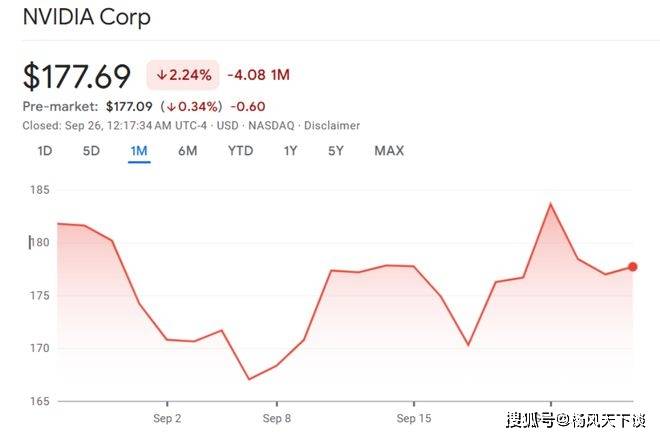
Group 1 - The article discusses the myth of the US stock market's resilience and the ongoing economic growth, questioning how long this can last [1][2] - It highlights the uncertainty in the US economic outlook due to the trade war initiated by the Trump administration, with calls for significant interest rate cuts by Treasury Secretary Mnuchin [2][3] - The Federal Reserve's recent rate cut of 25 basis points is deemed insufficient, with expectations for further cuts of 125 to 150 basis points by year-end [3][4] Group 2 - The article examines two main drivers of the US economy: the return of traditional manufacturing and the growth of the AI industry [5][6] - It suggests that while Trump's policies may temporarily slow down economic decline, the AI industry is currently in a bubble that could continue to inflate [7][8] - The performance of AI-related stocks, such as Nvidia and Oracle, indicates ongoing investor interest despite recent volatility [10][20][27] Group 3 - The article notes that the AI industry has played a crucial role in rescuing the US stock market from a bear market, with significant investments in AI infrastructure [29][30] - It emphasizes the importance of AI in sustaining economic growth, while also acknowledging the risks associated with the potential bubble [31][44] - The article discusses the influx of foreign investments into the US as part of Trump's strategy to revitalize manufacturing, with substantial commitments from countries like Japan and the EU [40][41] Group 4 - The article outlines both positive and negative factors affecting the US economy, including the ongoing AI investment and tariff revenues as positives, while rising debt and competition from China are seen as negatives [43][48] - It predicts that the AI bubble may last for another six months, but warns of potential stock market declines during this period [52][55] - The article concludes that while the Trump administration may navigate short-term challenges, long-term competition from China poses significant risks [56][59]
大资金落袋为安 | 谈股论金
水皮More· 2025-09-26 09:32
Market Overview - The A-share market experienced a collective decline today, with the Shanghai Composite Index down 0.65%, the Shenzhen Component down 1.76%, and the ChiNext Index down 2.60% [3] - The trading volume in the Shanghai and Shenzhen markets exceeded 2.1 trillion, a decrease of over 200 billion compared to the previous day [3] Investor Sentiment - Many investors opted to "cash out" to avoid potential market risks during the upcoming holiday, as indicated by the market's downward trend [4] - Despite the overall decline, there was still some buying activity, particularly in the insurance sector, which rose approximately 1% [4] Capital Flow - Major funds saw an outflow of 94.7 billion, with northbound funds experiencing a significant outflow of 86.4 billion [5] - A total of 58 stocks hit the daily limit up, while 31 stocks fell over 10%, indicating a retreat of speculative funds from previously hot sectors [5] Sector Performance - The sectors that experienced the most significant capital outflows included consumer electronics, semiconductor, software development, and internet services, which were previously popular among investors [6] - Notable declines were observed in stocks related to "Ji Lian Hai" and "Yi Zhong Tian Sheng," with drops ranging from 3.5% to 5% [6] External Influences - The overall market decline was influenced by external factors, including a drop in the US stock indices, where concerns were raised about high valuations and uncertainty regarding future interest rate cuts by the Federal Reserve [6] - The semiconductor sector faced significant selling pressure due to growing skepticism about the sustainability of investments in AI-related companies [7] Summary - The market sentiment reflects a cautious approach among investors, with a notable trend towards securing profits ahead of the holiday period, leading to a broad-based decline across major indices and sectors [4][5][6][7]

美AI巨头掀起投资潮,市场“喜忧参半”
Huan Qiu Shi Bao· 2025-09-25 22:58
Core Insights - The report indicates that without significant increases in AI capital expenditures by US tech companies, the US economy could be on the brink of recession or already in one [1] - AI spending is becoming a crucial pillar supporting the overall US economy, but there are concerns about the sustainability of this trend [1][2] Group 1: AI Investment Impact - The OECD has raised its economic growth forecast for the US in 2025 to 1.8%, up from 1.6% in June, attributing this to strong AI-related investments [2] - AI infrastructure investments have contributed more to US economic growth than consumer spending over the past six months, marking a historic shift [4] - Major tech companies, including Nvidia, Apple, and Microsoft, have invested over $100 billion in data centers in the last three months [4] Group 2: Concerns Over AI Bubble - There are growing concerns about a potential AI bubble, with fears that the current surge in AI capital spending may not be sustainable [5] - Major companies like Microsoft, Google, Amazon, and Meta are expected to reach a record $364 billion in capital investments by 2025 [5] - The cycle of investment and procurement among AI companies, such as Nvidia and OpenAI, is raising suspicions of a "circular trading" phenomenon that could exacerbate the bubble [6] Group 3: Economic Challenges and AI's Role - The OECD predicts that the US annual inflation rate will remain above the Federal Reserve's target through 2026, leading to a downward revision of economic growth expectations to 1.5% [7] - The US economy is facing "stagflation-like" challenges, with growth and employment showing signs of weakness while inflation remains high [7] - AI is seen as a potential driver of new productivity, but the transition to a new economic order will take time and may involve significant disruptions [7]





烧钱8500亿美元!OpenAI CEO奥尔特曼坦承AI泡沫担忧:我懂 但必须干
智通财经网· 2025-09-24 08:01
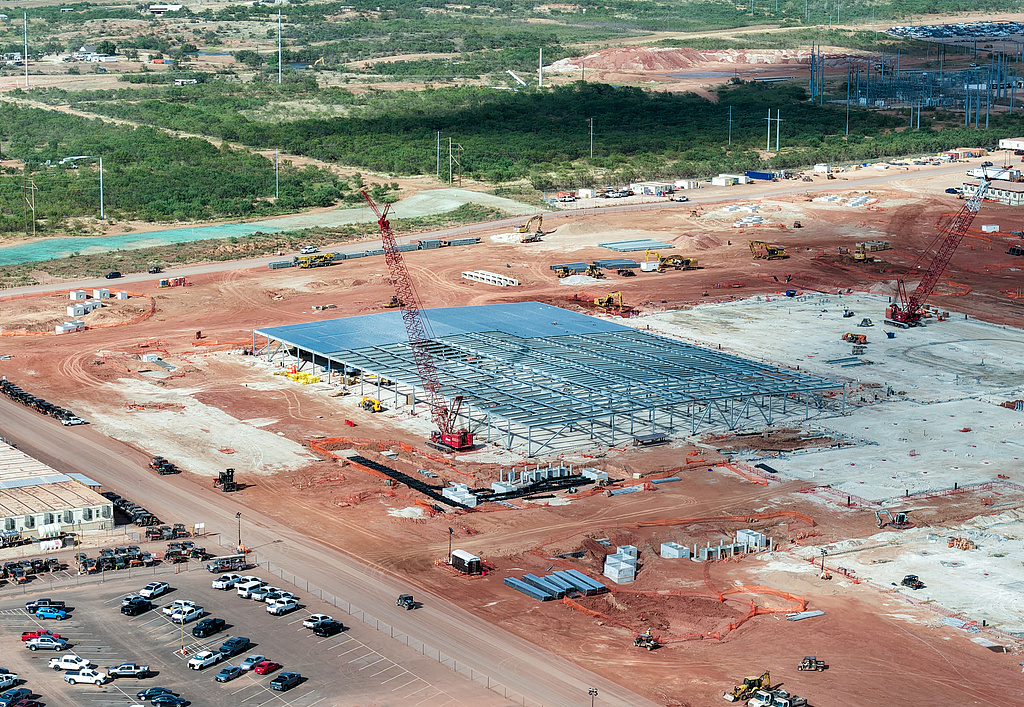
Core Insights - OpenAI, in collaboration with Oracle, NVIDIA, and SoftBank, is launching a massive AI computing infrastructure project in Abilene, Texas, with a total power capacity of 17 GW, equivalent to the output of 17 nuclear power plants or about 9 Hoover Dams [1][2] - The total investment for this initiative is projected to reach approximately $850 billion, which is nearly half of HSBC's forecasted $2 trillion global AI infrastructure surge [1][3] - OpenAI's CEO Sam Altman emphasizes that the infrastructure build-up is essential to meet the skyrocketing demand for AI, citing a tenfold increase in ChatGPT usage over the past 18 months [2][3] Investment and Financial Implications - The investment scale has raised concerns about a potential AI bubble, with critics pointing out that companies like NVIDIA and Microsoft have seen their market values increase significantly due to their partnerships with OpenAI [3] - OpenAI's CFO, Sarah Frier, argues that the ecosystem is collaborating to address unprecedented computing demands, which is a hallmark of major tech booms [3][4] - Altman acknowledges the cyclical nature of overinvestment and underinvestment in technology revolutions, suggesting that while some may incur losses, the long-term value of AI technology will be substantial [3][6] Strategic Partnerships and Leadership Changes - Oracle has made leadership adjustments to better position itself for future success in AI, promoting Clay Magouyrk and Mike Sicilia to CEO roles [4][5] - NVIDIA is not only providing chips but also investing equity capital to support the AI infrastructure projects [5][6] - OpenAI's partnership with Microsoft remains crucial, with ongoing collaborations expected to yield further developments [6][7] Future Developments and Innovations - OpenAI is planning to expand its infrastructure investments beyond Texas to states like New Mexico and Ohio [7] - The company has also made a significant move by acquiring Jony Ive's new startup for approximately $6.4 billion, indicating a focus on hardware development [7][8] - Altman hinted at the development of new hardware products that could revolutionize everyday computer usage, although he cautioned that it will take time to bring these products to market [8][9]
被指“循环融资”!英伟达(NVDA.US)千亿美元豪赌OpenAI 市场警示“泡沫”信号再现
Xin Lang Cai Jing· 2025-09-24 00:32
Core Viewpoint - OpenAI and Nvidia's partnership raises concerns about an "AI bubble" as Nvidia announces an investment of up to $100 billion to support OpenAI's data center expansion, leading to questions about the sustainability of such investments in the AI sector [1][2] Group 1: Investment Details - Nvidia plans to invest up to $100 billion in OpenAI to help build data centers equipped with Nvidia chips [1] - This investment is part of a broader trend where Nvidia has participated in over 50 AI-related venture capital deals in 2024, with expectations to exceed this number by year-end [1] Group 2: Market Concerns - Analysts express concerns about "circular financing," suggesting that Nvidia's investment may artificially support the market and encourage continued purchases of its high-priced GPUs by AI startups [1][2] - The scale of Nvidia's investment in OpenAI is seen as overshadowing other investments, raising questions about the underlying logic of such a move [2] Group 3: Industry Context - The AI industry is increasingly viewed as facing risks similar to the internet bubble burst 25 years ago, with OpenAI's CEO acknowledging the need for substantial infrastructure investment while also cautioning about potentially inflated valuations of some AI startups [2] - Nvidia's unique position in the AI ecosystem, as a leader in advanced chip technology essential for training AI models, makes it the largest single beneficiary of the current AI boom [2]
OpenAI董事长:我们正处于‘AI泡沫’,未来会有人亏本钱
Sou Hu Cai Jing· 2025-09-17 13:57
Core Insights - OpenAI Chairman Bret Taylor acknowledges the existence of an "AI bubble," which he describes as a "virtuous cycle" [1] - Taylor compares the current AI landscape to the internet boom of the late 20th and early 21st centuries, suggesting that while significant economic value will be created, the bubble will eventually burst, leading to losses for many investors [3] Group 1 - Taylor agrees with OpenAI CEO Sam Altman's statement that there will always be significant financial losses in the AI sector [1] - He believes that the AI industry carries substantial risks, but these risks are minor compared to the opportunities available [3] - Taylor reflects on his experience in the internet industry, noting that despite the bubble bursting and many companies failing, those involved at the time did not make mistakes in their investments [3] Group 2 - Bret Taylor's background includes leadership roles at Google and Twitter, and he became the Chairman of OpenAI in 2023 [5]

《九月惊雷:美联储降息“罗生门”背后的全球财富大挪移》
Sou Hu Cai Jing· 2025-09-17 08:30
Core Insights - The article discusses the current state of the Federal Reserve's interest rate decisions, highlighting the divide between dovish and hawkish perspectives on economic indicators and their implications for monetary policy [1][2][3]. Employment Data - The addition of 22,000 jobs is viewed by dovish analysts as a sign of impending recession, while hawkish analysts interpret it as a cooling labor market. The three-month average unemployment rate has risen by 0.5%, indicating a 62% probability of recession [2]. Inflation Metrics - The Consumer Price Index (CPI) stands at 2.6%, while core services inflation is at 5.1%. Dovish analysts focus on the six-month annualized rate returning to 2.2%, whereas hawkish analysts warn of persistent core service inflation. Quantitative models suggest that two rate cuts could lead to a rebound in core inflation to 3.3% by Q1 2026 [3]. Fiscal Concerns - The U.S. national debt has reached $34 trillion, with interest payments exceeding $1.2 trillion annually. This situation poses a dilemma for policymakers: not cutting rates could lead to escalating interest costs, while cutting rates risks triggering a second wave of inflation [4]. Dot Plot Insights - The dot plot indicates a median forecast of 75 basis points in rate cuts for the year, with the most hawkish member suggesting only 25 basis points and the most dovish suggesting 125 basis points. Each 25 basis point change is estimated to affect global equity and bond markets by approximately $500 billion [4]. Wealth Transfer Dynamics - The article suggests that the anticipated rate cuts are not merely about easing monetary policy but represent a pre-loaded transfer of wealth, impacting various market participants differently [5]. Emerging Markets Impact - A weaker dollar due to rate cuts could benefit countries like Argentina, Turkey, and Indonesia, which have borrowed nearly $500 billion in the past two years. However, countries with high current account deficits and low foreign reserves may face significant challenges [6]. Currency Valuation Concerns - The potential for a stronger euro and yen due to U.S. rate cuts raises concerns for European and Japanese exporters, as currency fluctuations could significantly impact profit margins [7][8]. Leverage in Financial Markets - The article notes that hedge funds have increased their leverage to an 18-month high, raising concerns about market stability. The U.S. stock market's valuation relative to GDP has reached 210%, indicating potential risks if inflation rebounds and interest rate expectations shift [9]. Unconventional Developments - The article highlights three significant trends: 1. Saudi Arabia's decision to allow transactions in yuan for oil sales, which could undermine the dollar's dominance [9]. 2. Central banks in Poland, Czech Republic, and Turkey have collectively increased gold reserves by 127 tons, indicating a shift towards gold as a hedge against inflation [10]. 3. Major tech companies are projected to spend $320 billion in capital expenditures, with a significant portion financed through debt, making them vulnerable to interest rate fluctuations [10]. Recommendations for Individuals - The article provides financial strategies for individuals, including diversifying investments into dollar-denominated money market funds, domestic short-term bonds, and gold ETFs to hedge against potential economic instability [10].