大数据

Search documents
中国经济持续回升向好 增长动能逐步优化
2 1 Shi Ji Jing Ji Bao Dao· 2025-11-28 22:31
Economic Growth - China's GDP grew by 5.2% year-on-year in the first three quarters of 2025, laying a solid foundation for achieving the annual growth target of around 5.0% [1] - The strong performance of external demand effectively offset the temporary shortfall in domestic demand, with contributions to GDP from final consumption expenditure, gross capital formation, and net exports at 53.5%, 17.5%, and 29% respectively [1] Consumer Market - The consumer market is expected to continue its moderate recovery, driven by the "trade-in" policy which significantly boosted retail sales of automobiles, home appliances, and furniture [2] - Retail sales of durable goods are showing strong recovery, with signs of improvement in service consumption such as dining [2] Manufacturing Sector - China's manufacturing value added accounts for 26.2% of GDP, highlighting its status as a manufacturing powerhouse [2] - Technological advancements in AI, big data, and biomanufacturing are accelerating the development of the digital economy and smart manufacturing, which will enhance overall productivity in the manufacturing sector [2] Real Estate Market - Policies aimed at stabilizing the real estate market are accelerating the inventory reduction process, with the area of unsold commercial housing decreasing from 800 million square meters in February 2025 to 760 million square meters by the end of September [3] - The reduction in mortgage rates and down payment ratios is expected to further stimulate demand in the real estate sector [3] Infrastructure Investment - Infrastructure investment is expected to improve marginally due to ongoing debt reduction efforts and the introduction of new policy financial tools [3] - Fiscal support for infrastructure remains strong, providing incremental investment power [3] Export Performance - China's export growth rate reached 6.1% year-on-year in the first three quarters, driven by the expansion into emerging markets and the advantages of its industrial chain [4] - The diversification of markets, particularly in Europe, ASEAN, and Latin America, has mitigated risks from reliance on a single market [4] Future Outlook - The Chinese economy is expected to continue its recovery, with growth momentum gradually optimizing due to proactive policies, technological empowerment in manufacturing, and the release of consumer market potential [4] - The combination of precise macro policies and deep structural reforms is anticipated to lead to qualitative improvements and reasonable quantitative growth in the economy [4]
FPG财盛国际:科技创新推动交易模式升级
Sou Hu Cai Jing· 2025-11-28 21:43
Core Insights - Technological innovation is a key driver in transforming global trading models, enhancing efficiency and security in the industry [1][11] - FPG Financial International plays a significant role in this transformation by integrating advanced technologies such as artificial intelligence, big data, and blockchain [1][11] Group 1: Technological Integration - The introduction of artificial intelligence has automated trading processes, reducing human error and improving decision-making efficiency [1][5] - Blockchain technology enhances transaction security and transparency, simplifying processes and minimizing fraud risks [5][8] - Big data analytics empowers trading upgrades by identifying market trends and potential risks, leading to optimized asset allocation [5][8] Group 2: User Experience and Market Impact - FPG Financial International's innovations lead to improved user experience through faster responses and personalized services [1][5] - The integration of cloud computing provides a flexible system that supports high-volume trading, breaking geographical barriers and expanding market reach [8] - Enhanced risk management through AI tools helps in early detection of anomalies, ensuring a safer trading environment [8][11] Group 3: Future Outlook - The company is committed to leading technological integration and promoting sustainable development in trading models [11] - Continuous exploration of emerging technologies, such as the Internet of Things, indicates a shift towards smarter and more interconnected trading systems [8][11]

追光廿余载艾比森“屏”实力闪耀国际舞台
Zhong Guo Zheng Quan Bao· 2025-11-28 20:25
Core Insights - The article highlights the success story of Absen, a leading global company in the LED display industry, which has achieved a market value exceeding 6 billion yuan through a focused strategy and innovative management practices [1][2]. Company Strategy - Absen has maintained a clear positioning as a "large screen brand company" since its inception, avoiding blind expansion during industry booms and remaining proactive during downturns [2][3]. - The company operates with a light asset model, maintaining fixed assets around 600 million yuan, which is significantly lower than many competitors [2]. - Absen emphasizes high-value intangible assets such as patents and brand reputation, holding over 1,300 patents, with more than 30% being invention patents [2]. Financial Performance - For the first three quarters of 2025, Absen reported revenue of 2.872 billion yuan, a year-on-year increase of 5.66%, and a net profit of 185 million yuan, up 57.33% [3]. - In the third quarter of 2025 alone, the company achieved revenue of 1.053 billion yuan, a 14.5% increase year-on-year, and a net profit of approximately 69 million yuan, reflecting a 138.55% growth [3]. Market Focus and Innovation - Absen aims to avoid the "red ocean" of competition by listening to user needs and finding opportunities in niche markets, focusing on personalized and precise user demands [3][4]. - The company has developed over 30 tailored solutions for various application scenarios, including sports venues and advertising, demonstrating its commitment to innovation based on market demands [4]. Digital Transformation - Absen has recognized the importance of digital transformation since 2007, investing in multiple IT systems to create a fully integrated digital operation [5][6]. - The company emphasizes standardized management and data integrity, allowing for real-time tracking of operations and financials, which enhances decision-making capabilities [6]. Global Expansion - Absen has built a market presence in over 140 countries and regions, supported by a network of more than 6,000 channel partners, and offers professional services across different regions [6][7]. - The company aims to position itself as a global player from the outset, employing a multilingual team to provide on-site services to international clients [6]. Industry Outlook - The LED display industry is expected to consolidate over the next 5 to 10 years, with only a few leading companies emerging due to rapid technological advancements and low standardization [7]. - Absen's strategy includes focusing on high-end branding, increasing R&D investment, and transitioning towards becoming a solution provider while contributing to industry standards for high-quality development [7].

AI赋能金融监管:深交所智能监测系统找到多项违法违规线索
Di Yi Cai Jing Zi Xun· 2025-11-28 14:32
Core Insights - The Shenzhen Stock Exchange (SZSE) has developed advanced technologies for monitoring abnormal trading behaviors, addressing the complexities of modern market activities [2][3][4] - The "Intelligent Monitoring and Detection Technology for Abnormal Trading Behaviors in Securities Markets" project has successfully completed its implementation phase, enhancing regulatory capabilities [2][3] - The industry regulation model aims to improve the accuracy and completeness of regulatory responses, leveraging AI to address the challenges of traditional methods [7][8] Group 1: Intelligent Monitoring Technologies - The project has produced three core technologies: investor trading behavior classification, insider trading detection, and a securities market simulation system [2][3][4] - The investor trading behavior classification technology utilizes a comprehensive label system to analyze trading behaviors across six dimensions, significantly improving the precision of investor profiling [3] - The insider trading detection technology employs a large-scale trading behavior graph to identify suspicious trading patterns, enhancing regulatory efficiency and transitioning to a proactive monitoring approach [4] Group 2: Securities Market Simulation System - The securities market simulation system integrates historical trading data to create parameterized behavioral models, allowing for the simulation of various trading strategies [5][6] - This system addresses the limitations of traditional empirical research by providing tools for risk assessment and strategy validation, thus shortening the development cycle for trading strategies [6] Group 3: Industry Regulation Model - The industry regulation model, developed in collaboration with Huawei, aims to enhance the understanding and accuracy of regulatory inquiries through an intelligent Q&A platform [7][8] - The platform has been deployed for internal use and is being trialed by regulatory and market institutions, showing significant improvements in response accuracy and completeness [7][8] - The model serves as a pilot for future task models in the industry, supporting various regulatory functions and contributing to the legal foundation of the capital market [8]
上亿元老旧管网改造资金自筹,现金流承压下燃气企业如何守住安全红线
Di Yi Cai Jing· 2025-11-28 13:13
Core Insights - The urgent need for the renovation of aging gas pipelines in China is highlighted, with nearly 100,000 kilometers of pipelines showing varying degrees of aging, some exceeding 20 years in operation [1][2] - The government has set a target to complete the renovation of approximately 100,000 kilometers of old pipelines by the end of 2025, emphasizing the importance of safety for millions of urban residents [1][2] - Companies are facing significant financial pressures to fund these renovations, with around 70% of the costs needing to be self-raised by enterprises [2][3] Group 1: Renovation Efforts - Fuzhou's Fuda Yiyuan community completed a 5,600-meter gas pipeline renovation involving 24 buildings and 1,021 households [1] - Shanghai completed over 700 kilometers of gas pipeline renovations last year and plans to complete at least 750 kilometers this year [2] - China Resources Gas has invested approximately 17 billion yuan in upgrading old pipelines and community gas facilities [2] Group 2: Financial Challenges - Companies like Sheneng Group have raised around 10 billion yuan for pipeline renovations, indicating the high costs involved [2] - The cost of redesigning the gas pipelines in Fuda Yiyuan alone was 1.5 million yuan within two months [2] - The industry is experiencing profit pressure due to factors like "gas price inversion" and declining revenue from gas engineering [3] Group 3: Policy Recommendations - The industry suggests a multi-funding mechanism involving central subsidies, local government support, enterprise contributions, and user payments for the renovation of old gas pipelines [3] - Recommendations include increasing subsidy ratios based on regional differences and simplifying the subsidy application process [3] Group 4: Technological Advancements - Companies are adopting advanced technologies like drones for pipeline inspections, significantly improving efficiency and safety [4] - New smart monitoring systems are being implemented to continuously track pipeline pressure and detect potential hazards [4]

世界物联网大会·交通车联高峰论坛在京举办
Zhong Guo Qi Che Bao Wang· 2025-11-28 13:11
论坛伊始,世界物联网大会执委会副主席苏涛率先致欢迎词,对莅临现场的各位嘉宾表示诚挚欢迎,并期待通过多方碰撞为交通车联产业发展注入新活 力。 随后,世界物联网大会交通车联委员会执行主席陈梓萱致开幕词,表示本届论坛旨在汇聚全球各界力量,搭建交流平台,助力中国汽车产业深耕全球市 场、重塑国际汽车贸易新格局。 政策引领产业方向,行业发展离不开政策护航。国家商务部电子商务司原副司长聂林海指出数字贸易为汽车产业研发、生产、营销等多环节赋能,商务 部将携手各方助力中国汽车产业在全球汽车贸易新版图中书写辉煌篇章。 中国贸易促进会汽车分会副会长杨琳指出本届论坛主题契合全球汽车产业正在经历的深刻变革,中国贸促会汽车行业分会将携手各方深化合作,推 动全球汽车产业迈向智慧高效未来。 2025年11月28日,世界物联网大会·交通车联高峰论坛在北京举办,来自全球多个国家的驻华使节、政府部门领导、行业专家学者以及知名汽车 企业代表齐聚一堂,围绕"技术启航・智慧重塑国际汽车贸易新版图"的核心主题,共商产业发展大计,共绘全球交通车联数字化转型新蓝图。 本届论坛由世界物联网大会发起,世界物联网大会交通车联委员会、北京理工大学电动车辆国家工程研究 ...

我国将加强人工智能专利伦理审查
Xin Hua Wang· 2025-11-28 11:50
据悉,最新修改的专利审查指南将于2026年1月1日起施行。 (文章来源:新华网) 国家知识产权局专利局审查业务管理部部长蒋彤介绍,最新修改的专利审查指南首次以"人工智能、大 数据"为主题设立专门章节,明确人工智能相关的数据采集、规则设置等技术方案的实施应符合法律、 社会公德和公共利益要求。 此外,针对人工智能模型"黑盒"特点可能带来的技术方案公开不充分问题,明确了模型构建、模型训练 等情形下说明书的撰写要求,细化了充分公开的判断标准,促进人工智能领域技术的传播与应用。 记者11月28日从国家知识产权局新闻发布会上获悉,我国将在专利审查过程中,加强人工智能伦理审 查,引导"智能向善"。 ...
理想汽车CEO李想:未来10年,最有价值的机器人是汽车【附智能网联汽车产业市场分析】
Qian Zhan Wang· 2025-11-28 11:26
Core Insights - The CEO of Li Auto, Li Xiang, stated that the most valuable products in the next decade will be cars with autonomous and proactive capabilities, defining the ultimate form of cars as "embodied intelligent products" or automotive robots [2] - The smart connected vehicle sector has become the core track for the global automotive industry's transformation, integrating cutting-edge technologies such as AI, 5G, big data, and cloud computing, and driving a complete industry chain reconstruction [2] - The market penetration rate of L2-level vehicles in China's passenger car market has increased from 23.5% in 2021 to 42.4% in the first half of 2023, indicating a shift from technology validation to large-scale commercialization [3] Industry Overview - The focus of technological innovation in China's new energy vehicle industry is accelerating towards emerging technologies such as AI, autonomous driving, vehicle networking, and cloud computing [4] - Emerging electric vehicle manufacturers like Li Auto, Tesla, BYD, NIO, and Xpeng are continuously innovating in the smart connected vehicle field, offering high-performance and intelligent electric vehicles [7] - The market size of China's smart connected vehicle industry reached 958.3 billion yuan in 2023, with optimistic expectations for significant growth driven by technology and policy support, potentially exceeding 2 trillion yuan by 2029 [12][13]



万科债券展期,房地产市场何去何从
Sou Hu Cai Jing· 2025-11-28 11:11
Group 1 - Vanke, a leading real estate company, is seeking to extend a 2 billion yuan medium-term note due to credit risk concerns, indicating a potential decline in its bond and stock prices in the short term [1] - As of October 30, Vanke has repaid 28.89 billion yuan in public debt, while its largest shareholder, Shenzhen Metro Group, has provided 29.13 billion yuan in loans, highlighting the ongoing credit risk despite efforts from both the company and state-owned shareholders [1] - The extension of Vanke's debt reflects broader challenges in the real estate market, raising questions about the effectiveness of policies aimed at stabilizing the sector [1] Group 2 - The overall state of the real estate market remains poor, with a 6.8% year-on-year decline in sales area and a 9.6% drop in sales revenue for the first ten months of 2025, indicating a significant downturn [2] - The inventory digestion period has reached a historical high of 30 months, particularly severe in third and fourth-tier cities, suggesting a lack of market recovery [2] - Despite over 4 trillion yuan in white list loans and 300 billion yuan in special loans for project completion, market responses have been increasingly muted [2] Group 3 - From a macroeconomic perspective, increasing support for the real estate market is deemed necessary to prevent a prolonged downturn, as historical lessons from Japan's real estate bubble suggest the need for a swift transition of resources away from traditional sectors [3] - Housing prices have been declining for nearly four years, with some regions experiencing drops of over 40%, indicating that the market may be nearing a bottom [3] - The significant proportion of housing in household assets (nearly 60%) suggests that declines in housing value could severely impact consumer spending and confidence [4] Group 4 - Proposed solutions for rescuing the real estate market include stabilizing developers through various financial mechanisms, which may inadvertently lead to increased inventory and hinder market clearing [6] - Other suggestions focus on stimulating market activity through measures like lowering mortgage rates and removing purchase restrictions, although past efforts have shown limited long-term effectiveness [7] - A third approach emphasizes stabilizing prices as a core variable to change market expectations, though practical implementation remains challenging [7] Group 5 - To stabilize the real estate market, indirect and market-oriented measures are recommended, such as signaling supply reductions and establishing a housing stability fund to manage market fluctuations [8] - The upcoming Central Economic Work Conference in December is expected to address the need for continued efforts to stabilize the real estate market, with a focus on breaking the negative cycle of declining expectations and prices [9] - The real estate market's performance in 2026 will likely depend on external policy interventions to address supply-demand imbalances and improve market activity [9]

水滴保“三好服务”全面升级 AI数字员工帮帮入职“帮帮赔服务工作室”
Sou Hu Cai Jing· 2025-11-28 10:12
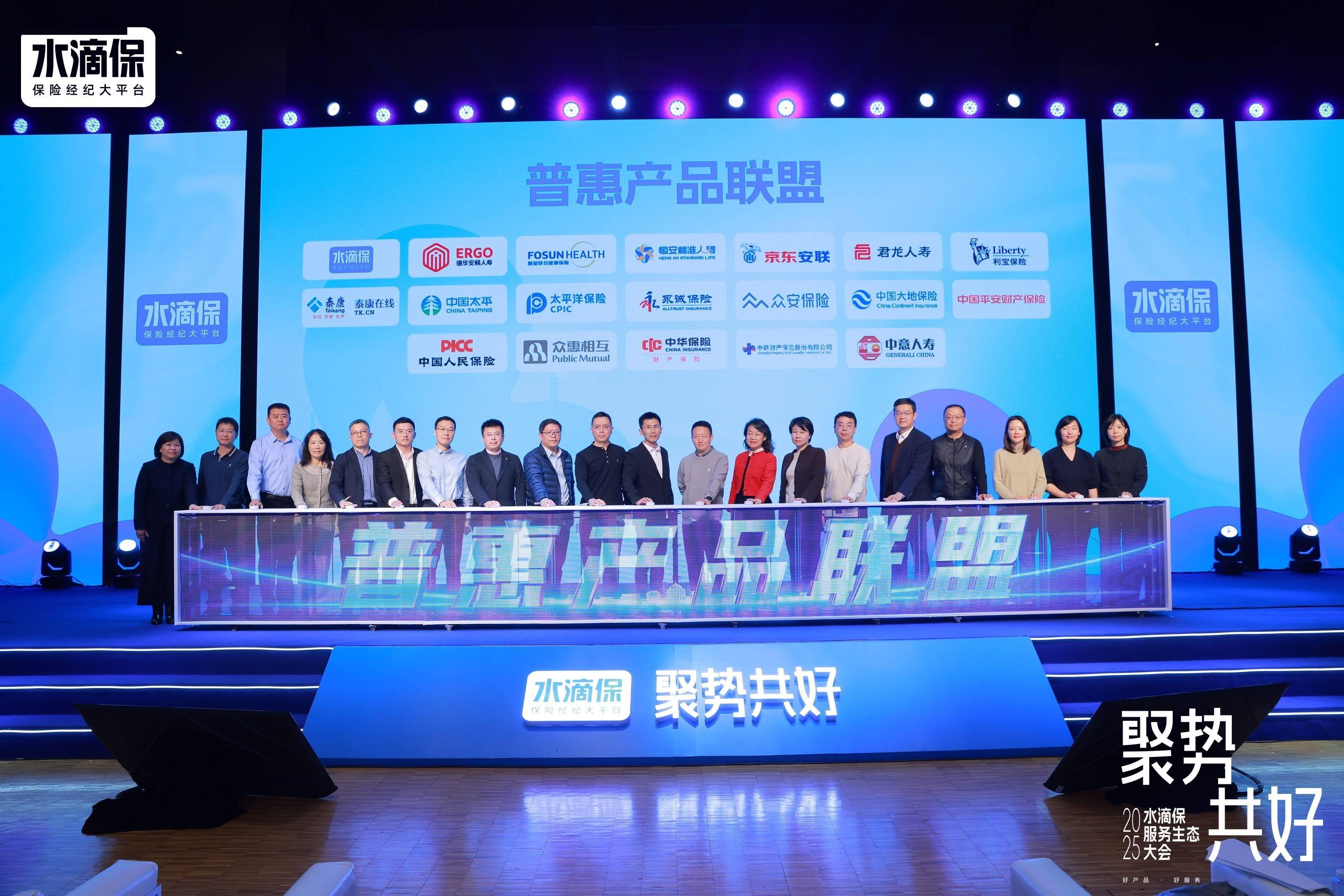
Core Insights - The second "Gathering Strength, Achieving Common Good" Waterdrop Insurance Service Ecosystem Conference was successfully held, where the "Research Report on Innovative Insurance for People with Pre-existing Conditions (2025)" was released, highlighting the protection status and demand pain points of the pre-existing condition population in China [1][5][12] - Waterdrop Insurance, in collaboration with 18 insurance companies, established the "Inclusive Product Alliance" to focus on the insurance needs of specific groups such as those with pre-existing conditions, the elderly, and mothers and infants, aiming to promote inclusive insurance services through AI empowerment and product co-creation [1][18] Group 1: Conference Highlights - The conference featured notable figures from the insurance industry, including former officials from the China Insurance Regulatory Commission and representatives from various insurance companies and media [4] - The development of insurance for people with pre-existing conditions is seen as a key measure for expanding coverage and serving public welfare, aligning with national development goals [5][7] Group 2: Research Findings - The average annual medical expenditure for individuals with pre-existing conditions is approximately 87,000 yuan, which is 2.1 times the average disposable income of residents, indicating a significant protection gap [12] - Over 60% of severe disease patients incur out-of-pocket expenses exceeding 100,000 yuan, highlighting the urgent need for better insurance solutions [12] - Young adults are experiencing a rising prevalence of sub-health and chronic diseases, with rates twice that of the elderly, necessitating innovative insurance products [12] Group 3: Product and Service Innovations - Waterdrop Insurance has launched 214 innovative insurance products for people with pre-existing conditions, with 34 being first-of-their-kind in the country, and an average of 1.14 days to launch a new product [14] - The introduction of AI-driven services, such as the AI customer service "Bao Xiaohui," has significantly improved service efficiency, achieving a response time of 1.5 seconds and a 40-fold increase in service capacity [17] - The establishment of the "Inclusive Product Alliance" aims to create affordable and accessible insurance products for the public, with participation from 18 insurance companies [18]