资产配置

Search documents
国际金价高位跳水 此前监管与银行已密集提示风险
Sou Hu Cai Jing· 2025-10-20 09:14
Group 1 - International gold prices experienced a significant drop after reaching record highs of $4,300 per ounce, falling below $4,200 on October 17, with a rebound to $4,269.8 by October 20 [1] - COMEX silver futures also saw a sharp decline, dropping over 5%, while spot silver fell more than 6%, marking the largest drop in six months [1] - The gold sector in the A-share market reacted negatively, with the precious metals sector overall declining by 7.09% on October 20, and several individual stocks, such as Hunan Silver and Western Gold, hitting their daily limit down [1] Group 2 - The recent drop in gold prices is attributed to multiple factors, including a technical correction after a significant price increase and a decrease in geopolitical risk sentiment, which reduced gold's short-term appeal [2] - The correlation between gold prices and gold stocks is highlighted, indicating that when gold price trends are disrupted, investors reassess the valuations of gold companies, often leading to larger declines in stock prices compared to gold itself [2] - Risk warnings have been issued by various banks, including Industrial and Commercial Bank of China, emphasizing the need for investors to be aware of market changes and to manage their gold asset allocations prudently [3][4] Group 3 - Several banks, including Everbright Bank and Industrial Bank, have issued multiple risk alerts regarding the volatility in precious metals prices, advising investors to control their positions and invest rationally [3][4] - Despite the increased volatility and risk warnings, gold is still considered to hold unique value in asset allocation, with recommendations for investors to adopt a strategy of gradual investment rather than chasing price spikes [4] - The core purpose of gold allocation for ordinary investors should be to hedge against macroeconomic uncertainties and inflation risks, suggesting that gold holdings should be maintained at a reasonable proportion of total assets for long-term investment [4]


海外创新产品周报:多只资产配置产品发行,黄金ETF流入明显-20251020
Shenwan Hongyuan Securities· 2025-10-20 08:15
1. Report Industry Investment Rating No relevant content provided. 2. Core Viewpoints of the Report - Multiple asset - allocation products were issued in the US last week, and gold ETFs had significant inflows. Precious - metal stock ETFs outperformed precious - metal ETFs, and in August 2025, the total amount of non - money public funds in the US increased [3]. 3. Summary by Related Catalogs 3.1 US ETF Innovation Products: Multiple Asset - Allocation Products Issued - Last week, 22 new products were issued in the US, including various types such as downside protection, leverage, theme, allocation, and rotation products [3][8]. - Seven new downside protection products were issued, including Calamos' laddered downside protection products linked to Bitcoin and Arrow Funds' Bitcoin strategy product [8]. - Four single - stock leverage products were issued, linked to Figma, Futu, JD, and Lemonade [9]. - GMO issued a dynamic asset - allocation ETF, with 40 - 80% invested in stocks and the rest in fixed - income and liquid alternative assets [9]. - AlphaDroid issued two strategy products: a momentum strategy and an industry rotation strategy [10]. - American Century issued 2 fundamental active ETFs for small - cap value and growth [10]. - Pictet issued 3 stock ETFs, entering the US ETF market [10]. 3.2 US ETF Dynamics 3.2.1 US ETF Fund Flows: Significant Inflows into Gold ETFs - In the past week, US ETFs maintained a high - speed inflow of nearly $50 billion, with over $25 billion flowing into domestic stocks and significant inflows into commodity ETFs, especially gold ETFs. Small - cap and high - yield bond products had relatively high outflows [3][11]. - Gold ETFs had obvious inflows even during sharp price fluctuations last Thursday and Friday, indicating high market attention to gold assets [3][14]. 3.2.2 US ETF Performance: Precious - Metal Stock ETFs Significantly Outperformed Precious - Metal ETFs - Due to frequent global situation changes this year, precious - metal ETFs led by gold have continuously risen, and precious - metal - related stock ETFs such as those for gold mining have significantly higher gains, with many products rising around 150% [3][16]. 3.3 Recent Fund Flows of US Ordinary Public Funds - In August 2025, the total amount of non - money public funds in the US was $22.98 trillion, an increase of $0.41 trillion from July 2025. The S&P 500 rose 1.91% in August, and the scale of US domestic stock products increased by 1.62%, with reduced redemption pressure [3][17]. - Last week, outflows from US domestic stock funds remained around $20 billion, while inflows into bond products were stable, slightly exceeding $10 billion [3][17].
全球央行都在抢黄金,散户该不该跟?
Sou Hu Cai Jing· 2025-10-20 06:18
Core Insights - Gold has become a highly sought-after asset this autumn, with significant price increases and widespread participation from various investors, including retail and institutional players [1][4] - As of October 15, 2023, COMEX gold prices have risen over 50% this year, making gold one of the most profitable assets globally [1] - Central banks are increasingly allocating gold in their reserves, surpassing U.S. Treasury bonds for the first time since 1996, indicating a major global rebalancing [1][5] Investment Trends - Since 2025, major gold ETFs have accumulated over 255 tons of gold, with a notable increase following the Federal Reserve's interest rate cut announcement [2][4] - Domestic gold ETF market has reached a historical high of over 200 billion yuan, significantly surpassing previous records [2] Central Bank Strategies - Central banks are strategically increasing gold reserves due to deepening distrust in the U.S. dollar and geopolitical risks, viewing gold as a sovereign asset that cannot be frozen or seized [5] - The current monetary easing cycle, with a high probability of further rate cuts, is driving demand for gold as a hedge against inflation [5] Retail Investor Guidance - Retail investors should adopt different strategies compared to central banks, focusing on liquidity and cost sensitivity rather than long-term holding [6][7] - Recommended investment approaches include physical gold for security, gold ETFs for liquidity and low costs, and gold mining stocks for higher risk and potential returns [8][9] Market Positioning - Investors are advised to maintain core positions in gold while being cautious of market volatility, as macroeconomic factors supporting gold prices remain intact [10][15] - For those yet to invest, a gradual approach through dollar-cost averaging in gold-related ETFs is suggested to mitigate risks associated with market timing [13][14]


如何考量风险?
Hu Xiu· 2025-10-20 03:41
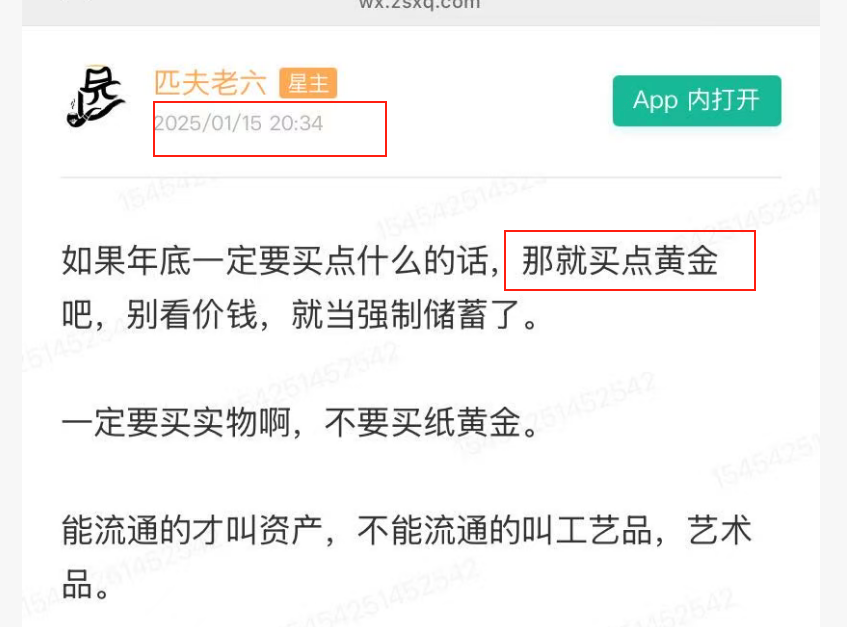
Core Viewpoint - The article emphasizes the importance of considering risks in investment, particularly in gold, advocating for the purchase of physical gold over paper gold due to the inherent risks associated with the latter [1][4][44]. Group 1: Investment in Gold - The author has consistently supported the investment in physical gold, distinguishing it from trading in paper gold [2][3]. - The recent surge in gold prices is viewed with caution, as it may indicate underlying issues such as increased risk of defaults among gold retailers [4][7][8]. - The ratio of paper gold to physical gold is highlighted, with a reference to paper gold being 126 times that of physical gold, indicating significant counterparty risk [9][11]. Group 2: Risk Assessment - The article discusses the concept of risk, emphasizing that risk assessment should consider the nature of the investment, the individuals involved, and the investor's control over the situation [17][27]. - It is noted that human nature plays a critical role in risk, as individuals may be tempted to take excessive risks when managing paper gold [20][41]. - The importance of holding physical assets is reiterated as a means to mitigate risks associated with human behavior and market volatility [23][36]. Group 3: Long-term Considerations - The article stresses the significance of holding time in investment decisions, suggesting that long-term holding of physical gold can serve as a hedge against various risks [31][34]. - The psychological aspect of owning physical gold versus paper gold is discussed, with physical gold providing a sense of security and reducing the temptation to frequently trade [39][40]. - The author concludes that while larger institutions may be less likely to face systemic risks, smaller entities could pose a threat, reinforcing the recommendation to invest in physical gold [42][43].
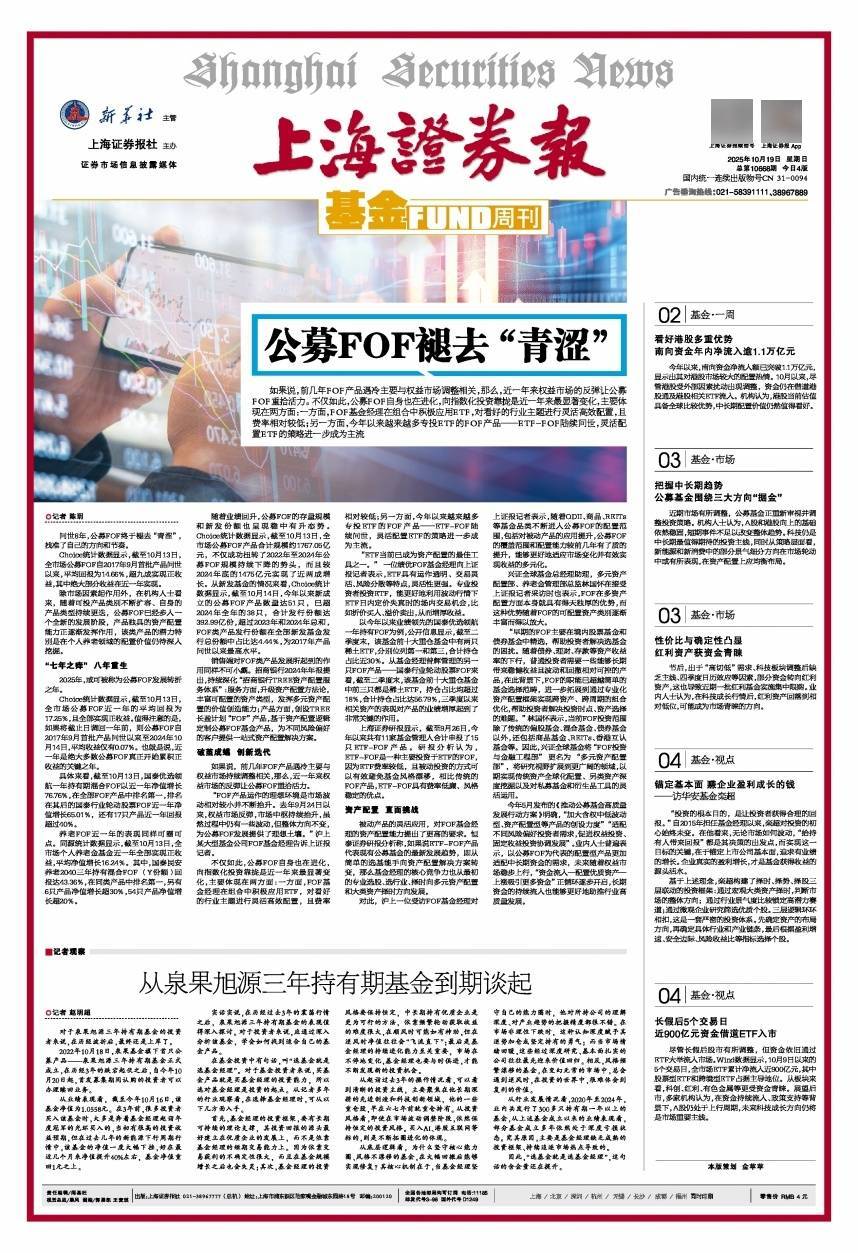
记者观察|从泉果旭源三年持有期基金到期谈起
Sou Hu Cai Jing· 2025-10-20 00:20
Core Insights - The performance of the Quan Guo Xu Yuan three-year holding period fund has improved significantly, allowing investors to redeem their investments after a challenging period [17][18] - The fund was established on October 18, 2022, and after three years of volatility, it has recently seen a net value increase of approximately 40% [17][19] - Investors initially had high expectations due to the fund manager's previous accolades, but the fund faced significant declines during the downturn in the new energy sector [17][19] Fund Performance - As of October 16, 2023, the fund's net value reached 1.0558 yuan, recovering from a significant drop experienced in the past years [17][19] - The fund's recovery is attributed to the manager's focus on quality companies and a consistent investment style, which has allowed it to navigate market fluctuations effectively [18][19] Investment Strategy - The investment philosophy emphasizes selecting fund managers based on their long-term sustainable investment frameworks rather than short-term trading abilities [18] - A consistent investment style focusing on high-quality enterprises is deemed more effective than frequent trading, especially during market downturns [18][19] - The ability of fund managers to adapt and evolve their strategies in response to market changes is crucial for identifying new investment opportunities [18][19] Industry Trends - The industry has seen the issuance of over 300 holding period funds from 2020 to 2024, with varying performance outcomes [19] - Many funds have struggled due to a lack of mature investment frameworks and a tendency to chase market trends, leading to prolonged underperformance [19]
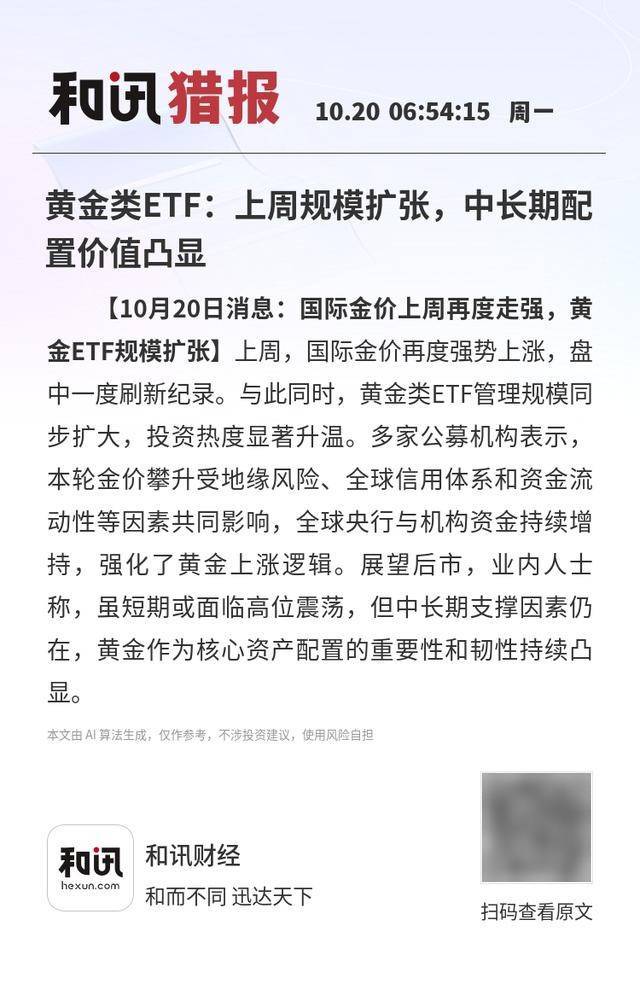
黄金类ETF:上周规模扩张,中长期配置价值凸显
Sou Hu Cai Jing· 2025-10-19 23:46
Core Insights - International gold prices have surged again, reaching record highs during the week [1][3] - The scale of gold ETFs has expanded, indicating a significant increase in investment interest [1][3] - Factors contributing to the rise in gold prices include geopolitical risks, the global credit system, and liquidity of funds [1][3] - Central banks and institutional funds are continuously increasing their holdings in gold, reinforcing the logic behind gold's price increase [1][3] - Industry experts suggest that while short-term fluctuations may occur, long-term support factors remain, highlighting the importance and resilience of gold as a core asset allocation [1][3]
奶酪基金总经理罗艳芳: 多元配置 打造财富稳健增长工具
Zhong Guo Zheng Quan Bao· 2025-10-19 20:16
Core Insights - The market environment is enhancing the value of FOF (Fund of Funds) allocation strategies, with private FOF strategies rapidly increasing their share in high-net-worth client asset allocation [1][2] - The FOF strategy is expected to become a mainstream asset allocation tool in the domestic market, driven by the evolution of risk awareness and investment tools [3][4] Group 1: FOF Development and Market Potential - The demand for wealth management is shifting from "single appreciation" to "stable diversification," making FOF strategies increasingly attractive due to their multi-asset and multi-strategy advantages [2][3] - Historical support for FOF strategies includes a large fund product market, long-term capital entering the market, and improved investor awareness transitioning from "high returns" to "stable returns" [2][3] - The domestic market has a rich base asset pool, with non-monetary public fund scale exceeding 22 trillion yuan and private fund scale exceeding 12 trillion yuan [2] Group 2: FOF Strategy Framework - The FOF strategy employs a three-tier framework: macro direction setting, strategy selection, and fund selection, focusing on risk tolerance and target volatility [4][5] - The strategy allows for dynamic balance through disciplined processes, enhancing the cost-effectiveness of investment portfolios compared to purely subjective or all-weather strategies [4][5] Group 3: Risk Control Mechanism - The core of FOF risk control lies in "double diversification," which isolates and dilutes risks more effectively than traditional funds [5] - The first layer of diversification involves asset dispersion within underlying funds, while the second layer focuses on diversifying strategies and managers to mitigate "same-source risk" [5] - FOF strategies can capture economic recovery gains through equity funds, provide stable foundations with bond funds, and hedge against market downturns with CTA strategies [5] Group 4: Future Outlook - The potential for domestic FOF products is significant, with expectations for the introduction of quantitative and hedging strategies to enhance risk-return profiles [6] - The industry anticipates that FOF allocation strategies will become essential tools for investors seeking stable wealth growth [6]
多元配置 打造财富稳健增长工具
Zhong Guo Zheng Quan Bao· 2025-10-19 20:13
Core Insights - The value of FOF (Fund of Funds) allocation strategies is being reinforced in the current market environment, with a rapid increase in its share among high-net-worth clients' asset allocations [1][2] - The FOF strategy is expected to become a mainstream asset allocation tool in the domestic market, driven by a large fund product market, long-term capital inflows, and improved investor awareness [2][3] FOF Development Potential - The demand for wealth management is shifting from "single appreciation" to "stable diversification," making FOF strategies increasingly attractive due to their multi-asset and multi-strategy advantages [1][2] - The domestic market has a rich base asset pool, with non-monetary public fund scale exceeding 22 trillion yuan and private fund scale exceeding 12 trillion yuan [2] Multi-Dimensional Allocation Framework - FOF strategies require investors to set target volatility based on their risk tolerance, forming a three-layer framework of "macro direction, mid-level strategy selection, and micro fund selection" [3] - The FOF strategy allows for diversified asset allocation and strategy dispersion, mitigating extreme risks from single assets while capturing multi-dimensional returns [2][3] Risk Control Mechanism - The core of FOF risk control lies in "double dispersion," which provides a more robust safeguard compared to traditional funds that only diversify single asset risks [4][5] - The first layer of dispersion involves diversifying underlying fund assets, while the second layer focuses on diversifying strategies and managers to avoid "same-source risk" [5] Future Outlook - The potential for FOF products in the domestic market is significant, with expectations for the introduction of quantitative and hedging strategies to enhance risk-return profiles and product attractiveness [5]
指数化投资加速提质扩容,未来趋势如何?
Di Yi Cai Jing· 2025-10-19 16:18
Core Insights - The scale of index products in China has reached approximately 6.5 trillion yuan, reflecting a 43% increase compared to the end of the previous year [1] - The Shanghai Stock Exchange is committed to promoting index investment development through systematic layout and enhancing the index and quantitative investment ecosystem [2][3] - The rapid growth of index and quantitative investment is significantly impacting the asset management industry, with a focus on regulatory development and market ecology [1][2] Index Product Growth - The number of indices compiled by the Shanghai Stock Exchange and China Securities Index has exceeded 8,700, with tracking product scale surpassing 5 trillion yuan [2] - The scale of ETF products in the Shanghai market has increased from 0.9 trillion yuan to 4 trillion yuan over the past five years, representing a cumulative growth of nearly 350% [2] Technology and Thematic Indices - A diverse index system focusing on technology innovation, including 369 technology-related indices with a product scale of 900 billion yuan, has been established [2] - The Science and Technology Innovation Board has become the segment with the highest index investment ratio, with 33 indices and a tracking product scale exceeding 340 billion yuan [2] Market Trends and Investor Behavior - The penetration rate of index investment in the domestic market has significantly increased, with ETF trading volume accounting for over 7% of total A-share trading volume [3] - Factors driving the growth of index investment include the transparency, low cost, and diversification of index products, as well as the increasing effectiveness of the market [3] ETF Market Development - The domestic ETF market has experienced rapid growth, with the number of listed ETF products nearing 1,200 and a total scale exceeding 5.6 trillion yuan [5] - The domestic ETF market has surpassed Japan, becoming the largest ETF market in Asia, with a total scale exceeding 5.5 trillion yuan [4] Future Outlook - The focus on broad-based index products is expected to increase in importance, with thematic indices in artificial intelligence and other sectors becoming key areas for fund managers [5] - Multi-asset allocation indices are anticipated to play a more significant role in wealth management for residents in a declining interest rate environment [5]
2025年三季度经济学人问卷调查:政策全力托举需求 房地产与外贸成关键变量
Jing Ji Guan Cha Wang· 2025-10-19 14:39
Group 1 - The current economic recovery in China is focusing on demand-side strategies as a key breakthrough point [6][2] - 71% of economists predict that the GDP growth rate for the third quarter will be between 4.7% and 4.9%, while 75% expect a growth rate of 4.8% to 5.1% for the entire year of 2025 [1] - 90% of economists believe that the real estate market is only experiencing a slowdown in decline and has not yet reached the bottom [1][15] Group 2 - The survey indicates that 33% of economists are concerned about employment pressure, 26% about external influences like finance and foreign trade, 23% about significant declines in housing prices, and 18% about debt risks [28] - The central government is implementing policies to address "involution" in various industries, including glass, cement, and steel, to improve product quality and reduce excess capacity [8][14] - The real estate market is seen as a critical support for stable growth, with recent policy adjustments signaling a strong commitment to stabilize the housing market [15][16] Group 3 - The impact of external uncertainties, particularly trade friction, is highlighted as a significant variable affecting economic operations [28] - Economists suggest that the recovery of the real estate market requires a coordinated effort from residents' income expectations, price signals, and the macroeconomic fundamentals [15][16] - The survey shows that 95% of economists expect the USD to RMB exchange rate to fluctuate between 7.1 and 7.5 in 2025 [17]