对等关税

Search documents
雷军发文纪念小米15周年,三星将京东方告上法庭,特朗普回应美股崩盘,最后生还者2上线PC,这就是今天的其他大新闻!
Sou Hu Cai Jing· 2025-04-06 17:05
Group 1: Xiaomi's 15th Anniversary - Xiaomi celebrates its 15th anniversary, with founder Lei Jun stating, "This is just the beginning, we will continue to work hard" [3] - Xiaomi's 2024 annual revenue reached 365.9 billion yuan, a historical high, with a year-on-year growth of 35.0% [3] - The adjusted net profit for Xiaomi in 2024 was 27.2 billion yuan, also a historical high, with a year-on-year increase of 41.3% [3] Group 2: Samsung vs. BOE Legal Dispute - Samsung has filed a new lawsuit against BOE in a U.S. court, accusing it of stealing OLED trade secrets [4] - This lawsuit marks the third legal action by Samsung against BOE in two years, highlighting the intensifying competition in the OLED sector [4] - Samsung claims BOE acquired its OLED technology through poaching key employees and colluding with companies in Samsung's supply chain [4] Group 3: Market Reactions to U.S. Tariff Policy - The U.S. announced a "reciprocal tariff" policy, causing significant volatility in U.S. and global stock markets [6] - Major U.S. stock indices experienced declines of over 5%, with European indices also falling across the board [6] - Analysts estimate that global stock market value has evaporated by approximately $4.9 trillion, with the U.S. market alone shrinking by $5.9 trillion in two days [6] Group 4: Sony's Shift in Gaming Strategy - Sony has released the PC version of "The Last of Us 2," marking a shift from its previous strategy of exclusive titles for PlayStation [8] - With this release, all major PlayStation titles have now been made available on PC, indicating a broader strategy change [8]




深度:“对等关税”对我国银行业影响:息差额外压力,资产质量稳健,投资价值凸显
ZHONGTAI SECURITIES· 2025-04-06 12:42
Investment Rating - The report maintains an "Overweight" rating for the banking sector [2] Core Insights - The impact of "reciprocal tariffs" on China's banking industry is profound, leading to additional pressure on loan demand and net interest margins, while asset quality remains stable. The investment value of bank stocks is highlighted, particularly for large banks, China Merchants Bank, and quality city commercial banks [7][12][14] Summary by Sections 1. Impact Mechanism of "Reciprocal Tariffs" on Bank Stocks - The economic impact includes weakened external demand, pressuring the credit demand and asset quality of banks [12][14] - Policy measures may boost retail credit demand through increased monetary easing [12][14] - Investment sentiment shifts towards banks due to enhanced dividend value amidst rising risk aversion [12][14] 2. Credit Demand: Pressure Points and Support - Economic growth pressure leads to declining credit growth, with a potential credit increment shortfall of CNY 2.139 billion in 2025 [15][19] - Export-related customer demand is expected to decline, while consumption-related customers may receive support from policy measures [27][28] 3. Net Interest Margin: Pressure Points and Support - A decline in credit growth could lead to a 14 basis points drop in net interest margins [33] - Monetary policy adjustments, including potential rate cuts, may exert additional pressure on margins [33][34] - The long-term outlook suggests that net interest margins are nearing their bottom, estimated at 1.24% [39][46] 4. Asset Quality: Pressure Points and Support - The impact on asset quality is manageable, with export-related sectors facing direct effects from tariffs [48] - The real estate sector's pressure is expected to ease, while retail sector non-performing loans may improve under supportive policies [48] 5. Investment Recommendations - The report emphasizes the dividend characteristics of bank stocks, recommending a focus on large banks and quality city commercial banks [7][12][14]




关税大战后,美国人把中国电视买断货
商业洞察· 2025-04-06 08:03
以下文章来源于每日怡见 ,作者每日怡见 每日怡见 . 关注 国际、财经、社会 作者:每日怡见 来源:每日怡见(ID:sxjjzj77) 最近,有朋友问对等关税的计算方式。 按照懂王的说法,对等关税是指美国与其贸易伙伴彼此征收的关税税率相等,即任何一个国家 对美国开征多少关税,美国同样会对等开征对方多少关税。 于是,就有朋友认为,对等关税的意思就是:中国对美国的农产品征收了10%的关税,所以回 过头,美国就也要对中国征收10%的关税? 可实际上,这是不对的。 美国这一次对我们加征了34%的对等关税。 注意了,这是在原来的基础上加征。 在拜登时期,美国对中国进口商品的平均关税已经上涨到了20.8%,算上今年年初借口芬太尼 问题连续两次加征,累计的20%,然后再加上这一次34%的对等关税。 美国对华平均关税税率已经高达惊人的74.8%。。。 按照上述逻辑,难道在此之前,我们对美国的关税是70%以上? 可实际上,公开资料可查,在4月4日我们宣布对美国反制之前,中国对美国商品的实际有效平 均关税约为21.1%。 这个数字其实是和拜登时期,美国对华商品所征收的关税是差不多的。 那么懂王这个所谓的"对等关税",又是怎么计算 ...
从牙膏到肥皂,美国人开始疯狂囤货
华尔街见闻· 2025-04-06 07:08
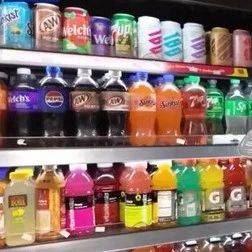
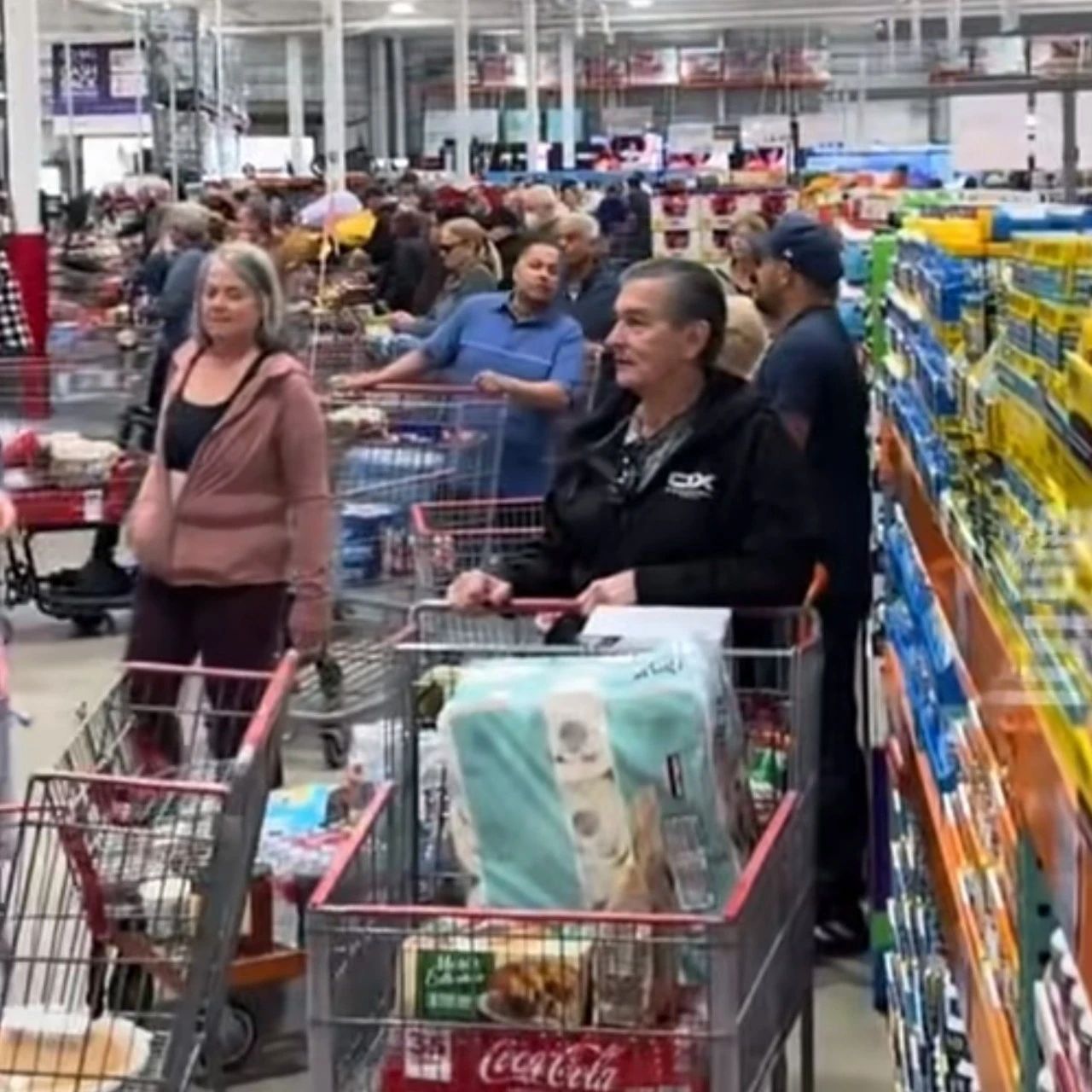
美国经济学家和商界人士警告说,加征关税将推高价格, 并最终转嫁到消费者身上。 由于担忧物价飙升,美国一些消费者已开始囤货模式。 每个家庭每年平均损失 3800美元的购买力 特朗普希望通过征收"对等关税"来施压其他国家,这可能会令美国消费者付出尤其高昂的代价。 来源:央视网 根据特朗普本月2日签署的关于所谓"对等关税"的行政令,美国定于5日开始对所有贸易伙伴加征10%的"最低基准关税"。对某些贸易伙伴征收更高的"对等关 税",这些措施将于9日生效。 | PERCENT CHANGE TO PRICE LEVEL | | | | | --- | --- | --- | --- | | Leather products | | | | | Gloves, handbags, etc. | | | 18.3% | | Wearing apparel | | | 16.9% | | clothing, shoes, etc. | | | | | Crops | | 13.3% | | | Primarly industrial crops like hemp | | | | | Metals | | 12.3% | | ...
美国人开始疯狂囤货!
21世纪经济报道· 2025-04-06 06:23
Core Viewpoint - The article discusses the implications of the new "reciprocal tariffs" imposed by the U.S. government, highlighting the potential economic burden on American consumers and the overall economy due to increased prices and reduced purchasing power [1][3][4]. Summary by Sections Tariff Implementation - The U.S. will begin imposing a 10% "minimum baseline tariff" on all trade partners starting April 5, with higher tariffs on certain partners effective April 9 [1]. - The tariffs are intended to pressure other countries, but they may lead to significant costs for U.S. consumers [3]. Economic Impact on Consumers - Average American households are projected to lose $3,800 in purchasing power annually due to the tariffs [2][4]. - The Yale Budget Lab estimates that if other countries retaliate, low, middle, and high-income households could lose $1,300, $2,100, and $5,400 respectively [4]. - The overall inflation rate in the U.S. is expected to rise by 2.3%, with food prices increasing by 2.8% and automobile prices by 8.4% [4]. Tax and Income Effects - The average post-tax income for Americans is expected to decrease by 1.9% [5]. - Households will face an average increase of $1,900 in tax burdens due to the tariffs [6]. Price Increases Across Goods - The tariffs will likely lead to price increases across various categories, including: - Leather products: 18.3% - Clothing and shoes: 16.9% - Crops: 13.3% - Metals: 12.3% - Motor vehicles and parts: 8.4% [8][9]. Consumer Behavior - Consumers are already responding to the anticipated price hikes by stockpiling goods, as advised by prominent investors [10][12]. - Reports indicate increased consumer activity in stores, with many purchasing items in bulk before prices rise [12]. Automotive Industry Impact - The automotive sector is particularly vulnerable, with a 25% tariff on imported vehicles expected to significantly raise costs for consumers and reduce sales by approximately 300,000 units [17]. - Major automakers like General Motors and Ford are projected to incur substantial tariff costs, potentially leading to higher vehicle prices and reduced competitiveness [17]. Economic Outlook - Financial institutions warn that the new tariff policies could push the U.S. economy into recession, with GDP growth forecasts being downgraded from 1.3% to a contraction of 0.3% [19]. - Analysts from various firms predict severe economic repercussions if the tariffs remain in place, with potential long-term impacts on GDP growth [19].
突发!美知名人士组团去与特朗普“讨论常识”
证券时报· 2025-04-06 02:39
突传重磅! 据美国消费者新闻与商业频道(CNBC)当地时间5日报道,多名消息人士透露,一批来自科技和金融行 业知名人士正前往特朗普位于佛罗里达州的海湖庄园,试图就其推出的税收政策与其"讨论常识"。 报道称,消息人士向美国资深科技记者卡拉·斯威舍披露了相关信息。斯威舍在社交平台Threads发文 称,"他们(为总统)就职典礼捐出的几百万美元,如今正变成数十亿、很快可能是数万亿美元的损 失。"斯威舍还补充说,特斯拉首席执行官埃隆·马斯克也"成了他们的目标之一"。 报道并未透露上述知名人士具体身份。但报道称,由于科技行业严重依赖中国、印度等国制造业、电脑芯 片和IT服务,特朗普关税政策对科技股造成重创。 来源:环球网 相关报道: 10%全球关税,正式生效! 责编:李丹 校对: 刘榕枝 版权声明 证券时报各平台所有原创内容,未经书面授权,任何单位及个人不得转载。我社保留追 究相关 行 为主体 法律责任的权利。 转载与合作可联系证券时报小助理,微信ID:SecuritiesTimes END 点击关键字可查看 报道还援引美国彭博社数据称,特朗普的关税政策上周引发全球市场动荡。马斯克净资产蒸发309亿美 元,亚马逊创始人 ...

美财长被曝受不了想辞职:“对等关税”太荒谬!巴菲特否认支持特朗普关税计划!美国面包店等老板称“成本增加,将转嫁给消费者”
新浪财经· 2025-04-06 02:16
Group 1 - The article discusses the potential resignation of U.S. Treasury Secretary Scott Basset due to dissatisfaction with the Trump administration's tariff policies, which he finds absurd [3][5][7] - Basset's comments on the tariffs have drawn criticism, with some analysts suggesting that the administration's approach reflects a lack of understanding of international trade [7][8] - The article highlights the significant market impact of Trump's recent tariff announcements, with major U.S. stock indices experiencing sharp declines, resulting in a market loss of approximately $6.5 trillion over two days [10][30] Group 2 - The article mentions that Trump's tariffs are expected to lead to increased costs for consumers, particularly affecting everyday items and household goods [10][12][16] - Specific examples of price increases due to tariffs are provided, including a 20% tariff on imported mineral water and a 24% tariff on certain food products, which will raise consumer prices [12][14][18] - Various industry representatives express concerns about the new tariffs, indicating that increased costs will ultimately be passed on to consumers, affecting sectors such as bakery, floral, and seafood [16][22][24] Group 3 - The article clarifies that Warren Buffett's company, Berkshire Hathaway, denied claims that Buffett supports Trump's tariff policies, labeling such reports as false [25][28][29] - Buffett has previously expressed concerns about the negative implications of punitive tariffs, suggesting they could lead to inflation and harm consumers [29] - Despite the recent market downturn, Berkshire Hathaway's stock has shown resilience, outperforming major indices year-to-date [30]
10%全球关税,正式生效!
证券时报· 2025-04-06 00:10
Core Viewpoint - The article discusses the significant impact of the U.S. government's announcement of "reciprocal tariffs" on global financial markets, leading to substantial losses for wealthy individuals and concerns about rising consumer prices due to increased tariffs [1][4][8]. Market Impact - Following the announcement of the tariffs, global financial markets experienced a major downturn, with U.S. stock markets losing nearly $6.5 trillion (over 47 trillion RMB) in value over two days [4]. - Specific declines included the Dow Jones falling over 9%, the Nasdaq dropping over 11%, and the S&P 500 decreasing over 10% [5]. - European markets also faced significant losses, with the UK FTSE 100 down over 6% and the German DAX index down nearly 8% [5]. - In the Asia-Pacific region, indices such as the Nikkei 225 and the Australian S&P 200 also saw declines of over 5% and 3%, respectively [5]. Wealth Losses - The article highlights that the world's wealthiest individuals lost over $39 billion in just two days, with the top 20 richest individuals alone losing more than $10 billion in one day [3][6]. - The Bloomberg Billionaires Index reported a total loss of $536 billion (over 39 trillion RMB) among the 500 wealthiest individuals, marking the largest two-day loss on record [6]. Consumer Behavior - Concerns about rising prices due to tariffs have led American consumers to start stockpiling goods, with some individuals advised to purchase essential items before prices increase [8][15]. - Notable figures, such as billionaire Mark Cuban, have publicly encouraged consumers to stock up on various products, fearing price hikes even on domestically produced goods [16][17]. Economic Predictions - The Yale Budget Lab estimates that the implementation of "reciprocal tariffs" could result in average losses of $1,300, $2,100, and $5,400 for low, middle, and high-income American households, respectively [9]. - The overall inflation rate in the U.S. is projected to rise by 2.3%, with food prices increasing by 2.8% and automobile prices by 8.4%, leading to an annual loss of $3,800 for the average American household [9][12]. Price Level Changes - The article provides specific predictions for price increases across various product categories, with leather products expected to rise by 18.3%, clothing by 16.9%, and metals by 12.3% [13][14]. - Other categories, such as processed rice and electrical equipment, are also projected to see price increases exceeding 10% [14]. International Reactions - Global leaders, including those from the UK and France, have expressed concerns about the economic and security implications of the U.S. tariff policy, emphasizing that trade wars do not benefit anyone [21][24]. - The French Prime Minister described the tariff increases as a "seismic" event that would primarily harm the U.S. economy and potentially lead to a global economic crisis [24].

刚刚!美国财长,突爆猛料!
券商中国· 2025-04-05 12:56
实际上,由于贝森特与华尔街的关系密切,有分析人士指出,贝森特始终不支持"激进地加征关税",并认 为他有可能阻拦特朗普征收过高的关税。 另外,一则关于"美国超市中国商品被民众抢购"的话题冲上热搜榜第一,引发关注与热议。有视频显示, 在美国超市,中国商品被抢购一空。美国经济学家和商界人士警告说,加征关税将推高价格,并最终转嫁 到美国消费者身上。由于担忧物价飙升,美国一些消费者已开始囤货模式。 "美国财长想离职" 4月5日,新华社消息,美国微软—全国广播公司主持人斯蒂芬妮·吕勒4日说,美国财政部长斯科特·贝森特 无法忍受特朗普政府"荒谬的(对等)关税算法",已打算辞职不干。 特朗普政府内部疑似出现裂痕。 据美媒最新爆料,美国总统特朗普宣布"灾难性"关税政策后,美国财长贝森特可能正计划离职。美国微软 —全国广播公司主持人斯蒂芬妮·吕勒认为,贝森特无法忍受特朗普政府"荒谬的关税算法"。 吕勒在微软—全国广播公司《早安,乔》电视节目中说:"我的消息来源说,斯科特·贝森特(在特朗普政 府中)行为另类。就特朗普的核心圈子而言,特朗普根本不亲近贝森特,也不听他的。" 吕勒说:"有人对我说,他正在寻找退路,找机会去美联储。因为在 ...
五连发!商务部回应起诉美“对等关税”
21世纪经济报道· 2025-04-04 12:24
Group 1 - The Chinese government has filed a lawsuit against the U.S. in the WTO regarding the imposition of "reciprocal tariffs," claiming it violates WTO rules and undermines the multilateral trade system [2] - The Chinese government has added 11 U.S. companies to the "unreliable entity list" due to their military technology cooperation with Taiwan, which is seen as a threat to China's national security [3] - A total of 16 U.S. entities have been placed on an export control list to protect national security and fulfill international obligations, prohibiting the export of dual-use items to these entities [4] Group 2 - The Chinese government has implemented export controls on seven categories of medium and heavy rare earth materials, citing the need to safeguard national security and fulfill international obligations [5][6] - The Ministry of Commerce has initiated an industry competitiveness investigation into imported medical CT tubes, responding to domestic industry requests due to the adverse impact of imports on local production [7]