中国企业出海

Search documents
高盛看好中企出海潮:关税难挡“走出去”步伐,行业头部企业前途无量
Feng Huang Wang· 2025-10-20 11:30
周日(10月19日),高盛中国股票策略分析师付思和刘劲津为首的分析师团队发布了一篇名为《中国战 略:走向世界(China Strategy: Journey to the World)》的报告。 高盛分析师们在最新报告中表示,投资者应关注那些寻求增加海外收入的中国上市公司,因为人民币汇 率仍然具备竞争力,中国在全球供应链中已经占据主导地位,中国产品在全球范围内都具备成本和质量 竞争力,这些因素都将支持这些中国领军公司的全球扩张。 高盛在报告写道:"认为中国出口商是面向发达国家消费者的低成本低附加值制造商的观念已经过时。 中国正向新兴市场出口更多产品,将其作为最终目的地,在高端制造业领域不断获得全球市场份额,如 今正向世界输出服务、知识产权和文化。" 中国"出海"势头强劲 自2001年加入世界贸易组织以来,中国不仅获得了"世界工厂"之称,而且中国企业一直在向价值链上游 移动,越来越多地出口电动汽车、太阳能电池等高端产品,而不仅仅是玩具、零件等传统产品。 与此同时,中国对美国的贸易依赖也在不断减少。高盛表示,自2018年以来,中国对美国的出口每年下 降0.6%,而对其他国家的出口年均增长了7.5%。 高盛指出,中 ...


专访北大汇丰商学院朱兆一:中东市场存在少量泡沫但具有长期潜力,中企精耕细作方能立足
Zheng Quan Shi Bao· 2025-10-20 04:33
Core Insights - Chinese companies are entering a mature phase of overseas expansion, with the Middle East emerging as a key market due to its long-term potential and strategic importance in global industrial layout [1][2][3] - Understanding local needs and integrating into the local ecosystem are essential for Chinese enterprises to establish a long-term presence in the Middle East [1][4] Summary by Sections Investment Trends - The Middle East, particularly Saudi Arabia and the UAE, has become a favored destination for Chinese investments, attracting 84% and 79% of surveyed companies respectively [1][2] - The current phase of overseas expansion can be categorized into three stages: resource-based, asset acquisition, and the current focus on capacity output and localized operations [3][4] Market Characteristics - The Gulf Cooperation Council (GCC) countries, especially the UAE, Saudi Arabia, Kuwait, and Qatar, represent significant economic potential, with a young population and strong purchasing power driven by oil resources [4][5] - While there are signs of market saturation in some sectors, the overall long-term value of the Middle East remains intact despite minor bubbles [4][5] Changes in Business Approach - There has been a shift from large state-owned enterprises targeting massive projects to a rise in localized entrepreneurship, with companies establishing headquarters in Dubai and focusing on local operations [7][8] - Chinese enterprises are contributing positively to the local ecosystem by enhancing diversity, transferring technology, and forming effective partnerships with local teams [8][9] Key Success Factors - Successful Chinese companies in the Middle East share three common traits: reliable local partners, well-structured teams, and thorough localization efforts [10][11] - The competitive landscape is complex, with significant challenges in understanding local regulations and the need for product customization [12]
专访北大汇丰商学院朱兆一:中东市场存在少量泡沫但具有长期潜力,中企精耕细作方能立足
证券时报· 2025-10-20 04:15
Core Insights - Chinese companies are entering a mature phase of overseas expansion, with the Middle East emerging as a key market. The phrase "if you don't go abroad, you will be eliminated" reflects the reality for many Chinese enterprises [1][3] - PwC's survey indicates that Saudi Arabia and the UAE are the top investment destinations for Chinese companies in the Middle East, attracting 84% and 79% of respondents, respectively [1][3] Stage of Overseas Expansion - The overseas expansion of Chinese companies can be divided into three stages: 1. Resource-based expansion (1990s to around 2010) focused on acquiring minerals and oil to meet domestic needs 2. Asset acquisition (represented by companies like Wanda, Alibaba, and Tencent) aimed at acquiring high-tech companies in Europe and the US, but with limited impact on global capacity layout 3. Capacity output and localized operation, driven by domestic capacity saturation and increased enterprise maturity, with Southeast Asia, the Middle East, and Central Asia as the main battlegrounds [4] Characteristics of Key Middle Eastern Markets - The Gulf Cooperation Council (GCC) countries, particularly the UAE, Saudi Arabia, Kuwait, and Qatar, account for over 95% of the Arab Peninsula's economic output. Each has unique characteristics suitable for different types of Chinese enterprises [5] - For instance, Kuwait has lagging infrastructure, making it suitable for construction and engineering firms, while the UAE is known for its high openness and favorable policies for technology and e-commerce companies [5] Changes in Chinese Companies' Approach - Post-pandemic, there has been a shift from large state-owned enterprises targeting massive projects to a rise in localized entrepreneurship, with some companies establishing headquarters in Dubai and maintaining operational teams locally [7][8] Impact on Local Ecosystem - Chinese companies are contributing positively to the local ecosystem in the UAE by diversifying and internationalizing the economy, transferring technology, and forming stable partnerships with local teams [8] Essential Traits for Success in the Middle East - Successful Chinese companies in the Middle East share three key traits: 1. Reliable local partners familiar with regulations and resource connections 2. A well-structured team combining Chinese core members, local labor, and capital 3. Thorough localization efforts, including in-depth market research and product customization [10] Market Dynamics and Competition - Many sectors in the Middle East are becoming competitive ("red ocean"), and companies are advised to explore opportunities in neighboring countries like Oman and Kuwait rather than solely focusing on the UAE [11] - The complexity of the Middle Eastern market, including hidden rules and high customization requirements, presents challenges for Chinese companies, which must rely on product strength and operational efficiency to compete [12]

绿洲和热土在这里 中国制度型开放之路越走越宽丨决胜“十四五”
证券时报· 2025-10-18 01:00
Core Viewpoint - The article emphasizes China's commitment to enhancing its openness during the "14th Five-Year Plan" period, focusing on trade and investment liberalization, financial sector reforms, and the integration of domestic and international capital markets [1][5][6]. Group 1: Financial Sector Reforms - The "14th Five-Year Plan" aims to deepen financial sector openness, optimizing cross-border capital flow efficiency and enhancing the convenience of cross-border investment and financing [3][4]. - Shenzhen's Qianhai area has established six cross-border financial brands, including cross-border RMB loans and dual-currency funding pools, reflecting significant improvements in cross-border financial services [3][4]. - Shanghai has initiated a high-version integrated currency pool pilot, enhancing financial service packages for multinational corporations, which has improved cross-border fund utilization efficiency [4]. Group 2: Attractiveness of Chinese Assets - The removal of foreign ownership limits in various sectors and the improvement of the Qualified Foreign Limited Partner (QFLP) system have significantly increased the long-term attractiveness of China's capital markets to global investors [6][7]. - As of September 22, 2023, 13 foreign-controlled securities and fund institutions have been approved to operate in China during the "14th Five-Year Plan" period, indicating a growing foreign interest in the Chinese market [6][7]. Group 3: Chinese Enterprises Going Global - Chinese companies are increasingly confident in their overseas expansion, transitioning from mere product exports to comprehensive global supply chain integration and value co-creation [9][10]. - The establishment of the "Mainland Enterprises Going Global Task Force" in Hong Kong aims to support mainland companies in their international ventures, highlighting Hong Kong's role as a facilitator for these enterprises [9][10]. - Companies like Gree have announced plans for overseas listings to enhance their global strategies and financing capabilities, leveraging Hong Kong's financial infrastructure [9][10].

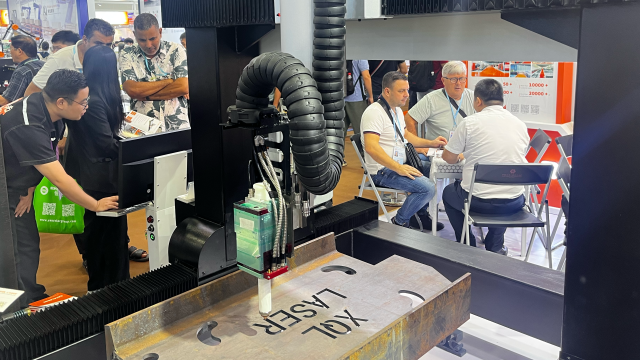
“鸡蛋不放在一个篮子里”,外贸企业出海寻路新兴市场|广交会现场
Di Yi Cai Jing· 2025-10-17 11:26
Core Insights - The Canton Fair serves as a barometer for China's foreign trade, reflecting the accelerated trend of Chinese companies expanding overseas [1][3] - In 2024, China's non-financial direct investment abroad reached $168.42 billion, a year-on-year increase of 5.9%, with manufacturing investment growing by 37.3% [1][3] Group 1: Company Expansion and Innovation - Companies like Guangdong Xinquanli Laser Intelligent Equipment Co., Ltd. are establishing offices in multiple countries to enhance their international market presence [1][3] - The introduction of advanced machinery, such as the three-dimensional five-axis multifunctional steel cutting machine, demonstrates innovation aimed at improving efficiency and precision in manufacturing [3] - The company reported a 25%-30% annual growth rate, driven by international market demand, with significant interest from foreign buyers during the Canton Fair [3][4] Group 2: Market Trends and Opportunities - Emerging markets, particularly in South America, are showing increased demand for products due to local policy changes that require enhanced safety measures [4][5] - Companies are increasingly focusing on localized services to better meet customer needs, with examples of firms establishing branches in key regions like Mexico [5] - The trend of "going out" is supported by external demands for infrastructure and manufacturing, particularly in countries involved in the Belt and Road Initiative [3][4] Group 3: Risk Management and Strategies - The SMERI report indicates a rising risk index for small and medium-sized foreign trade enterprises, highlighting the need for proactive risk management strategies [7][8] - Companies are encouraged to diversify their market presence to mitigate risks associated with geopolitical uncertainties [8] - Utilizing export credit insurance is recommended to safeguard transactions, especially when dealing with extended payment terms [8][9] - Collaborative approaches, such as "grouping" for market entry, are suggested to enhance competitiveness and share resources among companies [9]
70后学霸夫妻非洲卖纸尿裤,年收入32亿元,冲刺港股IPO
2 1 Shi Ji Jing Ji Bao Dao· 2025-10-16 15:25
Core Insights - The meeting between Ghana's Minister of Trade and the SenDa Group in Guangzhou highlights the potential investment opportunities in Ghana, particularly in the manufacturing sector, with a focus on the company LeShuShi, known as the "King of Diapers in Africa" [1] Company Overview - LeShuShi Limited has re-applied for a main board listing on the Hong Kong Stock Exchange after its previous application lapsed in January 2025. The company is backed by a couple who control 64.42% of its shares through Century BVI [2] - The company has established itself as a leader in the African baby diaper and sanitary napkin markets, holding market shares of 20.3% and 15.6% respectively as of 2024 [1] Financial Performance - LeShuShi's revenue is projected to grow from approximately $320 million in 2022 to $454 million in 2024, with a compound annual growth rate exceeding double digits. Net profit is expected to increase from $18 million to $95.1 million during the same period, reflecting a growth rate of over five times [4] - In the first four months of 2025, the company reported revenues of $161 million, a year-on-year increase of 15.5%, and a net profit of $31.1 million, up 12.5% [4] - The gross profit margin has improved significantly, reaching 35.2% in 2024 and 33.6% in the first four months of 2025, attributed to scale effects, product structure optimization, and improved foreign exchange risk management [4][5] Market Positioning - LeShuShi's pricing strategy has allowed it to maintain and even increase prices despite a general decline in average selling prices across its product lines. The company’s flagship diaper brand, Softcare, sells at an average price of 8.78 cents per piece in 2024 [5] - The company has adopted a "volume-driven" approach, with its products priced lower than competitors, which has helped it capture significant market share [5] Strategic Goals - Following the IPO, LeShuShi plans to invest in capacity expansion, production line upgrades, new product development, market expansion, and potential mergers and acquisitions to solidify its market leadership [6] Industry Context - The African market is experiencing strong population growth, with a compound annual growth rate of 1.8% in newborns from 2020 to 2024, presenting significant economic growth potential [8] - China remains Africa's largest trading partner, with trade volume reaching $295.6 billion in 2024, indicating a growing trend of Chinese companies investing in Africa, particularly in manufacturing and local production [8][9] Challenges - Despite its success, LeShuShi faces challenges such as foreign exchange losses, which amounted to $18.3 million from 2022 to 2024, representing 10% of its total net profit during that period [6] - The company currently lacks any currency hedging policies, which may expose it to further risks [6]

70后学霸夫妻非洲卖纸尿裤,年收入32亿元,冲刺港股IPO
21世纪经济报道· 2025-10-16 15:16
Core Viewpoint - The article discusses the investment opportunities and market positioning of Leshu Shi, a leading player in the African diaper and sanitary napkin market, as it prepares for its IPO and expands its operations in Africa [1][4]. Company Overview - Leshu Shi, known as the "King of Diapers in Africa," is seeking to list on the Hong Kong Stock Exchange after a previous application lapsed. The company holds the largest market shares in the African baby diaper and sanitary napkin markets, with 20.3% and 15.6% respectively [1][4]. - The company is controlled by a couple who graduated from Harbin Engineering University, holding 64.42% of the shares through Century BVI [2]. Financial Performance - From 2022 to 2024, Leshu Shi's revenue increased from approximately $320 million to $454 million, with a compound annual growth rate exceeding double digits. Net profit surged from $18 million to $95.1 million, reflecting a growth rate of over five times [4]. - In the first four months of 2025, the company reported revenue of $161 million, a year-on-year increase of 15.5%, and net profit of $31.1 million, up 12.5% [4]. - The gross profit margin improved significantly from 23.0% in 2022 to 35.2% in 2024, attributed to scale effects, product structure optimization, and improved foreign exchange risk management [4]. Market Strategy - Leshu Shi has adopted a "volume-driven" strategy, with its Softcare brand diapers priced at only 8.78 cents per piece in 2024, allowing it to maintain competitive pricing while achieving high gross margins [6][5]. - The company has established local production lines in Ghana since 2018, which has helped reduce costs and enhance competitiveness [5]. Industry Context - The African market is experiencing strong population growth, with a compound annual growth rate of 1.8% for newborns from 2020 to 2024, indicating significant economic potential [9]. - China has maintained its position as Africa's largest trading partner for 16 consecutive years, with trade volume reaching $295.6 billion in 2024, reflecting a growing trend of Chinese companies investing in Africa [9][10]. Challenges and Opportunities - Despite its success, Leshu Shi faces challenges such as foreign exchange losses, which amounted to $18.3 million from 2022 to 2024, and the absence of a currency hedging policy [7]. - The Ghanaian government has initiated a "24-hour economy and export plan" to improve the business environment, which could benefit local manufacturers like Leshu Shi [12].

从“产品出海”转向“体系出海”——中国企业“出海”锚定新航向
Zheng Quan Ri Bao· 2025-10-15 15:42
Core Viewpoint - Chinese companies are transitioning from "product export" to "system export" as they expand globally, necessitating a robust overseas comprehensive service system to support their international operations [1][6][13] Group 1: Current Trends in Overseas Expansion - There is a consensus among Chinese manufacturing enterprises that "not going abroad means being eliminated," leading both large and small companies to accelerate their globalization efforts [2] - The total export value of China's goods reached 19.95 trillion yuan, with a year-on-year growth of 7.1% in the first three quarters of 2025 [1] Group 2: Challenges Faced by Companies - Companies face various uncertainties when entering overseas markets, including contract terms, cultural conflicts, and policy changes, which can lead to significant risks [2] - Geopolitical and policy uncertainties, local operational challenges, and intense competition over intellectual property rights are major obstacles for Chinese companies going abroad [2][3] Group 3: Need for Supportive Services - The need for comprehensive support services is increasingly urgent as companies expand internationally, with challenges in legal compliance, financial services, logistics, and risk management being highlighted [4][5] - The establishment of an overseas comprehensive service system is essential for optimizing China's foreign investment and trade channels [5] Group 4: Government Initiatives - The State Council has called for the development of an overseas comprehensive service system, with various departments actively working on this initiative [6][7] - Local governments are exploring the creation of service ports and platforms to provide essential support for companies venturing abroad [7][9] Group 5: Successful Case Studies - The "Ningbo model" demonstrates the effectiveness of a cluster approach to overseas expansion, where companies collaborate to provide integrated services, resulting in reduced costs and improved financing opportunities [8] Group 6: Future Directions - The overseas comprehensive service system should evolve towards precision, collaboration, and institutionalization to better support companies in navigating global markets [11][12] - The ultimate goal is to create a sustainable competitive advantage through a standardized service system that enhances transparency and predictability in international business operations [12][13]
大成基金柏杨: 港股短期波动属情绪面扰动海外资金转向“买质量”
Zheng Quan Shi Bao· 2025-10-12 22:04
Core Viewpoint - The Hong Kong stock market has experienced fluctuations due to short-term investor sentiment changes, but the long-term outlook remains cautiously optimistic for the fourth quarter, supported by valuation advantages and strong ties to the mainland economy [1][2]. Market Trends - The Hong Kong stock market saw several sectors reach historical highs during the National Day and Mid-Autumn Festival holidays, followed by a downward adjustment [2]. - The recent adjustments in sectors such as chips, technology, innovative pharmaceuticals, and robotics are attributed to short-term market sentiment rather than fundamental issues [2]. Investment Strategy - The investment strategy emphasizes focusing on companies' long-term financial performance and competitive strength rather than short-term market movements [2]. - The current market environment is characterized by a balance of economic fundamentals, company profit growth, and reasonable valuation levels [2][3]. Foreign Investment Dynamics - Foreign investors are increasingly optimistic about Hong Kong stocks, with a notable shift from "buying cheap" to "buying quality," particularly in high-end manufacturing, new energy, innovative pharmaceuticals, and robotics [3][5]. - The trend of foreign capital returning to Hong Kong stocks is accelerating, with a cautious and selective approach towards companies with global competitive advantages [2][3]. Sector Opportunities - The investment focus includes five key areas: overseas expansion, innovative pharmaceuticals, AI+, high-end manufacturing, and upstream resources, with a particular emphasis on the "going global" trend of Chinese companies [5][6]. - The market for traditional consumer sectors, such as e-commerce and travel, is also seen as having potential for discovering undervalued stocks [5]. A+H Company Listings - The trend of A+H companies listing in Hong Kong is gaining momentum, with nearly 80 A-share companies applying for listings, covering various industries such as pharmaceuticals, telecommunications, and automotive [6]. - The transition of Chinese companies from "export" to "going global" is viewed as revolutionary, enhancing their revenue, profit, and global influence [6].
谁将是下一个劈开海外万亿市场的中国黑马?
Hu Xiu· 2025-10-12 08:19
Core Insights - The narrative of Chinese companies going global has evolved significantly, moving from being silent manufacturers to active players in the global market [1][3][26] - In the first half of 2025, Chinese overseas mergers and acquisitions surged by 79% to $19.6 billion, while new contracts for foreign engineering projects increased by 12.4% to $129.9 billion, indicating a robust expansion of Chinese enterprises abroad [2] Historical Phases of Chinese Companies Going Global - **Phase 1: "Manufacturing Outbound" Era** This period is characterized by OEM/ODM models where Chinese companies lacked brand ownership and consumer engagement, relying solely on low-cost labor and large production capacity [5][6][7][8] - **Phase 2: "Brand Outbound" Awakening Era** Triggered by the global financial crisis, this phase saw Chinese companies realizing the importance of branding. They began to innovate and offer products that could compete with international brands, exemplified by companies like Huawei and Xiaomi [9][10][11][12][15] - **Phase 3: "Ecosystem Outbound" Era** The current phase focuses on creating comprehensive systems and models rather than just selling products. Companies are now looking to establish brand matrices and cultural connections, as seen with brands like Anker and Pop Mart [16][19][20][21][29] Emerging Strategies - **Category "Exploders"** These companies aim to create standout products in specific niches and replicate their success across various verticals, leveraging technology and consumer insights [17][19] - **Cultural "Alchemists"** This strategy involves modernizing and globalizing Chinese cultural elements to resonate with international audiences, creating a new aesthetic that appeals to global youth [20] - **Ecosystem "Creators"** Companies are now exporting operational efficiencies and business models developed in China to global markets, focusing on platforms and infrastructure rather than direct consumer sales [21] - **"Gold Diggers" in Emerging Markets** With increasing competition in mature markets, many Chinese firms are targeting emerging markets like Southeast Asia and Africa, leveraging their established business models and supply chain advantages [22][23][25] Conclusion - The evolution of Chinese companies from labor-intensive manufacturers to sophisticated global players reflects a significant shift in strategy and ambition. The next generation of successful companies will likely be those that can integrate into global ecosystems and redefine market standards [26][30][31]