制造业回流

Search documents
Bristol-Myers Squibb Company (BMY) Begins Selling Its Psoriasis Medication Sotyktu Directly to Cash-Paying U.S. Customers
Insider Monkey· 2025-10-02 00:20
Group 1: AI Investment Opportunity - Artificial intelligence is considered the greatest investment opportunity of our lifetime, with a strong emphasis on the urgency to invest now [1] - Wall Street is investing hundreds of billions into AI, but there is a critical question regarding the energy supply needed to support this technology [2] - AI data centers consume as much energy as small cities, leading to concerns about power grid strain and rising electricity prices [2] Group 2: Company Overview - A specific company is highlighted as a key player in the AI energy sector, owning critical energy infrastructure assets that are essential for the anticipated surge in energy demand from AI [3][6] - This company is not a chipmaker or cloud platform but is positioned to benefit significantly from the increasing need for electricity in the digital age [3][6] - It has a unique footprint in nuclear energy and is capable of executing large-scale engineering, procurement, and construction projects across various energy sectors [7] Group 3: Financial Position - The company is completely debt-free and has a cash reserve equal to nearly one-third of its market capitalization, providing a strong financial foundation [8] - It also holds a significant equity stake in another AI-related company, offering investors indirect exposure to multiple growth engines without high premiums [9] Group 4: Market Sentiment - The company is gaining attention from Wall Street as it is seen as undervalued, trading at less than 7 times earnings excluding cash and investments [10] - There is a growing interest among hedge fund managers, who are discreetly promoting this stock at exclusive investment summits [9][10] Group 5: Future Outlook - The future of AI is closely tied to energy infrastructure, and the company is well-positioned to capitalize on the upcoming AI energy boom [6][14] - The ongoing onshoring trend and the surge in U.S. LNG exports under the current administration further enhance the company's strategic importance in the energy sector [14]



The State of New Jersey Awards CGI Inc. (GIB) a 10-Year Contract to Continue Building and Maintaining Its State Integrated Recovery Operations Management Systems (SIROMS)
Insider Monkey· 2025-10-02 00:09
Core Insights - Artificial intelligence (AI) is identified as the greatest investment opportunity of the current era, with a strong emphasis on the urgent need for energy to support its growth [1][2][3] - A specific company is highlighted as a key player in the AI energy sector, owning critical energy infrastructure assets that are essential for meeting the increasing energy demands of AI technologies [3][7][8] Investment Opportunity - Wall Street is investing heavily in AI, but there is a looming question regarding the energy supply needed to sustain this growth [2] - The company in focus is positioned to benefit from the surge in demand for electricity driven by AI data centers, making it a potentially lucrative investment [3][8] Energy Infrastructure - The company owns significant nuclear energy infrastructure, which is crucial for America's future power strategy [7] - It is capable of executing large-scale engineering, procurement, and construction projects across various energy sectors, including oil, gas, and renewables [7][8] Financial Position - The company is noted for being debt-free and having a substantial cash reserve, which is approximately one-third of its market capitalization [8] - It is trading at a low valuation of less than 7 times earnings, indicating a potentially undervalued investment opportunity [10] Market Trends - The current market dynamics include a push for onshoring due to tariffs, a surge in U.S. LNG exports, and a focus on nuclear energy as a clean power source [14] - The influx of talent into the AI sector is expected to drive continuous innovation and advancements, further solidifying the importance of investing in AI-related companies [12] Conclusion - The company is positioned at the intersection of AI and energy, making it a unique investment opportunity that could yield significant returns as the demand for AI continues to grow [3][11][13]


国际观察|新一轮关税或为美国经济又添“败笔”
Xin Hua She· 2025-10-01 09:05
Core Viewpoint - The new round of tariffs imposed by the U.S. government starting October 1 is expected to negatively impact global supply chains and increase living costs for American citizens, despite being framed as a measure for national security and promoting "Made in America" [1][2]. Tariff Expansion - The U.S. government has announced an expansion of tariffs on a range of products, including pharmaceuticals, heavy trucks, kitchen cabinets, soft furniture, and foreign films. Tariffs on all imported brand or patented drugs will reach up to 100%, effective October 1, while tariffs on wood and kitchen cabinets will be 10% and 25%, respectively, effective October 14 [2][3]. - Prior to this announcement, tariffs already covered nearly one-third of U.S. imports, according to the American Progress Policy Institute [2]. Manufacturing "Reshoring" Ineffectiveness - Experts indicate that the reliance on tariffs to drive manufacturing "reshoring" is unlikely to yield results. The pharmaceutical industry, for instance, is hesitant to commit to reshoring due to unclear policies and the complexity of establishing new manufacturing facilities [3][4]. - The lack of clarity regarding exemptions for generic drugs and the status of companies already operating in the U.S. adds to the uncertainty, making it difficult for pharmaceutical companies to plan effectively [3]. Impact on Pharmaceutical Investment - The imposition of tariffs is expected to hinder pharmaceutical companies' investment plans in the U.S., as the costs associated with tariffs could divert funds away from research and development [4]. - Smaller pharmaceutical companies may opt to exit the U.S. market or sell their product lines due to the inability to relocate production domestically, potentially affecting the supply of certain medications [4]. Consumer Cost Burden - The new tariffs are anticipated to exacerbate inflation in the U.S., with industry insiders warning that the cost pressures from tariffs will likely be passed on to consumers [5][6]. - The American Chamber of Commerce previously stated that tariffs on wood and related products do not pose a national security risk and will increase costs for U.S. businesses and residential construction [5]. - The imposition of tariffs on pharmaceuticals is expected to raise costs and disrupt supply chains, ultimately making it harder for patients to access essential medications [5][6].
福特CEO:在蓝领工业,我们远远落后中国,我们太卑微了
Guan Cha Zhe Wang· 2025-10-01 07:55
Core Viewpoint - The rapid development of electric vehicles in China is challenging the fragile sense of security among American automakers, as highlighted by Ford's CEO Jim Farley, who emphasizes the need for the U.S. to invest in manufacturing and workforce development to remain competitive [1][4]. Group 1: U.S. Manufacturing Challenges - Farley warns that the U.S. is significantly lagging behind countries like China in manufacturing and key technologies, attributing this to labor shortages and declining productivity in blue-collar industries [1][3]. - He calls for a collaborative effort between U.S. businesses and policymakers to enhance vocational education, apprenticeship programs, and support for small businesses to eliminate barriers to blue-collar development [1][4]. Group 2: Investment and Workforce Development - Farley notes that countries such as China, South Korea, and Japan are making substantial investments in their manufacturing sectors, which contrasts sharply with the U.S. approach [3][4]. - He emphasizes the importance of recognizing the value of blue-collar jobs in the U.S. and the need for comprehensive training and apprenticeship programs to ensure a stable labor supply in critical sectors [4]. Group 3: Competitive Landscape - Farley expresses concern that without significant investment, the U.S. risks losing high-paying jobs and intellectual leadership across various industries, particularly in the face of fierce competition from China [4][5]. - He highlights that 70% of the world's electric vehicles are manufactured in China, which possesses advanced in-car technology and superior cost and quality compared to Western products [5].


Citizens JMP Raises PT on ABIVAX Société Anonyme (ABVX) Stock
Insider Monkey· 2025-10-01 06:27
Core Insights - Artificial intelligence (AI) is identified as the greatest investment opportunity of the current era, with a strong emphasis on the urgency to invest now [1] - The energy demands of AI technologies are immense, with data centers consuming as much energy as small cities, leading to concerns about power grid capacity and rising electricity prices [2] - A specific company is highlighted as a key player in the AI energy sector, owning critical energy infrastructure assets that are essential for meeting the increasing energy demands of AI [3][7] Investment Opportunity - The company in focus is not a chipmaker or cloud platform but is positioned to benefit significantly from the anticipated surge in energy demand due to AI [3] - It operates as a "toll booth" for energy, collecting fees on exported liquefied natural gas (LNG) and is poised to capitalize on the onshoring trend driven by tariffs [5][6] - The company is debt-free and has a substantial cash reserve, amounting to nearly one-third of its market capitalization, which positions it favorably compared to other energy firms burdened by debt [8] Market Position - The company plays a crucial role in U.S. LNG exportation and is capable of executing large-scale engineering, procurement, and construction projects across various energy sectors [7] - It has an equity stake in another AI-related company, providing investors with indirect exposure to multiple growth engines in the AI space [9] - The stock is currently undervalued, trading at less than seven times earnings, which presents a compelling investment opportunity [10] Future Outlook - The ongoing AI infrastructure supercycle, combined with the onshoring boom and a surge in U.S. LNG exports, positions the company at the forefront of the energy landscape [14] - The influx of talent into the AI sector ensures continuous innovation and advancements, making investments in AI a strategic move for future growth [12] - The company is expected to deliver real cash flows and maintain its critical infrastructure role, making it a strong candidate for investment as the AI revolution unfolds [11]

Eli Lilly and Company (LLY) Opens a New Lilly Gateway Labs Innovation Hub in San Diego
Insider Monkey· 2025-09-30 20:48
Artificial intelligence is the greatest investment opportunity of our lifetime. The time to invest in groundbreaking AI is now, and this stock is a steal! AI is eating the world—and the machines behind it are ravenous. Each ChatGPT query, each model update, each robotic breakthrough consumes massive amounts of energy. In fact, AI is already pushing global power grids to the brink. Wall Street is pouring hundreds of billions into artificial intelligence—training smarter chatbots, automating industries, and b ...

“特不靠谱”?他的产业棋局,正在一个个落地成金!
Ge Long Hui· 2025-09-29 12:28
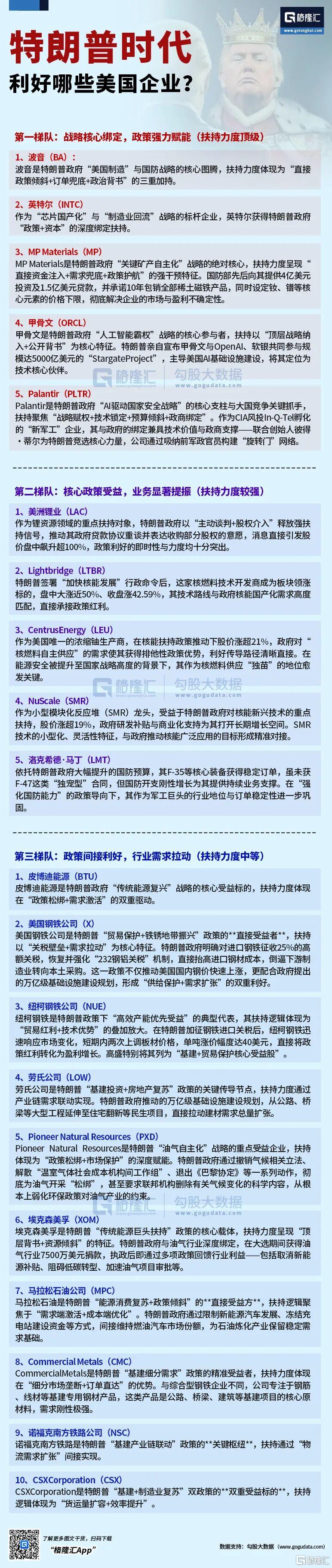
Group 1 - The article highlights the effectiveness of Trump's industrial policies, which were initially met with skepticism, but have since shown significant results in various sectors [1][14]. - The manufacturing sector has seen a return to the U.S. due to Trump's policies, with Intel and Boeing benefiting from government support and contracts [3][4]. - The U.S. steel industry has experienced a resurgence, with domestic steel prices rising and companies like U.S. Steel expanding operations due to protective tariffs and infrastructure demands [4][27]. Group 2 - Trump's focus on strategic sectors such as defense and critical resources has evolved into a systematic approach, with companies like MP Materials and Palantir positioned as key beneficiaries [6][7]. - MP Materials has transformed into a leading U.S. rare earth supplier with significant government backing, highlighting the importance of resource security [7][8]. - The nuclear energy sector has also gained traction, with companies like Centrus Energy and NuScale receiving substantial government support, leading to stock price increases [8][20][22]. Group 3 - In the energy sector, Trump's policies have led to increased domestic oil and gas production, benefiting companies like ExxonMobil and Pioneer Natural Resources through regulatory rollbacks [11][30][31]. - The infrastructure sector has seen a positive impact from Trump's $1 trillion infrastructure plan, with companies like Lowe's and Commercial Metals experiencing significant revenue growth [12][29][34]. - The article emphasizes the importance of understanding the long-term implications of Trump's policies on various industries, suggesting that companies closely aligned with these strategies are likely to thrive [15][35].



“特不靠谱”?他的产业棋局,正在一个个落地成金!
格隆汇APP· 2025-09-29 11:11
Core Viewpoint - The article emphasizes that Trump's industrial policies, once dismissed as mere rhetoric, have proven effective in reshaping the U.S. industrial landscape, creating significant investment opportunities in various sectors [2][10]. Group 1: Manufacturing and Defense - Trump's pressure on companies like Carrier and Intel to bring manufacturing back to the U.S. was initially ridiculed, but it has led to substantial investments and job creation in the semiconductor industry, with Intel's Arizona factory ramping up production [3][4]. - Boeing has secured hundreds of billions in contracts, demonstrating the effectiveness of Trump's defense policies and the importance of domestic manufacturing [4]. - The U.S. steel industry has benefited from tariffs on imported steel, with domestic steel prices rising and companies like U.S. Steel expanding operations, creating thousands of jobs [4][10]. Group 2: Strategic Resource Independence - The article highlights the rise of MP Materials as a key player in the rare earths sector, supported by government investments and contracts, showcasing the shift towards resource independence [5][6]. - The nuclear energy sector has seen significant growth, with companies like Centrus Energy and NuScale receiving government support, leading to stock price increases and project advancements [6][7]. - Palantir has experienced a dramatic increase in market value, reflecting its central role in the government's AI-driven national security strategy [7][10]. Group 3: Energy and Infrastructure - Trump's policies aimed at traditional energy have led to increased domestic oil production, with companies like ExxonMobil and Pioneer Natural Resources benefiting from regulatory rollbacks and increased market share [8][9]. - The infrastructure sector has seen a positive impact from Trump's $1 trillion infrastructure plan, with companies like Lowe's and Commercial Metals reporting significant revenue growth due to increased demand for construction materials [9][10]. Group 4: Key Beneficiary Companies - Palantir is identified as a core beneficiary of the AI-driven national security strategy, with strong government ties and significant budget allocations [13]. - MP Materials, Lightbridge, and Centrus Energy are highlighted as key players in the critical minerals and nuclear sectors, benefiting from government support and policy initiatives [14][15][16]. - U.S. Steel and Nucor Steel are recognized for their direct benefits from trade protection policies and increased domestic demand for steel [19][21].

医药生物行业报告(2025.09.22-2025.09.26):关税实际影响小,下跌为创新药加仓良机
China Post Securities· 2025-09-29 09:21
Investment Rating - The industry investment rating is "Outperform" [1] Core Insights - The report highlights that the recent tariff announcement by the U.S. government is expected to have a minimal impact on the pharmaceutical sector, suggesting that the current market downturn presents a good opportunity to increase positions in innovative drugs [4][13] - The report emphasizes the ongoing adjustments in the innovative drug sector, indicating that the recent price corrections are largely complete, and recommends maintaining or increasing exposure to high-quality stocks with growth potential [7][17] - The report discusses the positive outlook for the medical device sector due to new procurement policies aimed at preventing price wars, which could benefit companies previously affected by valuation pressures [8][23] Summary by Sections Industry Overview - The closing index for the pharmaceutical sector is 8770.86, with a weekly high of 9323.49 and a low of 6764.34 [1] Market Performance - For the week of September 22-26, 2025, the A-share pharmaceutical sector fell by 2.2%, underperforming the CSI 300 index by 3.27 percentage points and the ChiNext index by 4.16 percentage points [6][14][32] - The report ranks the pharmaceutical sector 26th among 31 first-level sub-industries in terms of weekly performance [14] Innovative Drugs - The innovative drug sector is experiencing a correction, with a recommendation to focus on high-quality stocks with growth potential, including companies like Innovent Biologics and Hengrui Medicine [7][17] Medical Devices - The National Healthcare Security Administration's new procurement policies are expected to positively impact the medical device sector, particularly benefiting companies like Mindray and Aohua [8][23] CDMO and CRO Sectors - The report expresses optimism about the CDMO sector's recovery, driven by increasing overseas demand and the upcoming interest rate cuts in the U.S. [18] - The CRO sector is also expected to see improved performance as domestic innovative drug demand stabilizes [18][19] Research Services - The report indicates a potential turnaround in the research services sector, with a focus on companies with strong competitive advantages [21] Biologics - The report notes that the blood products sector is currently facing downward pressure, while the vaccine sector is struggling due to declining birth rates and market saturation [22] Medical Services - The report highlights the potential for growth in the medical services sector, particularly for companies expanding their market share through acquisitions [26][27] Traditional Chinese Medicine - The report suggests that companies involved in innovative research and those benefiting from procurement policies are likely to see growth [28] Pharmaceutical Commerce - The report anticipates increased concentration in the retail pharmacy sector, with leading companies expected to gain market share [30][31]
精算 美国衰退的时间
Sou Hu Cai Jing· 2025-09-29 05:13
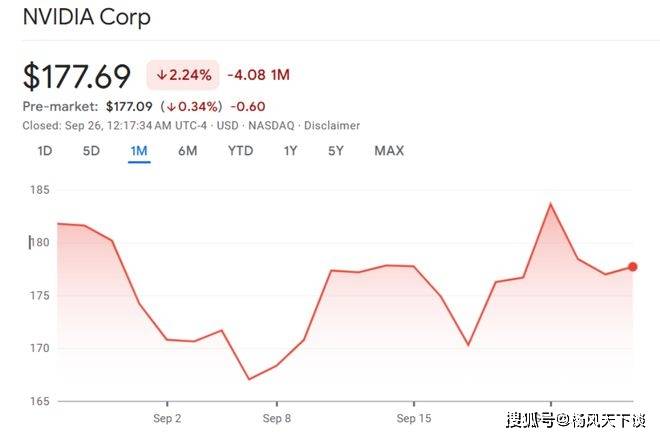
Group 1 - The article discusses the myth of the US stock market's resilience and the ongoing economic growth, questioning how long this can last [1][2] - It highlights the uncertainty in the US economic outlook due to the trade war initiated by the Trump administration, with calls for significant interest rate cuts by Treasury Secretary Mnuchin [2][3] - The Federal Reserve's recent rate cut of 25 basis points is deemed insufficient, with expectations for further cuts of 125 to 150 basis points by year-end [3][4] Group 2 - The article examines two main drivers of the US economy: the return of traditional manufacturing and the growth of the AI industry [5][6] - It suggests that while Trump's policies may temporarily slow down economic decline, the AI industry is currently in a bubble that could continue to inflate [7][8] - The performance of AI-related stocks, such as Nvidia and Oracle, indicates ongoing investor interest despite recent volatility [10][20][27] Group 3 - The article notes that the AI industry has played a crucial role in rescuing the US stock market from a bear market, with significant investments in AI infrastructure [29][30] - It emphasizes the importance of AI in sustaining economic growth, while also acknowledging the risks associated with the potential bubble [31][44] - The article discusses the influx of foreign investments into the US as part of Trump's strategy to revitalize manufacturing, with substantial commitments from countries like Japan and the EU [40][41] Group 4 - The article outlines both positive and negative factors affecting the US economy, including the ongoing AI investment and tariff revenues as positives, while rising debt and competition from China are seen as negatives [43][48] - It predicts that the AI bubble may last for another six months, but warns of potential stock market declines during this period [52][55] - The article concludes that while the Trump administration may navigate short-term challenges, long-term competition from China poses significant risks [56][59]